


Tax season hits, and suddenly your firm is juggling 200 client engagements, each with its own deadlines, document requests, and billing rates. They don’t understand why a missed extension deadline is different from a late marketing report, or why tracking billable hours down to the minute matters more than checking off tasks.
Traditional project management software was not designed for professional accounting workflows. These platforms treat all deadlines as equal, overlook the importance of granular time tracking, and fail to account for compliance-driven work. As a result, firms often rely on spreadsheets, email threads, and manual workarounds that increase risk and reduce visibility.
Project management software built for accountants addresses these gaps by aligning daily work with how accounting firms actually operate. This guide reviews 15 project management platforms suited for accounting firms in 2026 from specialized practice management systems to flexible work operating systems.
Key takeaways
- Accounting firms need purpose-built project management tools: generic platforms fail to support non-negotiable compliance deadlines, billable time tracking, and firm-level profitability visibility required in accounting workflows.
- Time tracking and billing integration directly impact profitability: software that connects time entries to budgets and invoicing reduces revenue leakage and gives firms real-time insight into engagement margins.
- Automation is essential for handling recurring and high-volume work: automating client onboarding, document requests, deadline sequencing, and approvals helps firms survive busy season without scaling administrative overhead.
- Real-time dashboards enable proactive management, not hindsight reporting: live visibility into workloads, budgets, and deadlines allows partners to intervene early, rebalance resources, and protect margins before problems escalate.
- Flexible platforms like monday.com support firm-wide operations: beyond client engagements, a unified system can connect accounting work with internal functions such as resourcing, HR, and business development on a single, scalable foundation.

Generic platforms rarely reflect how accounting firms actually operate. They overlook the realities of immovable client deadlines, billable minutes, and compliance-driven work that cannot slip. Accounting teams are not simply managing projects. They are running client engagements, tracking billable time, and delivering regulated work with precision.
The right platform connects time tracking, billing, and client work into one connected system. When these elements live together, nothing falls through the cracks. Tools built for professional services move beyond basic project tracking and evolve into a true business operating system for the firm.
To support this level of execution, platforms must capture time with precision, automate approvals, and provide real-time insight into firm-wide profitability. During busy season, systems should help teams stay ahead of deadlines rather than scrambling to recover. The goal is operational control, not reactive management.
Time tracking and automated billing integration
Revenue generation relies entirely on the engine of time tracking. Every billable minute matters, and approximation introduces revenue leakage. A strong platform supports multiple billing rates and fee structures while categorizing time by project, service line, and team member without manual effort.
When time entries flow directly into billing systems, invoicing cycles shorten and revenue loss is reduced. This integration turns time tracking into a dependable revenue engine rather than an administrative burden.
Client portal and document management
Moving from scattered emails to a branded, secure portal instantly upgrades the client experience. A centralized environment allows clients to submit documents, track progress, and access deliverables without confusion or risk.
For accounting firms, this structure strengthens control and security while simplifying collaboration. It also introduces safeguards that protect both the firm and its clients:
- Built-in version control: maintains accuracy across tax returns and sensitive documents.
- Complete audit trails: records exactly who accessed files and when.
- Confidential collaboration: enables secure sharing without compromising client data.
QuickBooks and Xero synchronization
Disconnected project and financial data limits visibility into engagement profitability. Synchronizing with accounting systems like QuickBooks and Xero establishes a single source of truth across operations.
When expenses update project budgets automatically, firms gain immediate insight into margins and resource utilization. This connection supports better planning, clearer billing, and eliminates manual reconciliation that slows decision-making.
Workflow automation for recurring tasks
Recurring work such as monthly closes and client onboarding follows consistent patterns. Automating these workflows removes repetitive administrative effort and reduces the risk of missed steps.
When a new client engagement begins, automation can:
- Trigger document requests: immediately upon engagement approval.
- Schedule kickoff meetings: without extended email coordination.
- Assign team members: based on availability and role alignment.
By removing manual coordination, teams stay focused on delivery while compliance requirements remain consistent and reliable.
Real-time budget tracking and profitability analysis
Waiting until the end of an engagement to assess profitability limits corrective action. With tight margins, firms need real-time visibility into fees, time, and expenses.
When leaders see an engagement reaching eighty percent of budget with only sixty percent of work completed, they can intervene early. These insights support proactive scope discussions and protect margins before issues escalate.
AI-powered features for forward-thinking firms
AI enhances oversight by identifying risks before they impact delivery. Instead of only reporting on completed work, modern platforms help predict what may happen next.
Intelligent insights monitor engagement timelines and budgets, flagging potential overruns or delays. Digital Workers handle routine monitoring, alert managers to bottlenecks, and recommend assignments based on skills and capacity. This automation shifts focus from tracking work to advising clients.
Best project management software for accountants
Accounting involves far more than crunching numbers; it requires managing countless moving parts. Firms need more than generic project platforms to manage these demands effectively.
The most effective systems support time tracking, billing integration, automation, and security in one connected environment. The solutions below help firms replace spreadsheets and email-based processes with structured, visible workflows that improve performance and profitability.
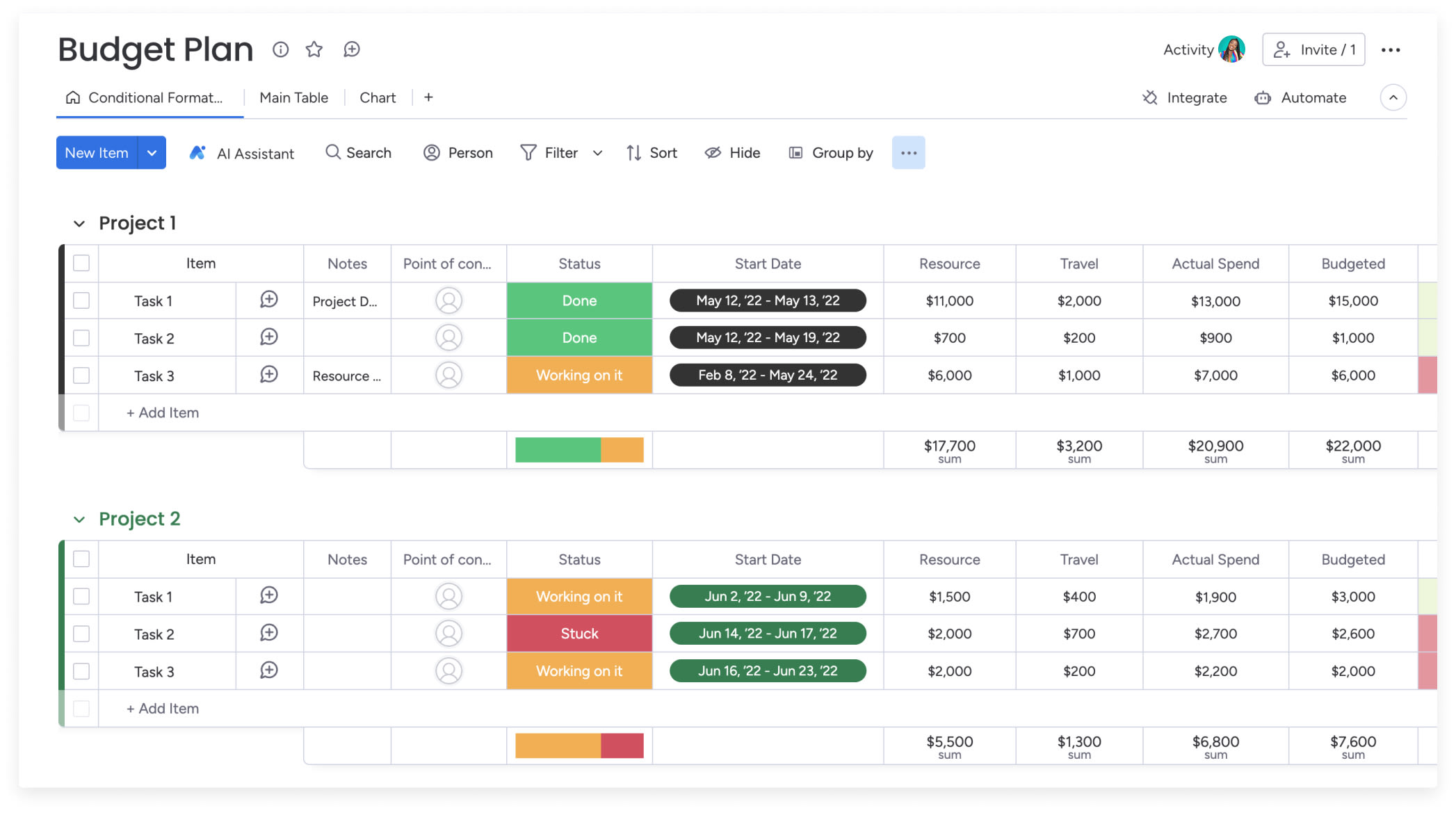
1. monday.com
Modern professional services teams benefit from platforms that unify client engagements, internal operations, and firm-wide initiatives in one digital workspace. monday.com supports firms managing tax, audit, advisory work, and capacity planning simultaneously.
Accounting firms often centralize engagement delivery, intake, and resource planning on the platform. Live reporting gives leaders visibility into deadlines and utilization. With consistent engagement structures, partners spend less time chasing updates and more time guiding work.

Example:
Firms use monday.com to centralize client projects, resource planning, and intake workflows. Live reporting allows leaders to maintain control over delivery and capacity. When every engagement follows a consistent structure, partners spend less time chasing updates and more time guiding work.
Key features:
Here is how the platform supports the specific needs of accountants day-to-day. These capabilities facilitate repeatable engagement delivery while maintaining flexibility when priorities shift.
- Billable time calculations: combine the native Time Tracking Column (Pro/Enterprise) with a formula column (e.g.,
ROUND(MULTIPLY({Time Tracking#Hours},{Hourly Rate}),0)) to calculate billable amounts per item. - Advanced project planning and visibility: utilize built-in views like Gantt chart, Timeline, Kanban, Calendar, and Workload to map work, monitor dependencies, and manage milestones across engagements.
- Dashboards and reporting: aggregate live data from boards into dashboards to track deadlines, workload, and budgets across a book of business. This provides a partner-friendly portfolio view without extra meetings.
- Project intake and approvals: standardize entry points with Forms, then route requests through project intake and approvals so stakeholders can review and prioritize with full context.
Pricing:
- Free: up to two seats with basic boards and templates.
- Basic: $9 per seat per month (billed annually) with unlimited boards and 5GB storage.
- Standard: $12 per seat per month (billed annually) with Timeline, Gantt, and guest access.
- Pro: $19 per seat per month (billed annually) with time tracking, private boards, and advanced dashboards.
- Enterprise: custom pricing with portfolio management, advanced security, and compliance features.
Why it stands out:
Accounting leaders need a platform that teams actually use, as adoption drives reliable reporting. This platform facilitates high adoption with flexible building blocks that teams can tailor without a heavy lift.
- High adoption ensures reliable reporting: when team members enjoy the interface, updates happen in real time, ensuring leadership dashboards reflect current reality.
- Fast time to value: the Forrester Total Economic Impact™ study reports a payback period of less than four months.
- Customization with governance: standardize core delivery steps while allowing tailored boards, automations, and dashboards per service line.
Advanced AI features:
AI should reduce workload, not add to it. monday.com integrates AI directly into boards and automations, allowing teams to handle repeatable work at scale.
- AI Blocks for common accounting workflows: leverage capabilities like Extract info, Categorize, and Summarize to convert unstructured inputs into organized work.
- Example for accountants: pull key fields such as names, invoice numbers, or document details from PDFs and images into board columns, then categorize incoming requests by urgency or service line.
- Responsible AI setup: account admins control AI capabilities from administration settings, ensuring AI respects existing permissions.
Automations:
Busy season acts as a stress test for process design. Automations keep work flowing with consistent handoffs and fewer manual follow-ups.
- Automation center: construct no-code automations from the board’s Automation center using templates and configurable steps.
- AI automations (Pro and Enterprise): incorporate AI blocks such as Categorize with AI, Summarize text with AI, Extract information with AI, and Translate text with AI.
- Operational confidence: the Run history feature allows teams to review automation outcomes, aiding in quick troubleshooting.
Integrations:
Work often becomes scattered across email, chat, spreadsheets, and calendars. Integrations connect over 200 apps to keep work and communication tied to the engagement.
- Everyday collaboration integrations: link platforms like Microsoft Teams and Slack so updates and notifications reach team members in their preferred environments.
- Email and calendar connections: import work from Outlook and Gmail to ensure action items land in workflows rather than forgotten threads.
- File collaboration: connect Google Drive for seamless access to working files as engagements progress.
Project management software for accountants features:
Firms use the platform to manage accountant-specific delivery without forcing rigid templates.
- Custom tax season workflows: build a repeatable board using status and date columns to track Document collection, Prep, Review, Sign-off, E-filing, and Extension requests, with automations sending reminders as deadlines approach.
- Engagement delivery boards: track phases, milestones, dependencies, and owners across audits, tax returns, and advisory projects using Gantt and milestone checkpoints.
- Capacity and resource planning: the Workload view reveals who can take on work, allowing assignment shifts before deadlines become critical.
- Standardized intake: capture requests through Forms, route them through approvals, and start work with a consistent structure every time.
2. BigTime
Specializing in quote-to-cash workflows for mid-market accounting firms, BigTime provides comprehensive professional services automation with deep financial integration. The platform connects project execution directly to billing and revenue tracking, making it ideal for practices needing sophisticated time tracking alongside project oversight. With over two decades in the market, BigTime brings established expertise to accounting-specific workflows.

Use case:
Mid-size accounting firms (20-100 employees) prioritizing sophisticated time tracking and billing capabilities, primarily needing project management for client work rather than internal operations.
Key features:
- Financially-aware project management: Budgets vs. actuals tracking at task, project, and portfolio levels with earned value management (EVM) metrics
- DCAA-compliant timekeeping: Audit logs, e-signature approvals, and government contracting workflows for firms serving federal clients
- Integrated billing and payments: Quote-to-cash automation with client portals, multi-currency support, and direct QuickBooks/Sage Intacct connections
Pricing:
- Essentials: $20 per user/month (includes Time & Expense, Billing & Invoicing, Project Portfolio Management, QuickBooks integration, AI Assistant)
- Advanced: Quote-based pricing (adds multi-currency expense management, custom reporting, project templates, DCAA support as add-on)
- Premier: Quote-based pricing (adds multi-currency invoicing, custom cost management, project budgeting, multi-level approvals)
- Enterprise: Quote-based pricing (Enterprise PSA, Services CPQ, Resource Management for multi-entity operations)
Additional modules like Resource Management, Data Hub, and Services CPQ require separate purchase
Key features:
- Financially-aware project management: budgets versus actuals tracking at task, project, and portfolio levels, supported by earned value management (EVM) metrics.
- DCAA-compliant timekeeping: audit logs, e-signature approvals, and government contracting workflows designed for firms serving federal clients.
- Integrated billing and payments: quote-to-cash automation with client portals, multi-currency support, and direct connections to QuickBooks and Sage Intacct.
Pricing:
- Essentials: twenty dollars per user per month, including time and expense tracking, billing and invoicing, project portfolio management, QuickBooks integration, and an AI assistant.
- Advanced: quote-based pricing that adds multi-currency expense management, custom reporting, project templates, and DCAA support as an add-on.
- Premier: quote-based pricing that includes multi-currency invoicing, custom cost management, project budgeting, and multi-level approvals.
- Enterprise: quote-based pricing covering enterprise PSA, services CPQ, and resource management for multi-entity operations.
Additional modules such as Resource Management, Data Hub, and Services CPQ require separate purchases, which can increase total cost as needs expand.
Considerations:
- Feature availability: advanced capabilities like DCAA timekeeping and resource management require add-ons or higher-tier plans.
- Product maturity gaps: the mobile app does not support all web features, and some authentication enhancements require enrollment in Early Access programs
- Multi-currency tiering: multi-currency expense management requires the Advanced tier or higher; multi-currency invoicing requires Premier tier or higher.
3. Asana
Designed to connect strategic goals with daily execution, Asana provides intuitive work management across teams and departments. It excels at delivering multi-project visibility while supporting flexible workflows that adapt as organizations grow. This balance makes it particularly appealing for mid-market companies scaling operations without introducing unnecessary complexity.

Use case:
Mid-market teams with fifty to five hundred employees that need to align strategic initiatives with execution. These organizations often span multiple departments and require consistent visibility into priorities, progress, and workloads across workflows.
Key features:
- Work Graph data model: work items can live in multiple projects at the same time, reducing duplication while preserving context across team workflows.
- Portfolio and workload management: real-time insight into resource allocation and project health, with capacity planning that helps prevent burnout.
- AI-powered workflow automation: AI Studio enables custom workflows, while AI teammates support faster delivery and more informed decision-making.
Pricing:
- Personal: free for up to two users, offering basic work tracking and collaboration.
- Starter: ten dollars and ninety-nine cents per user per month, billed annually, including timeline views, workflow builder, and basic AI features.
- Advanced: twenty-four dollars and ninety-nine cents per user per month, billed annually, adding goals, portfolios, native time tracking, and advanced integrations.
- Enterprise: custom pricing with enhanced security, compliance features, and a ninety-nine point nine percent uptime commitment.
Considerations:
- Work visibility limitations: sub-items do not automatically inherit project membership, which can create gaps in timeline and calendar views unless managed manually.
- Pricing structure: banded seat pricing can lead to unexpected cost increases when adding a small number of team members to an existing plan.
4. Karbon
Built specifically for accounting firms, Karbon rethinks how professionals manage client work by bringing email, workflows, and billing into one system. This accounting-first approach reduces the need to switch between platforms while preserving familiar terminology and processes. The result is a more cohesive experience that reflects how accounting work actually flows.

Use case:
Accounting firms that want comprehensive practice management aligned with real-world accounting workflows. Karbon is particularly strong for organizations that need to standardize recurring engagements and manage client communication alongside delivery.
Key features:
- Tax season pipeline automation: conditional automators sequence extension tracking and deadline reminders across active engagements without manual follow-up.
- Integrated email management: shared inboxes and triage tools convert emails into actionable work items with delegated ownership.
- Automated workflow templates: conditional automators and recurring schedulers standardize processes across tax, audit, and advisory services.
- Practice intelligence dashboards: built-in analytics track work velocity, budget realization, and revenue performance using accounting-specific KPIs.
Pricing:
- Team: fifty-nine dollars per user per month with annual billing, or seventy-nine dollars per user per month when billed monthly.
- Business: eighty-nine dollars per user per month with annual billing, or ninety-nine dollars per user per month when billed monthly.
- Enterprise: custom pricing based on firm size and requirements.
Additional costs may apply for eSignature credits and payment processing fees, which can be passed on to clients through surcharges.
Considerations:
- Security approach: authentication depends on the firm’s email provider rather than native platform-level multi-factor authentication.
- Geographic coverage: payment processing is currently limited to the United States, United Kingdom, Canada, Australia, and New Zealand.
5. Teamwork
Client services organizations often turn to Teamwork for its strong focus on billable work and financial visibility. The platform combines time tracking, budget management, and profitability reporting with collaboration features designed for client-facing teams. This makes it a practical option for accounting firms that manage engagements as defined projects.

Use case:
Accounting firms that manage client engagements as discrete projects with defined scopes, timelines, and deliverables. These firms require detailed financial tracking to understand profitability at the engagement level.
Key features:
- Native time tracking: billable rates, time-based and fixed-fee budgets, and profitability reporting built directly into daily workflows.
- Resource planning and utilization tracking: workload capacity planning and long-term forecasting to support sustainable staffing decisions.
- Client collaboration features: unlimited client users on paid plans, along with external proofing and approval workflows.
Pricing:
- Free: zero dollars per month for up to five users and five projects.
- Deliver: ten dollars and ninety-nine cents per user per month, billed annually, with a minimum of three users.
- Grow: nineteen dollars and ninety-nine cents per user per month, billed annually, with a minimum of five users.
- Scale: custom pricing available by quote.
- Enterprise: custom pricing available by quote.
Annual billing offers a twenty percent savings compared to monthly plans, and a thirty-day free trial is available on paid tiers.
Considerations:
- Plan limitations: advanced financial budgets and retainer management are restricted to higher-tier plans, which may require upgrades as firms grow.
- Usability learning curve: the breadth of features can feel complex for teams new to robust project management platforms, particularly during initial adoption.
6. Canopy
Canopy brings client management, workflow automation, and document storage together in one AI-powered practice management platform. The system is designed for accounting and tax firms that manage complex tax preparation work and ongoing client engagement, while maintaining visibility across teams.

Use case:
Tax and accounting practices that require specialized workflows to manage client relationships, automate tax season processes, and streamline engagement-to-billing cycles without relying on disconnected systems.
Key features:
- Client-first workflow automation: automatically generates projects from accepted engagements and routes work based on defined team roles.
- Capacity planning dashboard: visualizes team workload in real time and enables rebalancing assignments through drag-and-drop actions.
- Integrated client portal: manages client requests, eSignatures, and document collection directly within active project workflows.
Pricing:
- Starter (four users or fewer): $45 per user per month with annual billing or $60 per user per month with monthly billing.
- Essentials (four users or fewer): $66 per user per month with annual billing or $88 per user per month with monthly billing.
- Client engagement platform: $150 per month for unlimited users.
- Workflow add-on: $32 per user per month for Standard or $40 per user per month for PRO.
- Document management add-on: $36 per user per month.
- Time and billing add-on: $22 per user per month for Standard or $31 per user per month for PRO.
Considerations:
- Capacity planning scope: focuses on near-term visibility rather than long-range workforce forecasting.
- Billing structure: monthly billing requires a minimum spend of $250 per month, with implementation fees applying to some annual contracts.
7. Jetpack Workflow
Firms managing high-volume recurring work benefit from Jetpack Workflow’s templated automation approach. The platform is designed to standardize processes across multiple clients, helping teams reduce variability that often leads to missed deadlines or inconsistent delivery.

Use case:
Accounting firms that want to standardize recurring processes and reduce bottlenecks in monthly closes, payroll processing, and compliance-driven work with strict deadlines.
Key features:
- Template-based workflows: creates standardized processes that can be duplicated and customized per client, supporting consistent delivery.
- Cascading deadlines and task ordering: automatically sequences work with color-coded due dates and clear Next, Blocked, and Overdue states.
- Capacity planning: budgets time per workflow and visualizes team workload across a five-week planning horizon.
Pricing:
- Single plan: $49 per user per month with monthly billing or $40 per user per month with annual billing.
- Free trial: fourteen-day trial with a thirty-day money-back guarantee on annual plans.
- Add-ons: optional onboarding services ranging from $299 to $749, plus SSO via SAML for an additional fee.
Considerations:
- Access limitations: browser-only access with no native mobile app, which may limit productivity during field work.
- Platform coverage: fewer integrations and limited document management may require additional systems for full practice coverage.
8. Financial Cents
Financial Cents combines workflow automation with client collaboration in a practice management platform built specifically for accounting firms. The system emphasizes accounting-specific templates and integrated communication to reduce friction in day-to-day client interactions.

Use case:
Accounting practices looking for an all-in-one platform that connects workflows, client portals, and billing processes without managing multiple subscriptions.
Key features:
- Accounting-specific workflow templates: supports recurring automation for compliance work and seasonal accounting tasks.
- Two-way email integration: converts client emails into trackable work items that remain connected to active projects.
- Passwordless client portal: enables secure file exchange, chat-based communication, and automated reminders.
Pricing:
- Solo: $19 per user per month with annual billing.
- Team: $49 per user per month annually or $69 per user per month with monthly billing.
- Scale: $69 per user per month annually or $89 per user per month with monthly billing.
- Enterprise: $89 per user per month annually or $109 per user per month with monthly billing.
Monthly billing requires a minimum of five users for Team and Scale plans. Add-ons include ReCats at $4 per client per month and optional onboarding services priced at $500.
Considerations:
- Feature access: advanced capabilities such as task dependencies and Zapier integrations are limited to higher-tier plans.
- eSignature requirements: electronic signatures require a separate Adobe Sign subscription, increasing overall costs.
9. TaxDome
TaxDome is built specifically for tax preparation, bookkeeping, and accounting firms that require comprehensive practice management. It combines workflow automation with robust client-facing features to support complex tax season operations and year-round service delivery.

Use case:
Tax and accounting firms seeking a single platform to manage workflows, documents, client communication, and billing without relying on multiple disconnected tools.
Key features:
- Organizer-to-e-file sequencing: automated pipelines move engagements from client organizer to signature to preparation to review to e-filing without manual handoffs.
- Document-level audit trails: every upload, view, download, edit, signature, and approval on a document is logged chronologically with user name, email, and timestamp — accessible directly from the document viewer.
- Integrated client portal and mobile apps: supports document uploads, proposal approvals, and payment processing across devices.
- Unlimited eSignatures and storage: includes SOC two Type two compliance and IRS-compliant KBA options for sensitive tax documents.
Pricing:
- Essentials: $800 per user per year for solo practitioners with a one-year commitment.
- Pro: $1,000 per user per year with a one-year commitment and monthly add-on seats.
- Business: $1,200 per user per year with a one-year commitment and seasonal four-month seats.
Discounts are available for two-year and three-year commitments. Payment processing fees apply through providers such as Stripe and CPACharge.
Considerations:
- Pricing model: annual per-user pricing may be higher than workflow-only platforms, though it replaces multiple systems.
- Adoption curve: extensive functionality can require onboarding time, and integrations are primarily managed through Zapier.
10. Keeper
Keeper focuses on zero-knowledge password management to support enterprise-grade cybersecurity. The platform emphasizes secure collaboration and governance, making it suitable for accounting firms handling sensitive client data and system access.

Use case:
Accounting firms that need secure credential sharing, protected file access, and compliant access management across internal teams and external stakeholders.
Key features:
- Shared folders with permissions: enables granular access controls and time-limited sharing for client collaboration.
- One-time share links: provides device-bound security for external file sharing.
- Connection Manager: supports agentless remote access with session recording and detailed audit trails.
Pricing:
- Business starter: quote-based pricing for teams of five to ten seats.
- Business: quote-based pricing with a minimum of five seats.
- Enterprise: quote-based pricing with a minimum of five seats.
Advanced reporting, compliance modules, and privileged access management capabilities are available as add-ons.
Considerations:
- Workflow coverage: does not include traditional project management features such as timelines or Kanban boards.
- Folder structure: nested shared folders are not supported, which may limit complex project organization.
11. Qount
AI-native practice intelligence sits at the core of Qount, unifying project management with accounting operations. The platform supports tax and accounting firms that want to replace multiple disconnected systems with a single, structured digital workspace. Through QAI, Qount AI, the system surfaces priorities using compliance risk, deadlines, and client sentiment as guiding signals.

Use case:
Small to mid-sized accounting firms that want to consolidate their practice management stack while gaining AI-driven insight into project prioritization and resource allocation.
Key features:
- QAI Hub task prioritization: analyzes compliance risk, deadlines, staff capacity, and client sentiment to surface daily priorities using color-coded urgency scores.
- Unified communication timeline: centralizes direct messages, email, SMS, and client portal conversations within project views for consistent collaboration.
- Audit-ready document workflows: supports in-app PDF editing with version control, tamper-evident hashing, and secure SFTP integrations for compliance-focused teams.
Pricing:
- Essentials: seventy-four dollars per user, per month billed annually, or eighty-four dollars month to month.
- Pro: one hundred fourteen dollars per user, per month billed annually, or one hundred twenty-four dollars month to month.
- Intelligence: one hundred thirty-nine dollars per user, per month billed annually, or one hundred forty-nine dollars month to month.
Additional storage can be purchased beyond the included five hundred gigabytes. SMS lines cost thirty dollars per month for each additional line after the first included line.
Considerations:
- Limited third-party validation: fewer independent reviews make external evaluation harder than with long-established practice management platforms.
- Paid onboarding requirement: the lack of a free trial and a mandatory one-time onboarding fee may slow adoption for firms used to hands-on testing.
12. Mango
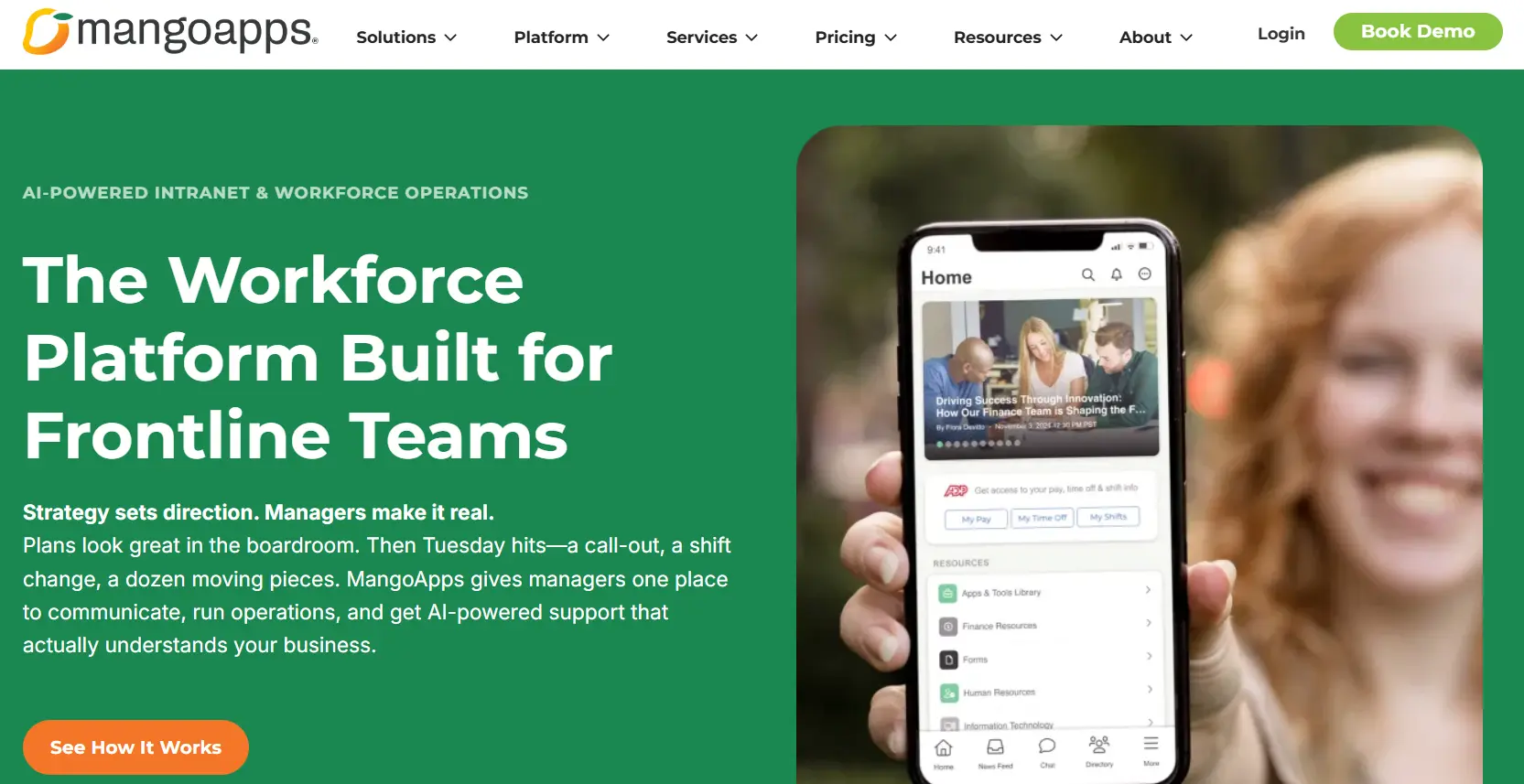
Positioned as a digital headquarters, Mango, also known as MangoApps, brings intranet, communication, and project management together in one platform. Rather than focusing on a single niche, it functions as a broad workspace for mid-market and enterprise organizations across healthcare, retail, and manufacturing.
Use case:
Organizations that want to replace fragmented internal tools with a single platform for communication, collaboration, and project execution.
Key features:
- Unified digital workspace: combines intranet content, collaboration, and project management into one connected environment.
- Workflow automation: supports customizable automation to streamline recurring business processes across departments.
- Project and work management: includes structured project tracking with team and department-level workspaces.
Pricing:
- Custom pricing: tailored to organization size, selected modules, and user volume.
- Sales-led quotes: pricing is provided after consulting with the Mango team.
Considerations:
- Enterprise scalability: proven to support organizations with hundreds of thousands of employees.
- Generalized depth: as a broad platform, it may lack the advanced, specialized controls found in dedicated project management systems.
13. Client Hub
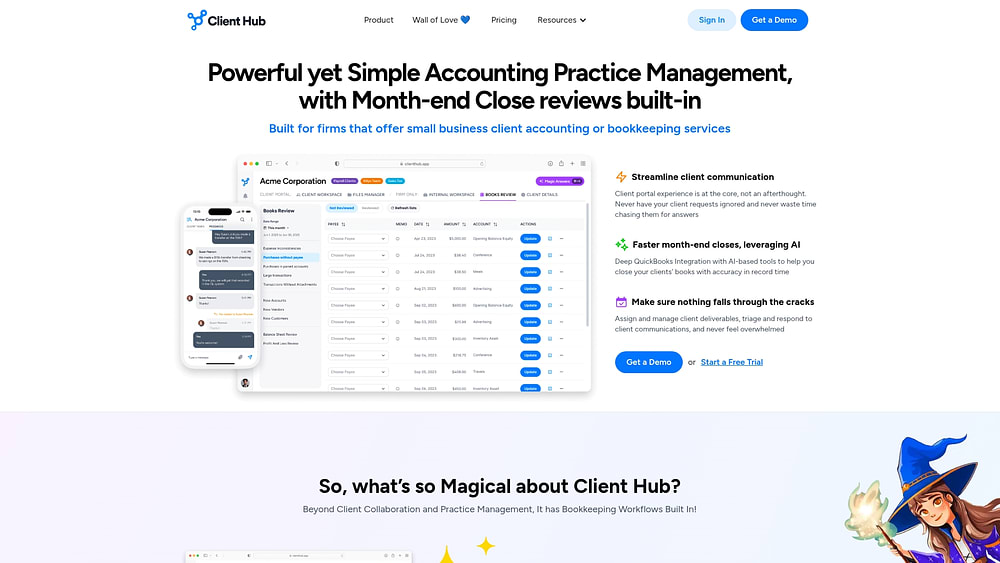
Client-focused accounting services firms often turn to Client Hub for its emphasis on relationships and collaboration. The platform blends workflow automation with a client-first portal experience, supported by deep integrations with QuickBooks Online and Xero.
Use case:
Accounting firms that prioritize client communication, document sharing, and engagement tracking within structured project workflows.
Key features:
- Jobs workflow system: organizes client deliverables into task checklists with recurring schedules, time tracking, and dashboard visibility.
- AI-powered workflow creation: uses Magic Workflow to generate tasks automatically, while AI supports email drafting, summaries, and knowledge retrieval.
- Bookkeeping integrations: provides two-way QuickBooks Online sync, Books Review for month-end close, and structured Xero workflows.
Pricing:
- Solopreneur: forty-nine dollars per user, per month billed annually.
- Practice manager: fifty-nine dollars per user, per month billed annually.
- Practice manager plus integrations: seventy-nine dollars per user, per month billed annually.
Monthly billing is available at higher rates, with pricing reaching up to ninety-nine dollars per user, per month. All plans include unlimited clients, unlimited storage, and access to AI features. Optional concierge onboarding ranges from one hundred ninety-nine to one thousand five hundred ninety-nine dollars.
Considerations:
- Workflow complexity limits: managing overlapping workflows with different deadlines can feel restrictive for some teams.
- Mobile experience gaps: advanced features such as file access and conversation management are more limited on mobile than desktop.
14. Ravetree
Ravetree provides professional services firms with structured oversight by combining project management, billing, and client management. The platform connects project delivery directly to financial outcomes, making it well suited for accounting practices that track profitability alongside execution.

Use case:
Professional services firms, including accounting practices, that need project-focused management with integrated time tracking, billing, and client portals.
Key features:
- Project management frameworks: supports Agile and Waterfall methodologies with Gantt charts, Kanban boards, and task dependencies.
- Financial tracking: includes time tracking, expense management, automated invoicing, and retainer handling.
- Client collaboration: offers client portals with unlimited access for approvals, communication, and file sharing.
Pricing:
- Monthly: thirty-nine dollars per user, per month billed monthly.
- Quarterly: thirty-four dollars per user, per month billed quarterly, reflecting thirteen percent savings.
- Annual: twenty-nine dollars per user, per month billed annually, reflecting twenty-six percent savings.
All plans include unlimited projects, onboarding, training, and support at no additional cost.
Considerations:
- Mobile limitations: the absence of a robust mobile app may affect teams that work away from desks.
- Integration breadth: the ecosystem is smaller than larger platforms, with some integrations still listed as upcoming.
15. Wrike
Wrike is designed for organizations that need enterprise-grade control and deep customization. The platform supports complex, multi-department workflows and includes advanced security and resource planning capabilities suited for regulated environments.

Use case:
Large accounting firms with one hundred or more employees that require scalable project management, advanced security controls, and flexible workflow design for audits and client delivery.
Key features:
- Custom workflow modeling: uses custom item types, cross-tagging, and Blueprints to mirror accounting and audit processes.
- Proofing and approvals: supports reviews across more than thirty file formats, including built-in HTML proofing.
- Enterprise security: includes SOC two Type two compliance, ISO certifications, customer-managed encryption keys, and regional data residency options.
Pricing:
- Free: zero dollars per month for basic work tracking and core views.
- Team: ten dollars per user, per month for two to fifteen users, including unlimited projects and fifty automation actions.
- Business: twenty-five dollars per user, per month for five to two hundred users, including Blueprints, AI features, and two hundred automation actions.
- Enterprise: custom pricing for SAML SSO, advanced permissions, and one thousand automation actions.
- Pinnacle: custom pricing for advanced BI, budgeting, locked spaces, and one thousand five hundred automation actions.
Add-ons are available for integrations, two-way sync, and collaborative whiteboarding.
Considerations:
- Tier-based access: advanced features such as locked spaces and BI are restricted to higher plans, increasing total cost.
- Automation caps: monthly automation limits may constrain highly automated accounting workflows without plan upgrades.

“monday.com has been a life-changer. It gives us transparency, accountability, and a centralized place to manage projects across the globe".
Kendra Seier | Project Manager
“monday.com is the link that holds our business together — connecting our support office and stores with the visibility to move fast, stay consistent, and understand the impact on revenue.”
Duncan McHugh | Chief Operations OfficerHow to choose project management software for your accounting firm
Selecting the right project management software is a strategic decision that shapes how your firm operates and grows, not simply a technical upgrade. The platform you choose influences whether work moves smoothly or becomes constrained by bottlenecks. A thoughtful selection starts with a clear understanding of current workflows, future objectives, and how the right system can actively support long-term success.
A strong foundation comes from aligning technology with strategy. When software reflects how your firm actually works, it becomes an enabler rather than an obstacle. This approach ensures the platform supports efficiency today while remaining flexible enough to adapt as priorities evolve.
Step 1: assess your firm’s workflow complexity
Begin by evaluating how complex your day-to-day operations truly are. Some firms rely on predictable, repeatable processes, while others manage layered engagements that require coordination across teams and approval stages. Understanding this difference helps narrow the field to platforms that fit your reality.
The capability of a platform should align with operational needs. To determine the right level of sophistication, review how work flows across your firm and where friction appears.
- Simple workflows: standard tax returns or recurring bookkeeping processes with defined steps and minimal variation.
- Complex workflows: multi-phase audits or advisory engagements that require cross-functional collaboration, dependencies, and structured approvals.
Growth adds another layer of consideration. As new services are introduced or larger clients come onboard, workflows often become more interconnected. When teams rely heavily on manual coordination or struggle to track ownership, it usually signals that existing systems no longer scale effectively.
Step 2: evaluate integration requirements
Project management software should not operate in isolation. It works best when it connects accounting, billing, document management, and financial systems into a single digital workspace. Start by mapping your existing technology stack and identifying where information transfer slows work down.
Focus on the areas where manual data entry consumes the most time. Automating these high-frequency exchanges reduces errors and frees teams to focus on client work. Platforms such as monday.com support real-time synchronization, helping teams maintain accurate data without repeated updates.
It is also important to look beyond surface-level integrations. Confirm whether connections are bidirectional and update automatically across systems. True synchronization creates a reliable source of truth that supports reporting, planning, and confident decision-making.
Step 3: consider scalability and growth plans
Long-term flexibility is critical when selecting a platform. Whether expansion plans include new locations, additional service lines, or larger teams, software must adapt without forcing a complete rebuild.
Consider how the platform performs as the firm grows from ten people to fifty or more. Limitations around permissions, reporting, or customization can quickly become barriers. A scalable solution allows firms to grow within the same system while maintaining structure and visibility.
Pricing models also influence sustainability. Per-user pricing that increases sharply with each hire can restrict growth, while tiered models provide room to expand without unexpected cost pressure.
Step 4: calculate total cost of ownership
The initial subscription fee rarely reflects the full investment. Total cost of ownership includes implementation, training, configuration, and ongoing maintenance. Data migration and process customization can significantly affect overall cost.
Another factor is the impact on productivity during adoption. Intuitive platforms reduce training time and help teams return to full capacity more quickly. Solutions like monday.com are designed to minimize disruption, enabling faster onboarding and earlier value realization.
Return on investment should guide the final decision. Evaluate gains such as:
- Automated workflows: hours saved each week through reduced manual coordination.
- Error reduction: fewer mistakes that lower rework and review time.
- Faster delivery: improved turnaround that increases overall billable capacity.
When these gains are measured together, many firms recover their investment within a year through operational improvements alone.
Step 5: review security and compliance features
Security underpins client trust in accounting firms. Any platform must safeguard sensitive financial information through encryption, role-based permissions, and detailed audit trails. Certifications such as SOC two and ISO twenty-seven thousand one provide important assurance.
Compliance requirements vary by firm, from regulatory retention rules to data residency standards. Platforms built with enterprise-grade security support these obligations and help firms respond confidently to client security reviews. monday.com includes SOC two Type two certification and granular access controls to meet these expectations.
Try monday.comClient scrutiny is increasing, especially among larger organizations. Being able to provide clear documentation and compliance reports is often essential. Without these safeguards in place, software limitations can become a barrier to winning and retaining enterprise clients.
7 ways project management software transforms accounting operations
Accounting firms face a choice: continue managing scattered spreadsheets and manual workflows, or adopt a platform that transforms operational drag into strategic advantage. This shift is about more than project tracking — it establishes a foundation for growth and efficiency.
Centralizing work creates compounding benefits. Teams spend less time on administrative tasks and more time on advisory services. Increased revenue then funds improved operations, helping firms attract top talent and larger clients.
1. Connect systems to stop manual data entry
Data entry errors consume time and create billing mistakes that reduce profitability. Every hour spent copying time entries or client information between systems generates no value. These hidden costs accumulate rapidly.
Integrated platforms automatically sync data. When a team member logs time, it flows directly into billing systems with correct rates and codes. Updates appear everywhere at once — eliminating manual entry.
Teams streamline project execution by connecting accounting software, time trackers, and document management into one unified environment. This integration recovers significant billable hours across the firm, allowing team members to focus on high-value work.
2. See real-time project profitability, not just historical reports
Monthly reports reflect past performance. By the time budget overruns are identified, the project may already be losing money. Delayed insights prevent timely action.
Live visibility into project finances allows managers to respond immediately. When a project reaches eighty percent of its budget with only sixty percent of work completed, resource allocation or client discussions can start promptly.
Modern platforms like monday.com provide customizable dashboards that display profitability across all clients. Partners can make strategic decisions in real time, protecting margins and ensuring project success.
3. Automate client updates for a premium experience
Inconsistent updates frustrate clients and waste team time. Status reports and document requests can slip through the cracks, undermining the client experience.
Automation triggers updates at project milestones, ensuring each client receives professional communication on time. For example, when a tax return enters the review stage, an automated update notifies the client.
Firms leverage no-code automations to handle recurring communications. This approach converts a manual task into a seamless service, boosting efficiency and client satisfaction simultaneously.
4. Balance workloads and prevent team burnout
Visibility is critical for maintaining balance. Without a clear view of capacity, top performers risk overload while others remain underutilized. This imbalance drives burnout, turnover, and inconsistent work quality.
Central platforms provide transparency into assignments and available capacity. Managers can identify approaching overload and reassign work before it becomes a problem, ensuring the right team member handles the right project.
Resource management views show workload distribution at a glance. Managers can adjust assignments with simple drag-and-drop actions, improving team well-being and productivity.
5. Meet every deadline with smarter scheduling
Non-negotiable deadlines often encourage padding schedules with extra buffers. While safe, this reduces overall capacity and slows project delivery.
Intelligent scheduling creates realistic timelines by accounting for dependencies, resource availability, and priorities. Early completion of one task automatically advances subsequent work, pulling the delivery date forward.
Organizations gain alignment using dynamic scheduling tools. Platforms learn from past projects to recommend achievable timelines, helping teams deliver on time without compromising quality.
6. Scale your firm without scaling your overhead
Revenue growth typically requires hiring more administrative staff, which reduces margins. Scaling operations without proportional headcount increases efficiency and profitability.
Work OS platforms automate coordination and monitoring that previously required manual intervention. Routine communications, client onboarding, and status updates occur automatically, freeing the team for client-focused work.
Firms achieve operational leverage by centralizing routine processes. Teams handle more projects without additional staff, directly improving profitability while maintaining service quality.
7. Power your advisory services with a collaborative platform
Spreadsheets cannot support ongoing collaboration required for advisory work. Delivering higher-value services requires a platform built for continuous partnership.
A shared digital workspace serves as the foundation for advisory services. Real-time dashboards, collaborative workspaces, and proactive recommendations demonstrate strategic value to clients.
Modern platforms allow firms to elevate their advisory practice. Client-facing dashboards and shared environments foster deeper collaboration, transitioning firms from compliance providers to trusted strategic advisors and driving long-term client loyalty.
How monday.com transforms accounting operations
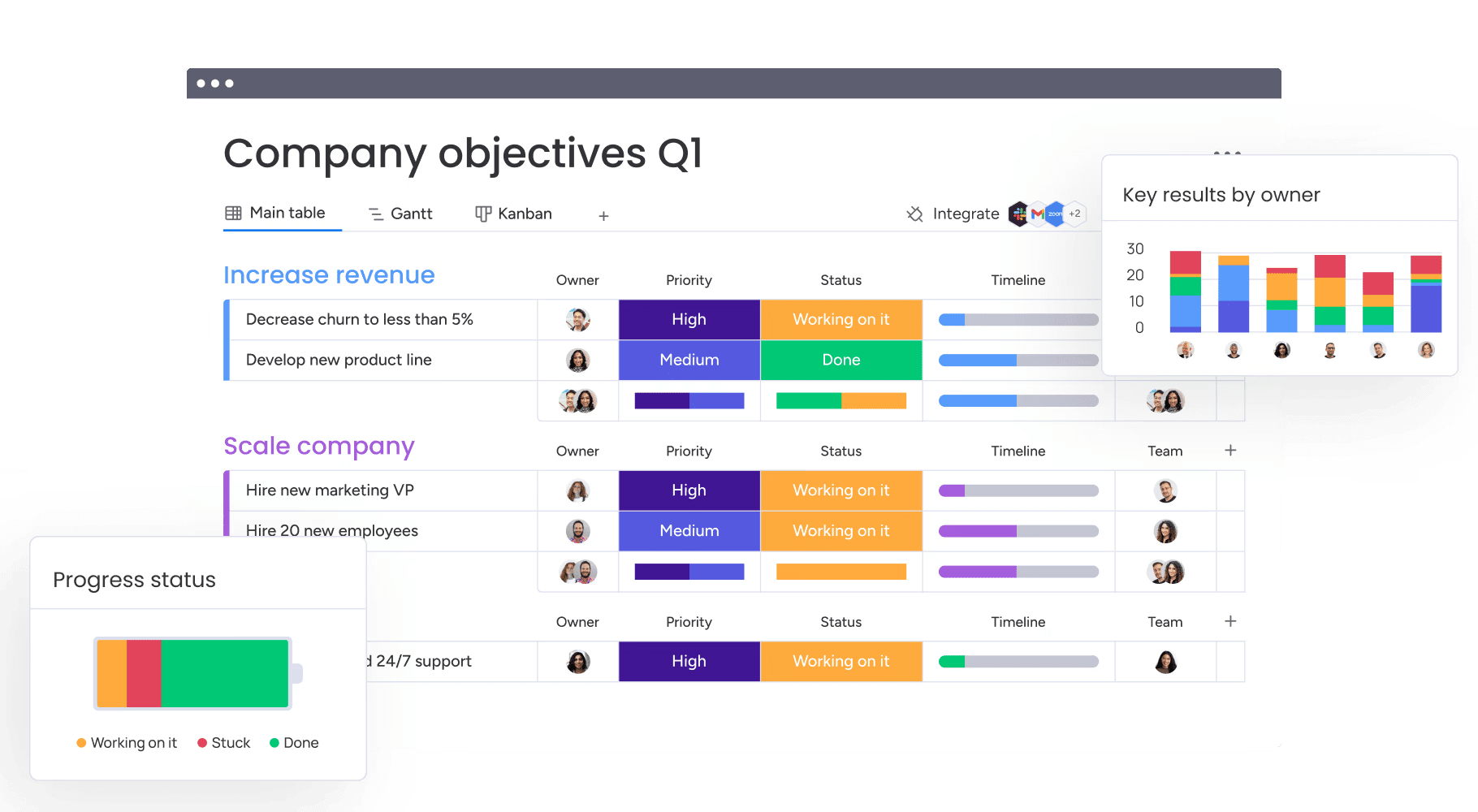
Accounting firms manage a complex mix of client work and internal operations. Many platforms require a choice: focus on accounting workflows or run the entire business. Firms should not have to compromise. monday.com unifies every aspect of a firm, from client projects to HR and marketing, on a single, scalable platform.
AI-powered risk detection across your portfolio
Manually monitoring hundreds of projects is impractical. Partners cannot oversee every engagement for budget overruns, timeline delays, or resource bottlenecks. By the time issues appear, client impact may already occur.
Portfolio Risk Insights on monday.com uses AI to identify patterns that signal potential risks. The system monitors project health across timelines, budgets, and resourcing, highlighting at-risk projects for immediate attention. This provides managers with foresight to act proactively rather than reactively.
The Project Analyzer offers deeper insights by comparing a project’s performance against historical data from similar engagements. For example, if a tax return takes longer than expected, the system flags the variance and suggests causes such as scope creep or resource gaps.
Cross-functional workflows beyond accounting
Disconnected departments hinder growth. Accounting firms involve more than client work — marketing, HR, and sales also require alignment. Using separate platforms creates information silos and fragmented business visibility.
With monday.com, firms run everything in one place. Marketing teams can track campaigns that feed directly into the client project pipeline, providing leaders a clear view from lead to delivery. HR teams manage recruiting and onboarding workflows that integrate with project forecasts, supporting strategic hiring decisions.
Partners gain a unified dashboard of firm-wide performance. They can make informed decisions based on complete operational data, linking every department’s effort to overall business results.
Customizable automation without code
Workflow customization should not require a computer science background. Accounting processes are often repetitive, yet each firm operates uniquely. Pre-built automation can force firms to adjust their processes to the software.
The no-code automation builder on monday.com allows teams to design workflows tailored to their needs. The visual interface enables anyone to define triggers, conditions, and actions for client onboarding, monthly closes, or quality control.
Teams can identify and resolve inefficiencies independently, without waiting for IT. The platform evolves alongside the firm, adapting as team members discover new opportunities to improve workflow efficiency.
Enterprise security built for compliance
Financial data requires strict protection. Weak security introduces liability, regulatory risk, and reputational damage.
monday.com provides enterprise-grade security with SOC 2 Type II certification. Teams benefit from robust data encryption, detailed audit trails, and granular access controls that safeguard information without limiting collaboration.
Firms can meet stringent client security requirements, from public companies to financial institutions. Compliance features such as data retention policies and comprehensive audit trails ensure that every interaction with client data is fully documented.
Beyond encryption and access controls, monday.com maintains a native activity log and version history for every board and item, timestamping changes and attributing them to the user who made them. This gives firms a built-in record of status changes and updates without needing a separate compliance tool layered on top.
| Capability | monday work management | BigTime | Karbon | Asana |
|---|---|---|---|---|
| AI-powered risk detection | Portfolio Risk Insights and Project Analyzer continuously monitor all projects, identifying patterns that indicate potential delays or budget overruns before they impact deliverables | Limited predictive capabilities; primarily reactive reporting on project status and budget consumption | Basic workflow monitoring with manual intervention required for risk identification | No AI-powered risk detection; relies on manual project monitoring |
| Cross-functional workflows | Unified platform manages client projects, marketing campaigns, HR processes, and business development within integrated workflows | Focused primarily on client project management; limited capabilities for non-billable internal operations | Designed specifically for accounting workflows; limited flexibility for broader business operations | General project management works across functions but lacks accounting-specific features |
| Integration ecosystem | Extensive pre-built integrations with major accounting platforms, plus open API for custom integrations enabling real-time bidirectional data flow | Strong integrations with accounting and billing systems; more limited connections to broader business tools | Good accounting software integrations; more limited ecosystem for non-accounting tools | Broad integration marketplace but requires configuration for accounting-specific workflows |
| Scalability | Scales seamlessly from small practices to enterprise firms without platform changes; consistent experience regardless of firm size | Scales well for professional services firms; may require customization as complexity increases | Designed for small to mid-size accounting firms; may face limitations at enterprise scale | Scales across organization sizes but requires extensive configuration for complex accounting workflows |
| Security & compliance | SOC 2 Type II certified with comprehensive audit trails, granular access controls, and data encryption meeting financial services requirements | Strong security appropriate for professional services; standard compliance certifications | Good security for accounting firm needs; standard compliance features | Enterprise security available; may require higher-tier plans for advanced compliance features |
Meeting strict client security standards is critical for winning and retaining high-value engagements. Teams can respond to due diligence requests efficiently, demonstrating compliance and building trust.

Elevate your firm’s potential
Adopting a capable project management platform transforms operations beyond simple process organization. Automating routine tasks, integrating financial data, and gaining real-time visibility into profitability shift firms from reactive problem-solving to proactive growth.
Platforms like monday.com support complex client engagements while unifying the entire organization. Teams collaborate seamlessly and execute precisely, creating capacity to deliver higher-value advisory services that drive long-term success.
Evaluate current workflows to identify manual processes that slow productivity. The right platform not only addresses present challenges but also scales with the firm as it grows and evolves.
Try monday.comFrequently asked questions
What is the best project management software for small accounting firms?
Small firms benefit most from software that scales alongside them. Platforms like monday.com provide customizable workflows that start simple and grow into enterprise-level operations.
Can project management software integrate with my existing accounting tools?
Yes. Leading platforms offer real-time sync with QuickBooks, Xero, and Sage, ensuring seamless information flow without manual entry.
How much does project management software for accountants typically cost?
Pricing generally ranges from $10 to $60 per user per month. The final cost depends on firm size and features required, including advanced security and compliance tools.
What features should accountants look for in project management software?
Prioritize tools that improve efficiency, such as integrated time tracking, client portals, and workflow automation. Real-time budget tracking and seamless integration with accounting software are also essential.
How long does it take to implement project management software in an accounting firm?
Implementation typically spans two to eight weeks. Duration depends on firm size, workflow complexity, and required integrations.
Do accounting project management platforms support tax deadline tracking?
Yes. Most platforms manage tax deadlines with automation to handle complex schedules, triggering task sequences and accounting for dependencies.
How does monday.com specifically help accounting firms manage client projects?
By providing AI-powered risk insights, automating recurring tasks, and offering real-time profitability dashboards, monday.com connects client work with internal operations, creating a single source of truth for the firm.

 Get started