

Sales teams need a CRM they can adjust on the fly. When the pipeline shifts, a handoff gets messy, or reporting needs a fresh view by Friday, a no-code CRM platform can deliver control without the IT bottleneck, so every update happens in minutes instead of weeks.
This guide covers what a no-code CRM is, how it works, and 10 platforms built for real flexibility. You’ll learn which features matter most, where these platforms deliver the biggest wins, and how to choose one that fits the way your team actually sells.
What is a no-code CRM?
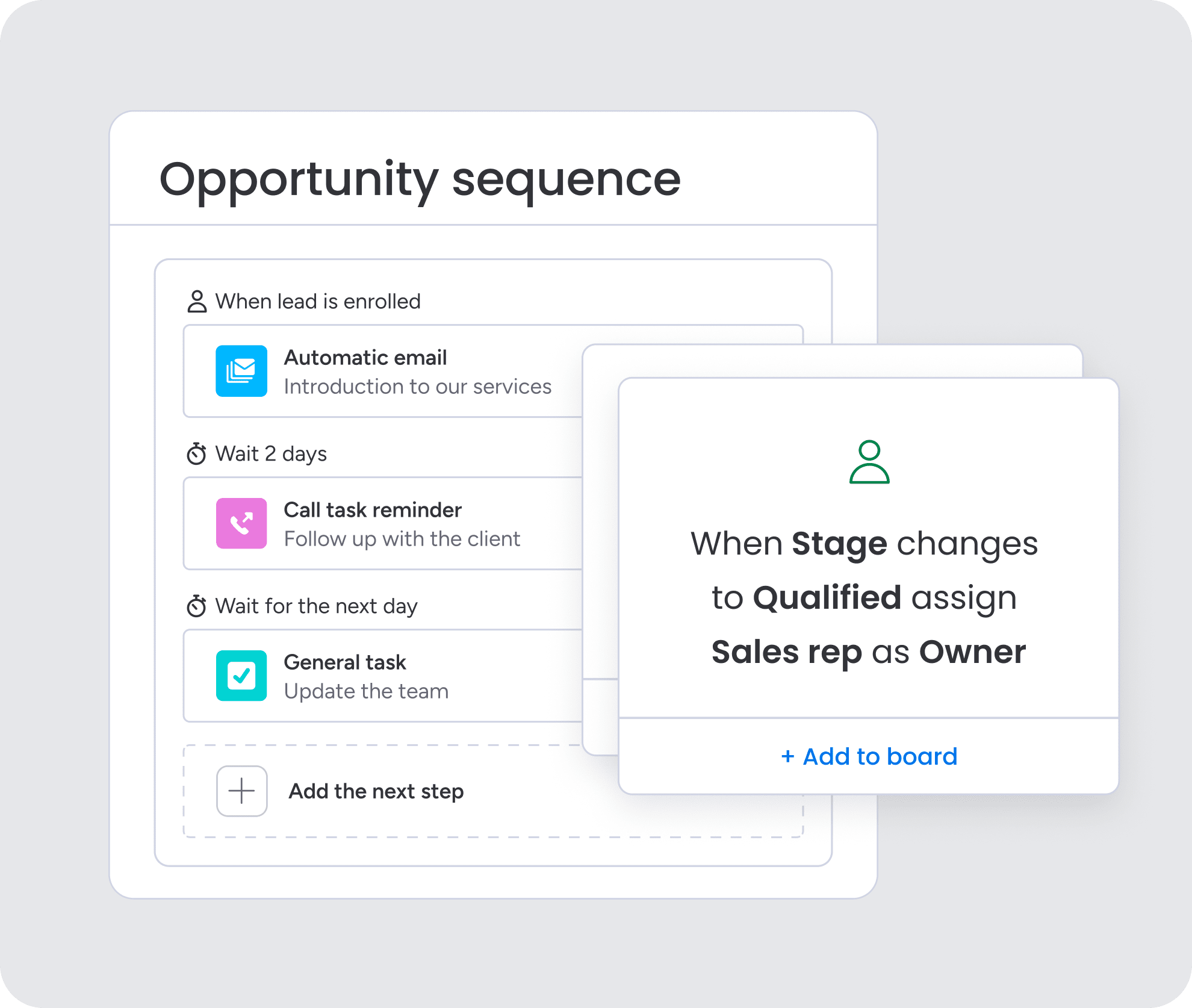
Most CRMs promise flexibility, but the moment you need to change something you have to pull in a developer. A no-code CRM is different, because your team builds, customizes, and automates workflows themselves. The people who run your sales process get to shape the system around how they actually work without doing any actual coding.
Here’s what that means in practice:
- Fast adaptation: Pipeline changes happen in minutes rather than weeks.
- Direct control: Sales leaders and RevOps teams manage fields, workflows, and integrations without IT tickets.
- More selling time: Your team focuses on closing deals instead of fighting the software.
How a no-code CRM works
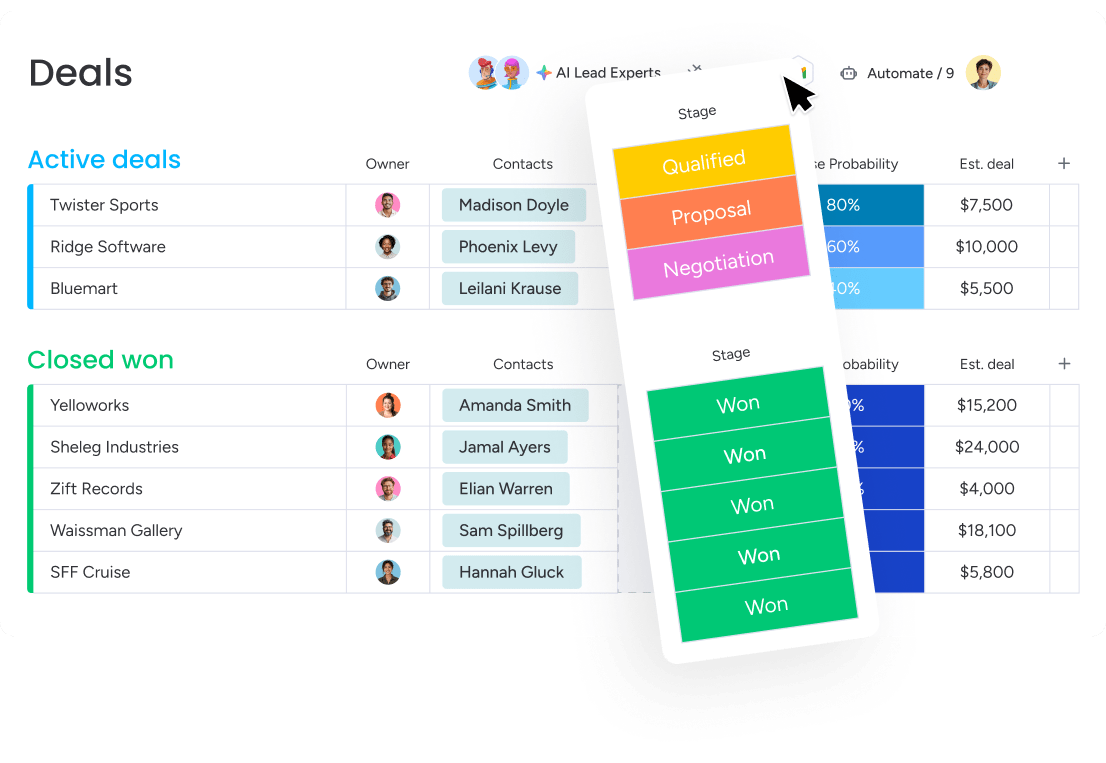
Vendors love to claim they’re no-code, but the truth shows up the moment your sales process changes. In a true no-code CRM, a manager can add a new deal stage in minutes instead of tossing the request into an IT queue. Here’s what that looks like in practice:
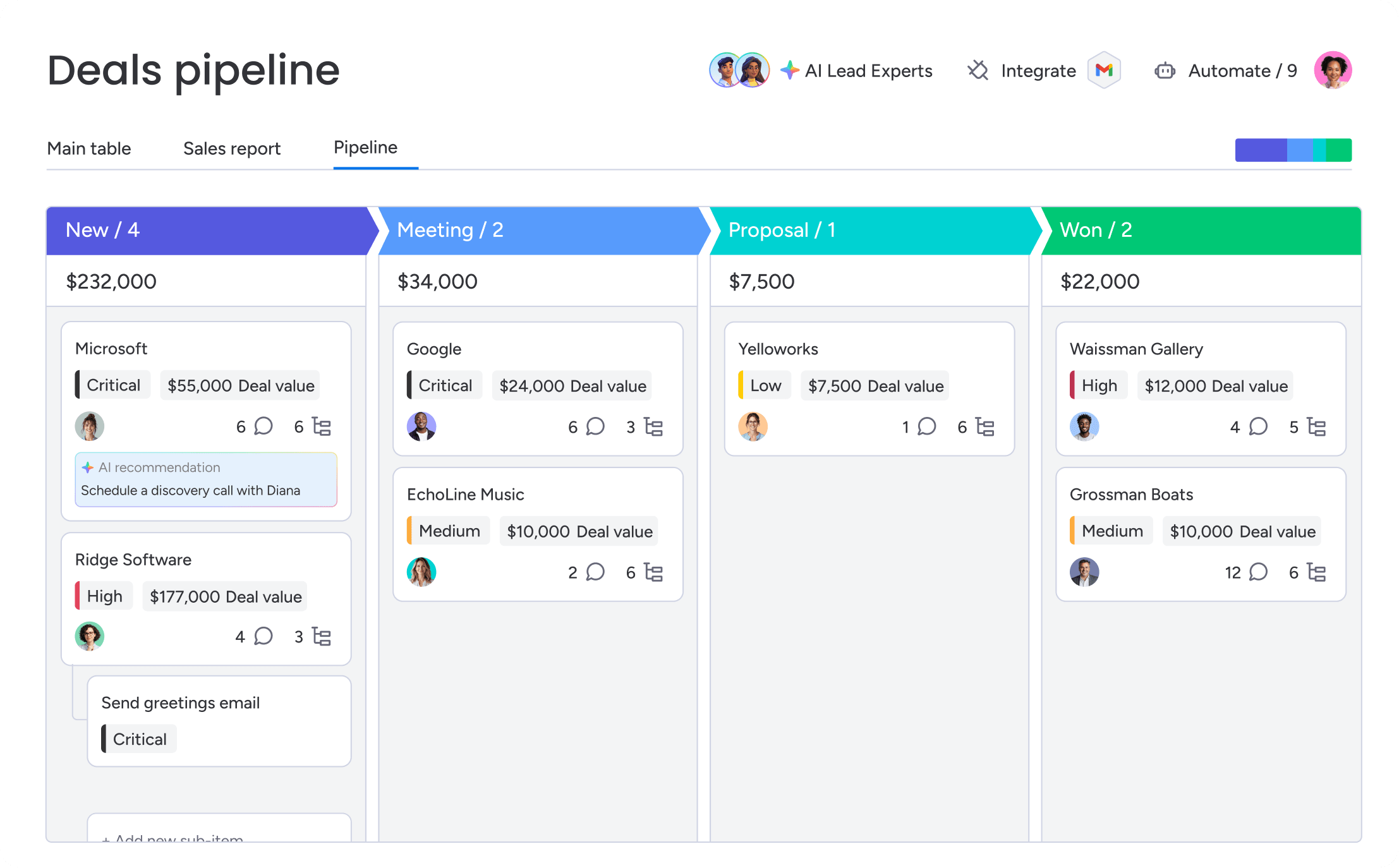
- Visual pipeline mapping: Add deal stages, create custom fields, or reorder workflows in a few clicks. Switch between Kanban, list, and chart views. Use conditional logic to show reps only what’s relevant at each stage.
- Drag-and-drop automation: Build trigger-based workflows using simple menus, not code editors. Auto-assign deals, send follow-up emails, and route leads without writing formulas.
- Native integrations: Connect Gmail, Slack, LinkedIn, and other tools with a login and a few clicks. No developer required to get started.
The role of AI in a no-code CRM
The best no-code CRMs don’t just eliminate technical barriers — they also eliminate busywork. When AI is embedded directly into the platform, it can autofill fields from emails, summarize deal activity, qualify leads, surface insights, and draft follow-ups automatically.
The result is less manual data entry, cleaner CRM records, and more time for sales teams to focus on customer conversations. As AI becomes a standard CRM capability, it’s worth evaluating whether a platform’s AI can actually automate work and improve decision-making, not just generate content.
No-code CRM vs. low-code CRM
No-code and low-code sound neatly separated in vendor messaging, but in practice, the line is much less clean. What matters isn’t the label. It’s how much your team can actually build and maintain without technical help. For revenue teams, the real comparison comes down to speed, control, and who has to do the work.
| Dimension | No-code CRM | Low-code CRM |
|---|---|---|
| Who configures it | Sales manager, RevOps | RevOps, IT, or developer |
| Setup time | Hours to days | Days to weeks |
| Customization depth | High for standard sales cycles | Higher for unique or complex cases |
| Maintenance | Self-service | Requires technical oversight |
| Best for | Teams without dedicated IT | Teams with some technical resources |
10 no-code CRM platforms for revenue teams
A “no-code” CRM that still sends you back to IT isn’t no-code at all. The real question is straightforward: Can a sales manager build a pipeline and generate a forecast without technical help?
We’ve collected 10 platforms to see how far their no-code capabilities actually go. Some are intuitive and drag-and-drop friendly. Others stay simple only until you move beyond the basics, at which point technical help starts creeping back in. Ultimately, the right CRM is the one your people can actually use, change, and own.
| Platform | Use case | Notable feature | No-code experience | Starting price* |
|---|---|---|---|---|
| monday CRM | Full revenue cycle management | Visual pipeline builder with multiple board views | Full self-service | See pricing page |
| Airtable | Custom CRM built on relational databases | Role-based custom interfaces | Requires setup time | $20/user/month |
| Zoho CRM | Feature-rich automation at lower cost | Blueprint process builder | Some features tier-locked | See pricing page |
| HubSpot | CRM and inbound marketing | Visual workflow automation | Advanced features require Pro+ | $25/user/month |
| Insightly | Deal-to-project conversion | AppConnect integration builder | Automation on Pro+ | $29/user/month |
| Creatio | Process-first enterprise CRM | Visual BPMN process designer | Complex for non-ops teams | ~$40/user/month |
| Pipedrive | Straightforward pipeline tracking | Visual Kanban pipeline | Governance features tier-locked | $14/user/month |
| Salesforce CRM | Enterprise-grade customization | Flow Builder | Often requires admin support | $25/user/month |
| Stacker | Spreadsheet-to-CRM interface | AI-assisted app builder | Not a purpose-built CRM | $49/month |
| noCRM | Lightweight lead tracking | Visual pipeline and prospecting lists | Automations limited to higher tiers | $13/user/month |
*Pricing reflects lowest paid tier as of publication. Annual billing may offer discounts.
1. monday CRM
monday CRM gives revenue teams a fully configurable platform built on the monday.com Work OS. Set it up, adapt it, and scale it, all with no code required. It supports the full customer journey — from first contact to closed-won and beyond. Sales, account management, and post-sales teams stay connected without duct-taping systems together.
Teams use monday CRM to bring lead capture, outreach, deal execution, and handoffs into one place. Everything stays flexible enough to adjust as the sales motion changes.

Use case: Revenue teams managing complex or fast-moving sales cycles that need a no-code setup they can control themselves with no IT dependency required
Key features
- Visual pipeline builder: Drag-and-drop deal stages and customizable columns let you reshape your sales process as it evolves. Teams can also choose from multiple board views, including Kanban, list, timeline, and chart, so reps and leaders get the perspective that fits how they work.
- No-code workflow automation: Build trigger-based automations using a visual builder to handle routine follow-ups, notifications, and deal updates automatically — no technical help required.
- Custom fields and forms: Add, modify, and organize custom fields to capture the exact data your sales process needs, then build intake forms that feed directly into your pipeline.
Pricing
- Standard: Pricing scales by seat count — visit the monday CRM pricing page for current rates.
- Pro: Includes unlimited contacts and deals, 75 columns per board, and 25,000 custom automations per month.
- Enterprise: Removes most caps and adds governance, security features, and HIPAA controls.
- Plans start at a minimum of 3 seats. AI features are usage-based with credits available as needed.
Why it stands out
- Fast to adapt when your process changes: Sales leaders can modify pipelines, fields, and dashboards on the fly. The CRM stays aligned with the quarter instead of falling behind it.
- Built for the whole revenue cycle: monday CRM handles lead management, account and contact management, deal management, forecasting, analytics, and post-sales workflows, so momentum doesn’t stop at signature.
- Visibility you can use in real meetings: Custom dashboards and sales widgets give leaders a direct view into pipeline status, forecasting, quota attainment, and team performance without rebuilding reports every time someone asks, “Can we slice it by rep and month?”

“With monday CRM, we’re finally able to adapt the platform to our needs — not the other way around. It gives us the flexibility to work smarter, cut costs, save time, and scale with confidence.”
Samuel Lobao | Contract Administrator & Special Projects, Strategix
“Now we have a lot less data, but it’s quality data. That change allows us to use AI confidently, without second-guessing the outputs.”
Elizabeth Gerbel | CEO
“Without monday CRM, we’d be chasing updates and fixing errors. Now we’re focused on growing the program — not just keeping up with it."
Quentin Williams | Head of Dropship, Freedom Furniture
“There’s probably about a 70% increase in efficiency in regards to the admin tasks that were removed and automated, which is a huge win for us.“
Kyle Dorman | Department Manager - Operations, Ray White
"monday CRM helps us make sure the right people have immediate visibility into the information they need so we're not wasting time."
Luca Pope | Global Client Solutions Manager at Black Mountain
“In a couple of weeks, all of the team members were using monday CRM fully. The automations and the many integrations, make monday CRM the best CRM in the market right now.”
Nuno Godinho | CIO at Velv
“monday.com provides developmental flexibility, operational efficiency, and data transparency — all in one place. We became a company that moved from chasing data to leading with it.”
Hyunghan Lee | Team Lead, Sandbox Network
"monday.com brought every part of our business into one connected space. The harmony between work management and CRM has become our operating system — giving us the clarity and confidence to scale.”
Jennifer Chinburg | Executive Vice President of Corporate Development & Brand, Chinburg Properties
“We just weren’t getting value from our old CRM. With monday.com, it's a thousand times better. Our sales teams are more informed, more consistent, and far more connected."
James Arnold | Chief Operating Officer, Cenversa2. Airtable
Airtable is a relational database at heart, but it can be shaped into a highly customizable CRM for teams that want flexibility over convention. It appeals to cross-functional groups (sales, operations, and marketing among them) that need a system tailored to the way they actually work. The tradeoff is setup time, but teams willing to invest it can create a data structure far more adaptable than most fixed CRM platforms allow.

Use case: Teams that prefer building a CRM around their own sales motion instead of adapting their process to a prebuilt structure
Key features
- Multiple pipeline views: Manage deals across Grid, Kanban, Timeline, Calendar, and Gallery views. Each team member gets a format that matches how they work best.
- Role-based custom interfaces: Create distinct CRM screens for reps, managers, and executives with a drag-and-drop interface builder. Permission controls keep access organized.
- AI-assisted sales workflows: Surface account insights, generate meeting summaries, flag deal risks, and forecast pipeline without leaving the platform.
Pricing
- Free: Available with limitations on records and features
- Team: $20/user/month (billed annually)
- Business: $45/user/month (billed annually)
- Enterprise Scale: Custom pricing via sales
- Read-only collaborators are free on Team and Business plans
- Portals (for external collaboration) is a paid add-on and not included in standard plans
- Airtable AI is billed separately
Considerations
- Teams without a defined data model may spend significant time configuring their schema, interfaces, and automations before the CRM is fully functional. It requires more setup than a purpose-built CRM.
- Automation limits (e.g., “Find records” defaults to 1,000 records per step) and plan-tiered sync restrictions can create friction for teams managing high-volume or complex sales operations.
3. Zoho CRM
Zoho CRM delivers a broad no-code toolkit in a platform priced well below many enterprise competitors. That balance helps explain why businesses across 180+ countries use it. It serves everyone from startups to enterprises, with extra appeal for teams already working inside the Zoho ecosystem. From interface customization to process enforcement, the platform gives non-technical teams meaningful control over how their CRM looks and behaves.

Use case: Feature-focused teams that want robust no-code automation and UI customization without paying enterprise-tier prices
Key features
- Blueprint process builder: Visually map and enforce sales processes through a drag-and-drop state machine (no code required). Reps follow the right steps on every deal.
- Canvas design studio: Customize record pages, list views, and portal layouts with a drag-and-drop editor. Teams get role-specific interfaces that reduce clicks and support adoption.
- Kiosk Studio: Create guided, multi-step flows embedded directly inside CRM pages and portals, pulling data across modules without touching code.
Pricing
- Free: Up to 3 users
- Standard, Professional, Enterprise, Ultimate: Paid tiers with increasing feature access; annual billing saves up to 34%
- CRM Plus (CX bundle): $57/user/month billed annually, or $69/user/month billed monthly
- Additional charges may apply for extended email send limits, extra storage, and premium support plans
Considerations
- The interface is functional but dated compared to newer CRM platforms, which can slow adoption for teams new to CRM.
- Advanced features like CommandCenter and certain AI capabilities are locked behind higher-tier editions, so the full no-code experience comes at a higher cost.
4. HubSpot
For SMBs that want CRM and marketing automation under one roof, HubSpot is often the first platform that comes to mind. It gives growing teams a single place to manage contacts, deals, and inbound campaigns, while visual builders and ready-made templates make it approachable from the start. Its free tier is unusually useful, and for teams generating leads through inbound channels, the handoff from marketing to sales is a real advantage.

Use case: SMBs and scaling teams that want CRM and inbound marketing managed together, without needing developer support to get started
Key features
- Visual workflow automation: Build automated sequences across marketing, sales, and service using a drag-and-drop editor, with options to start from scratch, use AI, or choose from prebuilt templates.
- No-code chatbot and forms builder: Create chatbots, live chat flows, and lead capture forms without writing a single line of code — all submissions feed directly into the CRM.
- Smart Deal Progression: AI-powered suggestions for post-meeting follow-ups, next steps, and deal updates, embedded directly into daily CRM workflows.
Pricing
- Free tier: $0 — includes contact management, deal tracking, forms, chatbots, and email integration.
- Starter: Paid seats-based pricing; includes basic automation and core CRM features.
- Marketing Hub Professional: Starts at $890/month (includes 3 seats); mandatory onboarding fee of $3,000.
- Marketing Hub Enterprise: Starts at $3,600/month (includes 5 seats); mandatory onboarding fee of $7,000.
- Additional costs: AI features consume HubSpot credits; marketing contact tiers can increase spend as your list grows; Professional and Enterprise plans require paid onboarding.
Considerations
- Advanced automation and custom reporting are locked behind the Professional tier, while Custom Objects are restricted to Enterprise plans only. Teams on the free or Starter plan will hit feature limits as their needs grow.
- Teams with complex, highly customizable sales processes may find the CRM structure less adaptable compared to more flexible platforms built specifically around pipeline configuration.
5. Insightly
Insightly is designed to connect what happens before the sale with what happens after it. For mid-market teams in professional services, consulting, and agencies, that matters: the platform can turn won deals directly into projects, keeping sales and delivery connected without custom code. Its AppConnect builder adds drag-and-drop integration workflows, giving non-technical admins a way to automate across tools.

Use case: Service businesses that need CRM and project delivery to function as one continuous workflow rather than 2 disconnected systems
Key features
- Deal-to-project conversion: Automatically turns closed deals into trackable projects, so nothing gets lost between sales and delivery.
- No-code workflow automation: Create if-this-then-that automations for notifications, field updates, and follow-ups — available on Professional and Enterprise plans.
- AppConnect integration builder: Connect hundreds of apps using drag-and-drop recipes with built-in audit logs, error handling, and versioning.
Pricing
- Plus: $29/user/month (billed annually)
- Professional: $49/user/month (billed annually)
- Enterprise: $99/user/month (billed annually)
- Free trial: 14-day free trial available for the CRM
- Add-on note: AppConnect is priced separately, starting at $249/month for 25,000 tasks, and requires a one-time $3,000 technical setup fee
Considerations
- Workflow automation is locked behind the Professional tier and above, so teams on the entry-level Plus plan won’t have access to one of Insightly’s core no-code capabilities.
- AppConnect’s separate, task-metered pricing adds meaningful cost for integration-heavy teams, which can make total ownership more expensive than the base CRM price suggests.
6. Creatio
Some CRMs are built around contacts and deals. Creatio is built around process. On its composable, AI-native platform, CRM and business process management come together in a way that makes sense for midsize and enterprise organizations with structured, repeatable workflows. Teams that need conditional logic, multi-step processes, and cross-departmental handoffs will find far more depth here than in simpler pipeline-first tools.

Use case: Operations-minded revenue teams that need to design, automate, and govern detailed sales processes without writing a single line of code
Key features
- Visual BPMN process designer: Map multi-step sales workflows with conditional logic and automated handoffs between departments using a drag-and-drop interface.
- AI Command Center: Build, deploy, and manage AI agents across sales, marketing, and service — with bring-your-own LLM support and policy-based governance controls.
- Freedom UI and no-code app builder: Design custom data models, sections, and integrations visually through a canvas-style interface, without developer involvement.
Pricing
- CRM Plans: Pricing is quote-based, but guides suggest starting points around $40/user/month.
- Minimums: Expect a $10,000 minimum annual purchase and a standard 3-year contract.
- Add-ons: Mandatory support packages add 0% (AI), 10% (Business), or 20% (Premium) to your subscription cost. The Governance application is a separate add-on at $50/user/month.
Considerations
- Creatio’s process-first design adds real depth, but teams without a dedicated RevOps or operations function may find the platform more complex than their workflows require.
- Commercial terms — including the $10,000 annual minimum and 3-year default contract — may be a barrier for smaller teams or those looking for flexible, short-term commitments.
7. Pipedrive
Pipedrive keeps its focus narrow in a good way: it exists to help sales teams keep deals moving. Aimed at SMBs and sales-led organizations, the platform combines visual pipeline management with no-code automation that doesn’t require technical setup. For teams prioritizing quick adoption and a clean, activity-first workflow, that simplicity is the appeal.

Use case: SMB sales teams that want a straightforward no-code pipeline platform for tracking deals, logging activity, and automating follow-ups without leaning on IT
Key features
- Visual Kanban pipeline: Drag and drop deals across stages, track activity, and manage multiple pipelines — all configured without writing a single line of code.
- No-code workflow automation: Build trigger-based automations using pre-made templates to handle routine follow-ups, notifications, and deal updates automatically.
- LeadBooster add-on: Capture and qualify inbound leads through no-code web forms and customizable chatbot flows that route submissions directly to your pipeline.
Pricing
- Lite: $14/month per seat (billed annually)
- Growth: $39/month per seat (billed annually)
- Premium: $59/month per seat (billed annually)
- Ultimate: $79/month per seat (billed annually)
- Annual billing saves up to 42%
- Add-ons priced separately: LeadBooster from $32.50/month per company, Campaigns from $13.33/month, Projects from $6.67/month, Smart Docs from $32.50/month
- 14-day free trial available
Considerations
- Advanced data governance features — including required fields, pipeline-specific visibility, and formula fields — are only available on higher-tier plans, which limits flexibility on entry-level plans.
- Teams that need post-sales management, cross-functional workflows, or deep AI-powered insights will need to integrate additional platforms, as Pipedrive focuses primarily on pipeline tracking.
8. Salesforce CRM
Salesforce sits at the top of the global CRM market and is built for enterprises that need deep customization, extensive approval workflows, and a massive integration ecosystem capable of supporting serious scale. The tradeoff is obvious: Salesforce can do a lot, but getting that “no-code” power into daily use often takes a dedicated admin.

Use case: Large enterprises with dedicated CRM administrators who need extensive customization, multi-system integrations, and enterprise-grade compliance across revenue operations
Key features
- Flow Builder: a no-code automation builder that handles record-triggered, schedule-triggered, and screen flows — including AI-powered predictions as actions
- Lightning App Builder: drag-and-drop UI composition with Dynamic Forms for conditional field visibility and tailored page behavior
- Flow Orchestration: declaratively coordinates multi-user, multi-stage processes without writing a single line of code
Pricing
- Free Suite: $0/user/month (up to 2 users)
- Starter Suite: starting at $25/user/month
- Pro Suite: $100/user/month
- Enterprise: $175/user/month
- Unlimited: $350/user/month
- Agentforce 1 Sales: $550/user/month
- Add-ons such as MuleSoft connectors and advanced AI/data capabilities may increase total cost beyond the base subscription
Considerations
- The no-code promise has real limits — highly specialized logic or UI customizations often require Apex or Lightning Web Components, pulling teams into pro-code territory faster than expected.
- Teams without a dedicated Salesforce admin or implementation budget should factor in consulting fees and ongoing admin costs, which can significantly exceed the subscription price alone.
9. Stacker
If your customer data already lives in spreadsheets, Stacker offers a faster path to structure. It layers an app-style CRM interface on top of Google Sheets or Airtable, adding permissions, custom forms, and filtered views without requiring a rebuild. For SMB operations teams and professional services firms trying to make their data feel more like software, that can be a practical shortcut.

Use case: Operations teams already managing customer data in spreadsheets and looking to add structure, access controls, and a polished interface without starting over
Key features
- AI-assisted app builder: Generate a CRM-style app from a plain-English description in 30–60 seconds, then refine it through conversational prompts.
- Granular permissions: Set field- and row-level access controls so internal teams and external clients only see the data relevant to them.
- Data sync with 20+ connectors: Connect to sources like Airtable, Salesforce, HubSpot, and Pipedrive — with 2-way sync available for select systems.
Pricing
- Personal: $9/month — 25 AI credits, up to 20 customers, Stacker branding included
- Starter: $49/month — 100 AI credits, up to 100 customers, custom branding, data integrations
- Plus: $99/month — 250 AI credits, up to 200 customers, custom domain, on-demand credit top-ups
- Pro: $199/month — 1,000 AI credits, up to 1,000 customers, full white-label, backup/restore, priority support
- Business: Custom pricing — SSO, audit trail, bring-your-own LLM, dedicated customer success manager
- Discount: Save 20%+ with annual billing; 30-day money-back guarantee on paid plans
Considerations
- Built-in workflow automation is listed as “coming soon,” so teams that need native CRM automations today will rely on Zapier or the API to fill that gap.
- Stacker is not a purpose-built CRM — teams that need native email tracking, pipeline forecasting, or AI-powered sales features will likely outgrow it as their sales operations scale.
10. noCRM
noCRM takes a deliberately stripped-down approach: lead cards, next actions, and a visual pipeline built to keep reps moving. It’s made for small sales teams and solo reps that want lead tracking without the weight of a full CRM, sacrificing breadth in favor of speed. Most of its no-code flexibility comes through Zapier and Make, while native automations are reserved for the top-tier Dream plan.

Use case: Outbound-focused small teams that need a fast, lightweight lead tracker with minimal setup and no technical resources required
Key features
- Internal automations via The Butler (Dream plan): Event-driven, rule-based automations handle common sales actions — assigning leads, setting tags, sending predefined emails — without touching a line of code.
- 3,000+ no-code integrations (Expert plan & up): Connect noCRM to your existing sales stack through Zapier and Make, extending functionality across apps without developer involvement.
- Visual pipeline and prospecting lists: Manage unqualified contacts in spreadsheet-style views and convert them into leads in a single click, keeping reps focused on the next action.
Pricing
- Starter: $13/user per month (billed annually)
- Expert: $26/user per month (billed annually)
- Dream: $39/user per month (billed annually)
- Annual billing saves up to 40% compared to monthly plans.
- Advanced automations, WhatsApp sync, and Call Campaigns are available on the Dream plan only.
Considerations
- Internal automations handle noCRM-to-noCRM actions only; cross-app workflows still require Zapier or Make, adding a layer of setup for teams wanting deeper integration.
- noCRM does not manage accounts, contacts, or post-sales workflows — teams that need forecasting, AI features, or cross-functional coordination will need a more comprehensive platform.
7 key features to look for in no-code CRM software
No-code CRM platforms are not interchangeable. Some look capable in a sales demo, then fall apart the moment you try to do something more advanced. Before committing, focus on the capabilities that actually make your team faster.
1. Customizable pipelines and boards
No two sales processes are identical, which is why rigid, prebuilt stages become a problem fast. A flexible CRM should let a sales manager add, rename, or reorder stages on the fly, without involving IT. One of the clearest signals of real flexibility is whether you can support multiple sales motions without cloning your whole setup.
Before you choose, make sure you can:
- Add custom fields: Track deal size, industry, or close probability without needing a developer.
- Create multiple pipelines: Manage different sales cycles for enterprise, SMB, and channel partners in one place.
- Adjust field visibility: Show reps only what’s relevant at each stage of the deal.
2. No-code automation builder
This is the feature that separates actual no-code from marketing language. If a basic follow-up email still requires technical support, the platform is missing the point. A proper no-code builder should feel intuitive, making it easy to define triggers and actions without writing code.
Look for a platform that delivers:
- Multi-step automations: Go beyond simple, single-action triggers to build complete workflows.
- Custom field triggers: Create automations that respond to your actual business data.
- Cross-board actions: Move deals, update related records, or send team notifications automatically.
3. Embedded AI capabilities
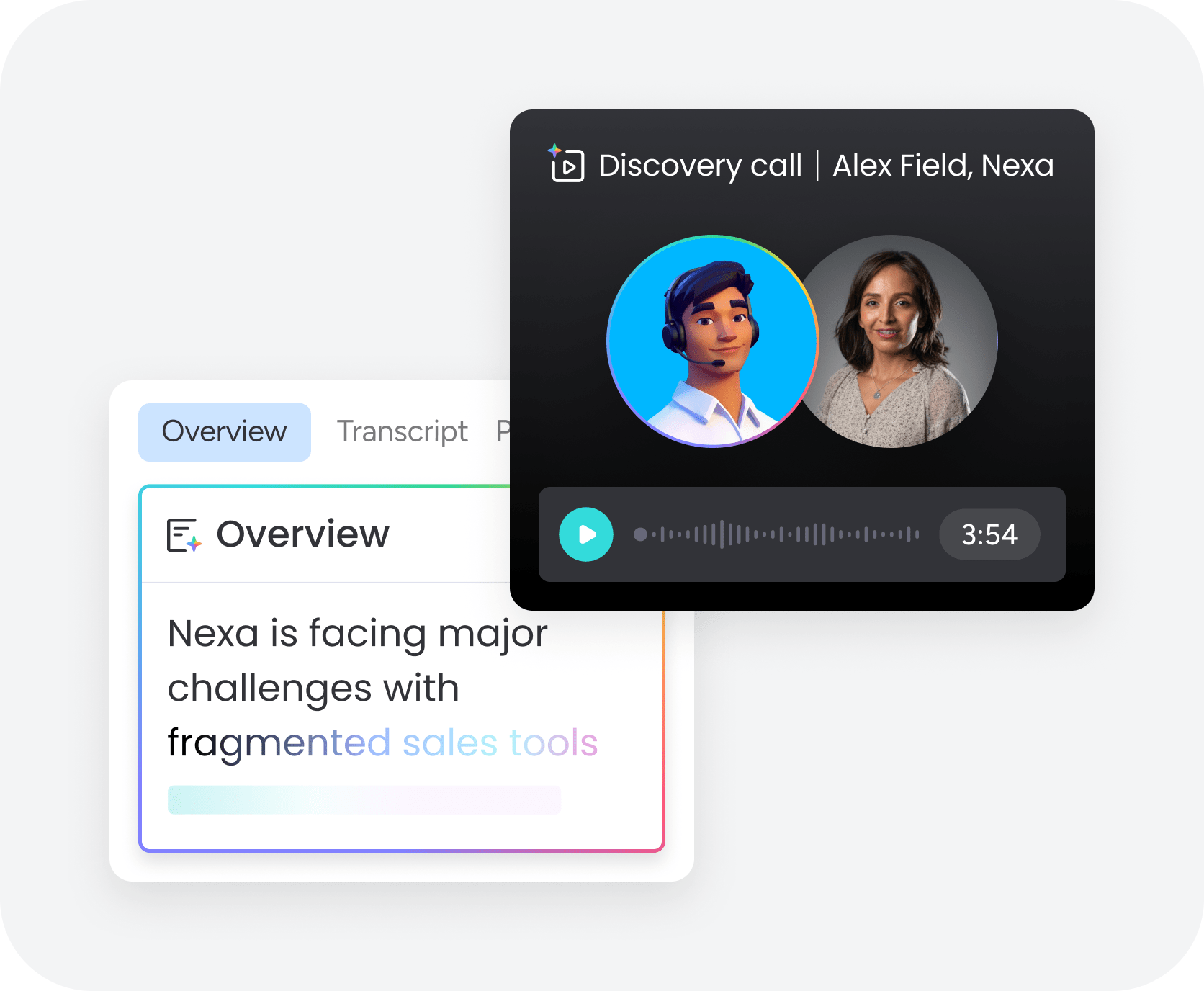
AI inside a CRM should do more than offer surface-level writing suggestions. The real value shows up when AI actively works through your data, finds useful context, and handles tasks without forcing users to become prompt engineers.
Focus on AI that can:
- Autofill fields: Pull key information directly from emails, calls, and notes.
- Summarize communication: Give reps instant context so they walk into every call prepared.
- Score and qualify leads: Use real CRM activity to find the hottest prospects automatically.
4. Native integrations
Your CRM should act as the center of your revenue workflow, not just another tab everyone forgets to update. If connecting email or calendar tools feels complicated, that’s a warning sign. Native integrations with tools like Gmail, Slack, and LinkedIn should be quick and painless.
Ask these key questions during your evaluation:
- Is the data sync bidirectional? Information should flow both ways between your tools.
- Are your team’s favorite tools supported? Check for native connections to avoid relying on third-party connectors.
- Can CRM updates trigger actions elsewhere? Automatically send a Slack alert or create a calendar event when a deal moves forward.
5. Real-time dashboards and forecasting
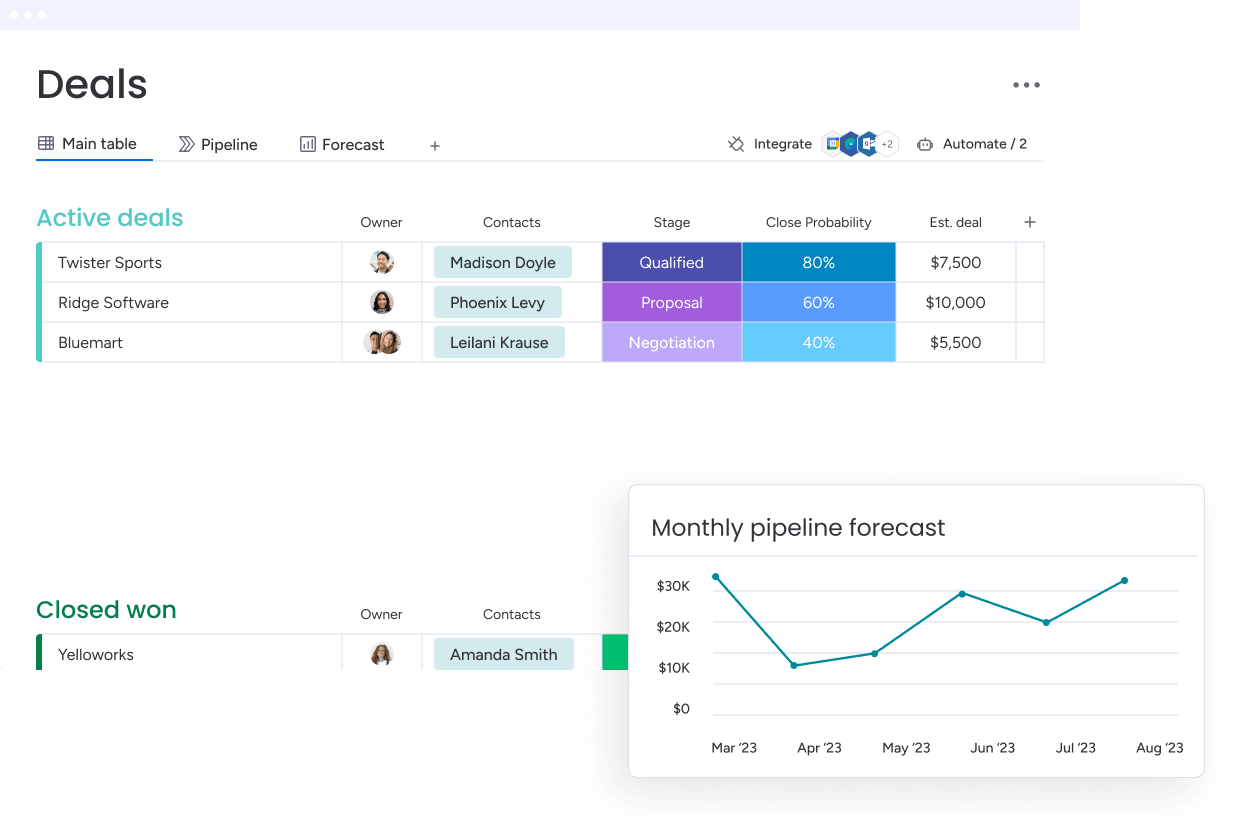
For sales leaders, visibility is one of the main reasons to invest in a CRM at all. That confidence disappears quickly when data feels stale or reporting takes too much effort. An analytical CRM should make forecasting accessible, not something that requires an analyst and a presentation deck.
Make sure the platform includes:
- Pre-built sales widgets: Get instant insights with ready-to-use funnels, leaderboards, and pipeline views.
- Easy filtering: Sort data by rep, time period, or deal stage without writing complex formulas.
- Shareable dashboards: Give executives a live look at performance without exporting anything.
6. Granular permissions and security
Permissions rarely get attention during the buying process, but they become critical the moment a team starts scaling. As your organization grows, you need control over who can view, edit, or delete specific data. If a sales manager can’t lock down a deal without help from IT, the system is missing a basic requirement.
Look for security and access features like:
- Role-based access: Control permissions at the board, column, and individual item level.
- Secure external access: Give partners or contractors limited visibility without exposing all your data.
- Enterprise-grade security: Verify certifications like SOC 2 Type II, ISO 27001, and HIPAA compliance.
7. Reliable mobile app
Selling doesn’t stop when reps leave their desks, and your CRM shouldn’t either. A strong CRM app lets people update deals from anywhere instead of struggling through a desktop site on a phone. If updates wait until everyone is back at a laptop, the forecast is already lagging behind reality.
A solid mobile experience provides:
- A native mobile app: Get full deal management capabilities designed for a smaller screen.
- Offline access: Let your team keep working even in areas with bad reception.
- Push notifications: Help reps stay on top of deal activity without having to check in.
The best no-code CRMs put powerful functionality directly in the hands of the people using it every day. With monday CRM, revenue teams can access those capabilities more easily, spending less time wrestling with software and more time moving deals forward.
Stop waiting on IT and take charge with monday CRM
monday CRM delivers no-code flexibility with embedded AI that actually works for revenue teams. Instead of bolting on third-party tools or waiting for IT to configure features, your team gets intelligent automation and assistance built directly into the platform.
Here’s what that means in practice:
- AI Sidekick: Ask questions in plain English and get instant answers about deal status, pipeline health, and next steps.
- Smart autofill: AI pulls key details from emails, calls, and notes to populate fields automatically, so reps spend less time on data entry and more time selling.
- Timeline summaries: Get instant context on every deal with AI-generated summaries that surface the most important updates and actions.
- Email composition: Draft follow-ups, outreach sequences, and internal updates using AI that understands your deal context and communication style.
- Vibe analysis: Gauge sentiment across customer interactions to spot risks early and prioritize deals that need attention.
- Visual pipeline builder: Drag and drop deal stages, custom fields, and conditional logic without touching code.
- No-code automations: Build trigger-based workflows for notifications, field updates, and cross-board actions using simple menus instead of formulas.
- Native integrations: Connect Gmail, Slack, LinkedIn, Zoom, and other tools with a few clicks.
- Real-time dashboards: Create custom views with pre-built widgets for forecasting, quota tracking, and pipeline analysis that update automatically.
- Granular permissions: Control access at the board, column, and item level so every team member sees exactly what they need.
When AI and no-code capabilities work together this seamlessly, your team gets a CRM that adapts to how they actually sell instead of forcing them to adapt to the software.
Try monday CRMTake control of your sales pipeline today
A no-code CRM puts control in the hands of the people who actually run your sales process, eliminating IT bottlenecks and letting your team adapt pipelines, automate workflows, and manage integrations on the fly. The right platform delivers real-time visibility, embedded AI, and the flexibility to evolve as fast as your market does, so your team spends less time fighting your CRM software and more time closing deals.
If your current CRM slows you down instead of speeding you up, it’s time to try a platform built for real flexibility. monday CRM gives revenue teams full no-code control with AI-powered automation that works from day one.
Try monday CRMFAQs
What is a no-code CRM?
A no-code CRM is a customer relationship management platform that lets sales teams and RevOps professionals build, customize, and automate workflows without writing code. Instead of waiting on developers for every pipeline change or field update, your team can drag, drop, and configure the system directly. The result is faster adaptation, more control, and less time spent fighting the software.
How does a no-code CRM differ from a traditional CRM?
Traditional CRMs often require technical resources to make meaningful changes — adding a deal stage, building an automation, or adjusting a dashboard can turn into an IT request. A no-code CRM removes that dependency. Sales managers and operations teams can make those changes themselves in minutes, which means the system keeps pace with the business instead of lagging behind it.
Can a no-code CRM handle complex sales processes?
Yes, but it depends on the platform. The best no-code CRMs support multi-stage pipelines, conditional logic, cross-functional workflows, and advanced automations without requiring code. Platforms like monday CRM handle enterprise deals, post-sales handoffs, and custom forecasting models while staying fully configurable by non-technical users. The limit isn't complexity — it's whether the platform was built with real flexibility from the start.
Do I need technical skills to use a no-code CRM?
No. That's the point. A true no-code CRM is designed for sales leaders, RevOps professionals, and account managers who need to shape the system around their workflow without learning to code. If you can use a spreadsheet or build a slide deck, you can configure a no-code CRM. The interface should feel intuitive, not technical.
What are the main benefits of using a no-code CRM?
Speed, control, and adoption. No-code CRMs let teams go live faster, adjust pipelines on the fly, and automate repetitive work without waiting in line for developer help. When the people running the sales process can also shape the system, adoption goes up, data quality improves, and the forecast becomes more reliable. The software starts working for the team instead of the other way around.
Are no-code CRMs suitable for small businesses?
Absolutely. Small teams benefit the most because they rarely have dedicated IT resources. A no-code CRM gives a small sales team the same configurability that enterprises get with custom development, but without the cost or complexity. Platforms like monday CRM, Pipedrive, and HubSpot are built to scale with growing businesses while staying accessible from day one.
Can I integrate a no-code CRM with other tools?
Yes, and integration quality matters as much as the CRM itself. The best no-code platforms offer native connections to tools like Gmail, Slack, LinkedIn, and Zoom, so setup takes minutes instead of hours. Some platforms also support open APIs and webhooks for custom integrations, but those should be optional — not required just to connect your email.
How much does a no-code CRM cost?
Pricing varies widely. Some platforms offer free tiers with basic features, while others start around $10–$30 per user per month and scale up based on automation limits, AI features, and integrations. Enterprise plans can run $100+ per user per month. The real cost includes more than the subscription — factor in onboarding fees, add-ons, and whether you'll need outside help to maintain the system.
What should I look for when choosing a no-code CRM?
Focus on what your team can actually build and maintain without technical help. Look for visual pipeline builders, drag-and-drop automations, native integrations, real-time dashboards, embedded AI, and granular permissions. Test the platform with a real workflow before committing. If a basic automation still requires a developer, the platform isn't truly no-code.
Is monday CRM a no-code platform?
Yes. monday CRM is built on the monday.com Work OS and designed for full no-code configuration. Revenue teams can build pipelines, automate workflows, connect integrations, and customize dashboards without writing a single line of code. AI features like autofill, timeline summaries, and email composition are embedded directly into the platform, and automations run natively without third-party connectors. Sales leaders and RevOps professionals control the system themselves, which means changes happen in minutes instead of weeks.
