


Your sales team closes deals, but customers churn within months. Marketing spend increases, yet conversion rates plateau. Revenue grows, but profitability shrinks as acquisition costs climb. Here’s what’s missing: strong customer relationships create measurable revenue outcomes that compound over time. They reduce acquisition costs through referrals, increase lifetime value through repeat purchases, and build competitive advantages that pricing alone cannot replicate.
Below, we break down 9 specific ways customer relationships drive revenue growth — from slashing acquisition costs to turning satisfied customers into advocates. We’ll show you proven strategies for building relationships at scale, how AI and automation make personalization possible across thousands of customers, and which metrics actually predict relationship strength and revenue potential. Plus, we’ll show you how monday CRM can help you turn these strategies into systematic processes that scale with your business.
Try monday CRMKey takeaways
• Strong relationships drive measurable revenue growth: Cut acquisition costs by up to 25%, boost lifetime value, and create predictable revenue through higher retention.
• Trust beats features in competitive markets: Competitors can copy your product or undercut pricing, but they can’t replicate the relationship investment that keeps customers loyal.
• Scale personalization with unified customer data: Centralize interactions with monday CRM and use AI to automate personalized outreach across thousands of customers.
• Proactive communication prevents churn and unlocks expansion: Regular check-ins and educational content reveal upsell opportunities and address issues before cancellations.
• Measure relationship health to predict revenue: Track engagement, response rates, and satisfaction to identify at-risk accounts and prioritize outreach.
What are customer relationships in business?
Customer relationships are the ongoing connections between a business and its customers that go beyond single transactions. They’re built on trust, real communication, and value that compounds over time. When you invest in these relationships consistently, one-time buyers become long-term partners who fuel your growth.
Think of it this way: transactional selling focuses on closing the next deal, while relationship-focused selling views each interaction as part of a longer journey. Here’s how these approaches differ in practice:
| Aspect | Transactional selling | Relationship-focused selling |
|---|---|---|
| Time horizon | Single deal | Long-term partnership |
| Rep role | Vendor | Trusted advisor |
| Success metric | Deal closed | Customer lifetime value |
| Communication | As needed for sale | Ongoing, proactive |
| Value exchange | One-directional | Mutual and compounding |
The shift to relationship-focused selling matters because buyers now expect more. They want personalized experiences tailored to their specific challenges. They’re managing longer sales cycles with multiple stakeholders, and in competitive markets, relationships provide the differentiation that price and features alone cannot.
CRM technology makes this shift actually work. Instead of relying on individual rep memory or scattered spreadsheets, CRM platforms provide a 360 customer view of every customer interaction.
Every email, meeting, support ticket, and purchase history lives in one place, so relationship-building becomes a system, not an accident.
Why building customer relationships drives revenue growth
Strong customer relationships hit your bottom line in measurable ways. According to research from Bain & Company, acquiring new customers costs 5 to 25 times more than retaining existing ones, making relationship building essential for sustainable growth.
When you focus on relationships, you tap into revenue drivers that compound over time:
- Reduced churn: Loyal customers stay longer and generate predictable recurring revenue
- Increased repeat purchases: Trust leads to more frequent buying decisions
- Higher referral rates: Satisfied customers become your most effective sales channel
Trust creates the predictability revenue leaders actually need. When customers trust your team, they respond faster, share budget info openly, and negotiate transparently. This openness shortens sales cycles, increases win rates, and makes revenue forecasting way more accurate.
Each customer interaction gives you data that powers deeper personalization: what they care about, how they use your product, the challenges they face, and expansion opportunities.
Strong relationships also create a competitive edge. Competitors can match pricing or copy features, but they can’t duplicate the trust and loyalty you’ve cultivated over years.
Learn more: How to build customer loyalty
9 revenue-driving benefits of strong customer relationships

Building strong customer relationships delivers specific outcomes that hit revenue and efficiency. These benefits compound over time, creating advantages that show up in financial reports and fuel predictable growth.
1. Slash customer acquisition costs by up to 25%

According to a Forrester study, just a 5% improvement in customer retention could increase profitability by at least 25%. Strong relationships reduce acquisition costs through three mechanisms:
- Referral acceleration: Satisfied customers recommend you to peers, with referred leads often converting at 3 to 5 times higher rates than cold prospects
- Conversion optimization: Warm relationships built through consistent nurturing convert more efficiently than cold outreach
- Sales cycle reduction: Trust eliminates common delays as prospects respond faster and decision-makers become more accessible
CRM platforms help teams track referral sources, automate nurture campaigns, and spot which relationship-building activities pay off most. Teams can centralize this data with monday CRM to track which relationships drive the most valuable referrals.
2. Boost customer lifetime value through smart personalization
Customer Lifetime Value goes up when you deliver experiences that match individual needs. Personalization fuels this growth by encouraging repeat purchases, making upsells easier, and extending customer relationships.
Effective personalization at scale requires centralized data and the ability to act in real time. When customers get recommendations that match their challenges, content for their industry, and outreach timed to their buying cycles, engagement deepens.
Teams using monday CRM can leverage AI capabilities to compose personalized emails and summarize customer timelines automatically, making personalization scalable without manual effort.
3. Improve retention rates and minimize churn
Customer retention delivers serious ROI because retained customers bring predictable recurring revenue and cost less to serve. They’ve already learned your product and processes, so they’re more likely to expand as trust builds.
Strong relationships reduce churn in several ways:
- Regular communication: Surface issues before they escalate into cancellation decisions
- Personalized support: Make customers feel understood and valued
- Trust foundation: Reduce the likelihood of moving to competitors during renewal periods
Sales teams can spot at-risk customers by watching for declining engagement, more support tickets, or delayed responses. Automated alerts and relationship health tracking help teams step in before customers cancel.
4. Unlock more revenue from your existing customer base
Existing customers offer immediate revenue potential via upsells, cross-sells, and account expansions. Customers who trust your team are way more open to additional products or premium tiers because they’ve already seen value and built a relationship.
Ongoing communication shows you when customers are expanding into new markets, hitting new challenges, or outgrowing current solutions. A sales rep who stays in touch picks up these signals naturally and can pitch relevant solutions at the right time.
Highlight these expansion opportunities with monday CRM within existing accounts to keep all revenue potential visible and actionable.
5. Create predictable sales forecasts and pipeline

Relationship strength makes customer behavior more predictable, giving revenue leaders confidence for resource allocation and target setting. When sales reps maintain strong relationships, they get insight into customer timelines, budget cycles, and decision processes.
Real-time pipeline visibility becomes more precise and predictive when you add relationship health metrics. Revenue leaders can see which accounts are truly progressing versus those that might slip, making forecasting more accurate.
Customizable dashboards in monday CRM let teams drill down by month, rep, or any criteria that matters to their business.
6. Build unbeatable competitive advantage through trust
While competitors can copy features or undercut pricing, they can’t quickly rebuild years of relationship work. Enterprise buyers take on real risk with major purchases, and trust cuts that risk even when your solution costs more.
Trust builds through consistent, positive moments:
- Reliable communication: Follow through on every commitment and promise
- Transparency: Be honest about capabilities and limitations upfront
- Genuine interest: Focus on customer success beyond a sale
- Consistent delivery: Meet expectations repeatedly over time
Each interaction either builds or erodes trust with that customer.
7. Accelerate sales velocity with warm relationships
Sales velocity jumps with warm relationships. Cold outreach means building credibility from scratch, educating prospects about their challenges, and earning enough trust just to get a meeting.
Warm relationships skip these time-consuming stages entirely, cutting delays throughout the sales process. Prospects respond to outreach fast, share challenges openly during discovery, and negotiate collaboratively.
Automation workflows and engagement tracking in platforms like monday CRM help teams prioritize these warm opportunities for maximum efficiency.
8. Gain actionable customer insights for products
Customers who trust you share honest feedback about pain points, feature requests, and workflow challenges. This candid input beats survey data because it comes from real usage.
A trusted account manager gets detailed explanations about why features don’t work, while generic surveys get surface-level answers. Teams can centralize this feedback through their CRM’s activity timeline, making it easy to identify patterns across customers.
With monday CRM’s AI sentiment analysis feature, teams can AI automatically pull key info from communications so important insights don’t get lost.
9. Transform satisfied customers into revenue-driving advocates
Customer advocacy delivers serious marketing ROI via referrals, testimonials, case studies, and peer recommendations. Advocates become an extension of your sales team, and their endorsements carry more weight than any marketing message.
Building advocacy requires intentional relationship investment:
- Deliver value: Consistently exceed expectations in every interaction
- Ask for feedback: Act on customer input visibly and communicate changes
- Make sharing easy: Provide simple ways for customers to share success stories
- Recognize efforts: Appreciate and acknowledge their advocacy publicly
How AI and automation enable relationship building at scale
Manual relationship building hits natural limits as your customer base grows. AI and automation solve this by letting you deliver personalized, consistent engagement without hiring more people. Rather than making relationships feel robotic, these technologies free your team to focus on the human moments that matter.
Deliver personalized experiences to thousands simultaneously
AI analyzes customer behavior patterns, preferences, and interaction history to automatically personalize communications and recommendations. In monday CRM, the platform’s AI can compose context-aware emails, summarize activity timelines instantly, and extract relevant information from contracts or invoices.
This human-AI partnership works because it splits work smartly:
- AI handles: Email customization, data entry, scheduling, and pattern recognition
- Humans handle: Strategic conversations, complex problem-solving, and relationship moments requiring empathy
Automate nurturing while maintaining human connection
Automated workflows make sure every prospect and customer gets valuable touchpoints without manual tracking. Educational content, check-in emails, and relevant updates flow automatically based on customer stage and behavior.
The key is knowing when to step in personally. Automation handles routine nurturing, while human reps jump in for questions that need judgment, strategic goal talks, and the relationship moments that matter most.
Predict and prevent customer issues before they happen
AI spots patterns that signal problems before they become deal-breakers. Sentiment detection flags tone changes in communication, while behavioral analysis spots deviations from normal engagement patterns.
Teams using these predictions can reach out early, address concerns fast, and show the attentiveness that builds relationships. The AI capabilities in monday CRM include automatic label assignment based on risk signals, helping teams prioritize intervention efforts.
7 steps to building stronger customer relationships
Using systematic relationship-building strategies keeps execution consistent across your entire customer base. These approaches transform good intentions into measurable outcomes that drive revenue growth and customer satisfaction.
Step 1: Create a unified customer view across every touchpoint
Fragmented customer data across multiple systems prevents teams from understanding full relationship context. When information lives in silos, customers repeat themselves constantly and feel like strangers despite years of interaction.
A unified view pulls all customer data into one system. Teams see complete relationship history including past conversations, preferences, pain points, and outcomes. Easily connect deals, accounts, contacts, and projects in one place with monday CRM, giving everyone on your team the context they need.
Try monday CRMStep 2: Design proactive communication workflows
Reactive communication, such as only reaching out for deals or problems, makes relationships feel transactional. Proactive workflows keep value flowing between purchases.
Effective proactive communication includes:
- Regular check-ins: Schedule touchpoints without pressure or a sales agenda
- Educational content: Share industry insights relevant to their specific challenges
- Product updates: Communicate changes that impact their use case directly
- Milestone celebrations: Recognize achievements and success moments
Automation makes these workflows scalable without losing the personal touch.
Step 3: Use customer data to power personalization
Generic outreach signals that you don’t know or care about specific customer situations. Personalization means using the data you collect to deliver relevant experiences.
Key data categories for personalization:
- Demographic data: Industry, company size, role, and responsibilities
- Behavioral data: Product usage patterns, content engagement, communication preferences
- Contextual data: Current goals, active challenges, past interaction outcomes
Centralizing this data powers automated personalization based on customer attributes and behaviors.
Step 4: Train your team on relationship-first selling
Technology alone cannot build relationships. Your team needs the mindset and skills to prioritize long-term customer success over short-term transactions.
Customer-oriented sellers view themselves as partners who succeed when customers succeed. They invest in understanding goals, provide value beyond the product, and maintain engagement after deals close.
Compensation structures should reward relationship quality alongside deal volume.
Step 5: Map customer journeys to identify key moments
Customer journey mapping reveals critical moments where relationship-building efforts pay off most. You’ll see where relationships strengthen from positive experiences and where they weaken from friction.
Key relationship moments include:
- Onboarding completion: Celebrate milestones and ensure smooth transitions
- Renewal decision windows: Proactively address concerns before they become issues
- Expansion readiness signals: Identify when customers are ready for additional solutions
- Support interaction outcomes: Follow up on resolution satisfaction and next steps
Automated touchpoints at these moments help you capture every opportunity.
Step 6: Build trust through radical transparency
Customers value honesty over perfection. Being transparent about capabilities, limitations, and challenges builds more trust than overselling and underdelivering.
Transparency might cost some short-term deals, but it creates long-term relationships with customers who trust your judgment and refer others because of your honesty. This approach differentiates you in markets full of exaggerated claims.
Step 7: Track and optimize relationship health metrics
Relationship health metrics measure connection strength so teams can spot risks, prioritize outreach, and track improvement.
Essential relationship health indicators:
- Engagement frequency: How often customers interact across all touchpoints
- Response rates and times: Speed and consistency of customer communication
- Product usage depth: How extensively customers use your solution
- Satisfaction scores: Direct feedback on relationship and product experience
- Expansion likelihood: Signals indicating readiness for additional purchases
Real-time dashboards turn these metrics into action, alerting teams when they need to step in.
Maximize customer relationships with monday CRM
With monday CRM, Teams can seamlessly centralize every customer interaction, conversation, and data point in one intuitive platform. Featuring unified customer information, AI-powered insights, and customizable workflows, your team gets the visibility and control needed to build stronger relationships at every stage of the customer journey.
Here’s how monday CRM transforms relationship building:
Unified customer view with AI-powered insights
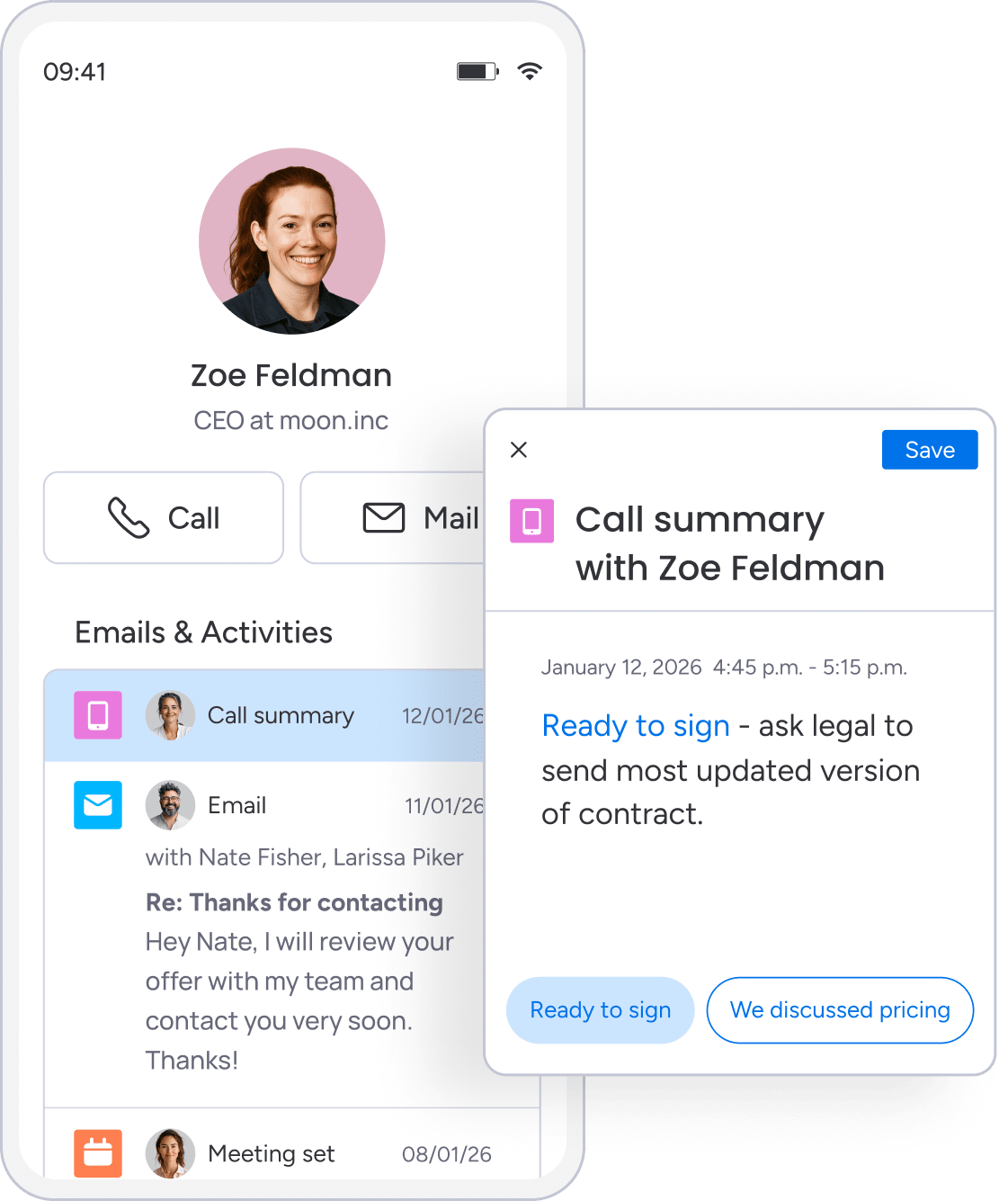
Get a 360° view of your customers that goes beyond basic contact info. See complete communication history, lifetime value, pipeline position, and AI-generated summaries of recent interactions all in one place.
monday CRM’s AI capabilities automatically extract key information from emails, contracts, and invoices, so your team spends less time on data entry and more time building relationships. AI sentiment analysis flags tone changes in customer communications, helping you spot potential issues before they escalate.
Real-time dashboards that predict relationship health
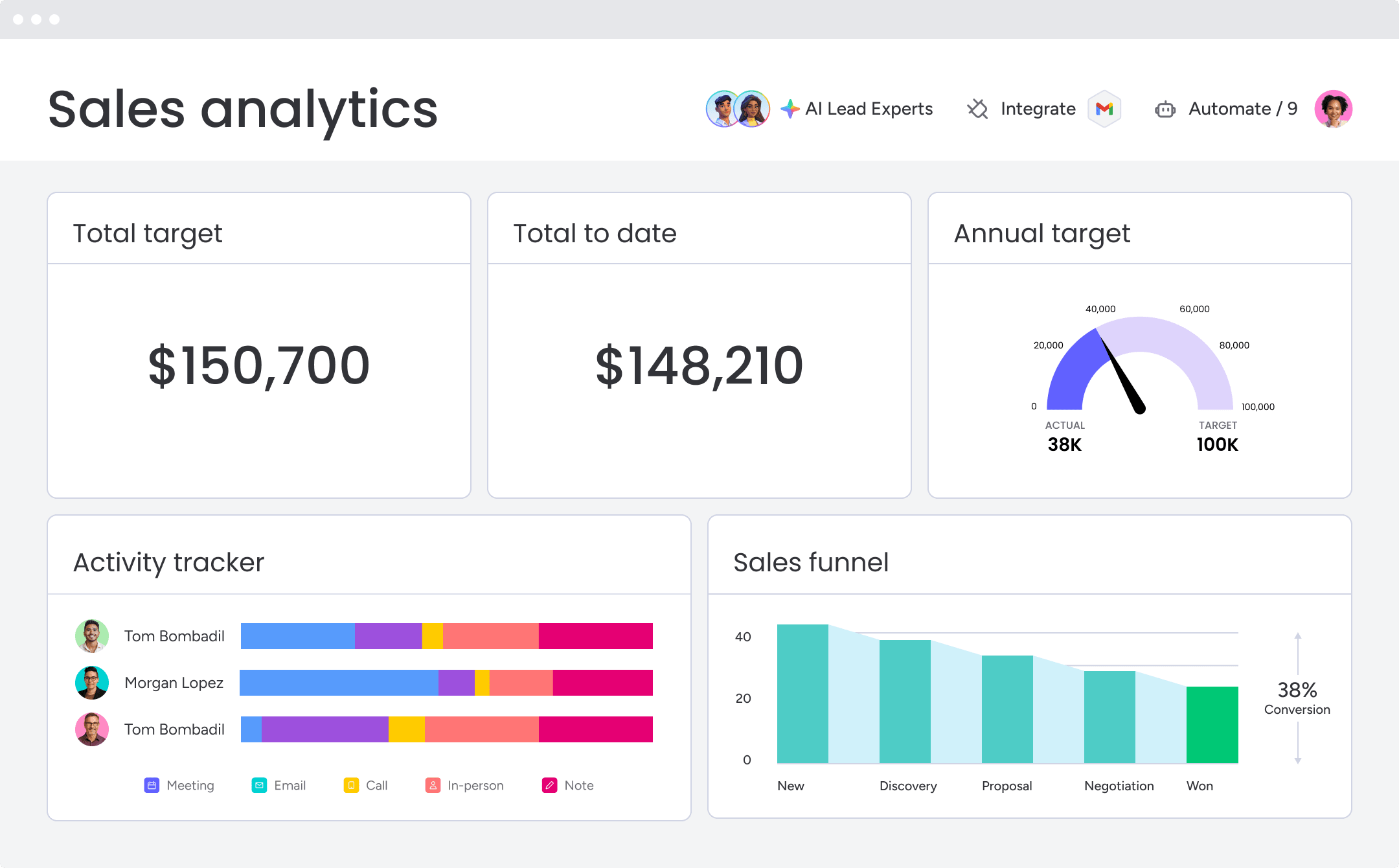
Track the metrics that actually matter for relationship strength. Custom dashboards surface deal progress, engagement patterns, and team performance in real time. Visualize customer satisfaction scores, retention rates, and expansion opportunities to identify where relationship-building efforts pay off most.
AI-powered analytics spot patterns across your customer base, revealing which accounts need attention and which are primed for upsells. These predictive insights help teams prioritize outreach and prevent churn before it happens.
AI-powered personalization at scale

Deliver personalized experiences to thousands of customers without manual effort. The platform’s AI composes context-aware emails based on customer history, preferences, and current stage in the pipeline. The platform analyzes past interactions to suggest the right message at the right time.
Use personalized sequences, mass emailing with tracking, and AI-generated content to reach every contact with messaging that feels tailored to their specific situation. The AI learns from customer responses, continuously improving personalization effectiveness.
Intelligent automation for proactive relationship building

Set up workflows that nurture relationships automatically while keeping the human touch. Create automations triggered by customer behavior, engagement patterns, or time-based milestones. Get alerts when customers show signs of disengagement or expansion readiness.
AI-powered automation handles routine touchpoints like follow-up reminders, re-engagement campaigns, and milestone celebrations, freeing your team to focus on strategic conversations that require empathy and judgment. The platform automatically assigns priority labels based on relationship health signals, so you always know where to focus your efforts.
Turn relationship building into your competitive advantage
Strong customer relationships are your most sustainable path to revenue growth. While competitors focus on features and pricing, relationship-focused teams build trust that creates lasting advantages.
The companies winning right now understand that every customer interaction is an investment in future revenue. They use technology to scale personalization, automate routine touchpoints, and free their teams to focus on the human moments that matter most.
Revenue teams using monday CRM discover that relationship building becomes systematic rather than accidental. With unified customer data, AI-powered personalization, and automated workflows, they can deliver consistent value to thousands of customers while keeping the human connection that fuels loyalty and growth.
Try monday CRMFAQs
What are the main benefits of building strong customer relationships?
The main benefits include reduced customer acquisition costs, increased lifetime value through personalization, improved retention rates, expanded revenue from existing customers, more accurate sales forecasts, competitive advantage through trust, faster sales cycles, valuable customer insights, and customer advocacy that drives referrals and social proof.
How do strong customer relationships specifically increase revenue?
Strong relationships increase revenue by driving repeat purchases at higher frequencies, enabling successful upsells and cross-sells with less resistance, generating high-converting referrals that reduce acquisition costs, and preventing churn that would otherwise erode recurring revenue streams.
What is the difference between customer service and customer relations?
Customer relationships are proactive, ongoing connections spanning the entire customer lifecycle and focusing on mutual value creation. Customer service is reactive support provided when customers encounter problems or have specific questions, typically addressing immediate needs rather than long-term partnership building.
How can CRM technology help teams build relationships at scale?
CRM platforms centralize all customer data in one accessible location, automate personalized outreach based on behavior and preferences, track relationship health metrics for proactive intervention, and use AI to handle repetitive tasks while humans focus on strategic conversations and relationship moments requiring empathy.
How does personalization improve customer relationships?
Personalization demonstrates that you understand and value each customer's unique situation, building trust through relevant communications. It increases engagement by delivering content and recommendations that actually address their challenges rather than generic messaging that gets ignored.
Which metrics should teams use to measure relationship success?
Key metrics include retention rate, net revenue retention, customer lifetime value, account expansion rate, sales cycle length, customer response rates, engagement frequency across touchpoints, and satisfaction scores that indicate relationship strength and revenue potential.
