

You have a business idea you believe in. Maybe you have even sketched it on a napkin or talked it through with a co-founder over coffee. But there’s a wide gap between an exciting concept and a plan that actually convinces investors to write a check. That gap is where most founders stall.
Starting a business plan template from scratch can feel overwhelming: 20-page documents, financial models, market projections. Without a reliable structure, it is easy to spend weeks spinning without progress.
This guide walks you through the different types of templates available, the nine sections every plan needs, and a step-by-step writing process that removes the guesswork. By the end, you’ll have everything you need to build a plan worth funding.
Key takeaways
- A business plan template gives your venture structure, from executive summary to financial projections, so nothing critical gets overlooked
- Traditional and lean startup formats serve different planning needs. Choose the format that matches your stage and audience.
- Every business plan needs 9 core sections to satisfy investors and lenders.
- A step-by-step writing process eliminates the blank-page problem and keeps momentum high.
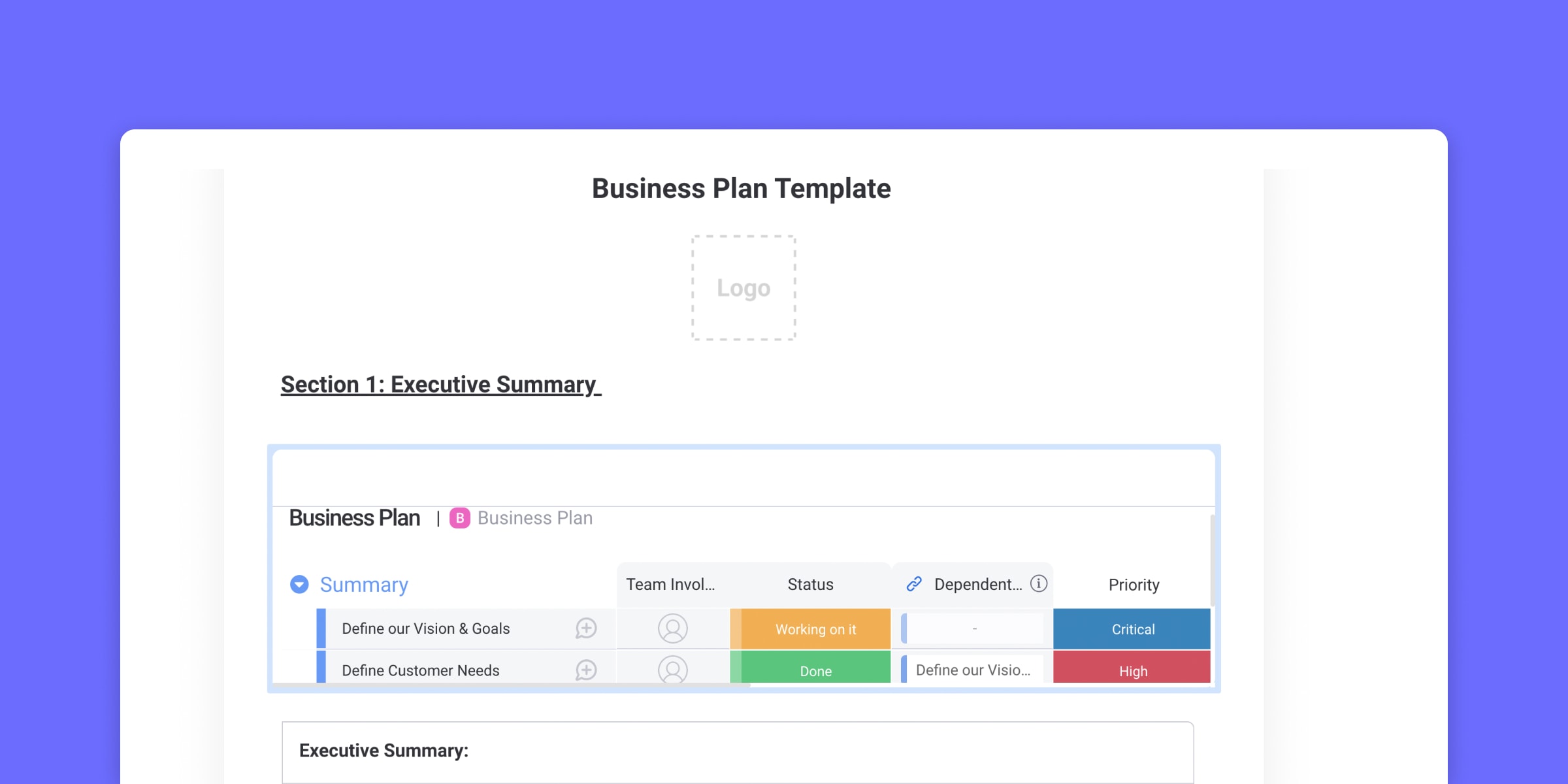
- monday AI Workspace provides a collaborative business plan template with built-in timelines, dashboards, automations, and AI-powered capabilities to help teams plan, align, and keep work moving in one connected workspace
What is a business plan template?
A business plan template is a pre-structured document that organizes your business idea into the sections investors, lenders, and partners expect to see. Instead of staring at a blank page, you fill in guided sections (from your executive summary to financial projections) tailored to your specific venture.
First-time founders, small business owners, and anyone seeking external funding use these templates to translate raw ideas into professional, fundable plans. They work especially well when you need to communicate your business models to stakeholders who evaluate dozens of proposals each week.
Two main formats dominate. A traditional business plan is comprehensive, typically 15 to 25 pages, and covers every angle investors want to evaluate. A lean startup business plan fits on a single page and is designed for fast iteration, ideal when you are still validating assumptions and pivoting quickly.
So what separates a template that collects dust from one that actually gets your business funded? It comes down to structure, specificity, and how easy the template makes it to collaborate with your team throughout the process.
Why use a business plan template?
A free business plan template gives you a proven framework that eliminates guesswork and keeps every section aligned with what decision-makers actually review. Whether you’re pitching to a venture capital firm or applying for an SBA loan, the right template ensures nothing falls through the cracks.
Here are five reasons a template is worth your time:
- Secures funding faster: A structured plan hits every section investors review, from market analysis to revenue projections, so your proposal checks every box on the first submission
- Provides professional credibility: A well-formatted plan signals preparedness and competence, two qualities that separate serious founders from casual dreamers
- Gives your business direction: The template forces you to define goals, milestones, and strategies upfront, turning a vague idea into a concrete roadmap
- Assesses feasibility early: Working through each section reveals whether your idea holds up financially and operationally before you invest months of effort
- Saves time and money: Building a plan from a template eliminates the need for expensive professional business plan writers who charge $40 to $150 per hour
Five types of business plan templates with examples
Not every business needs the same plan format. Your stage, audience, and goals determine which type of business plan template makes the most sense. Below are five formats, each with a different purpose, level of detail, and ideal use case.
1. Traditional business plan template
The traditional business plan is the gold standard for bank loans, investor pitches, and SBA applications. It contains nine or more sections and typically spans 15 to 25 pages. This format works when your audience needs comprehensive detail: financial projections, competitive analysis, operational plans, and a full market breakdown. If you’re presenting to a lender or institutional investor, this is the format they expect.
2. Lean startup business plan template
The lean startup business plan fits on a single page using a nine-block canvas layout. It covers key partners, value propositions, customer segments, revenue streams, and cost structure at a high level. This format is ideal for early-stage validation when you’re still testing assumptions and need to pivot quickly. Think of it as a snapshot that answers the question: Does this idea have legs?
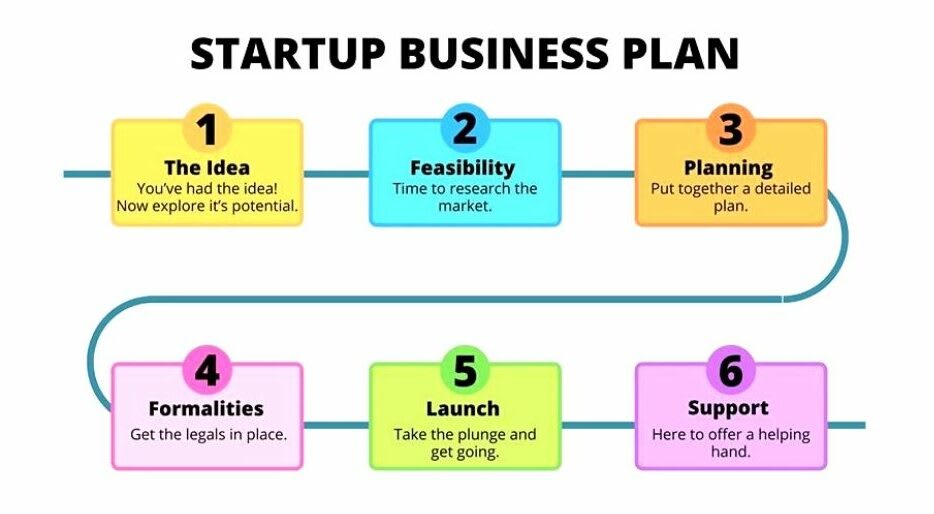
3. Startup business plan template
A startup business plan is a hybrid between the traditional and lean formats. It carries enough detail to pitch investors but stays concise enough to update as your business evolves. Sample business plan sections typically include an executive summary, target market analysis, product description, and initial financial model.
4. Strategic business plan template
A strategic business plan is an internal document designed for leadership alignment rather than external funding. It centers on a SWOT analysis (strengths, weaknesses, opportunities, and threats) and maps those insights to specific initiatives and timelines. Use this format when your business already operates, and you need to align departments around a unified direction.
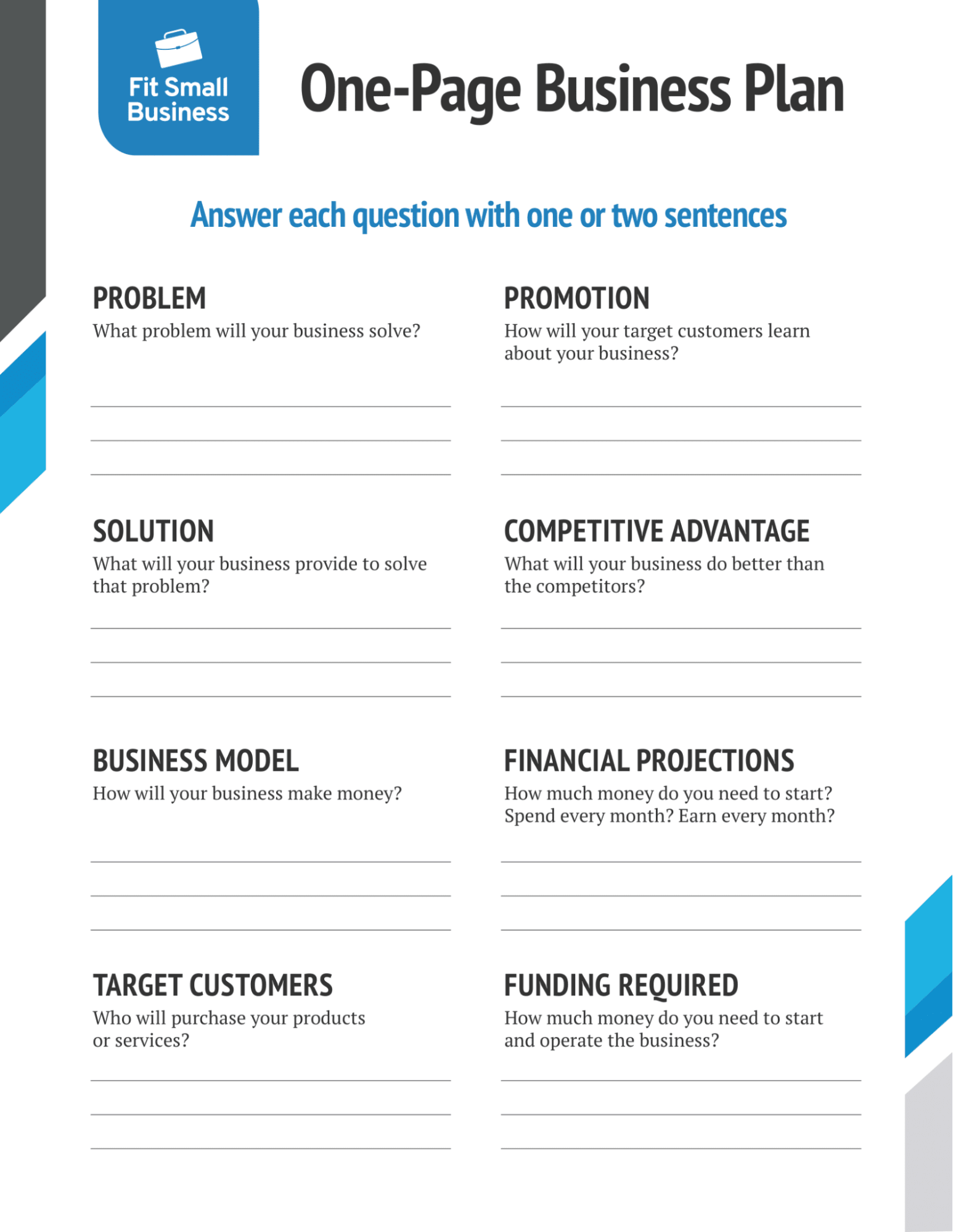
5. One-page business plan template
A one-page business plan distills all essentials onto a single page. It answers the core questions: what you do, who you serve, how you make money, and what makes you different. This format is perfect for initial conversations with potential partners, advisors, or early-stage investors who want the summary before the deep dive.
Can ChatGPT create a business plan? AI can draft individual sections, but a startup business plan template ensures the structure, internal consistency, and financial rigor that investors require. Use AI as a writing assistant, not a substitute for strategic thinking.
Get started with monday.comNine key sections every business plan template should include
While many guides reference seven core components, a thorough business plan actually contains nine sections that cover everything investors, lenders, and partners evaluate. A solid business plan format follows this outline template from start to finish. What does a complete business plan outline look like?
1. Executive summary
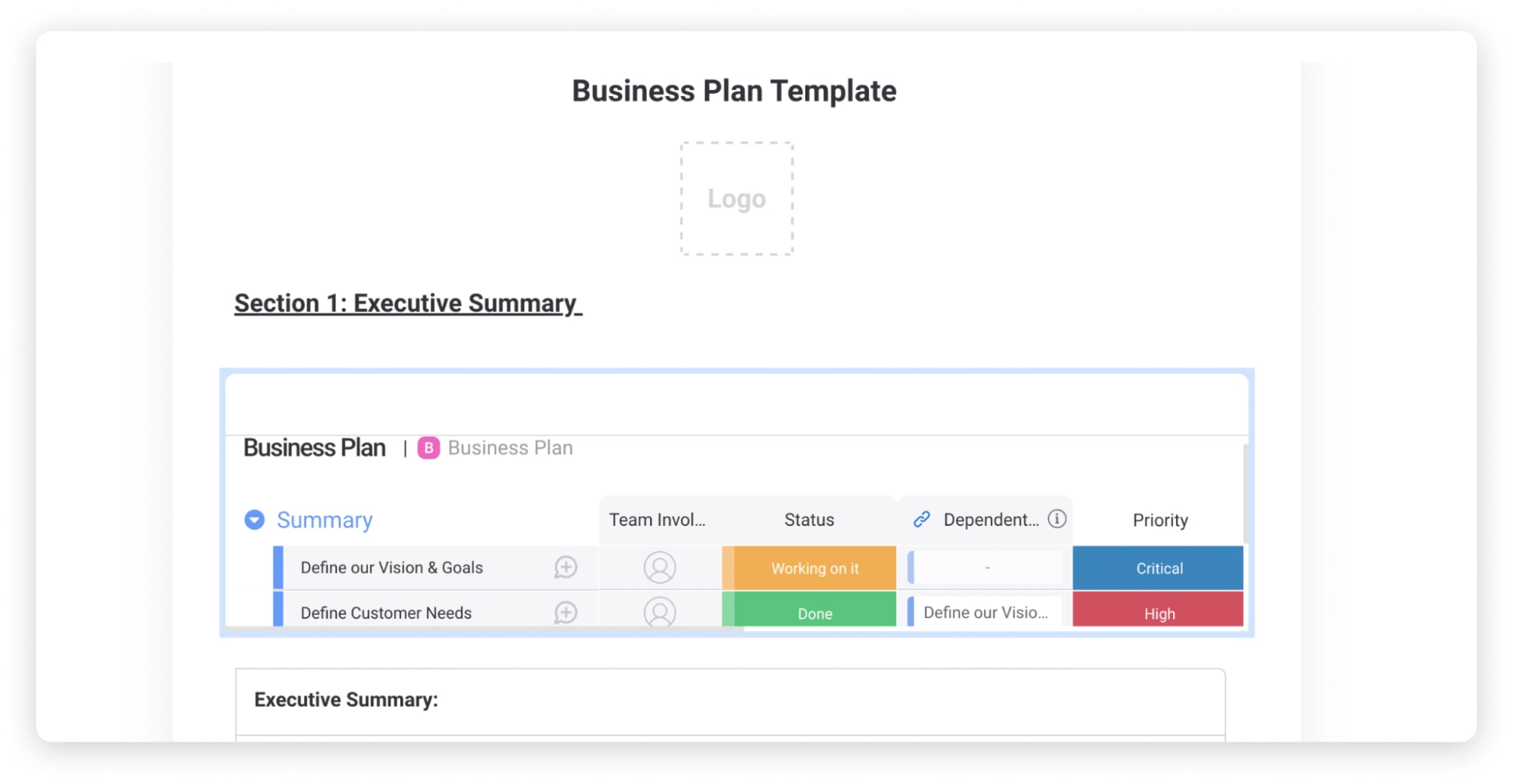
The executive summary is the first section readers see, and the last one you should write. It condenses your entire plan (mission, product, market opportunity, and financial highlights) into one to two pages. Use an executive summary template to make sure you capture every essential element.
 2. Company description
 2. Company description
This section answers the fundamental questions: what does your company do, what problem does it solve, and what makes it different? Include your legal structure, founding date, location, and mission statement.
3. Market analysis
Investors want evidence that real demand exists. Your market analysis should cover industry size, growth trends, target customer demographics, and a competitive analysis of existing players. Use a competitive analysis template to organize your research systematically.
4. Organization and management
Outline your team structure, key roles, and the experience each leader brings. Investors fund people as much as ideas, so this section should highlight relevant expertise and any advisory board members.
5. Products or services
Describe what you sell, how it works, and what makes it valuable to customers. Include your pricing model, product lifecycle stage, and any intellectual property or competitive advantages.
6. Marketing and sales strategy
Explain how you plan to attract and retain customers. Cover your positioning, pricing strategy, distribution channels, and sales process. A detailed marketing plan significantly strengthens this section.
7. Funding request
If you’re seeking external capital, state the amount you need, how you’ll use it, and the type of funding you prefer (equity, debt, or a combination). Be specific about how each dollar maps to growth activities.
8. Financial projections
Provide income statements, cash flow forecasts, and balance sheets for the next three to five years. Use a financial projections template to keep your numbers organized and presentation-ready.
9. Appendix
The appendix holds supporting documents: resumes, permits, lease agreements, product photos, or detailed market research. It keeps the main body focused while giving readers access to backup materials when needed.
How to write a business plan in seven steps
How do you write a simple business plan? Follow these seven steps: define your concept, research your market, outline your business model, build financial projections, draft each section, review with stakeholders, and present your finished plan. This process works whether you are creating a business plan for a small business or a high-growth startup.
Step 1. Define your business concept
Start by articulating what your business does, who it serves, and why it matters. Write a one-paragraph summary that captures your value proposition. This becomes the anchor for every other section.
Step 2. Research your target market
Gather data on your ideal customer: demographics, pain points, buying behavior, and spending patterns. Validate demand through surveys, competitor research, or existing industry reports.
Step 3. Outline your business model
Map out how your business generates revenue. Define your pricing, distribution channels, cost structure, and key partnerships. A simple business plan template can guide you through this structure.
Step 4. Build your financial projections
Create realistic revenue forecasts, expense budgets, and cash flow statements for three to five years. A startup budget template can help you structure early-stage expenses. Base your numbers on market research and comparable businesses rather than optimistic assumptions.
Step 5. Draft each section of your template
Work through each of the nine business plan sections sequentially. Write the executive summary last, since it summarizes everything else. Align your operational plan with your financial projections for consistency.
Step 6. Review and refine with stakeholders
Share your draft with advisors, mentors, or team members. Fresh perspectives catch blind spots, especially around your financial assumptions and market analysis. Incorporate feedback before finalizing.
Step 7. Present and share your plan
Format your plan professionally and prepare a pitch-ready version. What if you could skip the blank-page paralysis and start with a structure that guides you through each step? The right template makes this final stage seamless.
Five common business plan mistakes to avoid
Even a strong template cannot save a plan built on flawed assumptions or poor priorities. Knowing the most common pitfalls helps you sidestep them before they cost you funding or credibility.
- Skipping the market analysis: Investors dismiss plans that lack evidence of market demand. Without real data, your idea is just a hypothesis
- Unrealistic financial projections: Overly optimistic numbers erode credibility fast. Ground your forecasts in comparable data and conservative assumptions
- Writing for yourself instead of your audience: An investor plan needs a different emphasis than an internal strategy document. Tailor your content to whoever is reading it
- Treating the plan as a one-time document: Revisit your plan quarterly. Markets shift, costs change, and your business evolves, so your plan should keep pace
- Burying the value proposition: Lead with what makes your business different. Reviewers often skim, so your differentiator should appear within the first few paragraphs
How monday AI Workspace simplifies business planning
Building a business plan involves moving parts: research, writing, financial modeling, and stakeholder reviews. monday AI Workspace brings all those pieces into a single collaborative workspace where your entire team can contribute in real time, powered by AI capabilities that accelerate every phase of planning.
Here is how the platform supports each phase of your planning process:
- Customizable business plan boards: Create boards with status columns, ownership assignments, and timelines for each section of your plan. Track who is responsible for market research, who owns financial projections, and where every section stands
- Dashboard views for financial tracking: Pull real-time data into dashboards that visualize your budget, funding milestones, and revenue projections without switching between spreadsheets
- Gantt charts for implementation timelines: Map dependencies between plan sections and launch activities. See how delays in one area affect your overall timeline and adjust accordingly
- Automation recipes for deadline reminders: Set up automations that notify team members when deadlines approach, statuses change, or approvals are needed. Every follow-up happens automatically
- Workdocs for collaborative real-time drafting: Write and edit your business plan directly on monday AI Workspace. Multiple contributors can work simultaneously with embedded boards and dashboards for reference
- AI-powered content generation: Leverage built-in AI to draft sections, generate market insights, refine your executive summary, and suggest improvements to your business plan content, all within your workflow
- monday Vibe, the AI-powered no-code builder: Build custom business planning apps without writing a single line of code. Tailor your workflow to your specific industry and planning needs
- Sharing and permissions with granular access controls: Share your plan with investors, advisors, or board members using shareable links while controlling exactly who can view, comment, or edit each section. Learn more about effective stakeholder analysis to determine the right access levels
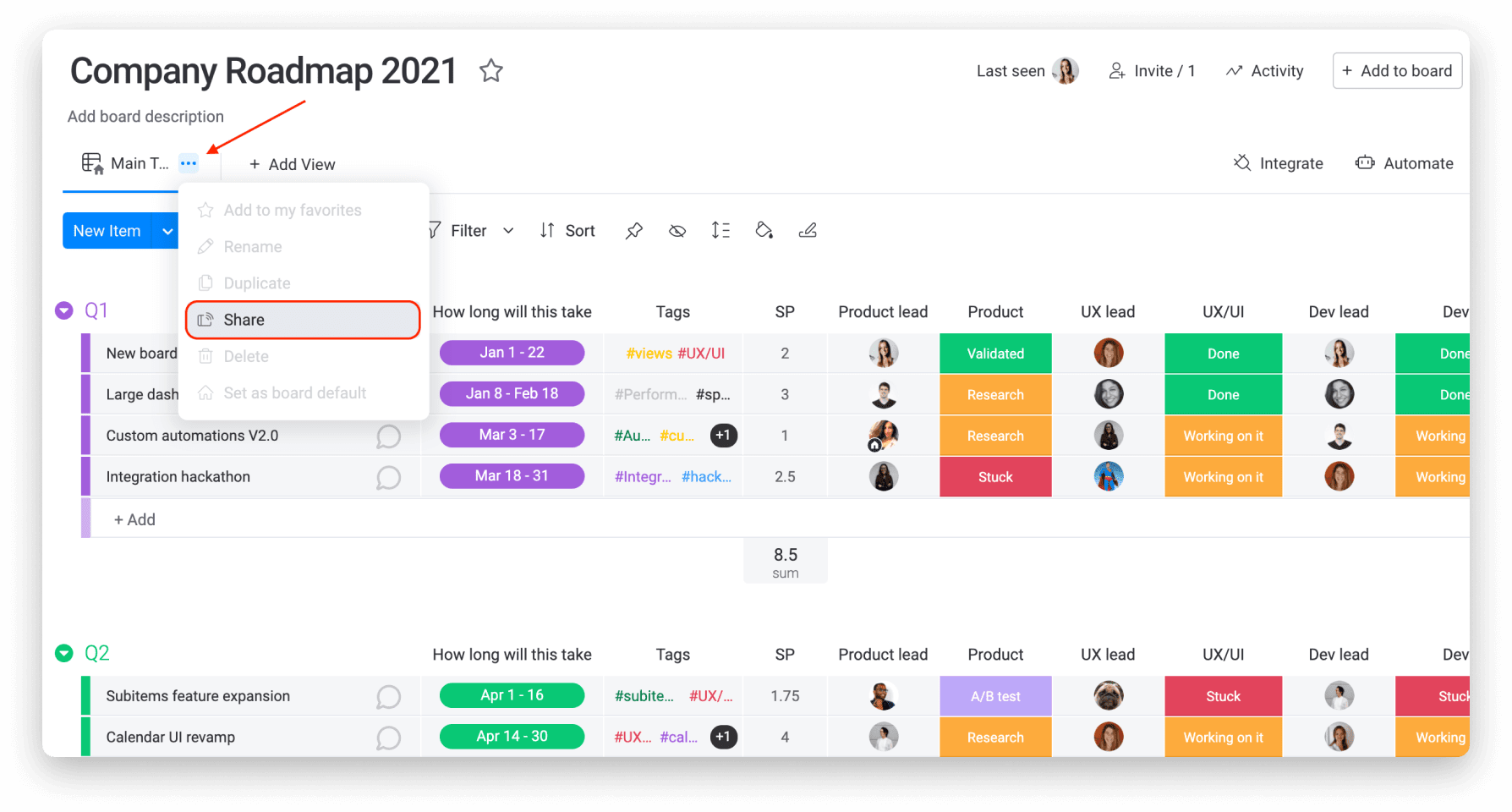 How does monday AI Workspace compare to the alternatives you may already use? Here’s a quick breakdown:
| Feature | Spreadsheets | Word processors | monday AI Work Platform |
|---|---|---|---|
| Structured sections | Manual setup | Manual formatting | Pre-built business plan template |
| Financial tracking | Static formulas | None | Live dashboards with real-time data |
| Team collaboration | Version conflicts | Track changes only | Real-time co-editing with ownership |
| Timeline visualization | Limited charts | None | Gantt charts with dependencies |
| Stakeholder sharing | Email attachments | Email attachments | Shareable links with permissions |
| Automation | None | None | Automated reminders and status updates |
| AI assistance | None | Limited add-ons | Built-in AI for content generation and insights |
Turning your business plan into a growth engine
A business plan template is only as valuable as the action it drives. The right template gives your venture structure, credibility, and a roadmap that evolves alongside your business.
monday AI Workspace transforms your static business plan into a living, intelligent workspace, one where your team collaborates on strategy, tracks financial milestones, and leverages AI-powered insights to move from planning to execution without missing a beat. Built-in AI capabilities accelerate content generation, surface strategic recommendations, and help you refine every section with data-driven precision.
FAQs about business plan templates
What are the three Cs of a business plan?
The three Cs of a business plan are company, customers, and competitors. These form the foundation of your market positioning and help investors understand your business landscape.
How long should a business plan be?
A business plan should be 15 to 25 pages for a traditional format or as short as one page for a lean startup version. Length depends on your audience and the complexity of your venture.
What does a business plan look like?
A business plan is a structured document with nine sections, from executive summary to appendix, presented in a professional layout with headings, financial tables, and supporting visuals.
Who should develop a business plan?
Anyone starting, acquiring, or expanding a business should develop a business plan. Founders, small business owners, and entrepreneurs seeking funding all benefit from a documented strategy.
Can AI help you write a business plan?
AI can help you write a business plan by drafting individual sections and generating initial content. However, a structured template ensures the format, financial rigor, and internal consistency that investors expect.
 Get started