


A one-page business plan is a useful tool for summarizing your goals, target audience, strategy, and next steps in an easy-to-review, easy-to-share format. Before you build a detailed business plan, a one-page version can help you test your ideas, set priorities, and create a clear outline for what comes next.
You can also keep your single-page plan on hand as your business grows, so you stay focused on your core objectives, customer needs, and most important actions.
In this article, we’ll show you how to use a one-page business plan template to create a stronger foundation for your business. We’ll also share examples, tips, and ways monday.com’s AI Work Platform can help you turn business planning into a more connected workflow.
Key takeaways
- A one-page business plan template helps you summarize your business goals, target audience, strategy, financial outlook, and next steps in one concise document
- One-page business plans are useful for testing ideas, aligning teams, pitching partners, and creating a starting point for a more detailed business plan
- Common one-page business plan formats include startup plans, business model canvases, business idea action plans, and small business plans
- The best one-page plans are clear, realistic, and focused on the information your audience needs most
- monday.com’s AI Work Platform can help teams organize business plans, timelines, dashboards, documents, automations, and execution workflows in one connected workspace
What is a one-page business plan template?
A one-page business plan condenses your business strategy into a single, easy-to-read document. A one-page business plan template provides a structured format for outlining your goals, target audience, offer, strategy, financial assumptions, and next steps.
Unlike a traditional business plan, which may run dozens of pages, a one-page plan focuses only on the most important information. The goal is to give readers a high-level understanding of what your business does, who it serves, how it will operate, and how it will grow. However, if it’s a one-page business plan to hand out to prospective investors, you’ll likely focus more on something like financial projections.
In general, your one-page business plan can include:
- Vision statements and strategic objectives of your business
- Customer segments your business will serve
- Overview of the product or service you’ll provide
- Sales goals and marketing strategy
- High-level business overview of financial projections
Why use a one-page business plan template?
A one-page business plan template helps you focus on the information that matters most instead of getting lost in unnecessary detail.
Provide an overview of your business plan
A one-page plan gives you a quick overview of the most important parts of your business venture. It captures the moving pieces of your strategy, operations, audience, and goals so you can stay focused on what matters.
One-page business plan templates are a very useful starting point for developing a more detailed standard business plan. By creating a high-level document, you can begin to sketch out your ideas and assumptions and test them before spending lots of time developing a long business plan that you end up rewriting. Once you’re satisfied with your one-page plan, you have a step-by-step outline for a more in-depth version.
Manage operations and finances
As you grow your business, the operations and finances side of things often become more complex and difficult to manage. In times like these, when you need to make important decisions, a one-page business plan helps keep the core objectives of your venture in mind at all times. Nailing down your template means you don’t waste time deciding which details are most important, so you can focus your time and energy on growing your business.
Synthesize business information
Another key benefit of having a one-page business plan on hand is that it provides anyone with a snapshot of your business whenever needed. This can be useful for your management team, potential business partners, or investors who want a fast, easy-to-digest overview of your business.
While you might have an elevator pitch ready, a one-page plan helps back up your claims, especially for items like financial projections or your cash flow statement. A one-page business plan template makes it easy for you to quickly synthesize relevant information for the target audience. Simply drop the latest information into your template and get ready to present.
What are some examples of one-page business plans?
Before you write a one-page business plan, it helps to understand the different template formats available and decide which one best fits your needs.
Startup one-page business plan template
Writing a business plan for a startup is different from creating one for an established business. Startups often have limited historical data, so their plans need to leave room for testing, learning, and adjusting as the business model develops.
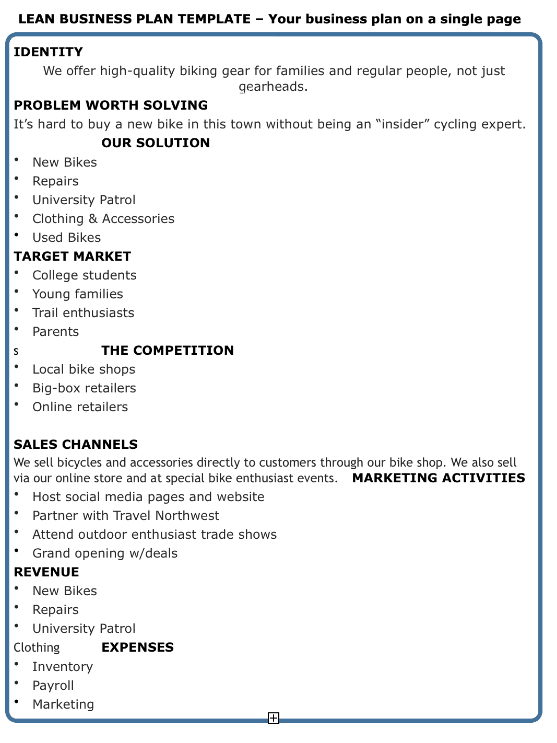
A one-page startup plan is useful for laying the groundwork for deeper strategic analysis while keeping the business model flexible.
Business model canvas
With a business model canvas, you can quickly outline your target market, value proposition, revenue streams, cost structure, channels, and key activities. Seeing these elements on one page makes it easier to test assumptions, compare options, and refine your business strategy.
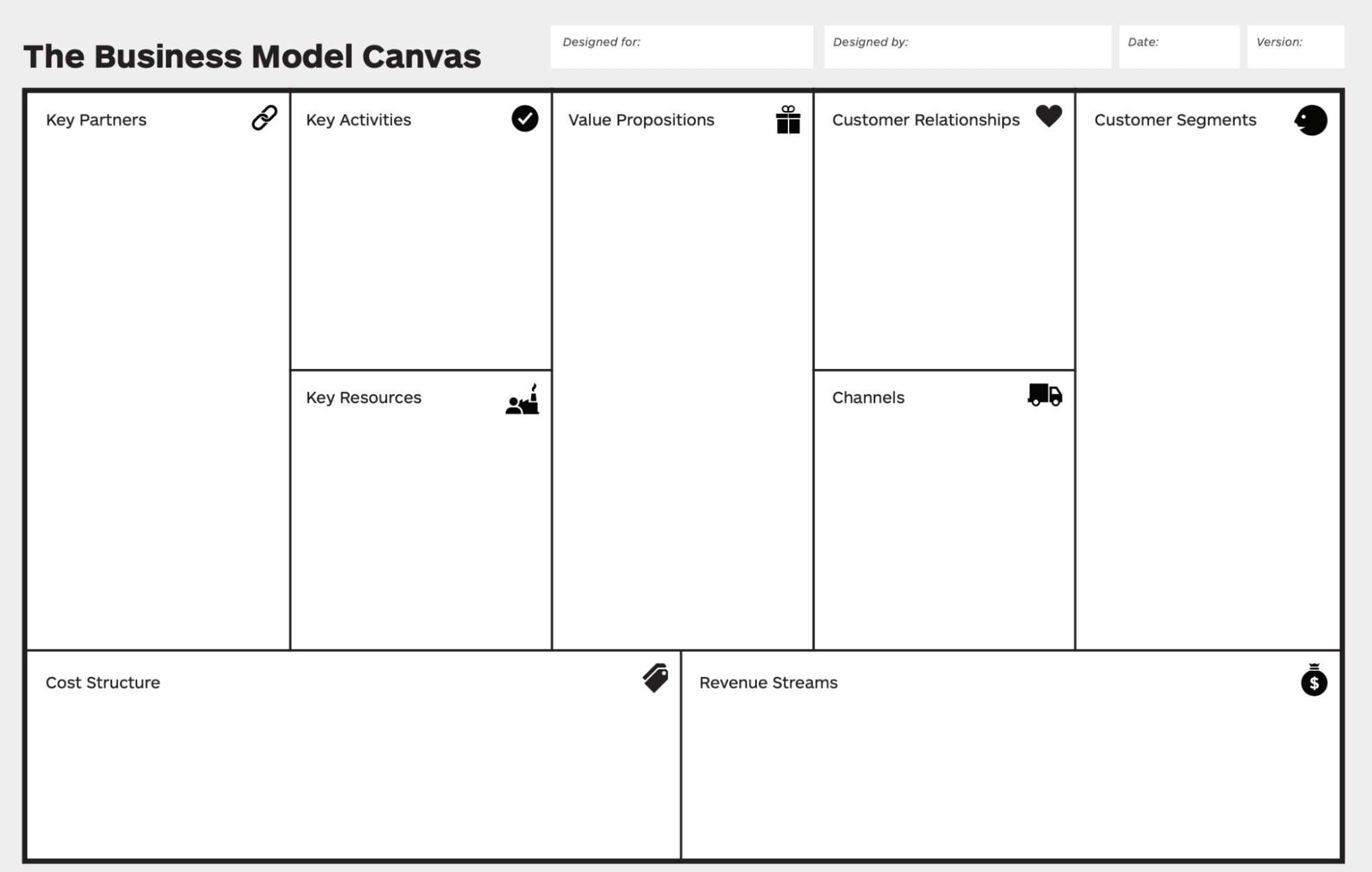
With a business model canvas, you’ll be able to quickly outline items like your target markets, value proposition, and revenue streams. Writing and comparing these sections on one-page allows you to validate your business model against your market analysis and quickly iterate on different elements of your business strategy.
Business idea action plan template
While many business plan templates focus on strategy and high-level objectives, some businesses require more focus on operations and action right from the start. In those instances, a business idea action plan template can be more beneficial.
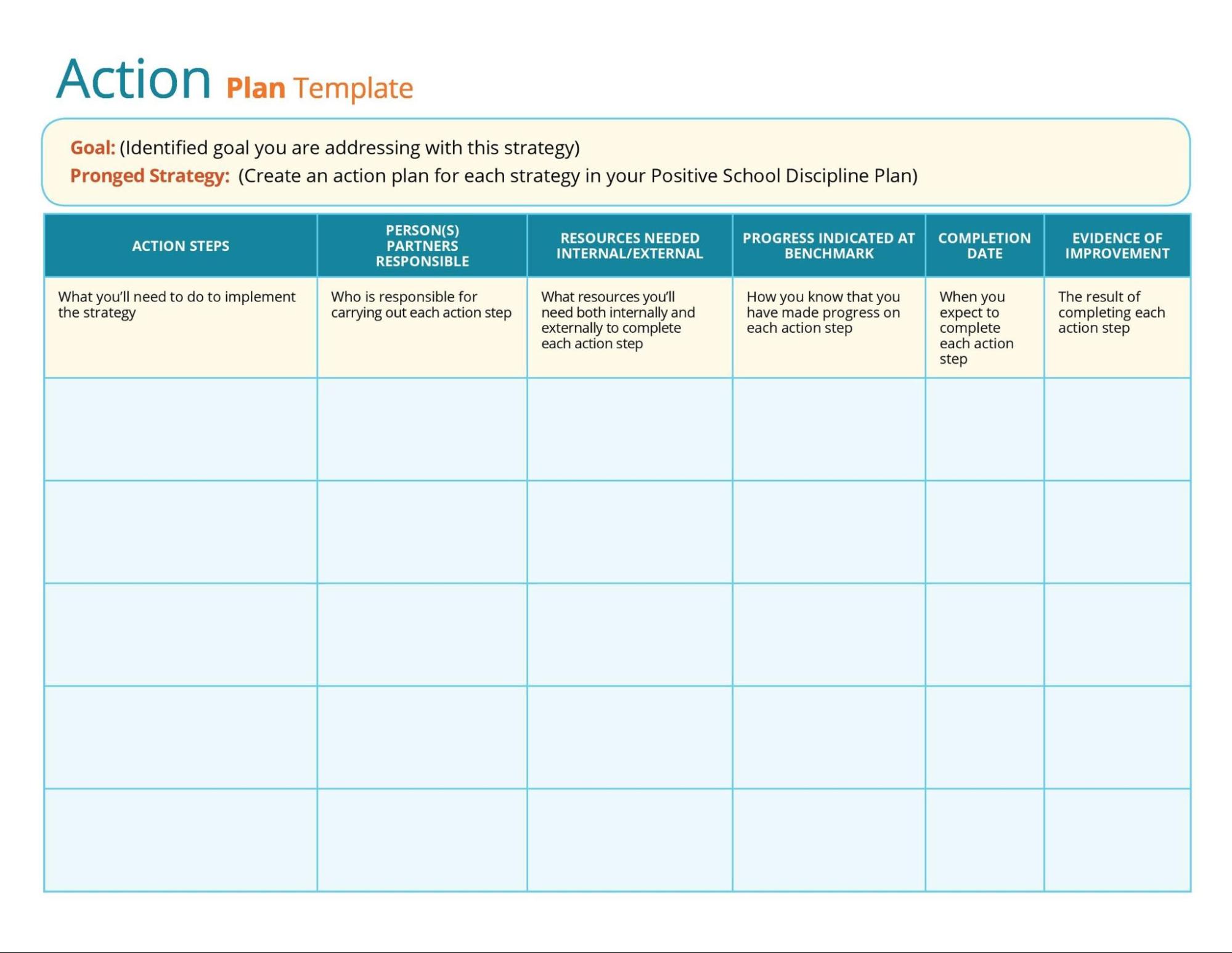
This type of one-page business plan focuses on what you’re going to do, how you’ll do it, and which actions need to happen first, rather than emphasizing analysis or long-range projections.
Small business plan template
Small businesses are often operating with limited funding and narrow profit margins. These constraints make revenue targets and cost-effective operations critically important to success, especially for a service business.
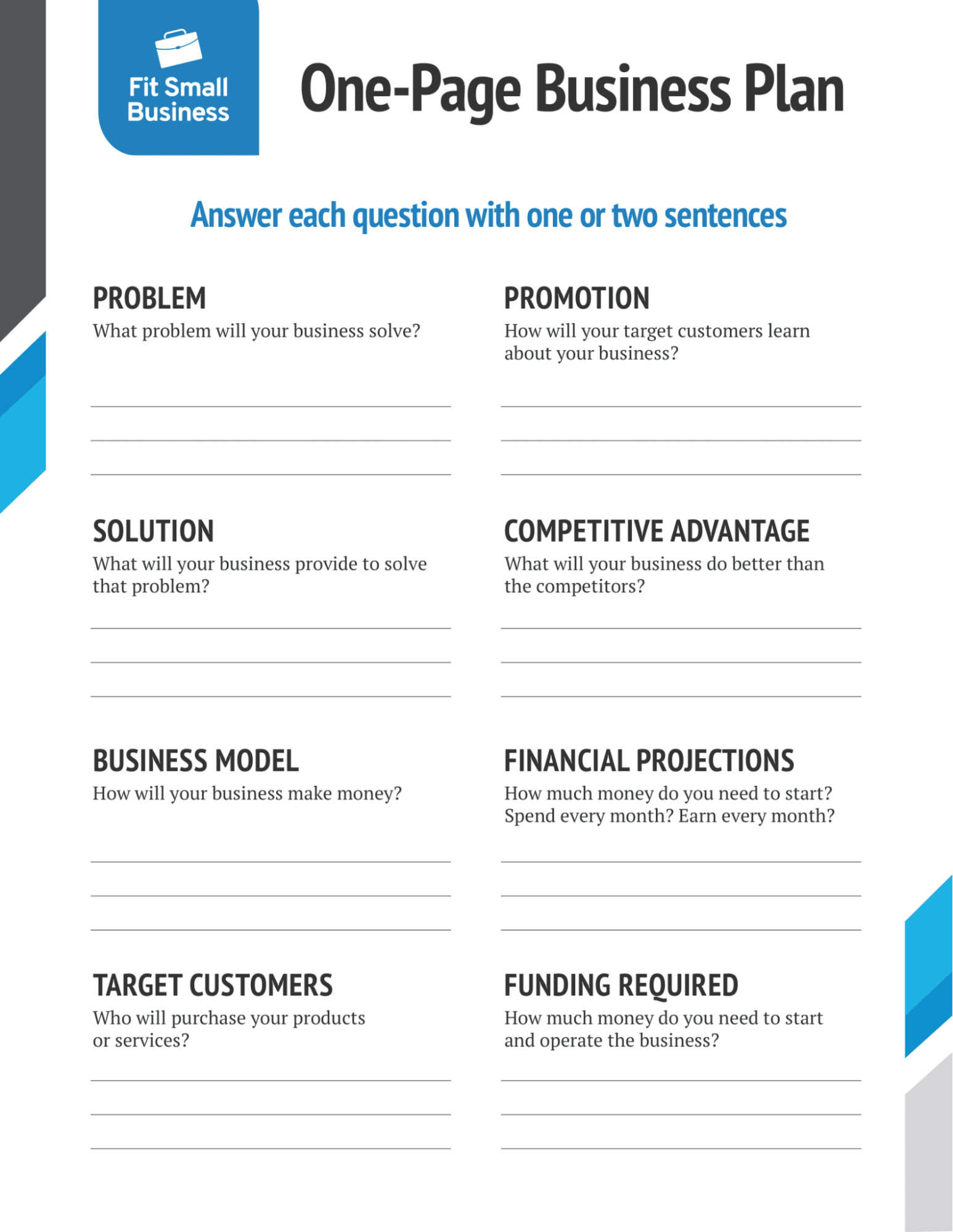
In this case, a shorter business plan template can help small businesses define their niche, set clear targets, create realistic timelines, and keep strategy aligned with the bottom line.
monday.com’s one-page business plan template
Building a one-page business plan from scratch involves several moving parts, but the process doesn’t have to be complicated. A template gives you a clear structure for shaping your strategy, goals, key activities, timelines, and targets in one place.
monday.com’s one-page business plan template helps teams organize the core elements of a business plan and keep goals, targets, owners, and next steps visible as the business grows. With monday.com’s AI Work Platform, teams can use the template to support:
- A visual overview of your business strategy in one place, making it easier to share plans and update them as priorities change
- Customizable fields and views so your business plan reflects your goals, branding, timeline, and audience
- The ability to add visuals, tables, files, updates, and supporting context to make the plan easier to understand
- Real-time collaboration with business partners, managers, and team members as the plan develops
- Integrations and automations that help move your plan from a static document into day-to-day execution

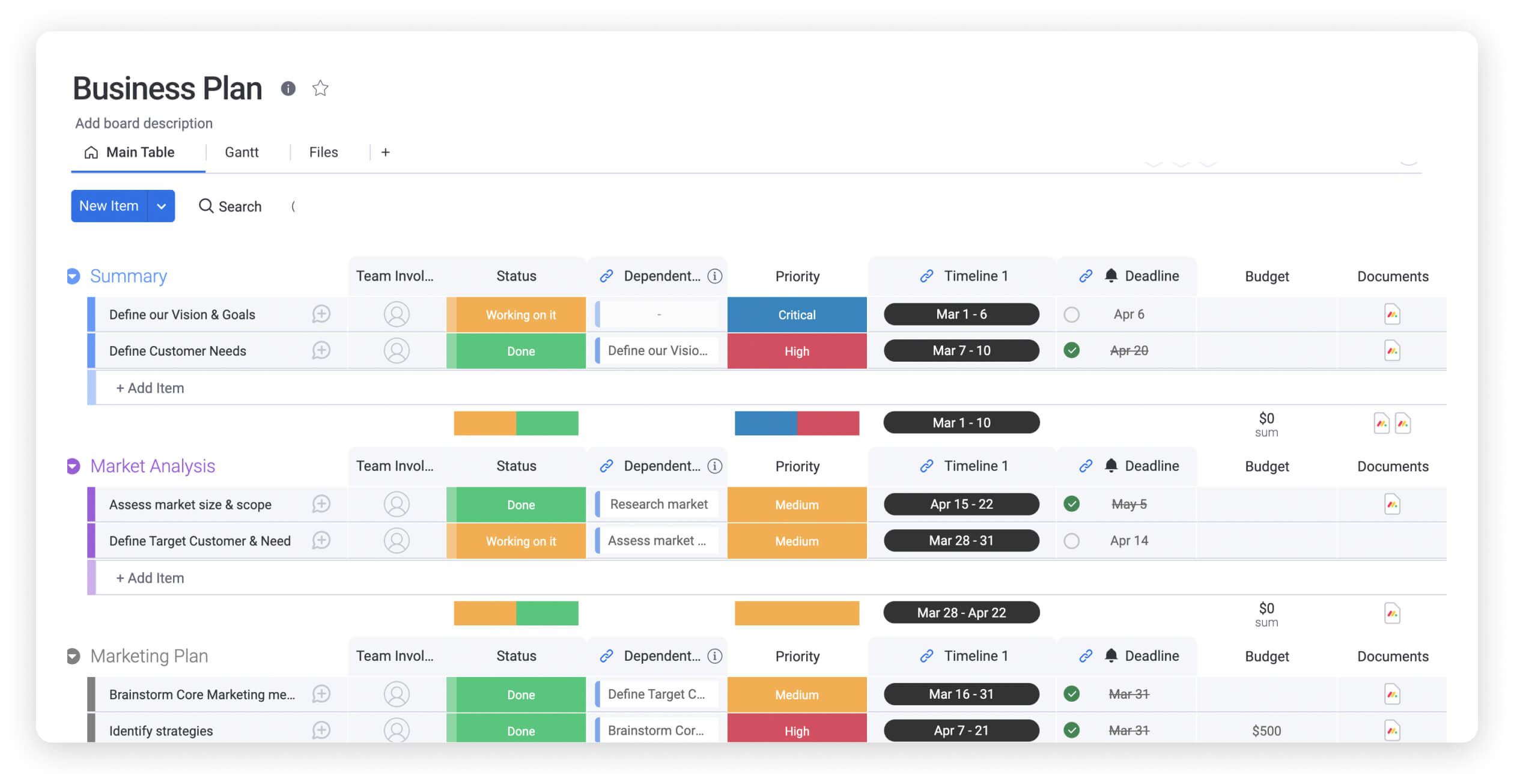
Use monday.com to create a one-page business plan, align your team around the most important goals, and connect planning to the work that follows.
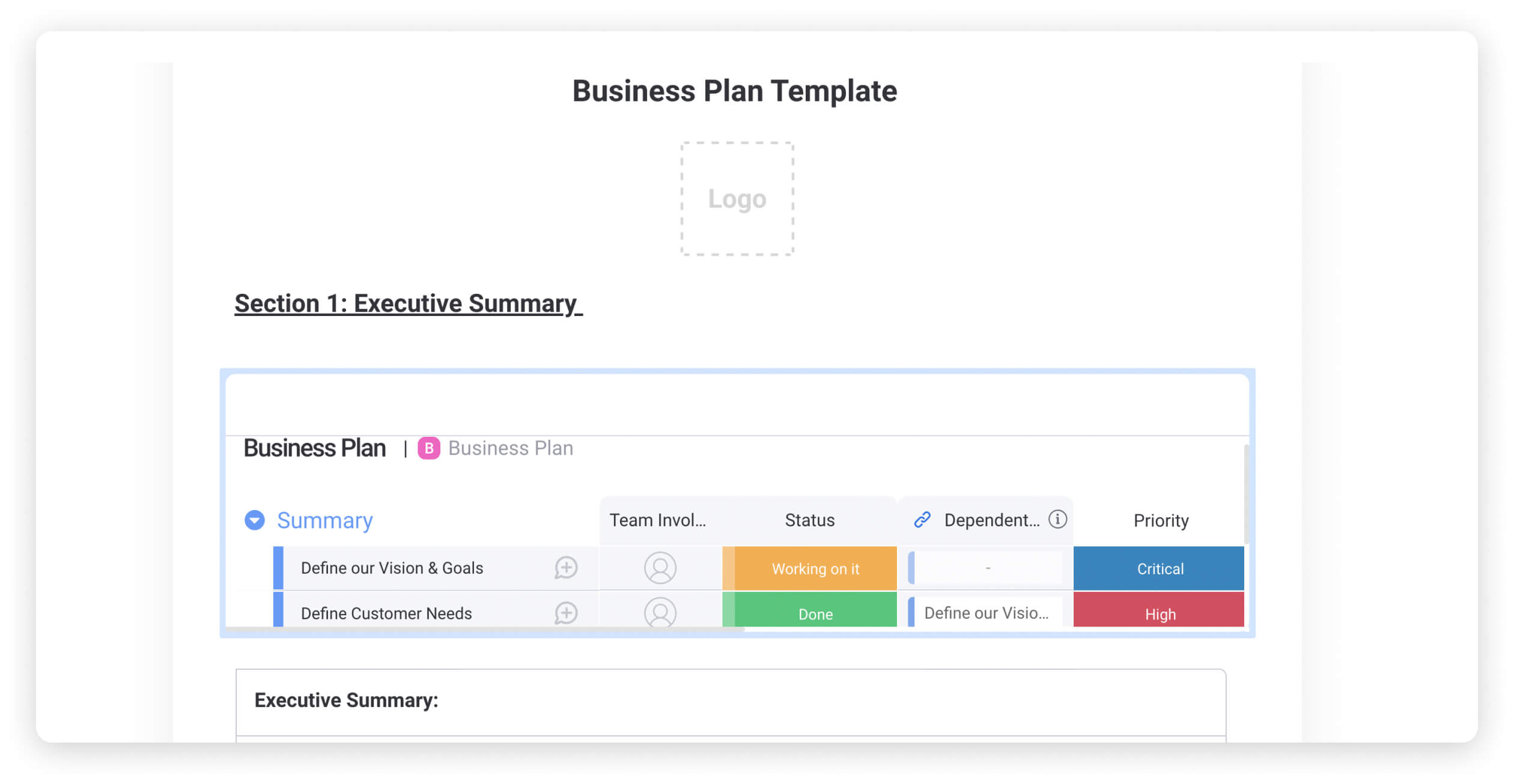
One-page business plan tips & tricks
Although a one-page business plan is shorter than a full business plan, it still needs to be clear, realistic, and useful.
Understand your target market
Before you start outlining your business activities and tactics, it’s imperative that you fully understand your target market and your product-market fit. This understanding includes considerations such as customer price sensitivity, buying preferences, demographics, and more.
Without understanding your target market, building a business model can lead to sales targets and timelines that don’t materialize, a marketing plan or marketing materials that miss the mark, and unrealistic financial projections.
Fine-tune your products and services
Another key element of your business plan is the outline of the products and services you’ll offer. In this area, business owners need to thoroughly understand the cost of production, how to price products and services to remain profitable, and how their offerings measure up against competitors in the market.
By getting a firm grasp of your value offering, you can more accurately project costs, revenue, and profitability over the long term.
Keep your goals and projections realistic
When creating your one-page business plan, use the hard numbers regarding costs and budget to remain realistic about your business goals.
This approach applies to your timelines, too. When your goals and targets are ambitious, there needs to be an achievable timeline and resource allocation attached to them.
Get startedFAQs
What is a one-page business plan?
A one-page business plan is a concise summary of your business goals, target market, products or services, strategy, financial outlook, and next steps. It gives readers a quick overview of what your business does, who it serves, and how it plans to grow.
How do you write a one-page business plan?
To write a one-page business plan, focus on the most important parts of your business: your mission, target audience, offer, revenue model, marketing strategy, key goals, and financial projections. Use short sections, clear headings, and visuals where helpful so the plan is easy to scan.
What should a one-page business plan include?
A one-page business plan should include your business mission, target customers, products or services, competitive positioning, sales and marketing strategy, operational priorities, financial goals, and next steps. The exact sections can change depending on whether the plan is for internal use, investors, partners, or early-stage planning.
What is the difference between a one-page business plan and a traditional business plan?
A one-page business plan gives a high-level summary of the most important business information, while a traditional business plan provides more detail across sections like market analysis, operations, financial forecasts, and funding needs. A one-page plan is often used as a starting point before building a longer version.
How can monday.com help with a one-page business plan?
monday.com’s AI Work Platform can help teams create, organize, and manage a one-page business plan alongside the work that supports it. Teams can use templates, dashboards, automations, documents, and AI-powered capabilities to connect strategy, owners, timelines, and execution in one workspace.
 Get started