


Every marketing campaign runs on customer relationships. Whether your team is running social ads or building a seasonal email flow, results depend on knowing what your customers want and what keeps them coming back. When customer information sits scattered across inboxes, spreadsheets, and ad platforms, marketers end up guessing. A marketing CRM pulls all of it together so you can segment audiences, personalize outreach, and measure what’s working across channels.
Below, we’ll cover what a marketing CRM does, how to build a strategy around it, and how it compares to a sales CRM. We’ll also walk through 5 leading platforms, including monday CRM, so you can find the right fit for your team.
Key takeaways
- A CRM for marketing centralizes customer data so teams can plan, personalize, and measure campaigns in one place.
- The biggest wins come from personalization at scale, stronger lead management, and higher return on marketing spend.
- Automation and AI now handle repetitive work like lead scoring, follow-ups, and reporting, freeing marketers to focus on strategy.
- Choosing the right platform means matching features like segmentation, integrations, and multichannel outreach to your goals.
- monday CRM brings marketing and sales into one workspace, with AI agents, campaigns, and real-time dashboards built in.
What is CRM for marketing?
A CRM for marketing is a platform that helps marketers manage strategies, tactics, and contacts. A marketing customer relationship management platform helps nurture prospects from when they’re first attracted to your brand until they then move through the sales funnel and even after.
Using CRM software to store and manage your customer data makes it easier to segment audiences, plan campaigns, and grow revenue all in one central location.
The role of a CRM for marketing is that it acts as a single source of truth and a single hub for all your customer communications and data, helping your team work collaboratively on the same information.
Wondering how this differs from a marketing automation platform? A marketing CRM stores unified customer data and manages relationships across the full lifecycle, while a marketing automation platform focuses on executing and scheduling campaigns like email sequences and ads. Most modern CRMs now blend both, so you get relationship data and campaign execution in the same platform.
What is a CRM marketing strategy?
A CRM marketing strategy is your plan for using customer data to guide every campaign across the customer lifecycle. Instead of sending one-off blasts, you use what you know about each contact to reach the right people with the right message at the right time. The strongest strategies follow a repeatable sequence, so results compound instead of resetting with each campaign.
Most effective CRM marketing strategies move through 5 steps:
- Collect customer data: Gather contact details, behavior, and past interactions into one record so every team works from the same picture.
- Segment your audience: Group contacts by demographics, behavior, or lifecycle stage to make messaging relevant.
- Personalize your messaging: Tailor content and offers to each segment based on what the data tells you.
- Automate the workflow: Trigger emails, follow-ups, and hand-offs automatically so timing stays consistent.
- Measure and optimize: Track engagement and conversions, then feed those insights back into the next campaign.
The foundation of any CRM marketing strategy is clean, centralized data. When customer information lives in one place, as it does on monday CRM, your team can move from planning to execution without stitching together scattered sources.
Core benefits of using a CRM for marketing
The payoff is real. McKinsey’s 2025 research found that 71% of consumers expect personalized interactions and 76% get frustrated when they don’t happen, so a platform that personalizes at scale directly shapes results. The stakes keep rising, too: Grand View Research values the CRM market at $79.6 billion in 2025, climbing to $86.4 billion in 2026 at a 9.3% CAGR, a sign of how central these platforms have become to predictable growth.
Setting up your customer relationship management platform as a marketing database can be highly beneficial to your team. Your CRM can become a single source of truth for your marketing team, housing essential documents, contact data, communications, and analytics. Below are some of the core benefits of using a CRM for marketing.
- Data-driven decision making: CRMs store a wealth of customer data, such as real-time analytics and performance metrics that marketers can use to adjust campaign strategies based on what’s actually working.
- Personalization at scale: CRMs now analyze customer behavior in real time, automate campaign workflows, and personalize outreach at scale — saving hours while boosting performance.
- Stronger lead management: CRMs help marketers track lead management from initial contact through conversion so that no opportunity gets overlooked.
- Boost customer retention: CRMs enable marketers to stay focused on keeping customers engaged, which can reduce churn and improve customer loyalty.
- AI-powered efficiency: Built-in AI features automate repetitive marketing tasks, from lead scoring to campaign optimization, while surfacing actionable insights in real time.
- AI agents that do the work: autonomous AI agents now source, qualify, and follow up with leads on their own, turning your CRM from a record keeper into an active member of the team.
- Increased ROI: Optimized marketing efforts allow companies to achieve greater results with lower costs.
- Predictable growth: As CRM adoption grows across the market, teams that centralize data get sharper forecasts and steadier pipeline, making revenue easier to plan for.
- Better campaign coordination: Marketing teams can align their efforts across channels and ensure consistent messaging throughout the customer journey.
- Improved team collaboration: Centralized customer data ensures all team members have access to the same information, reducing silos and miscommunication.
Learn more: CRM virtual assistant
Marketing CRM vs sales CRM
A marketing CRM and a sales CRM share the same core, but they optimize for different jobs. A marketing CRM focuses on segmentation, campaigns, nurture, and attribution, while a sales CRM centers on pipeline, deals, and forecasting. Both work from shared customer data, so the difference comes down to what each one is built to move forward.
| Marketing CRM | Sales CRM | |
|---|---|---|
| Focus | Campaigns and audience engagement | Pipeline and deal progression |
| Primary users | Marketing and lifecycle teams | Sales reps and managers |
| Key capabilities | Segmentation, email campaigns, lead nurturing, attribution | Contact management, deal stages, forecasting, activity tracking |
| Best for | Attracting and nurturing prospects at scale | Converting qualified leads into revenue |
In practice, the line keeps blurring. Unified platforms like monday CRM connect both sides in one system, so marketing hands off warm leads with full context and sales sees exactly how each contact arrived.
How CRMs facilitate multichannel marketing campaigns
Marketers can use their CRM as a communication base, logging correspondence and integrating the platform with key channels to engage potential customers at different touchpoints. From email marketing and beyond to social media and other digital channels, CRMs pull all your campaign data and communications into one home. Here are some of the top ways to use a CRM to advance multichannel marketing efforts.
Email marketing
- Centralize campaign management with inbox integration with email platforms like Gmail and Outlook to create, send, and track campaigns from a single dashboard.
- Personalize at scale with CRM customer data to segment audiences and tailor content based on behavior, preferences, and purchase history.
- Track email performance like open rates, click-throughs, and conversions in real-time to optimize messaging and improve ROI.
Example: An online bookstore uses an email marketing CRM to send personalized book recommendations to customers based on their past purchases and browsing history. Customers open relevant emails suggesting new releases in their favorite genres that they’re interested in purchasing.
Social media
- Unify social listening by using a CRM to track mentions, comments, and direct messages across platforms like LinkedIn, Instagram, Facebook, and X (Twitter)
- Capture and nurture leads with a CRM that can identify prospects that engage with your content the most and automate relevant follow-ups.
- Connect social media interactions to sales outcomes to improve campaign attribution so that your team understands which platforms and content types drive conversions.
Example: A B2B software company uses a CRM to monitor LinkedIn engagement. The CRM automatically creates lead records for company executives who comment on thought leadership posts, then triggers personalized outreach sequences.
Digital marketing
- Send timely, personalized SMS campaign messages for promotions, appointment reminders, or order updates directly from your CRM.
- Coordinate multi-channel campaigns across SMS, push notifications, in-app messages, and digital ads to create cohesive customer journeys.
- Maintain opt-in preferences and communication frequency caps across all digital channels to respect customer preferences and compliance requirements.
Example: A fitness studio uses CRM-powered SMS to send class reminders and last-minute availability alerts, increasing class attendance by 25% while tracking which message types generate the best response.
Customer interactions
- Add live chat to your website that connects to your CRM, so that potential customers can ask questions and get answers in real-time.
- Deploy AI-powered chatbots that pull from CRM data to answer common questions, qualify leads, and escalate complex issues to human agents with full context.
- Analyze chat transcripts with an AI-powered CRM to identify customer sentiment, common pain points, and upsell opportunities that inform marketing strategies.
Example: An online retailer’s CRM-connected chatbot recognizes returning customers, references their order history, and provides personalized product suggestions. The AI chatbot then seamlessly transfers the customer profile, where the full conversation context is already logged, to human agents to handle complex returns.
Choosing the right CRM for your marketing needs
CRMs come in all shapes and sizes. Some are more targeted to sales teams, while others can be customized to fit a range of use cases. When considering different software options, it’s important to first start with an understanding of the features your team needs most.
This will make it easier for you to narrow down options to platforms that best fit your marketing team’s specific needs. Here are some of the main features to look for in a CRM for marketing:
- AI and automation: CRM automation is particularly handy when it comes to maximizing efficiency and bypassing manual tasks like following up with leads and generating AI-driven reports for email campaigns.
- Campaign management: The solution you choose should help your team manage campaigns from creation to optimization, with features for building email marketing campaigns, automating campaign workflows, and gathering insights to improve performance.
- Lead management: Marketers need to gather all the intel they can on leads and customers to inform smart campaigns, so make sure your CRM can gather lead data, track engagement levels, and nurture leads at every stage of the customer journey.
- Robust integrations: Most marketing teams already have a packed tech stack, including email marketing tools, communication platforms, and social channels, so the CRM you choose should offer simple CRM integrations that sync data and workflows into one platform.
- CRM segmentation capabilities: Your CRM should enable you to divide your audience into targeted segments based on demographics, behaviors, or engagement levels to deliver relevant marketing messages every time.
- Analytics and reporting: Look for a CRM that provides real-time dashboards and customizable reports to track campaign performance, measure ROI, and identify opportunities for campaign optimization.
- Multichannel communication: Choose a software that supports outreach across multiple channels, such as email, SMS, social media, and chat, so that you can interact with customers where they are.
5 best CRM software for marketing
Marketing teams looking for the best CRM software for their business have several options. Whether you want a CRM for a small business or you want to manage enterprise marketing campaigns, there are versatile platforms out there to choose from.
Below, you can compare the 5 top platforms side by side to get a quick overview of their main selling points, pricing, and reviews. Keep reading below to get more details on each.
| Platform | Use case | Pricing | Free trial |
|---|---|---|---|
| monday CRM | All-in-one AI solution to coordinate smart marketing campaigns | Plans starting from $12/seat/month | 14 days |
| Salesforce Marketing Cloud | Advanced marketing automation for Salesforce users | Plans starting from $25/user/month | 30 days |
| HubSpot Smart CRM | Streamlining lead generation and marketing automation | Free plan; paid from $9/seat/month | N/A; free plan |
| Zoho CRM | Centralizing customer data and automating marketing workflows | Plans starting from $14/user/month | 15 days |
| Zendesk Sell | Productivity-focused CRM for sales and marketing teams | Plans starting from $19/user/month | 14 days |
1. monday CRM
Use case: All-in-one AI solution to coordinate smart marketing campaigns
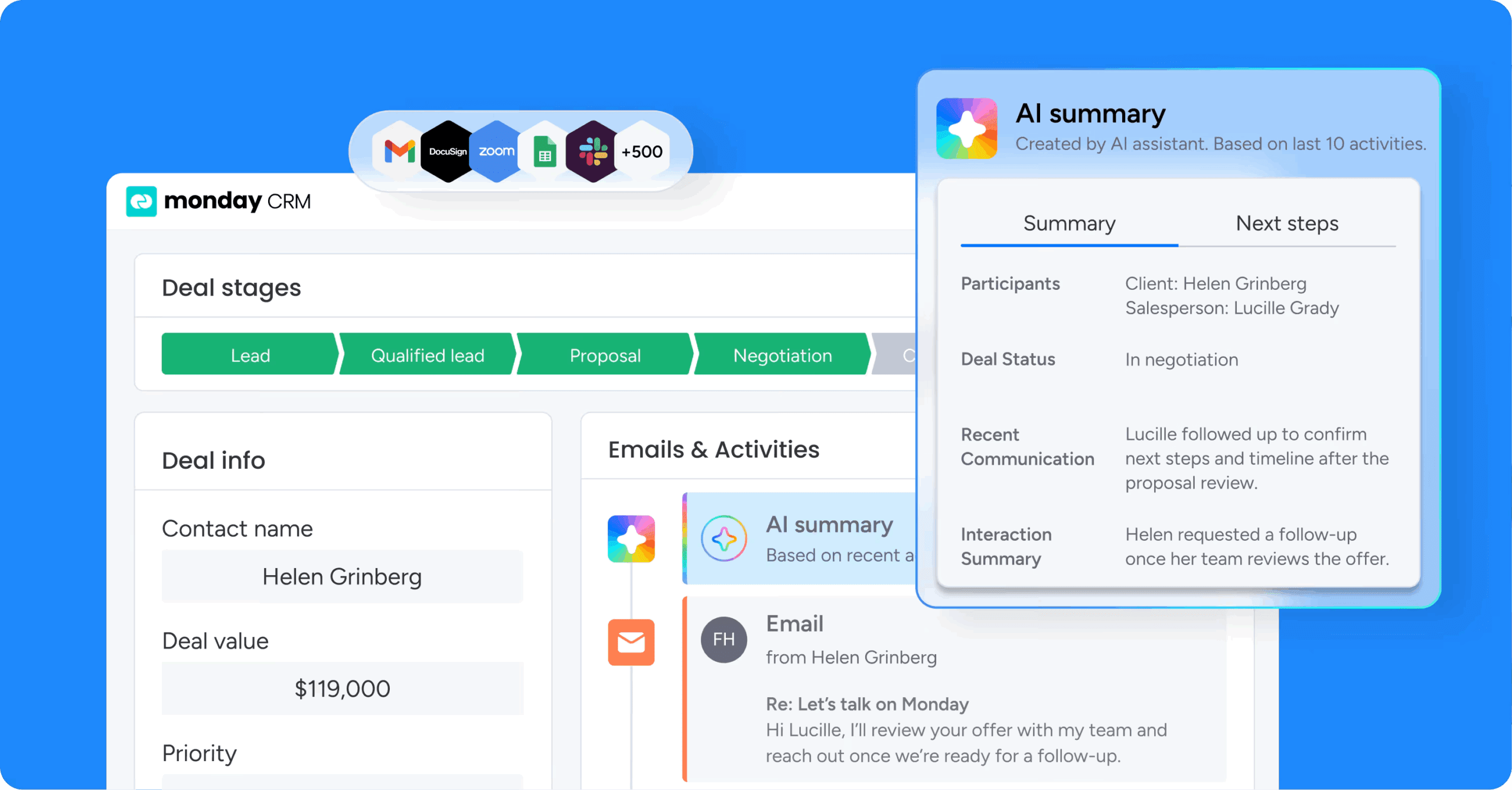
Marketers love monday CRM’s intuitive interface and smart AI workflows, which make it simple to create repeatable, personalized marketing processes. In addition to being a crucial component of your sales tech stack, monday CRM supports revenue teams in driving efficiencies at every stage of the customer journey, bridging workflows between marketing and sales teams.
Key features
- Craft customizable email campaigns with drag-and-drop templates.
- Build advanced AI automations with built-in recipes to create automated workflows.
- Nurture new prospects by understanding customer sentiment and preferences.
- Learn more about monday CRM features for marketing agencies.
Pricing
- Free 14-day trial
- Plans starting from $12/seat/month
Learn more about monday CRM plans and pricing.
2. Salesforce Marketing Cloud
Use case: Advanced marketing automation for Salesforce users

Salesforce Marketing Cloud helps marketers design, automate, and manage customer journeys from one platform. The platform is ideal for teams already using Salesforce products like Sales Cloud, Tableau, or Einstein 1, as it helps them smoothly deploy campaigns such as email marketing, advertisements, mobile campaigns, and more.
Key features
- Integrate Agentforce for advanced marketing AI and to streamline tasks
- Gain meaningful analytics and insights into campaign performance
- Personalize the customer experience at every touchpoint
Pricing
- Free 30-day trial
- Plans starting from $25/user/month
3. HubSpot Smart CRM
Use case: Streamlining lead generation and marketing automation

HubSpot Smart CRM is an AI-powered platform that helps businesses of all sizes attract, engage, and retain customers through smart automation and data-driven campaigns. It empowers marketing teams to build stronger relationships with prospects by unifying communication and performance tracking across every stage of the funnel.
Key features
- Generate leads directly from your website with customizable forms.
- Tailor email campaigns with a built-in AI email writer.
- Enrich customer records with AI to gather data from emails, calls, and web sources.
Pricing
- Free forever plan for up to 2 users
- Plans starting from $9/seat/month
4. Zoho CRM
Use case: Centralizing customer data and automating marketing workflows

Zoho CRM offers an easy-to-use interface that’s particularly suited to small businesses. It helps teams automate marketing workflows, manage customer relationships, and reduce manual work. Zoho CRM helps marketers improve lead engagement and conversion rates by giving them a clear view of customer interactions and campaign effectiveness in one place.
Key features
- View Google Ad Campaign and sales data in one dashboard
- Integrate over 800 third-party apps through Zoho Marketplace
- Capture, segment, and nurture leads with marketing automation
Pricing
- Free 15-day trial
- Plans starting from $14/user/month
5. Zendesk Sell
Use case: Productivity-focused CRM for sales and marketing teams

Zendesk Sell is an integrated CRM that helps sales and marketing teams automate outreach, manage leads, and streamline communication across channels. With Zendesk Sell, marketers can maintain momentum throughout the sales cycle by aligning customer insights with campaign execution so that no opportunity slips through the cracks.
Key features
- Segment and filter leads in real time with smart lists.
- Send bulk emails to prospects and customers for faster campaign management.
- Log and track marketing calls and texts to maintain complete communication history.
Pricing
- Free 14-day trial
- Plans starting from $19/user/month
Opt for a versatile solution for marketing teams with monday CRM
With monday CRM, marketing professionals get a centralized, user-friendly interface to manage marketing campaigns from start to finish. The AI CRM is suitable for anyone from small independent marketing teams to large digital marketing agencies in any industry, thanks to its flexibility, customization, and scalable pricing and plans.
Powered by advanced AI, monday CRM helps marketing teams automate tasks in seconds and gather essential data about customer behavior to inform winning campaigns. In parallel, monday CRM can be used to collaborate with sales and service teams with features to manage sales pipelines and post-sales activities, such as customer onboarding and account management.
Detailed campaign management
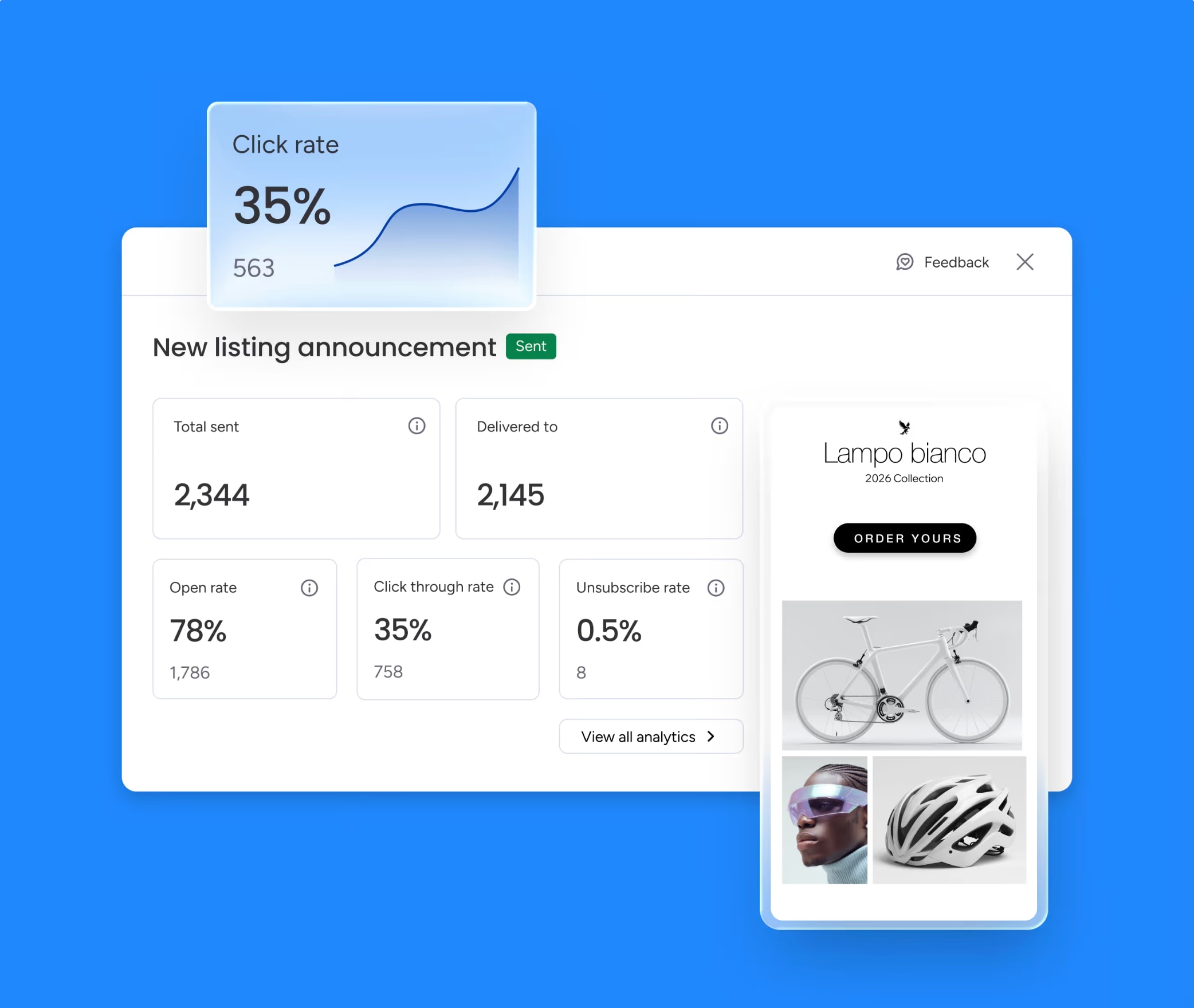
Launch completely personalized campaigns straight from monday CRM. Marketers can create memorable campaigns using monday campaigns, which includes a drag-and-drop interface along with smart templates that fit unique content and strategy needs. You can plan the work on dedicated campaign boards, then let AI draft a full campaign from a simple prompt. AI can even extract your brand’s look and voice to keep messaging consistent, while segmentation updates as customer data changes. From there, teams send mass emails and multi-step sequences, then track results like open rate and CTR all in one system.
Data analytics and campaign insight
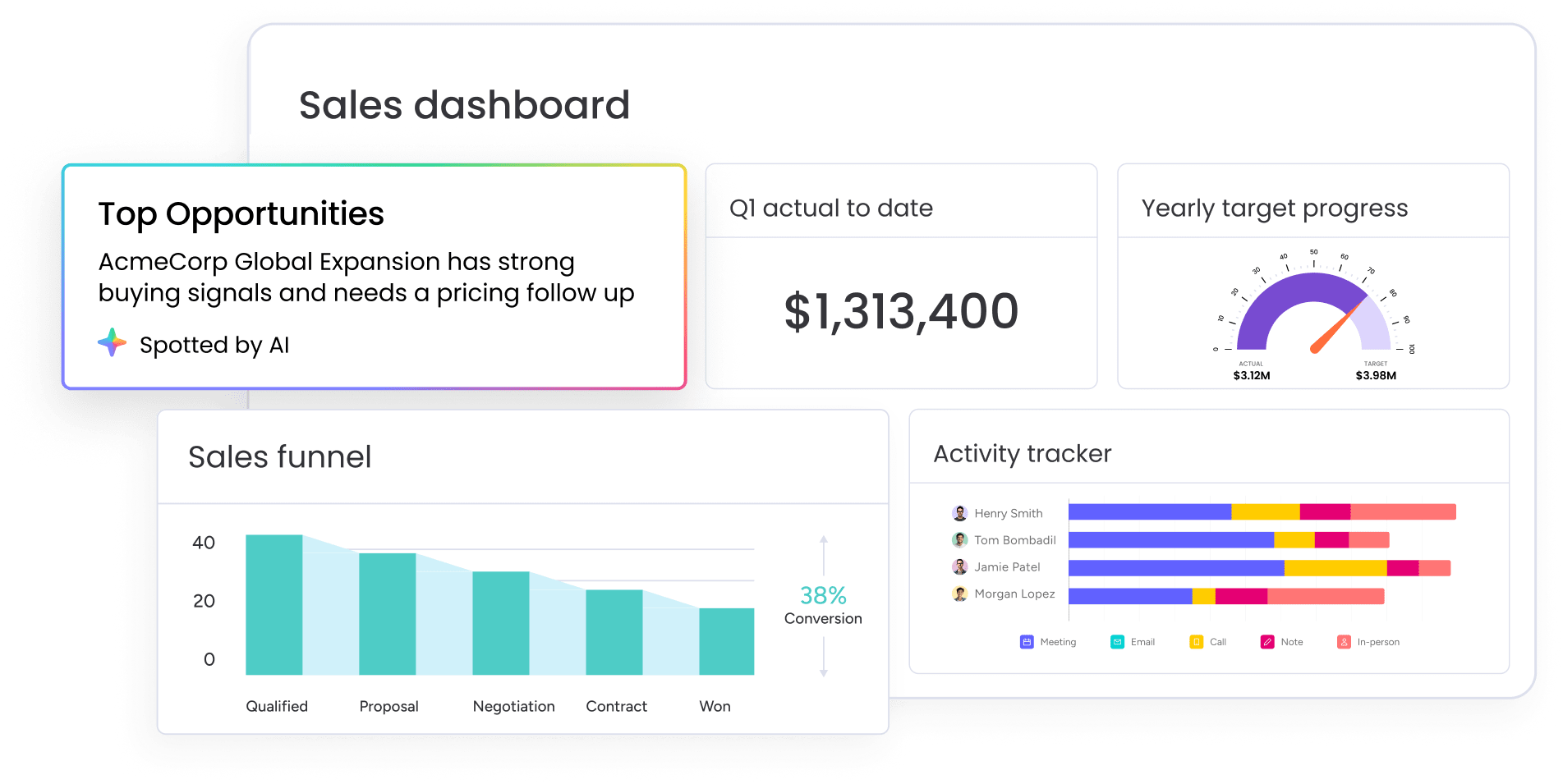
Get detailed overviews of your campaign performance with monday CRM’s dashboards and reporting tools. The platform uses AI to create reports and suggest data-backed improvements you can make in real time. Teams can also use monday CRM to gather predictive analytics and forecasting insights to help assess future campaign results based on historical data.
AI-powered workflow automations

Automate everything from lead nurturing to email send times with monday CRM. Teams can implement smart AI-driven automations that take seconds to set up to continuously engage leads and deliver personalized messages at the exact right time. monday CRM also includes AI blocks that autofill columns for you, detecting sentiment to prioritize leads, extracting information from messages, summarizing long email threads, and drafting campaign copy. On top of that, no-code automation recipes handle lead assignment, round-robin routing, and timed follow-ups, so routine work runs itself.
AI agents that expand the team
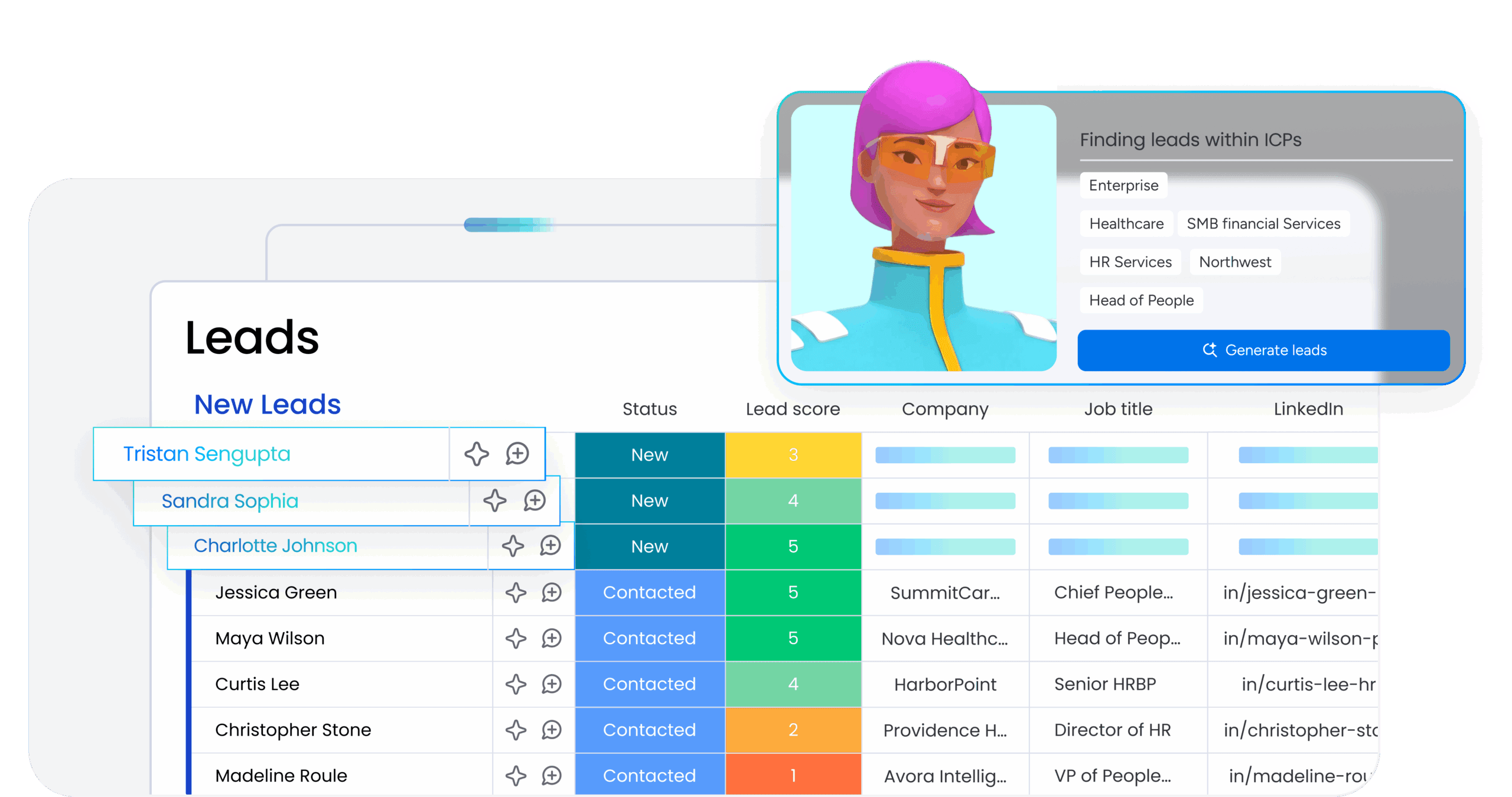
monday CRM’s AI agents take on work that used to need more headcount. The AI Sales Agent reaches out to leads through personalized calls and SMS, qualifies them, and books meetings on your behalf. The AI Lead Agent sources and enriches new leads that match your ideal customer profile, so your pipeline keeps filling without manual research. The AI Notetaker joins your calls, transcribes them, and turns each conversation into summaries and action items, keeping marketing and sales aligned with searchable, shareable notes inside the CRM.
How monday CRM compares to legacy CRMs
Here’s how monday CRM’s marketing approach lines up against a typical legacy CRM:
| Approach | monday CRM | Typical legacy CRMs | Free trial |
|---|---|---|---|
| Time-to-value | Set up in days with no-code building blocks | Often needs months and specialist help | 14 days |
| Customization | Drag-and-drop changes anyone can make | Custom code and admin resources | 30 days |
| AI | Agents that execute outreach and enrich leads | AI that mostly analyzes and reports | N/A; free plan |
| Marketing and sales | Both in one connected system | Separate modules or add-ons | 15 days |
| Pricing | Transparent, published plans | Quote-based or complex tiers | 14 days |
| Approach | monday CRM | Typical legacy CRMs | Free trial |
|---|---|---|---|
| Time-to-value | Set up in days with no-code building blocks | Often needs months and specialist help | 14 days |
| Customization | Drag-and-drop changes anyone can make | Custom code and admin resources | 30 days |
| AI | Agents that execute outreach and enrich leads | AI that mostly analyzes and reports | N/A; free plan |
| Marketing and sales | Both in one connected system | Separate modules or add-ons | 15 days |
| Pricing | Transparent, published plans | Quote-based or complex tiers | 14 days |

“With monday CRM, we’re finally able to adapt the platform to our needs — not the other way around. It gives us the flexibility to work smarter, cut costs, save time, and scale with confidence.”
Samuel Lobao | Contract Administrator & Special Projects, Strategix
“Now we have a lot less data, but it’s quality data. That change allows us to use AI confidently, without second-guessing the outputs.”
Elizabeth Gerbel | CEO
“Without monday CRM, we’d be chasing updates and fixing errors. Now we’re focused on growing the program — not just keeping up with it."
Quentin Williams | Head of Dropship, Freedom Furniture
“There’s probably about a 70% increase in efficiency in regards to the admin tasks that were removed and automated, which is a huge win for us.“
Kyle Dorman | Department Manager - Operations, Ray White
"monday CRM helps us make sure the right people have immediate visibility into the information they need so we're not wasting time."
Luca Pope | Global Client Solutions Manager at Black Mountain
“In a couple of weeks, all of the team members were using monday CRM fully. The automations and the many integrations, make monday CRM the best CRM in the market right now.”
Nuno Godinho | CIO at Velv
“monday.com provides developmental flexibility, operational efficiency, and data transparency — all in one place. We became a company that moved from chasing data to leading with it.”
Hyunghan Lee | Team Lead, Sandbox Network
"monday.com brought every part of our business into one connected space. The harmony between work management and CRM has become our operating system — giving us the clarity and confidence to scale.”
Jennifer Chinburg | Executive Vice President of Corporate Development & Brand, Chinburg Properties
“We just weren’t getting value from our old CRM. With monday.com, it's a thousand times better. Our sales teams are more informed, more consistent, and far more connected."
James Arnold | Chief Operating Officer, CenversaStep up your marketing operations with the right CRM
A CRM for marketing not only helps teams work more efficiently by helping members collaborate, but it can also become a reliable hub where all your campaigns and strategies live. With a flexible and easy-to-use system like monday CRM, marketing teams can increase ROI and work more productively by gathering essential data on customer behavior that can be used to inform targeted campaigns that deliver results.
FAQs
What is the difference between a CRM and a marketing automation platform?
The key difference between a CRM and a marketing automation platform is that a CRM is primarily designed to manage customer relationships and store contact data, while a marketing automation platform focuses specifically on executing and automating marketing campaigns. That said, many modern CRMs now include built-in marketing automation features, offering comprehensive customer management or specialized campaign tools.
How can a small business benefit from using a CRM for marketing?
Small businesses can use CRMs to compete with larger companies by automating repetitive tasks, personalizing customer communications, and making data-driven decisions without needing a big team. A CRM centralizes all customer information in one platform, making it easier to streamline workflows, track leads, manage campaigns, and build lasting relationships. Many CRMs also offer affordable plans that scale as your business grows.
What are some key CRM strategies for building effective marketing campaigns?
To build effective marketing campaigns with your CRM, start by segmenting your audience based on behavior, demographics, or engagement levels to craft targeted messages. Use automation to nurture leads consistently without manual effort, and leverage your CRM's analytics to track what's working. Marketing teams can also use CRM data to personalize communications using the analytics and insights.
What is the role of AI in modern CRM marketing tools?
AI in modern CRM marketing tools automates routine tasks like data entry, lead scoring, and email personalization. It can analyze campaign results, predict which leads are most likely to convert, and even recommend next best actions. For example, monday CRM uses AI Blocks to generate campaign insights and follow-up recommendations automatically.
Which features are essential for a CRM for social media marketing?
For a CRM for social media marketing, look for a solution that integrates with major social platforms to track mentions, comments, and direct messages in one place. Social listening capabilities help you monitor brand sentiment and identify opportunities for engagement, while lead capture features can add engaged prospects to your CRM. You should also choose a platform that offers analytics that examine your brand’s reputation and sentiment across social channels.
How can CRM integration with email marketing improve campaign results?
Integrating your CRM with email marketing allows you to leverage customer data for personalized campaigns that resonate with unique audience segments. You can automate email sequences based on behaviors or lifecycle stages for timely and relevant communication. Plus, tracking email engagement in a CRM helps teams identify hot leads, measure campaign effectiveness, and continuously refine email marketing strategies for better results.
How does monday CRM support marketing teams?
monday CRM supports marketing teams by bringing campaigns, segmentation, and reporting into one workspace. Teams can build email campaigns, automate follow-ups with AI, source leads with AI agents, and track performance on real-time dashboards, all alongside the sales pipeline.
