


Most sales teams don’t lose deals because their product is weak or their pitch needs work. They lose them because leads fall through the cracks: followed up too late, routed to the wrong rep, or never nurtured past the first touchpoint. A structured lead management process fixes this by giving revenue teams a repeatable way to capture, qualify, and move prospects through the pipeline so high-value leads get attention when it matters most. When the process works, forecasting gets more reliable, reps focus on prospects worth pursuing, and marketing and sales finally stop working against each other.
Here are the 7 stages of lead management, from generating leads to tracking what actually drives conversions. You’ll also find guidance on aligning marketing and sales, using AI to reduce manual work, and the metrics that reveal where your pipeline needs attention. Tools like monday CRM help teams execute each stage without the complexity of legacy systems.
Key takeaways
- Structure your process before you scale it: A defined lead management process is what separates predictable revenue from constant guesswork.
- Not every lead deserves the same attention: Scoring and qualifying leads early keeps your sales team focused on prospects most likely to buy, not just the most recent ones.
- Speed and personalization win deals: The faster you respond and the more relevant your follow-up, the higher your chances of converting a lead before they go cold.
- Marketing and sales need shared rules, not just shared goals: Agreed-upon lead definitions, handoff points, and SLAs are what actually stop leads from falling through the cracks.
- monday CRM connects every stage in one place: From lead capture and AI-powered scoring to automated nurturing and pipeline tracking, your team gets full visibility without the manual work.Try monday CRM
What is lead management?
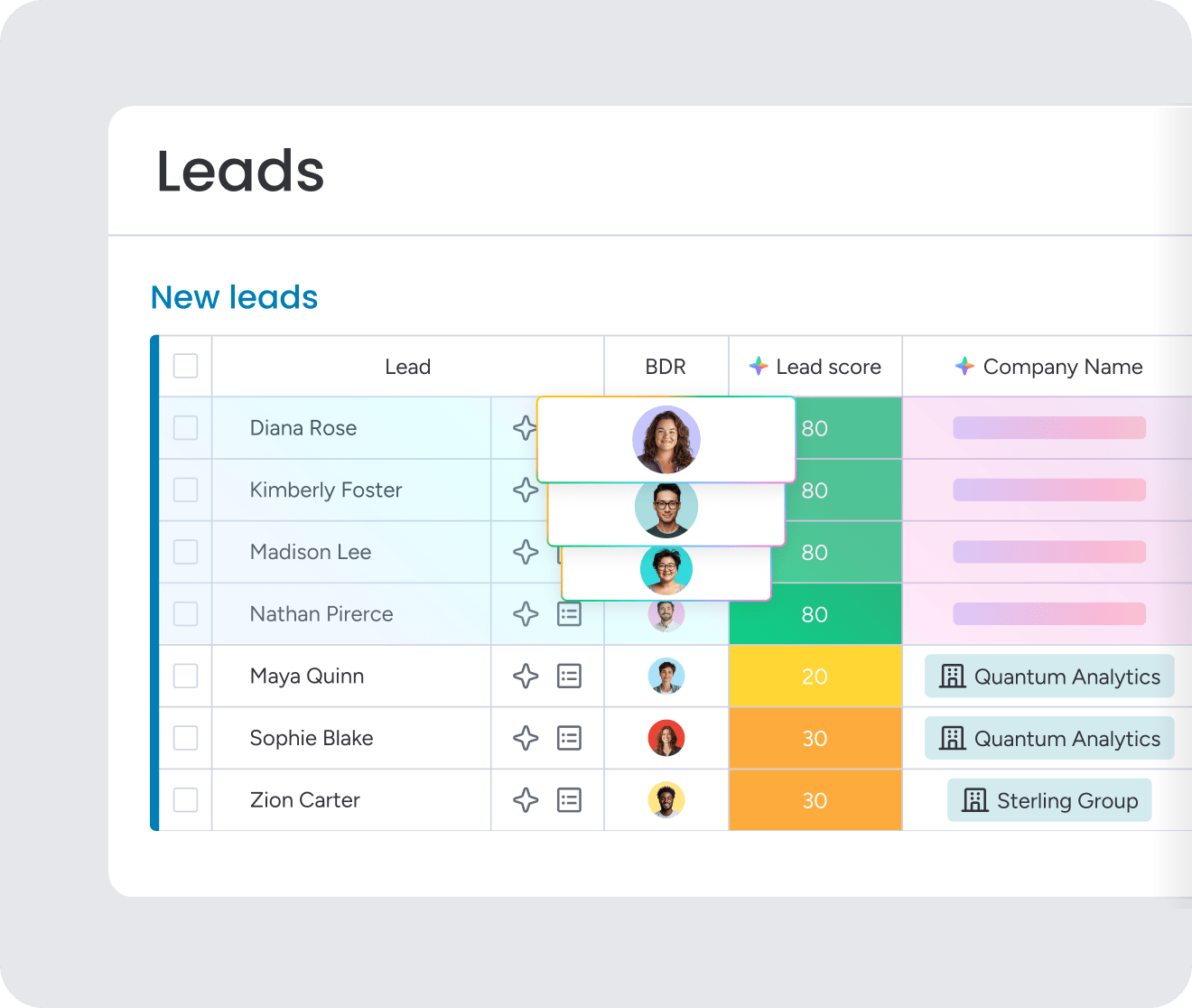
Lead management is the systematic process revenue teams use to capture, qualify, nurture, and convert prospects into customers. That means tracking every interaction from first contact to closed deal, so no opportunity slips through the cracks while your team focuses on the highest-value prospects.
The lead management process covers the entire lifecycle, from the moment someone fills out a form or responds to outreach, through qualification and nurturing, all the way to becoming a paying customer.
Without a structured lead management process, revenue teams face unpredictable forecasts, wasted time on unqualified leads, and constant friction between marketing and sales.
Why lead management matters for revenue teams
Revenue teams without structured lead management face three problems that get worse over time:
- Inaccurate forecasting: Teams don’t know which leads will convert or when deals will close.
- Wasted rep time: Sales reps chase unqualified prospects while high-value leads go cold.
- Siloed teams: Marketing and sales operate separately, leading to finger-pointing about lead quality and follow-up.
A defined lead management process turns these pain points into real advantages. Track, score, and move every lead through clear stages, and leaders can actually see pipeline health and project revenue with confidence. Sales reps focus on qualified buyers instead of spending time on data entry or hunting for context. Marketing and sales work from shared definitions and hold each other accountable, which fosters a culture of shared ownership.
The biggest win is predictability. With it, revenue leaders can report upward with actual data, allocate resources based on what’s working, and adjust strategy before missing targets.
Types of leads in the sales process
Treating all leads the same is one of the fastest ways to burn out your sales team. Understanding different lead types helps teams prioritize, route, and nurture appropriately. Each category needs different handling, messaging, and urgency levels to convert.
Marketing qualified leads (MQLs)
Marketing qualified leads have shown interest through marketing activities but aren’t ready for a sales call yet. They’ve downloaded resources, attended webinars, or engaged with email campaigns. And they meet criteria like job title or company size that suggest they might be a fit.
MQLs need nurturing before sales engagement. Common MQL behaviors include:
- Downloading gated content multiple times
- Sustained email engagement over several weeks
- Visiting pricing pages without requesting demos
Sales qualified leads (SQLs)
Sales teams vet sales qualified leads to confirm they are ready for direct outreach. They’ve expressed buying intent, match your ideal customer profile, and have authority or influence in purchasing decisions.
SQLs differ from MQLs in one critical way. They’ve moved beyond passive interest to actively evaluating solutions. They’re ready for discovery calls, demos, or proposals.
Product qualified leads (PQLs)
Product qualified leads have tried your product through trials, freemium models, or demos and shown signs they’re ready to buy. PQLs are common in SaaS and product-led growth models. They convert at higher rates because they’ve already seen the product’s value firsthand.
Lead temperature classifications
The temperature system helps sales teams prioritize outreach and tailor messaging based on engagement levels. Here’s how each tier breaks down:
| Lead temperature | Definition | Typical behavior | Recommended action |
|---|---|---|---|
| Cold | Little to no prior engagement | Contact from purchased list | Education and relationship-building |
| Warm | Some interest shown | Downloaded content or attended webinar | Nurturing with relevant content |
| Hot | Actively ready to buy | Requested quote or demo | Immediate follow-up |
The 7 stages of lead management
This lead generation sales funnel provides the operational backbone for moving prospects from initial awareness to closed deals. Each stage keeps momentum going and stops opportunities from slipping away. Here’s how each stage works in practice.
Stage 1: Generate leads through targeted outreach
Lead generation is how you attract and capture potential customers through marketing and outreach. This top-of-funnel stage means understanding your ideal customer profile and crafting messaging that speaks to their pain points.
Effective sales lead generation combines multiple approaches to maximize reach and quality:
- Inbound marketing: Content marketing, SEO, social media, and webinars attract prospects organically.
- Outbound marketing: Cold outreach, paid ads, events, and direct mail help teams prospect for sales leads proactively.
- Partner referrals: Leverage existing relationships for warm introductions.
Stage 2: Capture lead information with minimal friction
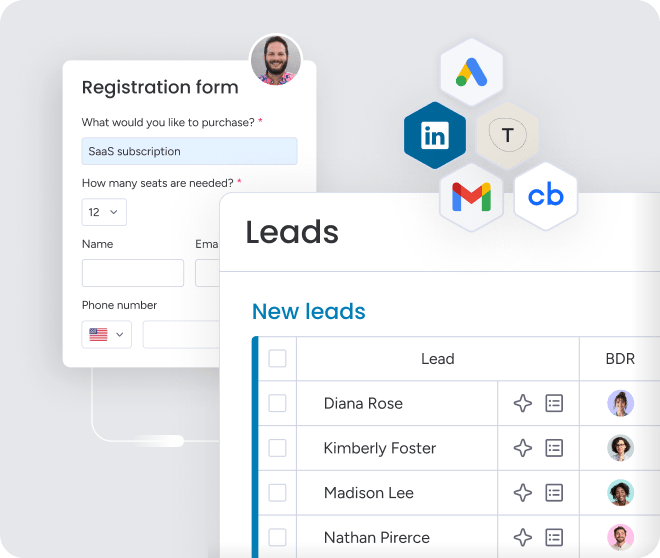
Lead capture is how you collect contact information and relevant details from interested prospects. This stage gets leads into your system for tracking, scoring, and routing.
Effective capture comes down to two things:
- Reduce friction: Use short forms with clear value propositions to maintain completion rates.
- Follow up immediately: Prompt follow-up keeps momentum alive before interest fades.
Every additional field on lead generation forms reduces completion rates, so balance data collection with conversion optimization.
Stage 3: Qualify and segment leads by fit and intent
Qualification is where you evaluate whether leads match your ideal customer profile and figure out if they’re ready to buy. Segmentation groups leads based on shared characteristics so you can tailor messaging and prioritize with more precision.
The qualification process answers two questions about each lead:
- Fit assessment: Do they match your ICP based on company size, industry, and budget?
- Intent evaluation: Are they actively looking for a solution or just researching?
- Segmentation criteria: Group by industry, company size, role, or buying stage for targeted outreach.
Stage 4: Score leads to prioritize sales attention

Lead scoring assigns numerical values based on fit, behavior, and engagement so teams can prioritize objectively. No more guessing which leads deserve immediate attention versus nurturing.
| Scoring type | What it measures | Example criteria |
|---|---|---|
| Fit-based | Demographic and firmographic data | Job title (+15), company size (+20), target industry (+25) |
| Behavior-based | Actions and engagement | Email opens (+5), website visits (+10), demo request (+30) |
| Threshold routing | Combined score triggers | Score 50+ routes to sales, below 50 stays in nurturing |
Stage 5: Route leads to the right rep, fast
Lead distribution is how you assign leads to the right sales reps based on territory, industry, product line, or score. Fast, accurate routing gets leads to the most qualified rep quickly.
Common routing methods serve different organizational needs:
- Round-robin: Distributes leads evenly across reps to balance workload.
- Territory-based: Assigns based on geographic location or account ownership.
- Skill-based: Routes to reps with specific industry or product expertise.
- Speed-to-lead: Automated instant assignment to reduce response time.
Learn more: Lead distribution software
Stage 6: Nurture leads across multiple touchpoints
B2B lead nurturing builds relationships with prospects not yet ready to buy through relevant, timely content and communication. This stage keeps leads engaged while moving them closer to buying.
Effective nurturing happens across multiple channels and touchpoints:
- Email sequences: Automated campaigns deliver educational content based on behavior and stage.
- Personalized outreach: Sales reps send tailored messages addressing specific pain points.
- Multi-channel engagement: Combine email, social media, webinars, and retargeting.
- Behavioral triggers: Content delivery based on actions like pricing page visits.
Stage 7: Convert leads and track what’s driving results
Lead conversion is where you turn qualified leads into paying customers while tracking metrics to see what’s working. This final stage is where you get a picture of what drives conversions.
To pinpoint where leads drop off, monitor conversion rates at each transition point:
- MQL to SQL rate
- SQL to opportunity rate
- Opportunity to closed-won rate
Identifying bottlenecks at each step gives teams the data to optimize the process continuously.
How to align marketing and sales
Lead management only works when marketing and sales operate from shared definitions and hold each other accountable. Without alignment, marketing generates leads that sales teams think are junk, while sales ignores the leads that marketing worked hard to generate. These 3 steps close that gap.
Step 1: Define shared lead criteria and SLAs
Both teams need to agree on what makes a qualified lead and when handoffs happen. This alignment means documenting specific criteria both teams commit to following:
- Ideal customer profile: Agreement on firmographic and demographic attributes.
- Lead scoring thresholds: Shared understanding of scores triggering handoffs.
- Service-level agreements: Marketing commits to lead volume; sales commits to follow-up timeframes.
Step 2: Build seamless handoff processes
Handoffs are where you’re most likely to lose leads. Marketing generates a lead but sales never follows up, or sales accepts a lead that isn’t ready. Seamless handoffs need defined processes, automation, and clear communication channels.
The handoff should feel invisible to the lead. No delays, no repeated questions, just a smooth transition from marketing to sales engagement.
Step 3: Track and engage the full buying group
B2B decisions always involve multiple stakeholders with different priorities. Here’s what each stakeholder typically cares about:
- Executives: ROI and strategic impact
- End users: Ease of use and day-to-day value
- Procurement: Cost and contract terms
- IT: Security and integration requirements
Effective lead management means tracking and engaging the entire buying group, not just single contacts. A defined lead management process turns these pain points into real advantages. When you track, score, and move every lead through defined stages on a platform like monday CRM, leaders can see pipeline health and project revenue with confidence. This comprehensive view helps reps understand the full buying group dynamics and tailor outreach to each stakeholder’s specific concerns.
Try monday CRMHow AI transforms lead management
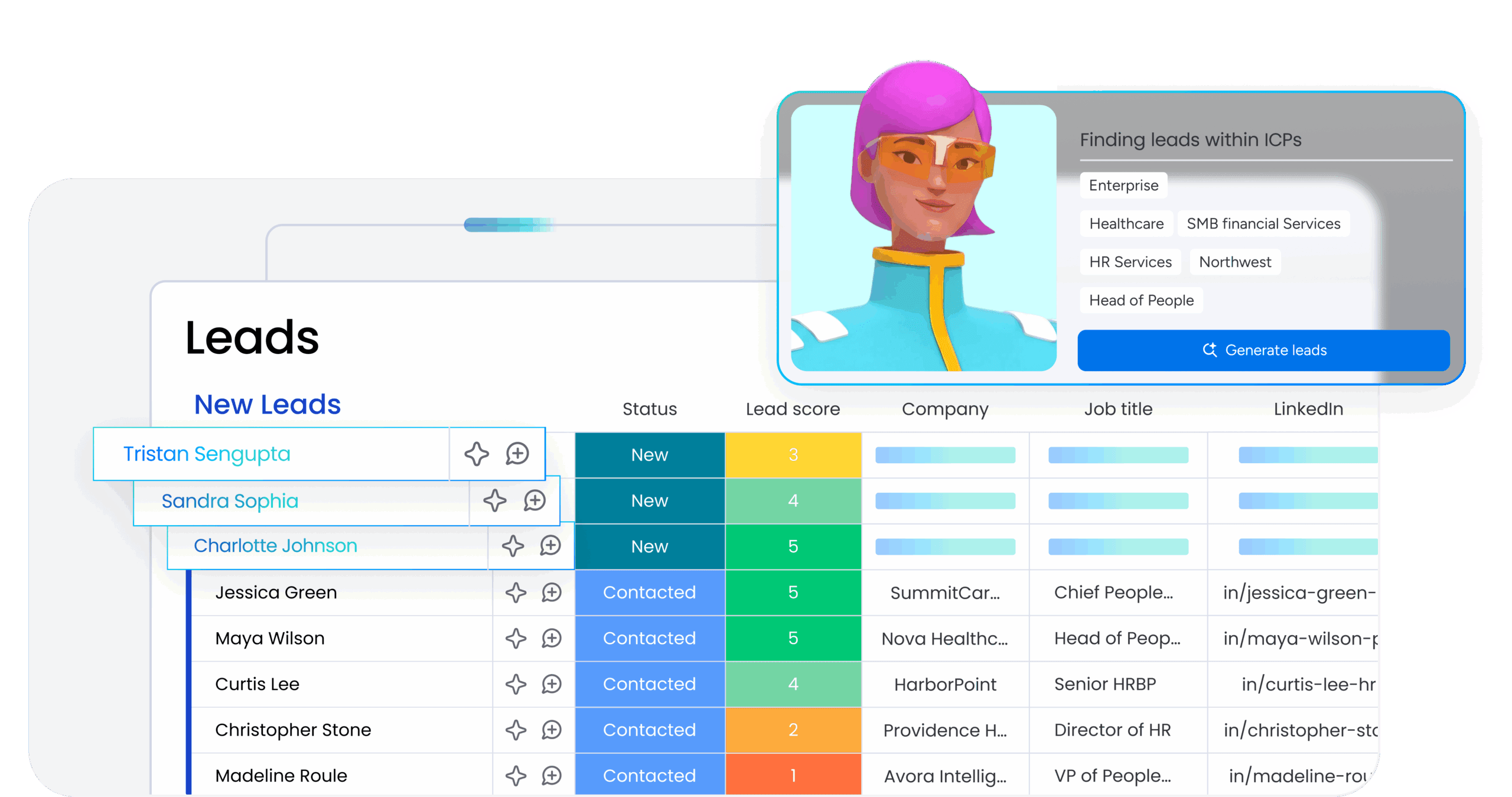
AI and automation replace manual processes with systems that work faster and more accurately at scale. Instead of hours on data entry, lead scoring, and follow-up scheduling, teams can focus on building relationships and closing deals. Here’s where AI makes the biggest difference.
Automated capture and enrichment
AI instantly enriches leads with additional data from third-party sources as soon as they enter your system. This eliminates manual research and gives sales reps complete context before reaching out.
The impact is immediate in three ways:
- Speed: Leads enriched instantly, not hours later.
- Accuracy: Verified data from reliable sources reduces errors.
- Completeness: Full context without manual research time.
AI-powered scoring and routing
AI analyzes patterns across thousands of leads to predict conversion likelihood. It learns from closed deals and adjusts scores based on actual outcomes. Unlike static scoring rules, AI keeps adapting to improve accuracy.
Smart routing assigns leads based on territory, expertise, workload, and availability. It also triggers personalized follow-up sequences based on lead behavior. Teams using monday CRM leverage AI capabilities to:
- Assign labels automatically
- Detect sentiment in messages
- Match leads with the right rep based on skills
Intelligent insights and automation
AI surfaces insights that would otherwise take hours to uncover manually. The AI Timeline Summary in monday CRM creates instant recaps of emails, calls, and meetings so teams act with full context. Automated workflows trigger based on conditions, eliminating manual task creation and follow-up reminders.
Try monday CRMBest practices for managing leads at scale
Executing lead management at scale takes discipline, the right systems, and continuous refinement. These practices help revenue teams avoid common pitfalls and improve conversion rates over time. Apply them consistently, and the results compound.
1. Centralize all lead data in one place
When lead data lives in spreadsheets, email inboxes, and disconnected platforms, teams lose visibility and miss opportunities. Simple as that. A single source of truth means everyone works from the same data and no lead falls through the cracks.
2. Qualify early with defined criteria
Without early qualification, sales teams waste time on leads that will never convert. A documented ideal customer profile means marketing generates the right leads while sales focuses on best-fit opportunities.
3. Set speed-to-lead standards
Research consistently shows faster response times lead to higher conversion rates. Establishing speed-to-lead SLAs means leads get contacted while they’re still engaged and interested.
4. Personalize nurturing with behavioral signals
Generic email blasts generate poor results. Personalized email campaigns and nurturing sequences based on specific pain points, buying stage, and recent behavior lead to higher engagement and conversion.
5. Build privacy into every stage
Regulations now require explicit consent for data collection and communication. Beyond compliance, respecting privacy builds trust and strengthens brand reputation. Use first-party data collected directly from prospects for reliability and compliance.
6. Review and refine regularly
Markets change, buyer behavior evolves, and teams discover what works through experience. Regular process reviews keep your lead management effective and aligned with business goals.
Metrics that reveal process health
If you’re not measuring it, you can’t improve it. Tracking the right metrics helps teams understand performance, spot bottlenecks, and optimize their lead management process. Focus on metrics that directly impact revenue and show where you need to improve.
Speed and response metrics
Speed-to-lead measures the time between lead entry and first contact. Faster response times consistently lead to higher conversion rates. Track both average and median response times to spot outliers affecting performance.
Conversion rate tracking
Monitor conversion rates at each stage transition to reveal where leads get stuck:
| Stage transition | Benchmark range | Low rates indicate |
|---|---|---|
| MQL to SQL | 15–30% | Loose qualification or ineffective nurturing |
| SQL to opportunity | 40–60% | Poor lead fit or weak sales messaging |
| Opportunity to closed-won | 20–35% | Proposal issues or competitive losses |
Pipeline velocity indicators
Lead and sales velocity rates measures month-over-month growth in qualified leads. It’s a leading indicator of future revenue. When your team’s qualified leads grow consistently, revenue follows.
Cost efficiency metrics
Cost per lead reveals generation efficiency. Cost per acquisition shows the full investment required to win customers. Together, these metrics help you optimize spending across channels and campaigns.
Source attribution analysis
Pipeline contribution by lead source tracks which channels generate actual revenue, not just lead volume. This deeper analysis reveals where to invest for maximum return.
Teams using monday CRM access sales-specific widgets, including leaderboards and funnels, to identify pipeline strengths and weaknesses. A lead analytics dashboard provides immediate insights into pipeline status, forecasting, and team performance.
Transform lead management with monday CRM
Revenue teams need a system that connects every stage of lead management without forcing them to work around rigid processes or juggle disconnected tools. With monday CRM, teams get full visibility into their pipeline while maintaining the flexibility to adapt workflows as their business evolves.
The platform brings together lead capture, scoring, routing, and nurturing in one place so nothing falls through the cracks. AI-powered capabilities reduce manual work while giving reps the context they need to engage prospects at exactly the right moment.
AI-powered lead scoring and routing
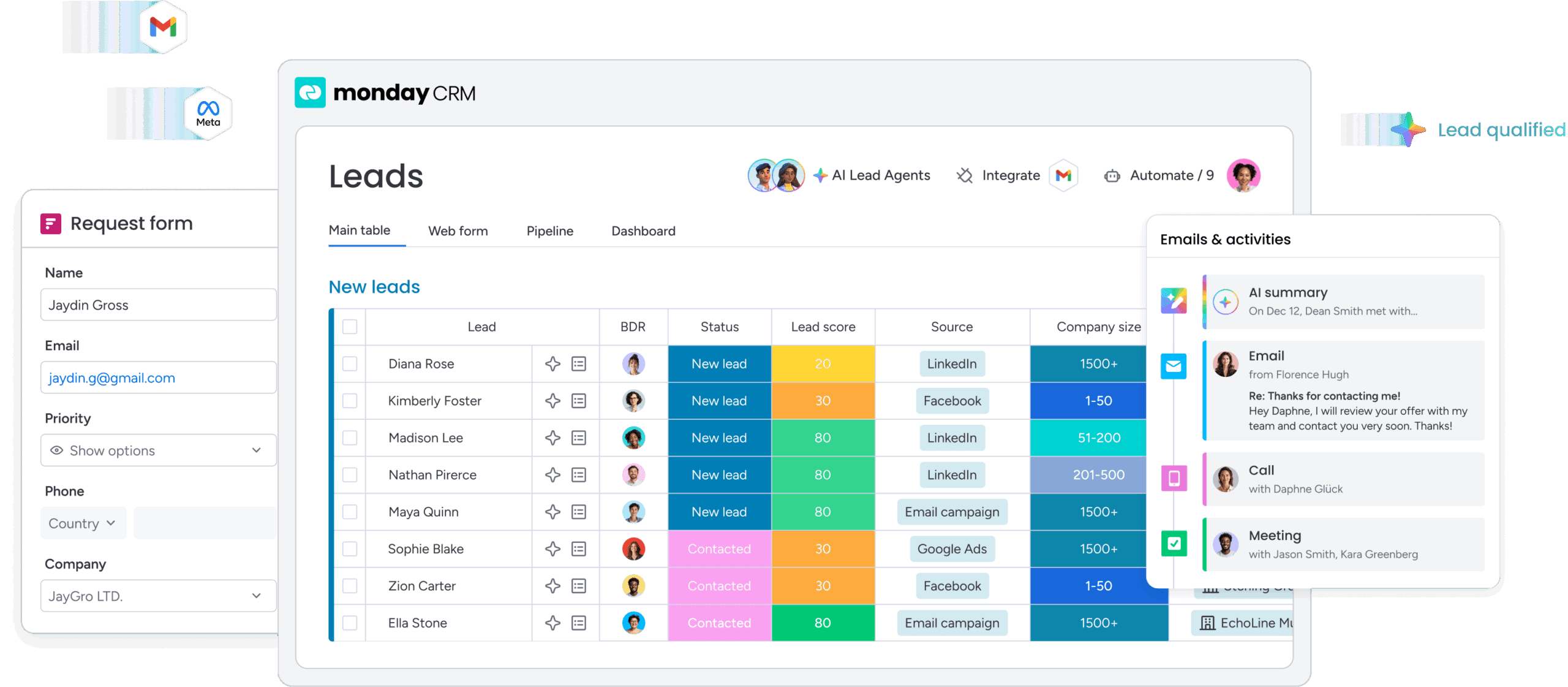
AI analyzes patterns across your pipeline to predict which leads are most likely to convert, automatically assigning scores based on fit and behavior. Smart routing ensures leads reach the right rep instantly based on territory, expertise, and availability. The system learns from your closed deals and continuously refines scoring accuracy so your team always focuses on the highest-value opportunities.
Automated lead capture and enrichment
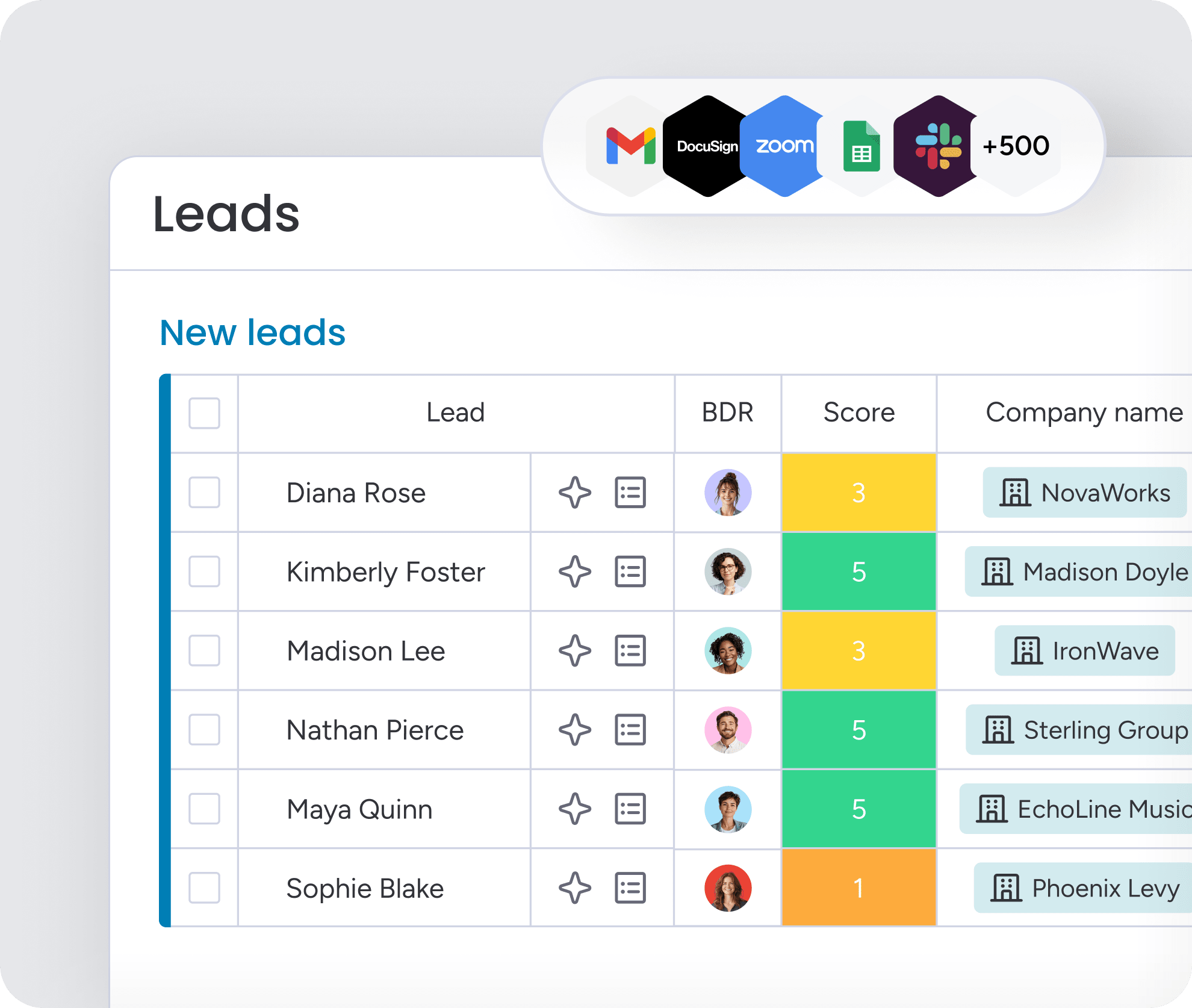
Leads flow into your pipeline automatically from forms, emails, and integrations, with AI enriching each record using third-party data sources. This eliminates manual research and gives reps complete context before their first outreach. Automated workflows trigger follow-up sequences based on lead behavior, ensuring timely engagement without constant manual oversight.
Unified timeline with AI-powered insights
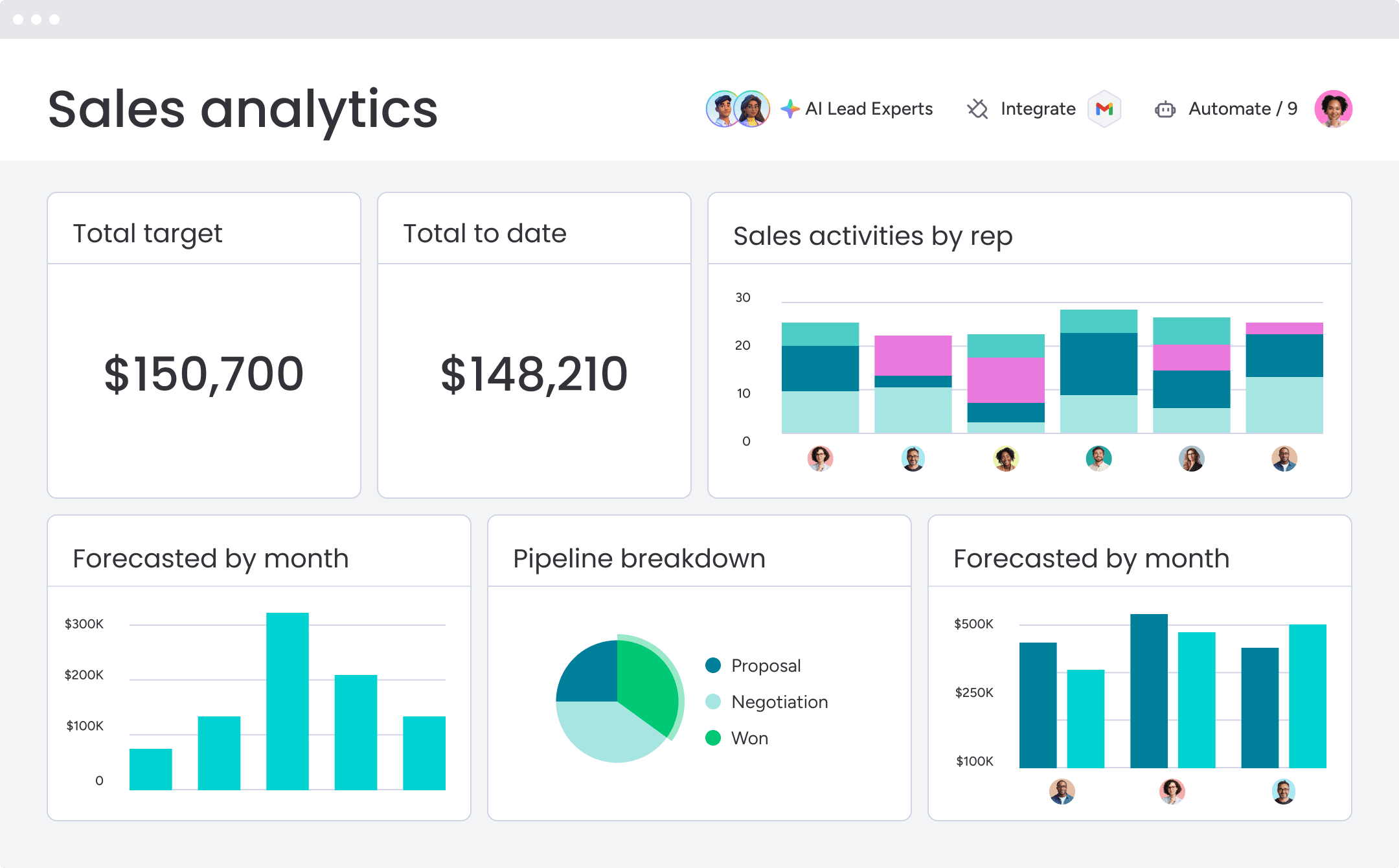
Every email, call, meeting, and note logs automatically in one visual timeline that gives your team full context for every interaction. The AI Timeline Summary creates instant recaps of all activity so reps can jump into conversations fully prepared. AI also detects sentiment in messages and surfaces insights that would otherwise take hours to uncover manually.
Customizable pipelines and automation
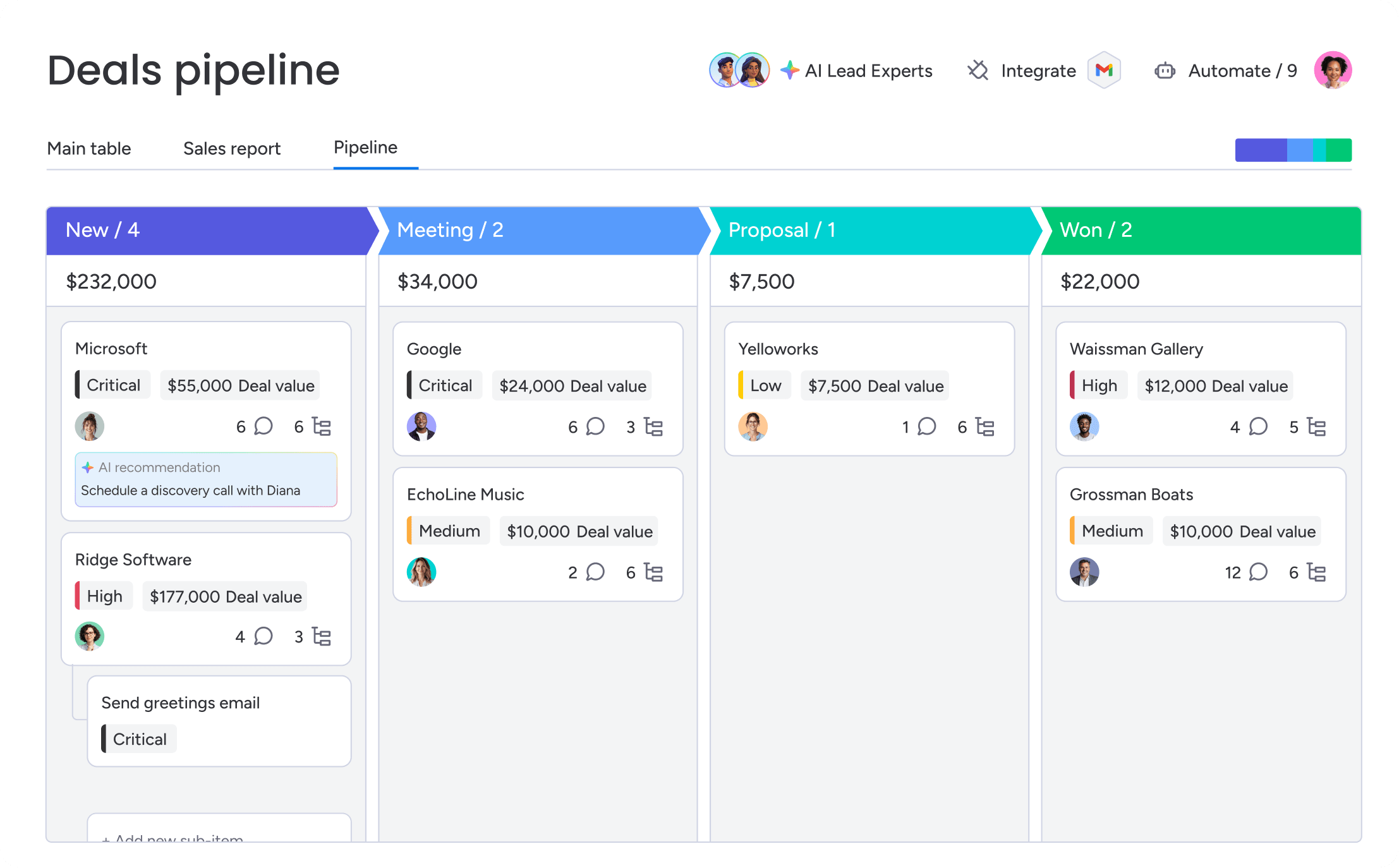
Drag-and-drop stages adapt to any sales cycle, letting teams build their ideal process without technical resources or lengthy implementations. Automations trigger actions based on conditions you define, from lead assignment and task creation to personalized email sequences. This flexibility means your lead management process scales with your team while maintaining consistency across every stage.
Build a lead management process that drives predictable revenue
A structured lead management process is the difference between a team that reacts and a team that predicts. When every lead is captured, scored, routed, and nurtured with intention, revenue becomes far less of a guessing game and far more of a repeatable outcome.
The practices and frameworks in this guide work best when they’re backed by a system that keeps everything connected. Shared definitions, fast handoffs, behavioral nurturing, and real-time metrics all depend on data that’s visible, accurate, and centralized. If your team is ready to move from reactive selling to confident forecasting, try monday CRM and see how a unified pipeline changes the way your team works.
Try monday CRMFAQs
What is the difference between lead management and lead generation?
The difference between lead management and lead generation is that lead generation is the first step of attracting potential customers, while lead management is the entire process of capturing, qualifying, nurturing, and converting those leads into customers., including qualification, scoring, routing, nurturing, and tracking of those generated leads.
How do you qualify a lead effectively?
Qualifying a lead involves evaluating whether the prospect matches your ideal customer profile and determining their readiness to buy. Teams assess leads based on fit criteria like company size and budget, plus intent signals like content engagement and demo requests.
What is lead scoring and why does it matter?
Lead scoring assigns numerical values to leads based on their fit, behavior, and engagement levels. Scoring helps teams prioritize leads objectively, ensuring sales reps focus on prospects most likely to convert rather than relying on gut feelings.
How long should the lead management process take?
The length varies based on industry, deal size, and buyer complexity. B2B sales cycles typically range from 30 days for smaller deals to 6–12 months for enterprise transactions, with the goal being efficient movement through stages without unnecessary delays.
What is the best way to align marketing and sales?
Aligning marketing and sales requires shared definitions of qualified leads, documented handoff points, and mutual accountability through service-level agreements. Regular reviews and shared metrics ensure both teams stay aligned on goals and processes.
How does AI improve lead management processes?
AI improves lead management by automating manual tasks, enhancing prioritization, and enabling personalization at scale. AI-powered scoring predicts conversion likelihood, automated enrichment provides instant context, and intelligent routing ensures leads reach the right rep quickly.
