


Projects rarely unravel in dramatic fashion. They slow down quietly. An approval lingers. A handoff gets missed. A workaround becomes permanent. Before long, the process itself is what’s holding the team back.
Business process improvement is about correcting that drift. It’s a disciplined way to examine how work actually flows, pinpoint where value leaks out, and redesign workflows so execution becomes faster, clearer, and more reliable.
This article explores what business process improvement means in practice, how it differs from business process management, and why it matters for performance. It also covers the continuous improvement cycle, and looks at how AI and modern work management platforms are reshaping how organizations optimize workflows.
The aim is straightforward: help you identify bottlenecks, streamline execution, and build processes that scale in 2026.
Key takeaways
- Business process improvement is a structured, continuous practice: It focuses on analyzing how work actually flows, addressing root causes of inefficiency, and refining processes through ongoing measurement rather than one-time fixes.
- High-impact improvements come from prioritization and data: Targeting processes with clear customer impact, high error rates, or heavy resource consumption delivers stronger ROI when changes are guided by defined KPIs.
- Methodologies should match the problem being solved: Approaches such as Lean, Six Sigma, Agile, and reengineering serve different needs, from incremental efficiency gains to radical process redesign.
- AI accelerates discovery, automation, and decision-making: Intelligent analysis, predictive insights, and adaptive automation enable faster identification of bottlenecks and more proactive intervention across workflows.
- Modern work management platforms support scalable improvement: Solutions like monday work management help teams document processes, automate routine tasks, and monitor performance in real time, enabling improvement efforts to scale without losing visibility or control.
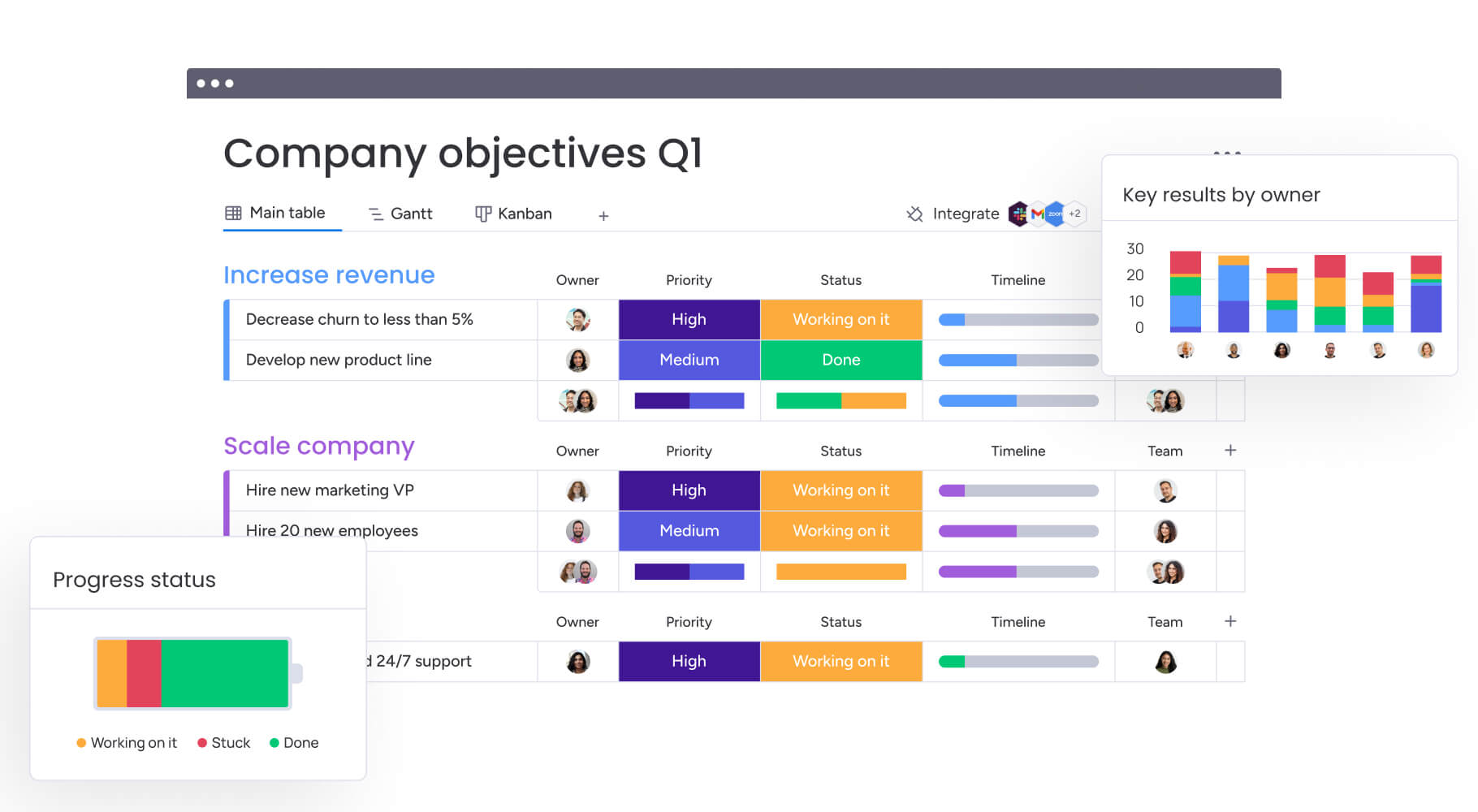
What is business process improvement?
Business process improvement (BPI) focuses on understanding how work moves through an organization, identifying where it slows down, and redesigning workflows to deliver measurable performance gains. It examines how work flows from the initial request through final delivery, revealing opportunities to simplify execution and improve outcomes.
BPI isn’t about patching problems or layering on temporary fixes. It’s about rethinking how work operates at its foundation. And organizations are getting better at it. In 2025, 79% of operating-model redesigns were completed successfully, up from just 51% in 2014, showing how structured, systematic approaches to process change are delivering more consistent results.
BPI vs business process management
Business process improvement (BPI) and business process management (BPM) are often grouped together, but they serve very different operational purposes. Understanding the difference is crucial as it helps organizations allocate resources effectively and set realistic expectations for each initiative.
While both approaches aim to improve how work gets done, they differ in focus, timeline, and scope. One concentrates on targeted optimization, while the other supports long-term operational consistency and governance.
Key differences between BPI and BPM
| Aspect | Business process improvement | Business process management |
|---|---|---|
| Focus | Optimizing specific existing processes | Managing ongoing, holistic operations |
| Timeline | Project-based with defined endpoints | Continuous, indefinite oversight |
| Scope | Targeted workflow enhancement | Entire process lifecycle and governance |
| Goal | Eliminate specific inefficiencies | Maintain consistency and alignment |
As the table above indicates, organizations typically rely on BPM to provide operational stability and governance.
On the other hand, BPI initiatives are introduced to improve efficiency in areas that fall behind, require modernization, or create friction. Both approaches complement one another but require different execution models and success metrics.
Core elements of effective process improvement
Successful BPI depends on a few must-haves that make changes stick. Without these foundations, even the best improvements fade fast or create new problems somewhere else.
Here’s what makes changes last and deliver real results:
- Stakeholder involvement: Those who do the work must help design the solution to ensure practicality and buy-in.
- Data-driven analysis: Decisions rely on quantitative metrics regarding time, cost, and error rates rather than intuition.
- Defined success metrics: KPIs are established upfront to objectively measure the impact of changes.
- Change management: A structured approach addresses the human side of adoption, training, and cultural alignment.
BPI isn’t about patching problems or layering on temporary fixes. It’s about rethinking how work operates at its foundation.
How business process improvement drives success
Strong strategy means little if execution is inconsistent. The way work flows through your organization directly shapes cost, speed, quality, and ultimately profitability. Business process improvement strengthens performance at its source, turning fragile, slow-moving workflows into systems that operate with clarity, control, and adaptability.
When processes run well, financial results follow. When they don’t, inefficiencies quietly erode margins, delay growth, and weaken competitive position.
The hidden costs of process inefficiency
Inefficiency consumes resources in ways that rarely appear on financial statements. Skilled employees spending hours on manual data entry represent a lost opportunity rather than a visible expense.
Delays in approvals can also prevent timely product launches or service delivery. These setbacks affect revenue potential and weaken competitive positioning.
Competitive advantages through process excellence
Organizations with optimized workflows operate with greater speed and reliability. Faster execution shortens time to market and improves responsiveness across customer-facing activities.
In crowded markets, executing better than everyone else is what sets you apart. Teams that nail their internal operations deliver consistent results while competitors get stuck in coordination chaos and delays.
This advantage is quantifiable too. A McKinsey report found that fewer than 100 “standout” firms accounted for two-thirds of productivity growth (across 8,300 large firms), showing how process excellence creates outsized competitive advantages.
Building adaptability through modern work platforms
To stay ready for what’s next, you need to be adaptable. Rigid processes snap when things get tough. Flexible, optimized ones bend and evolve. Building a strong operational foundation makes it easier to adopt new technologies as they emerge.
Intelligent platforms like monday work management makes this adaptability possible by giving teams flexible building blocks they can customize without losing control. This keeps your organization strong no matter what changes hit the market or what new tech comes along.

The measurable impact of business process improvement
When business process improvement is executed properly, the benefits are not abstract — they show up in cycle times, cost lines, customer satisfaction scores, and team performance. Improvements compound over time, with each gain reinforcing the next. What begins as workflow refinement quickly translates into stronger financial and operational outcomes.
Here’s how that impact plays out across the organization:
1. Increased operational efficiency
Efficiency improvements reduce cycle times and eliminate work that does not add value. Shorter approval timelines allow value to reach customers faster.
Faster reporting also shifts effort away from manual compilation and toward analysis. This enables teams to handle more work without increasing headcount.
2. Significant cost savings
The financial impact shows up in both direct and indirect costs. Direct savings come from cutting material waste and using labor more efficiently. For example, U.S. manufacturers working with process improvement programs reported $2.6 billion in cost savings in FY 2024 alone, demonstrating the substantial financial returns possible through systematic process optimization.
Process improvements reduce risk and cut the opportunity costs that come with delays.
3. Enhanced quality and customer experience
Standardized workflows reduce variability and errors. When internal processes remain consistent, product delivery and service quality improve as well.
Faster resolution times and accurate execution build customer trust. Reliability strengthens long-term relationships and reinforces brand credibility.
4. Higher employee productivity and engagement
Clear workflows reduce confusion and repetitive administrative work. Employees can focus on higher-value activities that require judgment and creativity.
Defined responsibilities and predictable handoffs also support accountability. Reduced friction contributes to stronger engagement and improved job satisfaction.
5. Data-driven decision making
Optimized processes generate reliable operational data. This visibility supports trend analysis, early issue detection, and informed decision making.
Live dashboards consolidate insights related to budgets, schedules, goals, and resource allocation. Decisions rely on data rather than assumptions.

“monday.com has been a life-changer. It gives us transparency, accountability, and a centralized place to manage projects across the globe".
Kendra Seier | Project Manager
“monday.com is the link that holds our business together — connecting our support office and stores with the visibility to move fast, stay consistent, and understand the impact on revenue.”
Duncan McHugh | Chief Operations OfficerHow business process improvement works
Business process improvement is not a one-time initiative. It functions as a continuous practice that evolves alongside organizational needs.
When improvement is treated as cyclical, organizations build momentum rather than resetting after each project. This approach strengthens long-term performance.
The continuous improvement cycle
Effective improvement follows a consistent pattern. Teams assess current performance, analyze causes, implement changes, and monitor outcomes before repeating the process.
Each cycle builds on previous insights. Over time, workflows become more refined and resilient.
Organizations that embrace this rhythm view each improvement as a foundation for the next opportunity.
Identifying high-impact processes
Prioritization ensures effort delivers meaningful return. Not every workflow requires the same level of attention.
High-impact processes typically share these characteristics:
- Customer impact: Workflows that directly affect service or experience.
- Resource intensity: Processes consuming disproportionate time or budget.
- Error frequency: Recurring mistakes that indicate structural issues.
- Strategic importance: Activities essential to core objectives.
Focusing on these areas maximizes improvement outcomes.
Setting measurable improvement goals
Clear goals distinguish real progress from perceived improvement. Establishing baselines allows teams to measure change objectively.
Specific targets guide execution and align stakeholders. Precision ensures accountability and clarity throughout implementation.
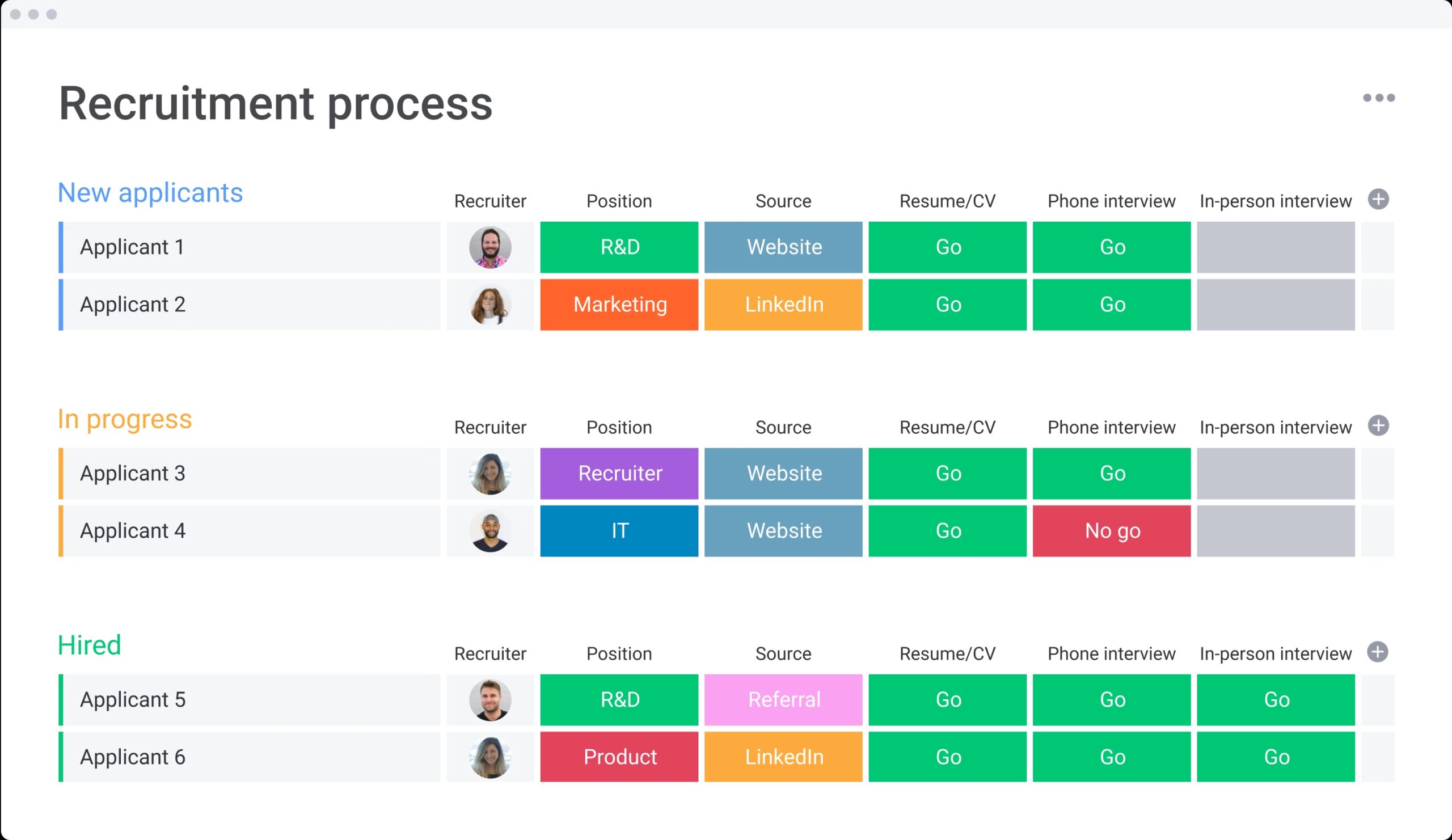
How to implement business process improvement successfully
Good intentions don’t improve processes — structure does. Without a clear sequence, improvement efforts stall, drift, or lose executive support. A defined framework turns optimization into a repeatable discipline, where each step builds logically on the last and creates momentum that lasts beyond the initial push.
The seven steps below outline how to move from analysis to measurable, sustainable change.
Step 1: Document current state processes
Accurate documentation establishes a shared understanding of how work actually flows. Visual mapping highlights inefficiencies that written descriptions often miss.
Digitizing this documentation using platforms like monday work management keeps information accessible and consistent across teams.
Step 2: Identify improvement opportunities
Business process analysis reveals where value is lost. Reviewing workflows exposes unnecessary steps and delays.
Input from those involved in execution often identifies the most impactful areas for change.
Step 3: Analyze root causes
Solving symptoms leads to recurrence; solving root causes leads to permanence. The “five Whys” method drills down through layers of causality to find the origin of an issue.
Cause-and-effect analysis ensures proposed solutions address the fundamental problem rather than surface-level noise. This prevents the same issues from resurfacing later under different circumstances.
Step 4: Design optimized workflows
Redesign focuses on flow and simplicity. Principles include minimizing handoffs, parallelizing activities where possible, and automating routine actions. Technology plays a key role, enabling new workflow designs previously impossible with manual methods.
With monday work management, teams build any workflow for any work process using powerful building blocks such as automations and dashboards, leveraging business process automation to streamline operations. The new design should be leaner, faster, and more robust.
Step 5: Test solutions through pilots
Controlled testing mitigates risk. Pilot programs run the new process with a small group to gather data and feedback. Success metrics determine if the solution is ready for scale or requires iteration.
This sandbox approach prevents widespread disruption and allows for fine-tuning before the entire organization is affected. Small failures during pilots are far less costly than organization-wide rollout problems.
Step 6: Roll out and scale improvements
Scaling requires deliberate change management. Training ensures proficiency while communication explains the “why” behind the change. A phased rollout allows support teams to manage the transition effectively, maintaining momentum and confidence.
Teams can use intuitive forms to collect information needed for efficient, streamlined project proposals and work requests during the transition. This step turns a successful experiment into a new organizational standard.
Step 7: Monitor and refine continuously
Implementation is the starting line for the next cycle. Ongoing monitoring through key performance indicators ensures the new process holds its value. Regular review cycles allow teams to adapt to new challenges.
This reinforces that improvement is a constant journey rather than a finished project. Organizations that stop monitoring often find their gains eroding within months.
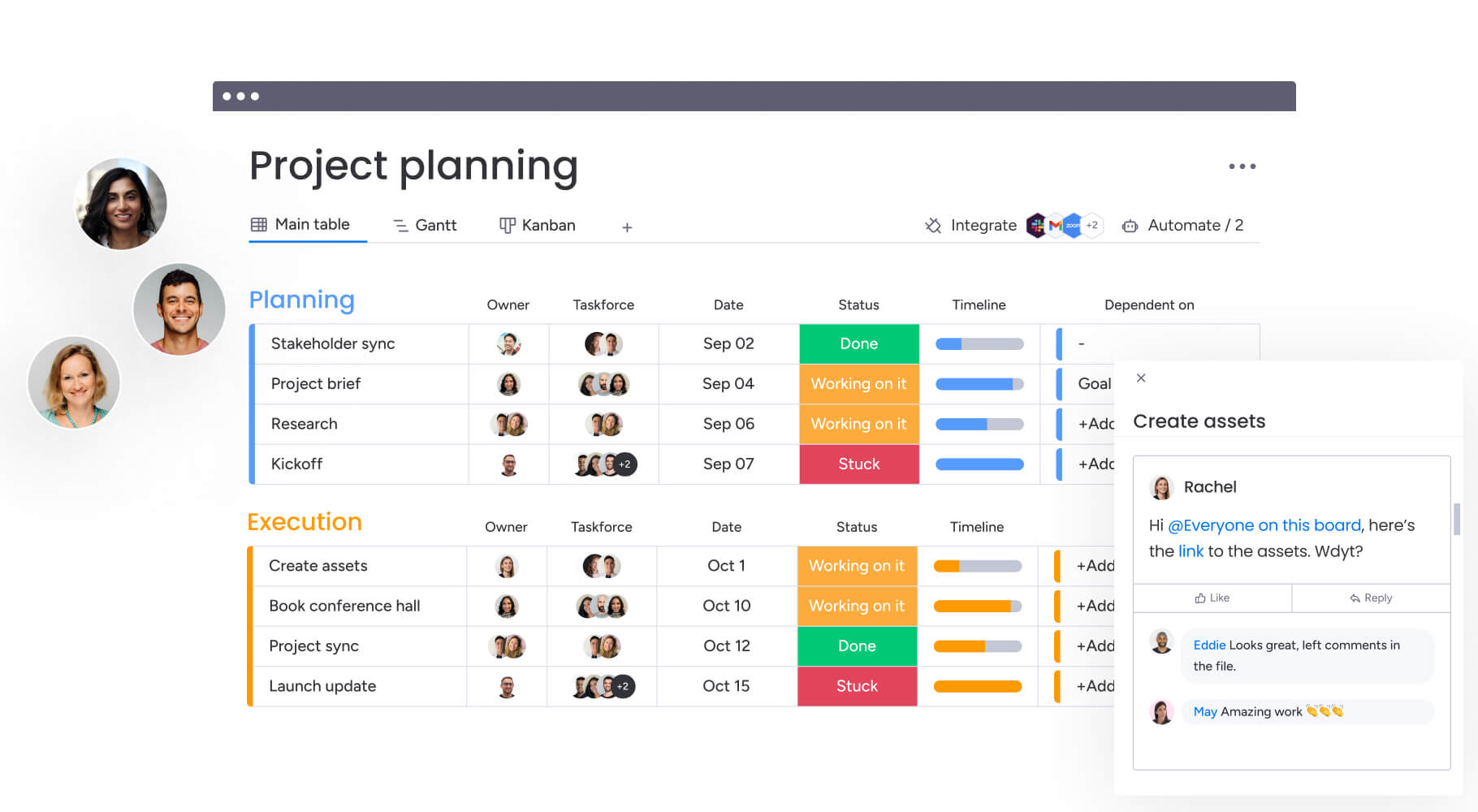
6 proven business process improvement methodologies
Not every process problem requires the same solution. Some inefficiencies need incremental tuning. Others demand rigorous statistical control or even a complete reset. Choosing the right methodology determines whether improvement efforts create steady gains or stall under the wrong framework.
The approaches below offer structured ways to tackle different types of operational challenges, from eliminating everyday waste to redesigning entire systems.
1. Lean process improvement
Lean focuses relentlessly on maximizing customer value by eliminating waste. It targets 8 types of waste, including:
- Overproduction: Creating more than customers need.
- Waiting: Idle time between process steps.
- Excess motion: Unnecessary movement of people or materials.
This methodology is most effective in manufacturing and logistics, but applies anywhere efficiency is paramount.
2. Six Sigma for quality enhancement
Six Sigma prioritizes reduction of defects and variability. It utilizes the DMAIC framework (Define, Measure, Analyze, Improve, Control) to achieve near-perfect quality levels.
Organizations use this when consistency and precision are critical, such as in healthcare or finance. The methodology demands rigorous data collection and statistical analysis to drive decisions.
3. Kaizen continuous improvement
Kaizen is the philosophy of “change for the better” through small, incremental steps. It engages every employee from CEO to front line in identifying improvements.
Over time, these small shifts compound into massive operational gains. The approach emphasizes employee empowerment and cultural transformation alongside process optimization.
4. Total Quality Management
Total Quality Management (TQM) integrates quality as a cultural value across all functions. It emphasizes customer focus and long-term success through customer satisfaction.
TQM benefits organizations seeking a holistic, culture-driven approach to excellence. The methodology requires leadership commitment and organization-wide participation to succeed.
5. Agile process optimization
Agile applies principles of iterative development to general business processes. It favors rapid feedback cycles, adaptive planning, and flexibility over rigid adherence to a plan.
This approach suits dynamic environments where requirements shift frequently. Teams work in short sprints, continuously adjusting based on results and changing conditions.
6. Business process reengineering
Business Process Reengineering (BPR) is the radical redesign of core processes to achieve dramatic improvements in productivity, cycle times, and quality. Unlike incremental methods, BPR starts with a blank slate when current processes are fundamentally broken or obsolete.
This method requires significant investment and organizational commitment but can yield transformational results when executed properly.
How AI accelerates business process improvement
Artificial Intelligence acts as an accelerant for BPI, moving from manual analysis to automated, intelligent optimization. AI also transforms how organizations discover, analyze, and improve their processes, making sophisticated optimization accessible to teams without specialized expertise.
Automated process discovery and analysis
AI algorithms analyze system logs and user interactions to automatically map actual process flows. This eliminates bias and error of manual documentation, revealing “shadow processes” that actually occur.
AI further identifies patterns and inefficiencies that human analysis often misses due to volume and complexity, providing a data-backed foundation for improvement.
Intelligent process automation
Intelligent automation transcends simple rule-based triggers. AI handles exceptions, makes routing decisions based on context, and adapts to changing variables without human intervention.
This allows automation of complex, cognitive activities previously requiring manual oversight. By utilizing a sophisticated platform like monday work management, AI Blocks enable teams to quickly harness AI with ready-made capabilities that can be added to workflows, taking manual work off their hands.
Predictive analytics for proactive improvement
AI shifts management from reactive to proactive. Predictive models forecast potential bottlenecks and failures before they impact operations. This foresight enables preventive action, keeping workflows smooth and predictable.
Teams address issues before they become crises, maintaining stability and avoiding the firefighting that derails strategic initiatives.
AI agents as process optimization partners
AI agents act as digital team members that continuously monitor workflow health. These assistants identify optimization opportunities and suggest specific improvements in real-time.
The Project Analyzer in monday work management monitors boards in real-time, flags bottlenecks, and provides proactive insights to keep everything on track.

The technology foundation behind effective process improvement
Methodologies provide the blueprint. Tools make them operational. Without the right technology layer, even well-designed process improvements struggle to scale, sustain visibility, or adapt as the organization grows.
Modern software enables teams to map workflows clearly, automate repetitive steps, monitor performance in real time, and collaborate without friction. The categories below represent the core tech stack that supports lasting BPI.
Visual process mapping software
Visual tools are essential for shared understanding. They offer drag-and-drop interfaces for creating flowcharts and diagrams, ensuring all stakeholders visualize the process identically.
Key features include:
- Collaborative editing: Multiple team members can contribute simultaneously.
- Version control: Track changes and maintain process documentation history.
- Template libraries: Pre-built frameworks accelerate mapping efforts.
Workflow automation platforms
These platforms democratize automation, allowing business users to build workflows without coding. Features include trigger-based actions, conditional logic, and seamless integration with other apps.
monday work management provides automations and templates that save valuable time and get new projects started faster. Teams automate crucial elements of their work, including:
- Creating templated project boards.
- Sending approval notifications and reminders.
- Updating status across connected workflows.
Real-time analytics and monitoring
Visibility tools provide a pulse on operational health. Dashboards display live metrics while alert systems notify leaders of anomalies. Real-time monitoring allows for immediate course correction rather than waiting for end-of-month reports.
These tools transform reactive management into proactive optimization, enabling teams to spot trends and address issues before they escalate.
Cross-functional collaboration solutions
Silos kill process efficiency. Collaboration platforms provide shared workspaces where cross-departmental teams coordinate and communicate. These tools centralize context, ensuring handoffs between teams are smooth and transparent.
Building a process improvement culture that lasts
Modern organizations are under constant pressure to move faster, adapt quicker, and deliver more with the same resources. But fragmented workflows, manual handoffs, and limited visibility quietly slow everything down. When processes don’t scale with shifting priorities, teams lose time, miss dependencies, and struggle to connect day-to-day execution with strategic objectives.
monday work management brings structure to that complexity. It provides a flexible, centralized system where teams can design, run, and continuously refine workflows without losing oversight or control.
Key capabilities that support sustainable business process improvement include:
-
Centralized Workflow Visibility: Processes, ownership, timelines, and dependencies live in one shared system, reducing coordination gaps and execution delays.
-
Workflow Automation And AI Support: Repetitive steps, approvals, and updates are automated while AI-driven insights surface bottlenecks and risks earlier.
-
Real-Time Performance Tracking: Dashboards connect operational metrics directly to KPIs, enabling faster, data-backed decisions.
-
Scalable Process Standardization: Templates and modular building blocks allow teams to improve consistently while remaining flexible.
-
Cross-Functional Collaboration: Work, documentation, and communication stay connected, minimizing friction across departments.
By aligning daily execution with portfolio-level goals, the intuitive platform helps teams improve efficiency, maintain clarity, and evolve processes as business needs change — without adding operational complexity.
Ready to turn process improvement into measurable performance? Get started now.
Frequently asked questions
What is the difference between business process improvement and business process reengineering?
Business process improvement focuses on incremental enhancements to existing workflows to boost efficiency, while business process reengineering involves completely redesigning processes from scratch to achieve dramatic, fundamental shifts in performance.
How long does it take to see results from business process improvement?
Initial improvements for simple processes often yield results within weeks, while comprehensive improvements typically show measurable business impact within 3 to 6 months, depending on the complexity and scope of the initiative.
What are common business process improvement techniques?
Key techniques include process mapping, root cause analysis like the 5 Whys, automation, standardization, and continuous monitoring, with the most effective approach depending on the specific bottlenecks and challenges the organization faces.
How do you measure business process improvement success?
Success is measured through specific Key Performance Indicators (KPIs) such as cycle time reduction, error rate decreases, cost savings, and customer satisfaction scores, with baseline measurements established before implementation for accurate comparison.
Can small businesses implement business process improvement effectively?
Small businesses can successfully implement process improvements and often see faster results due to fewer stakeholders and simpler approval chains, starting with high-impact, low-complexity improvements to build momentum.
What role does business process improvement software play in modern organizations?
Process improvement software enables visual process design, automation, real-time monitoring, and collaboration, making process improvement more accessible, scalable, and sustainable compared to traditional manual tracking methods.

 Get started