


You may be familiar with project management, but when it comes to the basic question of “what is a project,” it can sometimes be more difficult to specifically define. Understanding what a project is and entails is critical to move your operation toward growth and project success.
Projects can take on many different forms, from software development to launching a new website or working on constructing a building from scratch. Each project has its own unique needs, there are basic project requirements that can be applied across the board.
To help you meet your project goals, it’s essential to go back to basics and understand what a project really is. This post will look at the core elements of a project, including different project types, how to manage them the right way, examples, and how software like monday.com’s AI Work Platform can improve project management.
Key takeaways
- A project is a temporary initiative undertaken in a unique context to create value, according to the updated PMBOK 8 standard from the Project Management Institute.
- Every project has defined characteristics including scope, timeline, budget, team members, and deliverables that distinguish it from routine work.
- Projects differ from ongoing operations because they have a defined start and end date, producing a unique outcome rather than repeating existing processes.
- The project lifecycle follows five phases from initiation through closure, and understanding each phase helps teams anticipate challenges before they cause delays.
- monday.com’s AI Work Platform helps teams plan, execute, and track projects with AI-powered workflows, real-time dashboards, and 200+ integrations in one workspace.
What is a project?
A project is a group of tasks and subtasks that need to be completed to arrive at a goal. Often, these project tasks must be completed in a specific order, and they usually have a predetermined timeline that dictates a project’s pace. A project manager (PM) is typically responsible for planning, delegating, and overseeing the work required to deliver that value.
Projects vs. operations
So how does a project differ from day-to-day operations? Operations are ongoing, repetitive activities that sustain the business — think payroll processing, customer support ticket handling, or server maintenance. An accurate description of a project, would be that it’s temporary and creates something new.
- Launching a mobile app is a project.
- Maintaining that app’s servers after launch is operations.
The Project Management Institute (PMI) updated its official definition in the PMBOK 8 standard, released in late 2025. PMI now defines a project as “a temporary initiative in a unique context undertaken to create value.” This replaces the earlier PMBOK 7 definition of “a temporary endeavor undertaken to create a unique product, service, or result.” While the old definition emphasized what a project produces, the new one emphasizes why the work matters.
What are the key characteristics of a project?
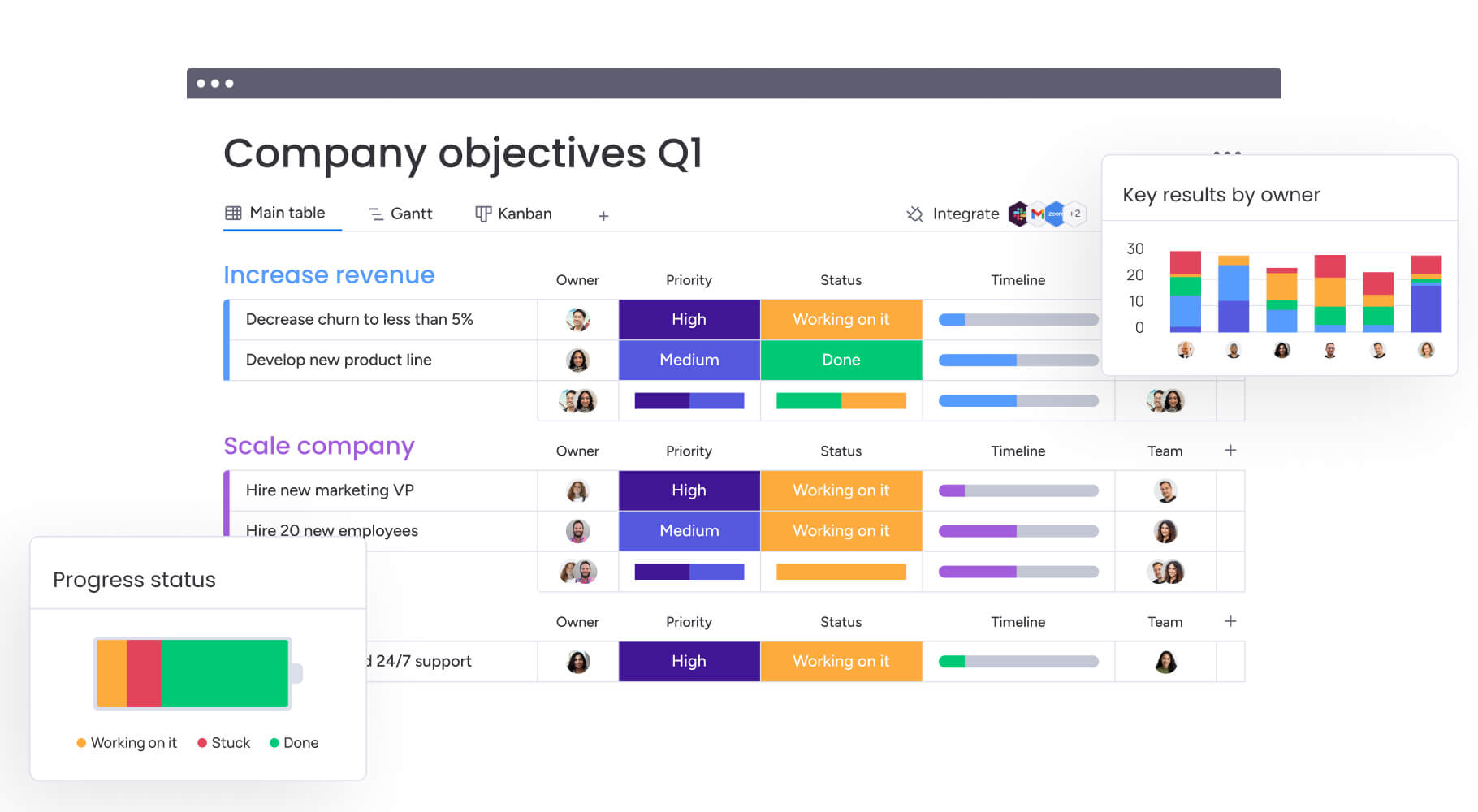
There are specific traits that set projects apart from other work tasks that may not meet the scope of a full project. While the goals and outcomes of each project will look different, even within the same team and company, most projects include many of the same elements, such as the ones below.
- Goals: These are desired outcomes to be achieved over a predefined time. Teams should work on establishing SMART goals for their projects, which could look like “launch the beta version of an app by March 10th”
- Tasks: Tasks are the project activities that are assigned to team members who must complete them before their deadlines
- Timelines: Timelines indicate clear start and end dates for individual tasks and help project managers visualize a project in its entirety
- Milestones: Milestones are important events along a project’s timeline and are used to monitor progress and key deliverables, such as securing funding, meeting stakeholder expectations, or entering the testing phase for a new app.
- Resources: Project resources cover anything a company needs to deliver a project, including manpower, money, supplies, software, project management tools, and more
- Deliverables: A deliverable is what gets produced during a project, which can be reports, content, products, apps, a single feature in an app, or any item that a client has asked for
- Budget: Budgets include the total cost of a project and are usually set from the get-go for teams to try and stick to as they collect resources and provide deliverables
- Stakeholders: Stakeholders are individuals who are involved in a project and could include anyone from internal team members like project owners and team members to external stakeholders like contractors and suppliers
- Acceptance criteria: Acceptance criteria are the project details and conditions that a project must meet for a client to accept an outcome, for example, a mobile app in development has to work with iOS and Android devices
Once all of these elements have been defined, they are compiled to form a project plan. The plan then acts as a guide for project control and execution.
Get startedWhat are the different types of projects?
It’s tricky to categorize every type of project that exists in set categories since projects can take on many different forms depending on your industry. Still, to better understand the wide range of project styles and how they can differ and compare, let’s take a look at some different types of projects.
- Software projects: Developing new software or delivering updates on existing software
- Manufacturing projects: Manufacturing physical products from scratch
- Construction projects: Building a structure for a specific purpose
- Business projects: Launching a new business or aspect of a business
- Marketing projects: Developing and executing campaigns to promote a brand, product, or service
- Educational projects: Creating programs, courses, or materials to facilitate learning
- Event planning projects: Organizing events like conferences, weddings, or product launches
- Research and development projects: Investigating new ideas, technologies, or processes to solve specific problems
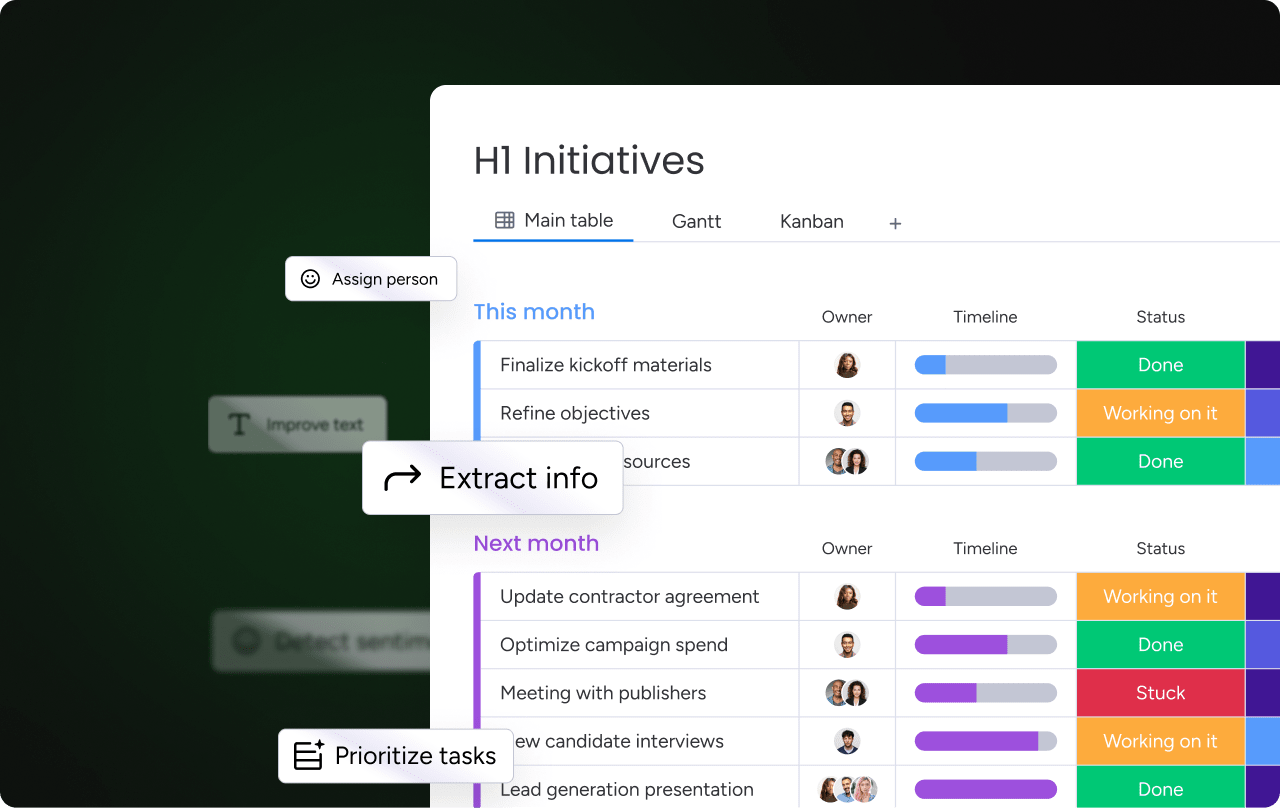
Pro tip: want to automate your projects with AI? Check out our new AI-powered project management features.
What does the project lifecycle look like?
The project lifecycle describes the sequence of phases every project moves through from start to finish. Understanding these phases helps teams anticipate what comes next, allocate resources at the right time, and avoid the delays that happen when phases overlap without intention.
Most project management frameworks recognize 5 standard phases. Each phase builds on the previous one, so skipping or rushing a phase almost always creates problems downstream — missed requirements, budget overruns, or deliverables that don’t meet stakeholder expectations.
- Initiation: Define the project’s purpose, assess feasibility, identify key stakeholders, and secure approval to move forward. This is where the project’s value proposition takes shape.
- Planning: Create the project plan, set timelines, allocate resources, define scope, and establish the budget. A thorough planning phase reduces surprises during execution.
- Execution: Carry out the project plan by assigning and completing activities, coordinating team members, and producing deliverables according to the established schedule.
- Monitoring and controlling: Track progress against milestones, manage risks, measure performance, and make adjustments when the project drifts from its plan.
- Closure: Deliver final outputs, document lessons learned, release resources, and formally close out the project with stakeholder sign-off.
These phases are not always strictly sequential. In Agile environments, teams may cycle through planning, execution, and monitoring repeatedly within shorter iterations. For a deeper exploration of how these phases connect, see this guide to the project life cycle.
How do you manage a project successfully?
Managing a project is by no means easy. A single misstep can lead to missed deadlines. In fact, only 38% of organizations say they mostly or always deliver projects on time. So, how can teams effectively manage a project from start to finish while coordinating individual tasks and keeping things on schedule?
The process of planning projects and leading teams toward successful project completion is known as project management. While each team can define a successful project in its own way, here are 5 tips for successful project management:
1. Proper planning
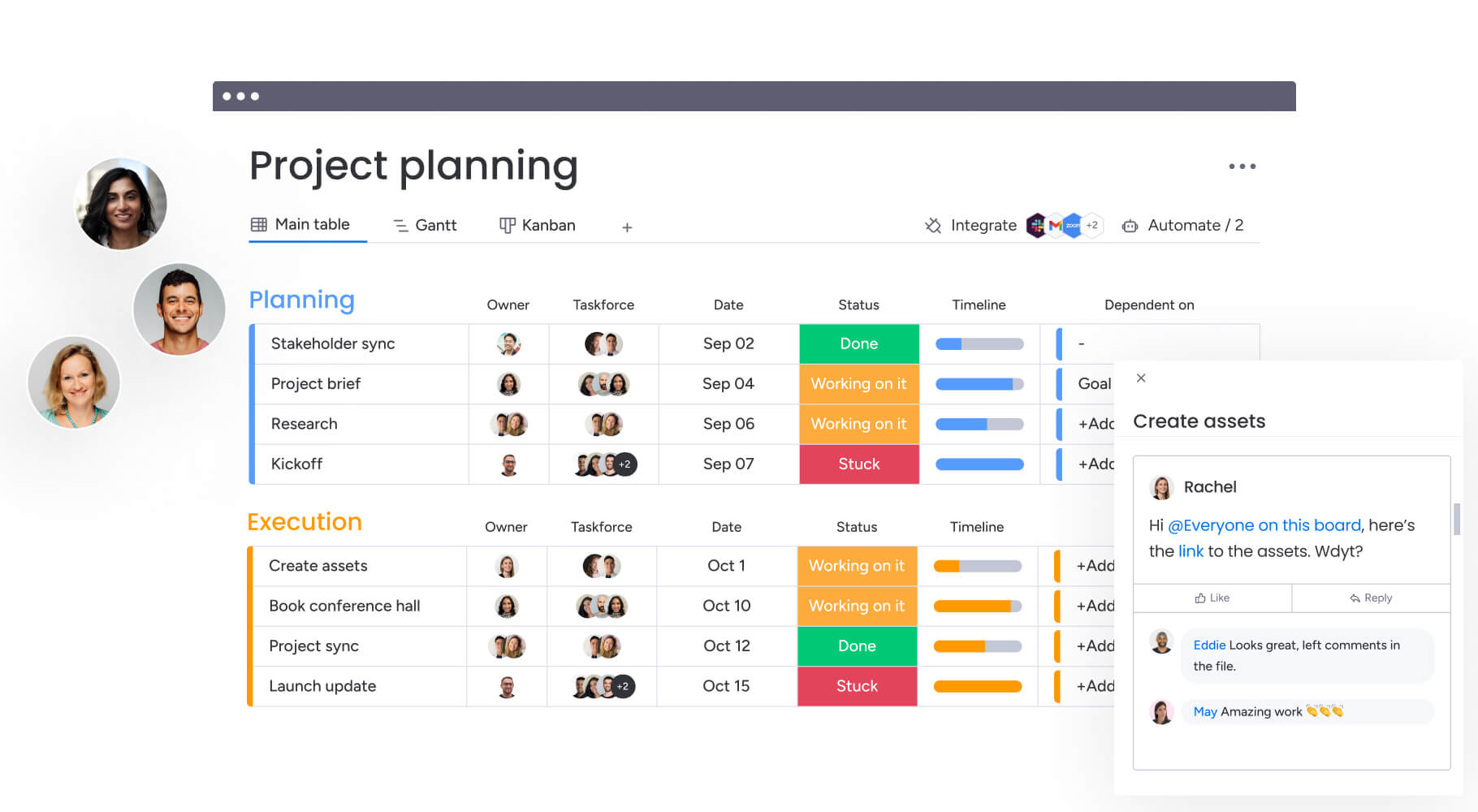
A vital part of the project management process is to build a project plan that helps the team meet their objective as efficiently as possible. PMs need to pick the right project management methodology, give their team the right tools, and keep an eye on the project budget and potential risks.
A good project plan involves a degree of flexibility (depending on your chosen project management methodology) since priorities can change once a project begins.
2. Pick the right team members
Managers must pick the right team members to perform critical roles in a project. This could mean choosing a specific employee to finish a significant task, choosing team members to be in charge of a particular project planning phase who have the right technical skills, or in general, assigning tasks to the right people.
3. Clear communication
For a project manager, good communication means everyone on your team has a clear idea of project objectives, progress, tasks, and any project-related updates. Creating a project communication plan is a good way to outline how team members should communicate with each other effectively. A software that centralizes all work-related communication, like monday.com’s AI Work Platform, is ideal for this.
Get started4. Use milestones to track progress
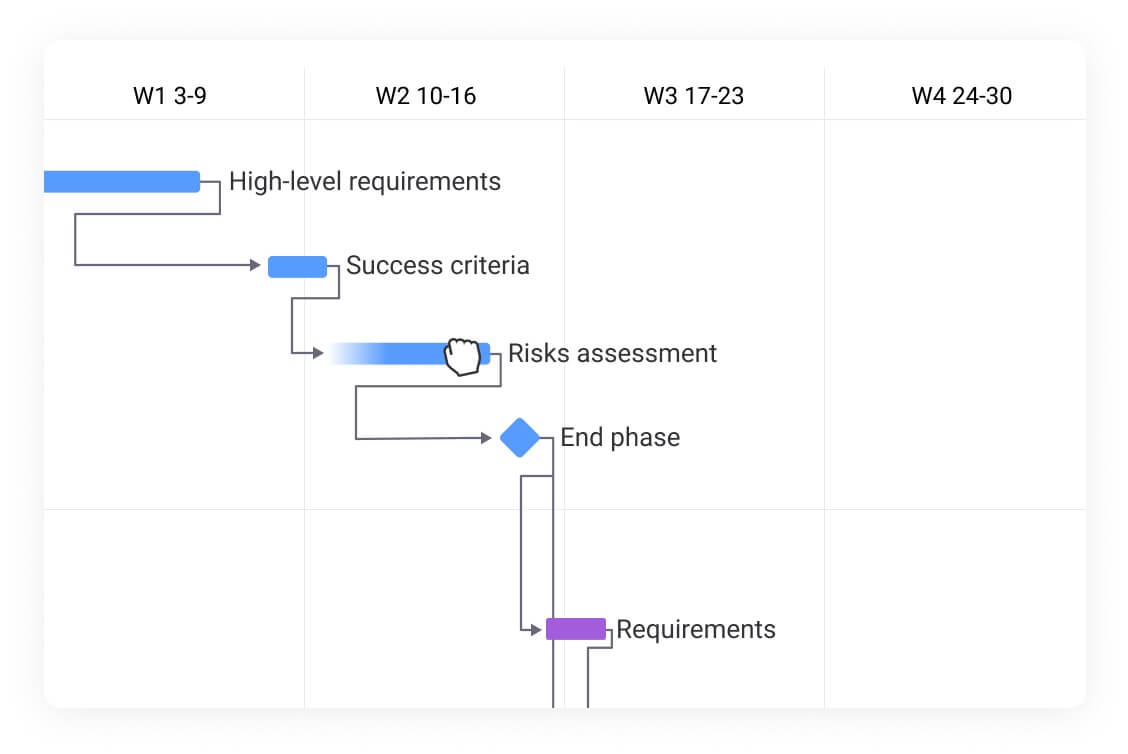
Milestones are indicators of project progress. When teams reach project milestones on time, it indicates that your project team is on track. Missed or delayed milestones indicate that managers and project team leaders need to re-evaluate key elements to identify and solve any issues.
5. Evaluate performance and make changes
Real-time data on Key Performance Indicators (KPIs) is crucial for project control. KPIs in project management are generally related to timeline, budget, quality, and effectiveness. Approximately half of surveyed project managers didn’t have access to real-time project KPIs. PMs need to use software that provides real-time project data and KPI reporting so they can identify and solve issues promptly.
What are some real-world project examples?
Projects range from weeks-long sprints to multi-year initiatives spanning dozens of teams and seven-figure budgets. To give you a sense of that range, here are some examples of projects that different teams work on across sectors and scales — notice how scope, duration, and team size vary dramatically depending on the industry and objective.
- Video game development: Designing and developing an interactive game for consoles, PCs, or mobile devices, involving coding, artwork, and sound design
- Residential construction: Building a single-family home, including planning, securing permits, and managing contractors
- Tech product launch: Creating and marketing a new tech gadget, from prototype design to release
- Mobile app development: Developing a fitness-tracking app with features like activity monitoring and personalized coaching
- Corporate event planning: Organizing a corporate seminar, including venue booking, speaker coordination, and attendee registration
- Research project: Conducting a study on renewable energy efficiency, compiling findings, and publishing results
- Community garden: Designing and establishing a sustainable urban garden for local residents
- Film production: Producing a short film, including scriptwriting, casting, filming, and post-production editing
Project terms you should know
It’s essential to understand certain commonly used project management terms. These terms can help you clarify responsibilities, expectations, and progress through a project lifecycle. Here are a few terms that are critical to understanding how projects flow.
Project scope
A project scope defines strategic objectives, deliverables, and project boundaries. It’s used to outline what’s included and what’s not to help teams avoid scope creep. When a project’s scope is clear, all team members are working towards the same business goal to better manage time and resource availability.
Project stakeholder
A project stakeholder is any individual or group that’s affected by a project or its outcome. This can include clients, team members, contractors, suppliers, and a project sponsor. It’s important to identify stakeholders early on to address their needs and expectations. Stakeholder satisfaction is also usually a main goal for a project’s outcomes to be accepted.
Project deliverables
Deliverables refer to the tangible or intangible outputs of a project, which can refer to project reports, prototypes, or the finished product or result. Tracking deliverables is important to make sure that progress is aligned with a project’s overall goals at regular intervals.
Project milestones
Milestones are a part of a project timeline and signify specific project phases or achievements. Marking milestones can help teams and project managers track progress to keep the project schedule on track.
Project framework vs project methodology: What’s the difference?
It’s easy to get confused between a project framework and methodology and to understand which one you need for your project and when. While similar, frameworks and methodologies serve different purposes and it’s important to understand the role of each in project planning and management.
A project framework maps out standardized processes, resources, and templates you’ll need to manage a project from start to finish. Think of it as a set of instructions that your team will follow to achieve a specific outcome. It usually consists of 3 elements: project life cycle, project control cycle, and tools and templates.
On the other hand, a project methodology is the set of principles you’ll follow to manage a project. It’s more strict and formal than a project management framework. For example, in the Agile project management methodology, projects are delivered incrementally, which is a core tenant that teams need to follow to stick with a selected method so that a project progresses according to plan. A project methodology helps project managers to manage the project work and facilitate team collaboration.
What’s similar between the two is that both frameworks and methodologies help teams ensure projects are completed within constraints of time and without going over budget or running into major issues.
How monday.com's AI Work Platform helps you manage projects
Project frameworks and methodologies provide tried-and-tested guidelines for managing a project. However, this alone isn’t enough. You need project management software to organize your work and keep your team on top of various tasks. monday.com’s AI Work Platform makes it easy for you to plan, manage, and track your projects in one place.
The AI Work Platform facilitates collaboration across entire teams, whether you’re working on an individual project or multiple, helping reduce tedious manual tasks and eliminate back-and-forth emails for stronger project streamlining. Here’s a look at some of the best project management features the platform offers.
Collaborative and customizable boards
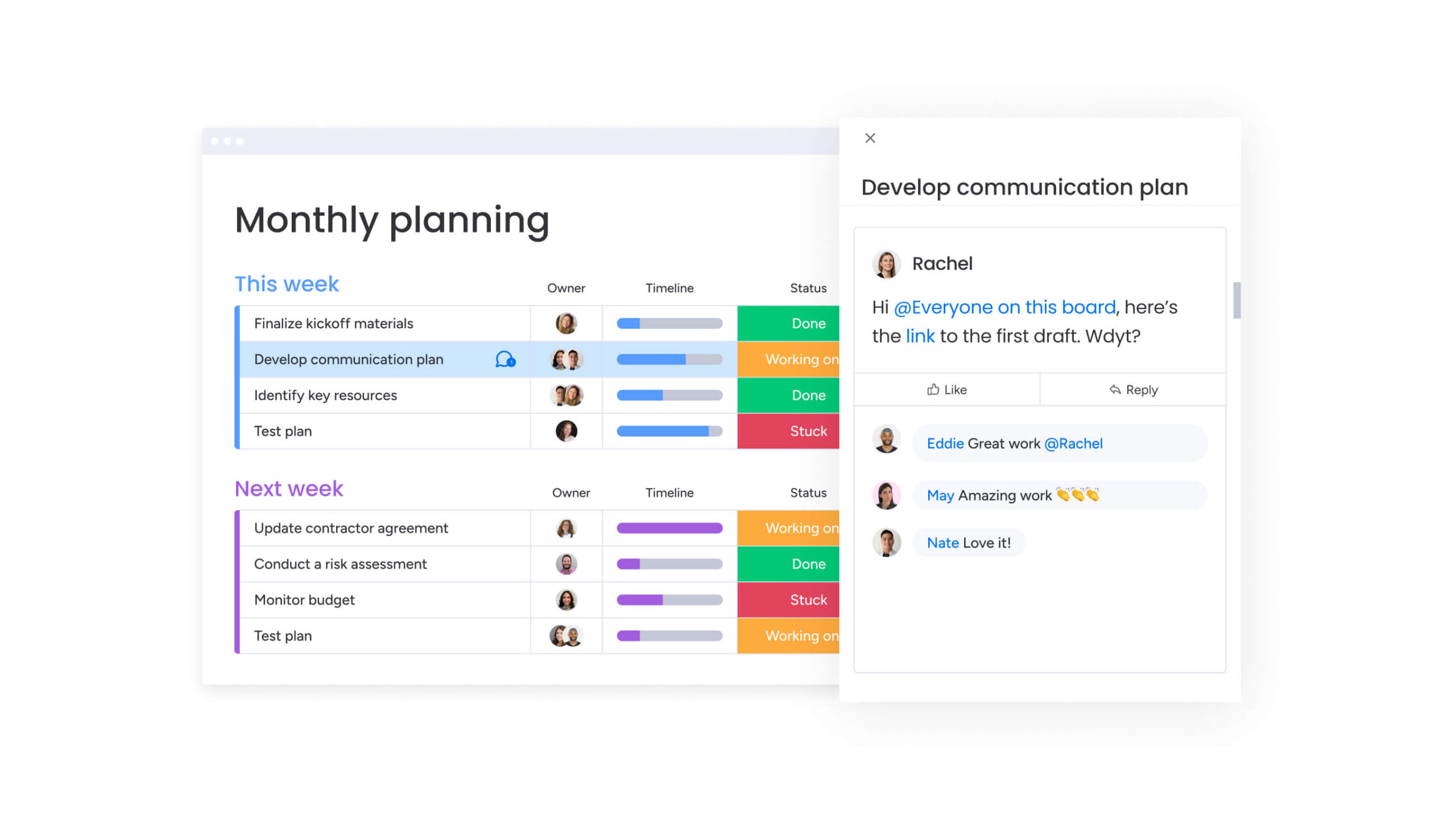
With AI Work Platform, you can choose from hundreds of board templates that fit your project management methodology. You can customize boards to your liking and use them to collaborate in real time by assigning responsibilities, sharing comments and updates, attaching documents, and more.
Visualize work your way
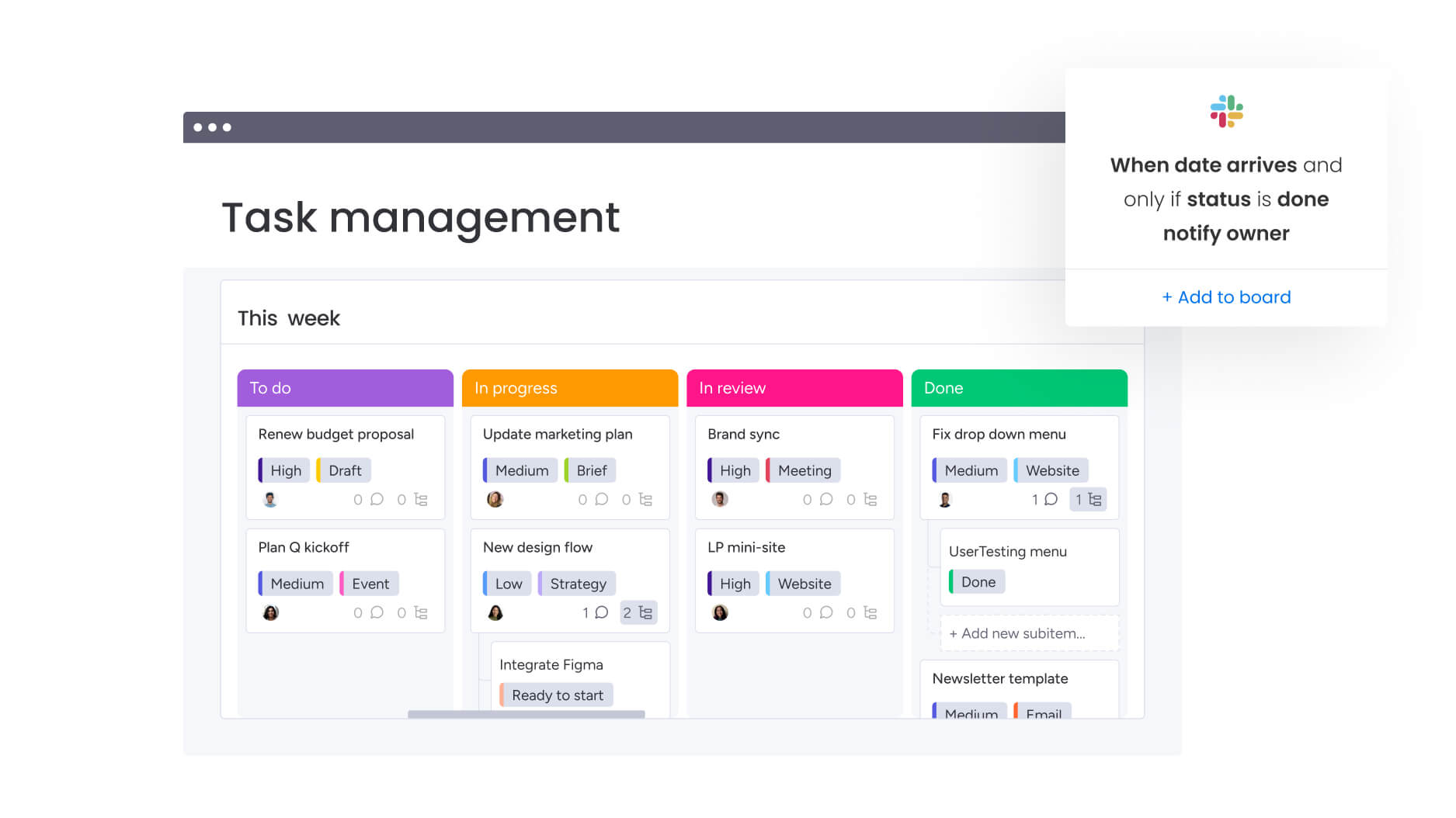
With over 27 different project visualization options including Kanban, Gantt, Timeline, Calendar, and more, you can visualize and monitor project progress exactly how you want to. This allows you to tailor the AI Work Platform to the specific project management methodology of your choosing.
Track project progress at a glance
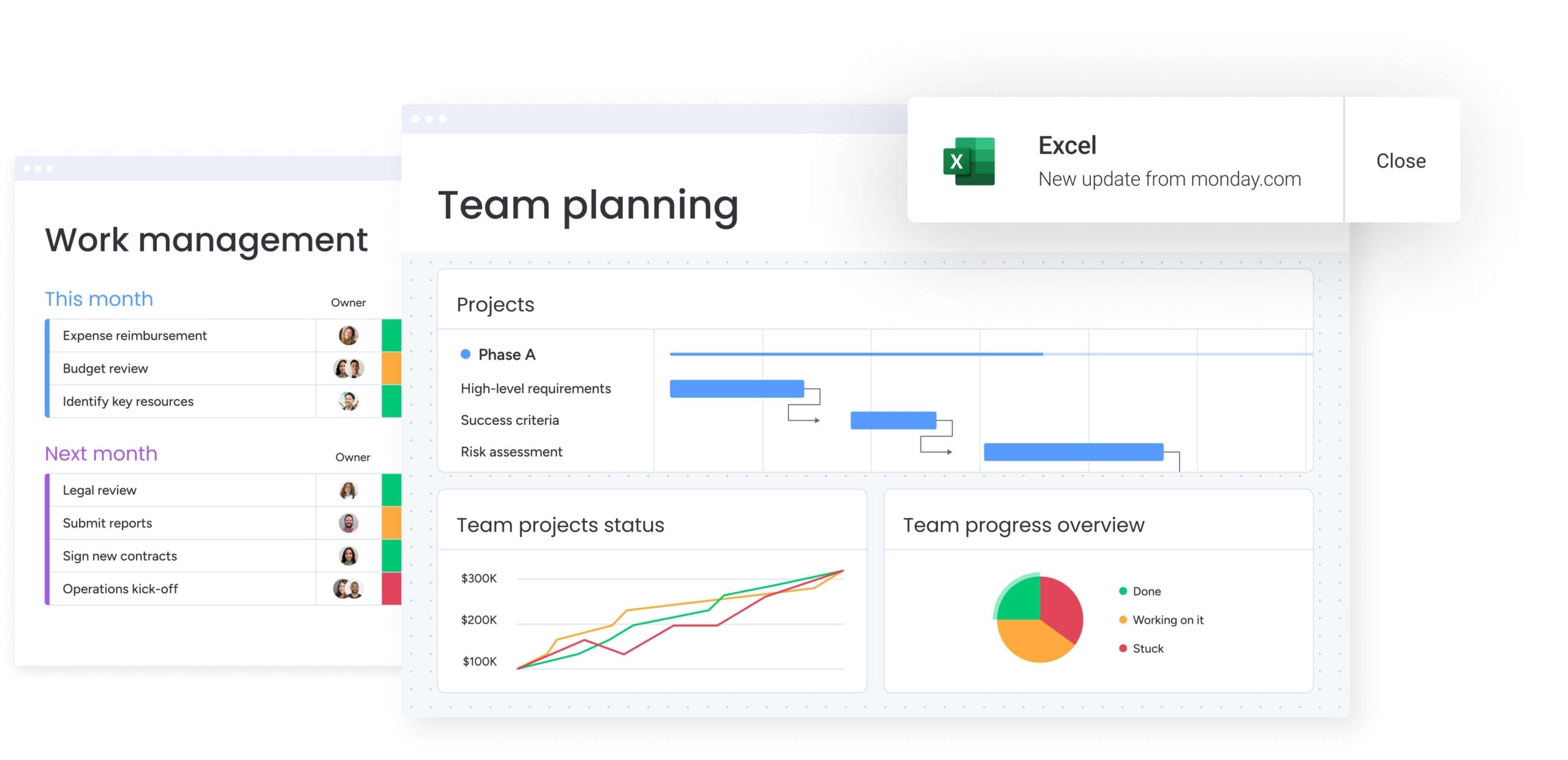
monday.com’s AI Work Platform allows you to view dashboards that collect all your essential project data in one place, giving you an overview of how your team and projects are progressing. Additionally, you can pull essential insights through reports and analytics to see what’s working and what project processes can be improved.
Work alongside AI to support your project work
Teams managing complex projects increasingly rely on AI to handle repetitive coordination work, freeing up project managers to focus on decisions that require human judgment. The platform embeds AI capabilities directly into the project workspace, so teams don’t need to switch between disconnected applications. Each capability is designed to reduce manual coordination so project managers can focus on strategic decisions rather than status updates.
- monday sidekick: A context-aware AI assistant embedded in the workspace that generates content, analyzes data, suggests next steps, and executes work within the platform. For project teams, Sidekick can summarize project updates, draft status reports, and identify blockers across workstreams.
- monday agents: Purpose-built AI agents that execute work autonomously, including processing requests, routing work across teams, analyzing data, and updating records. For projects, this means automated categorization of incoming work, risk flagging, and continuous progress monitoring.
- monday vibe: Build custom apps from a prompt with no coding required. Project teams can create custom OKR trackers, resource dashboards, or risk monitoring apps instantly.
- monday MCP: Connect AI assistants like Claude, ChatGPT, Cursor, and Copilot to monday.com workspaces securely. AI assistants can create items, update statuses, generate reports, and perform cross-board analysis.
- AI Blocks: Automate work categorization, summarize updates, trigger workflow steps, and generate smart reports without writing a single line of code.
How the platform compares to traditional project management
The table below breaks down key features across common project management needs. It shows how the platform addresses the coordination challenges that most teams encounter when managing projects at scale.
| Capability | Common challenge | The platform |
|---|---|---|
| Work management | Manual assignment and tracking across spreadsheets | AI-powered automation with smart categorization |
| Reporting | Static reports that require manual compilation | Live dashboards with AI-generated insights |
| Cross-team visibility | Siloed views that limit cross-team coordination | Unified workspace with 200+ integrations |
| Risk management | Reactive risk discovery after delays occur | Proactive — AI flags scheduling conflicts and bottlenecks |
| Custom workflows | Rigid templates that require developer support | No-code workflow builder with AI actions |
| AI assistant | No built-in AI assistance | Embedded sidekick, agents, and MCP |
Get started
Why structured project management drives outcomes
Whether you’re managing a software launch or a construction initiative, understanding what is a project and what makes work qualify as one is the first step toward managing it well. The characteristics, lifecycle phases, and management practices covered in this article give teams a shared vocabulary and a repeatable approach for turning ideas into delivered results. monday.com’s AI Work Platform gives teams real-time visibility and AI-powered support to move from planning to completion — so every project has a greater chance of finishing on time, on budget, and with the outcomes stakeholders expect.
Get startedFAQs
What are the 5 main characteristics of a project?
There are many characteristics that define a project, but 5 main ones that every project should have, include: a clear set of activities, a deadline, a result, clear goals, and finally, they must be unique.
What is not a project?
Many work tasks and activities may feel like projects but aren’t, such as ongoing tasks without an update, maintaining existing assets like a website, or repetitive events like monitoring marketing campaigns.
What are the 3 C's of a project?
The 3 C’s of project management include communication, collaboration, and cooperation, which are essential pillars of all successful projects.
What is the difference between a project and a process?
The difference between a project and a process is that a project is a temporary initiative with a unique outcome and a defined end date, while a process is an ongoing, repeatable activity. For example, designing a new employee onboarding program is a project, but running that onboarding for each new hire is a process.
What are the 5 phases of the project lifecycle?
The 5 phases of the project lifecycle are initiation, planning, execution, monitoring and controlling, and closure. Each phase builds on the previous one, guiding teams from defining the project’s purpose through delivering final outputs and documenting lessons learned.
How does monday.com's AI Work Platform help with project management?
The AI Work Platform helps with project management by combining AI-powered workflows, real-time dashboards, and 200+ integrations so teams can plan, execute, and track projects in one workspace. Features like sidekick and agents handle repetitive coordination work so project managers can focus on strategic decisions.
