


Supply chains generate enormous amounts of data. Shipment statuses, supplier performance scores, demand signals, inventory levels — it flows in constantly, from every direction. Yet, for most operations teams, the information doesn’t reach the right people in time to change what happens next.
AI in the supply chain changes the game by connecting signals to action. A supplier flagged as high-risk becomes an assigned task for your procurement manager, and a demand spike detected weeks early becomes an updated replenishment order. To achieve similar results, this guide explores what AI in the supply chain means, the types of AI driving the most measurable results, and the use cases delivering the fastest returns. You’ll also see how people and agents divide the work, and how monday AI Workspace connects supply chain execution to every other team in your organization.
Get startedKey takeaways
- Value comes from execution, not just prediction: forecasts and risk alerts only matter when they trigger workflows, assign owners, and update the right teams.
- The execution gap is the real bottleneck: most projects stall because insights stay trapped in dashboards, disconnected from daily work.
- Three AI types work together: predictive AI forecasts, generative AI drafts, and agentic AI acts within the guardrails you set.
- Cross-department context is essential: supply chain decisions affect finance, sales, and marketing, so agents need the full picture.
- Governance and adoption decide ROI: simulation mode, approval gates, and familiar interfaces determine whether teams trust and use AI.f
What is AI in supply chain management?
AI in supply chain management learns from your data to anticipate disruptions, optimize logistics, and automate coordination across operations.
Traditional supply chain software follows fixed logic. It tells you what shipped yesterday. AI learns from new data to detect what’s coming and recommends a response. This shift exposes the planning-to-execution gap, where AI generates useful insights, but those insights never become coordinated action across your teams.
Your ERP system reports what shipped. AI tells you which supplier will miss next week’s delivery, based on port congestion, weather data, and past performance. The difference is reporting vs. anticipating.

The 3 types of AI powering supply chain work
Not all AI capabilities work the same way. What separates them is what each type produces and how much people interaction it needs. Here’s the framework before we dive into each type.
Predictive AI: forecasting demand before it shows in your data
Predictive AI uses historical data to forecast demand, lead times, and inventory needs. A retailer’s model detects an early demand spike from social trends and weather data, adjusting replenishment orders 3 weeks before it shows up in sales data.
Generative AI: turning complex data into structured, usable content
Generative AI produces content from a prompt. A buyer asks it to summarize the risk profile of ten suppliers and gets a structured briefing in seconds, not hours.
Agentic AI: taking action within the guardrails you define
Agentic AI perceives a situation, reasons about it, and takes action within defined guardrails. An agent detects a port delay, calculates the production impact, then drafts a purchase order and routes it to the procurement manager for one-click approval.
With monday AI Workspace, these insights become assigned tasks across your teams, so signals turn into action instead of another report to read.
Which supply chain use cases deliver the fastest ROI?
According to Gartner research on supply chain technology, the highest-value AI applications share one trait: high-volume, repeatable work with clear success metrics. These use cases deliver returns in weeks, not years.
- Demand forecasting: predictive AI ingests point-of-sale data, web traffic, and weather to produce continuously updated forecasts. When those forecasts flow directly into procurement and production schedules, you improve fulfillment by catching demand shifts earlier.
- Inventory optimization: AI calculates the right safety stock levels and triggers reorder recommendations, so you hold leaner inventory while improving fill rates.
- Logistics and route optimization: AI logistics software evaluates route options against real-time constraints and rebooks shipments the moment disruptions hit.
- Supplier risk sensing: AI monitors news, financial filings, and shipping data to flag risk before it becomes a crisis. The Research Assistant digital worker locates this web intelligence automatically in the monday AI Workspace.
- Procurement knowledge work: generative AI drafts RFPs, summarizes contracts, and categorizes spend, freeing buyers for strategic sourcing.
When agents flag delays early and trigger proactive responses, you replace emergency shipping with planned moves. This single shift protects your margin and turns supply chain AI from an expense into measurable ROI.

Why supply chain AI projects fail to deliver ROI
Most supply chain AI fails because the insight never becomes action. Understand why your results are disappointing, and you’ll build a stronger business case before you invest.
- Insights trapped in dashboards: A risk score means nothing until it creates a task, assigns an owner, and sets a deadline. Without that connection, even accurate predictions go unactioned.
- Missing cross-functional context: An agent can’t recommend a supplier switch that respects budget if it can’t see finance data. Siloed systems produce siloed decisions.
- Low adoption from complex interfaces: Planners are far more likely to adopt AI when it lives inside the platforms they already rely on every day.
How to build a stronger business case
To justify the investment, start with high-impact work that’s low on complexity. Categorize incoming requests, extract shipment details from PDFs, or summarize daily updates. Measure time saved within weeks, then translate that into financial outcomes your CFO understands — like reduced expedited shipping, improved inventory turns, and faster fulfillment.
How scenario planning turns insight into action
Knowing a disruption is headed your way is only half the challenge. The other half is having a tested response ready before it arrives. Scenario planning is an effective solution that lets you stress-test decisions against real constraints before they become real problems.
What scenario planning means in practice
Scenario planning means modeling how your supply chain responds to a possible event before it happens. You stress-test decisions like a supplier failure or demand spike against inventory, cost, and service levels, so you respond with confidence backed by tested plans.
How digital twins accelerate scenario analysis
A digital twin is a virtual model of your physical supply chain. AI-powered twins simulate thousands of scenarios in minutes and show you the downstream impact of each choice. Instead of deciding on intuition, you decide with quantified confidence.
Connecting scenarios to execution
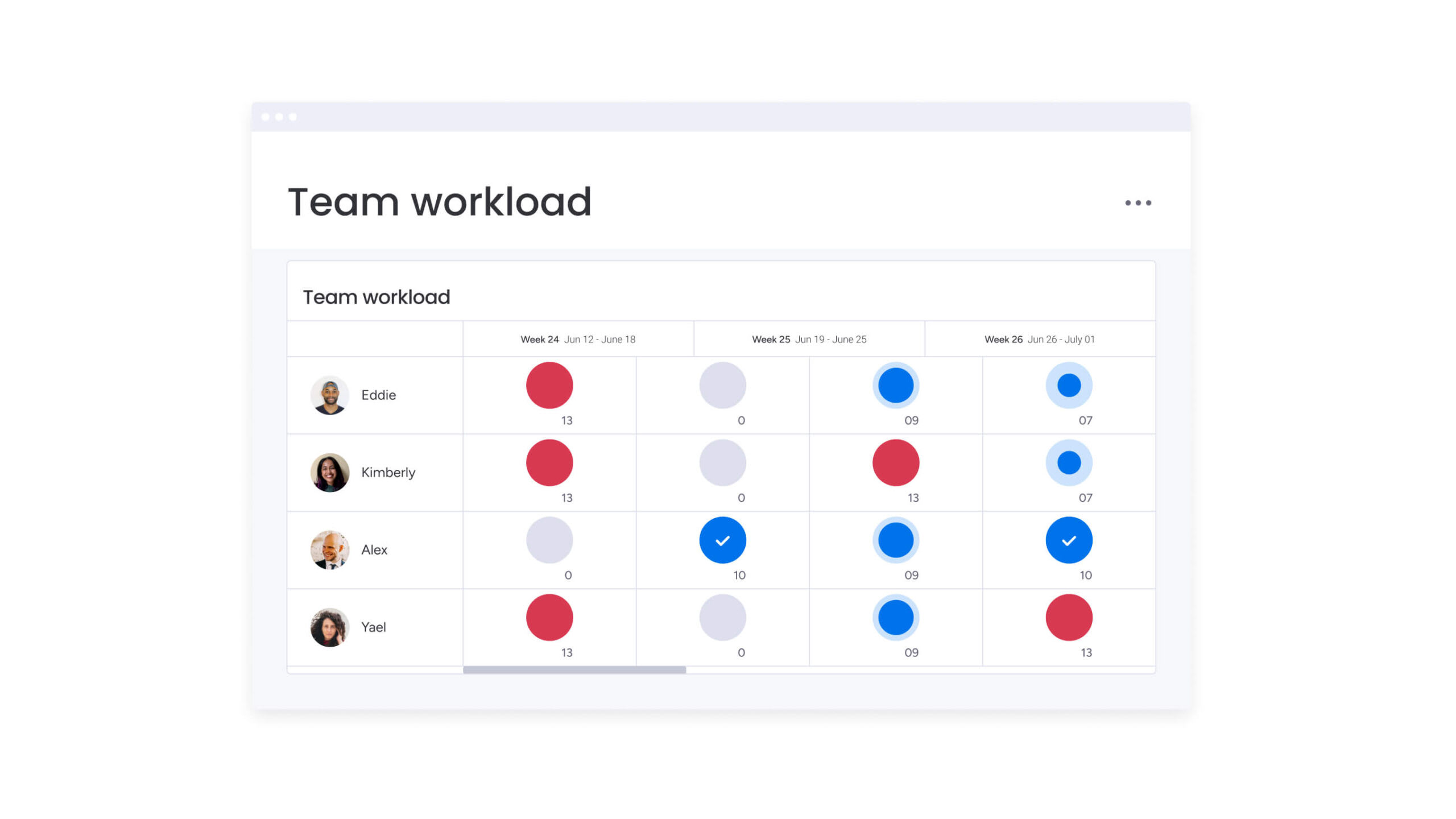
The value only lands when you connect scenarios to execution. Portfolio views, workload views, and AI-powered risk identification let you model dependencies and test response plans on the AI Workspace. When a scenario becomes reality, the plan’s already an assigned workflow with owners and deadlines, not a slide in a deck.
Where people and agents divide the work
Here’s the concrete division of responsibility between people and agents on a shared surface where both operate with full visibility.
How this plays out in a real workflow
Picture a supplier risk agent detecting a lead-time anomaly. It flags the issue on a shared board, attaches its reasoning, then assigns the procurement manager. You review it, approve an alternative source, and the agent executes the purchase order update. Logistics and finance see the change instantly in the same place.
This division keeps your judgment where it matters most and frees your team to focus on high-value work. Your team focuses on strategic outcomes instead of processing routine alerts.
Connecting supply chain to every other team
Supply chain decisions ripple out to the rest of your business. A marketing campaign, a new product launch, or a finance budget change all affect planning — but those signals rarely reach your team in time.
This is when cross-department context changes the outcome. Because marketing, sales, finance, and operations work on the same platform, agents see how everything connects. Consider how signals flow when data sits in one connected layer:
- Marketing launches a campaign: the agent detects the demand spike and flags inventory implications.
- Sales updates the pipeline: the agent adjusts production schedules and notifies procurement of component needs.
- Finance changes payment terms: the agent updates supplier workflows and recalculates working capital impact.
Live dashboards and AI-generated summaries also translate operational detail into clear insights for stakeholders across every function. Your CFO sees revenue impact and margin protection, not SKU-level noise. The same platform serves daily operational work and high-level executive views.
How monday AI Workspace handles execution
Most supply chain AI generates insights that never turn into coordinated action. The monday AI Workspace is where people and autonomous agents work together on one connected data layer. It’s the execution space where AI insights become assigned tasks, approvals, and cross-functional updates. When you frame supply chain AI as execution infrastructure instead of prediction alone, the value becomes measurable.
Here’s how the platform turns signals into results across your operations:
- Add AI to any workflow without code: AI Blocks categorize incoming requests, extract details from supplier PDFs, and summarize contract terms directly on your boards.
- Deploy digital workers that act: the Research Assistant brings supplier risk intelligence, and the Project Analyzer flags bottlenecks and predicts delays.
- Connect existing systems: 200+ integrations link your ERP, WMS, and logistics platforms so AI works on current data without replacing your core stack.
- See everything in one view: dashboards, Gantt views, and portfolio management show bottlenecks, resource constraints, and exception status in real time.
- Move work automatically: when an agent flags a risk, a workflow automation creates an assigned task, notifies logistics, and updates the finance dashboard.
You configure these workflows without engineering resources, so your teams can adapt as conditions change. Adoption stays high because AI meets people where they already work.

Governing AI you can trust
How do you keep control as agents take on more responsibility? Governance isn’t a constraint on AI. It’s the mechanism that lets AI autonomy expand safely over time. Built-in controls give you confidence, each building trust before you grant an agent more authority.
Simulation mode: validate before you activate
Run an agent in read-only mode where it drafts recommendations but executes nothing. You validate behavior first, so you can switch it on with full confidence in its behavior.
Approval gates: keep high-stakes decisions in human hands
Route high-impact actions, like a supplier change or expedited shipping above a threshold, through an approval workflow to a named approver. Agents act fast on routine decisions, while people stay in control of consequential ones.
Audit trails: full visibility for compliance and improvement
The platform logs every agent action, its data inputs, and its authorization automatically. Your compliance team has the record it needs, and your operations team has the data to improve agent performance over time.
The platform is SOC 2 Type II certified and GDPR compliant, with role-based permissions and open AI infrastructure. That open approach connects to models from Azure OpenAI and AWS Bedrock, so you retain full flexibility across models and keep your data protected.
Get startedWhere ambition meets execution in your supply chain
The question for supply chain leaders is how quickly your organization can set itself up to capture that value and lead your industry.
AI in the supply chain isn’t a forecasting upgrade. It’s a new operating model where people and agents work together and take planning forward to execution. The organizations that benefit most are those with the most connected data layer and the clearest governance.
When that coordination layer is in place, you respond to disruption faster, hold leaner inventory, and make cross-functional decisions with more precision. Your supply chain executes proactively for the future with tested, coordinated plans. The leaders who close the execution gap first will set the pace for their industries.
Get startedFrequently asked questions
How is AI used in supply chain management today?
Today, supply chain teams use AI for demand forecasting, inventory optimization, supplier risk monitoring, logistics routing, and procurement automation. The most advanced deployments use agentic AI to execute routine decisions on its own, within guardrails you define.
What is the difference between predictive AI and agentic AI in supply chains?
Predictive AI forecasts outcomes and surfaces recommendations for you to act on. Agentic AI takes autonomous action within the guardrails your team defines. An agent can adjust orders, reroute shipments, and execute routine tasks, while people focus on strategic decisions.
How does AI improve supply chain visibility across teams?
AI improves supply chain visibility by connecting siloed data across ERP, WMS, and logistics systems — then detecting patterns and surfacing real-time risks. This gives cross-functional teams one source of truth to anticipate disruptions before they occur.
What are the main challenges of implementing AI in the supply chain?
The main challenges of AI supply chain management are fragmented data, weak system integration, adoption resistance, and platform sprawl. Overcoming them requires a unified data layer and a shared workspace where people and agents collaborate.
Can AI replace supply chain planners and procurement managers?
AI works alongside supply chain planners and procurement managers, but real human judgment drives strategic relationships and complex exception resolution. Instead, people and agents work as one team, with agents handling routine monitoring and execution.
How do you keep data secure when using AI in the supply chain?
You keep data secure when using AI in the supply chain through enterprise-grade controls, audit trails, and approval gates. Platforms should also offer simulation mode and open AI infrastructure so you validate agent behavior before granting execution authority.

 Get started