HomeUse Cases
AI Logistics

Manage your logistics with AI

Give your operations team real-time visibility across every shipment, carrier, and warehouse — with AI agents that monitor, flag issues, and act so your team stays ahead of every delay.

Get Started
No credit card needed ✦ Unlimited time on Free plan
ai-logistics-software

Trusted by over 60% of the Fortune 500

Real-time visibility across every shipment

monday.com connects logistics data from multiple sources into a single, live view so your team always knows where things stand.

Automate workflows without writing code

Any operations team member can set up automated notifications, routing rules, and escalation paths — without waiting on IT or a developer.

AI agents that monitor and report risks

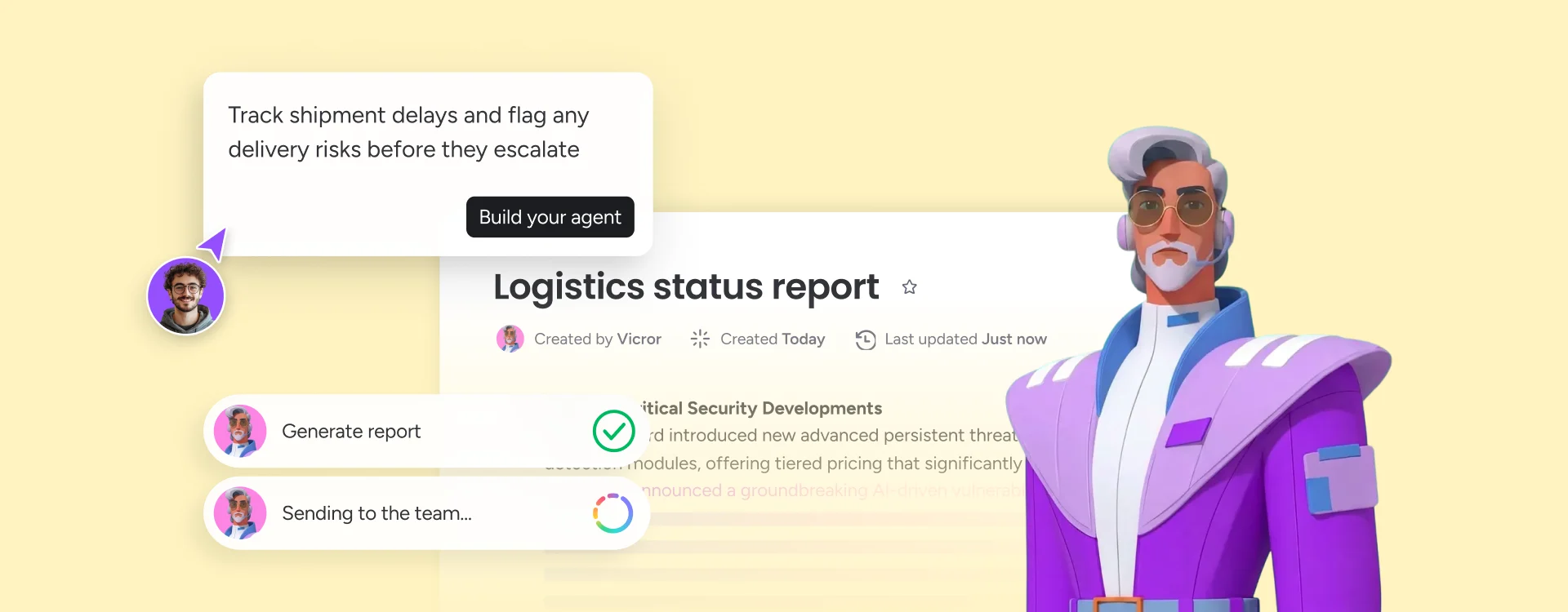
monday agents watch your logistics operations continuously, surface delays before they become problems, and generate status reports on demand.

Keep every shipment on track with live logistics tracking

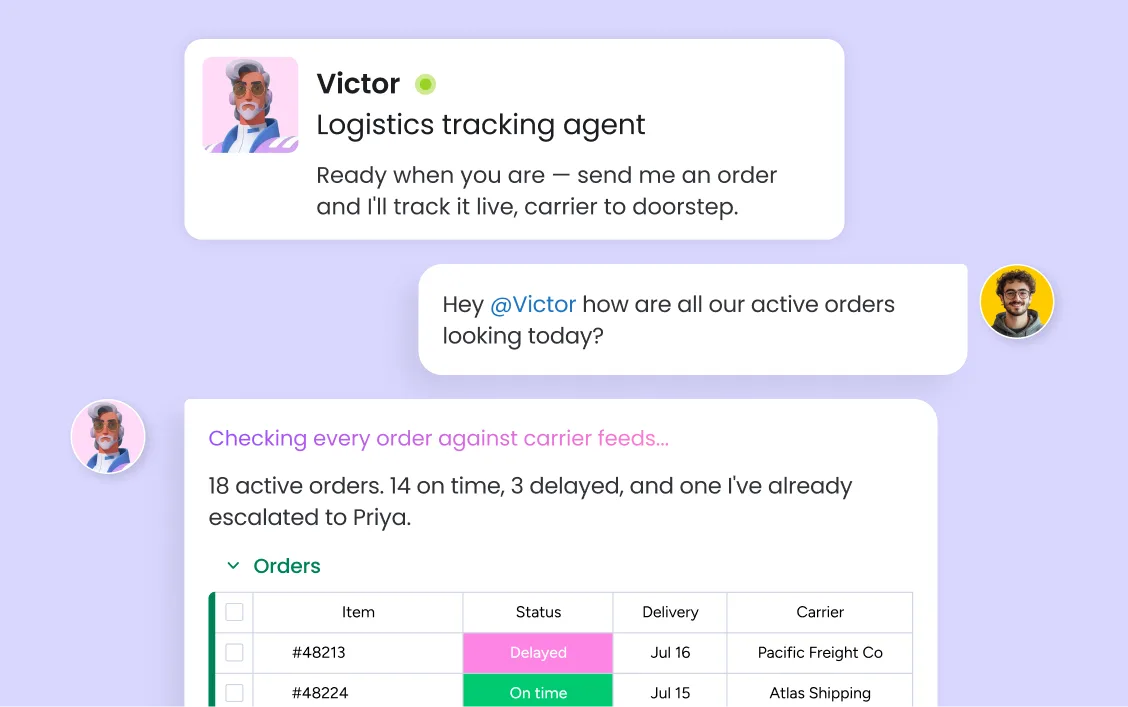
Your operations team gets a single, always-current view of every shipment — carrier details, delivery windows, customs documentation, and escalation history in one connected board. When a shipment is updated, the board reflects it immediately without manual data entry. monday agents monitor the thresholds you set and route alerts to the right person the moment something needs attention, building a searchable record over time so your team can spot patterns and make smarter carrier decisions.

Get Started
operations team viewing live shipment tracking board on monday.com
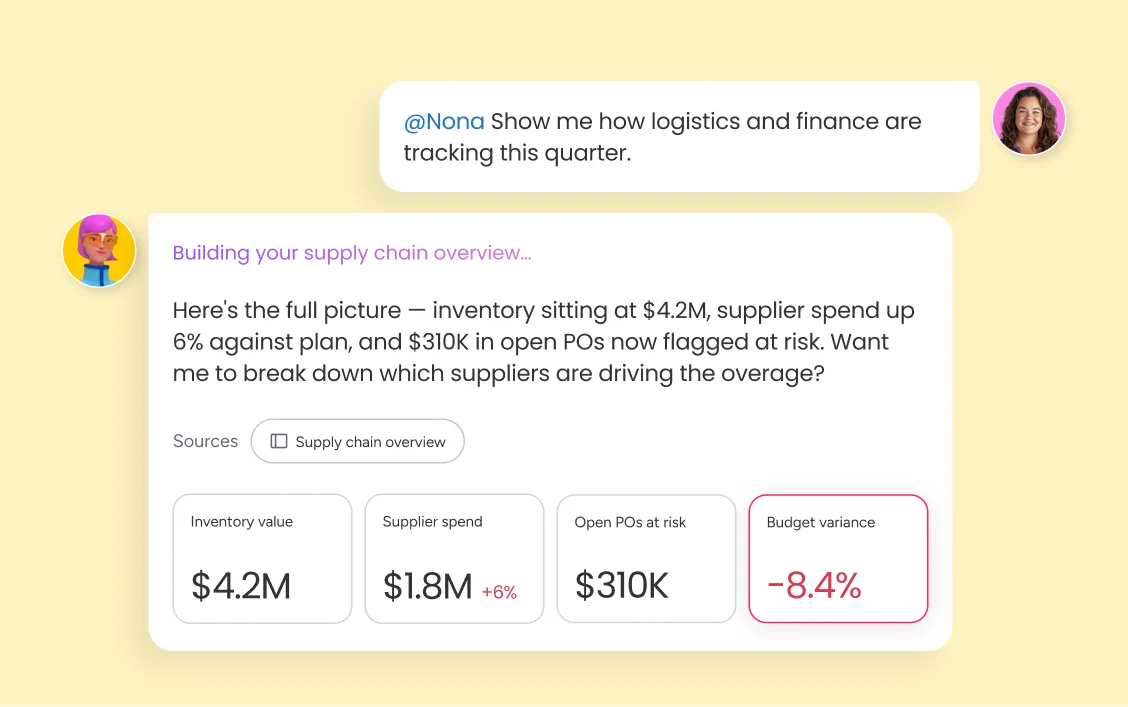
supply chain management dashboard connecting logistics and finance teams

Streamline supply chain coordination across every department

Any operations team member can set up automated notifications, routing rules, and escalation paths — without waiting on IT or a developer.

Get Started

Run logistics operations at scale with no-code automation

As your logistics volume grows, monday.com scales with you — operations teams build and adjust workflow automations without any technical help. Operations managers configure automations that assign incoming shipments to the right regional team, trigger re-order requests when inventory drops below a threshold, and send weekly reports to stakeholders automatically. Integrations with your existing ERP, WMS, and carrier tools keep data flowing without manual exports.

Get Started
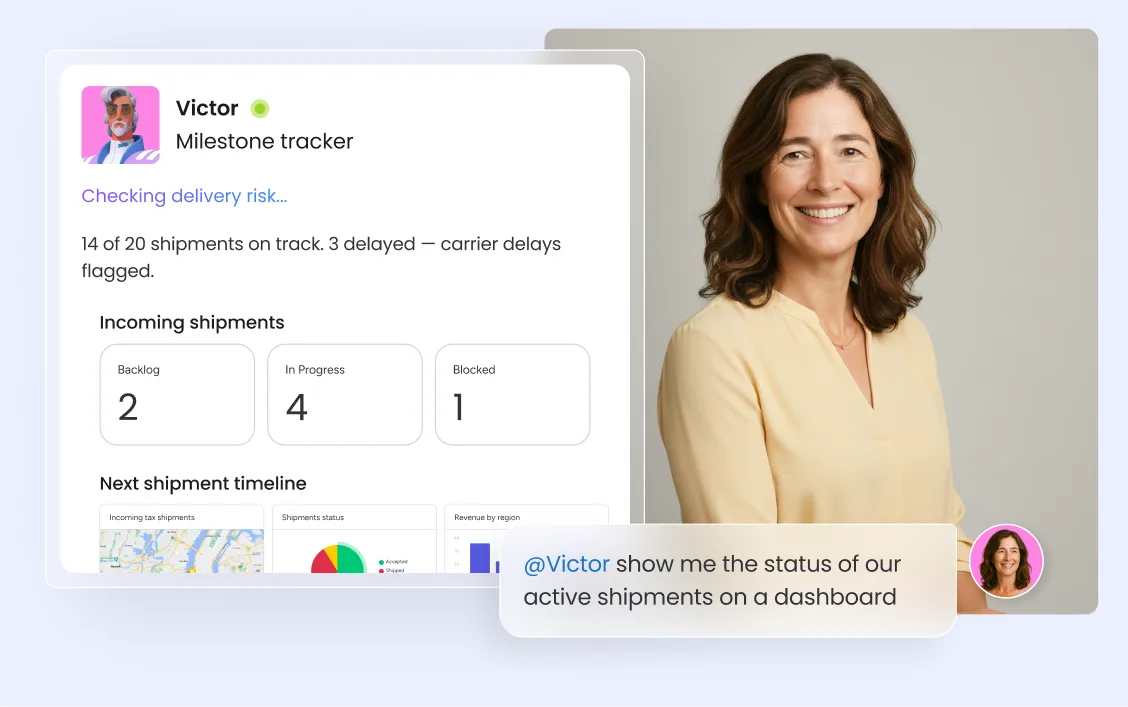
operations manager configuring no-code logistics automation on monday.com

Works with the tools your team already uses

monday.com connects your AI workflow automation software to the tools every team runs on. With 850+ integrations — including Slack, Jira, Microsoft Teams, Google Calendar, GitHub, and Salesforce — and MCP support for Claude, ChatGPT, and Copilot, your portfolio data stays connected wherever your teams work.

Gmail
Slack
Claude
Drive
Salesforce
Hubspot
Jira
Calendar
Zoom
GitHub
Teams
ChatGPT
Cursor

850+

more via API, MCP & native connectors

Solutions for every team, powered by AI

Your descriptive text here

Legal

Manage supplier contracts and compliance documentation in one place

Legal teams track carrier agreements, trade compliance requirements, and customs documentation on monday.com alongside the operations teams that need them. Automated reminders ensure contract renewals and compliance filings never fall through the cracks.

Get Started
Your descriptive text here

HR

Coordinate warehouse staffing to match logistics demand

HR teams align headcount planning with seasonal shipping peaks by connecting workforce schedules to logistics volume forecasts on monday.com. Onboarding workflows for warehouse and operations roles run automatically, so new team members are productive from day one.

Get Started
Your descriptive text here

PMO & Ops

Manage the full logistics lifecycle from one operations board

PMO and operations teams get a complete view of every logistics workstream — inbound, outbound, and warehousing — on a single connected platform. monday agents monitor for generate weekly reports, and surface the items that need attention today.

Get Started
Your descriptive text here

Product

Track component availability and supplier timelines

Product and engineering teams use monday.com to map hardware or component supply chains alongside product roadmaps. When a supplier pushes a delivery date, the change to dependencies is reflected in monday workflows automatically.

Get Started
Your descriptive text here

Marketing

Align campaign timing with real inventory availability

Marketing teams can connect upcoming campaign calendars to live inventory data on monday.com, so promotions go live only when stock is confirmed. monday agents flag conflicts between planned launches and current supply constraints before they affect customers.

Get Started

How to manage logistics operations with AI

Get Started
01

Step 1 - Set up your logistics tracking board

Start from a pre-built logistics template and customize it to match your actual operations — shipments, carriers, warehouses, inventory items, and whatever columns your team needs to stay on top of every moving part. Your team goes from zero to a working board in 15 minutes.

02

Step 2 - Connect your tools and activate AI monitoring

Integrate your existing carrier systems, ERP, and communication tools so data flows into your board automatically. Then configure monday agents to monitor shipment thresholds, flag at-risk items, and send proactive alerts — so your team is notified before a problem escalates.

03

Step 3 - Scale automation across the full supply chain

Once your core workflows are running, operations managers can expand automation to cover procurement cycles, inventory replenishment, and cross-team reporting — without writing code. monday.com grows with your operation, so adding new workflows or team members never requires starting over.

Features

End-to-end operations management

From initial purchase order to final delivery confirmation, monday.com covers every stage of the logistics lifecycle in one platform. Teams can manage exceptions, escalate issues, and close out orders without switching between systems.

Cross-team operations visibility

monday.com connects logistics data to the boards used by sales, finance, and procurement — so all teams work from the same information. Shared dashboards eliminate the need for status meetings and keep every stakeholder informed.

No-code logistics automation

Any operations team member can build multi-step automations using a visual, no-code builder — routing shipments, escalating exceptions, and generating reports without needing technical support. monday workflows handles the logic so your team handles the strategy.

Inventory tracking

Track stock levels, warehouse locations, and reorder points alongside your logistics workflows on one connected platform. When inventory drops below a threshold, monday.com can automatically trigger a procurement workflow or alert the relevant team.

Supply chain dashboard

A real-time supply chain dashboard aggregates data across your entire logistics operation — inbound, outbound, inventory, and supplier performance — into a single view for leadership and operations managers.

Automated logistics notifications

Set rules that send alerts when a shipment is delayed, an inventory level drops, or a deadline is approaching — without manual monitoring. Notifications route to the right team member based on shipment type, region, or priority.

Shipment status columns

Purpose-built column types capture shipment stage, expected arrival, carrier name, and customs status in structured fields. Status changes trigger downstream automations automatically, keeping the rest of your workflow moving.

Logistics tracking board

A centralized board gives every team member a live view of shipments, carriers, and delivery status. Operations managers can filter by region, carrier, or risk level and drill into any record for full context.

One AI Work Platform for every logistics team

Get Started

monday agents

AI agents that monitor shipments, flag delays, and generate logistics status reports automatically.

monday workflows

No-code automation that routes shipments, triggers replenishment orders, and keeps your supply chain moving.

monday sidekick

Your AI assistant that instantly drafts supplier updates, summarizes pipeline status, and answers logistics questions.

monday vibe

AI-powered content creation for on-brand operations documentation and supplier communications inside monday.com.

Real customers. Unreal outcomes.

Frequently
Asked Questions

Does monday.com have a logistics management app?

Yes, the monday.com app is available for download on the iOS and Android app stores.

How to streamline logistics processes with monday.com?

Streamlining logistics processes starts with consolidating your data into one connected system, then layering automation on top of the most repetitive coordination tasks. monday.com lets you build and iterate on logistics workflows quickly, so your team can focus on the work that drives results rather than on status updates and manual handoffs.

Is there free logistics management software?

Yes. monday.com offers a free plan that includes core board and workflow features suitable for small logistics teams getting started. Paid plans add advanced automation, AI capabilities, and integrations for larger operations that need more scale.

Why is monday.com the best logistics management software?

monday.com combines real-time logistics tracking, no-code workflow automation, vibe-coded apps, and AI agents into a single platform that connects your entire operation — not just the logistics team. Unlike standalone tools, monday.com gives sales, finance, procurement, and operations a shared view of the supply chain, so decisions get made faster and with better context.

How to automate logistics workflows without code?

monday.com includes a visual, no-code automation builder that lets any operations team member create multi-step workflows — routing shipments, sending alerts, updating inventory records, and escalating exceptions — without writing a single line of code. Simply describe the trigger and the action, and monday workflows handles the rest.

How much does monday.com logistics management software cost?

Logistics management software pricing varies depending on team size, feature requirements, and the number of integrations needed. monday.com offers a free plan for small teams and paid plans that scale with your operations — you can explore pricing at monday.com/pricing.

What is supply chain management software?

Supply chain management software coordinates the end-to-end flow of goods, information, and finances from supplier to customer. It connects procurement, warehousing, logistics, and fulfillment into a unified view so operations teams can manage dependencies and respond to disruptions quickly.



How does AI improve logistics operations?

AI capabilities in logistics software monitor data streams continuously, identify patterns that signal risk — such as carrier delays or inventory shortfalls — and trigger automated responses before problems escalate. On monday.com, monday agents handle this monitoring layer, so operations teams spend less time on manual oversight and more time on decisions that require human judgment.

What is logistics management software?

Logistics management software is a platform that helps operations teams plan, execute, and monitor the movement of goods across the supply chain. It typically covers shipment tracking, inventory management, carrier coordination, and workflow automation in a single connected system.