


Warehouse teams are moving away from spreadsheets and manual processes toward software that connects every part of their operation. Without warehouse software, teams face constant stockouts, shipping errors, and zero visibility into what’s happening across the floor. As operations scale and customer expectations rise, the right warehouse management system becomes the foundation for accuracy, speed, and sustainable growth.
This guide breaks down what warehouse management software does, how to evaluate the right fit, and which 10 systems stand out in 2026. Whether you’re replacing a legacy system or digitizing for the first time, you’ll find the criteria and comparisons you need to make a confident decision, including how platforms like monday.com’s AI Work Platform bring flexibility and AI to warehouse operations.
Key takeaways
- Automation reduces errors and speeds fulfillment: Warehouse management software automates receiving, picking, packing, and shipping to reduce errors and speed up fulfillment.
- Real-time visibility prevents stockouts: Real-time inventory visibility eliminates stockouts, overstocking, and the guesswork that comes with manual tracking.
- Integration is the most critical factor: Integration with ERP, e-commerce, and accounting platforms is the single most important factor when choosing a WMS.
- AI capabilities are becoming standard: AI-powered features like predictive restocking, automated data extraction, and smart categorization are becoming standard across top platforms.
- monday.com’s AI Work Platform adapts to any workflow: The AI Work Platform offers a flexible, no-code approach to warehouse operations, with customizable boards, 200+ automations, and built-in AI capabilities that adapt to any workflow.
What is a warehouse management system?
A warehouse management system (WMS) manages every stage of warehouse operations, from receiving inventory to shipping orders. It provides a central place to track stock, manage orders, and automate workflows. Real-time visibility ensures teams know what’s in stock, where it is, and where it’s headed next.
WMS platforms replace manual processes and spreadsheets with digital records and automated workflows. Tracking every item across receiving, picking, and packing reduces errors and prevents costly delays.
A connected system extends this visibility across departments. Linking warehouse data with sales, procurement, and customer service gives the entire business a shared, accurate view of operations.
How a WMS works
A WMS coordinates the flow of goods through every warehouse stage. When inventory arrives, the system logs quantities, assigns storage locations, and updates stock counts in real time. As orders come in, it generates optimized pick paths, verifies packing accuracy, and triggers shipping labels, all without manual handoffs between steps.
Behind the scenes, the platform continuously syncs data across receiving docks, storage zones, and outbound staging areas. Managers can monitor performance dashboards to spot bottlenecks, track fulfillment rates, and adjust staffing or workflows on the fly. The result is a single source of truth that keeps every team member, from floor workers to executives, operating from the same information.
Types of warehouse management systems
Not every warehouse needs the same system, but every warehouse can benefit from a modernized solution. The global warehouse management system market reached $3.38 billion in 2025 and is projected to hit $15.95 billion by 2033, growing at a 21.9% CAGR. The right architecture depends on your operation’s size, complexity, and existing technology stack. Here are the 3 main types to consider.
- Standalone WMS: A dedicated warehouse management application that focuses exclusively on inventory, order fulfillment, and warehouse workflows. Standalone systems offer deep functionality for warehouse-specific operations but may require additional integrations to connect with accounting, e-commerce, or procurement platforms.
- Cloud-based WMS: Hosted on remote servers and accessed through a browser or app, cloud-based systems eliminate the need for on-premise hardware and IT maintenance. They typically offer faster deployment, automatic updates, and subscription pricing, making them a strong fit for growing operations that need flexibility without heavy upfront investment.
- ERP-integrated WMS: Built as a module within a larger enterprise resource planning suite, ERP-integrated systems connect warehouse operations directly to finance, HR, supply chain, and sales data. This approach reduces data silos but often comes with higher implementation costs and longer deployment timelines.
What warehouse management software should do for your business
Warehouse management software should simplify daily operations and give teams the capabilities to perform at their best. Core capabilities include accurate inventory tracking, efficient fulfillment, and reporting that supports smarter decisions.
Know what you have as soon as it arrives
Accurate inventory starts with receiving. Features like barcode scanning and real-time stock updates eliminate manual entry errors. Teams can rely on precise counts and know exactly where to find every item. Strong labor management capabilities also matter here: the system should track workforce productivity during receiving so managers can allocate staff where they’re needed most.
Pick, pack, and ship with speed
Automated pick paths and packing verification reduce mistakes and shorten order processing time. Teams spend less time searching and more time fulfilling orders.
See the big picture
Dashboards and reports provide real-time insights into key metrics such as fulfillment speed and inventory turnover. Trends and bottlenecks become easier to identify, making it possible to resolve issues before they impact performance. Yard and dock management features round out this visibility by tracking inbound and outbound trailers, scheduling dock appointments, and coordinating staging areas so the full operation runs as a connected system.
Benefits of warehouse management software
What does a warehouse actually gain when it replaces manual processes with dedicated software? The benefits extend well beyond faster picking. Here’s what changes when the right system is in place.
Greater operational efficiency
Automated workflows eliminate the repetitive manual steps that slow down receiving, picking, packing, and shipping. A Kardex survey found that 63% of warehouses still operate fully manually, highlighting just how much room most operations have to improve. A WMS cuts processing time, reduces handoffs, and keeps orders moving without bottlenecks.
Real-time inventory visibility
Knowing exactly what’s in stock, and where it sits, prevents both stockouts and overstocking. Real-time tracking across every zone, bin, and shelf means teams don’t rely on periodic counts or guesswork. Purchase orders, safety stock alerts, and reorder triggers can all run automatically based on live data.
Lower costs and reduced waste
Fewer errors mean fewer returns, less wasted labor, and lower carrying costs. Optimized pick paths reduce travel time on the floor. Accurate demand forecasting prevents over-ordering, and automated expiration tracking minimizes spoilage for perishable goods. Over time, these savings compound into meaningful margin improvement.
Stronger supplier and customer relationships
Reliable fulfillment builds trust on both sides of the supply chain. When suppliers receive accurate forecasts and timely purchase orders, lead times shrink. When customers get the right product on time, satisfaction scores rise and return rates drop. A WMS creates the operational consistency that makes those outcomes repeatable.
How to choose the right warehouse management software
Selecting warehouse software should focus on fit and flexibility. A strong system adapts to the way your team works and scales as your business grows. Key factors to consider include integration, automation, and total cost.
Integration and scalability
The system should connect seamlessly with platforms like enterprise resource planning and e-commerce applications. Eliminating silos ensures all teams share the same data. According to research, 75% of warehouse operators rank integration with existing systems as their top priority when evaluating new software. Look for a platform that can scale during seasonal peaks or expansion without requiring a major overhaul.
Automation and AI potential
Automation reduces repetitive work and improves accuracy. AI features can categorize inventory, process shipping documents, or trigger alerts for low stock and delays. A platform like monday.com’s AI Work Platform includes built-in AI capabilities that handle these operations and give teams more time for higher-value work.
Cost, support, and implementation
Evaluate the full cost of ownership, including licensing, training, and ongoing maintenance. Pricing models vary: per-user subscriptions, per-transaction fees, and flat-rate structures are all common. Some enterprise WMS platforms charge implementation fees that can exceed the first year of licensing. Strong support is essential, especially during onboarding, to ensure your team can get the most value from the system. Ask vendors about dedicated onboarding specialists, average implementation timelines, and whether training is included or billed separately.
10 best warehouse management systems
Choosing warehouse software is a critical decision when balancing inventory, speed, and costs. The right system streamlines operations with automation and real-time visibility, helping teams reduce errors and improve fulfillment.
The platforms below represent the strongest options across different operational needs and budgets. Some are purpose-built WMS solutions designed for enterprise-scale complexity. Others offer flexible work management frameworks that adapt to warehouse workflows without rigid constraints. The comparison table breaks down how each platform stacks up on fit, core capabilities, and pricing structure.
| Platform | Best For | Key Strength | Starting Price |
|---|---|---|---|
| monday.com's AI Work Platform | Operations teams needing flexible, scalable warehouse workflows | Customizable boards, 200+ automations, built-in AI | $9/seat/month |
| SAP Extended Warehouse Management | Large enterprises with complex, multi-site operations | Deep ERP integration, advanced slotting | Custom enterprise pricing |
| Oracle Warehouse Management Cloud | Mid-to-large enterprises needing cloud-native WMS | Multi-facility management, mobile-first design | Custom pricing |
| Manhattan Active Warehouse Management | High-volume distribution centers | Versionless architecture, continuous updates | Custom enterprise pricing |
| Blue Yonder Warehouse Management | Supply chain-focused organizations | AI-driven demand sensing, robotics integration | Custom pricing |
| NetSuite WMS | Small-to-mid-sized businesses using NetSuite ERP | Native ERP integration, mobile RF scanning | Add-on module pricing |
| Fishbowl Inventory | Small manufacturers and distributors | QuickBooks integration, manufacturing support | $349/month |
| Deposco Bright Suite | Omnichannel retailers and 3PL providers | Omnichannel fulfillment, configurable workflows | Custom pricing |
| ShipBob WMS | E-commerce brands and DTC companies | Distributed inventory, 2-day shipping program | Custom pricing |
| Zoho Inventory | Small businesses and e-commerce sellers | Multi-channel selling, affordable pricing | Free plan; paid from $29/month |
1. monday‘s AI Work Platform
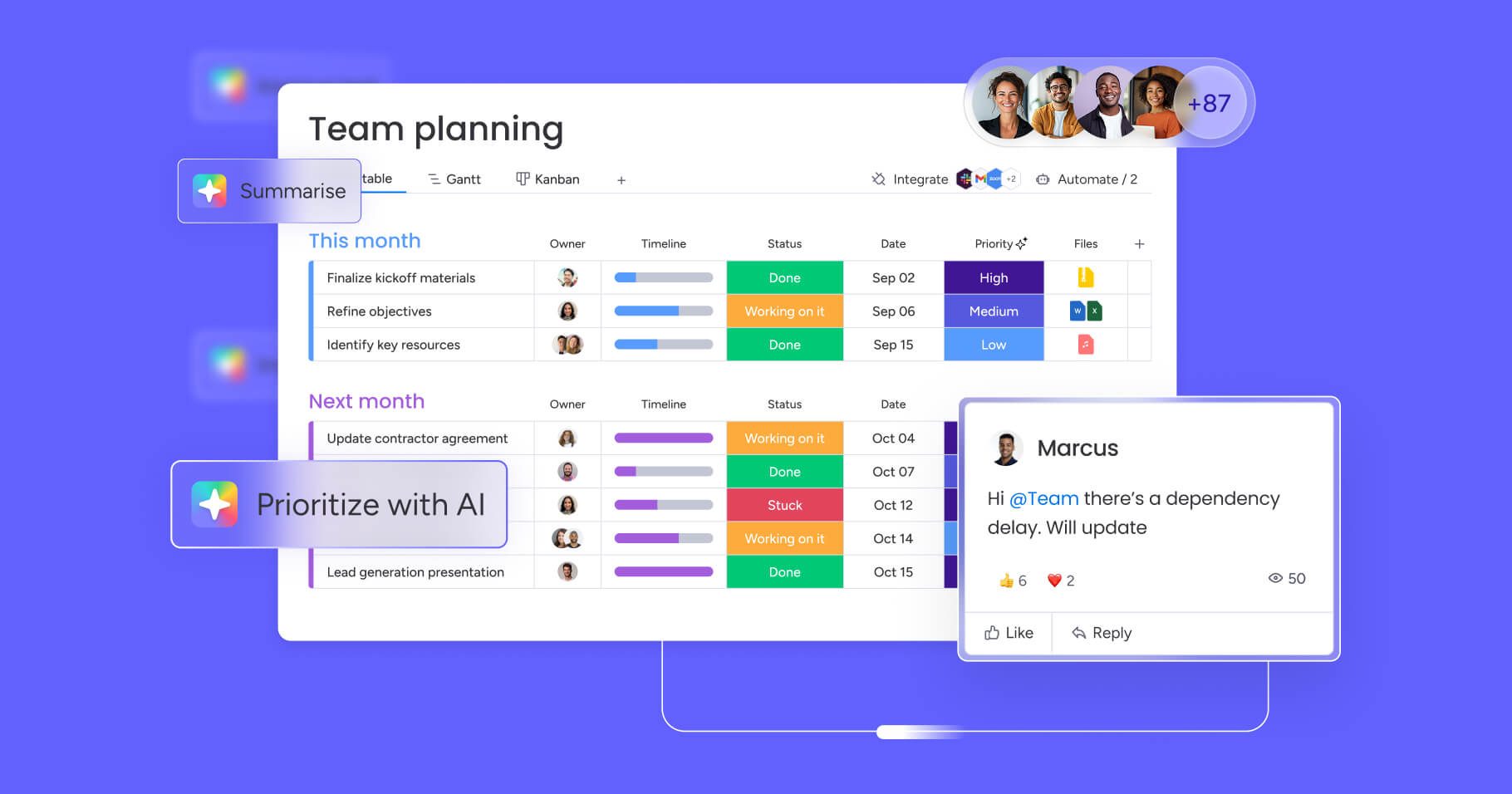
The AI Work Platform is a flexible, AI-powered work management platform that warehouse and operations teams can adapt to manage inventory workflows, track orders, automate processes, and gain real-time visibility. Unlike rigid, purpose-built WMS platforms, the AI Work Platform lets teams build custom warehouse applications without writing code, using drag-and-drop boards, 200+ automation recipes, and built-in AI capabilities.
Key features:
- Customizable inventory boards: Track stock levels, locations, and reorder points with flexible columns and views.
- AI Blocks: Auto-categorize inventory items, extract data from shipping documents, and generate summaries from operational data.
- 200+ automations: Trigger reorder alerts, assign receiving workflows, and update statuses without manual input.
- Real-time dashboards: Monitor fulfillment speed, inventory turnover, and order accuracy from a single view.
- 72+ integrations: Connect with ERP, e-commerce, shipping, and accounting platforms to eliminate data silos.
Pricing: Starts at $9/seat/month (billed annually). Free plan available for up to 2 seats.
Best for: Operations teams that need a flexible, scalable platform to manage warehouse workflows alongside broader business processes, without the cost and rigidity of a traditional WMS.
2. SAP Extended Warehouse Management
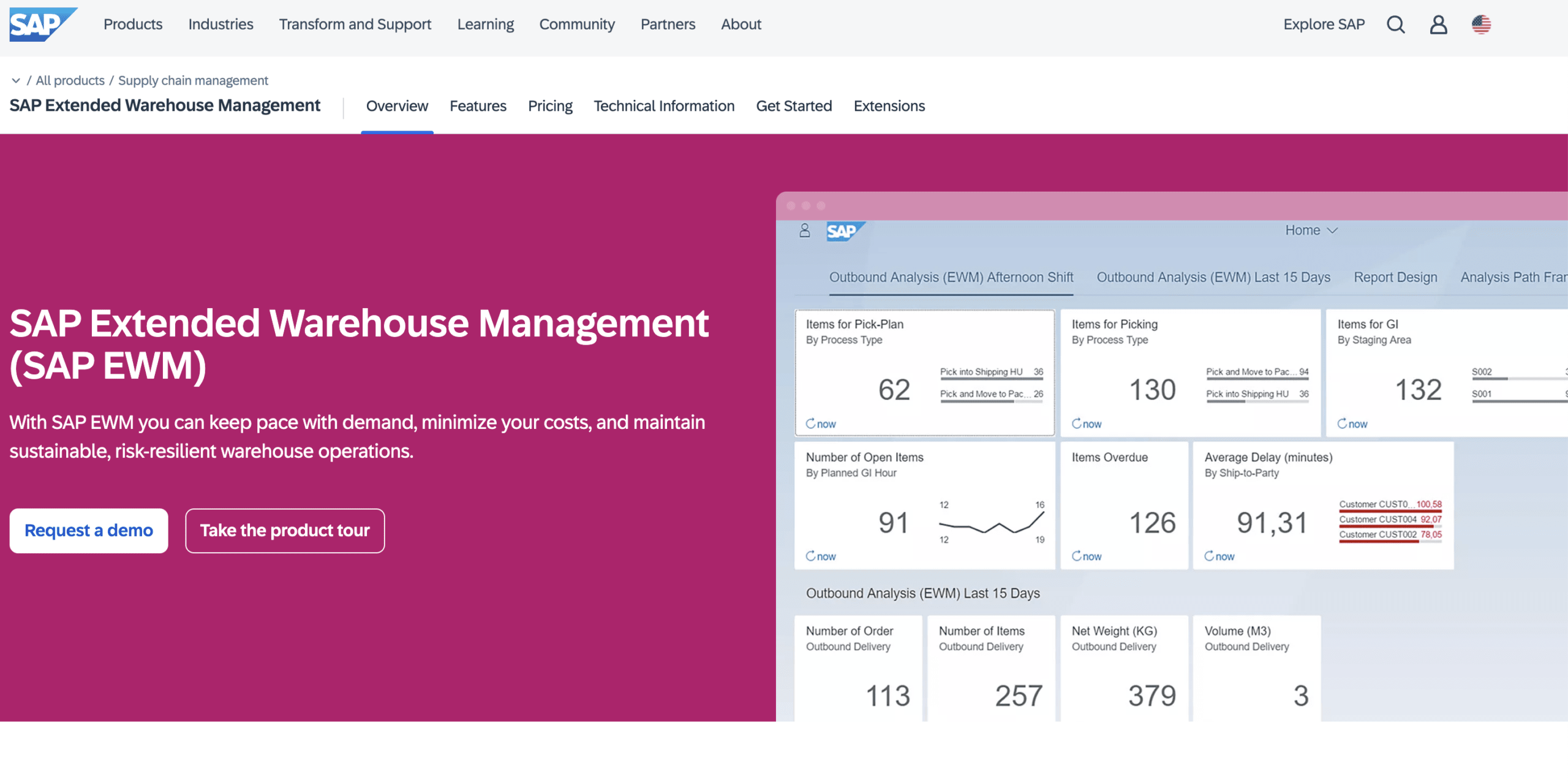
SAP Extended Warehouse Management (EWM) is an enterprise-grade WMS built for large, complex warehouse operations. It integrates directly with SAP’s broader ERP ecosystem, making it a natural fit for organizations already running SAP across finance, supply chain, and procurement.
Key features:
- Advanced slotting and putaway: Optimizes storage locations based on product dimensions, demand frequency, and warehouse layout.
- Labor management: Tracks worker productivity and helps managers balance staffing across shifts.
- Cross-docking: Routes inbound shipments directly to outbound docks, reducing storage time and handling costs.
Pricing: Custom enterprise pricing. Requires SAP ERP infrastructure.
Best for: Large enterprises with complex, multi-site warehouse operations already invested in the SAP ecosystem.
3. Oracle Warehouse Management Cloud

Oracle WMS Cloud delivers warehouse execution capabilities as part of Oracle’s supply chain management suite. It supports receiving, putaway, picking, packing, and shipping with real-time inventory tracking across multiple facilities.
Key features:
- Multi-facility management: Manage inventory across warehouses, distribution centers, and 3PL locations from one platform.
- Wave and waveless planning: Flexible order release strategies that adapt to demand patterns.
- Mobile-first design: Floor workers access all functions through handheld devices and barcode scanners.
Pricing: Custom pricing based on transaction volume and modules.
Best for: Mid-to-large enterprises that need a cloud-native WMS with deep supply chain integration.
4. Manhattan Active Warehouse Management
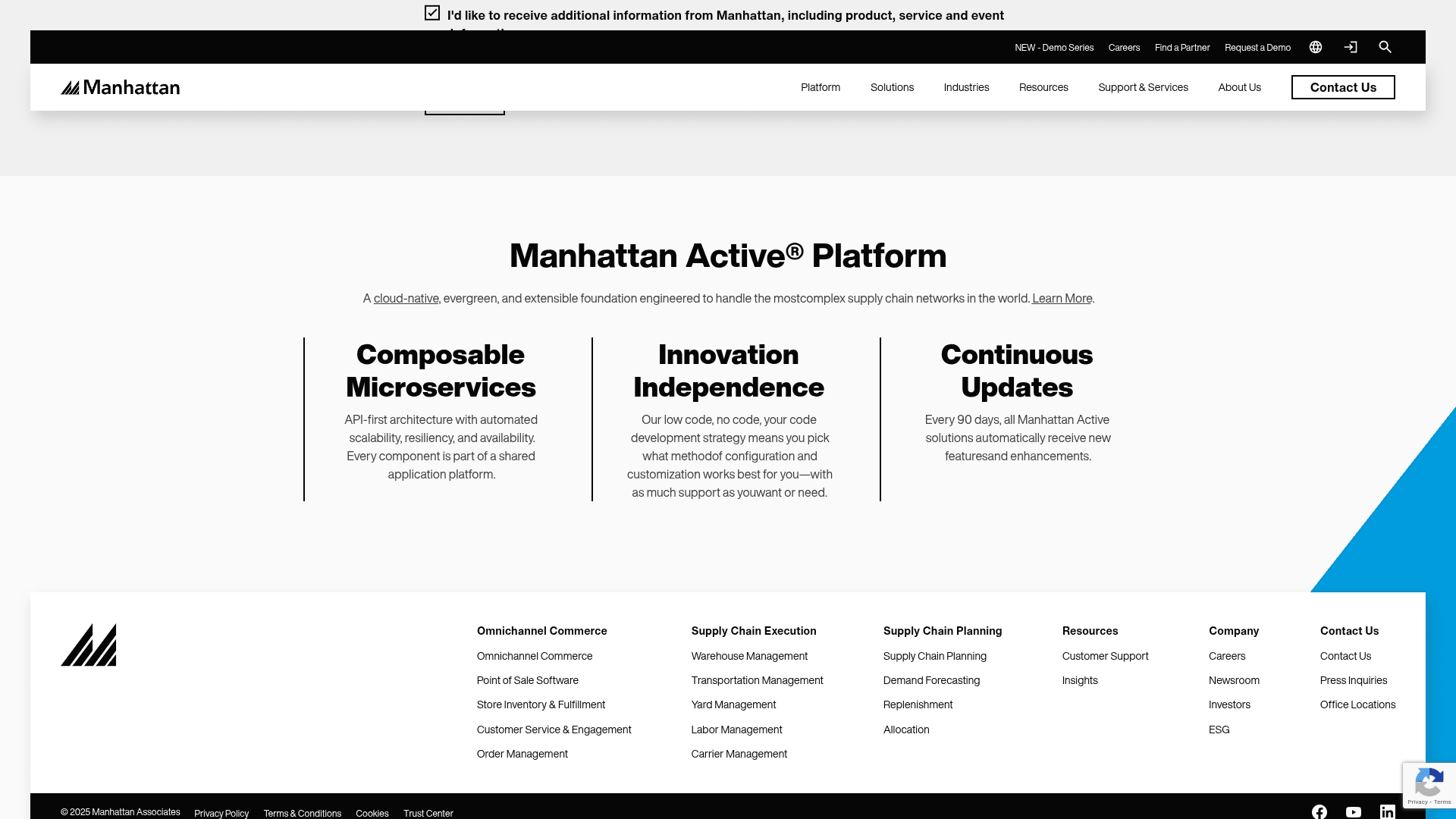
Manhattan Active WM is a cloud-native, versionless WMS that receives continuous updates without requiring scheduled upgrades. It’s designed for high-volume distribution environments where throughput and accuracy are critical.
Key features:
- Versionless architecture: Automatic updates mean teams always run the latest features without migration projects.
- Unified execution: Combines warehouse, labor, yard, and transportation management in a single platform.
- Machine learning optimization: Continuously improves slotting, pick paths, and workforce allocation based on operational data.
Pricing: Custom enterprise pricing.
Best for: High-volume distribution centers that need a continuously updated, enterprise-scale WMS.
5. Blue Yonder Warehouse Management

Blue Yonder (formerly JDA) offers a WMS focused on supply chain orchestration and warehouse execution. Its AI and machine learning capabilities help warehouses predict demand, optimize labor, and reduce order cycle times.
Key features:
- AI-driven demand sensing: Predicts inventory needs based on historical patterns and external signals.
- Robotics integration: Connects with autonomous mobile robots (AMRs) and goods-to-person systems.
- Labor optimization: Balances workloads across shifts using real-time productivity data.
Pricing: Custom pricing. Typically suited for mid-market to enterprise operations.
Best for: Supply chain-focused organizations that want AI-driven warehouse optimization and robotics support.
6. NetSuite WMS

NetSuite WMS is a module within Oracle NetSuite’s cloud ERP suite. It adds warehouse-specific functionality (barcode scanning, cycle counting, and bin management) to NetSuite’s existing inventory and order management capabilities.
Key features:
- Native ERP integration: Warehouse data flows directly into finance, sales, and procurement without middleware.
- Mobile RF scanning: Workers use handheld devices for receiving, picking, and inventory counts.
- Cycle counting: Schedule automated counts by zone, item class, or velocity to maintain accuracy without full physical inventories.
Pricing: Add-on module to NetSuite ERP. Pricing varies by contract.
Best for: Small-to-mid-sized businesses already using NetSuite ERP that want built-in warehouse capabilities.
7. Fishbowl Inventory
Fishbowl is a manufacturing and warehouse management solution designed for small-to-mid-sized businesses. It integrates with QuickBooks and Xero, making it popular with operations that need inventory management tied to their accounting platform.
Key features include:
- QuickBooks integration: Two-way sync with QuickBooks for real-time financial and inventory data.
- Manufacturing support: Bill of materials, work orders, and production tracking alongside warehouse management.
- Barcode scanning: Mobile scanning for receiving, picking, and shipping workflows.
Pricing: Starts at approximately $349/month. One-time licensing option also available.
Best for: Small manufacturers and distributors that need combined inventory and manufacturing management with QuickBooks integration.
8. Deposco Bright Suite
Deposco offers a cloud-based WMS and order management platform built for omnichannel fulfillment. It handles warehouse execution, distributed order management, and supply chain visibility in a single application.
Key features:
- Omnichannel fulfillment: Manages orders across e-commerce, wholesale, retail, and marketplace channels from one system.
- Configurable workflows: Adapts receiving, putaway, picking, and shipping processes to match specific operational needs.
- Real-time analytics: Operational dashboards track throughput, accuracy, and SLA performance.
Pricing: Custom pricing based on volume and modules.
Best for: Omnichannel retailers and 3PL providers managing fulfillment across multiple channels.
9. ShipBob WMS
ShipBob provides a WMS designed specifically for e-commerce brands and direct-to-consumer fulfillment. It combines inventory management, order routing, and shipping execution in a platform built for speed and simplicity.
Key features:
- Distributed inventory: Split stock across multiple fulfillment centers to reduce shipping times and costs.
- 2-day shipping program: Pre-negotiated carrier rates and strategic inventory placement for fast delivery.
- E-commerce integrations: Native connections with Shopify, Amazon, WooCommerce, and other major platforms.
Pricing: Custom pricing based on order volume and services.
Best for: E-commerce brands and DTC companies that need fast fulfillment across distributed warehouses.
10. Zoho Inventory
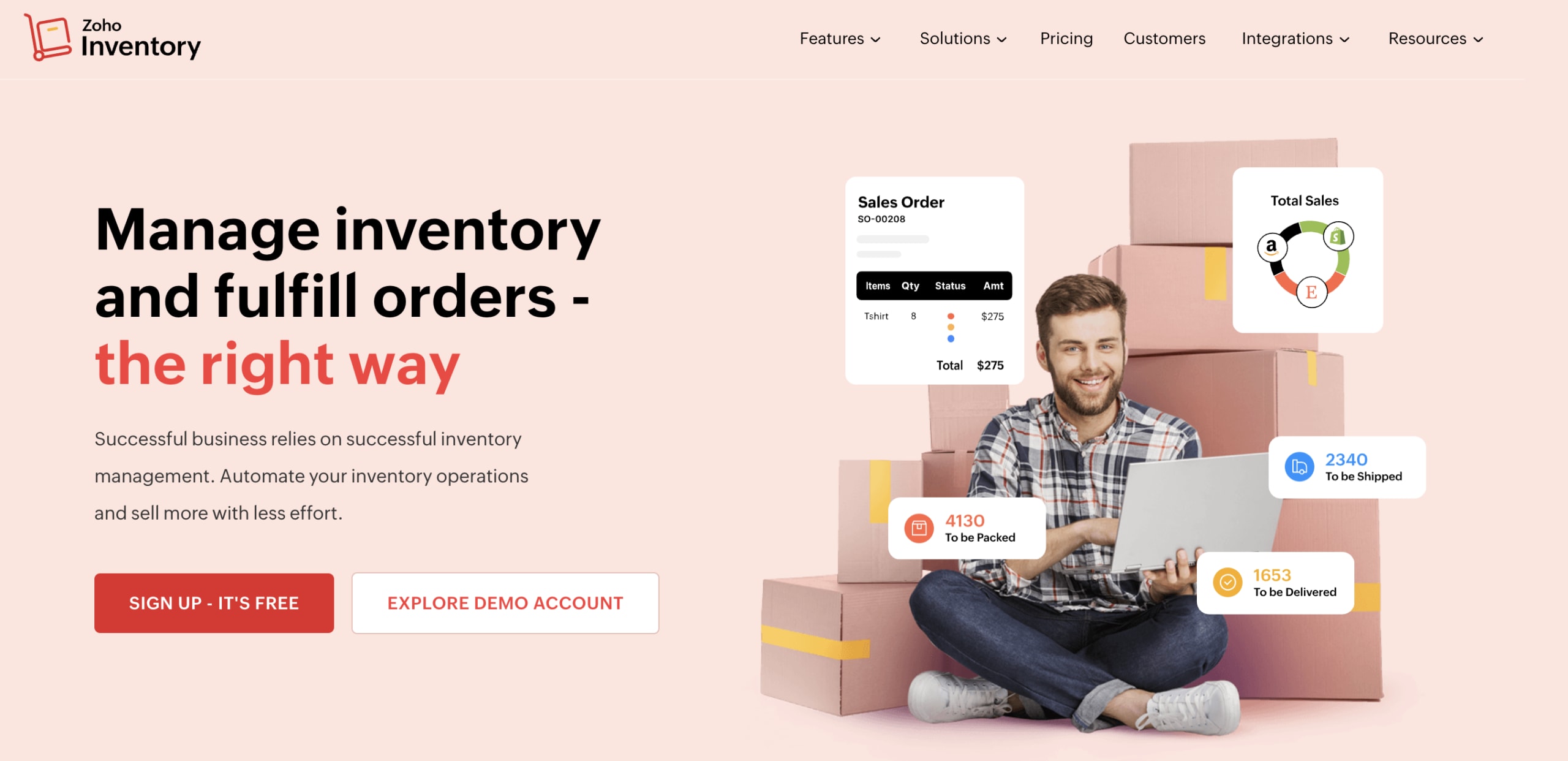
Zoho Inventory is a cloud-based inventory and order management platform that fits within Zoho’s broader suite of business management software solutions. It’s designed for small businesses and growing e-commerce operations that need straightforward stock tracking without enterprise-level complexity.
Key features:
- Multi-channel selling: Sync inventory across Amazon, eBay, Shopify, and Etsy from a single dashboard.
- Batch and serial tracking: Track items by batch number or serial number for compliance and traceability.
- Shipping integrations: Built-in rate comparison and label printing with major carriers.
Pricing: Free plan available. Paid plans start at $29/month (billed annually).
Best for: Small businesses and e-commerce sellers that need affordable, multi-channel inventory management with room to grow.
Adopting new technologies like AI and digital workforces
AI and automation enhance warehouse operations when they’re integrated quickly and effectively. These technologies improve accuracy, reduce manual effort, and give teams more time for higher-value work. Here’s how the industry is evolving with AI:
- Automate routine operations with AI: AI capabilities handle repetitive processes such as processing shipping documents and categorizing inventory. Features like automatic data extraction and smart organization ensure records stay accurate without manual input.
- Empower your team with a digital workforce: A digital workforce manages recurring warehouse processes and adapts to ongoing needs. These AI-powered agents take on operational work at scale, allowing teams to focus on problem-solving, planning, and growth.
- Forecast demand with predictive analytics: AI models now forecast demand patterns weeks in advance by analyzing historical sales data, seasonality, supplier lead times, and external signals like weather or economic shifts. Predictive restocking reduces both overstock costs and stockout frequency.
- Deploy robotics and automation hardware: Autonomous mobile robots (AMRs) handle goods-to-person picking, while automated sorting and packing systems reduce labor requirements for high-volume operations. These systems work alongside human teams, freeing workers for quality checks and exception handling.
- Leverage IoT sensor data for real-time intelligence: Temperature sensors, weight monitors, and location beacons feed real-time data into WMS platforms, enabling condition-based alerts for perishable goods, automated cycle counts, and precise asset tracking across large facilities.
How monday.com's AI Work Platform streamlines warehouse operations
Purpose-built WMS platforms solve specific warehouse problems, but they often come with rigid workflows, steep implementation costs, and limited flexibility outside the warehouse. What happens when your operations team also manages supplier relationships, coordinates with sales, or tracks capital projects alongside daily fulfillment?
monday.com’s AI Work Platform takes a different approach. Instead of locking teams into predefined warehouse modules, it provides building blocks that adapt to how your operation actually runs. The platform combines the flexibility of work management with AI-powered automation, giving warehouse teams a system that grows with their needs without the constraints of traditional WMS software.
Customizable inventory boards
Track stock levels, locations, and reorder points with flexible columns and views configured to your specific needs. Teams can build inventory workflows that match their operation without writing code or waiting on IT. Boards adapt as your warehouse evolves, whether you’re adding new product lines, expanding to multiple facilities, or adjusting fulfillment processes.
AI-powered automation and intelligence
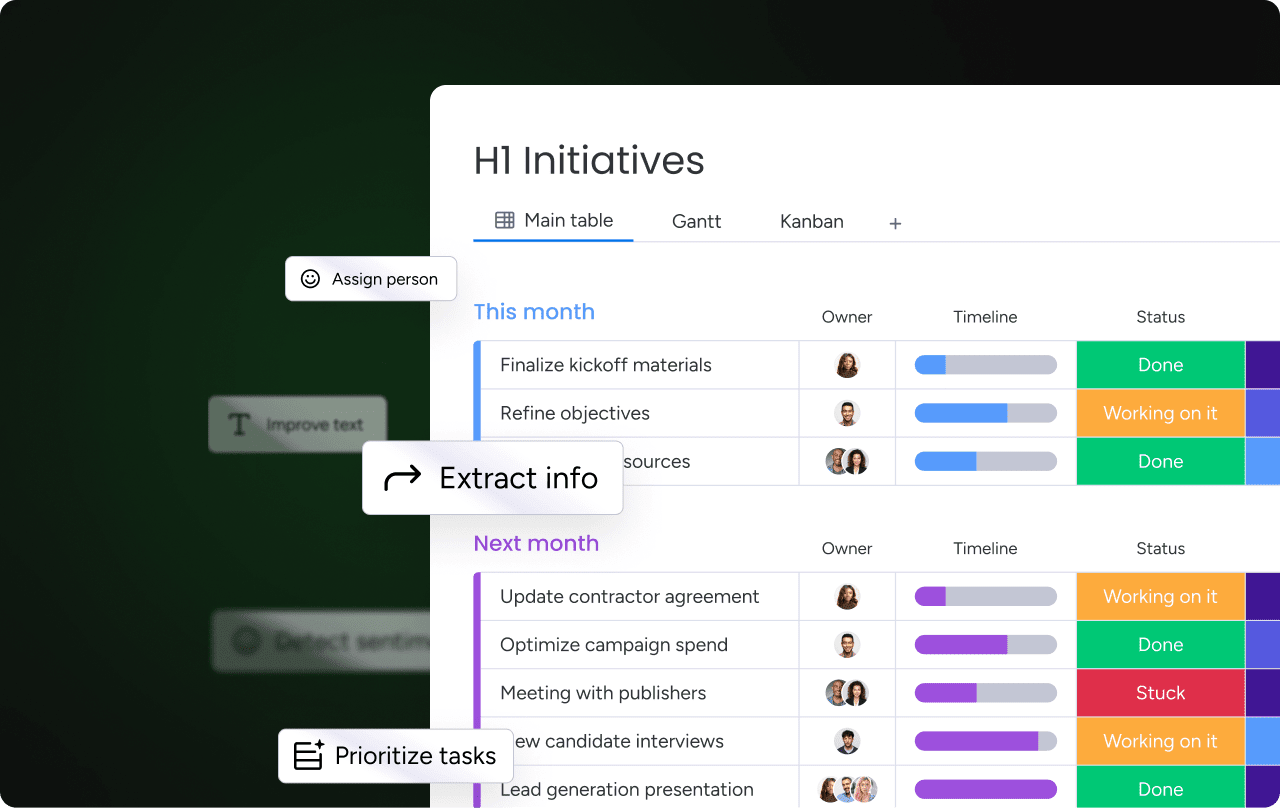
AI Blocks auto-categorize incoming inventory, extract data from shipping documents, and flag anomalies in order records. The platform’s AI capabilities handle the repetitive work that typically eats up the most time, from processing receiving paperwork to identifying patterns in fulfillment delays. monday vibe, the AI-powered no-code app builder, lets operations teams create custom warehouse applications (from receiving logs to shipment trackers) in minutes rather than months.
200+ automations for warehouse workflows

Automated recipes handle status updates, reorder notifications, assignment routing, and escalation triggers without manual intervention. Set up rules that trigger when stock hits reorder points, when orders need expedited shipping, or when receiving tasks need reassignment. Automations eliminate the handoffs and delays that slow down fulfillment.
Real-time dashboards and integrations
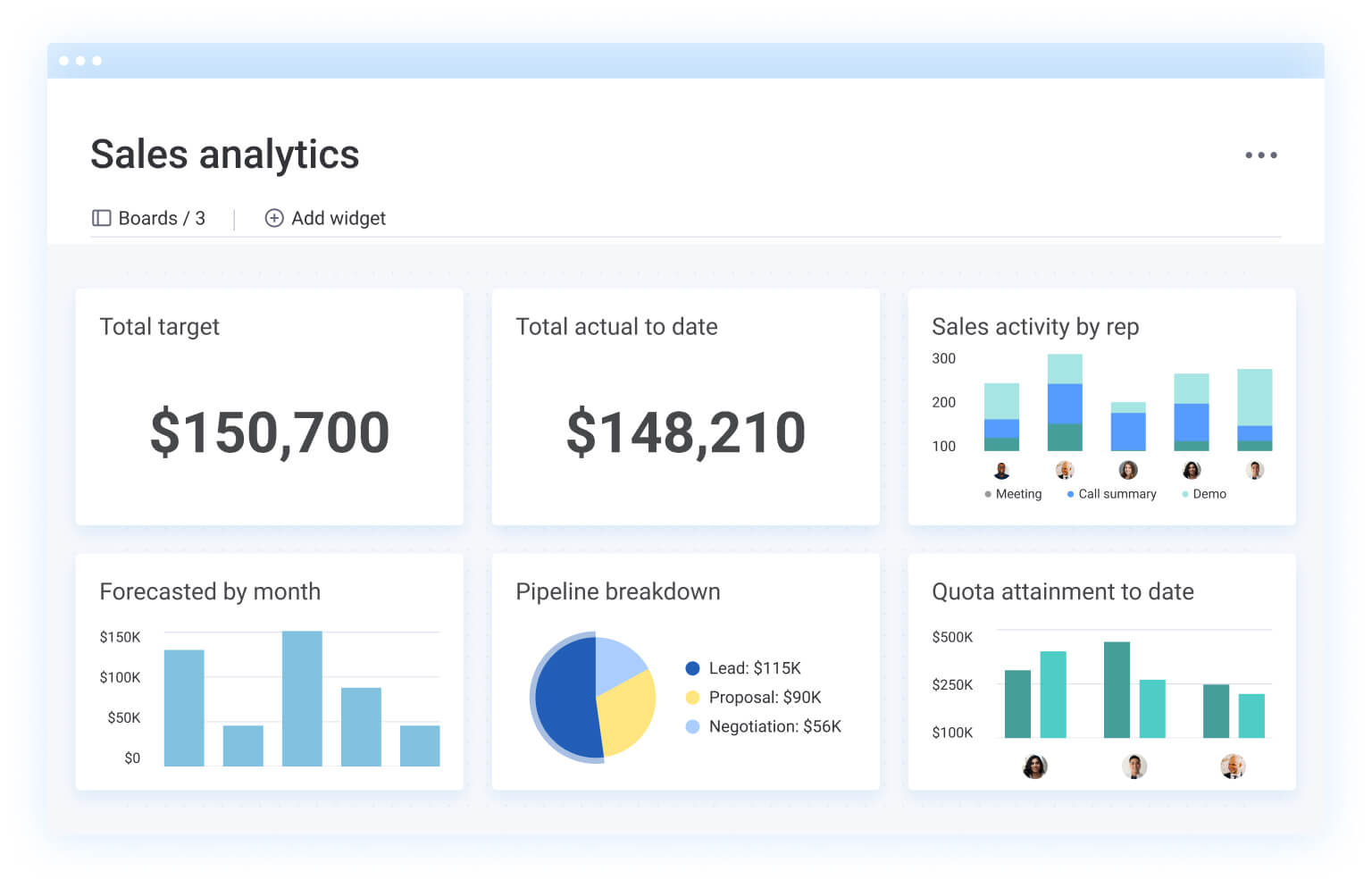
Consolidate fulfillment speed, inventory turnover, and order accuracy into a single view that updates as data flows in. With 72+ integrations connecting ERP, e-commerce, shipping, and accounting platforms, warehouse data doesn’t live in isolation. It feeds directly into the systems your entire organization relies on, creating a connected operation from receiving dock to final delivery.

“monday.com has been a life-changer. It gives us transparency, accountability, and a centralized place to manage projects across the globe".
Kendra Seier | Project Manager
“monday.com is the link that holds our business together — connecting our support office and stores with the visibility to move fast, stay consistent, and understand the impact on revenue.”
Duncan McHugh | Chief Operations OfficerRun a smarter warehouse with the right software
The right warehouse software connects your warehouse to the rest of your business. When fulfillment data flows into procurement, sales, and finance without manual handoffs, every team operates from the same accurate picture. As AI and automation reshape how warehouses operate, platforms that adapt fastest deliver the strongest returns. Whether you’re digitizing for the first time or replacing a legacy system, choosing software that grows with your operation is the decision that compounds over time.
monday.com’s AI Work Platform gives teams one place to track inventory, manage shipments, and monitor performance alongside strategic initiatives. Warehouse data becomes part of the broader business plan, supported by project management capabilities that keep every workflow connected.
FAQs
What is a warehouse management system (WMS)?
A warehouse management system is software that manages every stage of warehouse operations, from receiving inventory and assigning storage locations to picking, packing, and shipping orders. A WMS provides real-time visibility into stock levels and automates workflows to reduce errors and speed up fulfillment.
What software is used in a warehouse?
Warehouses typically use a combination of software including warehouse management systems (WMS), inventory management platforms, order management systems (OMS), transportation management systems (TMS), and enterprise resource planning (ERP) suites. Many operations also use barcode scanning applications, labor management systems, and reporting dashboards to track performance.
What is the best warehouse management software?
The best warehouse management software depends on your operation's size, complexity, and existing technology stack. Enterprise operations often choose SAP EWM or Manhattan Active WM. Mid-market businesses may prefer Oracle WMS Cloud or NetSuite WMS. For teams that need flexibility alongside warehouse management, monday.com's AI Work Platform offers customizable boards, built-in AI, and 200+ automations that adapt to any workflow.
What are the benefits of warehouse management software?
Warehouse management software improves operational efficiency by automating manual processes like receiving, picking, and shipping. Key benefits include real-time inventory visibility, fewer order errors, lower carrying costs, optimized labor allocation, and stronger supplier and customer relationships through consistent, on-time fulfillment.
What are the types of warehouse management systems?
The 3 main types of warehouse management systems are standalone WMS (dedicated warehouse-only applications), cloud-based WMS (hosted remotely with browser access and subscription pricing), and ERP-integrated WMS (warehouse modules built into broader enterprise resource planning suites). Each type offers different trade-offs between specialization, cost, and integration depth.
How much does warehouse management software cost?
Warehouse management software pricing varies significantly by type and scale. Cloud-based platforms may start as low as $29/month for basic inventory management, while mid-market WMS solutions typically range from $1,000 to $5,000/month. Enterprise WMS implementations (SAP, Manhattan, Oracle) can involve six-figure annual licensing plus implementation fees. monday.com's AI Work Platform starts at $9/seat/month, offering a lower entry point for teams that need flexible warehouse workflow management.
How does AI support warehouse management?
AI supports warehouse management through predictive demand forecasting, automated inventory categorization, document data extraction, and anomaly detection. AI-powered systems can optimize pick paths, predict restocking needs before stockouts occur, and automate quality checks. Platforms like monday.com's AI Work Platform use AI Blocks to auto-categorize inventory, extract shipping data, and generate operational insights without manual input.

 Get started