


Inventory management sits at the heart of every successful business. It balances supply and demand, ensuring products are available when customers need them without tying up unnecessary capital. Yet many organizations still rely on disconnected spreadsheets and manual updates that make it difficult to spot trends or respond quickly to changes in demand.
Today’s inventory management takes a more connected, AI-powered approach. Platforms like monday.com’s AI Work Platform combine real-time data, demand forecasting, and automated workflows to give teams the visibility and control needed to operate efficiently. This guide explores proven methods, digital templates, and AI-driven insights that help businesses turn inventory into a strategic advantage rather than a constant challenge.
Key takeaways
- Optimize cash flow and customer satisfaction: Effective inventory management balances availability with efficiency, keeping stock levels healthy without locking up cash in excess inventory.
- Choose methods that fit your operations: Retailers often rely on ABC analysis to prioritize products, while manufacturers use just-in-time (JIT) systems to reduce storage costs and waste.
- Turn data into action with monday.com’s AI Work Platform: The platform centralizes inventory tracking, automates key workflows, and provides AI-powered insights through monday sidekick, monday agents, and AI Blocks for real-time visibility to support scalable growth.
- Build a strong foundation: Begin with a full inventory audit, implement reliable tracking systems, and set reorder points based on demand trends and supplier lead times.
- Modernize your approach: Advanced inventory systems replace manual spreadsheets with AI-driven forecasting, automated reorder workflows, and error-free reporting for smarter purchasing decisions.
What is inventory management?
Inventory management is the process of ordering, storing, tracking, and controlling your company’s stock. It involves knowing exactly what products you have, where they’re located, and when to reorder, all while keeping costs under control.
Inventory management serves as the backbone of business operations, connecting every stage from raw materials to finished goods.
Effective management ensures that the right products are always available at the right time, keeping both production and customer satisfaction running smoothly.
Understanding inventory management systems
An inventory management system is inventory management software that automates how you track and control stock levels. These management systems replace manual spreadsheets with real-time data that updates automatically as products move through your business.
Modern systems connect to barcode scanners, point-of-sale systems, and supplier databases. They send alerts when stock runs low and can even create purchase orders automatically.
Inventory management vs inventory control
While the two terms are often used interchangeably, they focus on different levels of operation. Inventory management is the strategic process of planning what to stock, how much to order, and when to replenish to meet demand without overspending. It’s about forecasting, setting policies, and maintaining a healthy balance between availability and cost.
Inventory control, on the other hand, focuses on execution. It’s the hands-on process of tracking stock movement, monitoring quality, and ensuring items are stored and distributed accurately. Where management sets the direction, control keeps everything running smoothly day to day.
Together, they create a complete system: management defines the plan, and control ensures it’s carried out effectively.
Inventory management vs supply chain management
Supply chain management covers everything from raw material suppliers to final customer delivery. Inventory management is just one piece of this larger puzzle.
While supply chain management coordinates relationships with vendors and shipping partners, inventory management focuses specifically on the stock within your walls. Both work together, but inventory management deals with what you own and control directly.
How does inventory management work?

Inventory management follows a continuous cycle. You forecast demand, place orders, receive products, store them properly, sell to customers, then start again. Each step feeds into the next.
The process starts with analyzing sales data to predict what customers will buy. Based on these forecasts, procurement management ensures you order from suppliers at the right time to avoid stockouts or excess inventory.
Core components of inventory management
Every inventory system relies on five essential elements working together to create a seamless flow from procurement to sale. Understanding each component helps you build a system that actually works for your business, giving you control over costs and customer satisfaction. These core components are:
- Demand forecasting: predicting what customers will buy based on past sales and market trends.
- Procurement: ordering the right products at the right time from reliable suppliers.
- Storage: organizing products so you can find them quickly and keep them in good condition.
- Tracking: monitoring stock levels and movement through your business.
- Reporting: analyzing performance to spot problems and opportunities.
The inventory management process flow
An effective inventory process keeps products moving seamlessly from purchase to delivery. It starts when stock levels reach a predefined reorder point, the signal that it’s time to restock. At that stage, your order management system automatically generates and sends a purchase order to suppliers, ensuring replenishment happens before shortages occur.
Once the new inventory arrives, it’s checked for quality, recorded in your system, and made available for sale or production. As items are used or sold, your system updates stock counts in real time, maintaining accurate visibility across the supply chain. This continuous cycle forms the backbone of efficient inventory operations, preventing both overstocking and stockouts.
How inventory management drives business success
Inefficient inventory practices can quickly drain resources and damage customer relationships. Too much stock ties up valuable cash, while too little leads to missed sales and frustrated buyers. Effective inventory management prevents both problems, keeping products available while maintaining financial flexibility, which is essential for strong operations management.
Platforms like monday.com’s AI Work Platform make this balance easier to achieve by connecting inventory data with automated workflows and real-time insights. Together, these capabilities help teams:
- Track stock levels and reorder points automatically.
- Reduce waste by aligning purchases with real demand.
- Gain instant visibility into inventory performance across locations.
- Free up working capital to invest in growth.
By transforming inventory into a connected, data-driven process, businesses can boost efficiency, customer satisfaction, and long-term profitability.
Optimize cash flow and working capital
Every dollar sitting in unsold inventory is a dollar you can’t invest elsewhere. In fact, research shows that excess inventory has led to approximately $707 billion of trapped liquidity in working capital across industries. With the inventory management software market growing from $3.9 billion in 2026 to a projected $7.1 billion by 2033, the opportunity to unlock that capital through smarter inventory practices is only expanding.
Effective inventory management minimizes this trapped capital while maintaining enough stock to meet demand. Solutions like monday.com help businesses strike this balance by providing real-time visibility into stock levels and automated workflows that prevent both overstocking and stockouts.
Maximize customer satisfaction
Nothing frustrates customers more than finding their desired product out of stock. Good inventory management prevents these disappointments by maintaining optimal stock levels.
When products are consistently available, customers trust your business. They return more often and recommend you to others, driving sustainable growth.
Minimize storage costs and waste
Storage isn’t free. You pay for warehouse space, insurance, utilities, and staff to manage it all. Cost management helps you keep these carrying costs from adding up.
Smart inventory management, combined with warehouse software, reduces these expenses by keeping stock levels lean. You also minimize losses from expired products, damage, or items becoming obsolete.
Enable smarter business decisions
Real-time inventory data reveals which products generate profits and which drain resources. You can spot trends early and adjust your strategy before problems grow.
This visibility helps you negotiate with suppliers, plan promotions around available stock, and identify opportunities to optimize operations.
Get started7 proven inventory management methods
There’s no single way to manage inventory effectively: the right approach depends on what you sell, how you operate, and how predictable your demand is. Successful businesses often combine several techniques to balance efficiency, cost control, and customer satisfaction.
Below are seven proven inventory management methods that help teams minimize waste and maintain the right stock balance.
1. Just-in-time (JIT) inventory
JIT means receiving inventory only when you need it for production or sale. This approach minimizes storage costs and reduces waste from unsold products.
Success with JIT requires reliable suppliers and accurate demand forecasting. Manufacturing companies often use this method to keep work-in-progress inventory low. JIT is closely tied to lean manufacturing principles, where eliminating waste across the entire production process drives continuous improvement.
2. Economic order quantity (EOQ)
EOQ calculates the ideal order size by balancing ordering costs against storage costs. Order too often and you waste money on shipping. Order too much and storage costs eat your profits.
This mathematical approach provides a starting point, though most businesses adjust based on supplier minimums and cash flow needs.
3. ABC inventory analysis
ABC analysis ranks products by importance. Your “A” items generate most revenue and need closest monitoring. “C” items matter less and can use simpler tracking.
This prioritization ensures you focus effort where it creates the most value. Why spend equal time managing paper clips and your bestselling products?
4. First in, first out (FIFO)
FIFO ensures older inventory sells before newer stock. This prevents spoilage in perishable goods and reduces obsolescence in all products.
Beyond operational benefits, FIFO often provides tax advantages by matching older, lower-cost inventory against current sales prices. Some businesses use LIFO (last in, first out) instead, which can offer different tax implications depending on cost trends, though FIFO remains the more widely adopted method for physical inventory flow.
5. Materials requirement planning (MRP)
MRP works backward from production schedule to determine when to order materials. If you need 100 finished products next month, MRP calculates exactly what components to order today.
This method excels in manufacturing where multiple components must arrive together for assembly.
6. Safety stock strategy
Safety stock acts as insurance against unexpected demand or supplier delays. You keep extra inventory to prevent stockouts when things don’t go as planned.
The trick is finding the right balance. Too much safety stock wastes money. Too little risks disappointing customers.
7. Demand forecasting techniques
Accurate forecasting forms the foundation for all other methods. Common approaches include analyzing historical sales, tracking seasonal patterns, and monitoring market trends, all core elements of demand management.
Advanced forecasting increasingly relies on AI and machine learning to process large datasets, identify patterns human analysts might miss, and generate more precise predictions. The AI in inventory management market reached $12.36 billion in 2026, growing at 29.6% CAGR, signaling that AI-driven forecasting is rapidly becoming the industry standard.
Inventory management systems and software
As businesses expand, managing inventory manually becomes time-consuming and error-prone. Spreadsheets that once worked for a small operation can’t keep up with multiple sales channels, warehouses, and fast-moving demand. An inventory management system is a dedicated platform that automates routine tasks and delivers real-time insights, helping teams make smarter, faster decisions.
Below are the essential features to look for in a system that can grow with your business while keeping operations efficient and customers satisfied.
Essential features of modern inventory systems
The right inventory system should simplify operations, not complicate them. Look for features that automate routine tasks, provide real-time visibility, and scale as your business grows:
- Real-time visibility: see current stock levels across all locations instantly.
- Automated reordering: generate purchase orders when inventory drops below set points.
- Multi-channel integration: sync inventory across your website, store, and marketplaces.
- Barcode scanning: update stock levels instantly with mobile devices.
- Performance analytics: track turnover rates, carrying costs, and profitability by product.
Types of inventory management systems
Not every business needs the same type of system. The right fit depends on your product volume, industry, and growth trajectory. Here are the most common types:
- Perpetual inventory systems: track stock in real time with every sale and receipt recorded instantly, giving you an always-current view of what’s on hand.
- Periodic inventory systems: update stock counts at set intervals (weekly, monthly, or quarterly), which works for smaller operations with lower transaction volumes.
- Barcode and RFID systems: use scanning technology to automate data capture, reduce human error, and speed up receiving, picking, and auditing.
- Cloud-based inventory platforms: provide access from anywhere, scale easily as you grow, and integrate with e-commerce, accounting, and supplier systems.
How inventory management software transforms operations
Software eliminates hours of manual counting and data entry. Teams can focus on strategic decisions instead of updating spreadsheets by using resource management software.
Automation handles routine tasks like reorder alerts and stock transfers. This shift from reactive to proactive management prevents problems before they impact customers. And with 60% of warehouses planning to increase automation budgets by 20% in 2026 , the move toward automated inventory operations is accelerating across industries.
Choosing the right system for your business
System selection depends on your specific needs. Consider your product variety, number of locations, integration requirements, and growth plans.
Start with must-have features, then evaluate ease of use and total cost. The right system balances functionality with simplicity to ensure your team actually uses it. This is a crucial point given that research shows only 71% of employees report actually using the work management software provided at the largest enterprise companies.
5 steps to implement inventory management
Building an effective inventory system doesn’t happen overnight. It requires a structured approach that starts with understanding your current state, then layering in the right methods, technology, and processes. These five steps provide a practical roadmap for moving from reactive stock management to a proactive, data-driven system that scales with your business.
Step 1: audit your current inventory
Start with a complete physical count. Document every item’s quantity, condition, and location. This baseline reveals the gap between what you think you have and reality.
Note damaged goods, misplaced items, and obsolete stock. This information guides immediate improvements and helps measure future progress.
Step 2: select your management method
Choose an approach that fits your business model and resources. Retailers might combine ABC analysis with FIFO. Manufacturers often use MRP with safety stock buffers.
Start simple and add complexity gradually. Your method should support your business, not complicate it.
Step 3: deploy tracking technology
Implement systems that match your volume and accuracy needs. Small businesses might start with basic barcode scanning. Larger operations may need RFID tracking or automated systems.
Test new technology in limited areas first. This minimizes disruption while you refine processes and train staff.
Step 4: calculate reorder points
Set reorder points using average daily usage, supplier lead times, and safety stock needs. When inventory hits these triggers, it’s time to order more.
Review these calculations regularly. Demand patterns change, and your reorder points should adjust accordingly.
Step 5: measure and refine performance
Track metrics like inventory turnover, stockout frequency, and carrying costs. This level of measurement helps employees understand how success is defined, making them twice more likely to feel motivated. These numbers reveal what’s working and what needs adjustment.
Create feedback loops with your team. Their daily experience provides insights that numbers alone might miss.
Common inventory management challenges
Even well-run businesses encounter inventory hurdles that can erode margins and frustrate customers. Recognizing these challenges early helps you build systems that prevent small problems from becoming costly ones. Here are five of the most common obstacles and how to address them:
- Demand volatility: unpredictable shifts in customer demand make stock planning difficult. AI-powered forecasting tools analyze historical patterns and external signals to generate more accurate projections, reducing the guesswork.
- Supply chain disruptions: supplier delays, material shortages, and logistics breakdowns cascade through operations. Diversifying your supplier base and maintaining safety stock for critical items builds resilience.
- Manual tracking errors: spreadsheets and manual counts lead to miscounts, overselling, and data discrepancies. Automated inventory systems with barcode or RFID scanning eliminate these errors at the source.
- Inventory shrinkage: theft, damage, and administrative mistakes quietly erode your stock. Regular audits combined with barcode or RFID tracking help identify and reduce shrinkage before it impacts the bottom line.
- Scaling complexity: processes that work for 100 SKUs often break down at 10,000. Cloud-based inventory platforms adapt as you grow, handling multi-location, multi-channel complexity without requiring a full system migration.
Inventory management examples across industries
Every industry faces its own inventory challenges, from retailers managing fast-changing trends to manufacturers balancing supply chains and e-commerce businesses racing to meet delivery expectations. The principles of great inventory management stay the same, but the methods vary depending on what’s being tracked and how customers buy.
Below are real-world examples of how different industries apply inventory management practices to stay efficient, reduce waste, and keep operations running smoothly.
Retail inventory excellence
Retailers juggle thousands of products while managing seasonal demand and changing trends. Stock management software helps them use sophisticated forecasting that incorporates weather patterns, local events, and social media trends.
Successful retailers maintain minimal stock while using real-time data to identify winners quickly. They can reorder hot items before stockouts disappoint customers. Zara, for example, built its global reputation on a fast-fashion inventory model that moves designs from concept to store shelf in weeks, keeping stock lean and collections constantly fresh.
Manufacturing inventory optimization
Manufacturers coordinate raw materials, components, and finished goods across complex supply chains. They balance holding costs against production shutdown risks.
Just-in-time delivery reduces inventory investment but requires reliable suppliers. Many manufacturers rely on production management software to combine JIT efficiency with safety stock for critical components. Toyota pioneered this approach, proving that precise inventory coordination can eliminate waste while maintaining production quality at scale.
E-commerce inventory strategies
E-commerce businesses face the challenge of balancing fast delivery times with accurate stock management across multiple channels. Success depends on maintaining visibility and flexibility at every stage of fulfillment.
Key practices include:
- Multi-channel synchronization: keep inventory data consistent across your website, marketplaces, and retail partners.
- Distributed inventory: store products in multiple locations based on regional demand to reduce shipping costs and delivery times.
- Real-time tracking: use connected systems to monitor stock movement and prevent overselling or backorders.
This approach helps online sellers meet customer expectations while keeping operations lean and responsive.
Service industry inventory solutions
Service-based businesses manage supplies and equipment rather than sellable products, requiring a different approach to tracking and replenishment. Hotels, restaurants, and healthcare providers all depend on precision and efficiency.
Effective strategies include:
- Usage-based tracking: monitor consumption patterns to forecast future supply needs accurately.
- Waste reduction: implement systems that flag overuse or spoilage before it affects margins.
- Stock balance optimization: maintain enough supplies to meet demand without tying up capital in excess inventory.
Ready-to-use inventory management templates

Building an efficient inventory process takes more than good intentions. It requires structure, consistency, and the right foundation. Templates provide a proven starting point, helping teams standardize tracking, automate reorders, and monitor performance without starting from scratch.
monday.com’s AI Work Platform makes these templates fully interactive, turning static spreadsheets into connected, automated systems. Teams can also use monday vibe to build custom inventory apps tailored to their exact needs, no coding required. They allow businesses to customize workflows, visualize stock levels in real time, and scale effortlessly as operations grow.
Here are a few ready-to-use inventory management templates that simplify setup and help teams manage inventory with greater accuracy and control.
Inventory tracking dashboard template
This template centralizes all inventory data in one visual dashboard. See stock levels, pending orders, and key metrics at a glance.
Automated calculations show inventory turnover and days of supply. Color-coded alerts highlight items needing attention immediately.
Automated reorder point template
Calculate optimal reorder points based on your specific lead times and demand patterns. The template automatically flags items approaching reorder thresholds.
Built-in formulas adjust for seasonality and growth trends. Integration with supplier systems can trigger purchase orders automatically.
ABC analysis framework template
Categorize inventory by value and velocity using this structured framework. The template assigns items to categories based on your criteria.
Regular reviews keep categories current as your business evolves. Different management rules apply to each category for maximum efficiency.
Inventory audit checklist template
Ensure accurate counts with this comprehensive audit guide. The checklist covers pre-count preparation, counting procedures, and reconciliation steps.
Built-in variance tracking helps identify problem areas. Documentation features create an audit trail for compliance and continuous improvement.
Manage inventory smarter with monday.com's AI Work Platform
Managing inventory across multiple locations, suppliers, and sales channels quickly becomes complex, especially when relying on disconnected spreadsheets. Work management platforms bring everything together, turning fragmented tracking into coordinated, real-time visibility that supports smarter decisions and faster action.
With AI-powered capabilities, automation, and integrated reporting, monday.com’s AI Work Platform provides the structure needed to simplify inventory control at scale. It connects every process from demand forecasting to supplier coordination so teams can operate from a single source of truth while automation handles repetitive tasks. Organizations using the platform have seen 346% ROI over three years with payback in less than four months.
Meet monday sidekick: Your AI inventory assistant
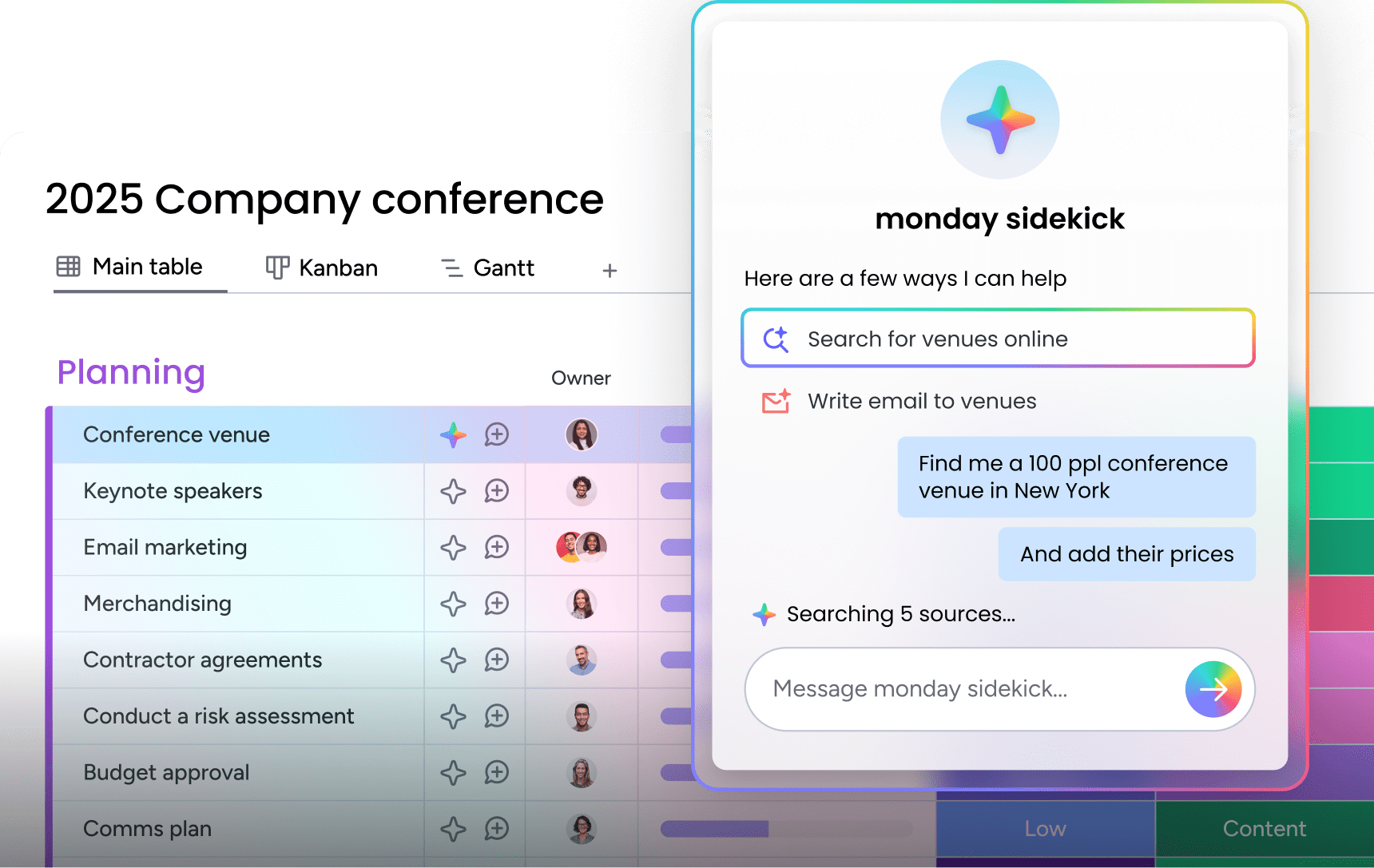
monday sidekick is a context-aware AI assistant built directly into the platform. It understands your boards, workflows, and organizational data, so it can analyze inventory trends, suggest next steps, and generate reports without switching between separate analytics tools.
Need to understand which SKUs are underperforming or identify reorder patterns across locations? Sidekick surfaces those insights in seconds, turning raw inventory data into actionable recommendations your team can act on immediately.
Build custom inventory apps with monday vibe
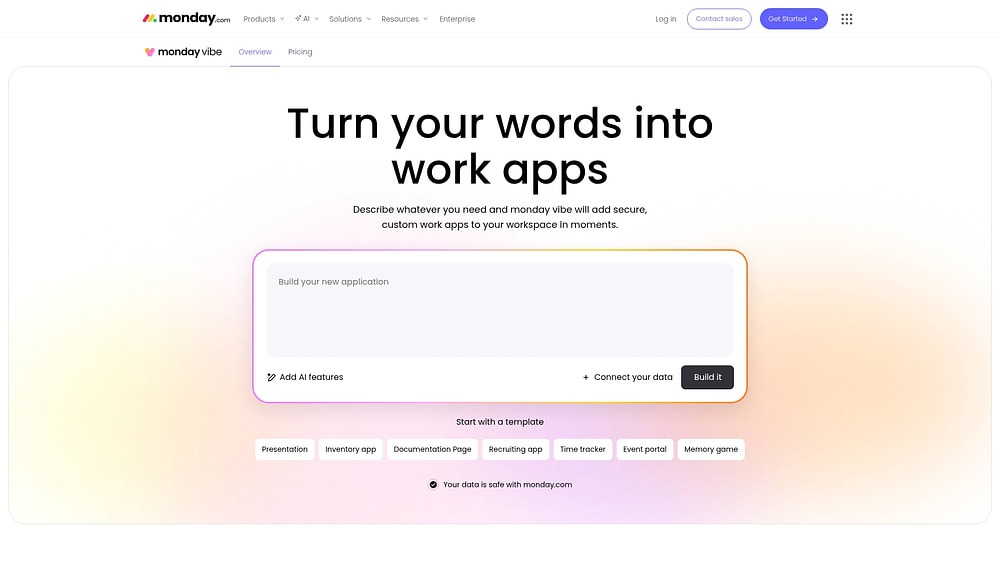
monday vibe is an AI-powered no-code builder that turns natural language prompts into fully functional apps. Describe the inventory workflow you need (a supplier intake form, a multi-warehouse tracker, a returns dashboard) and vibe builds it.
The Supply Chain Tracker template provides a ready-made starting point for monitoring logistics data across your network. From there, teams can customize dashboards, automation flows, and intake forms to match their exact inventory operations, all without writing a single line of code.
Automate workflows with monday agents

monday agents are purpose-built AI agents that execute work on your behalf, operating 24/7 with enterprise-grade security guardrails. Two agents are particularly valuable for inventory operations:
- Vendor Researcher: analyzes procurement requirements, researches suppliers, and generates prioritized vendor lists based on your criteria, saving hours of manual sourcing.
- Process Automator: identifies repetitive inventory tasks across your workflows and suggests automations to eliminate them, from status updates to reorder notifications.
Teams can also create custom agents tailored to specific inventory needs, such as monitoring stock thresholds or flagging shipment delays.
Connect AI assistants with monday MCP
The Model Context Protocol (MCP) lets external AI assistants like Claude, ChatGPT, Gemini CLI, and Copilot Studio securely access your monday.com workspace. This means you can manage inventory boards, generate reports, and analyze stock data through natural language conversations in the AI assistant you already use.
MCP is available on all plans at no additional cost, making it easy to extend your inventory management capabilities across your existing AI ecosystem.
AI Blocks for intelligent inventory management
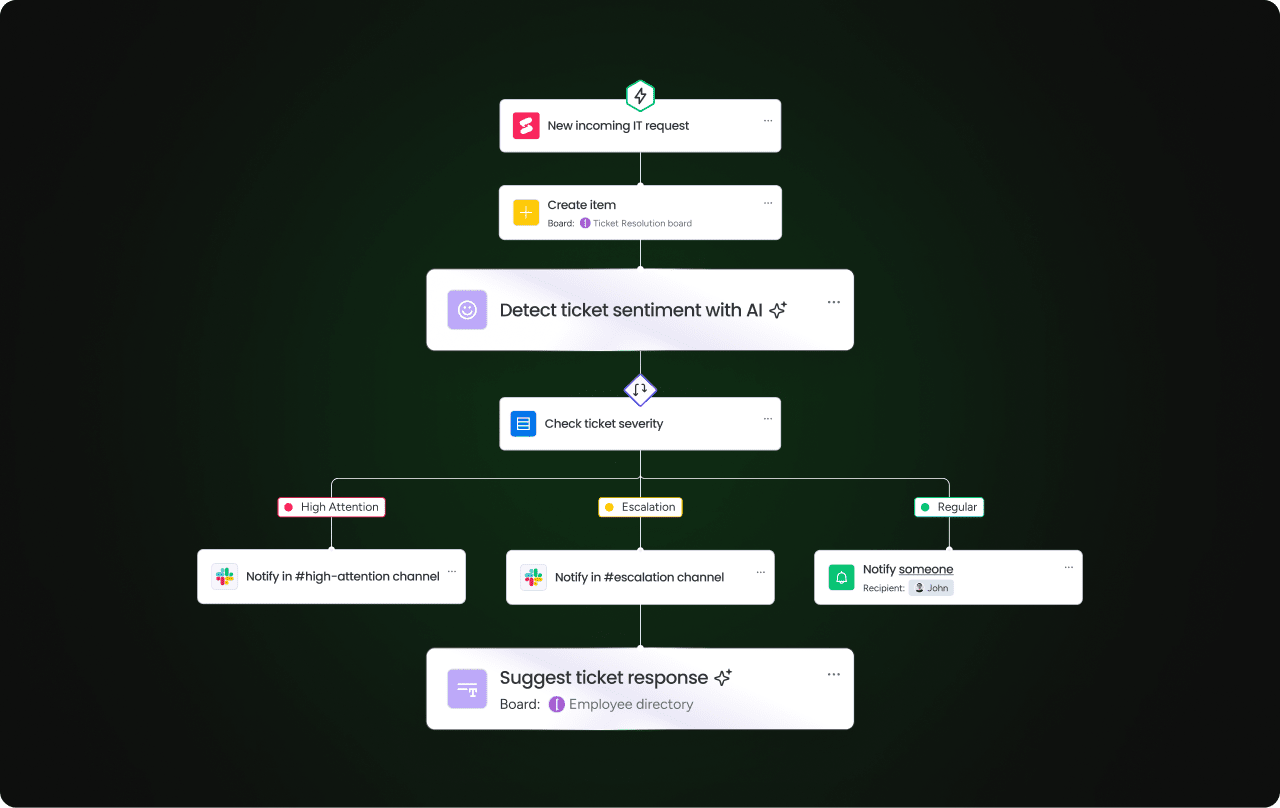
AI Blocks are pre-built AI actions you can embed directly into any inventory workflow. Categorize incoming stock automatically, extract supplier information from documents, flag anomalies in order patterns, and trigger reorder workflows based on intelligent thresholds.
Research shows that embedding AI in distribution operations can create reductions of 20% to 30% in inventory. AI Blocks make these gains accessible without requiring data science expertise. Any team member can add AI-powered steps to their existing workflows.
200+ integrations and real-time dashboards
Connect the AI Work Platform with the systems you already rely on, including QuickBooks, Shopify, and major supplier portals. Data flows automatically between platforms, eliminating duplicate entry and ensuring every team works from the same live information.
Customizable dashboards with 27+ views give you real-time visibility into stock levels, order status, and performance metrics across all locations. Sales knows what’s available before making promises. Purchasing sees what’s running low before stockouts occur. Automated alerts keep everyone informed without constant checking.
monday.com’s AI Work Platform vs traditional inventory tools
How does an AI-powered work platform compare to conventional inventory management software? Here’s a side-by-side look:
| Capability | monday.com's AI Work Platform | Traditional inventory tools |
|---|---|---|
| AI-powered forecasting | Built-in AI Blocks and monday sidekick | Manual analysis or basic algorithms |
| Custom app building | monday vibe (no-code, natural language) | Requires developers |
| Autonomous agents | Vendor Researcher, Process Automator | Not available |
| AI assistant integration | MCP for Claude, ChatGPT, Gemini, and more | Limited or no AI integration |
| Integrations | 200+ (QuickBooks, Shopify, and more) | Varies, often requires custom setup |
| Real-time dashboards | 27+ views, fully customizable | Static reports |
| Scalability | From 10 to 10,000+ SKUs | Often requires system migration |
What's next for inventory management
The shift from manual spreadsheets to AI-powered inventory operations is accelerating. As AI agents become more capable of handling procurement research, demand forecasting, and anomaly detection autonomously, inventory teams can focus less on data entry and more on strategic decision-making.
For businesses looking to stay competitive, the path forward involves combining proven inventory methods with AI-powered automation and real-time insights. Solutions like the AI Work Platform help organizations operate faster, leaner, and with greater confidence as demand patterns become increasingly complex.
Get startedFAQs
What are the four types of inventory in business?
The four types of inventory in business are raw materials (components used to create products), work-in-progress (partially completed items in production), finished goods (completed products ready for sale), and maintenance, repair, and operations supplies (MRO items that support operations but aren't sold).
How do you calculate inventory turnover ratio?
The inventory turnover ratio is calculated by dividing the cost of goods sold by the average inventory value over a given period. For instance, a ratio of six indicates that a company sold and replaced its entire inventory six times during the year.
What is the 80/20 rule for inventory management?
The 80/20 rule for inventory management states that 80% of your sales typically come from 20% of your products. This principle helps you identify which items deserve the most attention and resources in your inventory system.
How often should businesses perform inventory audits?
Businesses should perform complete physical inventory counts annually, with partial cycle counts monthly or quarterly based on product value and turnover speed. High-value or fast-moving items need more frequent counts to maintain accuracy.
How is AI changing inventory management?
AI is transforming inventory management through predictive demand forecasting, automated reorder workflows, and intelligent anomaly detection. The AI inventory management market reached $12.36 billion in 2026, reflecting rapid enterprise adoption of machine learning for stock optimization and supply chain coordination.
Which monday.com's AI Work Platform features help with inventory tracking?
The AI Work Platform offers AI Blocks for automated categorization and document extraction, monday agents for vendor research and process automation, monday vibe for building custom inventory apps without code, monday sidekick for data analysis and recommendations, and 200+ integrations with platforms like QuickBooks and Shopify.

 Get started