



Customer success implementation is how you build the systems, workflows, and team structures that let CS operate proactively instead of reactively. When you get the infrastructure right, your team spends less time putting out fires and more time driving retention and expansion revenue.
This guide breaks down what customer success implementation actually involves, how it differs from onboarding and adoption, and gives you a six-phase roadmap built for mid-market teams. You’ll also get a practical breakdown of the sales-to-CS handoff and see why CRM-native approaches outperform standalone platforms for teams that need to scale without adding headcount.
Key takeaways
- CS implementation is not the same as having a CS team: Without structured systems and playbooks, your team relies on guesswork — and customers feel it.
- Unclear ownership kills retention: Define who handles handoffs, health scoring, and renewals before gaps turn into churn.
- The sales-to-CS handoff is where deals are won or lost post-sale: Automate the trigger, document the context, and make sure CS walks into every kickoff fully prepared.
- A 6-phase roadmap keeps implementation on track: Move from discovery to renewal readiness in sequence — skipping phases creates problems that compound fast.
- monday CRM lets revenue teams run CS operations natively alongside sales: health scoring, automated handoffs, and customer data all live in one place, so nothing falls through the cracks.
What is customer success implementation?
Customer success implementation is the structured process of building systems, workflows, and team structures that enable proactive customer relationship management after the sale closes. It transforms CS teams from constantly reacting to problems into strategic partners who drive retention and expansion revenue.
Most organizations confuse having a CS team with having CS implementation. Without implementation, teams rely on tribal knowledge and inconsistent processes. With it, they have the infrastructure to prevent problems before they start.
This work covers four core areas that determine whether CS operates strategically or chaotically:
- Establishing infrastructure: CRM systems, playbooks, health scoring models, and cross-functional workflows give CS teams the data and tools they need to act decisively rather than guess.
- Defining ownership: Roles and responsibilities between sales, implementation, and CS teams must be explicit. The “who owns this customer?” confusion kills deals and erodes trust.
- Creating repeatable processes: Standardized handoffs, onboarding sequences, and milestone tracking ensure every customer receives consistent, high-quality engagement regardless of which CSM manages the account.
- Building measurement frameworks: Metrics that prove CS impact on retention and revenue matter. Vanity metrics that look good in reports but don’t move the needle waste everyone’s time.
For mid-market teams, implementation gets more complex because of limited resources and cross-functional dependencies. How do you scale without enterprise-level headcount? This reality makes a CRM-native platform like monday CRM particularly valuable, as it consolidates the tech stack, reduces integration overhead, and keeps customer data in one place where sales, CS, and operations teams already work.
Customer success implementation vs. onboarding vs. adoption

Implementation focuses on getting the product technically and operationally ready. Onboarding gives customers the guidance, training, and early milestones they need to start using it successfully. Adoption continues after launch, helping customers deepen usage and expand over time.
In practice, implementation and onboarding often happen in parallel: While one team configures systems, migrates data, and validates workflows, another may be training users, aligning on goals, and preparing the customer for launch.
Here is a quick look at how each phase breaks down by timeline, goal, ownership, and key metric:
| Phase | Timeline | Primary goal | Owner | Key metric |
|---|---|---|---|---|
| Implementation | Parallel with onboarding | Technical deployment and operational setup | Implementation specialist or TAM | Go-live completion |
| Onboarding | 30–90 days | First value realization | Onboarding specialist or CSM | Time to first value |
| Adoption | Ongoing | Deeper usage and expansion | CSM | Feature adoption rate |
1. Customer onboarding: Guide customers to first value
Customer onboarding guides new customers from contract signature to first value realization. The primary goal is getting customers to their “aha moment” as quickly as possible. Customers who see value early are more likely to stay engaged through renewal. Those who don’t often churn before the first renewal conversation even happens.
Key onboarding activities include:
- Kickoff calls: Align on goals and success criteria from day one.
- Product training: Target specific use cases, not generic walkthroughs.
- Initial configuration: Set up workflows and integrations that match how the customer actually works.
- Milestone tracking: Define checkpoints so progress is visible and measurable.
- Early engagement: Build trust and surface issues before they become problems.
2. Customer implementation: Deploy the product correctly
Customer implementation is the technical and operational setup needed to deploy the product in the customer’s environment. The goal is making sure the product is fully operational, integrated with existing systems, and configured to match the customer’s workflows. A product that’s not set up right creates friction that kills adoption.
Key implementation activities include:
- Data migration: Move data from legacy systems accurately and completely.
- System integration: Connect the product to CRM, ERP, and communication tools.
- Workflow configuration: Match setup to the customer’s existing processes.
- Technical validation: Confirm everything works before go-live.
- User provisioning: Assign appropriate permissions based on role.
3. Customer adoption: Drive deeper usage over time
Customer adoption is the ongoing work of driving deeper product usage, expanding use cases, and embedding the product into daily workflows. Unlike onboarding and implementation, adoption never ends. Strong adoption is the foundation for retention and expansion revenue.
Key adoption activities include:
- Usage monitoring: Understand how customers actually use the product versus how they could use it.
- Expansion planning: Identify growth opportunities based on usage patterns and customer trajectory.
- Best practice sharing: Deliver ongoing training and resources that deepen engagement.
- Health scoring: Flag at-risk accounts before they become churn risks.
- Feedback loops: Inform product roadmap and customer-specific optimizations.
Why customer success implementation drives retention and revenue
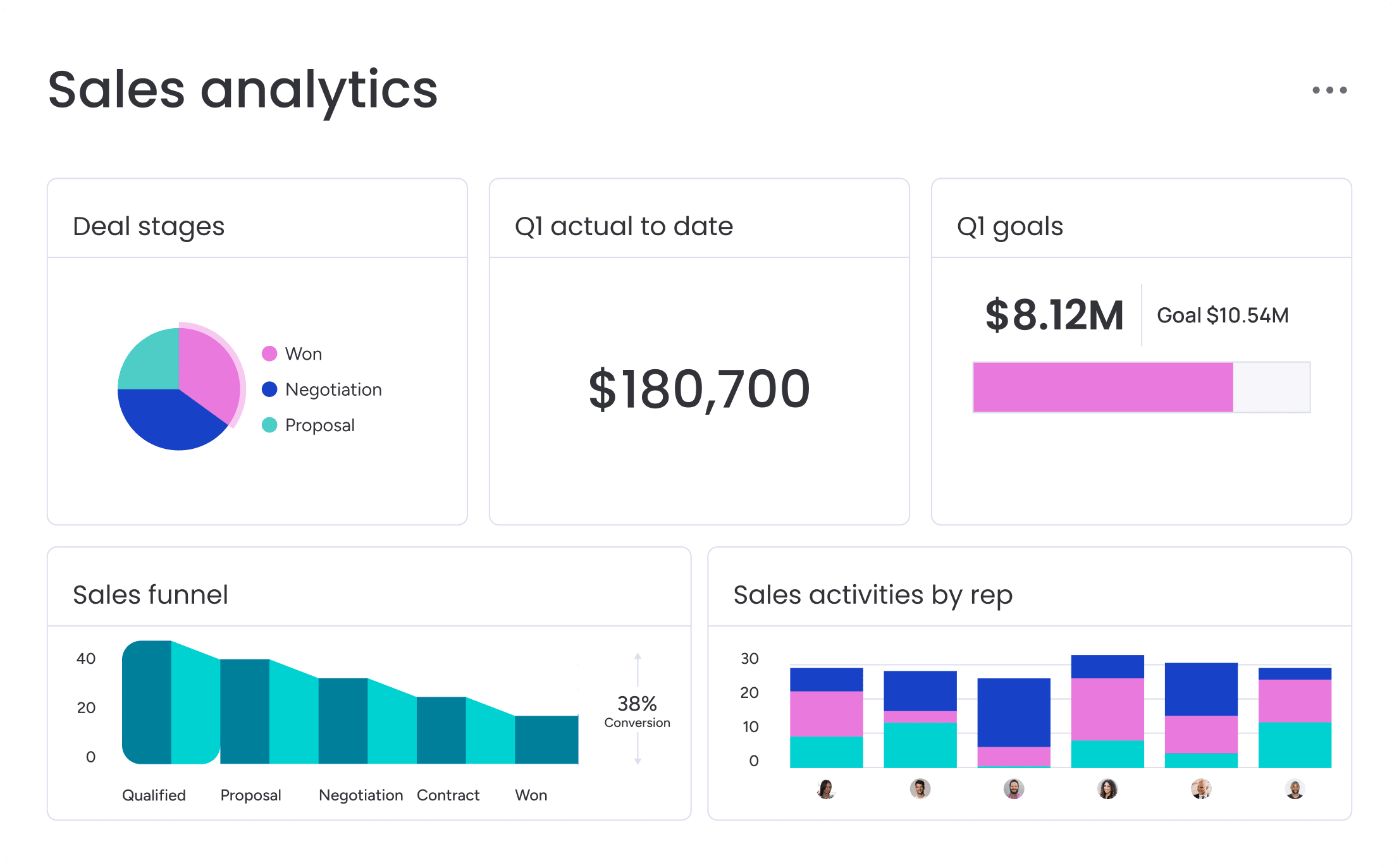
Customer success implementation is a revenue driver, not a cost center. When CS is implemented strategically, it directly impacts Net Revenue Retention (NRR) and Gross Renewal Rate (GRR). Organizations that treat CS as an afterthought consistently underperform on both metrics.
The business case for investing in CS implementation boils down to five measurable outcomes that transform how revenue teams operate:
- Reduces churn by proactively addressing risk: Structured CS implementation enables early risk detection through health scoring, usage monitoring, and automated alerts. When a customer’s engagement drops, the system flags it immediately instead of waiting until the renewal conversation reveals they’ve already decided to leave.
- Accelerates time to value: The first 90 days of the customer relationship are disproportionately important. CS implementation ensures repeatable onboarding, defined milestones, and consistent handoffs so every customer receives the same high-quality experience.
- Creates predictable expansion revenue: CS implementation includes playbooks for identifying upsell and cross-sell opportunities based on usage patterns, health scores, and customer milestones. When CS teams have structured processes for expansion, revenue growth becomes predictable instead of opportunistic.
- Improves operational efficiency: Without implementation, CS teams rely on manual processes and tribal knowledge. Implementation creates repeatable workflows and automation so CS teams can manage more accounts without adding headcount.
- Strengthens cross-functional alignment: Poor handoffs between sales and CS, or between CS and support, create gaps where customers fall through the cracks. CS implementation defines ownership, handoff triggers, and shared accountability.
CS implementation requires upfront investment in time, resources, and technology. But the returns compound as processes mature and scale.
Key roles in customer success implementation
Unclear ownership leads to fragmented CS operations, inconsistent execution, and stalled implementation efforts. When everyone is responsible, no one is responsible. Ownership varies by company size, organizational structure, and CS maturity. But successful implementation always requires accountability at multiple levels. Here’s how responsibility typically breaks down across key roles:
| Role | Primary responsibility | Key activities |
|---|---|---|
| VP of Customer Success or Chief Customer Officer | Set strategy and secure resources | Define success metrics, prioritize initiatives, ensure alignment with revenue goals, champion CS implementation at the executive level, and remove organizational blockers |
| CS Operations Manager or RevOps Leader | Execute and operationalize | Build playbooks, configure CRM workflows, define health scoring models, manage integrations, and translate strategy into repeatable processes |
| Sales | Enable seamless handoffs | Own the handoff process and provide complete context on customer goals and expectations |
| Product | Inform adoption strategies | Provide usage data, feature insights, and roadmap visibility that inform health scoring and adoption strategies |
| Support | Surface systemic issues | Contribute to escalation workflows and surface recurring issues that indicate systemic problems |
| IT | Manage technical infrastructure | Manage integrations, data security, and system administration |
CS implementation is not a CS-only initiative. Organizations that treat it as “the CS team’s problem” consistently fail to achieve the cross-functional alignment that makes implementation effective.
6 phases of a customer success implementation roadmap
This 6-phase roadmap provides a framework for implementing customer success operations, designed for mid-market teams building or optimizing CS. The focus is on CRM-native approaches that avoid tech stack sprawl.
Each phase builds on the previous one. Skipping phases or rushing through them creates technical debt and operational gaps that become increasingly expensive to fix.
1. Discovery and requirements mapping
Discovery is the foundational step where teams assess current state, define CS goals, and map requirements for systems, workflows, and team structure. Skipping discovery is the most common and most expensive mistake in CS implementation.
The primary objective is establishing what CS needs to accomplish, what resources are available, and what gaps must be addressed before selecting tools or building workflows.
Key activities:
- Stakeholder interviews: Gather input from sales, product, support, and leadership on CS priorities and pain points.
- Customer journey mapping: Document the end-to-end customer lifecycle, identifying handoff points and gaps.
- Data audits: Assess what customer data exists, where it lives, and what’s missing.
- Goal setting: Define CS success metrics with specific, measurable targets.
- Tech stack evaluation: Inventory existing tools and determine whether to consolidate or expand.
Success criteria:
- Documented customer journey map with handoff points and ownership
- Defined CS metrics and targets aligned with revenue goals
- A prioritized list of implementation requirements
2. Data migration and system integration
In this phase, you’ll handle the technical setup to centralize CRM data, integrate systems, and create a single source of truth for CS operations. The primary objective is ensuring CS teams have access to complete, accurate, and real-time customer data across all touchpoints — without switching between tools or relying on manual data entry.
Key activities:
- Data migration: Move data from spreadsheets, legacy CRMs, or disparate systems into the primary CRM.
- System integration: Connect the CRM to product analytics, support ticketing, billing, and communication tools.
- Data hygiene: Deduplicate records, standardize fields, and establish data governance rules.
- Permissions setup: Define who can view, edit, and delete customer data based on role and team.
Success criteria:
- All customer data is centralized in a single CRM with clean, deduplicated records.
- Real-time data syncs between CRM and key systems
- The CS team can access a complete customer history without switching between systems.
3. Configuration and playbook design
Configuration and playbook design is the operational setup whose primary objective is creating structured, repeatable processes that enable consistent CS delivery across all customer segments, regardless of which CSM manages the account.
Key activities:
- Playbook creation: Document step-by-step workflows for onboarding, QBRs, renewals, upsells, and churn prevention.
- Health scoring model definition: Establish criteria for customer health based on usage, engagement, support tickets, and sentiment.
- Automation setup: Build automated workflows for task assignment, email sequences, and risk alerts.
- Segmentation strategy: Group customers by size, industry, or lifecycle stage to tailor CS motions.
Success criteria:
- Documented playbooks for all major CS motions
- Automated health scoring model that updates in real time
- CS team can execute workflows consistently without relying on tribal knowledge
4. Sales-to-CS handoff and customer kickoff
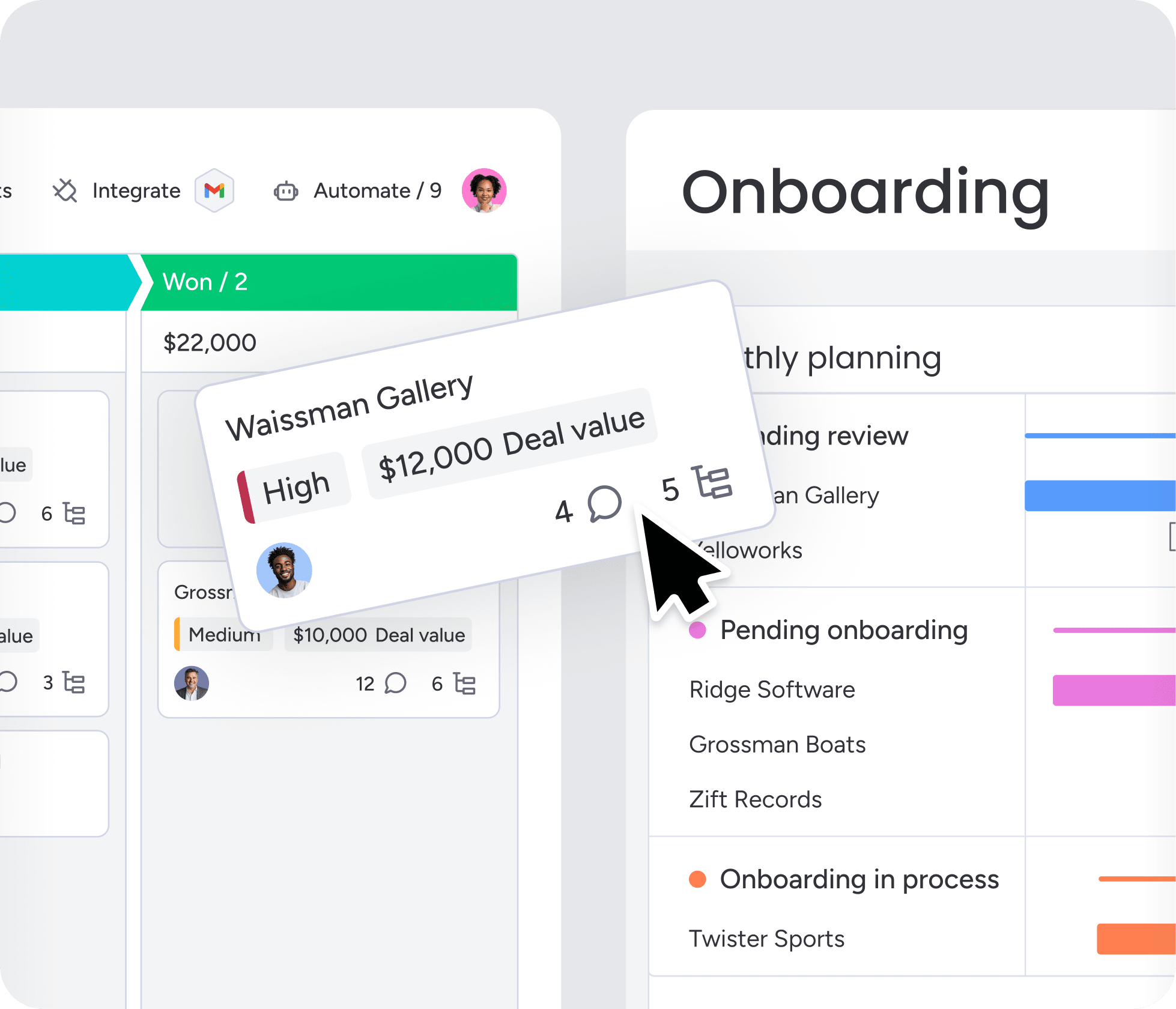
The sales-to-CS handoff is the critical transition point where ownership moves from sales to CS and the customer’s post-sale journey begins. Poor handoffs can contribute to early churn by creating confusion, delays, and repeated conversations for the customer.
The primary objective is to make sure every new customer moves from closed-won to kickoff with complete context, clear ownership, and a shared plan for achieving value.
Key activities:
- Build a shared account plan: Create one centralized CRM record with customer goals, stakeholders, pain points, contract terms, success criteria, and promised outcomes.
- Define handoff triggers and owners: Use CRM automation to notify CS when a deal closes, assign the right CSM, and trigger the next steps based on segment, geography, or product line.
- Require complete sales context: Make sure sales documents key insights before the kickoff, including why the customer bought, what success looks like, and any risks or expectations surfaced during the sales process.
- Hold an internal debrief: Schedule a short sales-CS sync before the customer kickoff so the CSM can ask questions and prepare.
- Run a structured kickoff call: Introduce the CS team, confirm goals, align on milestones, and set expectations for the next phase of the relationship.
Success criteria:
- 100% of new customers receive a kickoff call within the defined SLA.
- CS has complete context on customer goals, stakeholders, contract terms, and success criteria before kickoff.
- Every closed-won deal triggers a documented handoff workflow in the CRM.
- Customers report feeling well-supported in post-sale feedback surveys.
5. Adoption tracking and time to value
Adoption tracking and time to value is the ongoing effort to track customer engagement, drive product adoption, and accelerate the path to meaningful outcomes. This ensures customers achieve their first meaningful outcome quickly and continue deepening usage over time, creating the foundation for renewal and expansion.
Key activities:
- Usage tracking: Monitor product login frequency, feature adoption, and engagement depth.
- Milestone tracking: Define and track key milestones with automated alerts when milestones are missed.
- Proactive outreach: Trigger automated emails or CSM tasks when usage drops or milestones are missed.
- Adoption campaigns: Run targeted campaigns to drive deeper usage of underutilized features.
Success criteria:
- Defined time-to-value metric with baseline and improvement targets
- Automated alerts when customers miss key milestones or show declining usage
- Increased feature adoption rates across the customer base
6. Expansion and renewal readiness
Expansion and renewal readiness is the strategic effort to identify upsell and cross-sell opportunities and ensure customers renew on time. This phase drives predictable expansion revenue and minimizes churn by proactively managing renewals rather than reacting to them.
Key activities:
- Expansion playbooks: Define criteria for identifying upsell opportunities and guide CSMs through expansion conversations.
- Renewal tracking: Set up automated reminders and tasks for upcoming renewals at 90, 60, and 30 days out.
- Risk mitigation: Flag at-risk renewals based on health score, usage decline, or support escalations.
- QBR cadence: Conduct quarterly business reviews to demonstrate ROI and uncover expansion opportunities.
Success criteria:
- Defined renewal process with automated reminders and tasks
- Expansion revenue targets met or exceeded
- Renewal rates above company targets
Why monday CRM is built for customer success implementation
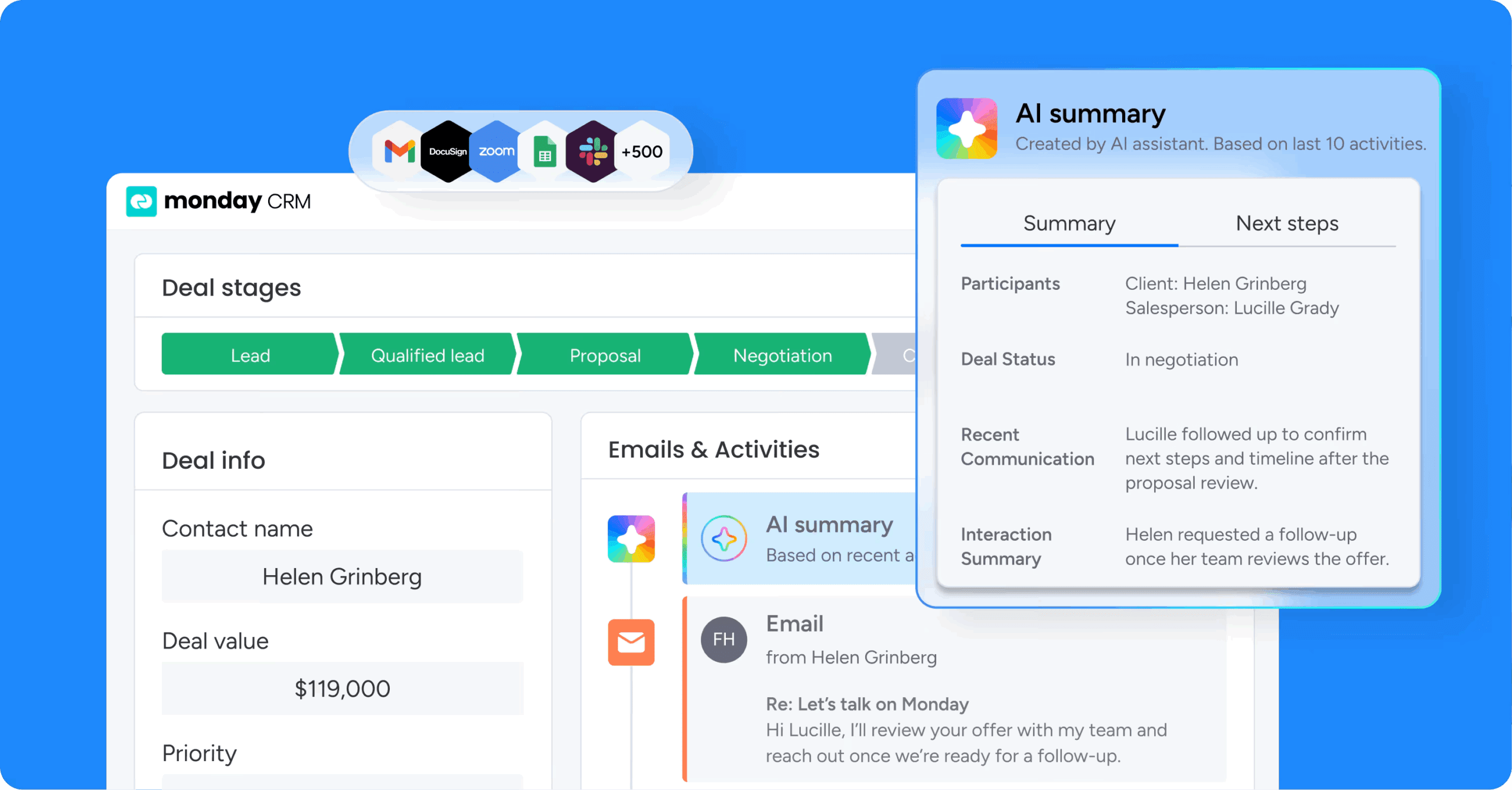
Most CS teams operate across fragmented tools — standalone CS platforms, separate CRMs, disconnected spreadsheets, and siloed communication channels. This tech stack sprawl creates data gaps, manual handoffs, and visibility problems that undermine even the best CS strategies. monday CRM takes a different approach: it consolidates CS operations natively within the same platform where sales and operations teams already work, eliminating integration overhead and keeping customer data in one centralized system.
For mid-market teams building or scaling CS operations, monday CRM delivers the infrastructure needed to implement proactive customer success without adding headcount or complexity. Here’s how:
- Unified customer data across the entire revenue lifecycle: CS teams access complete customer history without switching tools or hunting through email threads, ensuring every interaction is informed and intentional.
- Automated sales-to-CS handoffs that eliminate dropped accounts: When a deal closes, monday CRM automatically triggers handoff workflows, assigns the appropriate CSM, and surfaces the shared account plan with customer goals and contract details.
- Real-time health scoring built into your workflow: Configure health scoring models based on usage data, engagement metrics, support ticket volume, and custom criteria. Health scores update automatically and trigger alerts when accounts move into at-risk territory, enabling proactive intervention before churn becomes inevitable.
- Repeatable playbooks and milestone tracking: Build standardized workflows for onboarding, QBRs, renewals, and expansion directly in monday CRM. Track customer milestones with automated task assignment and reminders so nothing gets missed, even as your CS team scales.
- AI-powered insights that surface risk and opportunity: Analyze customer data to identify patterns, flag at-risk accounts, and recommend next-best actions. CS teams spend less time manually reviewing dashboards and more time acting on high-impact opportunities.
- Cross-functional visibility without access barriers: Sales, CS, support, and leadership teams work from the same system with role-based permissions. Everyone sees the same customer data in real time, eliminating the “who owns this account?” confusion that kills deals and erodes trust.
- Scalable without enterprise-level complexity: Designed for teams that need enterprise-grade functionality, monday CRM enables teams to configure workflows, integrate systems, and start operationalizing CS in weeks, not quarters.
The result is a CS operation that scales efficiently, operates proactively, and drives measurable impact on retention and expansion revenue. When your CRM is purpose-built to support the entire customer lifecycle — not just the sales motion — CS implementation becomes faster, cleaner, and more effective.

“With monday CRM, we’re finally able to adapt the platform to our needs — not the other way around. It gives us the flexibility to work smarter, cut costs, save time, and scale with confidence.”
Samuel Lobao | Contract Administrator & Special Projects, Strategix
“Now we have a lot less data, but it’s quality data. That change allows us to use AI confidently, without second-guessing the outputs.”
Elizabeth Gerbel | CEO
“Without monday CRM, we’d be chasing updates and fixing errors. Now we’re focused on growing the program — not just keeping up with it."
Quentin Williams | Head of Dropship, Freedom Furniture
“There’s probably about a 70% increase in efficiency in regards to the admin tasks that were removed and automated, which is a huge win for us.“
Kyle Dorman | Department Manager - Operations, Ray White
"monday CRM helps us make sure the right people have immediate visibility into the information they need so we're not wasting time."
Luca Pope | Global Client Solutions Manager at Black Mountain
“In a couple of weeks, all of the team members were using monday CRM fully. The automations and the many integrations, make monday CRM the best CRM in the market right now.”
Nuno Godinho | CIO at Velv
“monday.com provides developmental flexibility, operational efficiency, and data transparency — all in one place. We became a company that moved from chasing data to leading with it.”
Hyunghan Lee | Team Lead, Sandbox Network
"monday.com brought every part of our business into one connected space. The harmony between work management and CRM has become our operating system — giving us the clarity and confidence to scale.”
Jennifer Chinburg | Executive Vice President of Corporate Development & Brand, Chinburg Properties
“We just weren’t getting value from our old CRM. With monday.com, it's a thousand times better. Our sales teams are more informed, more consistent, and far more connected."
James Arnold | Chief Operating Officer, CenversaBuild CS operations that actually scale
Getting CS implementation right is one of the highest-leverage investments a revenue team can make. When the infrastructure is in place — clear ownership, repeatable processes, and centralized data — CS stops being reactive and starts driving predictable retention and expansion revenue.
The six-phase roadmap in this article gives you a structured path from discovery to renewal readiness. Each phase compounds on the last, so the earlier you invest in getting the foundations right, the faster the returns show up in your NRR and renewal rates.
Revenue teams find success using monday CRM to run CS operations natively alongside sales and operations — keeping customer data centralized, handoffs automated, and health scoring visible in real time.
Try monday CRMFAQs
What is customer success implementation?
Customer success implementation is the structured process of building systems, workflows, and team structures for proactive customer relationship management after the sale closes. It includes establishing CRM infrastructure, defining ownership between teams, creating repeatable processes, and building measurement frameworks.
What is the difference between customer implementation and customer onboarding?
Customer implementation is the technical setup required to deploy a product within a customer's environment, including data migration and system integration. Customer onboarding guides customers through setup, training, kickoff calls, and early milestones so they can begin using the product successfully.
Who should own customer success implementation?
The VP of Customer Success or CCO typically owns the overall CS strategy and implementation roadmap. CS Operations or RevOps teams handle tactical execution including playbook building and CRM configuration. Successful implementation also requires cross-functional collaboration with sales, product, support, and IT.
What is CRM-native customer success implementation?
CRM-native customer success implementation means building CS workflows, playbooks, handoffs, health scoring, and reporting directly inside the CRM instead of managing them across separate tools. This helps teams keep customer data centralized and reduce manual handoffs between sales, CS, support, and operations.
How long does customer success implementation take?
Customer success implementation timelines vary based on organizational complexity and existing infrastructure. Discovery and requirements mapping typically takes 2 to 4 weeks. Data migration and system integration can take 4 to 8 weeks. Full implementation across all six phases often spans 3 to 6 months for mid-market organizations.
What metrics should you track during customer success implementation?
Key metrics include time to first value, health score accuracy, handoff completion rates, milestone completion rates, feature adoption rates, renewal rates, and expansion revenue. Leading indicators like usage and engagement should be prioritized over lagging indicators like churn and NRR.
Can you run customer success implementation in your CRM?
Yes. CRM-native approaches allow teams to build CS workflows, playbooks, health scoring, and reporting directly within the CRM platform where sales and operations teams already work. This consolidates the tech stack, reduces integration complexity, and maintains a single source of truth for customer data.
