


Most workplace AI still acts like a helpful intern. It drafts emails, summarizes meetings, and suggests next steps, then hands everything back to you. Someone still has to read it, decide what to do, and actually do it. For high-volume, repeatable workflows like lead qualification, ticket triage, or candidate screening, that handoff is where speed and consistency get lost.
That’s where vertical AI agents work differently. Rather than responding to prompts, they take ownership of entire workflows within a specific business function. A vertical AI agent doesn’t suggest how to prioritize your support queue; it classifies every ticket, assigns owners, sets SLA timelines, and flags at-risk cases before a breach occurs. This distinction between suggesting and doing is becoming increasingly relevant as AI agents move into mainstream business software. Gartner forecasts that 40% of enterprise applications will integrate task-specific AI agents by the end of 2026, up from less than 5% in 2025.
In this guide, you’ll learn what vertical AI agents actually are, how they differ from general-purpose AI, how they work behind the scenes, and where they deliver real, measurable results across sales, marketing, IT, HR, and operations. Plus, you’ll get a practical framework for deploying your first agent and see how vertical AI agents on monday.com fit naturally into the workflows your teams already run daily.
Try monday agentsKey takeaways
- Vertical AI agents execute work; they don’t just suggest it: Unlike general AI assistants, vertical agents complete entire workflows on their own, scoring leads, triaging tickets, and screening candidates without waiting for human input at every step
- Depth beats breadth for real business results: Agents built for one specific function, like sales, IT, or HR, outperform general-purpose AI because they understand your data, your rules, and your workflows
- Start with one high-frequency workflow, then expand: Pick a process that happens daily and involves multiple handoffs and build from there as confidence grows
- monday agents give every team a faster path to execution: With ready-made agents for sales, IT, HR, and operations, plus a no-code builder, any team can deploy a vertical agent in three steps
- Governance isn’t optional; it’s what makes agents trustworthy: Define permissions, audit trails, and human approval checkpoints before you deploy, so agents operate within clear boundaries your organization can stand behind
What are vertical AI agents?
A vertical AI agent operates within one business function or industry, where it reasons, plans, and executes complete workflows using your team’s specific knowledge, data, and integrations.
The word “vertical” refers to depth, not breadth. General-purpose AI spreads thin across many domains. Vertical agents go deep into one. That domain can be an industry like healthcare, finance, or legal, or a business function like sales, marketing, IT, or HR. The agent understands the terminology, rules, data structures, and workflows unique to that domain, and it uses that understanding to take meaningful action.
Vertical AI agents change how teams actually use AI at work. Earlier AI acted as assistants: answering questions, generating text, surfacing recommendations. Someone still had to act on everything. Vertical AI agents move beyond assistance into execution. They score leads, triage support tickets, route requests, generate reports, and manage multi-step processes autonomously within the systems where work already happens.
Three terms define what makes vertical agents different:
- Autonomous: The agent completes a sequence of actions on its own once given direction and boundaries
- Domain-specific: It draws from data and rules unique to a particular function or industry
- End-to-end workflow: It handles an entire process from trigger to completion, not a single step
Four things set vertical AI agents apart:
- Domain expertise: Vertical AI agents are grounded in the specific knowledge, terminology, regulations, and best practices of a single business function or industry. A sales agent understands pipeline stages and deal velocity. An IT agent understands SLA thresholds and incident severity classifications. That depth lets them make decisions generalist AI can’t
- Autonomous action: These agents don’t wait for approval at every step. Once given a goal and guardrails, they plan a sequence of actions, execute them across connected systems, and adapt based on intermediate results. They move from insight to action without constant human oversight
- System integration: Vertical AI agents connect directly to the business platforms where work happens, including CRM pipelines, ticketing systems, project boards, and HR platforms. They read and write data within these systems, which means their actions have real operational impact rather than producing suggestions that sit in a chat window
- Continuous learning: As vertical agents process more data and complete more workflows, they refine their understanding of what works. A lead scoring agent that tracks deal outcomes over months becomes more accurate at predicting which prospects will convert. This compounding improvement makes vertical agents more valuable over time
Why vertical AI agents matter for business teams
The shift from AI that assists to AI that executes isn’t incremental. It’s structural. Here’s what that shift looks like in practice, where generic AI falls short, and how vertical agents fit into the software teams already use.
From copilots to agents that execute
The first wave of AI in business software introduced copilots, i.e., systems that suggest next steps, draft content, or surface information while you stay in the driver’s seat. Copilots help, but someone still has to review every suggestion, decide what to do, and execute it manually. The person remains the bottleneck.
Vertical AI agents remove that bottleneck for repeatable, well-defined workflows. Consider a sales team: a copilot might draft a follow-up email after a call, but a vertical AI agent handles the entire sequence without a person touching each step:
- Scores every incoming lead based on fit, intent, and engagement signals
- Routes high-priority prospects to the right rep
- Schedules follow-up meetings automatically
- Logs the interaction in the CRM
- Updates the pipeline stage
Reps spend time on conversations and decisions that close deals, not admin work.
The shift is already underway. McKinsey reports that 23% of organizations are scaling AI agents in at least one business function, while another 39% are actively experimenting with them.
General-purpose AI can still leave an execution gap. It may produce a useful recommendation, summary, or draft, but someone often has to transfer that output into the systems where work actually happens and complete the next steps manually. Vertical agents reduce that handoff by operating directly within the workflows and systems they are designed to manage.
A second limitation is context. Generic AI interactions may not retain the operational history required to manage a workflow over time. Vertical agents maintain relevant context across actions, workflows, and changing business states, allowing them to make decisions based on what has already happened rather than treating every request as isolated.
Why generic AI falls short for specialized work
General-purpose AI can answer questions and generate text across many topics. But it can’t reliably perform the specialized work vertical AI agents handle. Three shortcomings explain why generic AI struggles with domain-specific work:
- Lack of domain knowledge: Generic AI doesn’t understand your industry’s regulations, your team’s workflows, or the terminology that shapes how you make decisions. It can produce a plausible-sounding answer about SLA management, but it doesn’t know your SLA thresholds, escalation policies, or which team handles which ticket category. Without that depth, it can’t act autonomously in any meaningful way
- No system integration: Generic AI operates in a conversational interface. It can’t connect to your CRM pipeline to update a deal stage, create a ticket in your service desk, or assign an item on a project board. It generates output that a person must then manually transfer into the systems where work actually happens, which reintroduces the very bottleneck AI was supposed to remove
- No contextual memory: Generic AI treats each interaction as isolated. It doesn’t remember yesterday’s conversation, the current state of a project, or how a customer’s sentiment has shifted over the past month. Vertical agents maintain context across workflows, teams, and time, which is what allows them to make increasingly informed decisions
Here’s what that looks like in practice. Asking a generic AI to “prioritize my support tickets” produces a generic framework for prioritization. A vertical IT agent that understands your SLA thresholds, knows each ticket’s history, sees your team’s current capacity, and has access to your knowledge base can actually classify, prioritize, and route those tickets, then track resolution metrics and flag at-risk cases before they breach SLA.
How vertical agents fit into enterprise software
Vertical AI agents aren’t standalone applications teams adopt separately. They operate inside the platforms teams already use, including CRM systems, project management workspaces, service desks, and HR platforms. This is critical. The agent joins your existing workflow rather than creating a new one.
The most effective vertical agents connect to your structured data layer: the boards, pipelines, dashboards, and records where your business information lives. They use that structured context to make decisions and take actions grounded in real operational data, not generic training data.
The agents that deliver the most value work across departmental boundaries:
- A sales agent that can see marketing campaign data makes stronger lead scoring decisions
- An operations agent that can reference project timelines makes more accurate vendor assessments
This cross-department context transforms vertical agents from isolated specialists into connected teammates that understand how work flows across the organization.

Vertical AI agents vs. horizontal AI agents
Understanding the difference between vertical and horizontal AI agents helps you choose the right type and avoid investing in agents too broad to deliver measurable results.
What horizontal AI agents do
Horizontal AI agents perform general-purpose tasks across many domains. They can summarize text, generate content, answer questions, translate documents, create meeting summaries, and schedule meetings. Their strength is versatility: they help with a wide range of activities across any team or function.
The trade-off is depth. A horizontal agent can draft an email for a sales rep, summarize a meeting for a project manager, and translate a document for a marketing team. But it doesn’t deeply understand any of those functions well enough to execute complete workflows. It handles individual actions, not end-to-end processes.
What vertical AI agents do differently
Vertical agents go deep rather than wide. They are grounded in domain-specific data, follow function-specific or industry-specific rules, integrate with specialized business systems, and execute complete workflows rather than individual actions.
Here’s how that contrast plays out across three scenarios:
- CRM work: A horizontal agent drafts an email. A vertical CRM agent scores and routes leads based on pipeline data, schedules follow-ups, and updates deal stages
- Support tickets: A horizontal agent summarizes a ticket. A vertical IT agent triages it by severity, assigns it based on team capacity and expertise, sets SLA timelines, and tracks resolution metrics
- Hiring: A horizontal agent generates a job description. A vertical HR agent screens candidates against defined criteria, filters non-fits, surfaces strong matches, and schedules interviews automatically
When to use each type
This comparison helps you evaluate which type fits your workflow:
Most organizations need both types working together. Horizontal agents handle ad hoc requests like drafting a quick email, summarizing a document, or translating a message. Vertical agents own the recurring, high-stakes workflows where speed, accuracy, and consistency directly impact business outcomes, including lead qualification, ticket triage, candidate screening, and project status reporting.
The 2026 trend points decisively toward vertical agents. Vertical agents deliver measurable business outcomes tied to specific KPIs like pipeline velocity, mean time to resolution, and time-to-hire, while horizontal agents deliver productivity gains that are harder to quantify and attribute. As AI budgets grow and organizations demand more precise ROI, vertical agents are where the investment is moving. The market is expanding rapidly: Grand View Research estimates the global AI agents market will grow from $10.9 billion in 2026 to $182.9 billion by 2033, a CAGR of 49.6%.
Try monday agentsHow vertical AI agents work
Vertical AI agents aren’t a single technology. They’re an architecture built from several capabilities working together to enable autonomous, domain-specific workflow execution. Five core components make a vertical AI agent function and distinguish it from simpler AI systems.
Component 1: Knowledge and domain-specific data
Vertical AI agents are grounded in domain-specific knowledge. They draw from documents, PDFs, internal wikis, historical records, and structured data like CRM boards, project boards, or ticketing systems to inform their decisions. Unlike generic AI relying on broad internet training data, vertical agents use your organization’s own data as their primary context.
This grounding makes their actions relevant and accurate:
- A sales vertical agent grounded in a company’s deal history, pricing guidelines, and customer interaction logs can score leads with far greater accuracy than a generic model that has never seen the company’s data
- An IT agent grounded in a team’s knowledge base articles and past ticket resolutions can match incoming tickets to known solutions and route edge cases to the right specialist
Component 2: Reasoning and planning
Vertical AI agents don’t simply retrieve information and present it. They reason through multi-step processes, breaking a goal into sub-actions, determining the correct sequence, and adapting their plan based on intermediate results.
Here’s how that plays out in practice. When an IT vertical agent receives a high-severity incident report, it executes the following planned sequence:
- Classifies the severity based on predefined criteria
- Identifies the on-call team for that incident category
- Routes the ticket to the correct queue
- Triggers real-time alerts to the relevant stakeholders
- Begins tracking mean time to resolution
- Escalates to a backup team if the on-call team is unavailable
This conditional, multi-step reasoning separates agents from simple automation rules.
Component 3: Actions and integrations with business systems
Taking action separates vertical AI agents from passive AI assistants. Vertical agents connect to business systems through integrations and APIs, allowing them to create records, update statuses, send notifications, generate reports, and trigger workflows.
Here’s how vertical agents move from insight to execution within the systems where work already happens:
- Create and update records: Add new leads to a CRM pipeline, update ticket statuses in a service desk, or log meeting outcomes in a project board without anyone copying data between systems
- Route and assign work: Assign incoming requests to the right team member based on capacity, expertise, and current workload, ensuring work reaches the person best equipped to handle it
- Generate and send reports: Compile project status updates, risk summaries, or pipeline reviews and distribute them to stakeholders on a defined schedule or when triggered by specific conditions
- Trigger cross-system workflows: Sync data between a CRM, email platform, and project board without manual handoffs. For example, when a deal closes in the CRM, the agent creates an onboarding project on the project board and notifies the customer success team
- Communicate proactively: Send reminders when deadlines approach, flag risks when SLA thresholds are at risk, and notify team members when their input or action is needed
These actions happen within the platforms teams already use. The agent’s output is immediately operational, not a suggestion sitting in a chat window.
Component 4: Memory and context management
Vertical AI agents maintain context across interactions, workflows, and time. They remember previous actions, understand the current state of a project or pipeline, and use that accumulated context to make increasingly informed decisions.
This differs fundamentally from stateless AI interactions, like a chatbot that forgets the conversation after each session and treats every question like it’s the first. A vertical agent tracking a sales pipeline remembers:
- Which leads were scored last week
- What follow-ups were scheduled
- Which deals moved forward and which stalled
It uses that history to adjust its scoring model and prioritize its next actions.
Context management matters most in cross-departmental work. An agent helping with marketing campaign execution benefits from understanding the sales pipeline data, specifically which campaigns are generating qualified leads, and customer feedback data, specifically which messaging resonates. Without cross-departmental context, the agent operates in a silo, which limits its ability to drive outcomes that span multiple teams.
Component 5: Guardrails and human oversight
Vertical AI agents operate within defined boundaries. Organizations set guardrails that determine what an agent can and cannot do, what data it can access, and when it must pause for human approval before proceeding.
These controls ensure agents operate within organizational policies while building the trust needed for expanded autonomy:
- Permissions: Define which data the agent can read, edit, or create. An agent might have read access to all project boards but write access only to the boards it manages directly
- Scope controls: Limit the agent’s actions to specific workflows, boards, or departments. A sales agent operates within the CRM pipeline; it does not modify HR records or IT configurations
- Human-in-the-loop checkpoints: Require human review before the agent executes high-impact actions. An agent might autonomously triage and categorize support tickets but pause for approval before escalating a case to a VP or issuing a refund
- Audit trails: Log every action the agent takes so teams can review what happened, when it happened, and why the agent made a particular decision. This transparency is essential for debugging, compliance, and building organizational trust
Guardrails aren’t a limitation. They’re a design principle. They build the trust needed to expand agent autonomy over time. Successful AI adoption depends on more than the technology itself. Workflow design, governance, employee adoption, and clear ownership all influence whether agents produce meaningful business outcomes. A team that starts with tight guardrails and sees consistent, accurate agent behavior will naturally grant more autonomy, which compounds the agent’s value.
Vertical AI agent examples by team and industry
Vertical AI agents organize by the business function or industry they serve. The examples below show what these agents actually do in real workflows, the specific actions they take, and the outcomes they produce. The list spans both functional verticals, organized by team, and industry verticals, organized by sector.
Sales and CRM agents
Sales vertical agents handle the high-volume, time-sensitive work that determines whether leads convert or go cold. Here’s how these agents execute complete workflows within CRM systems:
- Lead scoring agent: Evaluates incoming leads using fit, intent, and engagement signals across the funnel. Routes high-priority prospects to the right rep and schedules follow-up meetings automatically. When intent spikes, the agent alerts the assigned rep immediately rather than waiting for a weekly review
- Contact deduplication agent: Scans CRM records to identify duplicate contacts and proactively suggests merging or removing them. Keeping the pipeline clean prevents reps from wasting time on duplicate outreach and ensures reporting accuracy across the sales organization
- Meeting summarizer agent: Analyzes sales call recordings to generate concise summaries, extract action items, and assign follow-up owners directly in the CRM. Instead of a rep spending 15 minutes writing call notes, the agent captures the key details and creates the next steps within seconds of the call ending
- Pipeline hygiene agent: Identifies stale deals that haven’t been updated in a defined period, flags records with missing data fields, and prompts reps to update their pipeline. This keeps forecasting accurate and prevents deals from silently dying in the pipeline
These agents work best inside the CRM platform where sales data already lives. An agent embedded in the CRM can read pipeline stages, contact history, and deal values in real time, which means its actions are grounded in current data, not a snapshot exported to a separate system.
Marketing agents
Marketing vertical agents handle the research, monitoring, and coordination work that consumes significant team bandwidth. Here’s how these agents execute workflows that would otherwise take hours of manual effort:
- Competitor research agent: Tracks key competitors across news, product updates, pricing changes, and market signals, then consolidates findings into a structured snapshot. Instead of a team member spending hours each week scanning competitor websites and news feeds, the agent delivers a current competitive view on a defined schedule
- Campaign performance agent: Monitors campaign metrics against goals and flags underperforming channels or assets. When a paid campaign’s cost-per-lead exceeds the target threshold, the agent surfaces the issue and identifies which creative or audience segment is driving the variance
- Content generation agent: Produces draft copy, social posts, or email sequences aligned with brand guidelines and campaign briefs. The agent draws from existing brand assets and messaging frameworks to ensure consistency, then routes drafts for human review before publication
- RSVP management agent: Tracks event invitations and responses, sends reminders to non-responders, updates attendance lists in real time, and flags gaps when registration falls below target. This eliminates the manual tracking that typically falls on event coordinators
IT and service agents
IT vertical agents handle the ticket volume, SLA tracking, and incident response that determine service quality. Here’s how these agents reduce resolution time while maintaining service standards:
- Ticket triage agent: Classifies incoming tickets by intent, urgency, and required expertise, then assigns owners, sets priority levels, and routes to the correct queue. It automatically matches tickets to knowledge base articles and resolves common requests directly, reducing the volume that reaches human agents
- SLA monitoring agent: Tracks service-level agreements across active tickets, flags at-risk cases before breaches occur, and proactively alerts managers with enough lead time to intervene. It continuously monitors resolution timelines and escalates when thresholds approach
- Knowledge base agent: Audits knowledge article health on an ongoing basis, detects content gaps by analyzing ticket patterns, specifically when tickets frequently reference topics not covered in the knowledge base, and feeds real resolution data back to build a self-improving knowledge base
- Incident management agent: Classifies incidents by severity, routes to the on-call team, triggers real-time alerts, calculates mean time to resolution, and ensures post-mortems happen after every major incident. The agent tracks the full lifecycle from detection to resolution to retrospective
HR and operations agents
HR and operations vertical agents handle the screening, scheduling, and research work that determines how quickly teams can hire and how effectively they can manage vendors. Here’s how these agents execute workflows spanning multiple systems and stakeholders:
- Candidate screening agent: Scores every application against defined criteria, including skills, experience, certifications, and cultural fit indicators, filters non-fits with automated notifications, and surfaces strong candidates immediately. Recruiters spend their time on the top-ranked candidates rather than reviewing every application manually
- Interview scheduling agent: Eliminates the back-and-forth of scheduling by letting candidates self-book against live interviewer availability. The agent sends automated confirmations, reminders, and rescheduling options, and updates the recruiting pipeline in real time
- Vendor research agent: Analyzes procurement requirements, researches potential suppliers across pricing, security posture, customer reviews, and contract terms, then builds prioritized vendor summaries. Operations teams get a structured comparison instead of spending days on manual research
- Process optimization agent: Identifies repetitive or redundant workflows across operations, including activities that are duplicated between teams, approval chains that add delay without adding value, and data entry that could be automated, and proactively suggests consolidations or automations
Healthcare, finance, and other industry agents
While the functional examples above are organized by team, vertical AI agents also serve traditional industry verticals with domain-specific regulatory and operational requirements. Here’s how vertical agents address the unique constraints of regulated industries:
- Healthcare: Patient intake agents collect and verify insurance information, schedule appointments based on provider availability and specialty requirements, and route cases to the appropriate specialist, reducing administrative burden on front-desk staff and shortening the time from first contact to first appointment
- Finance: Compliance monitoring agents scan transactions for regulatory violations, flag anomalies that deviate from established patterns, and generate audit-ready reports for review. They operate continuously, catching issues that periodic manual reviews might miss
- Legal: Contract drafting agents find relevant precedents from the organization’s document library, apply standard templates and clause rules, and produce review-ready drafts. Legal teams review and refine rather than starting from scratch, which compresses turnaround time on routine agreements
While industry-specific agents address regulatory and domain requirements unique to each sector, the underlying architecture is the same as functional vertical agents: knowledge grounding, reasoning, actions, context management, and guardrails.
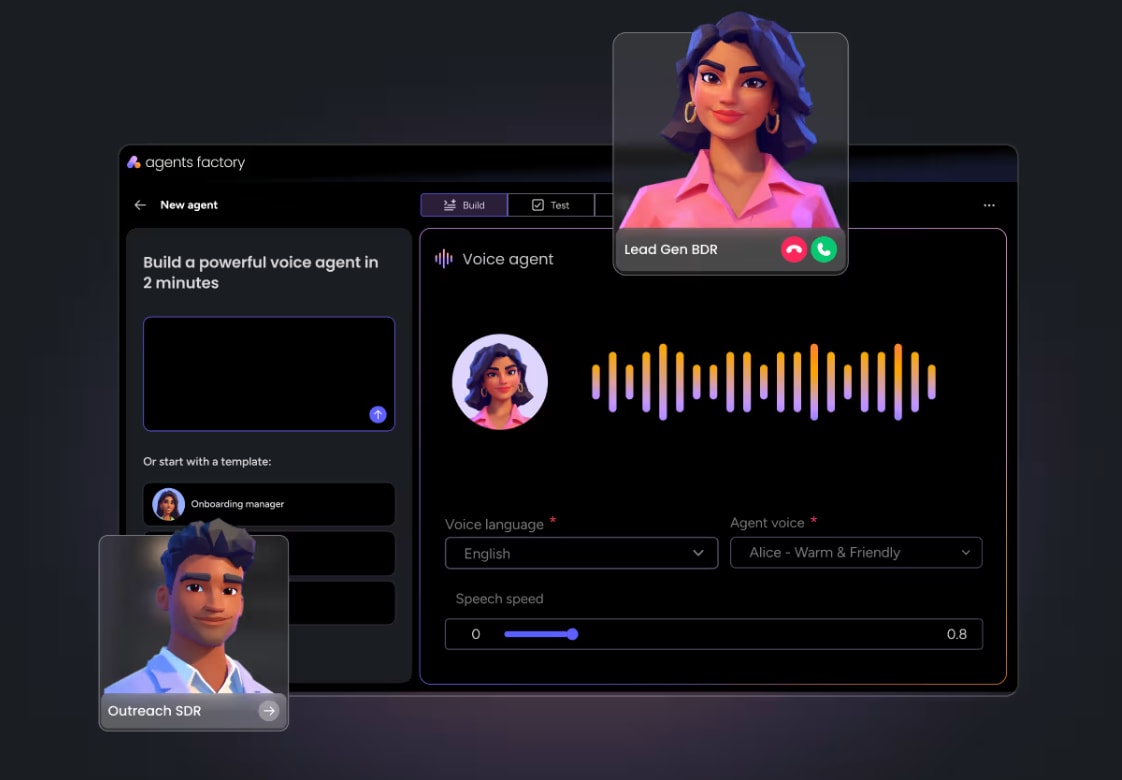
Five benefits of vertical AI agents
Vertical AI agents deliver value through business outcomes, not technical capabilities. Each benefit below ties to a specific result you can track and quantify.
1. Faster cycle times and lower operating costs
Vertical agents compress the time between a trigger event, such as a new lead, a support ticket, or a candidate application, and a completed action. Agents execute workflows autonomously around the clock, eliminating delays from manual handoffs, time zones, and human bottlenecks. Work that previously waited in a queue for the next available person gets processed immediately.
Without a triage agent, a human handles each ticket manually:
- Reads the ticket description
- Determines the category and priority
- Identifies the right assignee
- Updates the record
That process takes minutes per ticket, hours across a full queue. A ticket triage agent completes the same sequence in seconds. Multiply that across hundreds of daily tickets, and the time savings translate directly into lower operating costs and faster resolution for customers.
2. End-to-end workflow execution across systems
Vertical agents don’t complete individual actions in isolation. They execute entire workflows that span multiple systems and teams. A single agent can read data from a CRM, update a project board, send a notification through a messaging integration, and generate a dashboard report, all as part of one continuous workflow triggered by a single event.
This cross-system execution reduces the repetitive coordination that typically falls on team members:
- Copying data between platforms
- Sending routine status updates
- Reconciling information across disconnected systems
- Following up with colleagues for updates
These tasks are necessary to keep workflows moving, but they consume time that could otherwise go toward work requiring human judgment, expertise, or relationship-building. Vertical agents can take on many of these repeatable steps while escalating exceptions that still require a person.
3. Measurable ROI tied to business outcomes
Vertical agents operate within specific business functions, so their impact is directly measurable against function-specific KPIs, including:
- Sales agents: Pipeline velocity, lead-to-opportunity conversion rate, average deal cycle time
- IT agents: Mean time to resolution, SLA compliance rate, ticket volume handled per agent
- HR agents: Time-to-hire, cost-per-hire
Generic AI, by contrast, often delivers ROI that is vague, such as “saved time,” and difficult to attribute to specific business outcomes. Vertical agents close that attribution gap because their actions are directly tied to the workflows that drive measurable results.
4. Personalization and adaptability at scale
Vertical agents adapt to each organization’s specific data, terminology, workflows, and rules. They’re not one-size-fits-all. They are grounded in the company’s own knowledge base, historical data, and operational context. Two companies in the same industry can deploy the same type of vertical agent (like a lead scoring agent) and get results tailored to their unique sales processes, customer profiles, and pipeline stages.
This adaptability extends to how the agent evolves. As your processes change (new products launch, team structures shift, compliance requirements update), the agent adapts because it draws from the current state of your data, not a static model trained on historical snapshots.
5. Continuous learning that compounds over time
Vertical agents improve as they accumulate more context and data:
- An HR screening agent that processes hundreds of applications learns which criteria correlate with successful hires.
- A sales agent that tracks deal outcomes over months refines its lead scoring model to predict more accurately which prospects will convert.
- An IT agent that resolves thousands of tickets builds an increasingly accurate understanding of which issues require escalation and which can be resolved automatically.
This compounding effect means the agent becomes more valuable the longer it operates. The first month of deployment delivers baseline automation. By the sixth month, the agent’s accuracy and efficiency have improved measurably based on the patterns it has observed. This is a fundamentally different value curve than traditional software, which delivers the same capability on day one as it does on day 180.
How governance and trust keep vertical AI agents reliable
Trust is the biggest barrier to AI agent adoption. Organizations won’t grant agents autonomy over critical workflows (lead routing, ticket escalation, candidate screening, financial reporting) unless they trust the agent’s boundaries, transparency, and compliance posture. Four pillars form the governance framework that makes vertical AI agents reliable enough for production:
Pillar 1: Permissions and role-based access
Vertical AI agents should operate within the same permission model as human team members. An agent can only access data and perform actions that its assigned role permits. Administrators define whether an agent can read, create, or edit information, and can scope access to specific workspaces, boards, or departments.
In practice:
- A sales agent operates within the CRM pipeline and does not access HR records
- An IT agent manages tickets within the service desk and does not modify marketing campaign data
The permission model ensures agents respect the same data boundaries as humans, preventing unintended data exposure and maintaining organizational data hygiene.
Pillar 2: Audit trails and transparency
Every action a vertical AI agent takes should be logged and reviewable. Audit trails allow teams to see what the agent did, when it did it, and why it made a particular decision. If an agent escalated a support ticket to a senior engineer, the audit trail shows the classification logic, the severity assessment, and the routing rule that triggered the escalation.
This transparency serves three purposes, including:
- It enables debugging when an agent makes an unexpected decision
- It supports compliance reporting for regulated industries
- It builds organizational confidence in agent autonomy
When stakeholders can see exactly how an agent operates, they are more willing to expand its scope.
Pillar 3: Human-in-the-loop controls
You can require human approval at specific checkpoints before an agent executes high-impact actions. An agent might autonomously triage and categorize support tickets, but pause for human review before escalating a case to a VP or issuing a customer credit.
Simulation modes allow teams to test agent behavior before activating it in production. The agent processes real data and generates proposed actions, but does not execute them until a human reviews and approves. This “dry run” approach lets teams validate the agent’s decision-making against their expectations before granting it operational autonomy.
Pillar 4: Compliance and data privacy
Vertical AI agents handling sensitive data must comply with relevant regulations, including GDPR, HIPAA, SOC 2, and ISO certifications. This includes the following:
- Data encryption at rest and in transit
- Defined retention policies
- Ensuring that third-party AI models do not train on customer data
Organizations retain ownership of both the content they provide to agents and the content agents generate. This data ownership guarantee is essential for industries where data sovereignty and intellectual property protection are non-negotiable. The compliance posture of the platform hosting the agent determines whether the agent can be deployed in regulated environments, which is why enterprise-grade security infrastructure is a prerequisite, not an optional add-on.
Try monday agentsFour steps to evaluate and get started with vertical AI agents
Getting started with vertical AI agents does not require automating everything at once. The most successful deployments begin with a focused example, prove value quickly, and expand from there. The four steps below provide a practical starting framework for teams evaluating vertical AI agents for the first time.
Step 1: Identify high-frequency, high-value workflows
The right starting point is a workflow that is repeated frequently, involves multiple steps, and has a direct impact on business outcomes. Lead qualification in sales, ticket triage in IT, candidate screening in HR, and status reporting in project management are all strong candidates because they happen daily, involve multiple handoffs, and directly affect revenue, customer satisfaction, or operational efficiency.
Four questions to identify your first vertical AI workflow
Start with a workflow where automation can produce a visible operational result rather than simply demonstrating that the technology works. These four questions can help narrow the options:
- Does the workflow happen frequently? Daily or high-volume processes create more opportunities to generate measurable value.
- Does it involve repetitive decisions or handoffs? Look for processes where people repeatedly classify, route, update, follow up, or transfer information.
- Can success be measured clearly? Choose a workflow tied to an existing metric such as response time, conversion rate, SLA compliance, or time-to-hire.
- Can you define clear boundaries for the agent? The best starting workflows have known inputs, rules, permissions, and points where human approval should remain.
Step 2: Assess data readiness and integration needs
Vertical AI agents are only as effective as the data they can access. Before deploying an agent, teams should evaluate whether their business data meets three criteria:
- Structured: Organized in boards, pipelines, or databases rather than scattered across email threads or spreadsheets
- Current: Reflecting today’s reality rather than last quarter’s snapshot
- Accessible: Available through integrations or APIs that the agent can connect to
Platforms with a shared, structured data layer across departments give agents richer context than siloed systems where each team’s data lives in a separate application. When a sales agent can see marketing campaign data, or an operations agent can reference project timelines, the agent’s decisions are informed by the full picture, not just the data within its own department’s systems.
Step 3: Define governance requirements before deployment
Governance should be established before an agent goes live, not after. Before activating any agent, teams should define:
- What data the agent can access
- What actions it can take autonomously versus with approval
- Who reviews the agent’s audit trail
- What compliance standards apply to the data the agent handles
Skipping this step creates risk. An agent deployed without defined permissions might access data it shouldn’t. An agent without human-in-the-loop checkpoints might execute a high-impact action without the review that the organization’s process requires. Defining governance upfront prevents these issues and builds the trust foundation that allows the agent’s scope to expand over time.
Step 4: Start narrow, then expand autonomy in stages
The principle of progressive autonomy guides successful agent deployments: begin with a single agent handling a single workflow with human-in-the-loop checkpoints at every step. As the team builds confidence in the agent’s accuracy and reliability, gradually expand its scope, reduce approval checkpoints, and add new workflows.
Here is what that progression looks like in practice:
- Month 1: A lead scoring agent flags high-priority leads for human review only
- Month 2: After consistent, accurate scoring, the agent also schedules follow-up meetings and updates pipeline stages
- Month 3: The agent begins routing leads to specific reps based on territory and expertise
Each expansion is earned through demonstrated performance, not assumed from the start.
Execute vertical AI workflows with monday.com
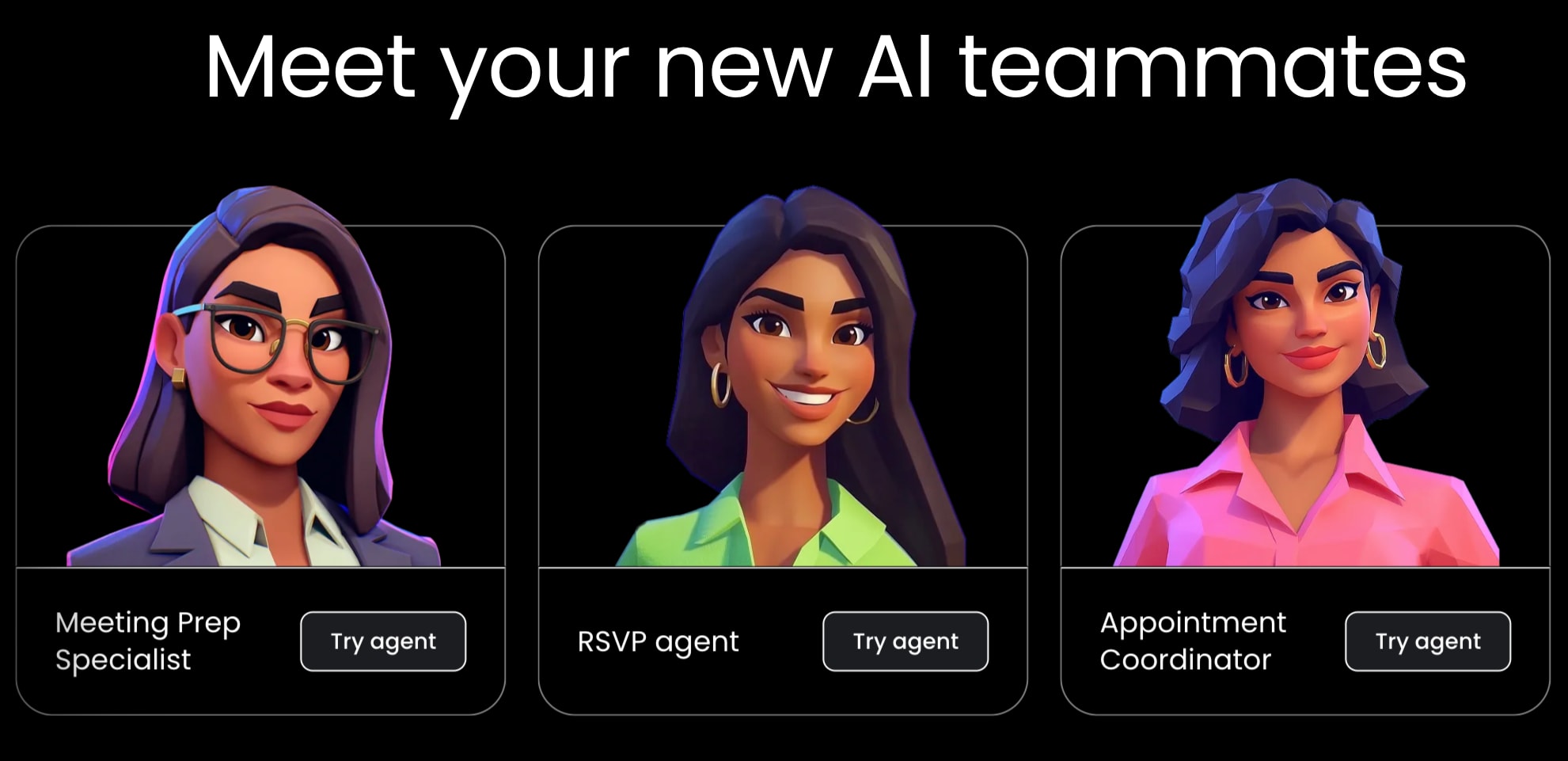
Vertical agents become more useful when they can operate directly in the systems where teams already manage work. With monday, agents can work with the same boards, workflows, and cross-department context teams already use, rather than requiring a separate environment for AI-driven execution.
monday agents includes ready-made agents for specific business workflows as well as a no-code agent builder for creating agents around an organization’s own processes. That gives teams a way to move from individual AI tasks to agents that can monitor and execute recurring workflows within defined permissions and guardrails.
Ready-made agents for sales, marketing, IT, and operations
The platform offers a library of ready-made vertical AI agents organized by department, each designed to handle specific workflows end to end. The following agents illustrate how vertical AI capabilities translate into operational execution within the platform:
- Lead Scorer: Scores leads using fit, intent, and engagement signals across the funnel. When intent spikes, it routes high-priority leads to the right rep, schedules follow-ups, and sends alerts so reps focus on the prospects most likely to convert
- Sentiment Detector: Detects sentiment shifts across tickets, emails, and feedback in real time. It proactively flags risks and notifies the right owner before a negative trend escalates into a customer churn event
- Risk Analyzer: Detects schedule, dependency, and workload risks across projects in real time. It mitigates risks by reassigning owners, updating timelines, and alerting stakeholders before a missed deadline becomes a missed deliverable
- Ticket Assignment agent: Detects ticket intent, urgency, and required expertise, then assigns owners, sets priority, and reroutes to reduce resolution time. It automatically matches tickets to knowledge base articles and resolves common requests directly
- Vendor Researcher: Gathers vendor details like pricing, security posture, reviews, and contract terms, then builds a vendor summary and requests the missing details needed for a decision
- Meeting Summarizer: Creates meeting notes, transcripts, and summaries, then extracts follow-ups, assigns owners, and creates updates accordingly, eliminating the post-meeting administrative work that typically takes 15–30 minutes per call
These agents span sales through monday CRM, IT and support through monday service, and project management through monday AI Workspace, all operating within the same platform and sharing the same data layer.
Build custom agents in three steps with the AI agent builder
For workflows that don’t match a ready-made agent, monday’s AI agent builder lets teams create vertical agents tailored to specific workflows without requiring teams to write code.
The process follows three steps:
- Describe what you need: Define the agent’s role, the workflows it should handle, and the triggers that activate it. This is done in natural language, with no code or configuration files required
- Connect knowledge and integrations: Link the agent to relevant documents, PDFs, boards, and external integrations so it has the context it needs to make informed decisions and take accurate actions
- Test and refine: Run the agent in simulation mode, review its proposed actions, make adjustments, and activate it when the results match expectations
This builder makes vertical AI agents accessible to any team, including marketing, HR, operations, and sales, not just technical teams with development resources. It directly addresses the adoption gap that keeps most organizations from moving beyond AI experimentation: the gap between AI excitement and real usage is significant, and the intuitive, no-code experience on monday.com invites every team to move from AI experimentation to daily execution.
Cross-department context connects agent workflows
Vertical workflows rarely exist entirely within one department. Lead qualification depends on marketing and sales data, customer onboarding can involve sales and operations, and service issues may need context from account or project teams.
Because work across these functions can live within monday, agents can use relevant context from connected workflows rather than operating only within an isolated departmental dataset.
Here is what that looks like across three teams:
- A marketing agent can reference sales pipeline data when evaluating campaign performance, seeing which campaigns generate leads that actually convert, not just leads that fill the top of the funnel
- An operations agent can see project timelines when assessing vendor delivery risks
- A PMO agent generating a status report can pull data from development sprints, marketing launches, and sales targets in a single view
This cross-department context is what enables agents to drive outcomes across the business, not automate isolated activities within a single team.
Enterprise-grade trust with built-in guardrails
Governance and trust capabilities on monday.com are built into the platform’s AI infrastructure, not bolted on as an afterthought. The following controls ensure that organizations can scale AI adoption without sacrificing security or compliance:
- Control: Explicitly decide what each agent can and cannot do, both inside monday.com and across external integrations connected through 200+ integrations and MCP protocol support
- Permissions: Define exactly which data the agent can access and whether it can edit or create information. Permissions align with the same role-based access model that governs human team members
- Human-in-the-loop: Validate agent actions before activation using simulation mode. The agent processes real data and proposes actions, but does not execute until a human approves
- Compliance: HIPAA compliant, with ISO/IEC 27001, SOC 2 Type II, and ISO/IEC 27701 certifications. Enterprise-grade security infrastructure protects data at every layer
- Data ownership: Organizations retain ownership of content provided to agents and content generated by agents. Third parties cannot train on customer data
The following comparison shows how vertical agents embedded in a shared work platform differ from domain-specific tools and general-purpose AI assistants.
The combination of cross-department context, built-in vertical agents, and enterprise-grade governance on monday.com creates a platform where teams can adopt vertical AI agents without separate systems, consultants, or steep learning curves. With 225,000+ organizations already running their work on the platform, agents integrate into the way teams already work, across every department and for every skill level.
Where vertical AI agents are headed
Three trends are shaping the next phase of vertical AI agents, and each one amplifies the value that organizations can capture.
Agents working together
The current generation of vertical AI agents operates within a single function, where a sales agent handles lead scoring and an IT agent handles ticket triage. The next evolution is multi-agent orchestration, where multiple vertical agents collaborate across departments to execute end-to-end business processes.
A sales agent hands off a closed deal to an onboarding agent, which coordinates with a project management agent to set up the client workspace, assign the account team, and schedule the kickoff meeting. No human orchestrates the handoff; the agents communicate through the shared data layer and execute their respective workflows in sequence.
Learn more: AI agent orchestration
Progressive autonomy becoming the norm
Organizations are learning that the right approach to agent autonomy mirrors how they onboard a new team member. You start with defined boundaries, close supervision, and frequent check-ins. As the person demonstrates competence and judgment, you expand their scope and reduce oversight.
The same pattern applies to vertical AI agents: tight guardrails at deployment, gradual expansion as trust builds, and eventually broad autonomy for well-understood workflows. This progressive model resolves the tension between the desire for AI-driven efficiency and the need for organizational control.
Vertical agents may reduce reliance on some point solutions
As agents become capable of executing more of a workflow end to end, organizations may need fewer standalone tools for individual steps. Rather than using separate applications for every action, some workflows can increasingly be coordinated by agents operating within broader business platforms.
How to get started with vertical AI agents today
Vertical AI agents are no longer a future-state concept. They are available now, deployable within the platforms your teams already use, and measurable against the KPIs that matter to your business.
The most important step is choosing the right first workflow: one that is high-frequency, involves multiple handoffs, and has a direct impact on revenue, customer satisfaction, or operational efficiency. Lead qualification, ticket triage, candidate screening, and project status reporting are all proven starting points. Each one delivers visible results quickly, which builds the organizational confidence needed to expand agent autonomy over time.
From there, the path forward is straightforward.
From there, expand based on results rather than ambition alone. Once an agent can reliably handle a bounded workflow within defined permissions and approval rules, teams can add more actions, connect additional context, or increase its level of autonomy.
With monday agents, teams can start with ready-made agents for common workflows or use the AI agent builder to create one around their own process. Simulation mode and configurable guardrails provide a way to test agent behavior before expanding what it is allowed to do.
Try monday agentsFrequently asked questions about vertical AI agents
What are the five types of AI agents?
The five commonly referenced types of AI agents are simple reflex agents, model-based reflex agents, goal-based agents, utility-based agents, and learning agents. Vertical AI agents typically combine goal-based reasoning, which involves breaking objectives into planned action sequences, with learning capabilities, which involve improving performance based on accumulated data and outcomes, to execute domain-specific workflows autonomously.
Is ChatGPT an AI agent or a large language model?
ChatGPT is an AI assistant powered by large language models (LLMs). It can use agentic capabilities in some contexts, but an AI agent is more broadly defined by its ability to reason about a goal, plan actions, use tools or connected systems, and execute work with some degree of autonomy.
Will vertical AI agents replace SaaS platforms?
Vertical AI agents are more likely to be embedded within SaaS platforms than to replace them. Agents need structured data, integrations, and governance infrastructure that platforms provide. The shift is from platforms as passive record-keeping systems to platforms as active execution environments where agents and people work together. The platform provides the data layer and guardrails, and agents provide the autonomous execution.
How do vertical AI agents differ from copilots and chatbots?
Chatbots respond to questions with text-based answers. Copilots suggest actions for people to review and execute manually. Vertical AI agents autonomously plan and execute multi-step workflows within a specific business domain, taking action in connected systems, including creating records, routing work, sending notifications, and generating reports, without requiring human involvement at every step.
Are vertical AI agents secure enough for regulated industries?
Vertical AI agents can meet regulatory requirements when deployed on platforms with enterprise-grade security infrastructure, including SOC 2 Type II, ISO 27001, HIPAA compliance, role-based permissions, audit trails, and data ownership guarantees. monday.com, for example, provides these controls as part of its AI infrastructure, along with GDPR compliance and ISO/IEC 27701 certification, ensuring that agents handling sensitive data operate within the same compliance framework as the rest of the organization.
 Get started