


Your marketing team just spent three weeks on a competitive analysis. By the time sales gets it, two competitors have shifted pricing and a new player entered the market. Meanwhile, your operations team manually tracks project risks in separate systems with no visibility into each other’s data. This coordination gap slows teams down, creates errors, and hands competitors an edge. The solution? AI agent orchestration, where specialized agents coordinate across departments to handle workflows that actually span teams. §
In this article, we’ll dive into what AI agent orchestration actually means, why cross-functional teams need it, and how to evaluate platforms that let agents work together seamlessly. You’ll see five orchestration patterns, how agents collaborate across teams, practical steps for building a scalable strategy, and how to deploy coordinated agents using platforms like monday agents.
Key takeaways
- Start with one cross-functional workflow that requires manual coordination. Map where agents can handle data gathering and routine communication while people focus on strategic decisions and approvals.
- Choose orchestration patterns based on your workflow complexity. Use sequential for step-by-step processes, concurrent for speed, and adaptive for unpredictable environments that change frequently.
- Prioritize platforms with cross-department data access. Agents perform better when they can see marketing, sales, and operations data together rather than working in isolated silos.
- Deploy monday agents across teams without coding. Use ready-made agents for competitor research, status reporting, and ticket triage, plus custom agents built through natural language descriptions.
- Design human-in-the-loop controls for high-stakes decisions. Set approval gates before external communication, financial changes, and escalations so people maintain oversight while agents handle execution.
What is AI agent orchestration?
AI agent orchestration coordinates multiple specialized AI agents to complete complex, multi-step workflows together. Instead of one AI agent handling everything, orchestration assigns distinct roles to different agents. A central coordinator manages how they break down work, picks the right agent for each step, and handles handoffs across the workflow.
We call that central coordinator an orchestrator agent. Think of it like a conductor leading an orchestra: each musician has a specialty, whether strings, brass, or percussion, but the conductor ensures they play in harmony, come in at the right moment, and produce something cohesive. The orchestrator agent decides which specialized agent handles which part of a process, determines when agents need to pass work to each other, and combines their results into a unified output.
Whether you have one generalist AI agent or multiple specialists directly impacts your business outcomes.
A single agent trying to research market trends, draft a report, flag risks, and notify stakeholders? You’ll get mediocre results everywhere. Specialization lets each agent excel at one thing while the orchestrator keeps them working together.
Learn more: AI agent frameworks
Why AI agent orchestration matters for business teams
Most organizations started with single-purpose assistants: a chatbot for customer support, an AI writing tool for marketing, a summarizer for meeting notes. Each one solved a narrow problem, but real business processes span multiple functions.
A product launch requires research agents gathering market research, content agents drafting materials, risk management agents flagging timeline issues, and reporting agents compiling status updates for leadership. When these agents work in isolation, they recreate the silos you’ve spent years breaking down:
- Disconnected information: Each agent works with partial data
- Duplicated effort: Multiple agents perform similar research or analysis
- Context-free decisions: Agents make recommendations without full organizational visibility
Multi-agent systems fix this by letting agents collaborate across functions. Instead of five separate outputs, orchestrated agents share context, build on each other’s work, and deliver one coordinated result.
Learn more: Types of AI agents
What analysts predict about agent orchestration adoption
The data shows real momentum behind multi-agent coordination. Gartner forecasts that 40% of enterprises will embed AI agents by the end of 2026, and CIOs expect that by 2030, 75% of IT work will involve people augmented with AI. Enterprise AI spending is growing 300–400%, but it’s shifting toward platforms where value multiplies over time.
One agent saves time on a single process. Orchestrated agents, on the other hand, transform entire workflows. However, the adoption gap is still massive. According to McKinsey, 62% of organizations are experimenting with AI agents, but only 23% are scaling them across the enterprise.
Most teams don’t know where to start with multi-agent coordination. Understanding orchestration patterns closes the gap between excitement and execution.
Why cross-department context powers effective orchestration
Orchestration only works when agents share organizational context by accessing and understanding data across the entire organization, not just their department’s silo.
Consider these cross-functional scenarios:
- Marketing campaigns: A marketing agent orchestrating a campaign launch makes smarter decisions when it can see sales pipeline data
- Risk analysis: A risk analysis agent spots problems faster when it can scan project timelines alongside support ticket volumes
- Resource planning: An operations agent planning resource allocation makes more informed calls when it can see HR capacity data and project deadlines together
The platform needs to provide structured, cross-departmental data access with the right permissions. Without that cross-functional foundation, you’re just coordinating agents within a single silo.
AI agent orchestration vs. automation and single-agent systems
Understanding how orchestration differs from business process automation and single agents prevents over-investing in the wrong layer or under-investing where it matters most. Each approach fits different business needs and complexity levels.
| Dimension | Basic automation | Single AI agent | Multi-agent orchestration |
|---|---|---|---|
| Coordination | Rule-based triggers (if X, then Y) | One agent handles end-to-end | Multiple specialized agents coordinated by an orchestrator |
| Adaptability | Static; breaks when conditions change | Can adapt within its scope | Agents dynamically adjust roles and routing based on context |
| Scalability | Add more rules (complexity grows fast) | Limited by one agent's capacity | Add new agents without rebuilding existing workflows |
| Governance | Simple audit trails | Single point of control | Granular permissions per agent with centralized oversight |
| Cross-functional capability | Confined to one workflow | Confined to one domain | Spans departments and data sources |
You need multi-agent orchestration when:
- Business outcomes depend on different kinds of expertise working together across functions
- Workflows need real-time decisions based on changing conditions
- You need to scale AI without rebuilding from scratch each time
5 agent orchestration patterns and when to use each
Different business scenarios need different coordination patterns. An orchestration pattern defines how agents communicate, sequence their work, and handle decision points. Know these patterns, and you’ll pick the right coordination model for your workflows.
Pattern 1: Sequential orchestration
Sequential orchestration runs agents in a fixed order. Each one passes its output to the next. Here’s how this works in a content publishing workflow:
- Research agent gathers data
- Writing agent drafts content based on that research
- Editing agent reviews the draft
- Publishing agent distributes the final version
Best for: Processes with a clear sequence where each step builds on the last, like:
- Onboarding workflows
- Document review chains
- Multi-stage approval processes
Pattern 2: Concurrent orchestration
Concurrent orchestration runs multiple agents at the same time on independent parts of a bigger goal. Here’s how this works when preparing for a quarterly business review:
- Reporting agent compiles financial data
- Risk agent scans for project blockers
- Research agent gathers competitive intelligence
All three agents work at the same time, then the orchestrator merges their outputs.
Best for: When sub-processes are independent and speed matters. The orchestrator needs to know how to merge results from concurrent agents into one unified output.
Pattern 3: Handoff orchestration
Handoff orchestration passes a process from one agent to another based on triggers or conditions. Here’s how this works in a vendor evaluation workflow:
- Intake agent receives a vendor request and validates it
- Research agent evaluates the vendor based on requirements
- Approval agent makes the final sign-off decision
Best for: Processes that move through distinct phases needing different expertise, like:
- Service ticket escalation
- Procurement workflows
- Candidate screening pipelines
Pattern 4: Hierarchical orchestration
Hierarchical orchestration uses a primary orchestrator that delegates work to sub-orchestrators. Each one manages its own group of specialized agents. Here’s how this works for a product launch:
- Executive-level orchestrator manages the overall initiative
- Marketing sub-orchestrator coordinates content, research, and campaign agents
- Operations sub-orchestrator manages logistics, vendor, and timeline agents
Best for: Complex, cross-departmental initiatives where a single orchestrator would be overwhelmed. This pattern reflects how teams are actually structured.
Pattern 5: Adaptive orchestration
Adaptive orchestration adjusts which agents are involved, what sequence they follow, and how resources are allocated, all based on real-time conditions. In an incident management workflow:
- Initial state: Orchestrator routes to a triage agent
- Escalation trigger: If severity escalates, it pulls in additional agents in real time for communication, root cause analysis, and stakeholder notification.
- Resolution phase: Agents shift to documentation and post-incident review
Best for: Unpredictable environments where conditions change frequently and fixed sequences would be too rigid.
How AI agents collaborate across departments
Orchestration shows its real power when agents work across departmental boundaries. Most business outcomes need coordination across multiple teams. Here’s how orchestrated agents break down silos and create cross-functional workflows that actually work.
Marketing and sales agent orchestration
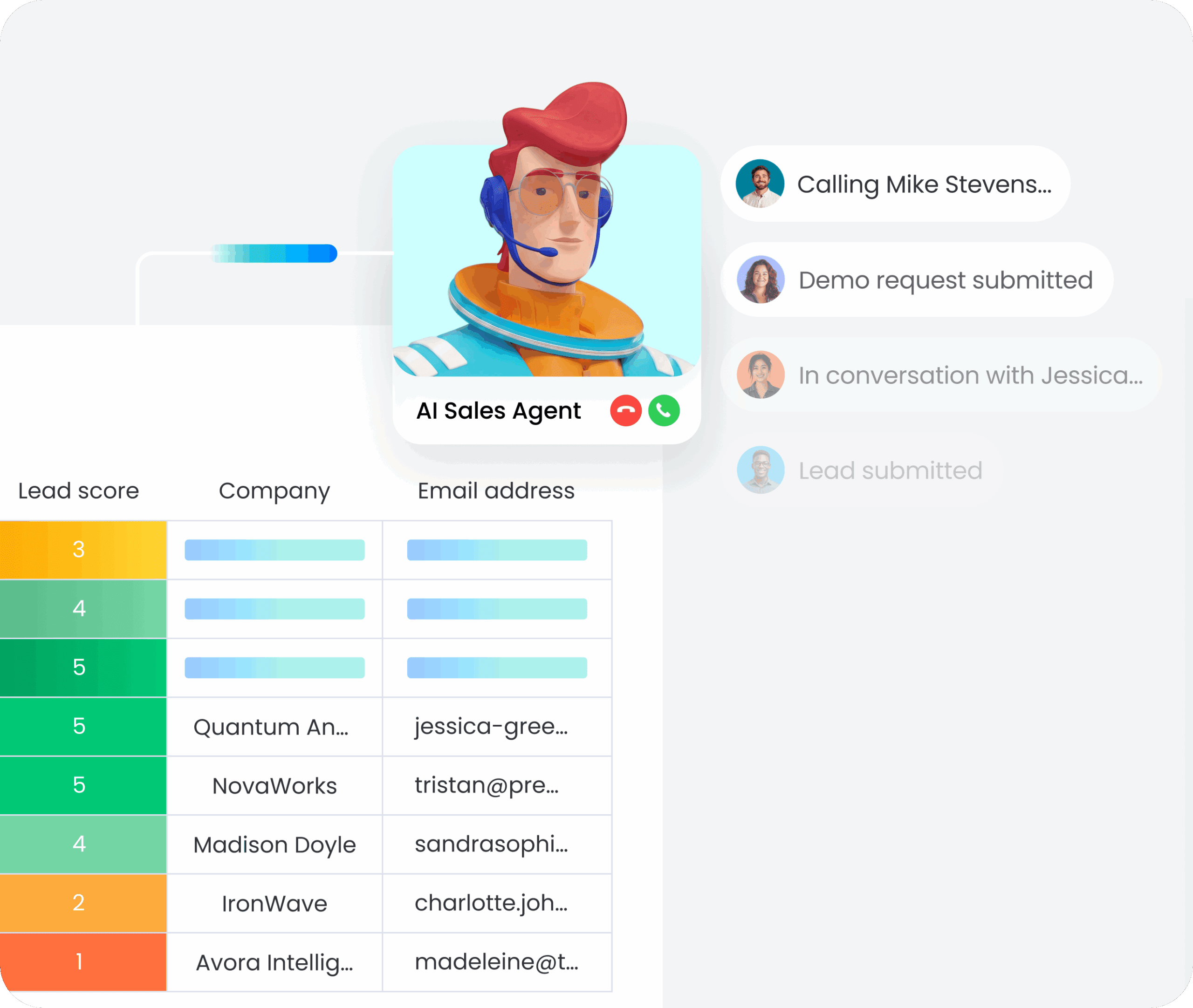
When marketing and sales agents coordinate, you get immediate competitive advantages:
- Competitor research agent monitors market signals and feeds findings to a lead scoring agent
- Lead scoring agent adjusts prospect prioritization based on competitive positioning changes
- Content agent generates updated messaging that reflects the new competitive intelligence
- Reporting agent compiles campaign performance data that sales agents use to prioritize outreach
This cross-department orchestration cuts the lag between marketing intelligence and sales action. Instead of marketing publishing a competitive analysis that sales reads days later, orchestrated agents make sure competitive shifts immediately inform lead scoring, messaging, and outreach priorities.
Operations and PMO agent orchestration
Operations teams get AI operations agents that coordinate project visibility and risk management:
- Status reporter agent automatically generates project status reports highlighting progress and blockers
- Risk analyzer agent proactively flags approaching deadlines and resource conflicts
- Vendor research agent evaluates supplier options for procurement needs
The orchestrator coordinates these agents so risk flags from the analyzer automatically trigger the status reporter to alert stakeholders. This cuts the manual coordination work for project managers and operations leaders.
IT and service agent orchestration
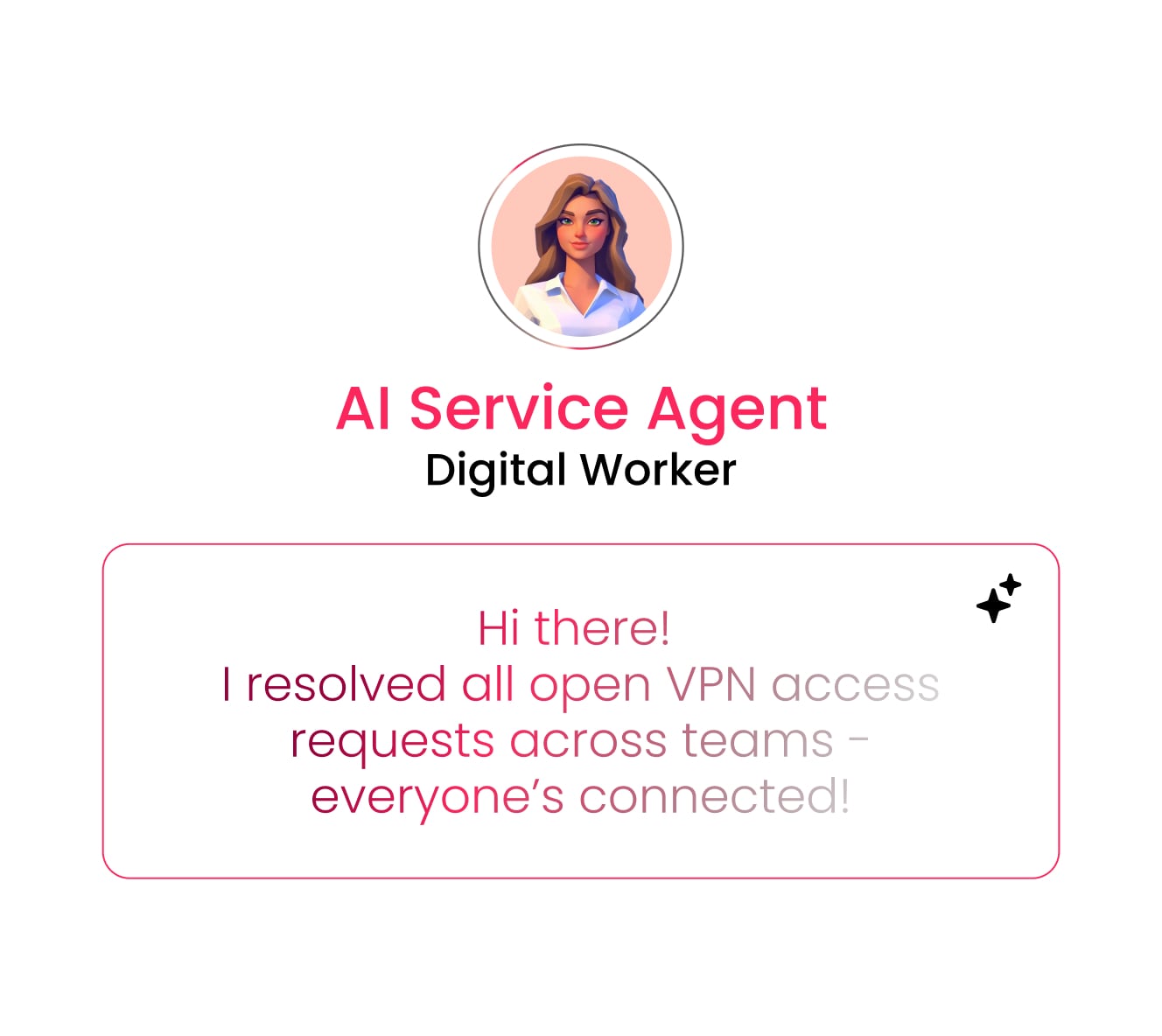
Service teams use orchestrated AI IT agents to speed up response times and improve knowledge management:
- Intake and triage agent classifies incoming tickets by intent, urgency, and required expertise
- SLA monitor agent tracks service level agreements across active tickets and flags at-risk cases
- Knowledge agent continuously audits help articles and detects content gaps based on ticket patterns
When the SLA monitor spots a pattern of similar tickets breaching SLA, it triggers the knowledge agent to create or update relevant documentation — cutting future ticket volume.
How people and AI agents work together
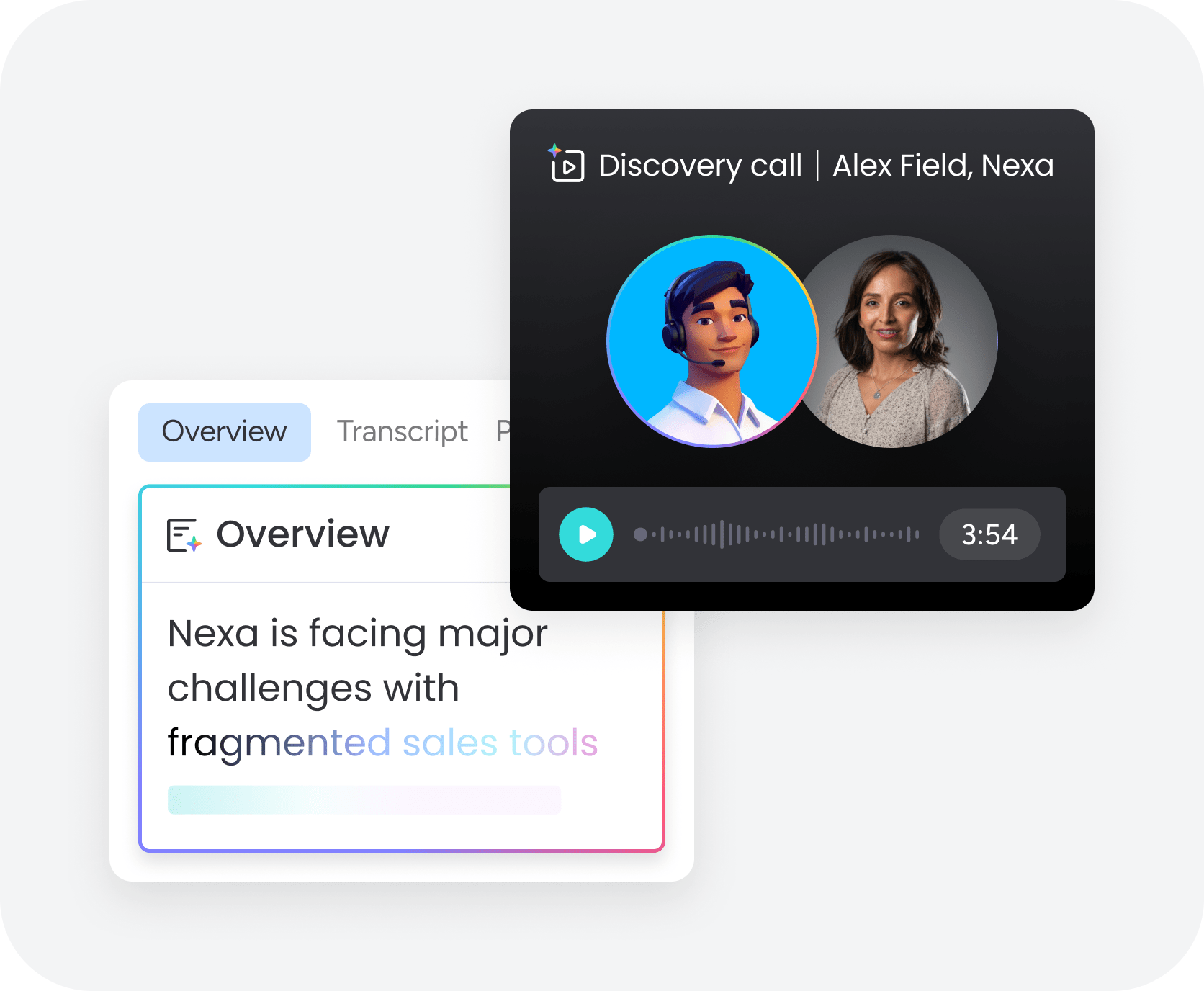
Orchestration isn’t about replacing people with agents. It’s about designing collaboration where people set direction, make judgment calls, and approve critical decisions so that AI agents can handle execution, data processing, and routine coordination. The best implementations balance automation with human oversight.
Human-in-the-loop controls and approval gates
“Human-in-the-loop” refers to specific points in an orchestrated workflow where the system pauses and requires a person to review, approve, or redirect before agents continue. These approval workflows matter most at high-stakes moments:
- Before external communication: An agent drafts a client update, but a person reviews and approves before it’s sent
- Before financial data changes: An agent flags a budget reallocation, but a manager confirms before the modification is applied
- Before escalation: An agent identifies a high-priority ticket for client escalation, but a team lead validates the severity assessment first
Good orchestration makes these gates configurable. You can start with more human oversight and dial it back as trust in agent performance grows.
Designing agent roles alongside team roles
Implementing orchestration means thinking about agent roles the same way you think about team roles. Map current workflows first, then identify which steps agents should handle and which need human judgment.
| Best handled by agents | Best handled by people |
|---|---|
| Data gathering and synthesis | Strategic decisions and trade-offs |
| Pattern detection and anomaly flagging | Relationship management and negotiation |
| Status reporting and progress tracking | Creative direction and brand judgment |
| Routine communication and notifications | Conflict resolution and team dynamics |
| Scheduling and coordination logistics | Ethical considerations and policy interpretation |
How to evaluate AI agent orchestration platforms
The platform you choose affects how quickly teams adopt AI, how well agents coordinate across departments, and how much governance you maintain. Focus on these capabilities when evaluating platforms.
Step 1: Assess cross-department context and data integration
The most critical capability is whether the platform provides a unified data layer spanning departments. Agents on a platform where marketing, sales, operations, IT, and HR data live in one structured system will outperform agents pulling data from disconnected sources through custom integrations.
Key evaluation criteria:
- Does the platform natively connect data from all major business functions?
- Can agents access cross-departmental context without custom API development?
- Are permissions granular enough to control what each agent can see?
Platforms like monday agents provide this unified data layer out of the box, letting agents access marketing campaigns, sales pipelines, project timelines, and support tickets without custom integration work.
Step 2: Evaluate built-in governance and compliance capabilities
Enterprise orchestration needs granular permissions, audit trails, human-in-the-loop approval gates, and compliance certifications. Deloitte research finds that only one in five companies has a mature governance model for autonomous AI agents, making it essential to evaluate whether governance is built into the platform’s core architecture or bolted on as an afterthought.
Essential governance features:
- Per-agent permission controls
- Complete audit trails of agent actions
- Configurable approval gates
- Compliance certifications (SOC 2, ISO 27001, HIPAA)
Step 3: Test ease of adoption for non-technical teams
Platforms that need developers or consultants to configure agents create adoption bottlenecks. Check whether business users can build, configure, and manage agents without writing code.
Adoption-friendly indicators:
- No-code agent builders
- Pre-built agents for common business functions
- Visual workflow designers
- Self-service configuration options
Step 4: Verify open standards and interoperability support
Open standards like the Model Context Protocol (MCP) let AI assistants from different providers securely connect to the orchestration platform. MCP means orchestration isn’t locked into one AI provider and can use the best available AI capabilities.
Interoperability requirements:
- Support for multiple AI providers
- Open API standards
- Integration with existing business platforms
- Future-proof architecture
How monday.com powers AI agent orchestration across teams
The principles covered in this guide are exactly what the monday.com platform was built to deliver. monday.com is an AI Work Platform where people and agents operate as one team. It provides the shared context, enterprise-grade trust, and easy-to-use interface that orchestration needs.
AI agent orchestration for every team
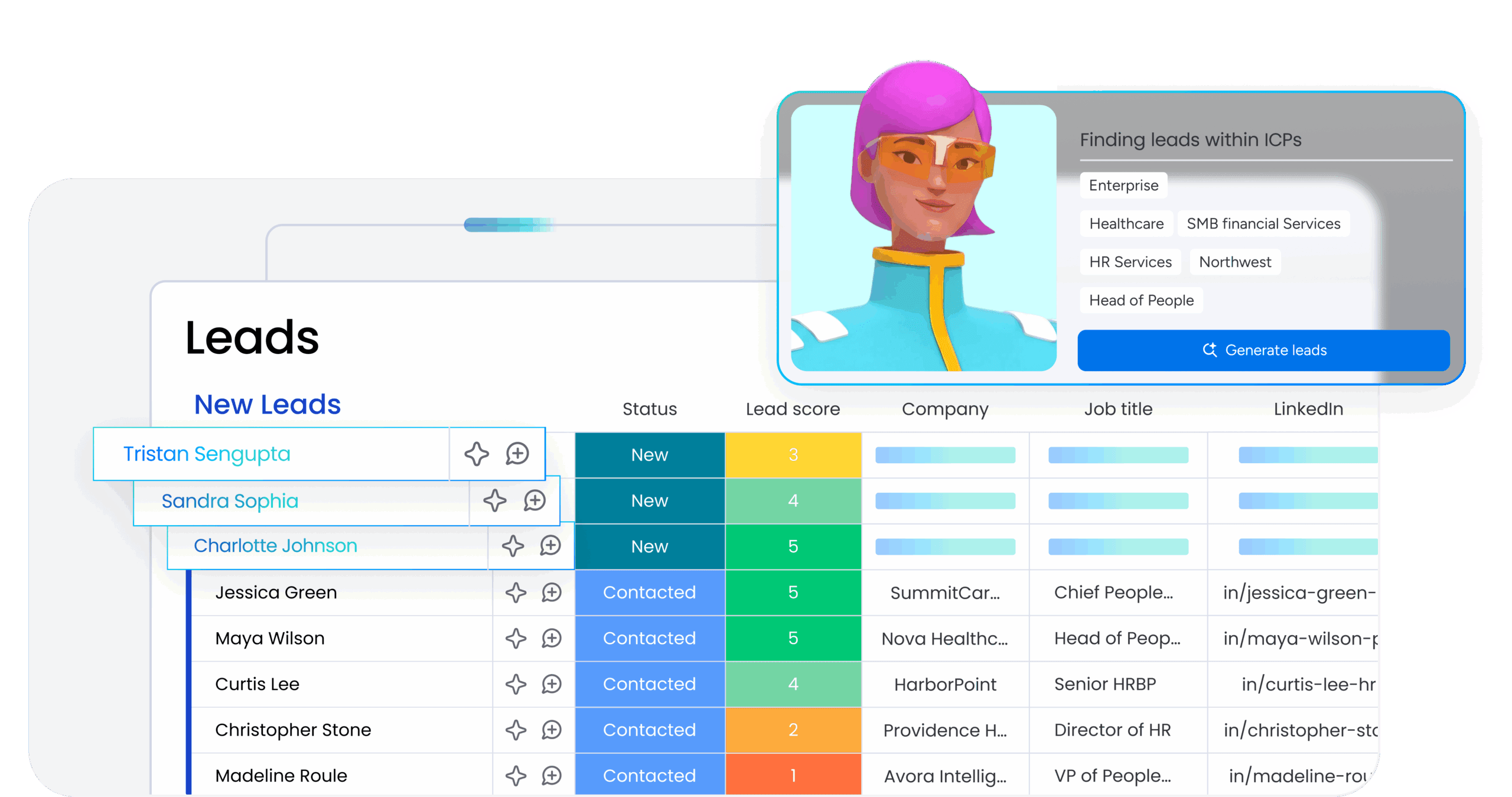
monday agents includes ready-made and custom AI agents for every major business function:
Marketing teams can deploy:
- Competitor Research Agent that tracks key competitors and consolidates signals into a structured snapshot
- Market Landscape Analyzer that identifies new competitors, emerging technologies, and macro trends
Operations and PMO teams benefit from:
- Status Reporter that automatically generates project status updates highlighting progress, risks, and blockers
- Risk Analyzer that proactively flags approaching deadlines and sends timely notifications
- Vendor Researcher that analyzes procurement requirements and prioritizes supplier lists
IT and service teams use:
- Ticket Assignment Agent that detects intent, urgency, and required expertise to resolve requests
- SLA Monitor that tracks SLAs across active tickets, flags at-risk cases, and proactively alerts managers
Agent builder for custom workflows
Teams can build their own agents to match unique workflows across teams. The agent builder uses a three-step process:
- Describe what you need using natural language
- Connect knowledge and context from your existing data
- Test and refine the agent’s performance
This closes the adoption gap by letting marketing managers, operations leads, and PMO directors build custom agents for their specific processes.
Guarantee data security across agent operations
monday MCP provides secure OAuth connection so compatible AI assistants, including Claude, ChatGPT, Cursor, Copilot Studio, Gemini CLI, and le Chat, can access workspace data. This open standard ensures your orchestration platform is not locked into a single AI provider and can use the best available AI capabilities.
Governance capabilities include:
- Explicit control over what each agent can and cannot do
- Granular permissions defining exactly which data each agent can access
- Simulation mode for validating agent actions before activation
- Full audit trails for compliance and oversight
monday.com is HIPAA compliant and holds ISO/IEC 27001, SOC 2 Type II, and ISO/IEC 27701 certifications.
Building your AI agent orchestration strategy
Start with one cross-functional workflow that needs manual coordination today. Map which steps involve data gathering, pattern recognition, or routine communication—prime candidates for agent automation. Then pick the orchestration pattern that fits your workflow complexity.
Organizations treating orchestration as a strategic capability, not just a productivity tool, are building real competitive advantages: faster response times, consistent execution, and scalable operations without proportional headcount growth.Platforms like monday agents let you implement orchestrated workflows across your organization without developer resources or complex integration work.
Try monday agentsFAQs
What is the difference between AI agent orchestration and AI automation?
AI agent orchestration coordinates multiple specialized AI agents that can reason, adapt, and collaborate to achieve complex goals. AI automation executes predefined rules and triggers without reasoning or adapting to changing conditions. Orchestration layers on top of automation, using it as one component within a larger, intelligent coordination system.
How many AI agents can be orchestrated at once?
There is no fixed limit to the number of agents that can be orchestrated. The practical ceiling depends on the platform's architecture, the complexity of coordination patterns, and governance requirements. Organizations typically start with 3–5 agents in a single orchestrated workflow and scale as they validate performance and trust.
Do you need developers to set up AI agent orchestration?
Not necessarily. Platforms like monday.com provide no-code agent builders and ready-made agents that allow business users to configure orchestration without developer involvement. Custom or highly complex orchestration scenarios may benefit from developer input, but the majority of business examples can be set up by the teams who own the workflows.
What is the Model Context Protocol and why does it matter for orchestration?
The Model Context Protocol (MCP) is an open standard that allows external AI assistants like Claude, ChatGPT, and Cursor to securely connect to platforms like monday.com, read workspace data, and take actions on a user's behalf. For orchestration, MCP ensures agents aren't locked into a single AI provider and can leverage the best available AI capabilities while operating within the platform's permission and governance framework.
How does monday.com support AI agent orchestration across departments?
monday.com provides ready-made and custom AI agents spanning marketing, sales, operations, IT, HR, and product teams, all operating on a shared cross-departmental data layer with built-in governance, per-agent permissions, audit trails, and human-in-the-loop controls. The platform's no-code agent builder, MCP integration for AI interoperability, and enterprise-grade compliance certifications make it possible to orchestrate agents across the entire organization without requiring developer resources or separate orchestration infrastructure.

 Get started