


Clear expectations are the foundation of any healthy business relationship or agreement. This is especially apparent for service providers, as their success is often measured by customer satisfaction. Customers need to clearly understand what service they will receive and how it will be delivered. SLAs remove ambiguity. Instead of vague promises, both parties agree on specific metrics along with consequences if those standards are not met.
In this article, we will break down the SLA meaning, explore the different types of SLAs, walk through their essential components and metrics, and share proven best practices for creating agreements that actually work. We will also look at how modern AI-native platforms like monday service are making SLA tracking and compliance more proactive than ever.
Key takeaways
- SLA definition: A service level agreement is a formal contract between a service provider and a customer that defines expected service standards, measurable performance metrics, and remedies for non-compliance.
- 3 types: Customer-based, service-based, and multi-level SLAs serve different organizational needs depending on the complexity of the service relationship.
- Key components: Effective SLAs include service scope, measurable metrics (SLOs), penalties for breaches, security provisions, disaster recovery plans, and structured review processes.
- Metrics that matter: Track availability, response time, resolution time, first contact resolution, MTTR, and customer satisfaction to measure SLA performance.
- AI-powered management: Modern SLA management uses AI agents and automation for proactive monitoring, breach prevention, and intelligent ticket routing.

What is a service-level agreement (SLA)?
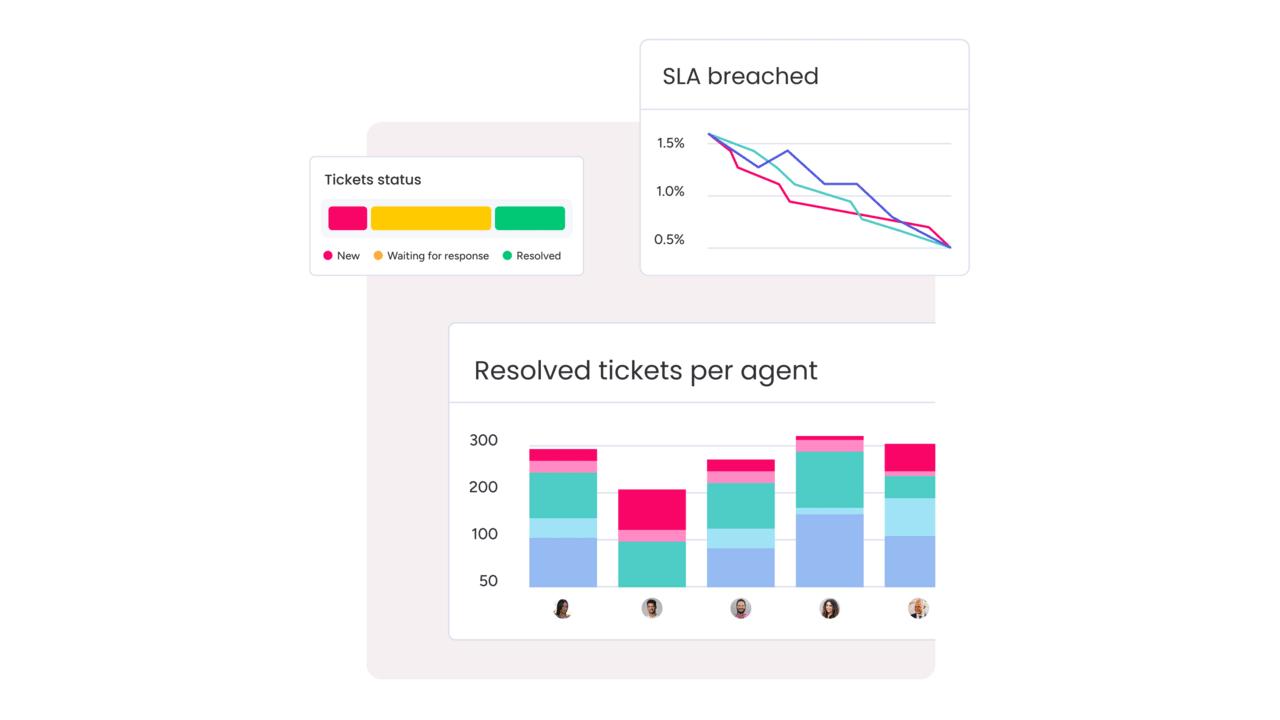
At its core, an SLA definition comes down to this: a service level agreement is a documented commitment between a service provider and a customer that specifies the level of service to be delivered.
The SLA meaning extends beyond a simple contract; it’s a strategic framework for managing expectations, measuring performance, and maintaining accountability.
This agreement generally defines:
- The scope of the service offered
- Metrics to measure and assess service performance
- What happens if a service provider falls short in their delivery
SLAs are commonly used across various IT service management providers to clarify customer expectations while maintaining a high level of trust and customer satisfaction.
Types of SLAs
Choosing the right type depends on your organizational complexity, the number of customers you serve, and the scope of services you provide. Understanding these distinctions helps you craft agreements that are practical, enforceable, and aligned with your specific business relationships.
Customer-based SLAs
A customer-based SLA is a unique agreement between a service provider and a specific customer that covers all the services that particular customer will receive. This type works well when different customers have different needs and service expectations.
Example: A construction company hires an IT company to cater to its specific service needs, including network monitoring, on-site support, and data backup — all documented in a single agreement tailored to that client.
Service-based SLAs
A service-based SLA is a standard agreement provided to all customers using a particular service. Because the terms are identical for everyone, this approach simplifies SLA management and is ideal for providers offering uniform services at scale.
Example: A cloud-service provider creates an SLA to detail the level of service that will be provided to any customer who uses the service. This may include a guaranteed 99.9% uptime for all customers.
Multi-level SLAs
A multi-level SLA covers different levels of service standards across multiple groups or tiers within a single organization. Enterprises with diverse departments often prefer this type because it allows them to define corporate-wide baselines while customizing commitments per team.
Example: A large company employs a SaaS platform that will be used across the organization, so an SLA is created to define the different service commitments for various teams (HR, sales, operations) across the organization.
What are the key components of an SLA?
While SLAs vary depending on each business and the customer needs, a solid SLA generally includes specific elements. Getting these components right is what separates an SLA that protects both parties from one that creates confusion and disputes.
Agreement overview
This section describes the agreement’s basics, including the parties involved, the time frame for which the SLA is valid, and a basic overview of its goals.
Description of services
A very clear and detailed section should outline what types of services will be provided and the expected turnaround time for each service.
Exclusions
In this part of an SLA, a service provider specifically states what services are not included to avoid confusion. It might also state specific exceptions for when the terms of the SLA are not valid, like in the case of scheduled maintenance or third-party dependencies.
Stakeholder objectives, roles, and responsibilities
A list of each involved stakeholder, including their unique roles and responsibilities in the agreement, must be included. This ensures there is a point of contact for specific issues, and that everyone understands who is in charge of what.
Service level objectives (SLOs)
The SLO refers to the agreed-upon service levels that must be met and distinct ways to measure them. This section includes specific metrics that a service provider commits to delivering. Some of these common metrics include service availability and uptime guarantee, response time, resolution time, and error rates.
Penalties for a breach of service
An SLA should clearly define the course of action if the service provider does not fulfill its obligations stated in the agreement. These penalties can include financial compensation for the customer, or the right to terminate the contract.
Security and compliance provisions
Modern SLAs should address data protection requirements, regulatory compliance standards (such as GDPR, HIPAA, or SOC 2), and security protocols that both parties agree to uphold. This section defines how sensitive data will be handled, what certifications the provider maintains, and how security incidents will be reported and resolved. For organizations juggling dozens of these SLAs alongside other vendor agreements, software that uses AI to track contract compliance obligations can flag upcoming certification renewals and security review dates before they lapse.
Disaster recovery and business continuity
This component outlines how services will be restored after a major disruption. It typically includes a recovery time objective (RTO) — how quickly service must be restored — and a recovery point objective (RPO) — the maximum acceptable amount of data loss. These commitments ensure that both parties have a clear plan for worst-case scenarios.
Change processes
In an increasingly Agile world, SLAs must be able to adapt to evolving business objectives and vendor capabilities. It is important that there is a section that describes a clear process for changing parts of the SLA.
Signatures
For an SLA to be valid, both parties must sign the agreement, confirming their acceptance of all terms and conditions.
Essential SLA metrics to track
What gets measured gets managed, and with SLAs, choosing the right metrics is everything. The most effective SLAs go beyond simple uptime guarantees and track a range of performance indicators that reflect the full customer experience. Here are the metrics that matter most:
- Availability/uptime: The percentage of time a service is operational and accessible. The difference between 99.9% and 99.99% uptime may seem small, but it translates to roughly 8.7 hours versus 52 minutes of downtime per year.
- Response time: How quickly a service request is acknowledged after submission. Common benchmarks include 15 – 30 minutes for critical issues, 1 – 4 hours for high-priority, 4 – 8 hours for standard, and 24 – 48 hours for low-priority requests.
- Resolution time: The total time from when an issue is reported to when it is fully resolved. This metric captures the end-to-end service experience and is often the most visible indicator of SLA performance.
- First contact resolution (FCR): The percentage of issues resolved during the initial interaction without requiring escalation or follow-up. Higher FCR rates typically correlate with greater customer satisfaction.
- Mean time to recovery (MTTR): The average time it takes to restore service after an outage or failure. MTTR is especially critical for IT infrastructure and cloud services where downtime directly impacts revenue.
- Error rate: The frequency of service errors relative to total transactions or requests. Tracking error rates helps identify systemic issues before they escalate into SLA breaches.
- Customer satisfaction (CSAT): Post-resolution feedback scores that measure how satisfied customers are with the service they received. CSAT provides a qualitative layer that pure operational metrics cannot capture.
- Abandonment rate: The percentage of service requests abandoned before resolution, often due to long wait times. A rising abandonment rate is an early warning sign that SLA response commitments may not be met.
It is also worth noting the growing shift toward Experience Level Agreements (XLAs), which supplement traditional SLA metrics with measures of user experience and outcome quality. According to IDC, organizations are increasingly recognizing that uptime alone does not capture whether users are actually satisfied with the service they receive.
SLA vs KPI and other related terms
SLAs, KPIs, SLOs, and SLIs are closely related but serve distinct purposes. Understanding the differences helps you build a more precise and enforceable service framework. Here is how they compare:
| Term | Definition | Example |
|---|---|---|
| SLA (service level agreement) | A formal contract defining expected service standards and remedies | "We guarantee 99.9% uptime with service credits for breaches" |
| KPI (key performance indicator) | A measurable value used to track performance against objectives | "Average ticket resolution time is 2.3 hours" |
| SLO (service level objective) | A specific, measurable target within an SLA | "Respond to critical tickets within 15 minutes" |
| SLI (service level indicator) | The actual measurement used to evaluate an SLO | "Average response time this month was 12 minutes" |
In short, SLAs are the agreements, SLOs are the targets within those agreements, SLIs are the measurements that tell you whether you are hitting those targets, and KPIs are the broader performance metrics that inform business decisions. For a deeper dive, read our guide on SLA vs SLO vs SLI.
Why SLAs matter for your organization
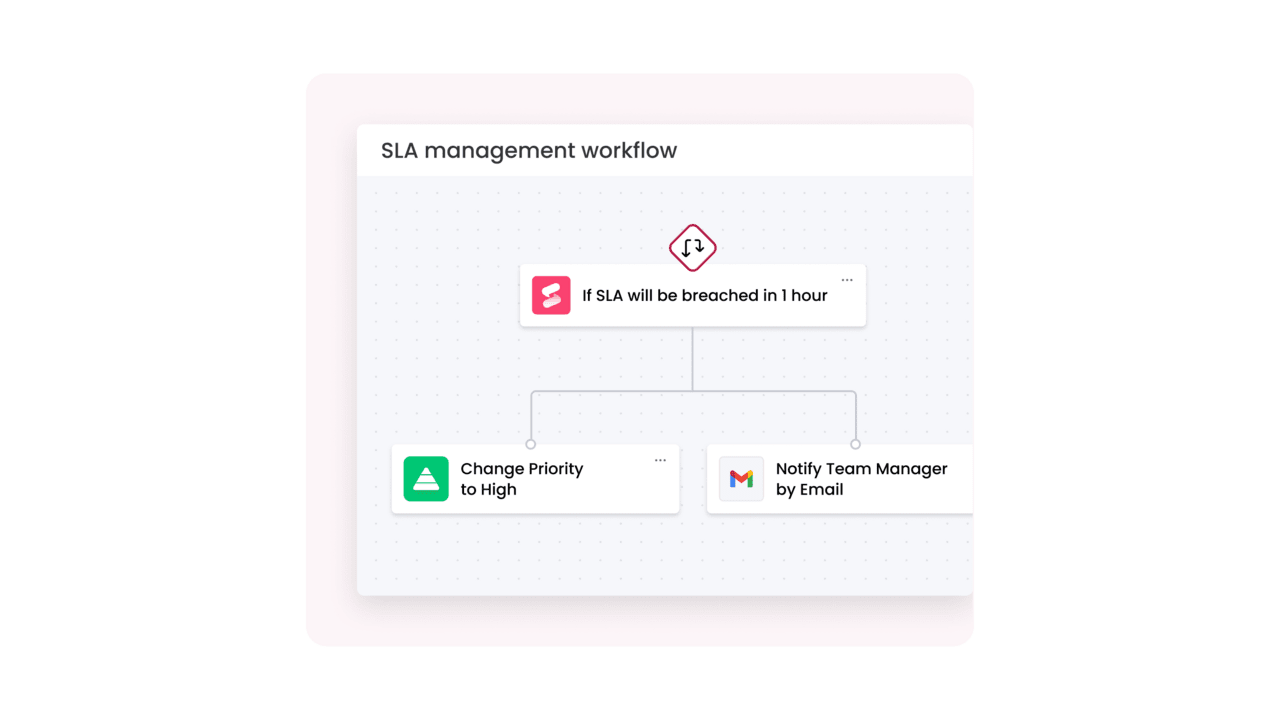
SLAs are widely used in IT and other service industries for a good reason: they provide a structured, reliable way to manage expectations and foster successful relationships between service providers and customers. Here are the core benefits:
Clear and aligned expectations
By requiring service providers to clearly define their offerings, SLAs ensure customers know exactly what to expect. This eliminates confusion, prevents misunderstandings about service quality, and ensures customers do not feel misled.
Heightened accountability
An SLA holds service providers accountable for their obligations, as they are clearly stated in writing with measurable metrics and penalties for breach of contract. It also ensures the right individuals know their specific responsibilities, since this is explicitly stated for everybody to see.
Increased trust
When a legal document is involved, holding both vendors and customers accountable to their end of an agreement ensures everyone will naturally feel a little more at ease. This is especially relevant for customers, because a written commitment that a vendor will execute their services as specified will foster a sense of trust, building stronger long-term customer relationships.
Risk mitigation and cost predictability
SLAs define penalties, liability caps, and remedies upfront, reducing financial exposure for both parties. For customers, this means a clear path to compensation if service falls short. For providers, it creates predictable financial obligations and incentivizes investment in reliable infrastructure and processes.
SLA examples across industries
What does an SLA look like in practice? While the structure remains consistent, the specific commitments vary significantly across industries. Here are 4 real-world examples that illustrate how different organizations apply SLAs:
- IT and SaaS: A cloud infrastructure provider guarantees 99.99% uptime for its hosting services, with automatic service credits of 10% of the monthly bill for every hour of unplanned downtime beyond the threshold. The SLA also specifies a 15-minute response time for severity-1 incidents and a 4-hour resolution target.
- Customer support: A help desk team commits to a 1-hour initial response time for critical tickets, a 24-hour resolution window for standard requests, and a 95% or higher CSAT score across all interactions. The SLA includes quarterly performance reviews with the customer.
- Telecommunications: An internet service provider guarantees a minimum download bandwidth of 500 Mbps, maximum latency of 20 milliseconds, and 99.9% network availability. Breaches trigger prorated credits on the customer’s next billing cycle.
- Internal services (HR and facilities): An HR team commits to acknowledging employee requests within 24 hours and resolving standard requests (benefits enrollment, onboarding paperwork) within 48 hours. Monthly reports track compliance rates by request category.
These examples show that SLAs are not limited to IT. Any team delivering a service can benefit from formalizing their commitments, and platforms like monday service make it easy to track and enforce those commitments across departments, from customer support to HR to facilities management.
How to avoid common SLA pitfalls
While SLAs might seem like a foolproof way to align customers and service providers, they require careful management to deliver real value. SLAs are delicate agreements with significant implications; if not managed correctly, service providers may face serious challenges.
- Lack of visibility: If SLAs are not managed on a collaborative platform, it can be difficult for teams to track responsibilities, deadlines, and performance metrics. Without real-time visibility, service providers risk missed targets and SLA breaches.
- Difficult amendment process: Over time, business needs, technology, and customer expectations naturally evolve, which means SLAs need to be updated. However, many SLAs are structured in a way that makes revisions time-consuming and complex, creating unnecessary delays in improving service terms.
- Insufficient clarity: If the SLA creation process is rushed or not properly reviewed by all stakeholders, the agreement will likely contain ambiguous language or unclear measurement criteria. For example, if a metric like “fast response time” is not explicitly defined (such as within 1 hour on weekdays), it can lead to misinterpretations and disputes.
Best practices for creating an effective SLA
Creating an SLA that genuinely protects both parties and drives service improvement requires more than filling in a template. Follow these best practices to ensure your SLAs reach their full potential:
- Ensure everything is as clear as possible. Use unambiguous language to guarantee there is no room for misinterpretation, especially regarding what services you are expected to deliver. Define every metric precisely; “respond within 1 business hour” is enforceable, while “respond quickly” is not.
- Ensure stakeholder involvement before the SLA is signed. Including all relevant stakeholders in the SLA creation process helps assure SLAs align with business goals, are realistic, and can be effectively met. This means involving not just leadership, but also the frontline teams responsible for delivering the service.
- Make sure metrics are easily measurable. There should be a clear, automated way to determine performance metrics so there are no misunderstandings about what is or is not acceptable. Metrics that require manual calculation invite error and dispute.
- Use historical data to provide accurate targets. While it can be tempting to promise 99.99% uptime, it is important to make sure this is attainable. The most reliable way to certify your targets are realistic is to analyze previous performance data and gauge capabilities directly from there.
- Review regularly. Implementing a structured review process is important to ensure metrics are being met and to spot potential issues before they escalate. SLAs should evolve as your service capabilities and customer needs change.
- Involve legal and compliance teams early. SLAs are binding agreements, and having legal review language around penalties, liability caps, and termination clauses prevents costly disputes down the road. For organizations in regulated industries, compliance review is essential to ensure the SLA meets industry-specific requirements.
- Use a collaborative platform for SLA lifecycle management. Managing SLAs in shared documents or spreadsheets creates version control issues and limits visibility. A centralized service management platform ensures all stakeholders access the same current version, automates tracking, and provides real-time performance data.
How monday service simplifies SLA management
Managing SLAs effectively requires a platform that makes compliance proactive, visible, and automated. monday service is an AI-native service management platform built to help teams track, enforce, and optimize SLAs without the manual overhead that leads to breaches and blind spots.
Here are some of the platform’s key features for effortless SLA tracking and compliance:
Built-in SLA Column
monday service includes a native SLA Column on every Tickets board that measures time to resolution with live timer badges (Within, About to breach, Breached, and Paused). Target times are fully configurable by priority, request type, or sentiment, and the column automatically pauses tracking outside defined working hours and non-working days. Because the SLA Column integrates directly with dashboards, teams get trend reporting and compliance visibility without exporting data or building custom reports.
AI agents for proactive SLA monitoring
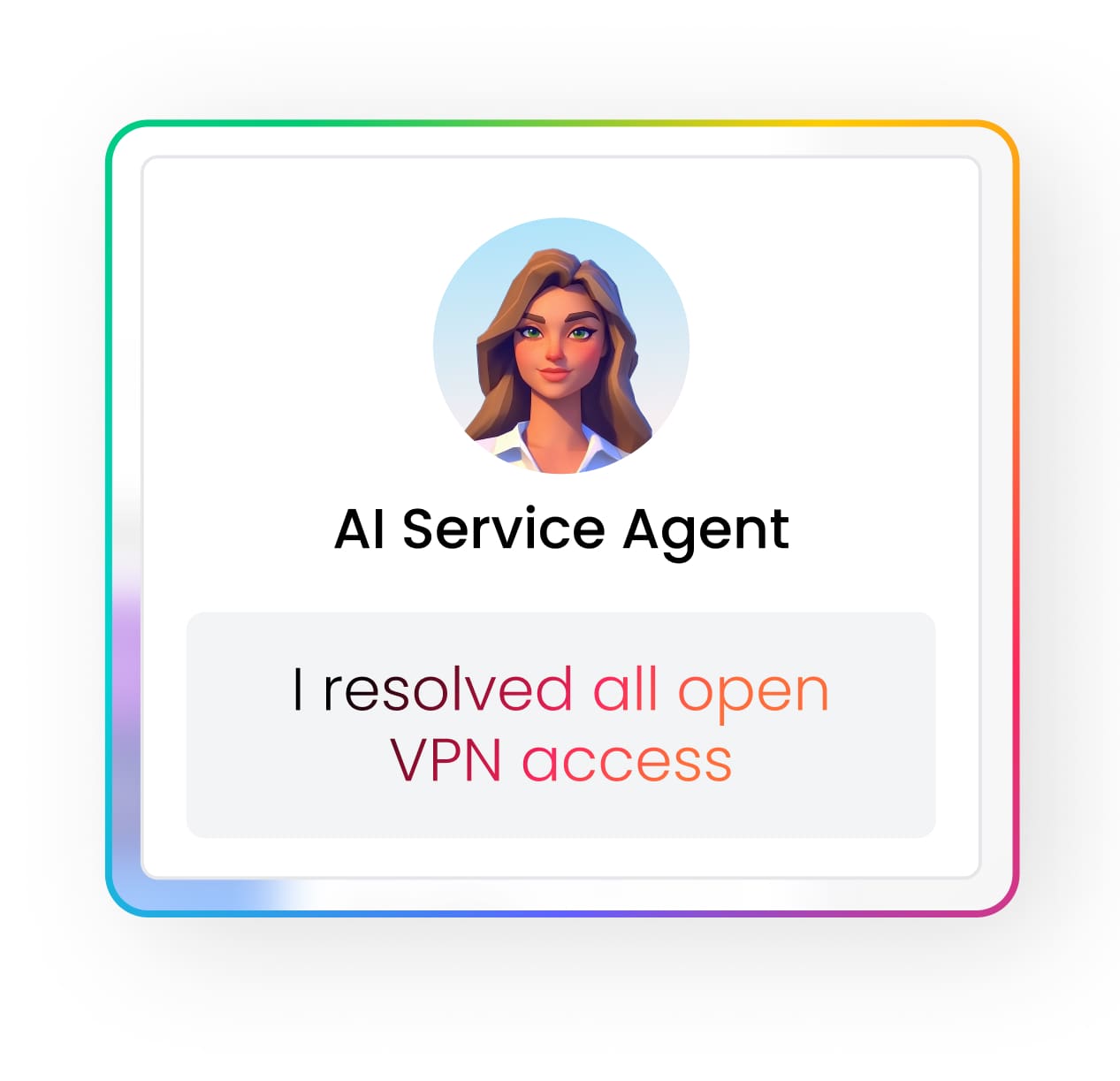
Rather than waiting for a breach to occur, monday service deploys specialized AI agents that keep SLAs on track. The SLA Monitor Agent continuously tracks SLAs across active tickets and proactively alerts managers when cases are at risk. The Anomaly and Outlier Detector scans for unusual spikes or drops in SLA performance, flagging patterns that might signal deeper issues. And the Intake and Triage Agent classifies, prioritizes, and routes incoming service requests automatically, setting SLA timers from the moment a ticket arrives.
Learn more: How AI models prevent SLA breaches in service management
Automated workflows and smart routing
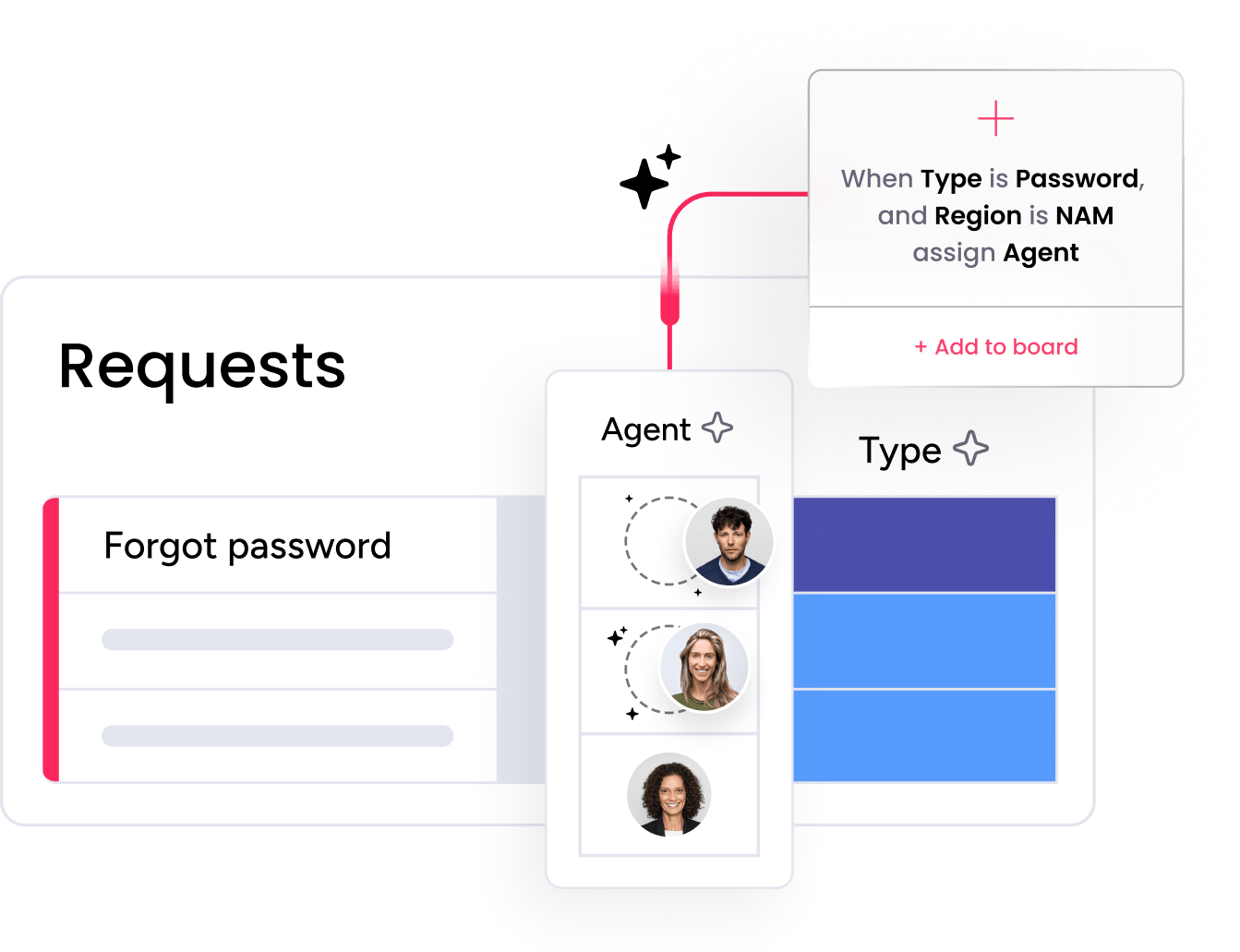
monday service automates the workflows that directly impact SLA compliance. Smart assignment distributes tickets using round-robin rotation or AI-based matching by priority, sentiment, and agent skills, so that every request reaches the right person immediately. Automated escalation paths and breach notifications trigger before deadlines are missed, giving teams time to act rather than react.
Real-time service analytics and dashboards
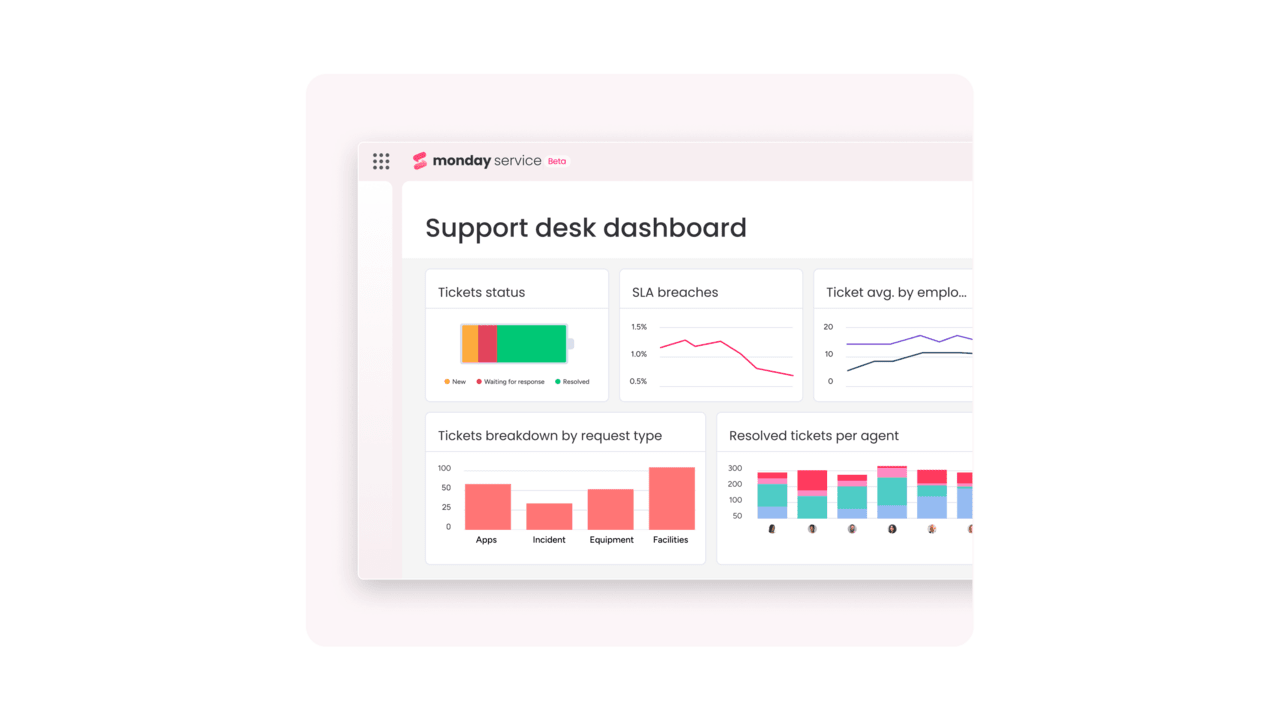
Gain full visibility into SLA performance with real-time dashboards that track compliance rates, response times, resolution times, and CSAT scores at a glance. SLA trend reporting helps teams identify patterns over time, while connected boards provide cross-department visibility across IT, HR, customer support, and more.
monday sidekick for faster resolution
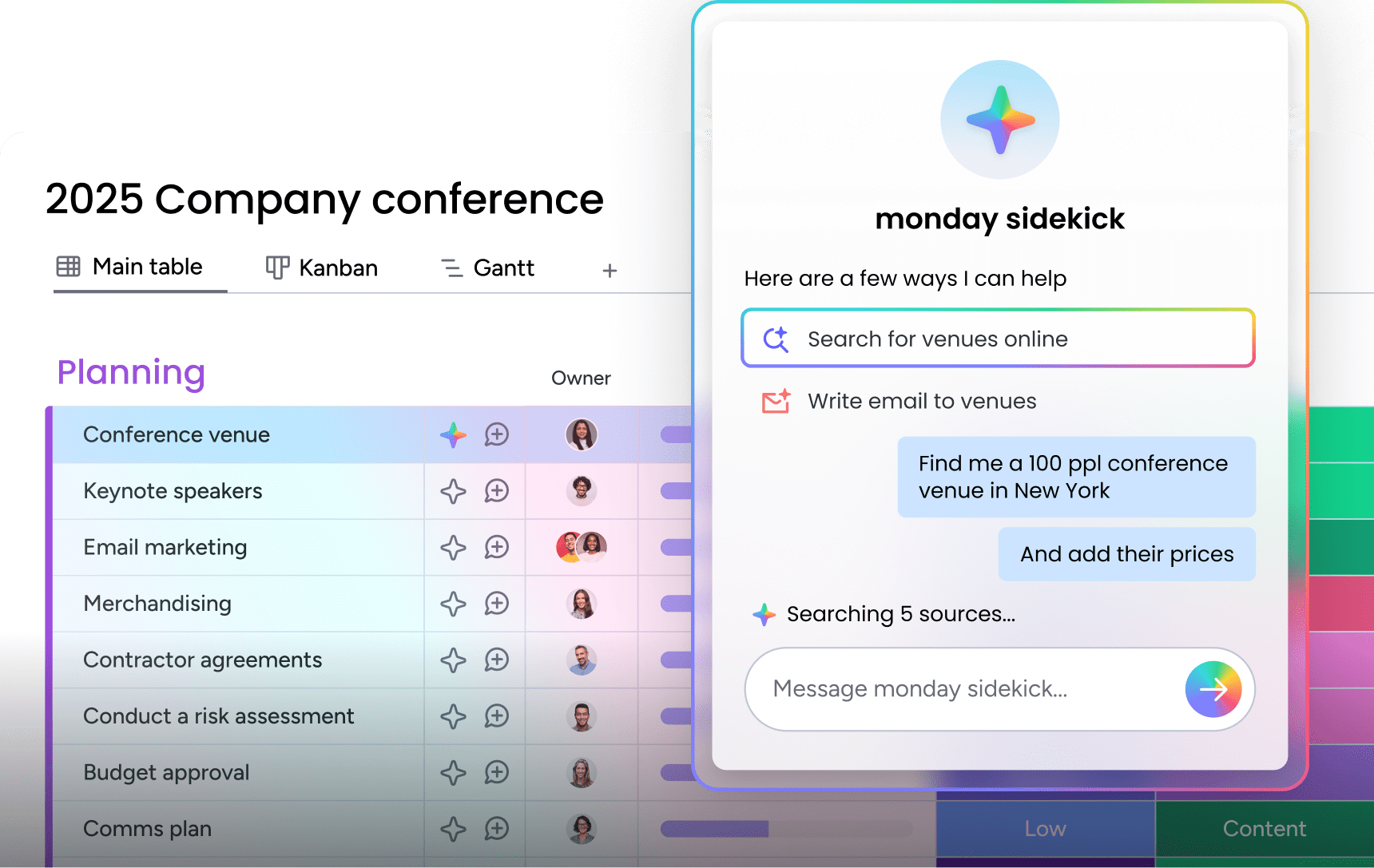
Meeting SLA targets often comes down to how quickly agents can understand and resolve each request. monday sidekick helps by summarizing ticket context, recommending next steps, drafting replies, and surfacing similar past tickets, reducing the time agents spend on research and accelerating resolution.
How monday service compares to traditional approaches
The difference between traditional SLA management and AI-native service management comes down to visibility, speed, and prevention. Legacy systems often rely on manual tracking, reactive alerts, and siloed reporting that only reveal problems after they occur. Modern platforms like monday service shift the paradigm by embedding SLA tracking directly into workflows, using AI to predict and prevent breaches, and providing real-time visibility across every team. Here’s how the two approaches compare:
| Capability | Traditional SLA management | AI-native service management |
|---|---|---|
| SLA tracking | Manual spreadsheets or add-on modules | Built-in SLA Column with live timers |
| Breach prevention | Reactive alerts after breach | Proactive AI monitoring before breach |
| Ticket routing | Manual assignment or basic rules | AI-powered triage by priority, sentiment, and agent skills |
| Reporting | Periodic manual reports | Real-time dashboards with trend analysis |
| Cross-department visibility | Siloed by department | Connected boards across IT, HR, CRM, and dev |

"Our team LOVES the monday service platform and we’re already exploring how we could incorporate it for other departments, too. It has streamlined our workflow in a way that both our team and customers appreciate."
Andrew Marshall | VP Operations
״monday service provides clear insights into requests volume and types, response times, and trends - helping us continuously improve operations"
Grant De Waal-Dubla | CIO
"The biggest value for us is speed and flexibility. You can get up and running in days, change anything instantly, and see everything in real time. And you don’t need a dedicated admin to do it."
Clive Camilleri | Head of People Tech & OperationsStrengthen customer relationships through reliable SLAs
SLAs are more than legal formalities; they’re the commitments that define how your organization delivers value, builds trust, and earns long-term loyalty. When backed by clear metrics, proactive monitoring, and AI-powered automation, SLAs shift from a compliance checkbox to a genuine competitive advantage.
The organizations that thrive are the ones that treat SLAs as living agreements: continuously measured, refined, and enforced with real-time data. With monday service, teams can move from reactive SLA management to proactive service delivery, ensuring every commitment is tracked, every breach is prevented before it happens, and every customer interaction strengthens the relationship.
FAQs
What happens if service-level agreements aren’t met?
When service level agreements are not met, the penalties outlined in the SLA take effect. These may include financial compensation such as service credits, the right to terminate the contract, or other remedies specified in the agreement. The specific consequences depend on the severity of the breach and the terms both parties agreed to.
What SLA metrics should be monitored?
The SLA metrics that should be monitored include response time (how quickly a request is acknowledged), resolution time (how long it takes to fully resolve an issue), uptime percentage (service availability), customer satisfaction (CSAT) scores, first contact resolution rate, and mean time to recovery (MTTR). The right mix depends on your industry and service type.
What’s the difference between an SLA and KPI?
The difference between an SLA and a KPI is that an SLA (service level agreement) is a legal contract outlining agreed-upon service standards between a provider and a customer, while a KPI (key performance indicator) is a specific metric used to track performance and ensure SLA targets are being met. SLAs define the commitment, and KPIs measure progress toward fulfilling it.
What is a good SLA response time?
A good SLA response time depends on the urgency and type of request. Common benchmarks include 15 - 30 minutes for critical issues, 1 - 4 hours for high-priority requests, 4 - 8 hours for standard issues, and 24 - 48 hours for low-priority requests. The right target should be based on historical performance data and industry standards.
What's the difference between SLO and SLA?
The difference between an SLO and an SLA is that an SLA (service level agreement) is a contractual commitment outlining the service provider's overall obligations, while an SLO (service level objective) is a specific, measurable target within that SLA. For example, an SLA might promise reliable email service, while the SLO specifies 99.9% uptime.
Who needs SLAs?
Any organization that provides a service, whether externally to customers or internally to employees, can benefit from SLAs. SLAs are most commonly used in IT, SaaS, cloud computing, telecommunications, and customer support, but they are increasingly adopted by HR, facilities, finance, and other internal service teams to set clear expectations and improve accountability.
How does monday service help manage SLAs?
monday service helps manage SLAs through its built-in SLA Column, AI-powered monitoring agents, automated workflows, and real-time dashboards. The SLA Monitor Agent proactively flags at-risk cases before breaches occur, while smart assignment routes tickets to the right agents based on priority, sentiment, and skills, making SLA compliance proactive rather than reactive.
What is an SLA Column in service management?
An SLA Column in service management is a built-in tracking feature that measures time to resolution for each ticket. On monday service, the SLA Column displays live timer badges (Within, About to breach, Breached, and Paused), pauses tracking outside working hours, supports configurable targets by priority and request type, and integrates with dashboards for trend reporting.

 Get started