


Service teams operate in highly unpredictable environments where the gap between a customer request and a completed job involves complex routing, parts inventory, and live updates. Strong coordination across these moving parts keeps operational costs in check and builds lasting customer trust. Effective field service management connects your people, assets, and data into one streamlined process. It replaces scattered spreadsheets and manual handoffs with a single source of truth, allowing organizations to deliver reliable service at scale without overworking their teams.
This guide covers the core components of field service operations and the measurable benefits of centralizing your workflows. We will explore common industry challenges and the performance metrics that matter most to leadership. Finally, we will show how a modern, connected platform like monday service can help enterprise teams build smarter service delivery models.
Key takeaways
- The right FSM system reduces costs and keeps customers happy. Faster repairs, fewer missed appointments, and clear communication all come from having one connected system in place.
- AI and automation take the guesswork out of scheduling. Smart routing assigns the right technician to the right job automatically, so your team spends less time coordinating and more time delivering.
- monday service connects your field operations to the rest of your business. From AI-powered ticket routing to live dashboards, it gives service teams the tools to scale without adding complexity.
- First-time fix rate is the metric that matters most. When technicians arrive with the right parts and information, fewer jobs need a second visit, saving time and money.
- Mobile workflows and real-time data keep field teams moving. When technicians can access job details and close work orders from their phone, the back-and-forth with the office disappears.
What is field service management?
Field service management is the process of coordinating service work that happens outside your main office. This means organizing your technicians, work orders, schedules, parts, and customer updates so jobs get done at homes, job sites, and remote facilities.
Think of a cable technician installing internet equipment, a plumber repairing a burst pipe, or an engineer servicing a conveyor system at a factory. Each of these jobs needs the right person, the right parts, and the right information to show up at the right place at the right time.
Field service management, often shortened to FSM, brings structure to coordination.
It unifies emails, phone calls, and spreadsheets into one connected system that tracks every moving part from intake to completion.
What counts as a field service?
A field service is any service work performed at a location outside your company’s main office. The defining feature is simple: the work happens where the customer or asset is, not where your team is based.
Field services show up across many industries. Here are a few common examples:
- A cable technician installs or repairs internet equipment in a customer’s home
- A field engineer services a conveyor system at a manufacturing plant
- A medical equipment technician calibrates an imaging device in a hospital
- An IT technician replaces networking hardware at a branch office
- An HVAC specialist repairs a heating unit during a winter cold snap
How field service management differs from CRM
CRM and FSM both involve customers, but they handle different parts of the experience. CRM focuses on relationships, sales, and account history. FSM focuses on getting service work done in the field.
Here’s an easy way to remember the difference:
- What they manage: FSM manages service execution and field operations. CRM manages customer relationships and sales activity.
- Who uses them: FSM is used by dispatchers, technicians, and service managers. CRM is used by sales, account, and customer success teams.
- What they track: FSM tracks work orders, schedules, parts, and service outcomes. CRM tracks leads, contacts, and deal progress.
Many organizations use both together so service teams can act on customer context, and sales teams can see service history. monday service connects these worlds by linking field operations with CRM, HR, IT, and operations on one platform.
What does a field service manager do?
A field service manager keeps service work moving from request to completion. They make sure the right technician shows up at the right job with the right parts and information.
The role combines planning, coordination, and follow-through. On any given day, a field service manager reviews incoming work, adjusts schedules, responds to surprises, and helps the team resolve issues before they reach the customer.
Here’s what that work usually includes:
- Assigning and scheduling technicians: Matching jobs to technicians based on availability, location, and skill set.
- Managing work orders: Reviewing requests, confirming details, and making sure each job has the information needed to act.
- Monitoring jobs in real time: Watching which jobs are in progress, delayed, or complete so they can reassign or update customers quickly.
- Handling escalations: Stepping in when a technician needs support or a customer issue gets urgent.
- Tracking parts and inventory: Confirming technicians have the parts and tools they need before they head out.
- Reporting on performance: Reviewing service data to inform staffing, coaching, and planning decisions.
A field service manager and a dispatcher often work side by side, but they’re not the same role. Dispatchers focus on the day-to-day movement of jobs, while field service managers own the broader performance and outcomes of the operation.
Key components of a field service management system
Field service management isn’t one workflow. It’s a connected operating model made up of several parts that have to work together. Understanding each one makes it much easier to evaluate what your team actually needs.
Work order management
A work order is a documented service request that includes details like the service location, required skills, parts needed, and expected completion time. Work order management covers the full lifecycle of that request, from creation through final closure.
Centralized work orders give everyone one shared record of what needs to happen, who owns it, and whether it was done correctly.
Scheduling and dispatch
Field service scheduling software helps decide who handles a job and when. Dispatching software sends that technician to the location with the job details they need.
This part of FSM handles the real-world complexity of matching skills, availability, travel distance, and timing all at once. monday service supports this with AI-powered routing that automatically assigns work based on logic you define.
Mobile workforce enablement
Field technicians work away from desks, so they need information where the job actually happens. Mobile workforce enablement gives them job assignments, customer history, checklists, and status updates from the field.
When a technician can review service history, complete a checklist, and close a work order from a mobile device, the back-and-forth disappears.
Inventory and asset management
Inventory tracks the parts and tools your technicians need. Asset management tracks the equipment being serviced, like an HVAC unit or a medical device.
These two belong together because every visit depends on both knowing what’s being serviced and confirming the right parts are ready before arrival.
Customer portal and communication
Why shouldn’t customers be able to track a service request the way they track a package? A customer portal lets them submit requests, check status, and review what happened after the visit. A customer portal lets them submit requests, check status, and review what happened after the visit.
Clear, automated communication keeps customers informed about arrival windows and next steps without forcing them to call in for updates.
Analytics and reporting
Analytics turns daily field activity into information leaders can act on. Service data like completion times, technician utilization, and repeat visits reveals patterns that are hard to spot otherwise.
monday service surfaces this data through live dashboards, so service directors can monitor workload, spot bottlenecks, and make staffing decisions from current information instead of waiting for end-of-week reports.
Try monday serviceWhat is field service management software?
Field service management software is the digital system that connects work orders, scheduling, dispatch, field updates, customer communication, and reporting in one place. It brings spreadsheets, emails, and phone calls together so service teams can move faster.
Not all FSM software looks the same. The right type depends on your team size, how much you want to customize, and how broadly service workflows need to connect across the business.
- Cloud platforms: Hosted online and accessed through a browser or mobile app, with automatic updates and shared data across locations.
- Mobile apps: Built for technicians in the field, with job details, navigation, photo capture, and digital signatures.
- Open source options: Source code is publicly available for modification, which works well for teams with strong internal developers.
- Enterprise suites: Designed for large organizations managing high volumes of service work across regions and business units.
monday service fits naturally into the enterprise suite category as a connected, AI-native platform that supports service operations across departments. It combines the flexibility of a no-code builder with the governance enterprise teams expect.
Benefits of field service management
Why invest in field service management at all? The outcomes show up in places leadership cares about: costs, customer satisfaction, technician retention, and service quality. Each of the benefits below ties directly to measurable operational and financial impact.
Higher first-time fix rates
First-time fix rate is the percentage of service calls resolved on the first visit. FSM improves this by matching the right technician to the job and making sure they arrive prepared with the right parts and context. Fewer return trips mean lower costs and a smoother experience for the customer.
Fewer missed appointments
Field service scheduling software and real-time communication keep technicians and customers aligned on timing. When customers get reminders and arrival windows, fewer appointments fall through. Showing up on time feels like a promise kept, and that consistency directly builds trust.
Lower operational costs
Route quality has a direct impact on fuel use, mileage, and vehicle wear. When dispatch assigns jobs based on proximity and route logic, organizations cut unnecessary travel and complete more jobs per day.
Stronger customer satisfaction
Customers care about reliability and transparency. Faster resolution, clearer arrival expectations, and consistent communication make service feel organized instead of chaotic.
More engaged technicians
Technicians stay engaged when they get clear assignments, the information they need, and less paperwork to chase. That improves morale and helps retention in roles that are often hard to staff, especially given that only 17% of on-site workers are engaged globally, according to Gallup’s State of the Global Workplace 2026.
Common field service challenges solved by FSM
Field service challenges look different on the surface, but the patterns are surprisingly similar across industries. The same issues tend to appear wherever teams manage mobile workers and time-sensitive jobs.
Here are the most common challenges and how FSM addresses them:
- Manual scheduling errors: Centralized scheduling and rule-based assignment reduce double-bookings and mismatches.
- No real-time job visibility: Live status tracking shows job progress as it happens, so managers can act quickly.
- Technicians arriving without parts: Linking inventory to work orders before dispatch prevents wasted trips.
- Poor customer communication: Automated updates keep customers informed without forcing them to call in.
- Siloed data: Shared workflows connect service data across billing, support, and operations.
- Hard-to-measure performance: Dashboards and reporting surface measurable trends instead of relying on anecdotes.
Industries that rely on field service management
Field service management applies anywhere work happens outside a central office. The model stays consistent, but the environment, urgency, and complexity vary a lot by industry.
- Telecommunications and utilities: Coordinate large technician networks and respond fast to outages across wide geographic areas.
- Healthcare: Maintain medical devices like imaging systems and infusion pumps with accurate, auditable service records.
- Manufacturing: Schedule on-site maintenance for production equipment to avoid unplanned downtime.
- Home services: Handle seasonal surges, same-day requests, and customer communication for HVAC, plumbing, and electrical work.
- IT and managed services: Coordinate hardware installation and on-site support, which often overlaps with IT service management.
How AI and cloud are reshaping field service
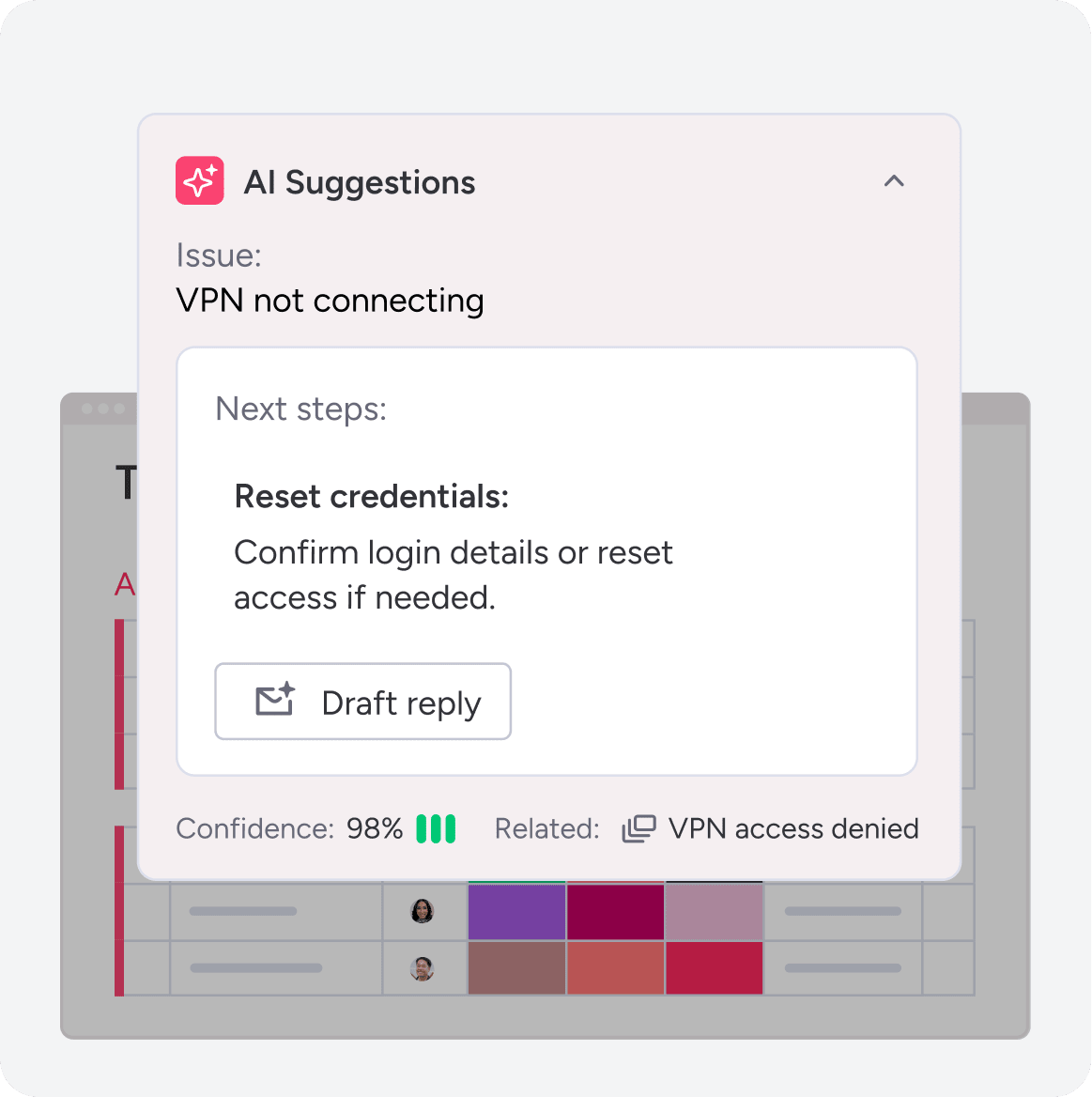
AI and cloud technology are making service operations adaptive, connected, and responsive in real time. The pressure to act is intensifying: a Gartner survey found 91% of customer service leaders are under executive pressure to implement AI in 2026.
For service leaders, this is a strategic shift. FSM is becoming a system of operational intelligence, not just a scheduling platform.
AI-powered scheduling and dispatch
AI-powered scheduling considers more than basic availability. It factors in technician skills, traffic, job complexity, and past completion patterns to recommend the best assignment. monday service uses AI to support smart routing and request classification, so incoming work moves to the right team without manual sorting.
Predictive maintenance from service data
Predictive maintenance uses past service records and sensor data to identify when a machine is likely to need service before it fails. Over time, those records reveal patterns that help organizations move from reactive repair to planned intervention. The results are measurable: at Siemens Numerical Control, scaling AI and IoT examples including predictive maintenance reduced field failures by 46%, according to the World Economic Forum’s Global Lighthouse Network.
Generative AI assistants for technicians
Generative AI creates text, instructions, or recommendations in response to a prompt. In the field, a technician facing an unfamiliar error code can ask the assistant for a step-by-step resolution based on company documentation and past cases.
Cross-departmental service management
Modern FSM operates as part of a larger service ecosystem. A completed job can trigger inventory replenishment, billing, and customer follow-up across departments without manual handoffs. monday service supports this kind of connected service management by linking field operations with IT, HR, and operations on one platform.
5 ways to improve field service operations
Improving field service starts with tightening the connection between requests, people, and systems. The biggest gains usually come from reducing fragmentation, automating repeatable decisions, and making field data available the moment work happens.
1. Centralize requests on one cloud platform
When requests arrive through email, phone calls, and side conversations, visibility can suffer quickly. A centralized cloud platform gives everyone one shared system for intake, tracking, and ownership. monday service supports this with no-code configuration, so teams can tailor intake without waiting on developers for every change.
2. Automate scheduling and routing with AI
Manual scheduling leaves a lot of room for streamlining at dispatch. AI-based automation evaluates open work, technician availability, and route logic, then assigns and notifies the right person with far less manual effort.
3. Equip technicians with mobile workflows
Mobile workflows give technicians faster access than paper forms and email instructions. They deliver structured job details, digital checklists, photo capture, and status updates that sync back to the central system in real time.
4. Connect field data to your other business systems
Field data becomes more valuable when it moves beyond the service team. A completed work order can update the customer’s CRM record, trigger invoicing, and add maintenance history to the asset record automatically. monday service integrates with CRMs, employee directories, and asset management systems, so field operations connect directly with the rest of your organization.
5. Track field service KPIs in real time
Real-time KPIs turn field operations into something leaders can actively manage. Here are the metrics that matter most:
- First-time fix rate: The percentage of jobs resolved on the first visit.
- Mean time to repair: The average time to restore equipment or close an issue.
- Technician utilization: How much of a technician’s time is spent on productive work.
- Customer satisfaction score: How customers rate their service experience.
- SLA compliance rate: How often the team hits its agreed response and resolution targets.
Live dashboards on monday service make these metrics actionable while there’s still time to adjust staffing or routing.
Run field service management on monday service
monday service supports the operational improvements that matter most in field service — centralized intake, flexible workflows, AI-supported routing, and shared visibility. It’s especially relevant for mid-market and enterprise organizations that want to scale service capacity without adding complexity to every handoff.
The platform brings together work order management, scheduling, mobile access, and analytics in one connected system. Service teams can configure workflows to match their specific processes, while leadership gets the real-time visibility needed to make informed decisions about resource allocation and performance.
monday sidekick for ticket classification and routing
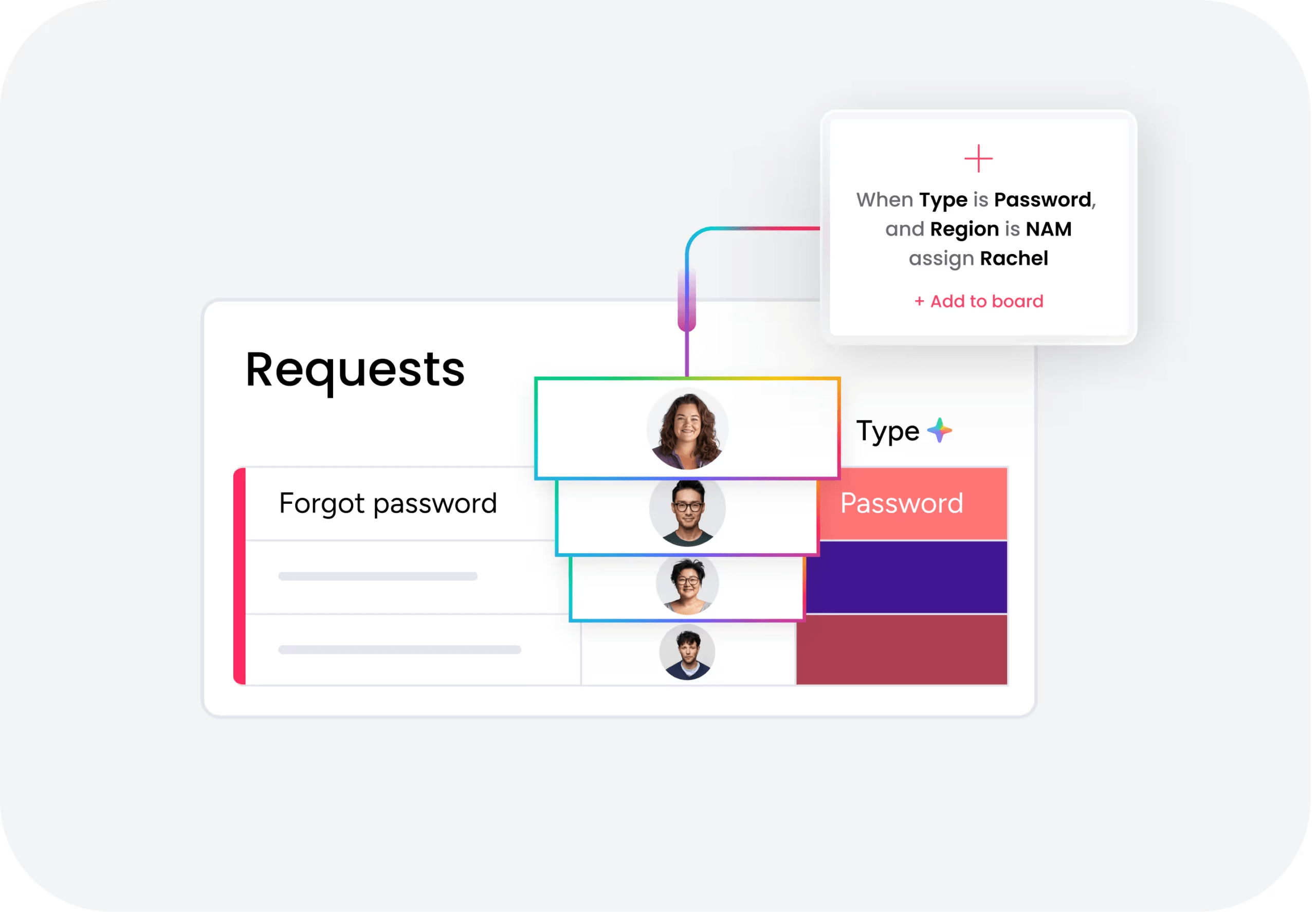
monday sidekick acts as the AI Copilot to classify incoming service requests and route them to the right team based on logic you define. That reduces manual triage at the service desk and helps incoming volume move into the right queue quickly.
No-code workflows you can customize yourself

monday service gives field service managers the power to design and update workflows without writing code. Create a new work order type, add approval steps, define automations, and set notifications through a visual interface. That keeps process ownership close to the people who actually run the operation.
Real-time analytics for service leaders
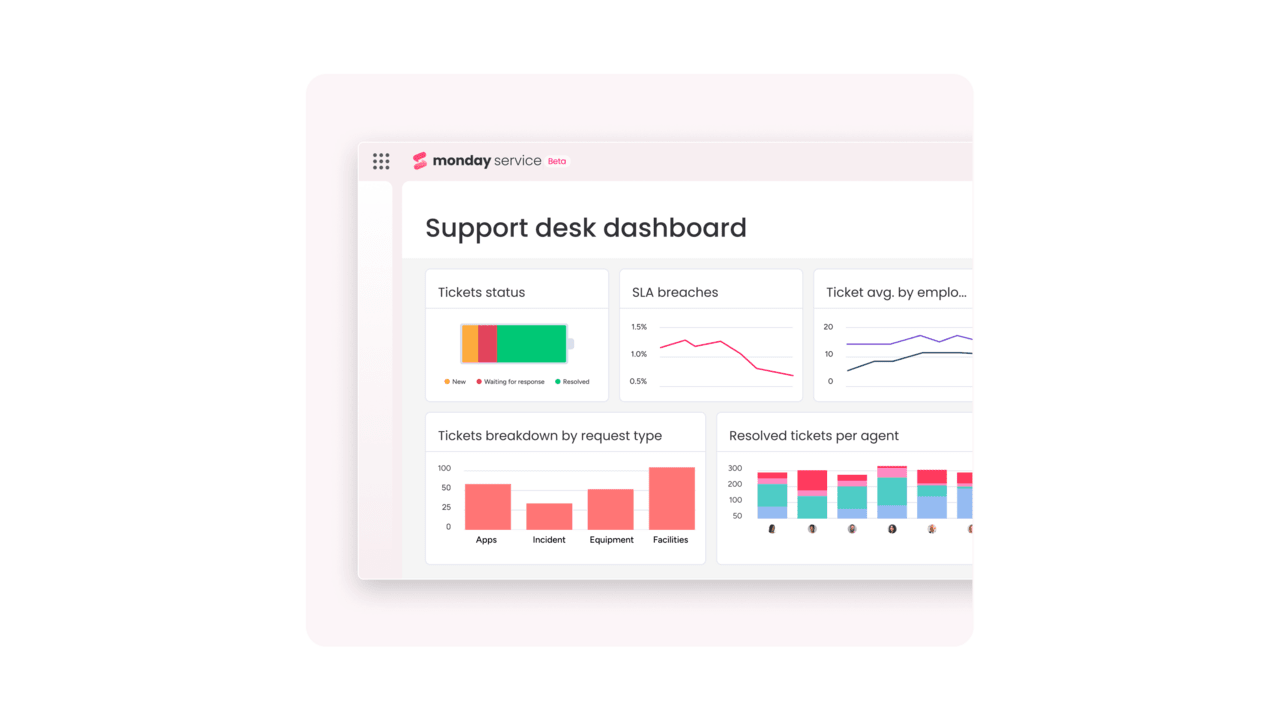
monday service provides live dashboards that show service activity as it happens. Service directors can monitor workload, spot bottlenecks, and make staffing decisions from current data instead of waiting for end-of-week reporting.
AI agents that work across your service operations

monday service deploys AI agents that handle routine service tasks across field operations, IT, HR, and facilities on one platform. These agents classify requests, suggest routing decisions, and surface relevant context automatically, so your teams spend less time coordinating and more time resolving.
Try monday serviceField service management built for what's next
Field service management connects the people, systems, and data that keep service operations running smoothly. When work orders, scheduling, mobile access, and analytics live in one place, teams can deliver faster, more reliable service without adding complexity to every handoff.
The platform you choose should grow with your operation and adapt to how your team actually works. monday service gives enterprise teams the flexibility to build workflows that match their processes, the intelligence to route work automatically, and the visibility to make decisions from real-time data instead of waiting for reports.
Try monday serviceFAQs
What does field service management mean?
Field service management means coordinating workers, work orders, schedules, and resources for jobs performed outside a central office. It covers service activity at customer sites, job sites, and other remote locations.
What's the difference between field service management and CRM?
The difference between field service management and CRM is that CRM manages customer relationships and sales information, while FSM manages how service work gets delivered in the field. Many organizations use both together because customer context and service execution are closely connected.
What does a field service manager do?
A field service manager coordinates the people, schedules, and resources needed to complete service jobs in the field. They assign technicians, manage work orders, monitor jobs in real time, handle escalations, and report on team performance.
How much does field service management software cost?
Field service management software cost varies based on features, deployment model, and number of users. Cloud platforms typically charge per seat per month, with pricing ranging from around $20 per user for basic plans up to custom enterprise pricing based on volume and integration needs.
What's the difference between field service management and IT service management?
The difference between field service management and IT service management is that FSM coordinates physical, on-site service work performed by field technicians, while ITSM governs IT service delivery and support, often for internal users. The two overlap when IT teams handle hardware installation or on-site support in the field.
How long does it take to implement field service management software?
The time it takes to implement field service management software depends on your organization size, integrations, and platform complexity. Cloud-based platforms like monday service can often be configured in days to weeks, while larger enterprise deployments with deeper integrations may take several months.

 Get started