


Even the most talented teams struggle when work ownership is unclear. When people do not know who is accountable for what, projects stall, deadlines slip, and good ideas get lost. Unclear roles and responsibilities are also a quiet driver of disengagement:
Gallup’s State of the Global Workplace 2026 found that only 20% of employees worldwide were engaged in 2025, a gap that costs the global economy roughly $10 trillion in lost productivity.
Clear roles and responsibilities turn that chaos into coordinated action. This guide walks through a practical method for defining them, including a 5-step process, the RACI framework, ready-to-use templates, and real-world examples you can adapt to your own team.
Key takeaways
- Roles define your position on the team while responsibilities are the specific tasks you complete daily, and understanding this distinction prevents confusion and improves team performance.
- Clear role definition eliminates project delays, reduces conflicts, and enables faster decision-making by ensuring everyone knows who owns what work.
- The 5-step process involves identifying key tasks, defining each role’s purpose, aligning responsibilities with strengths, documenting everything, and regularly reviewing for updates.
- monday.com’s AI Work Platform keeps roles and responsibilities visible by connecting people to real work through assignee fields and a workload view, so teams see both the big-picture structure and detailed task ownership.
- Future-proof your team by focusing on skills and outcomes rather than rigid task lists, allowing roles to evolve with changing business needs and new technology.
Understanding roles vs. responsibilities
A role is your position or function within a team — your job title or area of ownership, like “marketing manager” or “customer support specialist.” A responsibility is the specific work you complete in that role — the daily tasks like “create monthly reports” or “respond to customer emails.”
| Aspect | Role | Responsibility |
|---|---|---|
| Definition | Your position on the team | Specific work you complete |
| Scope | Broad area of expertise | Individual tasks and duties |
| Duration | Stable over months or years | Can change with each project |
| Example | Operations manager | Review vendor contracts monthly |
This distinction becomes critical when discussing performance or planning work. Someone might excel in their role while struggling with specific responsibilities, or vice versa.
Why defining roles and responsibilities matters for teams
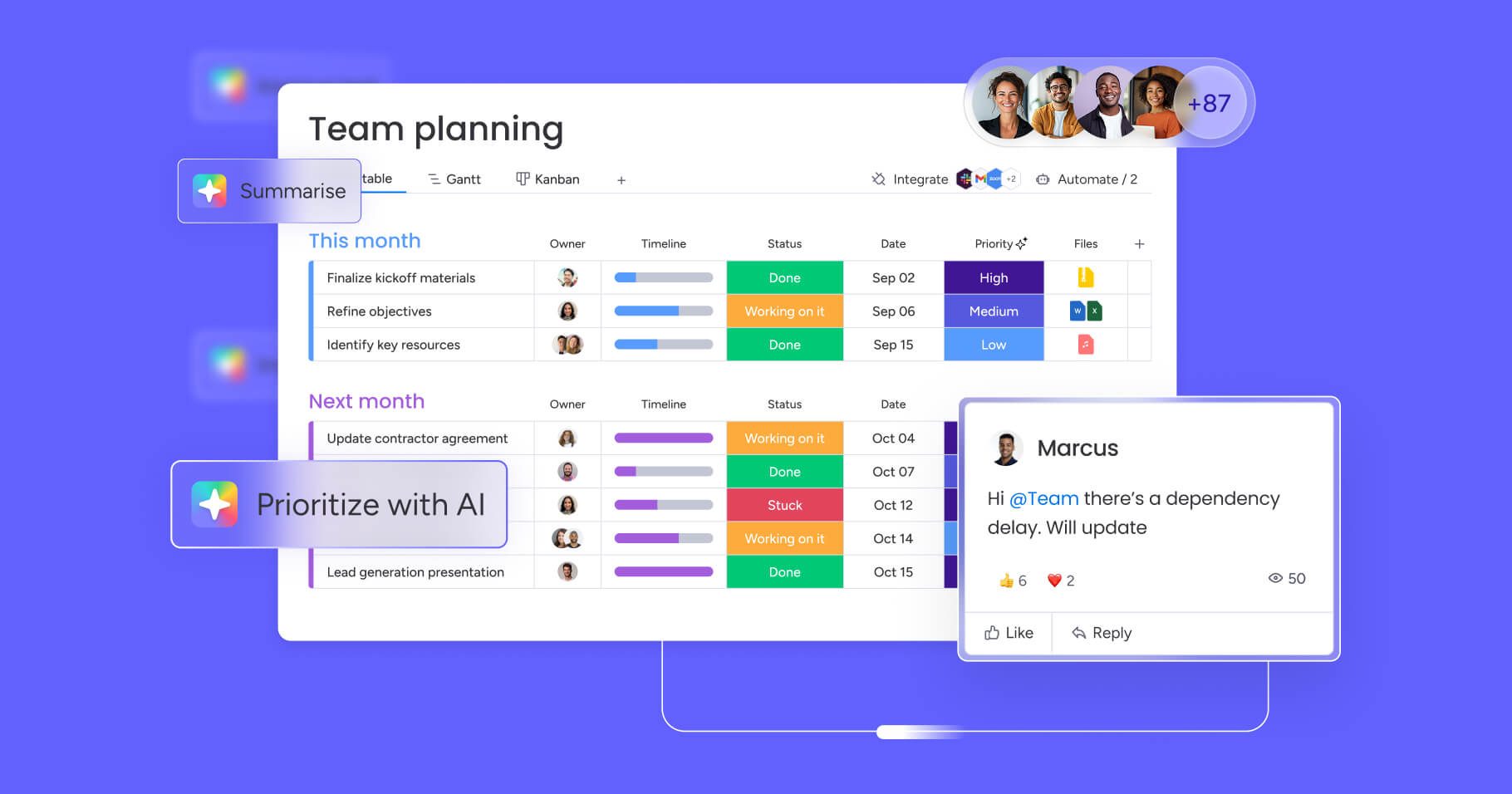
Without clear definitions, work becomes chaotic. Many organizations quietly grow more complex over time, and without clear ownership that complexity turns into duplicated effort, missed deadlines, and wasted time figuring out who should handle what.
The real cost shows up in your results. Projects stall when no one knows who makes decisions. Team members burn out from unclear expectations, and new hires struggle to understand their place. Clarity is the opposite lever: Gallup finds that highly engaged teams consistently outperform their peers on key business outcomes, and knowing who owns what is a foundation of that engagement.
Clear role definition transforms how teams operate. Decision-making speeds up because everyone knows who has authority, and work gets distributed based on skills and capacity, not just availability.
The real value of this clarity shows up in measurable business outcomes. For leadership, defining roles and responsibilities is a strategic move that directly impacts the bottom line in several key ways:
- Faster project delivery: Clear ownership eliminates delays from confusion.
- Strategic resource allocation: Assign work based on expertise, not guesswork.
- Measurable performance: Track individual contributions to team goals.
- Reduced conflict: Eliminate disputes over who owns what.
How many times have you seen projects fail because 2 people thought someone else was handling a critical task? The right work management platform prevents these gaps by making ownership visible across all work.
5 steps to define roles and responsibilities

Creating clarity requires a systematic approach. These steps move you from confusion to a well-organized team where everyone knows their part.
Step 1: Identify key tasks and deliverables
List every activity your team performs, including daily operations, recurring processes, and project-specific work. Start with broad categories, then break them down into specific actions. “Customer service” becomes “answer support tickets,” “update knowledge base,” and “train new team members.”
Capture this information where everyone can see it. monday.com’s AI Work Platform lets you build visual workflows that show every task and process, making gaps obvious before they cause problems.
Step 2: Define each role and its purpose
Write clear definitions that go beyond job titles. Each role needs 3 components to be effective.
- Define the primary function: What does this person focus on most?
- Clarify decision-making authority: What can they approve or change independently?
- Outline collaboration requirements: Who do they work with regularly?
A content manager might focus on editorial planning, have authority to approve blog posts, and collaborate daily with writers and designers. A social media manager would want to see all their posts and designs in one place, approve copy, and collaborate with designers and social media freelancers. These specifics prevent confusion later.
Step 3: Align responsibilities with strengths
Match tasks to the people best equipped to handle them. Consider skills, experience, and interests when making assignments. Look at current capabilities and future potential. Someone strong in data analysis might also want to develop presentation skills. Give them reporting responsibilities that use both.
Step 4: Document and share
Create documentation everyone can access and understand. Use simple formats with clear headings and bullet points. Make this information part of daily work, not a separate document. When role definitions live alongside actual projects, they stay current and useful.
Keep descriptions brief but complete. Include enough detail to prevent confusion without creating overwhelming documentation no one will read.
Step 5: Review and refine
Schedule regular reviews to keep definitions current. Business needs change, and roles should evolve with them. Gather feedback during one-on-ones and team meetings. Ask what’s working and what creates friction. Use performance reviews to adjust responsibilities based on results. Document changes and communicate them clearly.
What is a RACI matrix for defining roles and responsibilities?
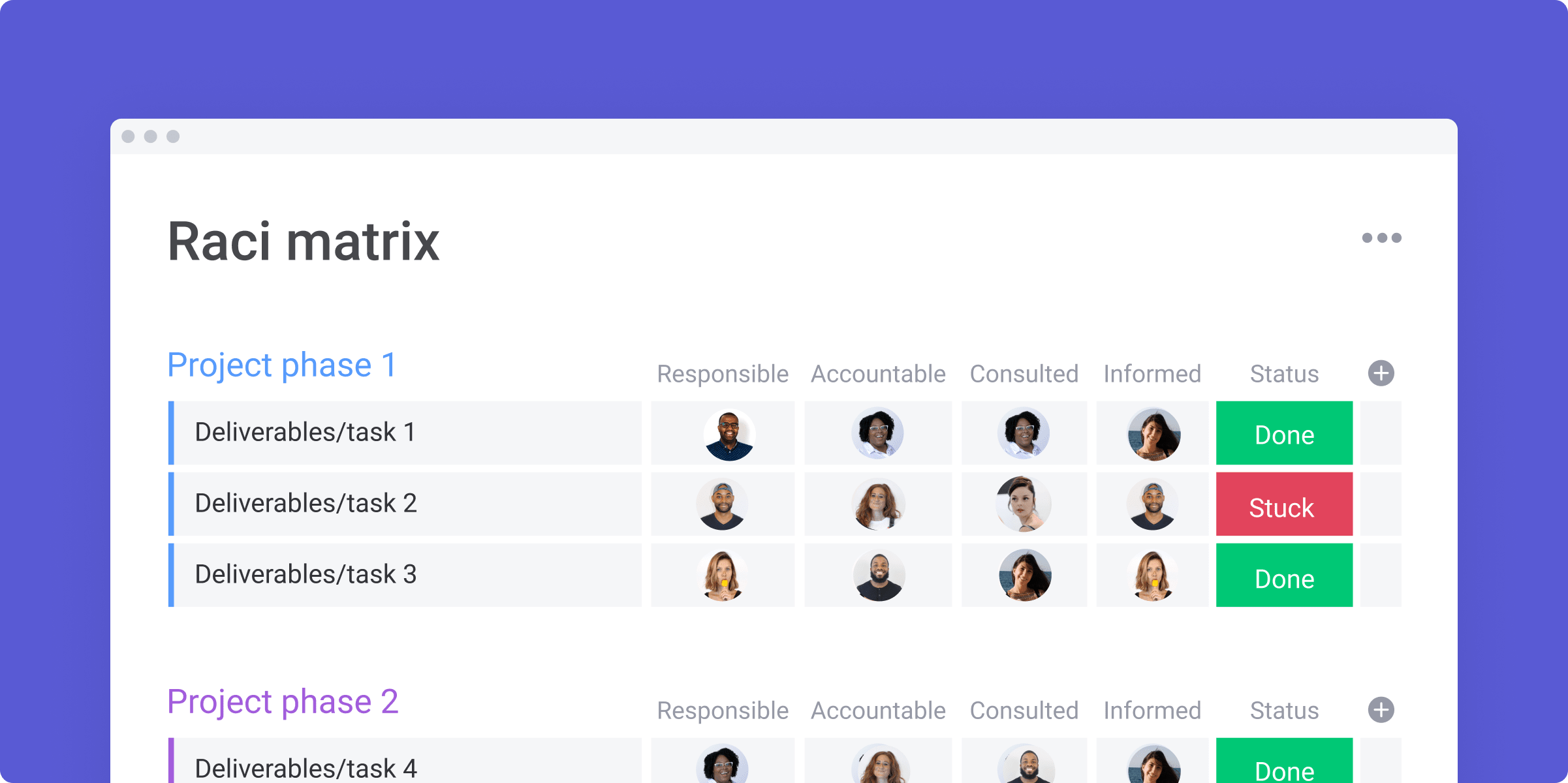
A RACI matrix is a simple grid that maps every task or decision to 4 levels of involvement: Responsible, Accountable, Consulted, and Informed. It answers one question at a glance: for a given piece of work, who does it, who owns the outcome, whose input is needed, and who just needs to stay in the loop.
The 4 letters stand for:
- Responsible: The person or people who do the work to complete the task
- Accountable: The single person who owns the outcome and signs off (there is only ever one)
- Consulted: The people whose input shapes the work before it is finalized
- Informed: The people who need to know the result but do not weigh in
A plain owner list tells you who is doing a task. A RACI matrix goes further by separating doing the work from owning the result, and by naming who to ask and who to keep updated. That distinction is what prevents the classic failure where 2 people each assume the other has it covered.
Here is a simple RACI matrix for a product launch, mapped across a small cross-functional team:
| Task | Product lead | Marketing manager | Engineer | Executive sponsor |
|---|---|---|---|---|
| Define the launch plan | A | R | C | I |
| Build the release | C | I | R | A |
| Produce campaign assets | I | R | I | A |
| Make the go/no-go call | R | C | C | A |
As teams add AI agents to their workflows, the same grid still applies. Because RACI allows only one Accountable owner per row, and that owner signs off on the outcome, an agent is never assigned Accountable. Agents can be Responsible for routine work and can be Consulted or Informed on a task, but a person always owns the result. People and agents work together, and the person stays in charge.
Want to go deeper on the framework? Read our guide to the RACI model or get the free RACI template.
Team leader vs. team member responsibilities

Different levels require different approaches to defining work. Leaders and individual contributors have distinct but complementary responsibilities.
Team leader duties and responsibilities
Leaders balance strategic thinking with tactical execution. The exact mix depends on team size and organizational structure.
Core leadership responsibilities focus on enabling team success:
- Strategic planning: Setting goals aligned with company objectives
- Resource management: Allocating budget and people effectively
- Performance development: Providing feedback and growth opportunities
- Cross-functional coordination: Representing the team in broader initiatives
Smaller teams often need hands-on leaders who contribute directly to deliverables. Larger organizations may have purely strategic leadership roles. Either way, clarity about where leadership ends and individual work begins prevents confusion.
Team member duties and responsibilities
Individual contributors drive execution through their specialized skills and daily work. Their success depends on clear expectations and appropriate autonomy.
Essential team member responsibilities include:
- Quality delivery: Meeting standards and deadlines consistently
- Proactive communication: Sharing updates before someone has to ask
- Process improvement: Suggesting ways to work more effectively
- Knowledge sharing: Helping teammates learn and grow
The best team members take ownership within their defined scope. They solve problems independently while knowing when to escalate issues.
Using a roles and responsibilities template
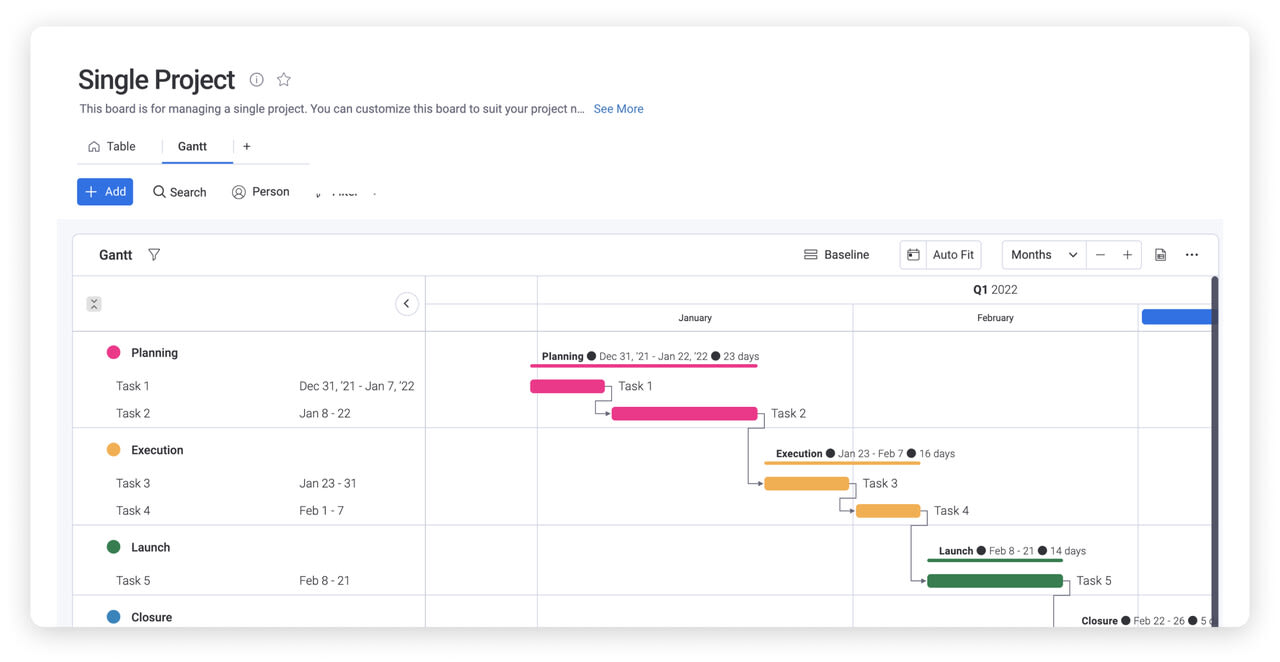
A roles and responsibilities template is a reusable format for documenting positions. It includes standard fields like title, reporting structure, key duties, and success metrics.
Templates work best during major transitions. Use them when forming new teams, restructuring departments, or scaling operations quickly; they prevent important details from falling through the cracks.
The structure ensures consistency while allowing customization. Every role gets documented the same way, making comparison and gap analysis easier.
Tips for creating a simple template
- Start with essential elements that apply to every role. Include position title, direct reports, key responsibilities, required skills, and performance indicators.
- Keep language clear and specific. Instead of “handles various marketing tasks,” write “creates social media content calendar” or “manages email campaign deployment.”
- Adapt templates to match team needs without losing consistency. Marketing teams might emphasize creative deliverables and campaign metrics. Engineering teams focus on technical specifications and sprint commitments.
Consider these customization factors:
- Industry requirements: Healthcare needs compliance elements that retail doesn’t
- Team size: Smaller teams need broader role definitions
- Work style: Remote teams require communication protocols
- Growth stage: Startups need flexibility that enterprises don’t
Common gaps in role definitions and how to address them
When examining your team’s role structure, there are specific problem areas to watch out for. Even thoughtful planning leaves gaps that undermine team effectiveness. Recognizing these patterns helps you fix them before they cause major issues.
The most damaging gaps create confusion about ownership and authority. This is a disconnect reflected in monday.com’s world of work report, which found that senior leaders are far more likely than individual contributors to believe their organization fosters shared ownership.
When multiple people think they own something or worse, when no one does work stalls and relationships strain. Here are some common problems you should be proactive in addressing:
- Overlapping responsibilities: Define primary and backup owners for shared areas.
- Authority confusion: Clarify who can make which decisions independently.
- Communication gaps: Establish regular check-ins and status updates.
- Accountability voids: Ensure every critical process has a named owner.
When conflicts arise, bring people together to discuss boundaries openly. Visual workflows in monday.com make overlaps obvious, turning abstract discussions into concrete solutions.
3 roles common to most organizations
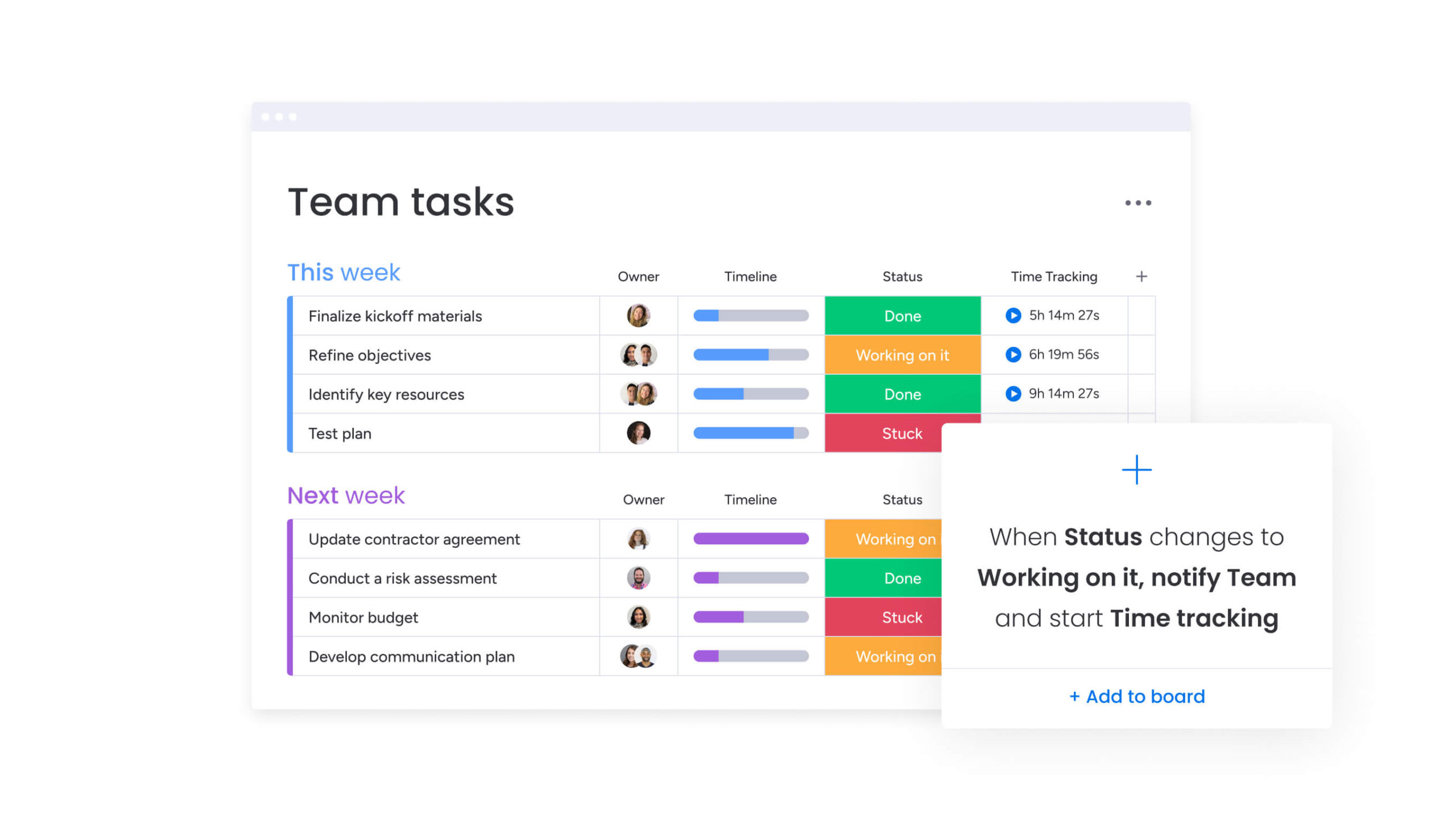 Seeing roles in action helps teams understand how definitions translate to daily work. These examples show different approaches across common positions.
Project manager
Project managers orchestrate complex initiatives across multiple teams. They own the process, not the individual deliverables.
- Creating and managing project timelines
- Handling stakeholder communication
- Monitoring and mitigating project risks
- Coordinating team resources effectively
- Adjusting schedules when necessary
- Escalating issues to leadership when needed
- Running standup meetings
- Updating project boards with current status
- Communicating progress to stakeholders
- Removing blockers for team members
Success metrics:
- Delivering projects on time and within budget
- Maintaining project scope without unplanned expansion
- Meeting or exceeding quality standards
- Achieving stakeholder satisfaction with final deliverables
Marketing coordinator

Marketing coordinators execute campaigns while supporting broader team initiatives. They balance independent work with collaborative projects.
- Managing content calendars across channels
- Creating and scheduling social media content
- Coordinating marketing events and promotions
- Tracking campaign performance metrics
- Managing small budget allocations
- Maintaining vendor relationships
Success metrics:
- Consistent and cohesive brand presence
- On-time campaign delivery
- Accurate performance reporting
- Effective collaboration with sales, design teams, and external agencies
Finance specialist
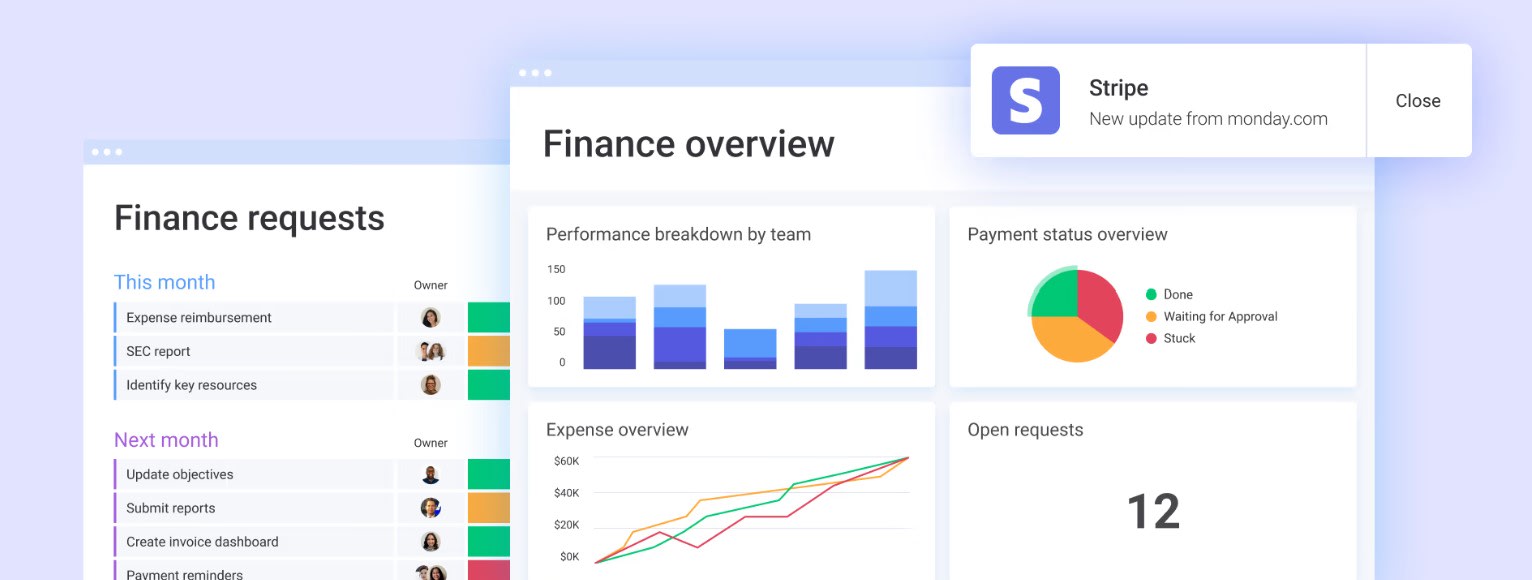 Finance specialists ensure accuracy and compliance in financial operations. They handle technical work while communicating complex information clearly.
Key responsibilities:
- Processing financial transactions accurately
- Preparing detailed financial reports
- Monitoring budget performance and variances
- Supporting internal and external audit processes
- Ensuring compliance with financial regulations
- Translating complex financial data for non-finance teams
Success metrics:
- Clean audit results with minimal findings
- Accurate and timely financial reporting
- Delivering actionable financial insights to decision-makers
- Meeting strict monthly and quarterly deadlines
- Maintaining data integrity across financial systems
How to future-proof your roles and responsibilities

Organizations change constantly. New technology, market shifts, and growth create pressure to evolve how work gets done, so build flexibility into your role definitions from the start. Focus on outcomes and capabilities rather than rigid task lists to help teams adapt without constant reorganization.
As AI automates routine tasks, roles that emphasize problem-solving and creativity become even more valuable. The strongest teams treat people and agents as one team: agents own repetitive tasks end to end, while people own the decisions, the direction, and the accountability. Defining who owns what, including which work an agent handles and which person signs off, keeps that partnership clear as your workflows evolve.
Prepare for change by:
- Emphasizing skills over tasks: Define roles by capabilities, not just activities
- Building in learning time: Include professional development in role expectations
- Creating evolution paths: Show how roles can grow with the organization
- Staying technology-aware: Consider how new tools might change work
How monday.com's AI Work Platform supports clear roles and responsibilities
A written role definition is only useful if it stays connected to the actual work. On the AI Work Platform, roles and responsibilities live inside the same place the work happens, so ownership stays visible instead of buried in a document nobody reopens.
Key capabilities that keep roles clear and actionable:
- Assignee and owner fields: Connect a real person to every item, so each task, project, and deliverable has a clear owner at a glance
- Workload view: Shows current assignments against team capacity, helping you balance responsibilities by strength and availability rather than guesswork
- Dashboards: Roll ownership and progress up across projects, giving leaders a single view of who owns what without chasing status updates
- Automations: Notify the right stakeholders automatically when an owner or role changes, so definitions never quietly go stale
- Resource directory: Keeps department, job roles, and expertise in one place across the organization
- monday agents: Task-specific agents that handle repetitive work like assigning tasks, updating statuses, or routing requests while people remain accountable for outcomes.
- monday MCP: Connects your workspace to AI assistants you already use, turning meeting notes into assigned tasks with clear owners, priorities, and due dates
- monday vibe: Builds simple roles or RACI apps from plain-language descriptions, connected to your real data
Turning role clarity into everyday execution
Well-defined roles and responsibilities change how a team performs. Clarity removes the friction of overlapping work, speeds up decisions, and lets everyone focus on their highest-value contributions. The payoff shows up as faster delivery, fewer conflicts, and more time spent on results instead of figuring out who does what.
Roles are not a one-time exercise. As your business grows and AI takes on more routine work, revisit your roles and responsibilities so people and agents stay aligned on who owns each outcome. The teams that keep that clarity current are the ones that turn ambition into everyday execution.
Get startedFAQs
What is the difference between roles and responsibilities in the workplace?
The difference between roles and responsibilities in the workplace is that roles refer to your position or function, while responsibilities are the specific activities and duties assigned to that role. Think of roles as your job title and responsibilities as your daily work activities.
How often should team roles and responsibilities be reviewed?
Team roles and responsibilities should be reviewed quarterly or whenever significant organizational changes occur. Regular reviews ensure role definitions stay aligned with business needs and team member capabilities.
What happens when roles and responsibilities overlap between team members?
Overlapping roles and responsibilities can lead to confusion, duplicated work, and accountability gaps. Address overlaps by clearly defining boundaries, assigning primary ownership, and establishing collaboration protocols.
How do you define roles and responsibilities for remote teams?
Defining roles and responsibilities for remote teams requires extra emphasis on communication protocols, availability expectations, and digital collaboration methods. Clear documentation and regular check-ins become even more critical for distributed teams.
What should be included in a roles and responsibilities document?
A roles and responsibilities document should include the role title, reporting structure, key responsibilities, required skills, decision-making authority, and success metrics. Keep the document concise but comprehensive enough to eliminate ambiguity.
How do roles and responsibilities change as a company grows?
Roles and responsibilities typically become more specialized and clearly defined as companies grow from startup to enterprise. What starts as broad, overlapping duties evolves into distinct functions with specific expertise requirements.
How does the AI Work Platform help assign roles and responsibilities?
The AI Work Platform helps assign roles and responsibilities by connecting people directly to work. Assignee and owner fields give every item a clear owner, the workload view balances assignments against team capacity, and automations notify stakeholders whenever an owner or role changes, so definitions stay current.

 Get started