


Team management is a muscle. The more you work at it, the stronger you become at managing a team. When considering how to manage a team, success in this field requires a lot of practice, learning the right skills and techniques, and seeking deeper guidance from peers. It also involves using the right platforms to make managing your team run more smoothly.
This post will examine the ins and outs of team management: what it is, the skills you need, its benefits, tips for success, and more. We’ll also look more closely at how monday AI Workspace can support more effective team management.
Get startedKey takeaways
- Effective team management depends on clear communication, thoughtful delegation, strong feedback habits, and shared visibility into work
- Different team management styles, from democratic to coaching to collaborative, can work well depending on your team’s goals, structure, and culture
- Team managers need both people-focused skills and operational systems to keep work moving without overwhelming employees
- Tools like dashboards, templates, automations, and shared boards can make it easier to track goals, manage resources, and support team accountability
- monday AI Workspace helps managers organize team workflows, automate updates, track capacity, and use AI-powered capabilities to summarize information and surface work that needs attention
What is team management?
Team management is a manager’s ability to lead and coordinate a team to execute its tasks and achieve its common goals. Team managers need to support their teams through communication, active listening, motivation, and the fostering of a positive work environment to help each team member complete their tasks. Often, project management software is used to help managers manage teams efficiently and in an organized way.
Efficient team management skills are crucial because they help employees feel motivated, making them more productive.
To effectively learn how to manage a team, we first need to understand what makes a team manager successful. We break down some of the necessities below.
Team manager vs team leader: what’s the difference?
The difference between a team manager and a team leader comes down to focus: a team manager runs the day-to-day execution, while a team leader owns the vision and motivation. In some work settings these roles fall on the same person, but there are real differences between the two.
A great team manager is someone who manages day-to-day tasks within their team and ensures team members understand and correctly execute workflows. It’s their job to make sure the team’s goal is accomplished by keeping everyone organized and on the same page.
Team leaders, on the other hand, are responsible for ensuring their team is aligned with the company vision and inspires members to work towards it. Rather than focus on the day-to-day tasks, team leaders are more concerned with the big picture.
8 types of team management
There are different styles managers can adopt when it comes to directing their team, and the right one depends on your team’s maturity, goals, and culture. The management style you go with can ultimately dictate your approach to managing your team, from the activities you choose to foster teamwork to how you deliver feedback and evaluations. Here are 8 common team management styles we see in the workplace.
- Autocratic management: Team managers make decisions unilaterally, without much input from team members
- Democratic management: Team members share their opinions and insights and participate in decision-making that will affect the team, creating a sense of shared responsibility
- Laissez-faire management: Taking a hands-off approach, the manager will allow team members to work independently with little interjection to encourage a culture of autonomy
- Transformational management: Team managers inspire and motivate members to reach for extraordinary results through change and innovation
- Transactional management: Based on a system of rewards and penalties, managers focus on tasks and clear instructions to incentivize workers
- Servant leadership: Managers are focused on the growth of individual team members and strive to help them grow as much as possible
- Collaborative management: Teams are focused on working together and making decisions collectively, while the manager facilitates cooperation in the group
- Coaching management: The manager acts as a coach and provides guidance, support, and feedback to help hone team members’ skills
Learn more: Working styles
Skills for effective team management
As a manager, the skills you exhibit will influence how your team performs. Team managers need to manage the demands of the company, in other words, fulfilling goals and deliverables, while still being supportive of their team members’ individual needs.
Honing the right skills as a team manager is essential to strike this delicate balance. Some key skills for effective team management include:
- Strong communication and active listening skills
- A mindset of growth for both the company and team members
- Goal setting and performance management
- Time management
- Delegating tasks to the right employees
- Decision-making and problem-solving
- Leadership that inspires and guides members
- Empathy and understanding
- Conflict resolution
- Adaptability
How to develop your team management skills
With a long list of skills for effective team management, it can be tricky to master them all while juggling so many responsibilities. Developing these skills comes with time and practice. It’s important to take time to reflect on your skills and how you handle specific situations within your team, while also seeking guidance from other team managers and leaders around you.
Additionally, you can hone your soft skills through ongoing leadership training and courses focused on communication and decision-making. Furthermore, take the time to actively seek feedback from colleagues and mentors to identify areas for improvement, and observe their managerial style to see what you can incorporate into your own approach.
Learn more: Team communication
The benefits of effective team management
Aside from creating a positive work environment and ensuring all team members are aligned with the team’s and organization’s goals, there are other benefits to learning to manage a team effectively. Below, we break down three reasons why team management is important.
1. Team management can lead to happier employees
It’’s part of a team leader’s or manager’s role to ensure employees feel good about where they work, as this can positively impact the business’’s success. Engagement carries real financial weight: Gallup’s State of the Global Workplace 2026 report estimates that low engagement cost the global economy about $10 trillion in lost productivity in 2025, equivalent to 9% of global GDP. There’’s also often a higher quality of customer service, and as a result, customers become more loyal.
To increase employee happiness, managers can:
- Encourage employee feedback and follow through with acting on it
- Prioritize work-life balance by encouraging employees to leave the office on time or follow a more flexible work schedule
- Be transparent by openly communicating about mistakes, shortcomings, results, management plans, and more with employees
2. More productive employees
With effective team management, you can shape a culture where employees thrive. Fostering a positive team culture goes a long way toward engaging employees, and when people feel connected to their work, they tend to be more productive and more invested in the outcomes they own. For more ways to help your team do their best work, explore these team productivity tips.
Here are a few ways managers can shape company culture:
- Demonstrate leadership through participation by attending company events, showing excitement for team progress, and connecting with employees on a personal level
- Recognize employees for completing tasks instead of solely waiting for the results
- Discuss and define goals together so employees know what’s important to a company and what’s not before determining what’s worth focusing on
3. Reduce employee turnover
Replacing an employee is expensive once you account for recruiting, onboarding, and the productivity lost while a role sits open. Turnover is a costly problem, so it’’s in a company’’s best interest to keep the rate of turnover low, which is where effective team management comes in.
When focusing on hiring the right people, here are a few things managers can do:
- Determine if they would fit your company culture by asking questions related to the candidate’s values or interpersonal skills, and assess whether they’d fit in with your team
- Hire slowly, rushing to fill a vacant position may increase the chances of winding up with someone who isn’t a good fit
- Have candidates meet or interview with team members to understand whether they will mesh with the rest of your team
Team management career paths
Even if you don’t want to know how to manage a team specifically, team management skills open the door to a number of exciting career paths in different domains. Here are different careers you can pursue with technical skills and experience in team management:
- Project Manager: Coordinates tasks, resources, and project timelines
- Operations Manager: Manages daily operations in a company to ensure efficiency
- Team Leader: Lead, guide, and support teams in a department
- Product Manager: Manage the lifecycle and development of a product by coordinating different teams
- Human Resources Manager: Manage employee relations, recruitment, and professional development
- Customer Service Manager: Oversee customer service teams and enhance customer satisfaction by resolving issues
6 essential tips for how to manage a team
As we’ve outlined above, a good manager is an important part of a team’s success. They regularly keep the team motivated, on track, informed of company milestones and goals, and ensure everyone is satisfied and contributing towards the company’s bottom line.
Here are a few tips for how to manage a team:
1. Communicate directly and transparently
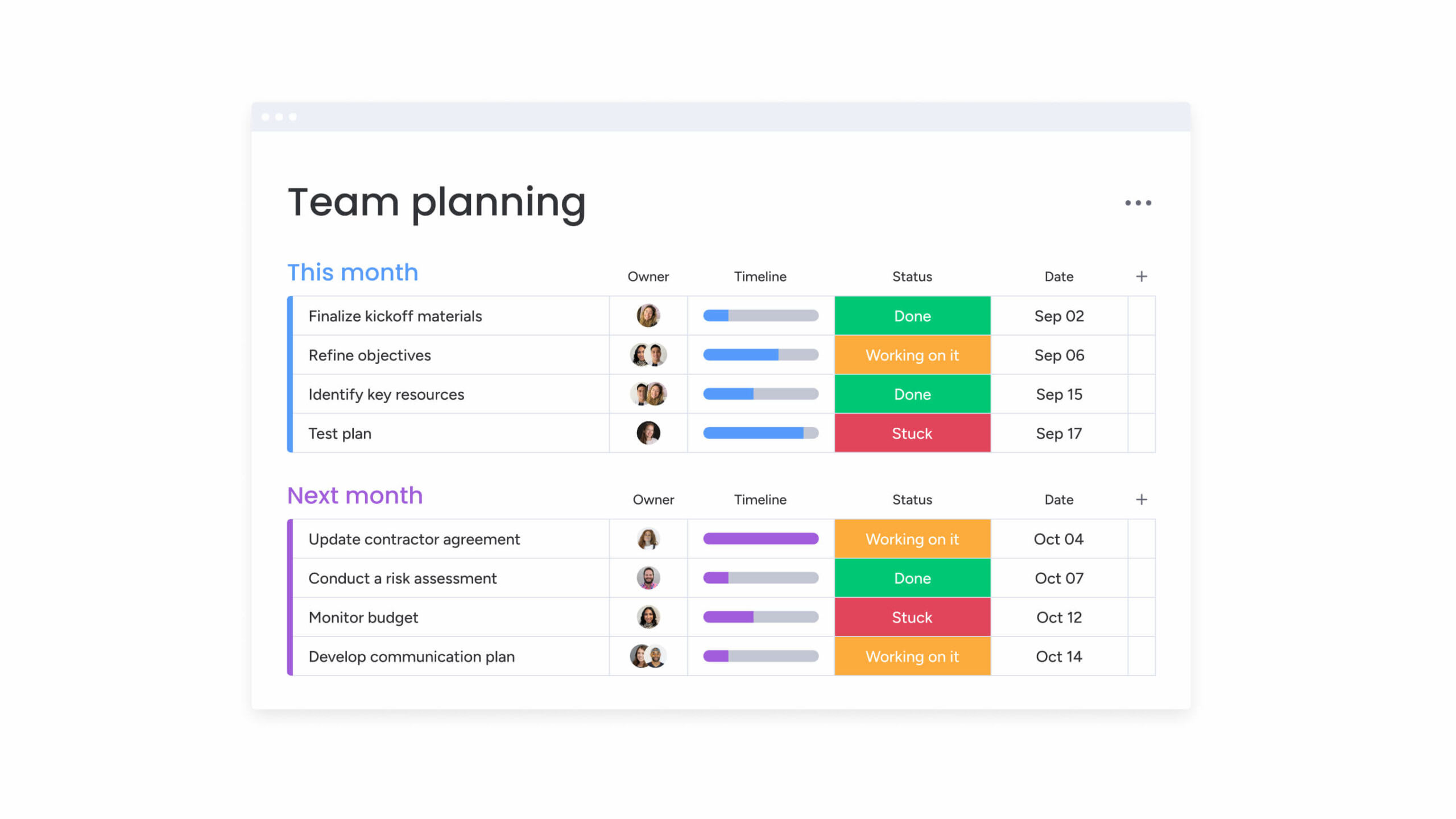
Employees dread miscommunication because it causes confusion and stress. Effective communication skills ensure team-wide clarity on tasks, deadlines, and goals. Keeping updates, tasks, and files on shared boards means everyone reads the same information instead of digging through scattered threads. This transparency allows a team to focus on their productivity and collaboration.
monday AI Workspace can help managers and team members communicate better through regular updates, shared boards, and clear ownership. Managers can use a project communication plan for team meetings, tasks, and progress reviews, and assign team members to action items while monitoring progress at every stage.
2. Offer a clear vision
For managers, keeping their team on track to achieve goals is an important part of their role. Managers who don’t have their eyes on the ball can’t ensure their employees move in the right direction.
A good way to maintain momentum and keep track of different asks is to set a clear vision that highlights short-term and long-term project goals. Using team management software, such as monday AI Workspace’s OKR (objectives and key results) template, to list and track goals can help maintain focus and direct teams toward achieving them. Goal boards keep short-term and long-term targets visible to the whole team, so people can see how their daily work ladders up to the bigger picture.
Get started3. Encourage team collaboration
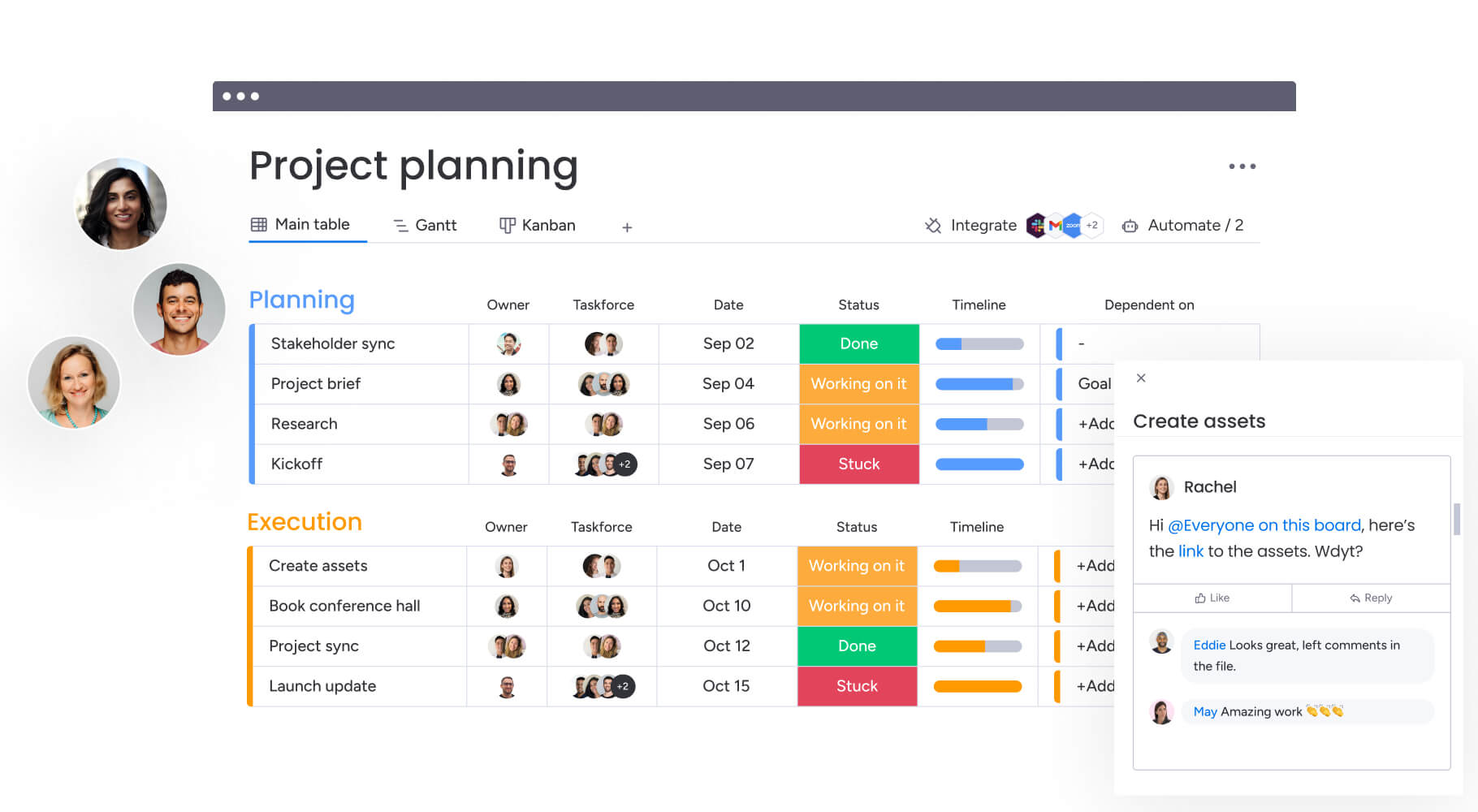
Employees who feel connected to their team and company culture are more likely to be engaged and more productive at work. Effective collaboration is crucial for teams to get things done together, on time, and without conflicts.
To accomplish this, managers can turn to collaboration software. Platforms with a customizable project-tracking template can help managers and teams set up projects, track tasks and deadlines, send and receive notifications, and make changes quickly. Shared, customizable boards give everyone real-time visibility into who’s doing what, which cuts down on status meetings and back-and-forth. This transparent approach also enables employees to receive feedback and flag any issues immediately.
4. Delegate with care
To delegate effectively, match each task to the person’s skills and current capacity, set a clear deadline, then track progress in one shared view. A manager is expected to assign tasks to employees based on their skills, experience, and competencies. They must trust that every team member can complete assigned tasks on time.
Ideally, every team member should have a fair workload, but that balance is easy to lose. According to PwC’s 2025 Global Workforce Hopes and Fears Survey, workers experiencing fatigue, boredom, anger, or feeling overwhelmed are 30% less motivated.”
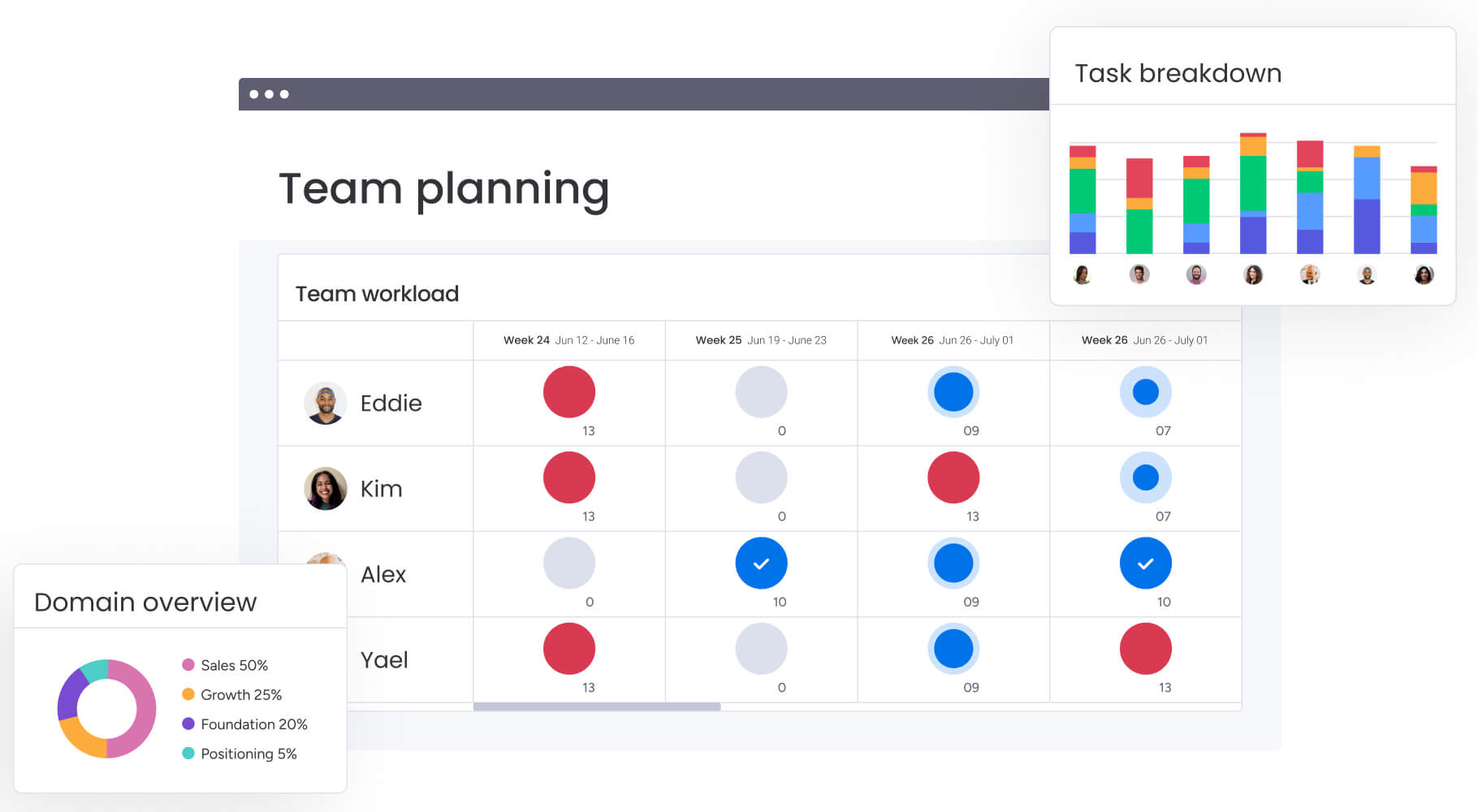
One solution to this concern is to use workflow automations. With the right AI Workspace, new tasks can be assigned or routed based on parameters like workload, region, expertise, and other workflow needs. Workload views make it easy to spot who’s over capacity at a glance, and monday agents can help rebalance and reassign work when someone is overloaded, so no one quietly burns out. Additionally, a team task management template can help managers delegate tasks by easily identifying team members’’ capacities and making changes to reduce heavy workloads.
5. Prioritize feedback and recognition
Constructive feedback sessions provide insights into areas for improvement for both employees and managers. It gives employees clarity on where they stand and where they’re headed. When employees provide feedback, listen to what they’re saying and, if possible, act on it. Changes inspired by these sessions can help employees, managers, and the team perform better and build trust.
Another critical aspect of feedback sessions is recognition. Appreciation of team members’ efforts and achievements significantly impacts employee morale, while a lack of recognition can lead to burnout. Scheduling feedback sessions while handling many other responsibilities can be challenging. One tool managers can use for easy feedback scheduling and management is a feedback tracker, where all input is organized on a unified board. Tracking feedback and recognition on a shared board keeps commitments visible, so follow-ups and shout-outs aren’t missed.
6. Overcome remote work challenges
To manage a remote team, set a rhythm of regular check-ins, put communication in writing, and give everyone shared visibility into who owns what and when it’s due. To handle a remote team, managers must identify and solve the challenges of hiring and managing virtual team members. Some common challenges include scheduling and miscommunication. To overcome these roadblocks, managers can record all information, from new-hire details to team activities, in a remote work plan template.
Managers can even use this template to organize remote employees’’ feedback. Regular and ongoing feedback can do a lot to engage an employee, especially when they’’re remote, and connecting is more challenging. When people feel supported and stay connected to the team, their engagement and performance tend to hold up even at a distance.
Learn more: AI employee management software
How monday AI Workspace supports effective team management
Learning the right skills and putting them into practice is a huge part of being a successful team manager, but it’s not the only thing that will lead to effective team management. Finding the right platform to help you manage your work so you can focus on more personally managing your team is critical.
monday AI Workspace makes it easier to manage tasks, projects, and workflows so managers can spend more time supporting their teams. With the AI Workspace, managers can track project progress, assign work clearly, manage capacity, and give team members the visibility they need to work more independently.
The difference is crystal clear when you compare how core team management jobs get done with disconnected tools versus one connected platform. The table below maps everyday responsibilities to the specific capabilities that handle them.
| Team management job | Manual, disconnected tools | The AI Workspace approach |
|---|---|---|
| Communication | Updates scattered across email, chat, and docs, so context gets lost | Shared boards, item updates, and 200+ integrations (Slack, Teams, Gmail, Outlook) keep every conversation next to the work |
| Delegation and workload | Capacity lives in someone's head, and overload goes unnoticed until a deadline slips | Workload views show who is over capacity, and Agents can rebalance and reassign work |
| Goal tracking | Goals sit in a separate spreadsheet, disconnected from daily work | Goal and OKR boards link daily tasks to short-term and long-term targets |
| Reporting | Manual status roundups and copy-paste updates before every meeting | Real-time dashboards summarize progress, risks, and capacity automatically |
| Routine admin | Reminders, assignments, and handoffs done by hand | No-code automations handle notifications, assignments, and handoffs |
Implement no-code automations
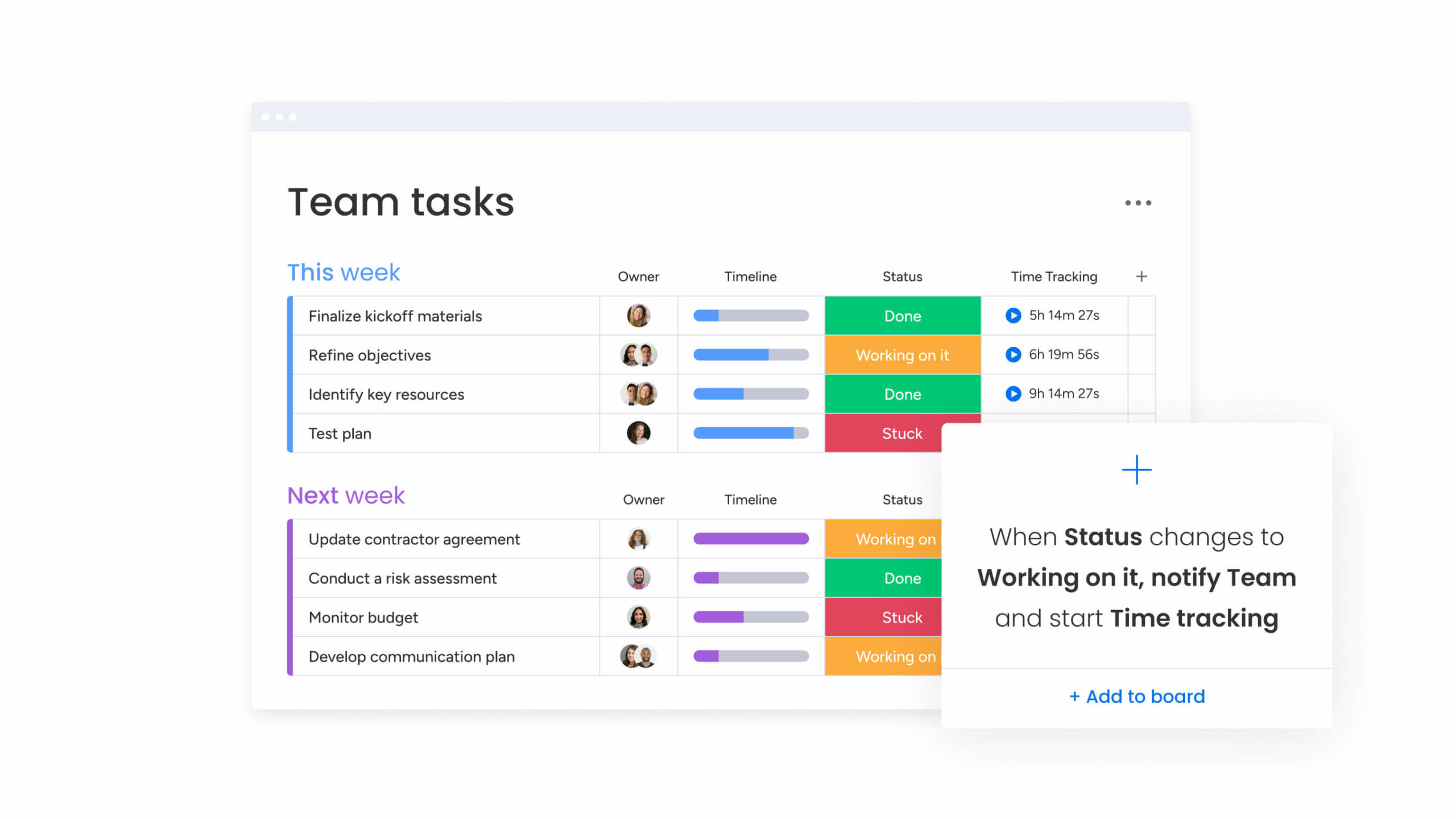
AI-powered capabilities can also help managers reduce manual admin work. Here is how those capabilities show up in day-to-day team management:
- monday sidekick: a context-aware assistant that summarizes long update threads, drafts plans, and surfaces the work that needs your attention. Sidekick can also create dashboards and automations from a plain-language request.
- Operations agents: task-specific AI workers that run in the background on triggers. Agents can rebalance workloads, route incoming requests, and monitor risks, working alongside your team rather than in place of anyone.
- monday vibe: describe the tracker you need in plain language and Vibe builds it, whether that is a capacity view or an OKR monitor tailored to how your team works.
- monday MCP: connect assistants like Claude or Microsoft Copilot so they can act on your board data securely, within the same permissions your team already has.
Track goals, strategies, and results

Easily track different metrics and strategies with different boards and templates. Create a tailored and detailed action plan based on your company goals and key strategies and put them in motion with customizable boards where you can see results in real time. Goal and OKR boards connect each person’s tasks to their targets, so progress stays visible without a weekly status meeting.
Manage resources with real-time dashboards
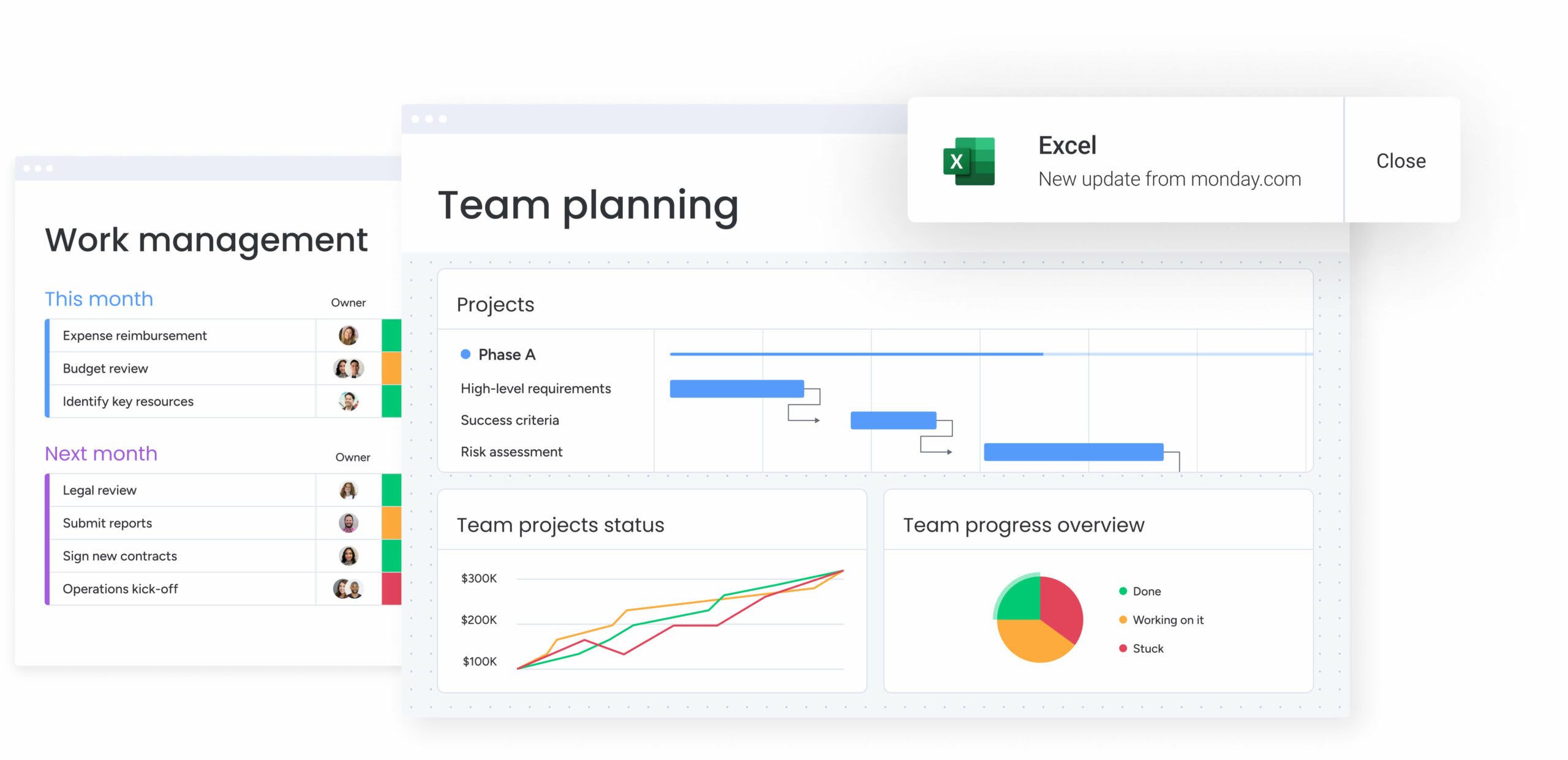
Get a bird’’s-eye view of team capacity and resources in one place. Workload views help you see which team members have a lot on their plates, while dashboards can track team performance, goals, projects, and other key metrics at a glance. Dashboards pull data from across every board into one view and can flag risks and generate summaries automatically, so you spot a bottleneck before it becomes a missed deadline. Hundreds of thousands of teams run their work on the platform to keep this kind of coordination in one place.
Get startedStrong team management helps the whole company run smoothly
Knowing how to manage a team comes down to the fundamentals: set clear goals, delegate with intention, and give consistent feedback. Managers who do these well tend to have more engaged people who are all pulling toward the same outcomes. The platform you use should make that easier, not add to the busywork.
As teams start working alongside AI agents, the manager’s edge shifts further toward judgment, coaching, and context, the parts of the job software cannot do. monday AI Workspace keeps everything connected letting you track goals and align your teams, so more of your attention goes to guiding people in the right direction.
Get startedFAQs
How do you effectively manage a small team?
To effectively manage a small team, it’s important to build strong relationships with each member, set clear goals, and delegate tasks thoughtfully. Small teams give you more direct contact time, so use it to keep communication open and make sure everyone understands how their work connects to shared objectives.
What are the three C's of a team?
The three C’'s of a team are communication, collaboration, and coordination. Communication keeps everyone informed, collaboration gets people working toward shared goals, and coordination aligns their efforts. Together, these three things are essential for a team to function successfully and meet its objectives.
How do you manage an ineffective team?
Managing an ineffective team starts with identifying the root cause, whether that is unclear goals, skill gaps, or conflict. Once you know the cause, address it directly, provide clear direction, and rebuild a positive, collaborative environment. Shared visibility into who owns what helps prevent the same problems from returning.
What is the best team management style?
The best team management style depends on your team's maturity, goals, and the situation at hand. A democratic style suits experienced teams that thrive on input, a coaching style helps develop newer members, and a laissez-faire style works when people are highly autonomous. Most strong managers blend styles as needed.
How can monday AI Workspace help with team management?
monday AI Workspace helps managers organize team workflows with shared boards, automations, dashboards, workload views, templates, integrations, and AI-powered capabilities. Teams can track tasks, manage capacity, share updates, and keep goals visible in one connected workspace.

 Get started