


You can’t butter your toast until you’ve toasted the bread. Every project works the same way: Certain tasks must happen in a specific order, and when you map these dependencies clearly, work flows smoothly and your team stays on schedule.
This guide shows you how to identify different types of dependencies, understand their benefits, and organize them on monday AI Workspace to keep every task moving forward without delays.
Key takeaways
- A project dependency is a relationship where one task can’t start or finish until another task is done.
- Dependencies fall into 4 core types: logical, resource, preferential, and cross-team, and they can be internal or external.
- Task relationships follow 4 patterns, finish-to-start, start-to-start, finish-to-finish, and start-to-finish, with finish-to-start the most common.
- Identifying dependencies early turns unknowns into knowns, reduces risk, and keeps timelines realistic.
- monday AI Workspace maps dependencies on a Gantt view, auto-shifts dependent dates, and uses AI to flag bottlenecks before delays cascade.
What is a dependency in project management?
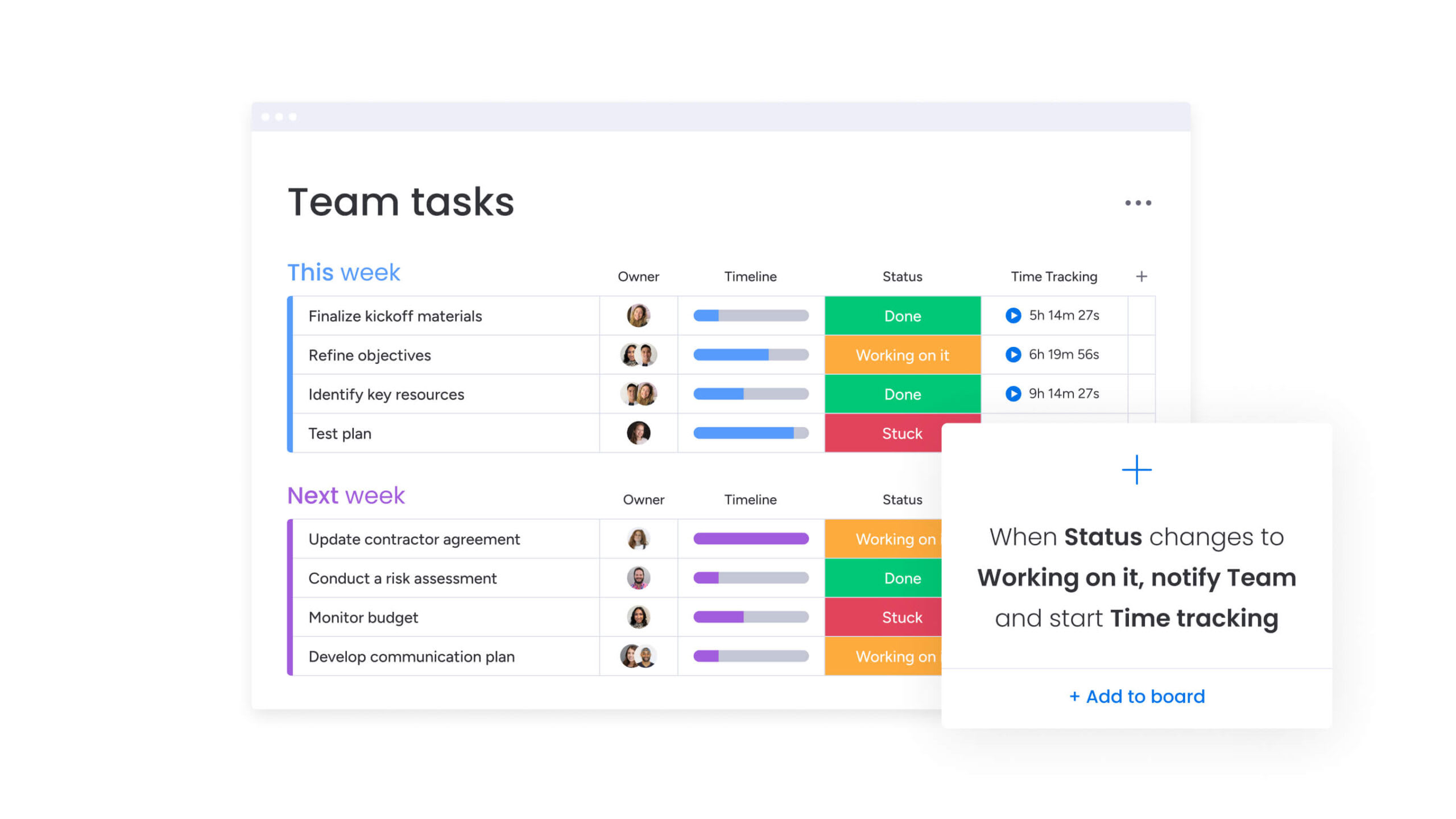
A project dependency is a relationship where one task can’t start or finish until another task is done. A dependency in project management refers to the relationships between project tasks and the order you complete them. For example, you can only complete Task B once you’ve finished Task A. And you won’t get started on Task C until you’ve signed off on Task B.
In project management, you won’t be able to start the first phase of your project until you’ve got the budget approved, and you’ll hold off on sharing the project results with your client until successful completion of your internal quality checks. Each of these tasks depends on another.
Dependencies are not the same as constraints. A dependency is a relationship between tasks, while a constraint is a fixed limit on the project, such as budget, scope, or a fixed deadline.
4 types of dependencies in project management
Internal decisions and resource allocation influence the following types of project dependencies. These include:

1. Logical dependencies
A logical dependency, also known as a causal dependency or logical relationship, is based on the natural flow of work needed to complete a project or project phase. The task sequence must follow a specific order and can’t run in parallel with other tasks which would be “illogical.”
Example: software developers can only start coding software once they’ve designed the software architecture. Task A is necessary to proceed with Task B.
2. Resource dependencies
Resource dependencies refer to tangible assets such as budget, materials, personnel, and the written documentation required to move forward with your project.
Example: You’ll need cash, bricks, and builders to build a house.
3. Preferential dependencies
Unlike most other dependencies, you can leave preferential dependencies out of your project workflows. But that would be a mistake. Also known as discretionary dependencies, these act as quality checks to ensure your work is completed to a high standard.
Example: A news publication would have an editor fact-check a journalist’s article before going to print. The editor can only complete their task once the journalist has finished writing. But you could skip this step altogether if you don’t mind the risk of error.
Cross-team dependencies
When several internal teams work together on a project, cross-team dependencies describe the order in which each group gets involved in the workflow.
Example: A sales team would need to wait until a product is developed before they could sell it. And a payroll department wouldn’t be able to pay employees who haven’t submitted their timesheets yet.
Internal dependencies in project management
Here’s a quick summary of the different types of internal dependencies that might feature in your next project:
- Task-based dependencies are sequential tasks where one must finish before the next begins, including that testing a product can’t start until it has been developed.
- Team-based dependencies require output from one team for another to proceed. For example, the design team must deliver mockups before developers can start coding.
- Approval-based dependencies need formal sign-offs before continuing. A project launch may require approval from the project sponsor.
- Best practices-based dependencies follow recommended standards to ensure quality or safety. For example, installing plumbing before electrical wiring on a construction project prevents potential damage and aligns with industry guidance.
- Resource-based dependencies are shaped by specific resource availability, like personnel or equipment. For instance, a photoshoot can’t proceed without a photographer and camera.
- Software-based dependencies rely on technology infrastructure to function. For example, implementing frontend features depends on setting up the backend server infrastructure first.
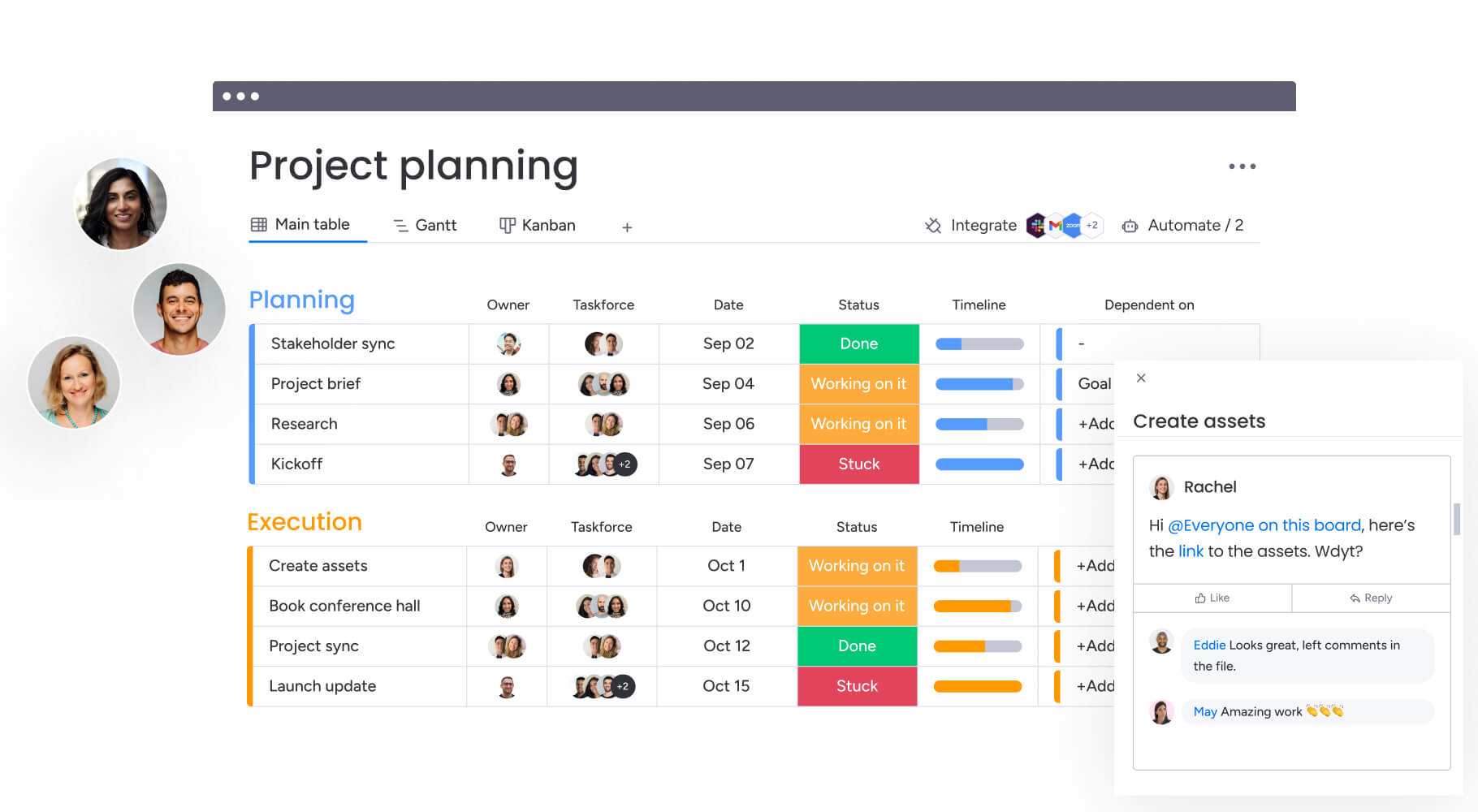
External dependencies in project management
External dependencies fall outside of your control, and any of the following could cause project delays:
- Supply chain-based dependencies rely on external suppliers or vendors to deliver materials or components. Building projects may be delayed if steel deliveries are late, for example.
- Weather-based dependencies are influenced by environmental conditions. Outdoor construction or filming projects may need to pause during heavy rain or extreme weather.
- Public health-based dependencies affect health-related issues or restrictions. For example, a global pandemic may impose travel restrictions, delaying international business projects.
- Bureaucracy-based dependencies depend on government or regulatory approvals. For example, launching a new product may require waiting for permits or compliance certifications.
- Traffic-based dependencies influence transportation delays or logistical challenges. Shipping goods to a warehouse may be delayed due to road closures or traffic congestion.
- Finance-based dependencies can also be internal. But if the project hinges on external funding, such as getting a bank loan approval, this becomes an external dependency.
- Legislature-based dependencies relate to changes in laws or policies. For example, a new tax regulation might require adjustments to a financial reporting system before it can be implemented.
4 types of task dependencies
Not all project tasks link up in the same way. In more complex projects, some tasks must finish before others start, while others may run in parallel. Understanding the relationships between task dependencies is critical to building an efficient project schedule and avoiding any frustrating bottlenecks.
- Finish to finish (FF): One task can’t finish until another task is complete. For example, the final edits of a report (Task A) must be completed so you can finalize the report layout (Task B). While waiting on these subtasks, the parent task (the report) is left pending.
- Start to start (SS): One task can’t begin before another begins. For example, streaming the live video feed during an online event (Task A) and monitoring the live chat for audience questions (Task B) start simultaneously. The chat monitoring can only begin once the live feed starts, ensuring real-time interaction with the audience.
- Finish to start (FS): One task must finish before another can start. For example, during an employee upskilling project, your workers must complete a foundational qualification (e.g., Task A) before progressing to an advanced level.
- Start to finish (SF): One task can’t finish until another task has started. For example, a night-shift worker (Task A) can’t clock off until the day-shift worker (Task B) has started their shift.
Mapping these relationships upfront prevents scheduling bottlenecks, because you can see exactly which tasks wait on which. Finish-to-start is the most common dependency, since so much work naturally moves in a clear, sequential order.

Benefits of managing project dependencies efficiently
Managing dependencies helps projects run more smoothly by keeping work in the right order. Your project will run smoothly if you have everything running in the correct order. Here are the specific gains your project team can expect when you commit to this process:
Improved project timelines
Project timelines are mere guesswork when you don’t take all the pieces of the puzzle into account. If your current approach to effective project management involves setting out generic project stages like development, execution, and delivery, without zooming into the details, you’re not seeing the full picture.
By understanding how one task affects or relies on another, you can structure your schedule appropriately to deliver your project on time.
Increased team productivity
Drawing clear links between individual project activities enhances team collaboration. If the owner of Task A understands their colleague assigned to Task B is waiting on them, they’ll (hopefully) feel compelled to work hard and hand over high-quality work to them.
Better risk management
Mapping dependencies also highlights project risks. What happens if the owner of Task A becomes unavailable and unable to complete their task? What contingency plans will you put in place to move the work to the person in charge of Task B?
This matters more as work grows more tangled: 81% of project professionals say projects have become more complex in recent years, per the PMI Pulse of the Profession 2026.
Optimized resource allocation
The beauty of dependency management lies in its granularity. Hammering out the specific details at each project stage focuses the mind on the resources you require to complete the work. You may realize you lack enough skills or personnel, enabling you to proactively source and allocate resources to keep your project on track.
Greater adaptability to change
When unexpected events arise (and we all know they do), having your dependent tasks mapped out allows you to pivot quickly. You immediately know what tasks are linked, what will be impacted, and how to take back control of the situation.
Examples of project dependency by industry
Each industry has its own typical business processes shaped by the type of work they produce and the working environment. Here are some common examples of project dependencies:
- Marketing teams can only respond to social media comments once they’ve written, scheduled, and published their posts.
- Software developers will fix a product bug when they’ve located the coding problem
- Construction teams can fix your roof when the storm has passed
- Healthcare providers will schedule patient surgery after the patient has completed all pre-operative tests
- Event planners can finalize seating arrangements once they’ve confirmed the guest list
- Education institutions will start a training course once they’ve enrolled students and booked an instructor
- Legal teams will file a lawsuit after they’ve collected the necessary evidence and documentation
How to identify project dependencies
While some dependencies are glaringly obvious, you’ll need to dig deeper to understand the types of relationship between other project elements. A project manager can follow these steps to identify your dependencies:

Break down your project into detailed tasks
Begin by considering your project‘s main objective to first understand what you need to complete on a macro level. For example, launching a new website would be your big picture project goal. From here, you’ll work backward to define all of the tasks that go into this major project. They might include:
- Registering a domain name
- Paying for domain hosting
- Deciding how many pages your website needs
- Determining the layout or design template for your website
- Writing copy for each page
- Optimizing the text for search engines
- Working with a graphic team to create visual elements like logos, videos, brand images, etc.
- Developing the website’s interface, including menus and navigation
- Testing website functionality before launch
- Finalizing your legal pages, for example, your privacy and terms of use policies
- Launching your website
- Sharing your website with your audience via social media, your newsletter, etc.
Sequence your tasks
Working from your list, begin sequencing your tasks. The Critical Path Method is a popular technique for doing this. It works by determining the longest sequence of dependencies that will determine your project’s end date and then calculating the earliest and latest possible start date for every task.
The difference between these dates is “float time,” which represents how much leeway you have before your project completion date is affected.
Categorize dependencies
Group your dependencies into different types, such as logical, preferential, etc. This allows you to prioritize each task correctly, ensuring you’re working on the most critical dependencies first. For example, a legal team might need to review and approve certain documents before you can launch the website. This would be categorized as a logical dependency since it is necessary for regulatory compliance.
Consult stakeholders
To ensure accuracy, project managers must consult with key stakeholders to ensure they’re presenting the dependencies correctly. Stakeholders may include:
- Managers and team leads
- Specialists such as developers or web designers
- External parties, such as your customers or any outsourced providers
- Other relevant departments

Visualize your dependencies
There are numerous ways you can create a map of project tasks and dependencies, from brainstorming on a whiteboard to using project management tools equipped with mind mapping and dependency diagram functionality.
Teams often visualize dependencies with Gantt charts, dependency diagrams, or network diagrams depending on project complexity. But the most effective way to visualize dependency relationships is to display them clearly on a Gantt chart, which can easily be updated as required.
Consider your blockers
So far, we’ve largely focused on dependencies that function as planned. But it’s important to identify any blockers that may prevent your workflows from running smoothly, for example, if a critical team member needs to take leave unexpectedly. Identifying blockers early turns unknowns into knowns and reduces risk, which keeps small issues from cascading into schedule delays later on.
Validate your dependencies
Once you’ve considered every possible angle and mapped out all your dependencies, complete the planning cycle by returning to your stakeholders and asking them to validate your findings.
Get started
Best practices for managing project dependencies
A project manager and their team can follow these tried-and-tested best practices to ensure effective dependency management.
- Identify dependencies early: Pinpointing all potential dependencies should be one of your first steps when putting together your project plans. This allows you to understand the scope and complexity of your project, as well as anticipate potential roadblocks.
- Keep track of updates: Review and update your dependencies regularly as changes occur throughout the project lifecycle. This will ensure your project stays on track and any changes in dependencies are accounted for. To streamline this process, you should use a business process management tool.
- Ensure every dependency has an accountable owner: Knowing who is responsible for a dependency is just as important as knowing it exists. Otherwise, Task B’s owner will be waiting forever, while Task A’s owner isn’t aware they have work to do. Communicate ownership using a shared document that your entire team has access to or collaborative project management software.
Learn more: AI dependency and risk mapper agent
Manage project dependencies in monday AI Workspace
Once you understand how dependencies work, the next step is keeping them visible and current as your project moves. monday AI Workspace provides a collaborative space for tracking your entire project, including its dependencies, timeline, and task owners. Here’s how teams put it to work.
- Dependency columns and Gantt view: Map finish-to-start, start-to-start, finish-to-finish, and start-to-finish relationships, then display them on a Gantt chart. Strict and flexible settings decide how connected tasks respond when a schedule shifts, so dependent dates move automatically when a predecessor moves.
- Automations for clean handoffs: No-code automations send date reminders and notify the next owner the moment a task closes, so work moves to the right person without anyone chasing an update. Handoffs stay smooth and nothing stalls between owners.
- AI risk management: The platform’s AI helps monitor work in real time, flags bottlenecks and scheduling conflicts as they emerge, and adjusts schedules based on task dependencies before delays cascade across the plan. Your team sees a problem while there is still time to act on it.
- Dashboards for cross-team visibility: Dashboards consolidate timelines and dependency status across teams into one live view, so a shared picture of work management replaces scattered status updates. Pairing this with a business process management tool keeps repeatable workflows consistent across every department.
These capabilities also connect to a wider AI ecosystem. monday agents include a Risk Analyzer agent that flags bottlenecks and scheduling risks so owners hear about them early. monday MCP lets teams connect AI assistants like Claude or ChatGPT to read and update dependency data securely, while people stay in control. And monday vibe lets you describe a custom dependency or OKR tracker in plain language, then builds the app for you in minutes.
Here is how these approaches compare when it comes to handling dependencies day to day:
| Capability | monday AI Work Platform | Generic spreadsheets | Traditional PM tools |
|---|---|---|---|
| Dependency mapping | Built-in columns for all four task relationships | Manual and easy to break | Available but often rigid |
| Automatic date shifting | Strict and flexible settings move dependent dates for you | None, every change is manual | Limited and rules-heavy |
| AI risk alerts | AI flags bottlenecks and conflicts in real time | None | Rare or add-on only |
| Cross-team visibility | Live dashboards across teams and projects | Siloed by file and version | Often role or license gated |
| Ease of use | Scores 9.1/10 for ease of use on G2 | Familiar but manual | Steeper learning curve |
Turn dependency mapping into on-time delivery
Project dependencies decide the order your work has to move in, so the teams that map them clearly are the ones that deliver on time. When every relationship is visible, you know what waits on what, who owns each handoff, and where a single slip could ripple through the plan.
That visibility gets sharper with AI-assisted scheduling. Instead of tracking connections by hand, your team sees dependencies on a live Gantt view, watches dependent dates shift automatically, and hears about bottlenecks while there is still time to reroute the work.
Map your dependencies once, keep them current, and let clear sequencing carry your project from planning through to a smooth finish.
Get started
FAQs
What is the most common type of dependency?
Finish-to-start is the most common type of dependency, where one task must finish before the next can start. It reflects how most work naturally moves in a clear, sequential order.
Can a dependency also be a risk?
Yes, a dependency can be a risk. If a critical dependency is not met, it could affect the overall project completion date and budget, which is why it helps to identify and manage dependencies early in the planning phase.
How do you manage dependencies across multiple projects?
Managing dependencies between 2 related projects works the same way as managing dependent tasks within a project. Both hinge on understanding the relationships between tasks, identifying potential blockers, and communicating clearly with project stakeholders.
Are project dependencies the same as constraints?
No, project dependencies are not the same as constraints. Constraints are fixed limits such as budget, time, and resources, while dependencies are related tasks you must complete in sequence, and a delayed dependency can affect a constraint like your deadline.
What is the difference between a dependency and a blocker?
A dependency is a planned relationship where one task relies on another, while a blocker is an unplanned issue that stops work from progressing. Dependencies are expected and mapped in advance, whereas blockers surface as obstacles you need to clear.
How does monday AI Workspace handle project dependencies?
monday AI Workspace maps dependencies with dedicated columns and a Gantt view, then auto-shifts dependent dates when a predecessor moves. Its AI also flags bottlenecks and scheduling conflicts in real time so teams can act before delays cascade.

 Get started