


Vague deliverables are where projects quietly go wrong. When a team cannot point to the exact outputs it owes stakeholders, scope creeps, handoffs slip, and the finished work rarely matches what anyone pictured at kickoff. Clear project deliverables solve that by turning abstract goals into concrete, measurable outputs everyone can see and track.
Getting deliverables right is what separates a project that lands from one that drifts. The sections below define deliverables, show how they differ from milestones, and cover the types you meet on real projects. You will also see project deliverable examples across software, marketing, design, construction, and consulting, so you can map the exact outputs your own project owes and keep them on schedule. Throughout, you will see how the monday AI Workspace keeps those outputs visible and on track with real-time dashboards, no-code automations, and AI risk alerts that flag at-risk work before deadlines slip.
Key takeaways
- A project deliverable is any measurable output a project produces and hands off, from documents and designs to finished products
- Deliverables differ from milestones: a deliverable is a tangible or intangible output, while a milestone is a time-based checkpoint that marks progress
- Deliverables group into internal, external, and process categories, and each one is either tangible or intangible depending on the output
- Defining deliverables well means mapping scope, writing clear acceptance criteria, assigning owners, and tracking progress against each output
- The AI Workspace keeps deliverables on track with real-time dashboards, no-code automations, and AI risk alerts that flag at-risk work early
What is a project deliverable in project management?
A deliverables list is the full set of agreed outputs a project must produce, such as documents, features, and reports, gathered in one place so the team and stakeholders know exactly what is due and when. Each item on that list is a single project deliverable.
A project deliverable is any tangible or intangible output produced as a result of project work that can be verified and measured. In project management, a deliverable is a specific item, result, or outcome that must be completed and handed over to stakeholders during or at the end of a project.
To define a deliverable more clearly, think of deliverables as the concrete proof that work has been completed successfully. A deliverable differs from a goal or a milestone because deliverables are actual outputs you can touch, see, or experience.
This includes everything from physical products like printed brochures to intangible outputs like training sessions or software code. Understanding what deliverables are helps teams stay focused and aligned throughout the project lifecycle.
Deliverables vs milestones: what is the difference
Key project deliverables are the outputs a project must hand over, while milestones are the moments in time that mark meaningful progress toward them. A deliverable is something you produce. A milestone is a checkpoint you reach, often when one or more deliverables are complete.
Mixing the two is a common source of confusion. Teams that treat a milestone like a deliverable end up with a date on the calendar but no defined output attached. The distinction matters because you accept and verify a deliverable against criteria, whereas you simply pass a milestone once the work behind it is done.
Here is how the two compare side by side.
| Aspect | Deliverable | Milestone |
|---|---|---|
| Definition | A tangible or intangible output the project produces | A checkpoint in time that marks progress |
| Example | A finished design mockup or a requirements document | Design phase approved, or beta launch reached |
| How it is measured | Verified against acceptance criteria | Reached once its underlying work is complete |
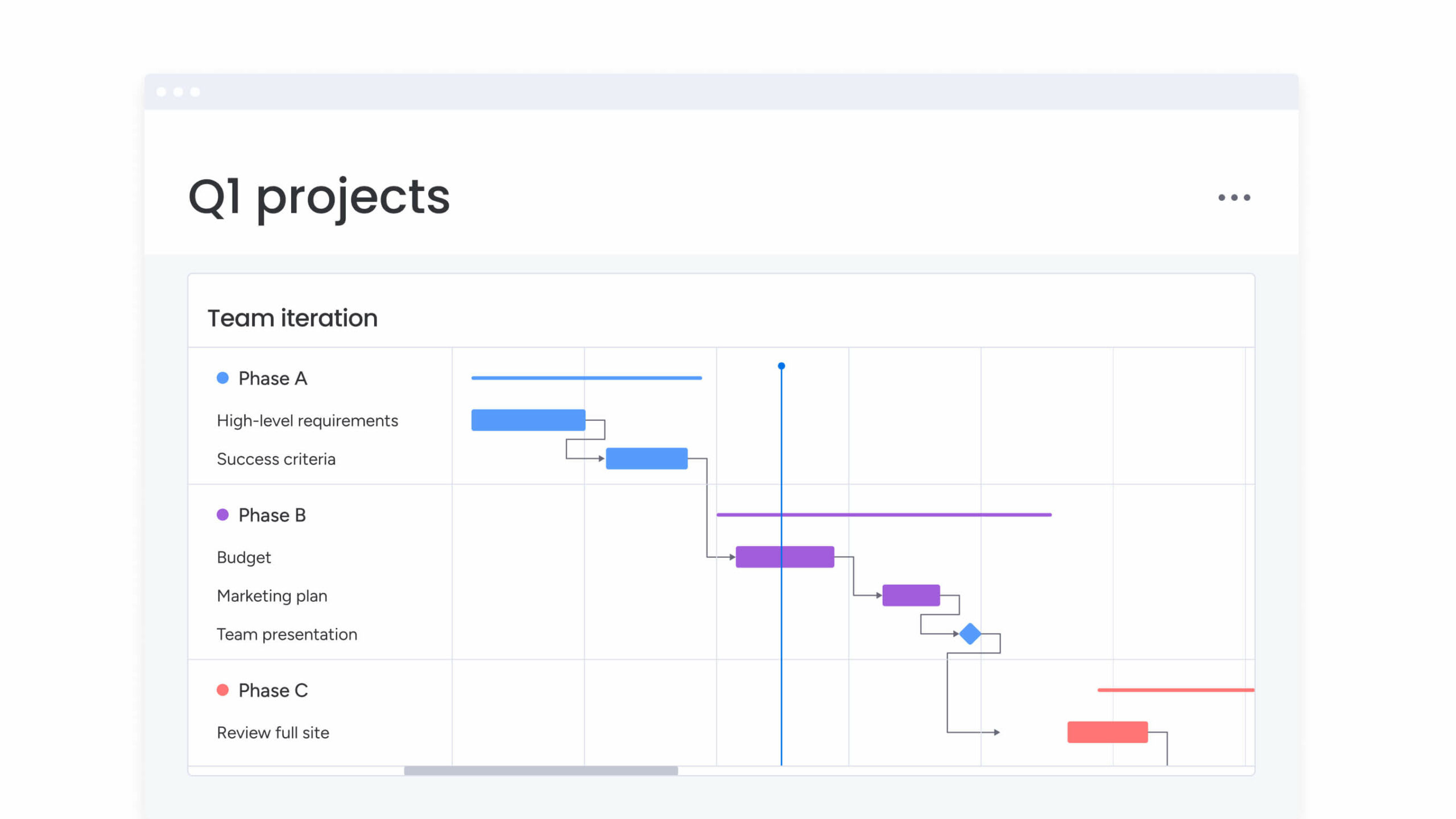
Different types of project deliverables
Project deliverables fall into several categories that help teams organize their work and set clear expectations. Understanding the various types clarifies what deliverables look like in different project contexts, since each serves a specific purpose and needs a different management approach.
Internal deliverables
Internal deliverables are outputs used within the project team or organization to support project execution. These deliverables focus on planning, coordination, and progress tracking rather than final client-facing results.
The most common internal deliverables are:
- Project plans that outline tasks and timelines
- Status reports that track progress
- Meeting notes that document decisions
- Risk assessments that identify potential issues
These deliverables keep teams organized and informed throughout the project.
External deliverables
External deliverables represent what clients or customers receive as the project’s value. These final deliverables often require higher quality standards since they directly impact stakeholder satisfaction.
Examples of deliverables for external audiences are:
- Completed products
- Client reports
- User manuals
- Training materials
Process deliverables
Process deliverables support the project’s workflow and methodology. These deliverables ensure consistent procedures and quality standards throughout execution.
Key process deliverables might include:
- Workflow documentation
- Testing procedures
- Quality checklists
- Project schedules
No-code automations on monday.com can keep these process deliverables consistent by standardizing recurring steps across every project, so the same checks and handoffs happen every time.
Tangible vs intangible deliverables
Alongside those categories, every deliverable is either tangible or intangible, and the difference changes how you verify it. A tangible deliverable is a physical or concrete output you can hand over directly, such as a printed report, a signed contract, or a shipped product. An intangible deliverable is a knowledge or service output with real value that is harder to hold, such as a training session, a brand strategy, or tested software code.
Both types still need acceptance criteria. For a tangible deliverable, the criteria are usually obvious, like page count or dimensions. For an intangible one, you must agree upfront on what “done” looks like so the output stays measurable rather than open to interpretation.
Seven steps to define project deliverables
A systematic approach to defining project deliverables prevents scope creep and keeps a project on course. These steps help teams create clear, actionable deliverables that align with stakeholder expectations. The process starts with understanding what the project must accomplish and translating those requirements into specific, measurable outputs.
Step 1: Map your project scope
Document the boundaries of your project, including what is included and excluded from the work. Use scope statements to clarify these boundaries and connect each part of the scope to potential deliverables.
For example, a website redesign project might include updating the homepage and contact page, leading to deliverables like new page layouts and revised navigation. Clear scope mapping ensures teams create the right deliverables.
Step 2: Align with objectives
Ensure every deliverable supports a specific project objective. This step prevents teams from creating outputs that do not contribute to the project’s ultimate goals.
If your objective is increasing user engagement, relevant deliverables might include an interactive tutorial or an engagement analytics dashboard. Goal-tracking features on monday.com help maintain this alignment throughout the project.
Step 3: Use a work breakdown structure
A work breakdown structure divides the project into smaller, manageable parts. Create this structure to systematically identify all necessary deliverables.
The breakdown reveals dependencies between deliverables and helps teams sequence their work logically. Standards bodies share this view: NASA’s Work Breakdown Structure Handbook describes a WBS as a product-oriented hierarchy that captures a project’s full approved scope of work. This approach ensures comprehensive deliverable identification.

Step 4: Document acceptance criteria
Define what “done” looks like for each deliverable with specific, measurable standards. Examples include “brochure must be five pages and include pricing” or “website must load in under two seconds.”
Clear criteria help verify completion and prevent disputes about quality, and they keep teams motivated because everyone understands how success will be measured. Document these standards and agree on them before work begins.
Step 5: Assign ownership
Assign a specific person or team to each deliverable using clear responsibility assignments. Effective ownership includes who will create, review, approve, and maintain each deliverable.
This clarity prevents confusion and ensures smooth handoffs between team members throughout the project lifecycle.
Step 6: Validate with stakeholders
Get stakeholder agreement on each deliverable and its acceptance criteria through structured validation sessions. Early validation prevents misunderstandings and reduces rework later.
Document these approvals for reference throughout the project to keep everyone aligned on expectations.
Step 7: Track progress continuously
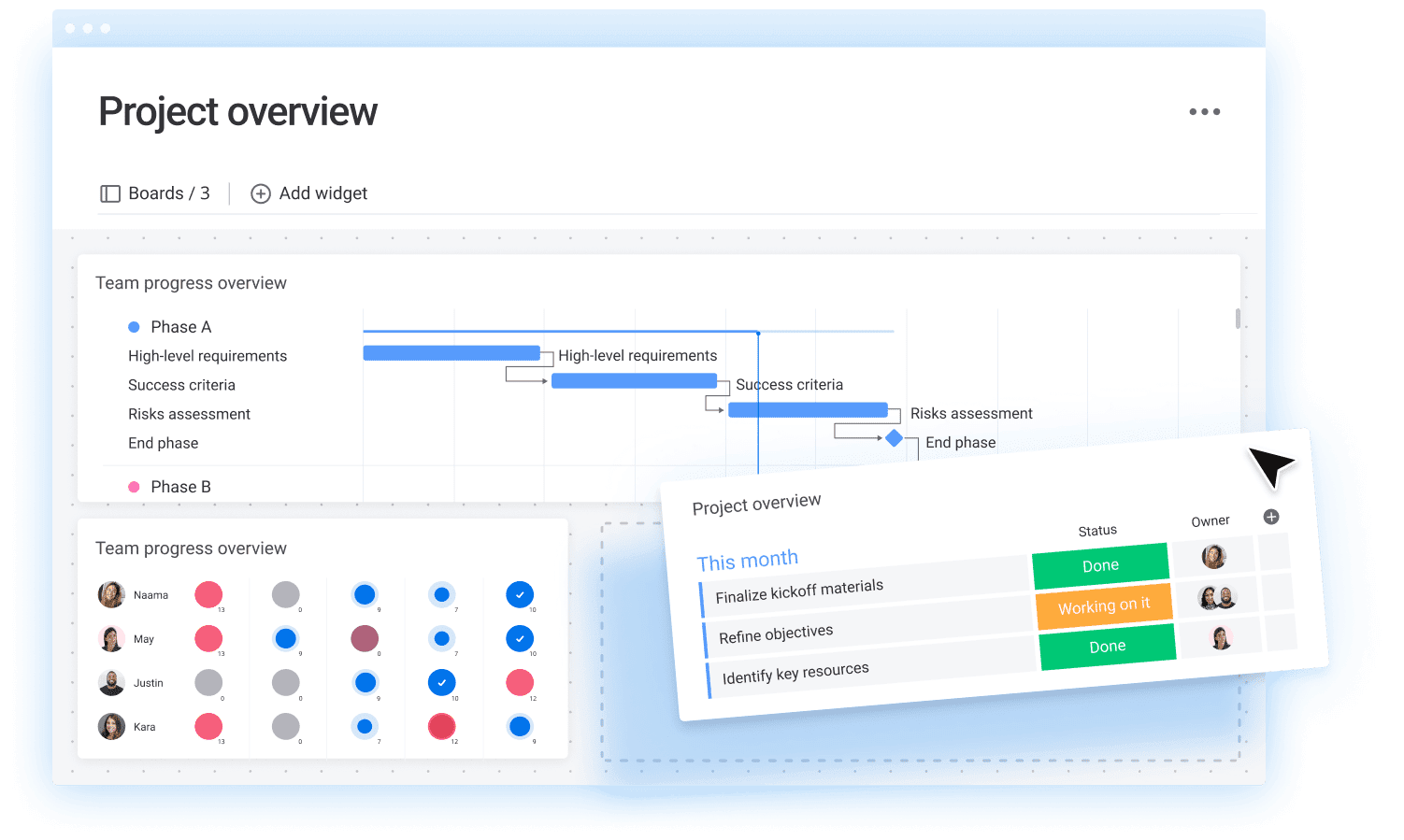
Monitor deliverable status throughout the project using dashboards and visual tracking. Dashboards on monday.com provide real-time visibility that keeps teams and stakeholders informed about progress.
Regular tracking enables proactive problem-solving and helps teams adjust when deliverables encounter challenges.
Project deliverables examples by team and industry
The five key deliverables most projects share are a project charter, a project plan, a requirements document, regular status reports, and a final product or handover. Beyond that core set, real examples clarify how teams translate objectives into concrete outputs across industries and roles. The groups below illustrate the wide range of outputs projects generate.
Software development deliverables
Software projects produce both technical and user-facing outputs throughout the development lifecycle. These software development deliverables typically flow from initial requirements to final deployment.
Essential software project deliverables examples include requirements documents that specify functionality, functional prototypes that demonstrate key features, source code repositories with complete documentation, user guides for end-users, and final software releases ready for production.
Marketing deliverables
Marketing projects focus on creating materials that drive business objectives and customer engagement. Marketing deliverables support campaign goals and provide measurable outputs for evaluation.
Key marketing deliverables include campaign strategy plans, creative assets like banners and videos, social media calendars with scheduled content, and performance analytics reports that measure effectiveness.
Design deliverables
Design projects progress from early concepts to polished, client-ready assets through iterative deliverables. Each design deliverable builds upon previous work while moving toward the final vision.
Essential design deliverables include wireframes showing basic layout, detailed mockups with visual elements, comprehensive style guides for consistent branding, and final design files ready for production.
Client deliverables examples
Client-facing deliverables vary by industry but always focus on demonstrating project value. These outputs represent the tangible benefits clients receive from their investment.
Typical client deliverables examples include project proposals outlining scope, progress reports maintaining transparency, final product delivery with agreed features, and support documentation for ongoing maintenance.
Construction deliverables
Construction projects move through tightly regulated stages, and their deliverables reflect that rigor. Each output has to satisfy safety, compliance, and quality checks before the next phase can start.
- Architectural blueprints: detailed drawings and specifications that define the structure and guide every trade on site
- Permits and approvals: the regulatory sign-offs required before work can legally begin or continue
- Inspection reports: documented checks confirming that work meets code and safety standards at each stage
- Completed structures: the finished building or infrastructure handed over to the client on acceptance
Business and consulting deliverables
Business and consulting projects trade in knowledge outputs, so their deliverables are often intangible but still measurable. Clients pay for insight and change, and each deliverable has to make that value explicit.
- Market analysis reports: research-backed findings that frame the problem and the opportunity
- Strategic recommendations: prioritized actions the client can execute against, with expected outcomes
- Training workshops: sessions that transfer new skills or processes to the client’s team
- Implementation roadmaps: phased plans that turn recommendations into scheduled, owned work
Pro tip: Organize deliverables by project phase to maintain momentum. Early deliverables validate concepts while final deliverables ensure a successful handoff and long-term value.
How to manage and track project deliverables
Managing deliverables successfully requires systematic tracking, clear communication, and proactive problem-solving. Teams need visibility into progress, dependencies, and potential issues to keep deliverables on track. Here is what we recommend.
Set clear timelines
Establish realistic deadlines for each deliverable by considering dependencies and resource availability. Sequence deliverables logically so prerequisite work finishes before dependent activities begin.
Visual timeline platforms help map deliverable schedules and surface conflicts early. Manual reporting still eats real time, since Wellingtone’s State of Project Management report found that 72% of teams spend half a day or more each month just collating project reports, which makes shared, real-time timelines a practical upgrade for keeping everyone aligned on project flow and critical dates.
Use automation features
Deliverable tracking and automation reduce manual work that can slow progress. Set up automated reminders for deadlines, status updates when deliverables are complete, and approval workflows that route outputs to reviewers.
Automations on monday.com help teams stay on top of deliverables by triggering actions based on status changes, due dates, or project conditions. Recipes can nudge an owner before a due date, notify a reviewer the moment a status flips to done, and hand a finished deliverable to the next stage without anyone chasing it.

Communicate with stakeholders
Provide regular updates on deliverable status through dashboards, summaries, or structured meetings. Visual progress reports help stakeholders understand project status quickly without lengthy explanations.
Effective communication includes proactive updates when deliverables progress smoothly and immediate alerts when issues arise. Real-time dashboards support this by showing live progress and flagging at-risk deliverables early, so the conversation starts before a slip becomes a crisis. This transparency builds trust and helps stakeholders step in when needed.
Review and adjust regularly
Schedule regular reviews to assess deliverable progress through check-ins, retrospectives, or milestone meetings. Use these sessions to identify improvements and adjust plans based on feedback or changing requirements.
Regular reviews help teams catch issues early and correct course before challenges become critical. This proactive approach keeps projects on track and ensures deliverables meet expectations.
How the monday AI Workspace helps you manage project deliverables
Once you know your deliverables, the challenge becomes keeping every output visible, owned, and on schedule across teams. The AI Workspace is where people and agents work together to move that work forward, and several capabilities map directly to managing deliverables. Each one is educational context here, not a replacement for the process above.

- Dashboards: real-time status across every deliverable, with progress battery views, Gantt timelines, and portfolio roll-ups. AI-generated summaries and risk alerts flag at-risk deliverables early so leaders act on foresight, not hindsight
- Automations: no-code recipes send deadline reminders, auto-assign deliverable owners, notify reviewers of status changes, and manage stage handoffs, removing the manual chasing that slows projects down
- monday agents: task-specific AI workers that run alongside your team. A Risk Analyzer surfaces deliverables that are trending late, and a reporting agent can compile status updates. Agents act on triggers within clear guardrails, so people stay in control while they handle repetitive work
- monday workflows: visually build multi-step, cross-team processes so a deliverable moves automatically from one owner to the next. Workflows can also trigger agents as a step, connecting deterministic automation with AI execution
All of this runs on mondayDB, one connected data layer that gives every team and every agent the same cross-department context, while 200+ integrations and MCP keep deliverables in sync with the rest of your stack. The table below contrasts three common approaches to managing deliverables.
| Capability | Manual and spreadsheets | Generic PM software | The AI Workspace |
|---|---|---|---|
| Deliverable visibility | Static files updated by hand | Board or list views per project | Real-time dashboards with portfolio roll-ups |
| Status updates | Manual edits and follow-up messages | Manual status fields | Automations that update and notify on triggers |
| Risk detection | Spotted late, if at all | Manual review of due dates | AI risk alerts that flag at-risk deliverables early |
| Ownership handoffs | Verbal or email handoffs | Manual reassignment | Automated handoffs and workflow routing |
| Cross-team context | Siloed per file or team | Limited to one project or app | One connected data layer across departments |
Trusted by hundreds of thousands of organizations worldwide, the platform is built so people and agents work as one team on the same deliverables, rather than adding another disconnected system to manage.
Turning deliverables into project success
Clear deliverables turn project uncertainty into focused action by giving teams specific outputs to produce and measurable ways to verify them. When responsibilities are defined, acceptance criteria are agreed, and progress is tracked against each output, teams avoid scope creep and stay accountable to what they actually owe. That is the difference between deliverables as a checklist and deliverables as commitments that carry real business value.
The next step is getting ahead of problems. With real-time tracking, you catch a slipping deliverable early enough to act. Whether you are building your first deliverables list or mapping outputs for a new project, the difference between teams that deliver and teams that drift comes down to visibility: every output needs an owner, clear criteria, and a way to track it from start to handoff.
FAQs about project deliverables
What is the difference between project deliverables and milestones?
Project deliverables are the tangible or intangible outputs a project produces, while milestones are checkpoints in time that mark progress. Deliverables are verified against acceptance criteria. Milestones are simply reached once their underlying work is complete.
What are the five key deliverables in a project?
The five key deliverables in a project are usually the project charter, the project plan, the requirements document, regular status reports, and the final product or handover. Together, they define why the project exists, how it will run, what it must produce, and proof that the work is complete.
How do you create acceptance criteria for project deliverables?
You create acceptance criteria for project deliverables by defining specific, measurable standards that are agreed with stakeholders before work begins. Focus on quality standards, performance requirements, and functional specifications that clearly state what a completed deliverable looks like, so you can verify completion without dispute.
How do project deliverables vary across different industries?
Project deliverables vary across industries in format, complexity, and regulatory requirements, though all are measurable outputs that support project objectives. Construction deliverables include blueprints and inspection reports, software deliverables include code and documentation, and consulting deliverables include analysis reports and strategic recommendations.
Is there a project deliverables template or checklist?
A project deliverables template is simply a structured deliverables list that captures every agreed output in one place. A useful checklist records each deliverable, its owner, acceptance criteria, due date, and current status, keeping the team and stakeholders aligned on what is due.
How does monday AI Workspace help track project deliverables?
monday AI Workspace helps track project deliverables through real-time dashboards, no-code automations, and Agents. Dashboards show live status and AI risk alerts, automations handle reminders and handoffs, and Agents surface at-risk work, so people and AI keep every output visible and on schedule together.
 Get started