


When one romantic partner proposes to the other, they give themselves the best chance of receiving the “Yes” they’re hoping for. They might create the perfect mood by going to a special location, buying a sparkling ring, and rehearsing some meaningful words to say. They want their efforts to resonate with their loved one.
Although marriage engagements and project proposals seem worlds apart, the process is surprisingly similar. Both hinge on putting in the prep work to secure an eager approval. This guide shows you how to write a persuasive project proposal from start to finish, six different types of proposals, and how to manage your proposals and everything project-related on monday.com. You’ll also find a comparison table, a real-world example, and answers to the most common questions about project proposals.
Key takeaways
- A project proposal is a persuasion document that outlines your project’s scope, timeline, budget, and value to win stakeholder approval.
- There are six types of project proposals (solicited, unsolicited, informal, renewal, continuation, and supplemental), each suited to different situations and audiences.
- A strong proposal follows a clear structure: executive summary, background, solution, goals, resources, and a closing summary with next steps.
- Project proposals differ from project plans and project charters in purpose, timing, and level of detail.
- monday.com’s AI Work Platform helps you manage the entire proposal lifecycle, from intake and collaboration to approval tracking and project execution.
What is a project proposal?

A project proposal is a document that outlines the details of a proposed project, such as scope, timeline, and budget. Project managers typically use it to persuade potential stakeholders or sponsors to fund, support, or approve the project. Think of it as the first formal step in the project initiation phase.
Before any planning, scheduling, or resource allocation begins, a proposal sets the stage by communicating why a project matters and how it will be executed.
The goal is to clearly communicate your project idea and convince others that it’s worth investing time, resources, and money into.
This is an important task, since organizations only win 45% of their requests for proposals, according to Proposal.biz research in 2025. That means more than half of all proposals never convert, which is why writing a compelling one can give you a serious competitive edge.
What are the different types of project proposals?
Before you start writing, the six project proposal formats below will guide your approach based on your proposal’s goals, audience, and whether you’re competing against other companies:
Solicited
A solicited proposal is a response to a formal Request for Proposal (RFP.) In this scenario, the company requesting the proposal has most likely asked a variety of companies to send a proposal in, and they’ll select their preference from a range of offers.
A professional and persuasive proposal is essential to outline why you’re the best fit for the project.
Unsolicited
Unsolicited proposals go hand in hand with cold pitching where you send an uninvited proposal to a company you’d love to work with as part of your professional outreach. Writing these proposals is challenging as you must guess the company’s pain points before describing how your project will solve them.
Informal
Informal pitches occur without a formal RFP. A client might send you a casual email or direct message asking for a pitch. This informal type of proposal might be suitable if this is someone you’ve worked with previously or as a pre-vetted referral from an existing contact.
Renewal
Renewal proposals are a chance to extend your relationship with an existing client you’ve previously or are currently working with. Typically, you’ll present your progress and success metrics to justify why the project should renew.
Continuation
Continuation proposals are quick to write and provide an update about your project and progress details to an existing client, any upcoming milestones, and potential roadblocks to consider.
Supplemental
Supplemental proposals focus on one specific aspect of the project rather than the entire project itself. You might reach out to a specific stakeholder to present a case for more funding or resources for an additional part of the project.
How to write a project proposal
An effective project proposal includes plenty of scope for creativity and individuality, showcasing why you are the best person or company to handle the workload. Delivering the completed successful proposal usually involves working through a series of core steps, as follows:
1. Create an executive summary
The executive summary is your bottom line up front. Acting as the introduction to your proposal, it gets straight to the point and briefly touches on:
- The problem your project will address
- The solution you plan to implement
- The overall impact of your project
2. Outline the project background
Describing the pain points your project will solve reminds the project recipient about the current situation to justify why your project is essential. Include details such as:
- What you know and understand about the problem
- What they have already tried to overcome it
- What other competitors are doing to solve similar problems
For example, if your project is to design a new website, you might outline current issues with the company’s existing site, such as outdated design and poor user experience. To make your proposal even more compelling, explain how the UX has resulted in low ecommerce sales and high bounce rates.
Back up your claims with data wherever possible. Research from industry reports, customer surveys, or internal analytics makes your case harder to dismiss. Stakeholders respond to evidence, not assumptions.
3. Provide a solution to the project’s pain point
After outlining the problem, it’s time to showcase your creativity and expertise by explaining how your project will solve the pain point in a way that sets you apart from competitors. You should include:
- The project management methodology you plan to use
- Expected outcomes and results
- Potential risks and challenges and how you plan to mitigate them
- Case studies involving similar projects and the results you’ve produced
In the website project example, you could detail your user-centric approach to creating a modern and visually appealing site, while highlighting how it’ll improve conversions and user engagement. You might highlight your team of experienced web designers who can handle any potential design challenges that may arise. Or that you have a thorough testing process in place to ensure the site meets all necessary technical standards.
4. Define your project goals and deliverables
Any stakeholder reading your proposal should understand exactly what they’ll receive in return for their investment, whether a new process, service, or product. Include:
- Specific project goals and objectives
- Measurable success criteria post-project, tied to KPIs your stakeholders already care about
- A detailed timeline for each phase of development and project completion
The more specific you are about deliverables and deadlines, the easier it is for decision-makers to say yes. Vague promises erode confidence, while concrete targets build it.
5. List your required resources
Project managers require specific resources to achieve their goals. These include:
- Personnel: Who is responsible (and available) for the project, and what are their roles? Consider including bios to highlight relevant skills, experience, and qualifications.
- Tools, materials, and technology: What software, equipment, or materials do you need to complete the project? Ensure they align with industry standards and best practices.
- Budget: Offer a detailed breakdown of costs for each resource required to complete the project. This information shows transparency and helps stakeholders understand where their investment is going.
On this last point, Webflow developer Darren Sims suggests providing a range of pricing options for stakeholders to review, based on his recent experience:
“Sent out a proposal for a webflow project recently and made the mistake of not providing two or three pricing options. I knew it at the time, but was just keen to get the proposal out. I felt like I‘d been spending too much time agonizing over the wording. Thankfully, the client isn‘t put off, but would like another couple options to consider. Gold, silver, bronze—as they put it.”
6. Summarize your project proposal
The final step is to condense your proposal into a concise but persuasive summary with a call to action to contact you. This will serve as a final recap for stakeholders, while also providing an opportunity to remind them why they should choose you and your project.
Don’t overlook the power of a clear next step. Whether it’s scheduling a follow-up meeting, signing a letter of intent, or requesting additional documentation, telling the reader exactly what to do next keeps the momentum going and reduces the chance your proposal sits unread in an inbox.
Key elements every project proposal needs
While the writing process above gives you a step-by-step path, it helps to zoom out and see the full picture. Every project proposal, regardless of type or audience, should contain a core set of elements that stakeholders expect to see.
Missing even one of these components can raise red flags or leave decision-makers with unanswered questions. Here’s a quick-reference checklist you can use before submitting any proposal:
- Executive summary: A concise overview of the project’s purpose, solution, and expected impact.
- Problem statement: A clear description of the issue or opportunity your project addresses.
- Proposed solution: Your approach, methodology, and the specific actions you’ll take.
- Scope and deliverables: What’s included (and excluded) in the project, along with tangible outputs.
- Timeline: A phased schedule with milestones and deadlines for each stage.
- Budget: An itemized cost breakdown that accounts for personnel, materials, and contingency.
- Team qualifications: Brief bios or credentials that demonstrate your team’s ability to deliver.
- Next steps: A specific call to action, such as scheduling a kickoff meeting or signing an agreement.
Project proposal vs. project plan vs. project charter
Project proposals, project plans, and project charters are three documents that often get confused, especially by teams new to formal project management. They serve different purposes at different stages of the project lifecycle, and understanding those differences helps you write the right document at the right time.
Here’s a side-by-side comparison that clarifies what sets them apart:
| Attribute | Project proposal | Project plan | Project charter |
|---|---|---|---|
| Purpose | Persuade stakeholders to approve or fund a project | Guide the execution of an approved project | Formally authorize the project and define its scope |
| When created | Before approval, during project initiation | After approval, during planning phase | After approval, before detailed planning |
| Who creates it | Project manager, business development team, or consultant | Project manager and core team | Project sponsor or senior leadership |
| Level of detail | High-level: problem, solution, budget estimate, timeline overview | Detailed: task breakdowns, resource assignments, risk registers | Summary-level: objectives, constraints, stakeholders, authority |
| Audience | Decision-makers, sponsors, clients | Project team, managers, contractors | Executives, steering committees |
In short, the proposal sells the idea, the charter gives it official backing, and the plan turns it into a day-by-day roadmap. Many organizations skip the charter entirely and move straight from proposal to plan, but having all three in place strengthens accountability across the board. With monday.com’s AI Work Platform, you can manage all three documents in one centralized workspace, ensuring nothing gets lost in the handoff from approval to execution.
Get startedProject proposal example
Seeing a proposal in action makes the structure easier to follow. Below is a short, annotated example based on a fictional website redesign project. Each section maps directly to the writing steps covered earlier in this guide.
While your real proposal will likely be longer and more detailed, this gives you a concrete framework to build from:
Executive summary
We propose a full redesign of Greenleaf Co.’s e-commerce website to improve user experience, increase mobile conversion rates by 20%, and reduce bounce rates by 15% within six months of launch.
Project background
Greenleaf Co.’s current site was built in 2019 and has not been updated to reflect modern UX standards. Mobile traffic accounts for 62% of visits, yet the mobile conversion rate sits at 1.2%, well below the industry average of 3.6%. Customer support tickets related to checkout issues have increased 40% year over year.
Proposed solution
Our team will conduct a UX audit, redesign the site architecture, and rebuild the front end using a responsive framework. We’ll run A/B tests on key pages before full deployment and provide 30 days of post-launch support.
Goals and deliverables
Deliverables include a UX audit report, wireframes, a staging site, and the final production site. Success will be measured against mobile conversion rate, bounce rate, and average session duration.
Required resources
The project requires a UX designer, two front-end developers, a QA specialist, and a project manager. Estimated budget: $85,000-$110,000 over a 14-week timeline.
Summary and next steps
This redesign positions Greenleaf Co. to capture more mobile revenue and reduce support overhead. We recommend scheduling a kickoff call by March 15 to finalize scope and begin the UX audit.
Feel free to adapt this structure for your own projects. You can also explore our program proposal template, budget proposal template, or consulting proposal template for more specialized starting points.
Tips for writing a project proposal
Along with following the process above, consider these best practices to ensure your project proposal resonates with the recipients you’re presenting it to:
- Know your audience: Tailor your language, tone, and content to the specific stakeholders you’re presenting to. For example, if you’re pitching to a technical team, use industry-specific terminology and focus on technical details rather than high-level business benefits.
- Showcase your expertise: Highlight relevant experience, qualifications, and case studies demonstrating your ability to complete the project successfully.
- Use visuals: Images or representations such as graphs, charts, or mockups convey complex information in a more digestible format.
- Proofread and edit: Ensure your proposal is free of grammatical or spelling errors, and check that the formatting is consistent throughout the document to produce a polished and professional finish.
- Customize each proposal: While a template is a useful foundation, always tailor your proposal to the specific project and stakeholders involved so it doesn’t look generic.
- Sell the vision, not just the plan: Stakeholders want to see the end result, not just the steps to get there. Paint a picture of what success looks like and why it matters to their organization’s broader goals.
- Keep it concise: A proposal that’s twice as long isn’t twice as persuasive. Cut anything that doesn’t directly support your case, and front-load the most important information so busy decision-makers get the point fast.
- Back every claim with evidence: Whenever you reference a market trend, a cost estimate, or a performance benchmark, link it to a credible source. Data-backed proposals are harder to dismiss and signal that you’ve done your homework.
Manage your project proposals with monday.com's AI Work Platform
Whether you’re managing a single project proposal or need to track a whole range of RFPs, the AI Work Platform offers a centralized platform to keep everything streamlined. Trusted by nearly 250,000 customers worldwide, including more than 60% of the Fortune 500, it gives project teams the visibility and structure they need from the first draft to final approval and beyond.
From intake and collaboration to approval tracking and project execution, monday.com brings the entire proposal lifecycle into one workspace. You can draft proposals, assign reviews, monitor progress, and transition seamlessly from approval to delivery without switching tools or losing context along the way.
monday sidekick
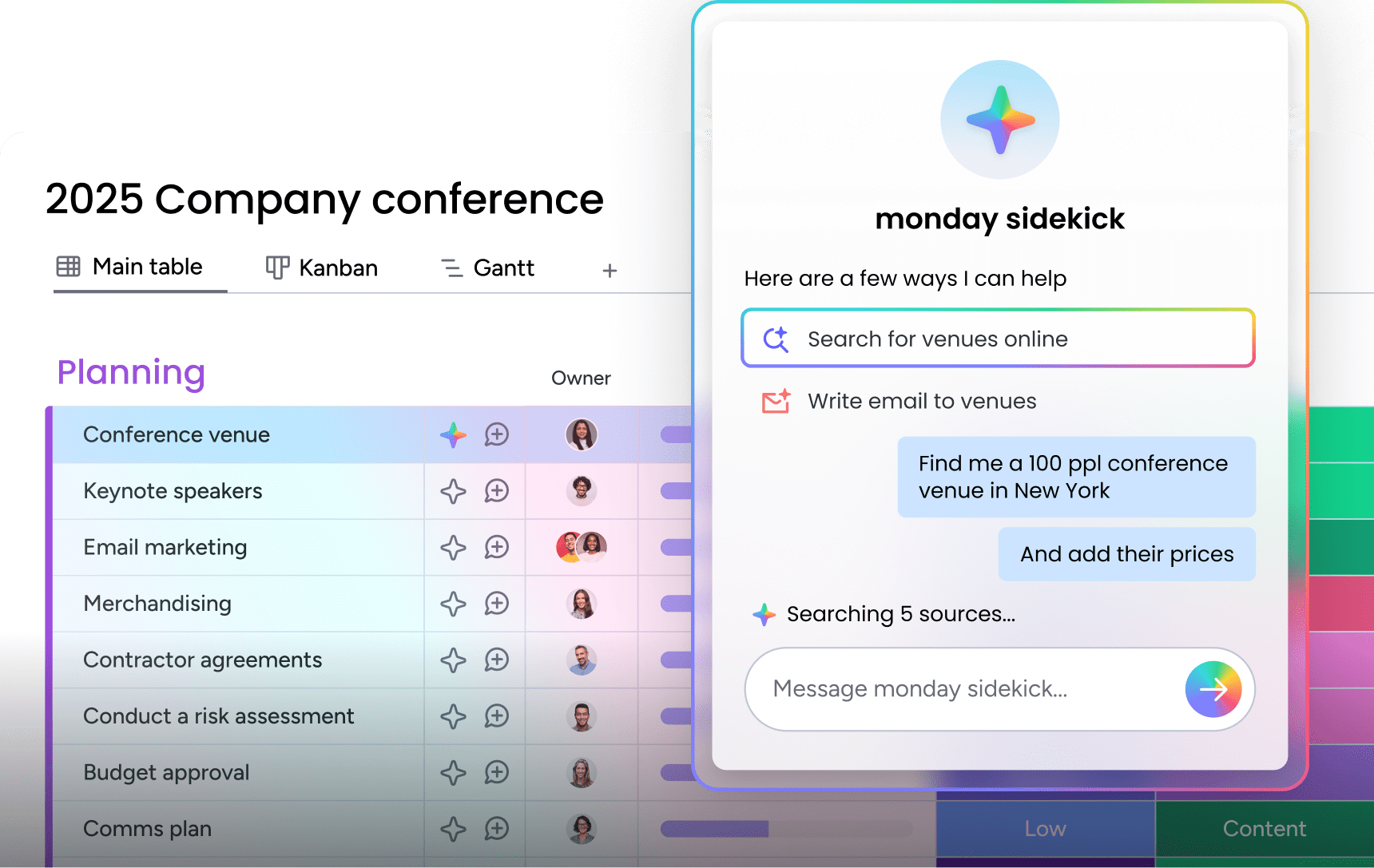
Use the built-in AI assistant to generate proposal content, create project plans, and analyze data, all without leaving the platform. monday sidekick understands your board context and can draft summaries, suggest timelines, and surface insights that strengthen your proposals. It saves time on repetitive writing tasks so you can focus on strategy and customization.
monday agents
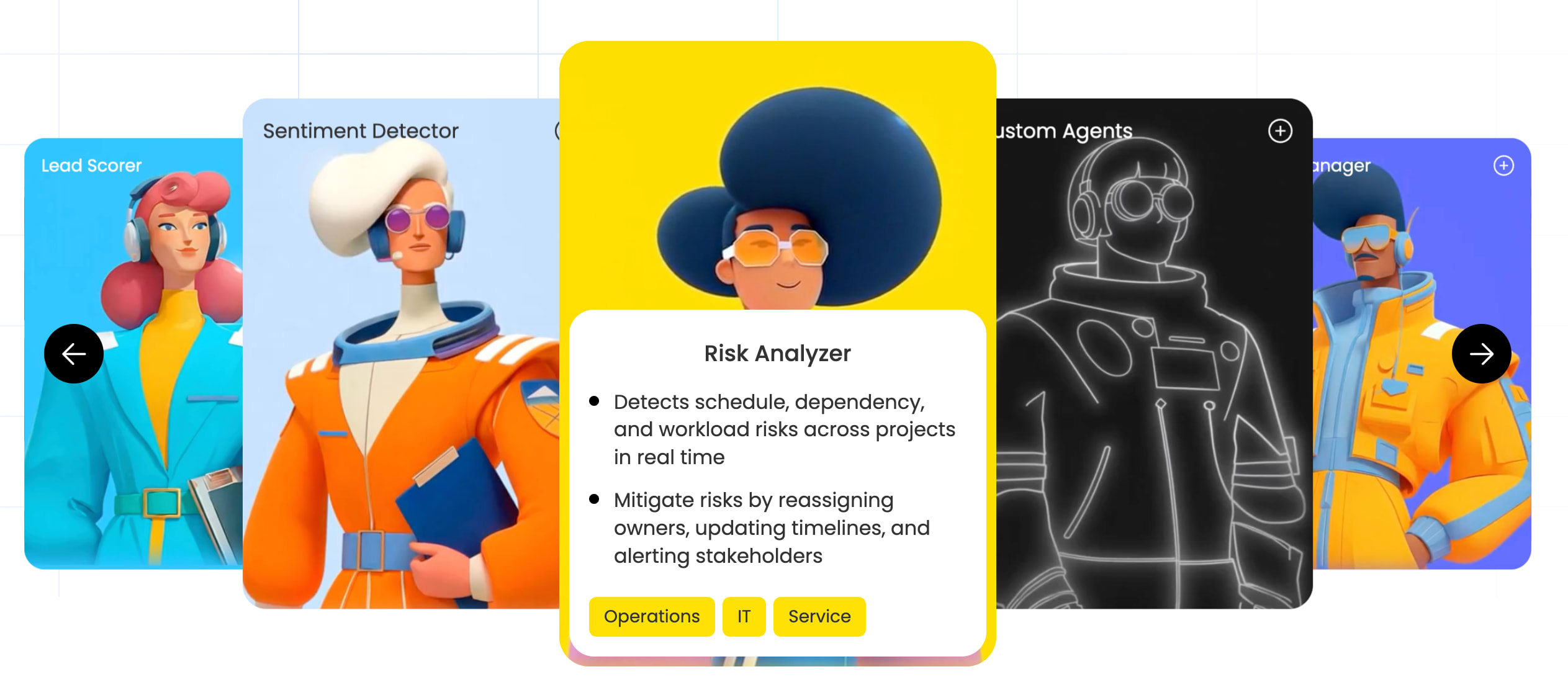
AI-powered agents like Project Analyzer continuously monitor your projects after approval, flagging risks, tracking milestones, and keeping stakeholders informed. This means the same platform you used to write the proposal can manage the project it created. Agents work in the background to surface issues before they become blockers, giving you proactive oversight across every active proposal and project.
monday Workdocs

Write and collaborate on project proposals in real time using team comments, task assignments, and to-do lists. You can embed live boards and dashboards directly into your documents, which means your proposal data stays up to date without toggling between platforms. It’s easy to turn text into action items in just a few clicks, keeping your team aligned from draft to delivery.
Requests and approvals
Streamline your proposal intake process with standardized request forms that collect everything stakeholders need to make a decision. Set up automated approval workflows so the right people review each proposal at the right time, with no manual follow-ups required. This reduces bottlenecks and ensures nothing sits waiting in someone’s inbox.
Build stronger projects with better proposals
Crafting the perfect project proposal is the first step to project success. Get it wrong, and your plans could stall before they begin. Get it right, and you’ll have a clear plan of action, an aligned team, and stakeholders invested in your project’s success.
The best proposals don’t just describe what you’ll do. They build confidence that you’re the right team to do it. With the right structure, supporting evidence, and a platform like monday.com that keeps the entire lifecycle organized, you can move from proposal to execution without missing a beat.
Get startedFAQs
What is the purpose of a project proposal?
A project proposal's primary purpose is to persuade stakeholders or sponsors to approve, fund, or support a project. It communicates the problem, your proposed solution, and the expected value so decision-makers can evaluate whether the project is worth the investment.
What should a project proposal include?
Every project proposal should include an executive summary, problem statement, proposed solution, scope and deliverables, timeline, budget, team qualifications, and clear next steps. The depth of each section depends on the project's complexity and your audience.
How long should a project proposal be?
There's no single right length. Simple internal projects might need only 1-3 pages, while complex RFP responses can run 10-20 pages or more. Focus on being thorough without being repetitive, and let the project's scope dictate the document's length.
What is the difference between a project proposal and a project plan?
A project proposal sells the idea and seeks approval before work begins. A project plan is created after approval and provides detailed execution steps, task assignments, resource schedules, and risk mitigation strategies. The proposal comes first; the plan follows.
Who writes a project proposal?
Project proposals are typically written by project managers, business development professionals, consultants, or team leads. In some organizations, a dedicated proposals or bids team handles the writing, especially for large-scale RFP responses.
What makes a project proposal successful?
Successful proposals are clear, concise, and tailored to the audience. They combine a compelling narrative with data-backed evidence, realistic timelines, and transparent budgets. A strong closing with specific next steps increases the likelihood of approval.

 Get started