


How you spend your first hour often decides how the rest of your day goes. A rushed, reactive morning tends to spill into a rushed, reactive workday, while a calm and intentional start makes it easier to stay focused when things get busy. That’s why the right morning routine ideas can change more than your mornings.
You’re not alone in feeling this pull. In a 2025 Nespresso survey with Project Healthy Minds, more than 90% of U.S. adults said their morning routine impacts their mental wellness for the rest of the day, and many still carve out under 30 minutes for it. The appetite is there, but the time and structure often aren’t.
This post walks through 11 expert-proven ideas you can fold into your own mornings, plus a few structured routines worth trying and a simple way to make new habits stick. We’ll also look at how a tool like the monday.com’s AI Work Platform helps you plan your day so your routine holds up when your calendar fills.
Key takeaways
- Consistency beats intensity: a short routine you repeat every day does more than an elaborate one you abandon after a week.
- Start with one habit: layer in movement, hydration, or planning gradually instead of overhauling your whole morning at once.
- Structured frameworks give you a starting point: the 20-20-20, 5-5-5-30, and Mel Robbins routines offer ready-made templates you can adapt.
- Planning your day early protects your focus: a two-minute review of your priorities keeps you from reacting to whatever lands first.
- monday.com’s AI Work Platform turns a routine into a repeatable system: plan your day with templates, set automated reminders, and track where your focus goes.
What makes a good morning routine?
A good morning routine is a small set of intentional habits you repeat consistently to fit your schedule and energy. It isn’t about waking at 5 a.m. or copying someone else’s hour-long ritual. The best routine is the one you’ll repeat on a normal Tuesday.
The value comes from consistency, not complexity. When you choose your first actions beforehand, you spend less willpower deciding what to do and more energy on the things that matter. Consistency separates a routine that lasts from a list of good intentions you drop by the weekend.
A strong routine usually shares a few traits:
- It’s realistic for the time you have
- It mixes something for your body with something for your mind
- It points you toward your priorities before the day’s demands take over
1. Don't fall into the snooze trap
We’ve all been there before: you set your alarm clock for a reasonable hour and then end up snoozing once…twice… and suddenly you’re jumping out of bed almost an hour late. It takes time, practice, and discipline, but breaking the habit of hitting the snooze button will change your mornings for the better.
According to a survey, 57% of people regularly hit snooze, but those few extra minutes of sleep aren’t going to help you feel more rested or alert. The sleep you get between snoozes is disjointed and disturbed and won’t have a long-lasting effect on your day. Instead of multiple snoozes, try these tips instead:
- Put your alarm out of arm’s reach so you’ll need to get out of bed to turn it off
- Wake up around the same time every morning so your body naturally feels more alert at the same time
- Don’t leave time in your morning routine to press snooze so you’re less tempted to stay in bed
- Consider natural or artificial light sources to help your brain wake up when you need to
2. Make your bed first thing in the morning
It can be tempting to leave your blankets in a heap and your pillows on either end of the bed, but multiple studies show us that making your bed each morning has many benefits, which is why so many successful people are known to do it. Here’s how:
- Making your bed is tied to positive mental health benefits, like a sense of accomplishment, calm, and better organization
- Mindful practices like getting into the morning habit of making your bed can make you feel less anxious and stressed
- Making your bed is thought of as the first task that you’ll accomplish in a day, setting the tone for the rest of the day
- Getting into a tidy and neat bed at night is a lot more inviting and can help you sleep better
3. Get some morning movement
Many people find that moving their body early helps them feel more alert and level-headed heading into the day. While all exercise is good no matter the time of day, getting moving in the morning is a great way to control your stress levels, feel more focused, and stay motivated. It’s one of the simplest ways to support your productivity before work even begins.
Even if you don’t have time for a full-blown workout like a run or a gym session, a quick yoga flow or stretching session at home can also go a long way to preparing yourself for the rest of the day.
4. Don't forget to hydrate
Your body loses water overnight, so instead of reaching straight for the coffee machine, start with a full glass of water to rehydrate. Staying well hydrated supports how you feel and think through the day, though as Healthline notes, the most important consideration is getting enough water overall rather than the exact time you drink it. A morning glass is simply an easy way to build the habit, as it:
- Replaces the fluid you lose while you sleep
- Supports your energy and alertness
- Helps concentration and mental performance
5. Meditate or practice breathwork
A moment of mindful practice can go a long way in the morning. Turning your attention inward in the morning can support concentration, focus, and self-awareness. Meditation also tends to be easier to stick with when it’s anchored to a set morning slot, so folding it into your routine helps the habit hold.
For some people, breathwork might be a stronger fit than meditating. Practicing breathwork in the morning can calm your stress and make you feel more energized. There are different breathing techniques you can use, so finding the right one for you and practicing it every morning can get you into a solid routine.
6. Plan out your day before it starts
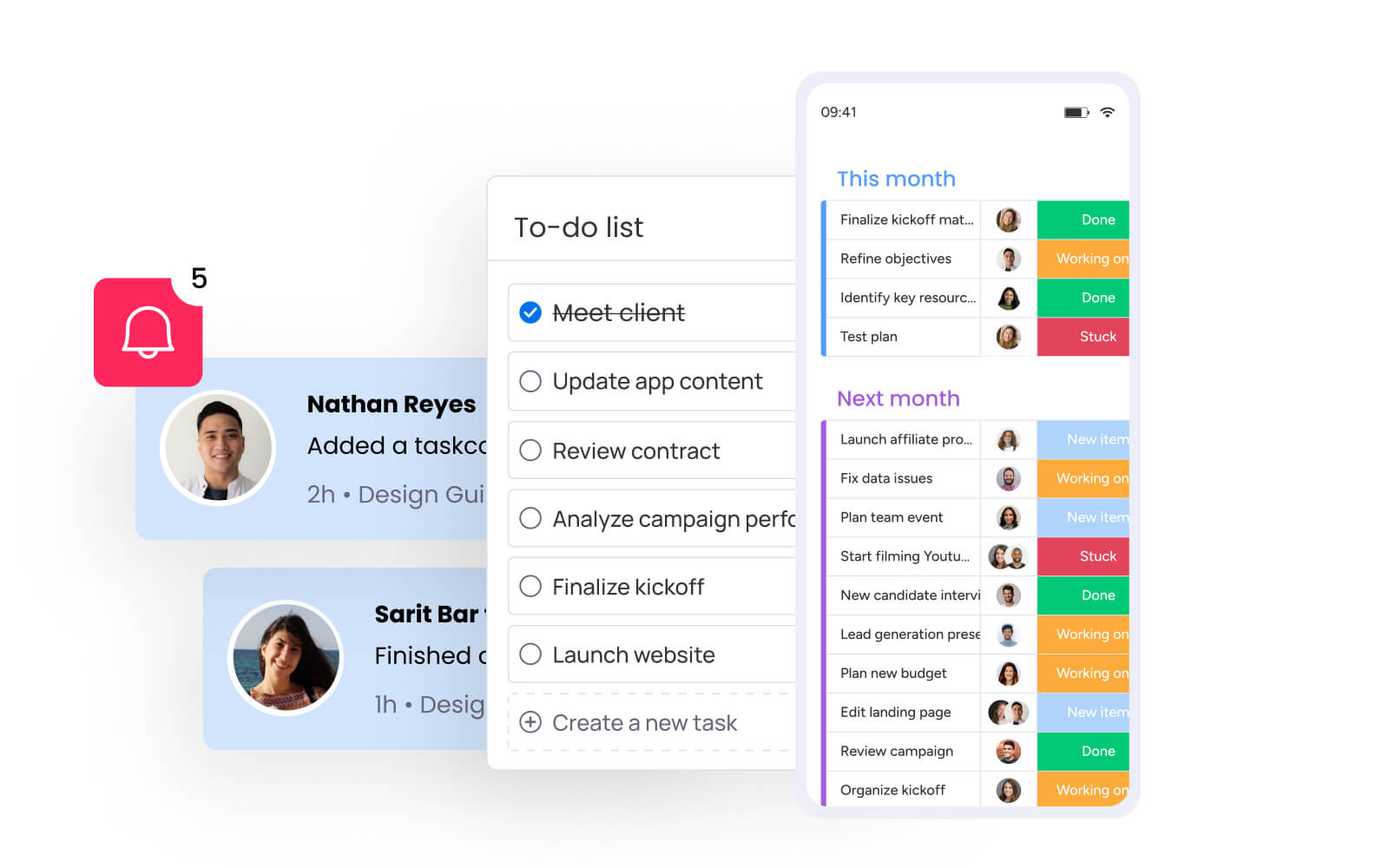
Before heading out to work or sitting at your desk, take a few moments to plan out your day. This could be creating a to-do list for tasks you need to prioritize at work, errands you need to run, or reminders of meetings or events you may have to attend.
Keep your day plan organized with a daily planner on monday.com’s AI Work Platform, where you can quickly jot down events, tasks, and reminders. You can use the AI Work Platform on the go with the mobile app and even set times and dates and create quick automations so that you get notified before a task is due or about an upcoming meeting for better time management when you’re busy.
The best routine when you wake up is one that points you at your priorities before the day pulls you elsewhere. Turn that to-do list into a repeatable morning ritual: spend two minutes reviewing what matters most, set due-date reminders so nothing slips, and color-code tasks by priority so the important work stands out at a glance. Once the ritual lives in one place, you repeat it each morning without rebuilding it from scratch.
7. Don't skip breakfast
We’ve been reminded since we were kids to never skip breakfast, yet many of us still do on a regular basis. A balanced breakfast of fruit, vegetable, protein, carbohydrate and healthy fat, offers plenty of health benefits that go beyond kickstarting your metabolism. There are a number of other mental benefits, too, such as:
- Boosted energy levels
- Improved mood
- Enhanced ability to concentrate
- More brain fuel to function
8. Focus your thoughts in a journal
Like a number of other morning rituals on this list, journaling is a great way to practice being more present, self-aware, and setting a goal or intention for your day. Focusing your thoughts first thing in the morning in a journal helps you adapt to work and whatever else you need to get done throughout the day. To make the most of your morning journaling, here are a few tips:
- Find a comfy spot that’s distraction-free
- Don’t focus on writing rules, write your thoughts as they come out
- Commit to filling a set number of pages every morning
- Set yourself a minimum or maximum time limit
9. Be intentional about your screentime
It’s difficult to entirely avoid screen time these days as we’re so focused on our devices. But it can be useful to try and limit the amount of time you’re looking at a screen in the morning, including your phone or the TV.
If you use your phone to use apps for mindfulness, meditation, or day planning, get into the habit of accessing those apps only instead of checking the news, your notifications, or scrolling through social media. If you find this difficult to do, set yourself a new challenge: for 30 days, commit to no screen time for the first hour after you wake up.
A phone-free first hour is one of the most talked-about morning trends right now, and for good reason. When you delay the first scroll, you start the day on your own agenda instead of reacting to everyone else’s. Even 20 minutes of screen-free time before you check your phone can make your mornings feel calmer and more deliberate.
10. Spend a few minutes being creative
Spending just a few minutes on a creative pursuit in the mornings may feel superfluous, but it can impact your happiness levels and mental health. A short creative session first thing in the day can lift your mood, help you think more divergently, and keep a positive mindset when challenges show up.
So, if you have an important sales meeting in the afternoon, spending a few minutes in the morning painting, sketching, dancing, or even journaling can help you nail your pitch more than you’d expect.
11. Set yourself up to minimize distractions
Distractions fragment your attention more than most people realize. Microsoft’s 2025 Work Trend Index found that knowledge workers are interrupted roughly every two minutes, and nearly half say their work feels chaotic and fragmented. Distractions can come in many forms, such as scrolling through apps, responding to emails, or even entertaining your children if you’re working from home. It’s hard to avoid them entirely, so it helps to minimize them or set yourself up to refocus quickly rather than try to remove them completely:
- Turn off alarms, ringtones, or noises that can break your focus
- If you focus better with music, pick a playlist that will help keep you in the zone
- Use time blocking or the Pomodoro technique to work at set intervals
- Try to make sure you’re working in a quiet and neat environment
- Avoid trying to multitask and instead focus on one thing at a time
- Use monday.com’s AI Work Platform to track tasks so you always know what you need to focus on next when you get sidetracked
Popular structured morning routines to try
If building a routine from scratch feels daunting, a named framework gives you a ready-made starting point. Three have become especially popular in recent years, each with a slightly different focus. You don’t have to follow any of them to the minute, but they’re useful scaffolding you can adapt to your own schedule, much like other productivity systems you might already lean on.
The 20-20-20 morning routine, popularized by Robin Sharma’s The 5 AM Club, splits your first hour into three 20-minute blocks: 20 minutes of movement, 20 minutes of reflection, and 20 minutes of learning. It’s built around the idea that mind, body, and growth each deserve dedicated time before the workday starts.
The 5-5-5-30 morning routine is a popular framework for people who want a quick, energizing start rather than a full hour. The common version pairs a few short bursts of activity with a longer block of focused movement or mindfulness, so you cover several bases in a compact window. Think of it as a template to adjust rather than a strict prescription.
Mel Robbins’ 6-step routine leans on habits that reduce friction first thing. As documented in a first-person test, it includes getting up the moment your alarm sounds using her 5-4-3-2-1 countdown, making your bed, hydrating, and moving your body before you reach for your phone. Here’s how the three compare:
| Routine | Best for | What it involves |
|---|---|---|
| 20-20-20 | People who want a full, hour-long start | 20 minutes each of movement, reflection, and learning |
| 5-5-5-30 | People who want a compact, energizing start | Short activity bursts paired with a longer focus or movement block |
| Mel Robbins' 6-step | People who struggle to get out of bed | 5-4-3-2-1 wake-up, make the bed, hydrate, and move before screens |
How to build a morning routine that sticks
To start an early morning routine, begin with one small habit and repeat it until it feels automatic, then layer in the next. Trying to change everything at once is the fastest way to give up by Thursday. Pick the single change that would help most, whether that’s waking at a consistent time or drinking water before coffee, and let it settle before adding more. If mornings feel scattered, a few habits to get organized can give the routine something to hang on.
Set realistic expectations for how long this takes. A widely cited UCL study found that forming a new habit took an average of about 66 days, with a wide range depending on the person and the behavior. Missing a day here and there won’t undo your progress, so the goal is steady repetition, not a perfect streak.
It also helps to match your routine to your own schedule and energy. If you’re sharpest at 6 a.m., front-load your hardest habit then; if you’re a slow starter, keep the first 20 minutes gentle. This is also where tracking makes a difference. Watching a new routine take hold is far easier when you can see it in one place instead of keeping it all in your head, which is where a tool can help.
How monday.com's AI Work Platform helps you build a morning routine
You might assume that a platform like monday.com’s AI Work Platform is just for teams working together, but the platform is highly versatile and fits a variety of needs, including day planning and scheduling just for one person. As AI Work Platform is customizable, it suits day and task planning for individual users just as well as complex teams. With a flexible day planner, scheduler, and reminders, you can spend just a few minutes at the start of your day or week to make sure you’re on track.
The challenge with any new morning routine is keeping it visible and repeatable once real life gets busy. Doing it all by hand means rebuilding your plan every morning and relying on memory for reminders. Here’s how the two approaches compare:
| Task | Managing your morning by hand | Managing your morning on monday.com's AI Work Platform |
|---|---|---|
| Planning the day | Rewrite your list on paper or a notes app each morning | Reuse a daily template so your plan is ready when you sit down |
| Reminders | Rely on memory or set them one by one | Set no-code automations for due dates, meetings, and events |
| Tracking focus time | Guess where your morning went | Use built-in time tracking to see how long tasks take |
| Building a custom tracker | Cobble together a spreadsheet | Describe the tracker you want and build it in minutes |
| Connecting your tools | Switch between calendar, email, and notes apps | Connect 200+ integrations, including Google Calendar, in one place |
On the platform, a few features make a morning routine easier to keep:
- Customize the daily work schedule template to stay on top of your work tasks
- Plan out your entire day by time-blocking with a 24-hour schedule template
- Create custom no-code automations to get reminders for important tasks, events, or meetings
- Add color-coded labels to plan out your day and set priorities for different tasks
- Choose from 15+ board views so you can see your day as a calendar, timeline, or simple list
- Use the platform’s built-in time-tracking feature to see how long you spend on tasks and stay focused
- Organize your workload for the day so you know exactly what you need to focus on each morning at a glance
- Use the mobile app to get notifications, access tasks, and jot down notes on the go
- Integrate 200+ third-party apps, including Google Calendar, so your schedule stays in sync
How AI can support your morning routine
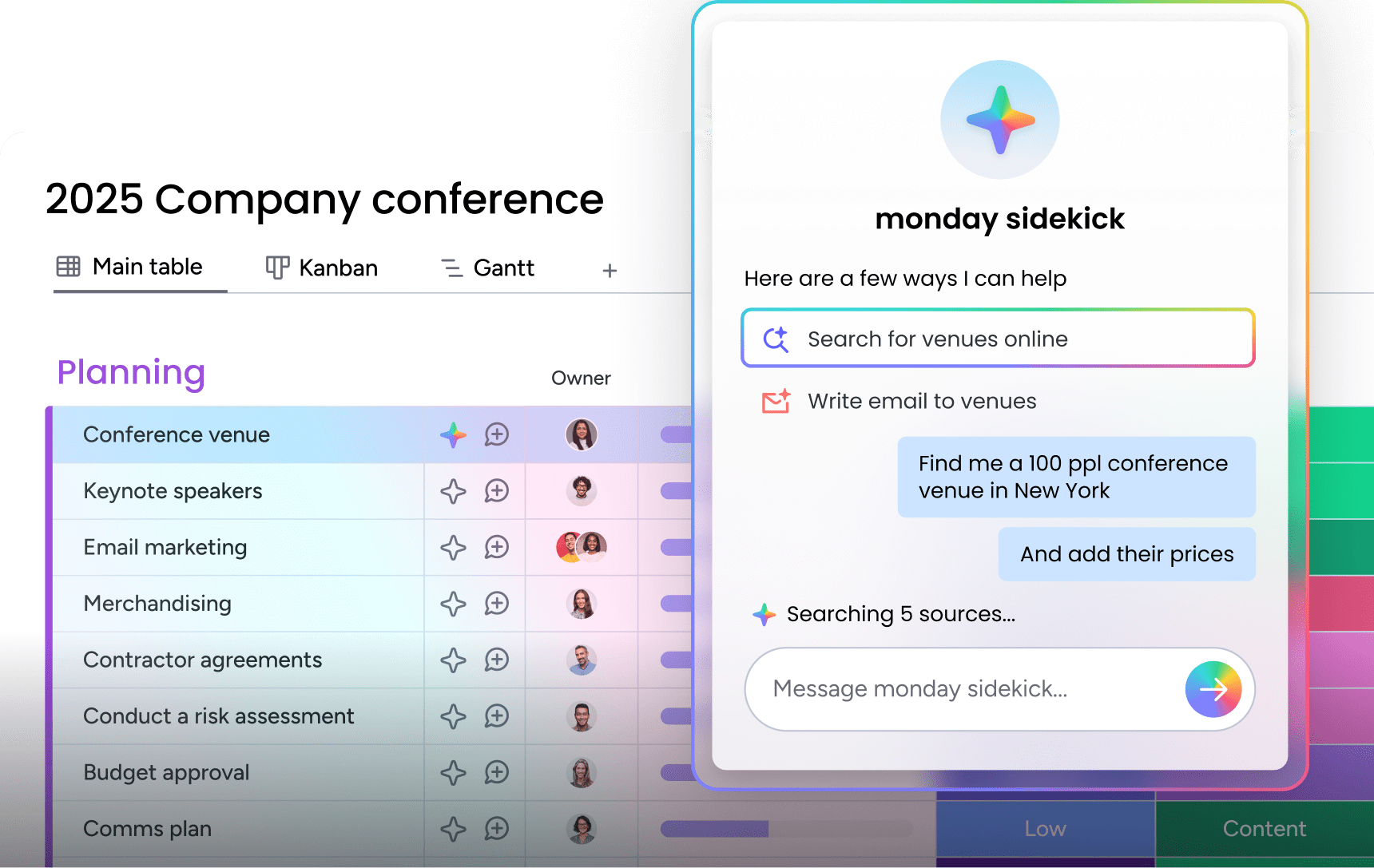
The AI capabilities on the platform can take repetitive morning admin off your plate:
- monday sidekick: plan your work, summarize updates, and set up tasks from a simple prompt, so a scattered list becomes a structured morning plan.
- monday vibe: describe a personal daily-routine or habit tracker in plain language and build a custom app in minutes, private by default until you share it
- monday agents: ready-made or custom AI agents that handle repetitive admin like meeting summaries and triage, so your first hour goes to focused work
- monday MCP: connect assistants like Claude or ChatGPT to your workspace to turn morning notes into structured tasks without leaving your chat
Turn your mornings into momentum
There’s no such thing as a perfect morning routine for all, and that’s the point. The best morning routine ideas are those you can repeat without thinking, so try a few of the habits above, borrow from a structured framework if it helps, and keep what fits your life.
If you’re not a morning person at all, start with a single ritual and add more once it sticks. When you’re ready to make the routine repeatable, monday.com’s AI Work Platform helps you plan your day, set reminders, and see where your focus goes, so a good morning turns into a productive day.
FAQs
What is the best routine when you wake up?
Each person's morning routine will look different, but a few staples suit almost everyone: avoiding the snooze button, eating a balanced breakfast, hydrating, and adding a grounding ritual like meditating, breathwork, journaling, or movement.
How to start an early morning routine?
Start by getting into the habit of waking up earlier so you don't feel stressed about time. Then slowly add one new part of your routine each week until you're satisfied with your early morning routine.
What is the 5-5-5-30 morning routine?
The 5-5-5-30 morning routine is a compact framework that pairs a few short bursts of activity with a longer block of focused movement or mindfulness. It's designed for an energizing start without committing a full hour.
Is it healthy to wake up at 5 a.m.?
Waking up at 5 a.m. is neither healthy nor unhealthy on its own; it depends on how much sleep you got. As long as you get the recommended minimum of seven hours, an early wake-up can give you time for a solid routine, so prioritize enough sleep over the exact hour.
How does monday.com's AI Work Platform help with a morning routine?
monday.com's AI Work Platform lets you plan your day with daily and weekly templates, set automated reminders, and track where your focus goes. That turns a loose set of habits into a repeatable morning system.

 Get started