


Strong results on paper can hide a quieter problem. Deadlines are met, targets are hit, yet energy across the team feels low and key people start looking elsewhere. It is a familiar tension, where performance looks solid but something underneath is slipping. That gap often comes down to how leadership actually shows up day to day, not just what gets delivered.
It becomes clearer in everyday moments. Meetings feel efficient but flat, ideas are shared less freely, and feedback starts to dry up. Work keeps moving, but the sense of ownership quietly fades. Over time, that disconnect begins to show up in retention, creativity, and the willingness to go beyond the minimum.
This article explores what truly drives leadership effectiveness in 2026, beyond surface metrics and routine execution. Join us for a few moments and get ready to dive into how leaders shape team momentum, influence trust, and connect everyday work to something that feels meaningful.
Key takeaways
- Prioritize outcomes over activity: Leadership effectiveness is defined by the ability to drive meaningful business results while building engaged, high performing teams.
- Strengthen teams, not just individual leaders: Leadership success depends heavily on team dynamics, cross functional collaboration, and shared decision making rather than individual effort alone.
- Measure leadership continuously: Real time feedback, engagement signals, and delivery data give organizations a clearer view of leadership impact than static annual reviews.
- Develop human skills alongside AI adoption: As AI supports analysis and routine decisions, leaders need to sharpen judgment, empathy, communication, and complex problem solving.
- Use connected workflows to scale leadership: Platforms such as monday work management help leaders align strategy with execution through shared visibility, automation, and cross team coordination.

What is leadership effectiveness?
Leadership effectiveness is your ability to guide people and resources toward outcomes that actually matter. It goes beyond holding a title, instead it shows up in how well you turn strategy into real progress. You are not just managing tasks, you are shaping direction and making sure the work delivers value.
Think of a leader who handles a merger without losing key talent, or someone who turns a struggling team into a profitable one. That is leadership effectiveness in action: it’s about creating results that last, not just keeping things moving.
Leadership effectiveness vs. leadership efficiency
Understanding this difference changes how you assess leaders and build strong teams. While both matter, they serve very different purposes, and confusing them can lead to the wrong priorities.
Below is a clear comparison to help you see how they differ in practice:
| Dimension | Leadership efficiency | Leadership effectiveness |
|---|---|---|
| Primary focus | Process optimization and resource speed | Strategic direction and long-term impact |
| Measurement | Time-to-completion, budget adherence, output volume | Employee engagement, revenue growth, innovation rate |
| Time horizon | Short-term (quarterly/project-based) | Long-term (annual/multi-year strategic) |
| Typical outcome | Reduced operational costs and faster delivery | Sustainable competitive advantage and market leadership |
Efficiency is about doing things right, while effectiveness is about doing the right things.
Efficiency also removes waste, however effectiveness creates value. If you have to opt for one approach, effectiveness matters more because it determines whether your organization is even heading in the right direction.
How leadership effectiveness has evolved
Leadership has not stayed the same, and neither have expectations. As workplaces changed, what defines an effective leader shifted as well. Each phase brought new demands that reshaped how leaders operate.
- Industrial era: Effectiveness focused on control, consistency, and output within strict hierarchies.
- Knowledge economy: Leaders began managing expertise and encouraging individual contribution.
- Digital transformation: Collaboration across teams became essential, along with speed and adaptability.
- AI augmented era: Leaders now balance human creativity with data driven insights while managing distributed teams.
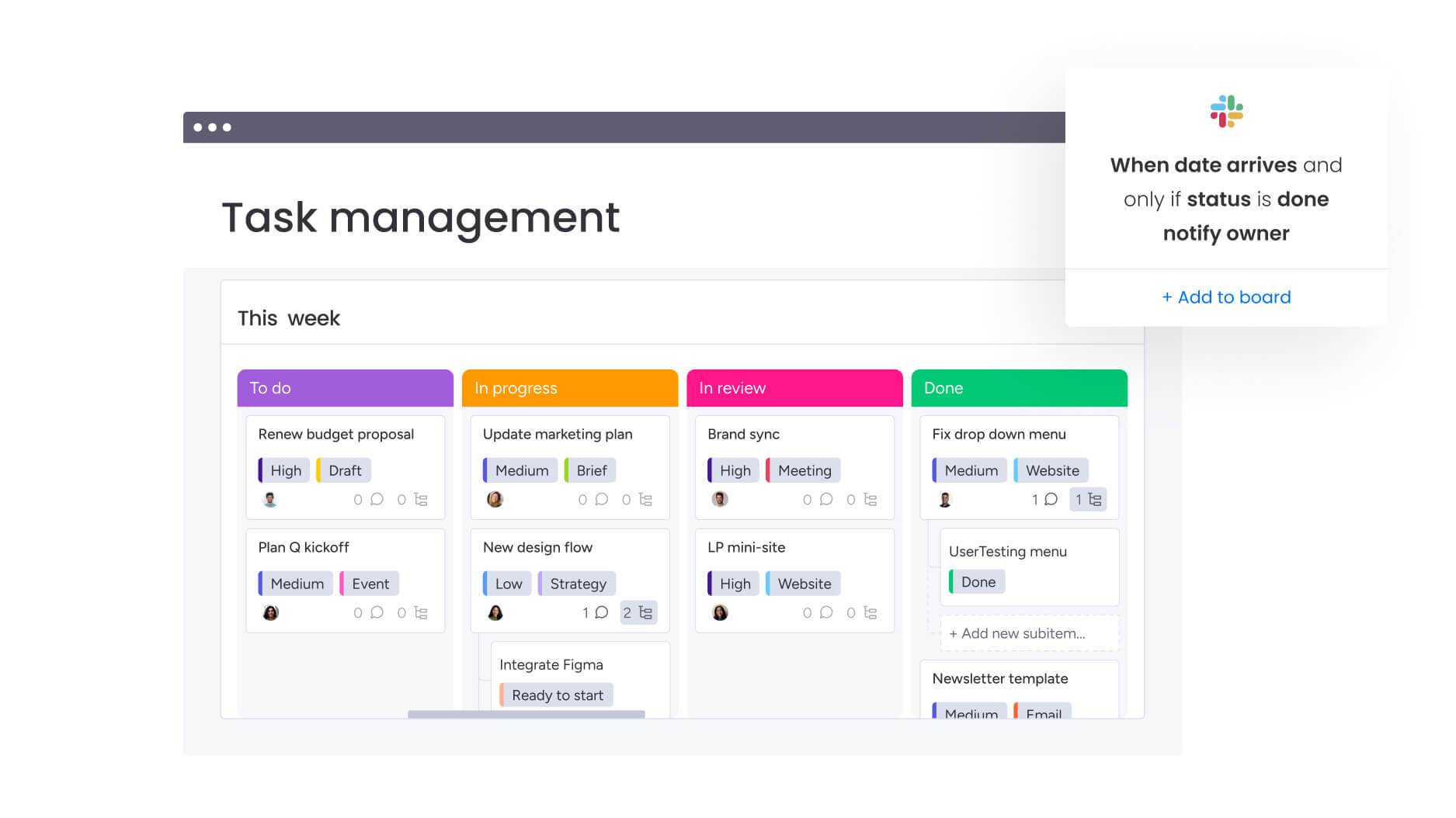
Because of this shift, you need a way to keep strategy and execution connected. Platforms like monday work management help you align daily work with long term goals, especially when teams are spread across locations.
Try monday work managementWhy leadership effectiveness matters for organizational success
Leadership effectiveness directly influences how your organization performs and adapts. Strong leadership does not just improve morale, it drives measurable business outcomes. When leaders are clear and focused, teams execute better and results follow.
Recent research shows that 79% of operating-model redesigns were completed and implemented when led well, with 63% meeting most objectives and improving performance.
That’s because great leaders turn strategy into action.
Direct impact on business performance
You can see leadership effectiveness reflected in key business metrics. When leaders guide teams toward meaningful work, performance improves across the board.
- Revenue growth: Clear direction ensures teams focus on high value opportunities, increasing profitability.
- Cost reduction: Strong communication reduces rework and delays, which improves margins.
- Customer satisfaction: Motivated teams deliver better experiences, increasing loyalty and long term value.
Building resilient organizations through leadership
Resilience is about staying steady when conditions change. Effective leaders help organizations adapt without losing momentum, even during uncertainty.
- Operational continuity: Leaders make quick, informed decisions that keep operations running during disruptions.
- Change management: They handle transitions carefully, reducing resistance and maintaining productivity.
- Psychological safety: By creating trust, they keep morale strong, even when pressure is high.
Creating sustainable competitive advantage
Unlike products or pricing, leadership culture cannot be easily copied. That is why effective leadership becomes a long term advantage.
- Talent attraction and retention: Leaders who invest in people build stronger, more capable teams.
- Knowledge preservation: Retaining talent helps protect critical expertise within the organization.
- Innovation culture: Encouraging smart risk taking leads to faster development and better responses to market shifts.

6 core components of effective leadership
Leadership effectiveness works as a connected system, not a checklist. Each component supports the others, and if one weakens, the whole system feels it. Understanding how they fit together helps you lead with more clarity and impact.
1. How to set a clear strategic vision and direction
A strong strategic vision helps you define where your organization is headed and what it will take to get there. It is not just about long term thinking, it is about breaking that vision into practical steps your team can act on daily.
At the same time, you need to keep stakeholders aligned so effort and resources stay focused on what matters most. When strategy connects directly to execution, your team can see how their work contributes to bigger goals, which keeps momentum steady.
2. How to build emotional intelligence and strengthen team trust
Emotional intelligence shapes how you connect with people and how your team experiences your leadership. It influences trust, collaboration, and how effectively your team handles pressure.
To build this, focus on three key areas:
- Self awareness: Recognizing how your behavior and reactions affect team dynamics
- Social awareness: Understanding team sentiment and reading situations accurately
- Relationship management: Handling conflict constructively and building alignment
When you lead with emotional awareness, you listen more carefully, respond with intention, and create space for honest conversations. As a result, your team feels supported and more willing to contribute.
3. How to improve decision making with clarity and speed
Strong decision making is not about choosing quickly, it is about choosing well under pressure. You need a balance between speed and depth, where decisions are informed but not delayed.
That means gathering relevant data, involving the right people, and weighing risks before moving forward. When you rely on clear visibility into progress and resources, you reduce guesswork and make decisions that hold up over time.
4. How to communicate with clarity and build transparency
Communication drives how leadership shows up in day to day work. It is not only about sharing updates, it is about making sure people understand the reasoning behind decisions.
Effective communication depends on three key elements:
- Contextual adaptation: Adjusting your message based on your audience
- Transparency: Explaining the “why” to build trust and reduce confusion
- Platform enablement: Using a shared workspace to keep everyone aligned on progress and decisions
When communication is clear and consistent, your team spends less time guessing and more time executing with confidence.
5. How to stay adaptable and keep learning as a leader
Change is constant, so your ability to adapt determines how well your team keeps up. Adaptability is not just reacting to change, it is adjusting your approach as new information becomes available.
At the same time, learning agility helps you shift from needing all the answers to staying open and curious. When you treat mistakes as learning moments, your team feels safer experimenting and improving, which leads to stronger long term performance.
6. How to empower your team and scale your impact
Your impact as a leader grows when your team becomes more capable and confident. That starts with giving people ownership, not just tasks to complete.
To build that environment, focus on:
- Strengths based assignments: Aligning work with individual capabilities
- Growth opportunities: Offering challenges that stretch skills and build experience
- Autonomy: Creating space for independent decision making within clear boundaries
When your team has both support and ownership, they move faster and take more initiative. As a result, you spend less time managing details and more time focusing on direction.
A strong strategic vision helps you define where your organization is headed and what it will take to get there. It is not just about long term thinking, it is about breaking that vision into practical steps your team can act on daily.
How teams drive 76% of leadership performance
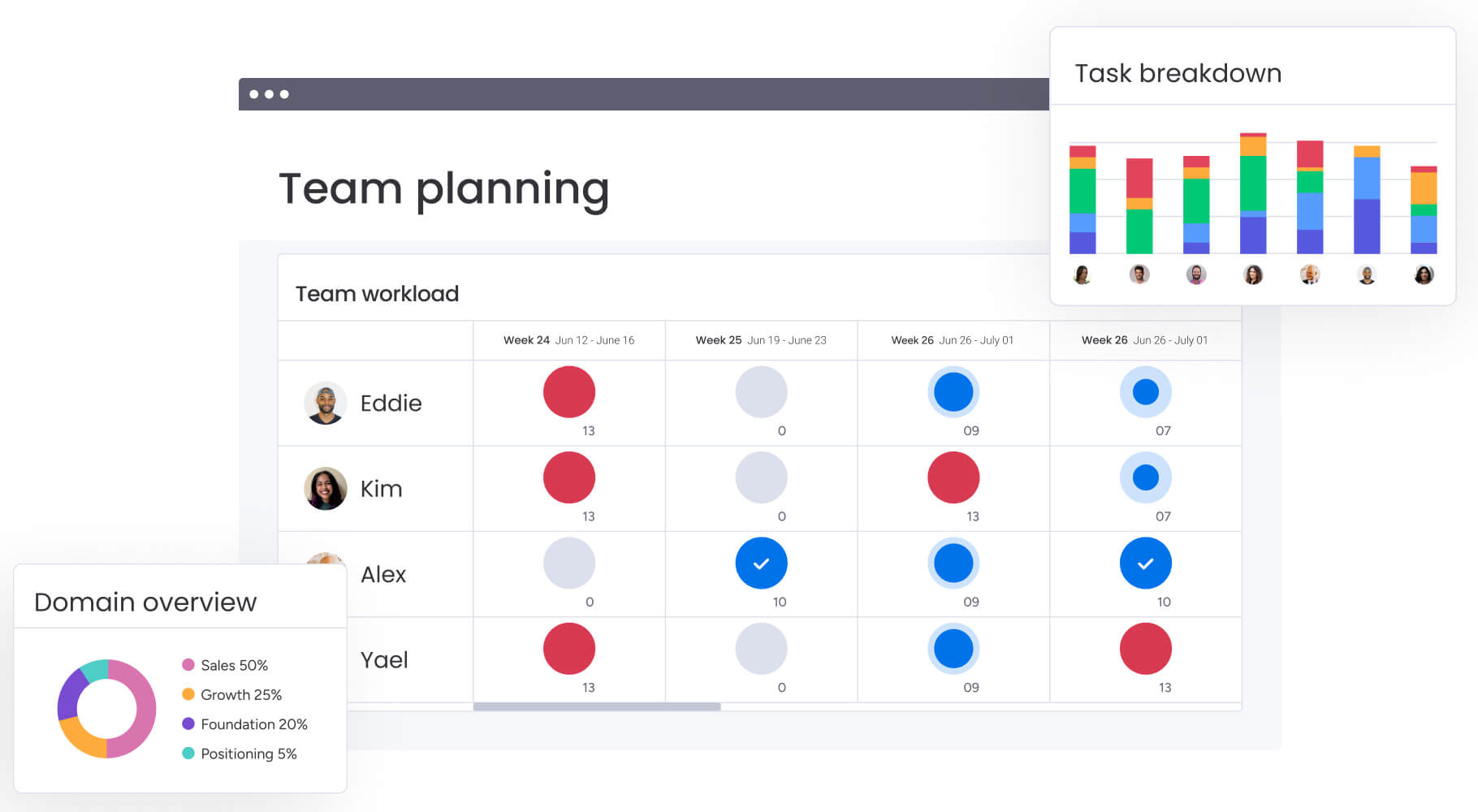
Leadership is no longer centered on one individual. Instead, it depends heavily on how well your team works together. Research shows that 76% of leadership performance comes from collective intelligence and team cohesion, which highlights the importance of shared ownership.
When leadership is strong, teams naturally align around goals and deliver better outcomes. Because of this, your role shifts from being the central decision maker to building an environment where others can lead effectively.
Shifting from individual leaders to leadership teams
Moving toward distributed leadership allows expertise to guide decisions, regardless of role or title. This approach makes your organization more flexible and less dependent on a single person.
Here’s how that plays out in practice:
- Project based leadership: Different people step up based on expertise
- Peer mentorship: Team members support and learn from each other
- Organizational resilience: Leadership is shared, so disruption is minimized
As a result, your team becomes more adaptable and better equipped to handle change.
Measuring team effectiveness impact
Understanding team performance gives you a clearer picture of how leadership is working in real conditions. Instead of focusing only on individuals, you look at how the team operates as a whole.
Key metrics to track include:
- Collaboration scores: How often and how well teams work across functions
- Project velocity: The speed from idea to execution
- Collective problem solving: How effectively teams resolve challenges without escalation
When these areas improve, it signals that leadership practices are creating the right environment for success.
Building high-performance leadership networks
Strong leadership extends beyond your immediate team. Building connections across departments helps remove friction and keeps work moving smoothly.
To strengthen these networks, focus on:
- Cross departmental alliances: Building relationships that support collaboration
- External partnerships: Gaining insights and perspective from outside your organization
- Digital infrastructure: Using a shared platform to keep communication and work aligned
When teams operate from shared information, collaboration becomes more natural. This reduces delays, improves decision making, and keeps everyone moving in the same direction.

Measuring leadership effectiveness in real time
Adaptability sits at the core of effective leadership because markets, customer expectations, and technology rarely stay still. As conditions shift, you are expected to adjust your approach quickly while continuing to learn along the way. T
That shift moves you away from trying to have all the answers and toward building a habit of ongoing improvement.
At the same time, strong leaders treat setbacks as useful signals instead of failures to punish. This mindset helps you refine how you lead and better support evolving teams and new ways of working. So when change happens, the real question becomes how fast you and your team can respond and move forward.
Key performance indicators for modern leaders
You cannot improve what you do not measure, and leadership is no exception. Clear metrics help you understand whether your actions are actually driving results or just creating activity. In addition, they give you a consistent way to track progress over time and adjust when needed.
Here are the core indicators that help you evaluate leadership effectiveness:
- Team engagement metrics: Track retention rates, Employee Net Promoter Score, and participation in optional initiatives to understand how your team feels and behaves.
- Delivery performance: Measure on time project completion, budget variance, and quality assurance scores to see how reliably your team executes.
- Strategic alignment: Assess the percentage of team resources focused on strategic priorities versus maintenance work to ensure efforts match business goals.
- Talent development: Monitor internal promotions and skill growth within your team to gauge how well you are building future leaders.
360-degree feedback and continuous assessment
Feedback becomes far more useful when it comes from multiple perspectives. A 360 degree approach gathers input from direct reports, peers, leadership, and even external partners. As a result, you gain a clearer picture of how your leadership is experienced across the board.
To make this process practical and actionable, focus on these elements:
- Anonymous surveys: Use structured questionnaires to collect both quantitative ratings and open ended feedback.
- Qualitative interviews: Go deeper through conversations that uncover gaps between how you see yourself and how others experience your leadership.
- Behavioral goal setting: Turn insights into clear, actionable goals that you can track and improve over time.
When feedback is translated into specific actions, it becomes far less intimidating and far more valuable for real progress.
Dashboard-driven leadership analytics
Leaders often rely on scattered reports, which makes it hard to see the bigger picture. Dashboards solve this by bringing together data from multiple projects into one clear view. Because of this, you can spot patterns and risks much earlier.
With dashboard analytics, you gain three important capabilities:
- Productivity trends: Identify whether your team is consistently overloaded or underutilized, then adjust workloads accordingly.
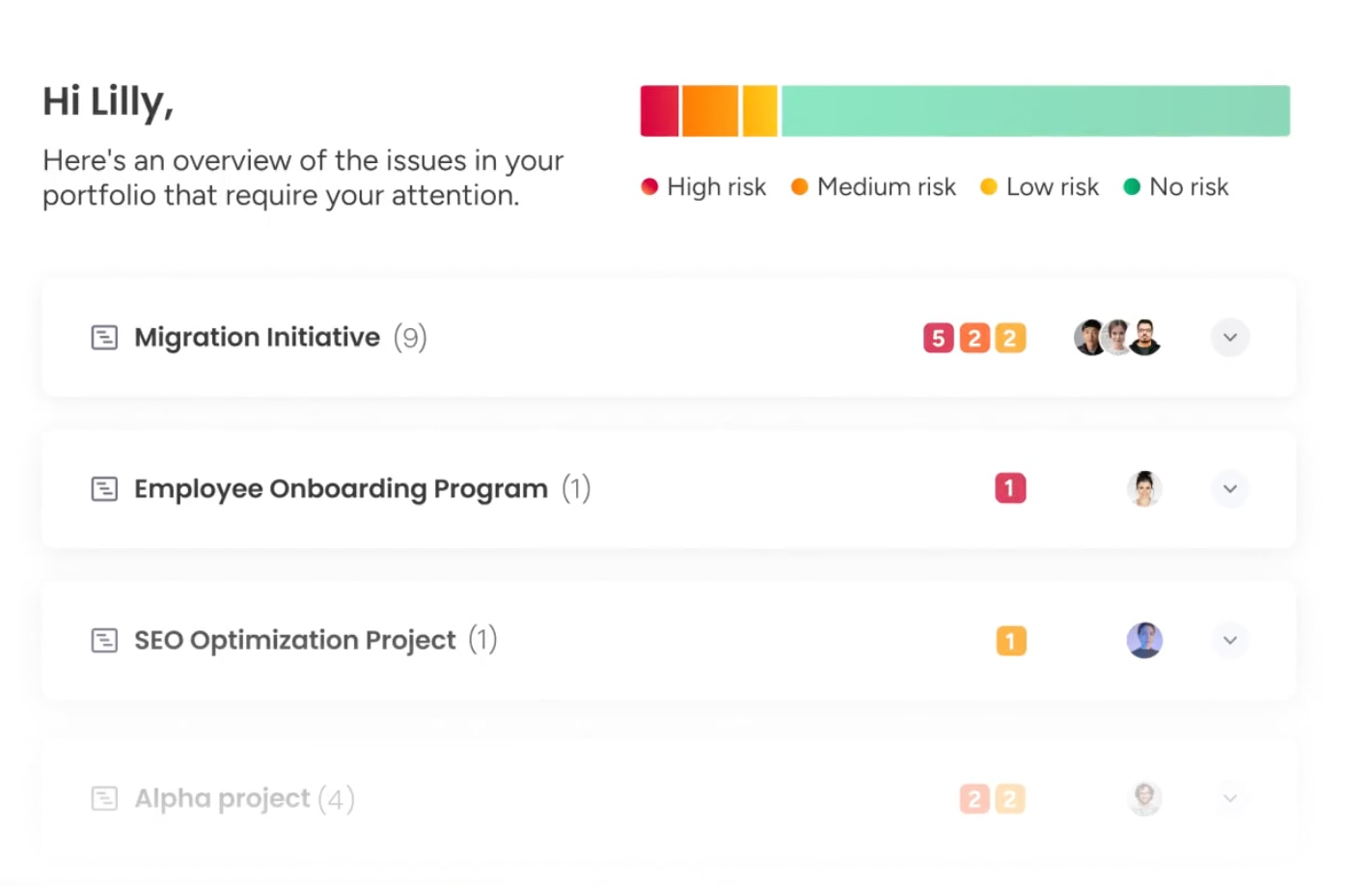
- Project health: See which initiatives are at risk so you can step in before issues escalate.
- Resource utilization: Ensure talent is allocated effectively across priorities instead of being spread too thin.
Portfolio Risk Insights in monday work management scans project boards and highlights risks by severity. This way, you can quickly focus on what matters without digging through layers of data.
Try monday work managementYou cannot improve what you do not measure, and leadership is no exception. Clear metrics help you understand whether your actions are actually driving results or just creating activity.
7 ways to enhance leadership effectiveness at scale
Scaling leadership is not about occasional coaching or isolated training sessions. It is about building systems that develop leaders at every level, consistently and intentionally. When done right, this approach strengthens decision making, improves alignment, and creates a culture where leadership is practiced daily across the organization.
Each method below focuses on a different part of leadership development. Together, they create a structure that helps leadership skills grow steadily as your organization expands.
1. Build structured leadership development that grows with your teams
If leadership development feels inconsistent, your results will be too. That is why creating structured programs matters, as they ensure every leader develops a strong and reliable foundation. At the same time, these programs should evolve with career stages so learning stays relevant and practical.
Here is what makes these programs effective:
- Career stage alignment: Training should match the responsibilities leaders handle at different stages, so early managers and senior leaders are not learning the same things. This keeps development focused and useful.
- Theory to practice integration: Learning should not stay in workshops alone. Instead, leaders should apply what they learn through real projects, which helps ideas stick and improves confidence.
- ROI measurement: Progress needs to be visible. By comparing leadership behavior before and after training, you can clearly see what is working and where to adjust.
2. Create feedback systems that drive continuous improvement
Leaders improve faster when feedback is frequent and honest. Waiting for annual reviews slows progress and allows small issues to grow. Instead, ongoing feedback helps leaders adjust in real time and stay aligned with team needs.
To make feedback part of daily work, focus on these systems:
- Peer feedback platforms: When colleagues can share input regularly, leaders gain a broader view of their impact. This creates a culture where feedback feels normal, not forced.
- Upward feedback channels: Teams need safe ways to share input with their managers. When leaders listen actively, trust increases and performance improves.
- Technology integration: Automated prompts at key project moments ensure feedback happens naturally, rather than relying on memory or manual effort.
3. Build cross functional programs that broaden leadership perspective
Leaders make better decisions when they understand how different parts of the business connect. Without that exposure, silos form and collaboration becomes harder. Cross functional programs solve this by giving leaders direct experience in multiple areas.
To make these programs effective, include:
- Job rotations: Moving high potential leaders across functions helps them understand different challenges and priorities. As a result, they become more adaptable and informed.
- Shared projects: Assigning leaders to initiatives that involve multiple teams encourages collaboration and strengthens communication skills.
- Context preservation: As leaders move between teams, systems should capture project history and insights. This ensures knowledge is not lost along the way.
4. Encourage peer learning to scale leadership naturally
Leadership does not grow only through formal training. In many cases, leaders learn more from each other by sharing real experiences and solving challenges together. Creating space for this exchange builds stronger networks and speeds up development.
You can support this through:
- Communities of practice: Regular discussions allow leaders to share what is working and learn from others facing similar challenges.
- Peer mentoring: Pairing experienced leaders with newer managers creates ongoing support that feels practical and relevant.
- Knowledge documentation: Capturing lessons from key projects ensures valuable insights stay within the organization and can be reused.
5. Use automation to free up time for high impact leadership work
Leaders often spend too much time on routine tasks, which limits their ability to focus on strategy and team development. By reducing manual work, you create more space for meaningful leadership activities.
Key areas where automation helps include:
- Reporting systems: Automated updates and KPI tracking remove the need for manual data collection, saving time and improving accuracy.
- Approval processes: Streamlined workflows speed up decisions around budgets and resources, which keeps projects moving.
- Strategic focus: When routine tasks are reduced, leaders can spend more time coaching teams and driving innovation.
Teams using monday work management rely on automations and templates to reduce repetitive work. As a result, they can start projects faster and keep progress consistent without unnecessary delays.
6. Apply AI insights to support smarter leadership decisions
As organizations grow, the amount of data leaders need to process increases quickly. AI helps by identifying patterns and surfacing insights that would otherwise take significant time to uncover. Still, leaders remain responsible for interpreting and acting on those insights.
AI can support leadership in several ways:
- Predictive analytics: By analyzing past data, AI can highlight potential risks or delays before they happen, which allows leaders to act early.
- Sentiment analysis: Monitoring communication trends helps identify shifts in team morale, so leaders can respond before issues escalate.
- Priority optimization: AI can filter large volumes of information, helping leaders focus on what truly matters.
The AI capabilities in monday work management help leaders plan projects, organize incoming requests, and identify risks across their portfolio with greater clarity.
7. Create leadership playbooks that ensure consistency at scale
As your organization grows, consistency becomes harder to maintain. Leadership playbooks solve this by documenting proven approaches that others can follow. This ensures that quality does not depend on individual style alone.
Strong playbooks usually include:
- Decision frameworks: Clear structures help leaders make complex choices with confidence and consistency.
- Communication templates: Standard formats for updates or crisis communication ensure clarity and alignment across teams.
- Quality consistency: Documented best practices help maintain high standards, even as new leaders step in.
Leading through AI and digital transformation
AI is changing how work gets done, which means leadership must evolve alongside it. Leaders now need to balance technology with human judgment, ensuring that efficiency does not come at the cost of trust or clarity. This shift requires new skills and a more thoughtful approach to decision making.
AI-enabled decision making for leaders
AI can process large amounts of data quickly, but it still depends on human direction. Leaders who use AI effectively treat it as a support system rather than a replacement for judgment. This balance leads to better and more informed decisions.
AI strengthens decision making through:
- Data analysis: Identifying trends and patterns that may not be obvious through manual review.
- Risk assessment: Simulating different scenarios to understand possible outcomes before making decisions.
- Human oversight: Leaders remain responsible for final decisions, especially when ethical or strategic considerations are involved.
Managing human-AI team collaboration
As AI becomes part of daily workflows, leaders must guide how teams interact with it. This is not just about introducing new technology, it is about helping people adapt and feel confident using it.
To manage this transition effectively:
- Change management: Address concerns early and position AI as support rather than replacement.
- Role redefinition: Help team members shift toward more creative and strategic work as routine tasks are handled by AI.
- Workflow integration: Design processes where AI handles data processing, while people focus on interpretation and relationships.
Future-proofing leadership capabilities
As AI handles more routine work, human skills become even more important. Leaders who focus on these areas will stay effective, regardless of how technology evolves.
Key skills to develop include:
- Ethical judgment: Making decisions that consider both business outcomes and broader impact.
- Complex problem solving: Handling challenges that do not have clear or predefined solutions.
- Human connection: Building trust, motivating teams, and creating strong relationships in a digital environment.

“monday.com has been a life-changer. It gives us transparency, accountability, and a centralized place to manage projects across the globe".
Kendra Seier | Project Manager
“monday.com is the link that holds our business together — connecting our support office and stores with the visibility to move fast, stay consistent, and understand the impact on revenue.”
Duncan McHugh | Chief Operations OfficerScale leadership effectiveness with monday work management
Leadership challenges today rarely come from a lack of effort, they come from fragmentation between goals, work, and people. When priorities shift quickly and teams operate across functions, leaders need systems that make execution visible, coordinated, and measurable in real time.
- Lack of alignment between strategy and execution: Strategic goals are often defined at the top but not translated into clear, trackable initiatives, making it difficult for teams to understand how their daily work contributes to broader business outcomes.
- Limited visibility across teams and projects: Work is spread across multiple tools and communication channels, which prevents leaders from seeing real time progress, identifying risks early, or understanding how different projects impact each other.
- Unclear prioritization of work: Competing requests and shifting demands make it hard to distinguish high impact work from routine tasks, leading teams to stay busy without necessarily moving key objectives forward.
- Inconsistent accountability and ownership: When responsibilities are not explicitly defined or tracked, work can stall, handoffs become unclear, and leaders spend more time following up instead of enabling progress.
- Manual and disconnected workflows: Repetitive administrative tasks, status updates, and approvals slow down execution and reduce the time leaders can spend on decision making, coaching, and strategic thinking.
By centralizing work, standardizing workflows, and providing real time visibility into progress and performance, monday work management enables leaders to connect strategy with execution more effectively. This allows teams to stay aligned on priorities, respond faster to change, and deliver consistent results with greater clarity and control.
Try monday work managementFrequently asked questions
What is the difference between leadership and leadership effectiveness?
Leadership is about guiding a group or holding a position of influence. Leadership effectiveness, on the other hand, measures how well that influence leads to real outcomes and progress.
How long does it take to develop leadership effectiveness?
Most leaders start seeing noticeable improvement within six to twelve months of consistent effort. Still, growth continues over time as new challenges and responsibilities come into play.
What are the biggest obstacles to leadership effectiveness?
Common challenges include limited visibility, unclear communication, lack of timely feedback, and misalignment between strategy and execution.
How does leadership effectiveness impact employee retention?
When leadership is clear and supportive, people feel valued and understand their path forward. That sense of direction and trust plays a big role in whether they choose to stay.
Can leadership effectiveness be measured objectively?
Yes, you can track it through metrics like project completion rates, revenue performance, and retention. In addition, feedback from employees helps add important context.
What role does AI play in modern leadership effectiveness?
AI helps you process large amounts of information quickly, highlight patterns, and reduce manual work. As a result, you can spend more time leading and less time managing details.

 Get started