


Quarterly plans often look sharp on paper. The challenge begins when execution starts. Deadlines drift, budgets expand, and cross-team dependencies create friction that slows momentum. These breakdowns rarely come from weak strategy. More often, they stem from a lack of structure to coordinate complex, fast-moving work.
Project management provides that structure. It creates a disciplined framework for aligning initiatives with strategic priorities, clarifying ownership, managing constraints, and turning ambition into measurable progress.
This expert article explores the core benefits of project management for scaling teams and operations, from improving delivery predictability and resource efficiency to strengthening collaboration and decision-making. It also examines how modern platforms and AI-enhanced capabilities amplify these advantages, enabling organizations to grow without losing control.
Key takeaways
- Align projects with organizational strategy: Structured project management ensures every initiative supports company objectives, providing visibility from leadership down to individual contributors.
- Deliver projects on time and within budget: By mapping timelines, tracking resources, and managing milestones, organizations reduce scope creep and improve financial and operational predictability.
- Enhance cross-team collaboration: Centralized workflows and shared workspaces break down departmental silos, making dependencies visible and improving handoffs across functions.
- Make informed decisions with real-time insights: Dashboards and reporting tools provide actionable data on team capacity, project health, and resource allocation, enabling proactive management.
- Scale operations efficiently with integrated platforms: Project management solutions, such as monday.com, consolidate tools, automate repetitive tasks, and support enterprise-level portfolio oversight while maintaining workflow flexibility.
What is project management and why does it matter?
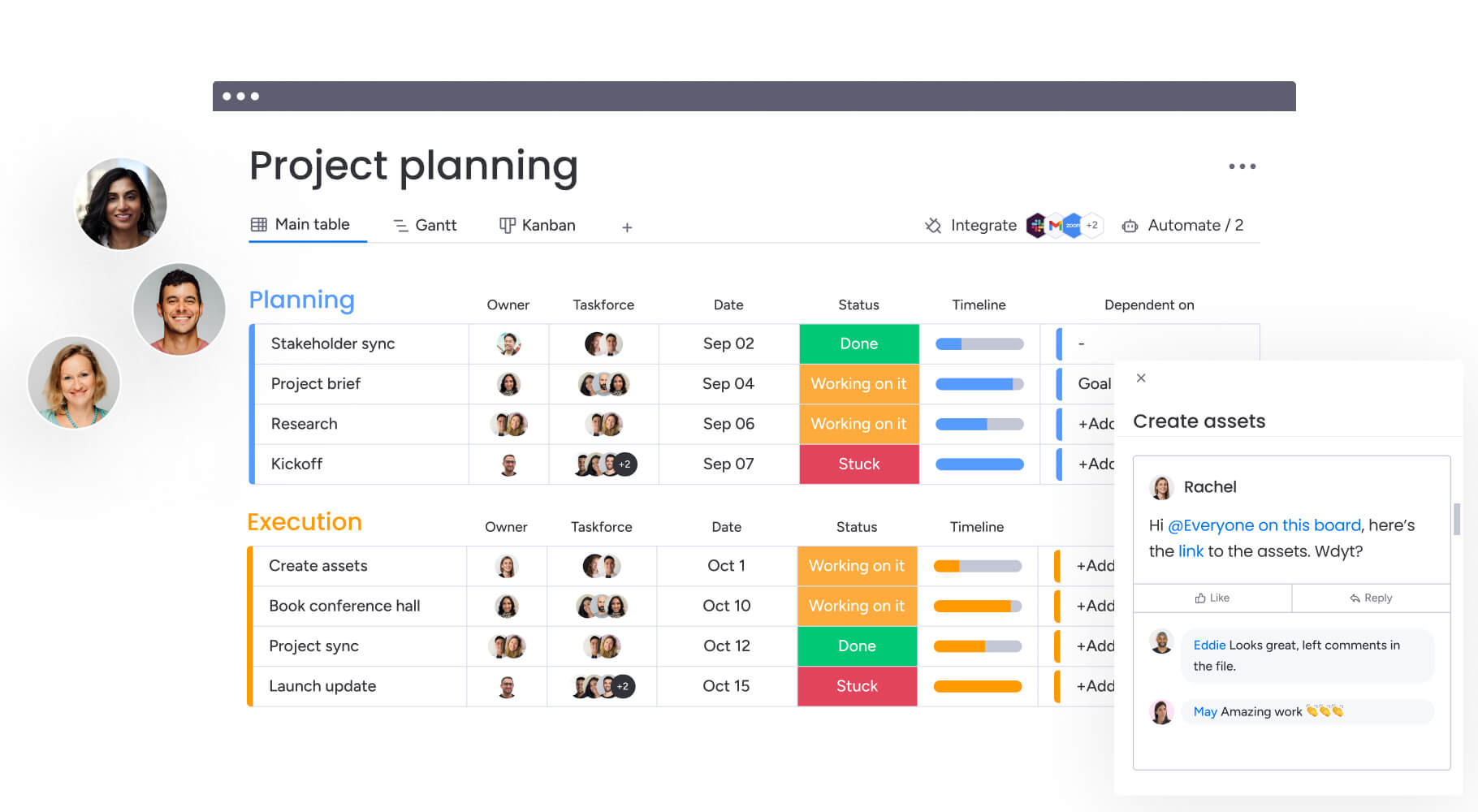
Project management defines how organizations plan, execute, and track work to achieve specific goals within real constraints such as time, budget, and resources. It focuses on coordinating people, schedules, and financial inputs while maintaining quality standards and reducing operational risk.
Rather than concentrating on isolated assignments, project management aligns collective effort across teams and departments: it transforms fragmented activity into coordinated execution, ensuring that time and effort contribute directly to measurable outcomes.
Cross-functional collaboration has become a baseline requirement for modern organizations. Marketing relies on product teams, sales depends on legal input, and operations support nearly every function. Without structured project management, these interdependencies create delays, cost overruns, and missed strategic objectives.
Learn more: Project management vs business management
How project management drives organizational success
Organizations apply project management principles to manage complex initiatives across industries and functions. Structured approaches replace uncertainty with predictability, making execution scalable and repeatable as operations grow.
- Product launches: Synchronizing R&D, marketing, and sales teams to bring solutions to market on schedule.
- Operational scaling: Implementing new software across global offices without disrupting daily workflows.
- Marketing campaigns: Managing creative assets, budgets, and distribution channels across multiple regions simultaneously.
- Digital transformation: Coordinating technology adoption, process changes, and training across departments.
When organizations centralize their work on platforms like monday.com, they gain the visibility needed to make informed decisions and keep every initiative on track. This makes project management accessible to everyone, enabling even non-technical teams to build sophisticated workflows without coding skills.

Top benefits of project management for today's organizations
Project management does more than check off tasks, in 2026 it has the power to change how organizations operate, creating efficiency gains from individual contributors all the way to the C-suite.
Here are the seven biggest ways project management impacts how your organization performs. Each one tackles real challenges mid-to-large organizations face when coordinating work across departments.
1. Achieve strategic goals faster with alignment
Strategy fails when daily work loses connection to big-picture goals. Project management bridges this gap by connecting company-wide goals to individual projects and tasks.
When teams utilize frameworks like OKRs (Objectives and Key Results) within their project environment, every team member understands how their specific contribution impacts organizational outcomes through effective resource management.
For example, leadership can monitor progress in real-time and make rapid adjustments instead of waiting for quarterly post-mortems.
Organizations using monday.com can also connect strategic objectives directly to portfolios, projects, and tasks through Goals and OKRs capabilities. This creates direct visibility from executive vision down to daily execution.
2. Deliver every project on time and under budget
Consistent delivery protects both financial performance and organizational credibility. Structured project management reduces scope expansion by defining timelines, costs, and responsibilities at the outset.
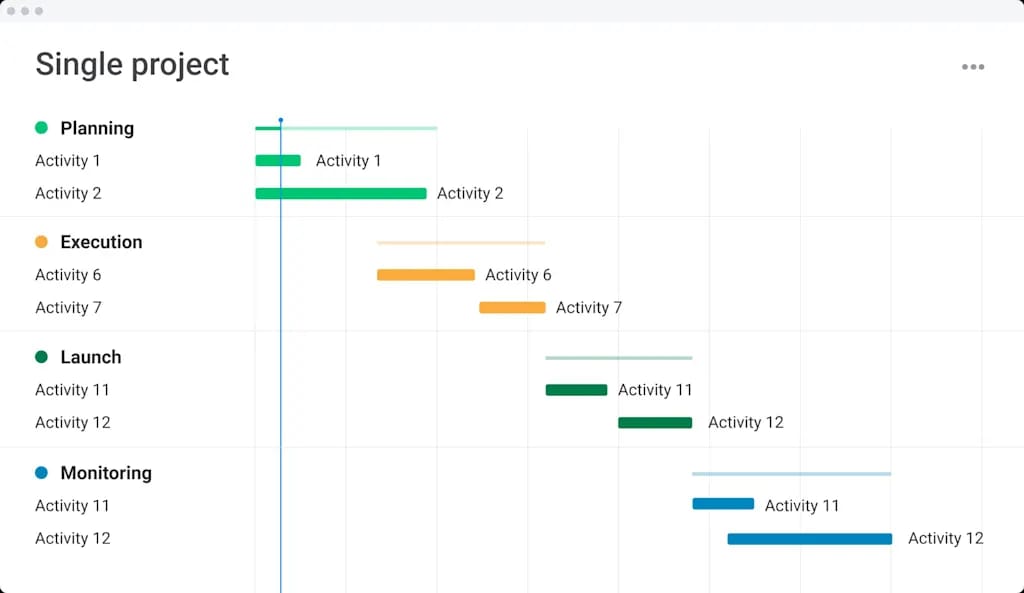
By mapping timelines and budgets upfront using tools like Gantt charts, then tracking them against actuals, teams identify variances immediately. This proactive approach ensures you use resources efficiently and keep projects profitable.
Key delivery mechanisms include:
- Timeline mapping: Gantt charts visualize dependencies and critical paths.
- Budget tracking: Real-time monitoring prevents cost overruns.
- Milestone management: Regular checkpoints ensure progress stays on track.
3. Unite teams by breaking down department silos
Critical information gets lost between departments all the time, creating delays and wasted effort. Project management creates a shared digital work management workspace where information flows freely between teams.
When marketing and development share workflows, handoffs become seamless, and context remains intact. This unified environment makes dependencies visible so teams support each other instead of getting in the way.
monday.com enables organizations to pull data from all projects across different programs into one high-level view. This makes it simple to detect bottlenecks and address problems before they escalate.
4. Make smarter decisions with real-time data
Enterprise decision-making depends on accurate insight rather than intuition. Project management platforms convert day-to-day activity into actionable data by centralizing execution signals.
Leaders use these insights to make evidence-based decisions about:
- Hiring needs: When capacity data shows consistent overutilization.
- Priority shifts: Which projects to accelerate or pause based on performance.
- Process improvements: Where bottlenecks consistently slow progress.
Dashboards automatically display live project data for insights on budget, goals, schedules, and resources. Executives can customize views with drag-and-drop widgets to see data exactly how they need it for sharper, faster decisions.
5. Maximize resource efficiency and prevent burnout
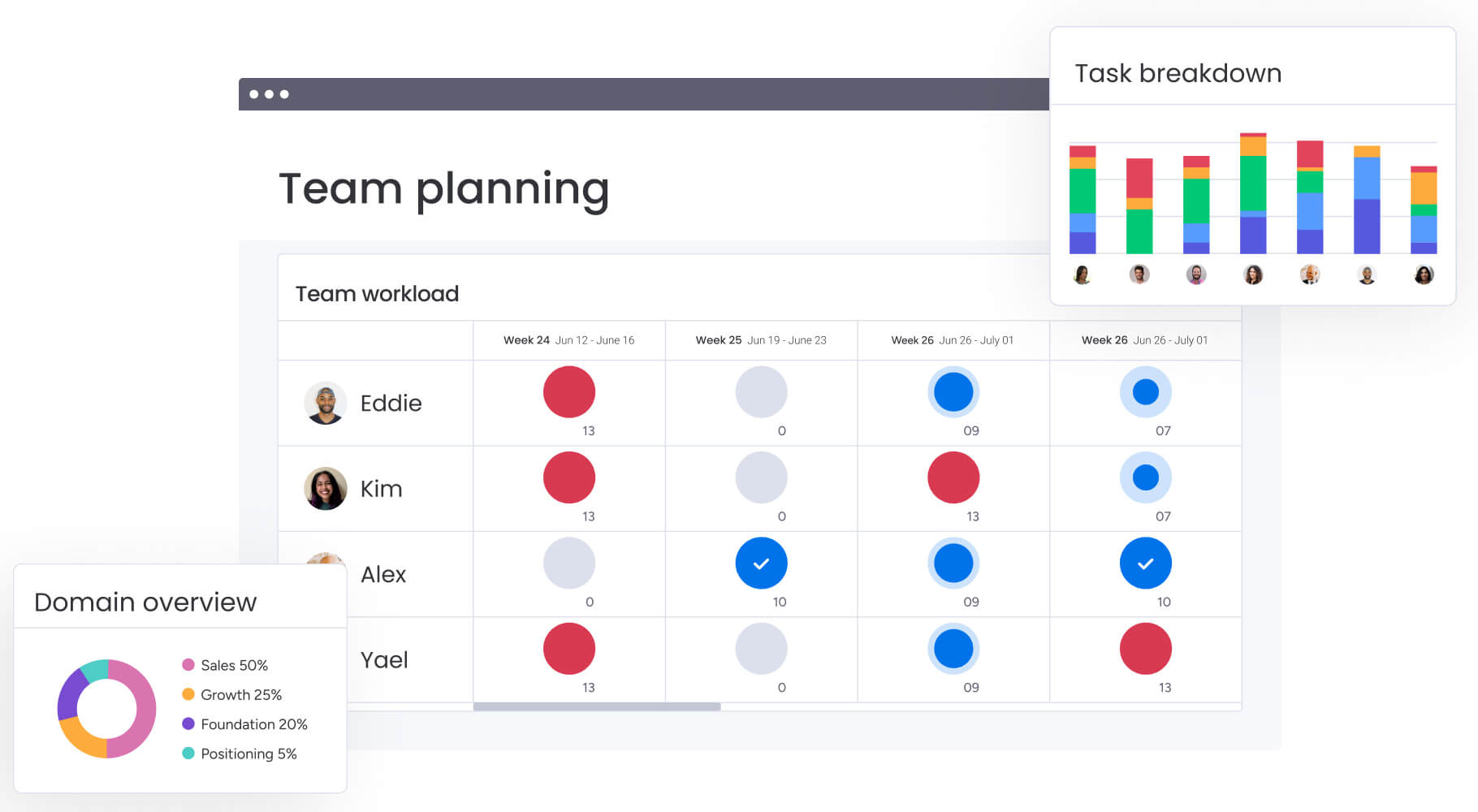
Inefficient workload distribution increases burnout and reduces output quality. Project management introduces visibility into individual and team capacity, enabling balanced assignment planning.
This visibility allows managers to:
- Balance assignments fairly: Distribute work based on actual capacity.
- Prevent overload: Identify at-risk team members before burnout occurs.
- Optimize utilization: Ensure skilled professionals focus on high-value work.
The Workload View in monday.com enables teams to plan, schedule, and allocate resources while adapting to changing priorities. Managers can see over or under-utilized resources at a glance, maximizing overall work efficiency.
6. Identify and mitigate risks before they impact business
Reactive management only fixes problems after they happen. Proactive project management prevents problems by building risk assessment and contingency planning into workflows.
Teams identify potential pitfalls before they become critical issues through benefits management, creating backup plans that keep projects on track even when unexpected challenges arise: this approach protects timelines and budgets from unexpected complications.
AI-powered Portfolio Risk Insights also scan all project boards, quickly flagging potential risks by severity without manually combing through data. With just a click, teams can notify the right person about emerging risks with generated summaries and linked relevant tasks.
7. Boost team productivity and job satisfaction
Ambiguity stresses people out and kills productivity. Project management gives teams the structure they need: defined roles, clear deadlines, and accessible resources.
When employees know what’s expected and have the right tools, they get more done. By automating administrative work, project management platforms free skilled professionals to focus on creative and strategic work they find fulfilling.
Automations and templates in monday.com save valuable time by handling crucial elements of work, creating templated project boards, sending approval notifications and reminders, and more. This allows teams to focus on high-impact activities rather than repetitive tasks.
Strategy fails when daily work loses connection to big-picture goals. Project management bridges this gap by connecting company-wide goals to individual projects and tasks.
How project management software amplifies these benefits
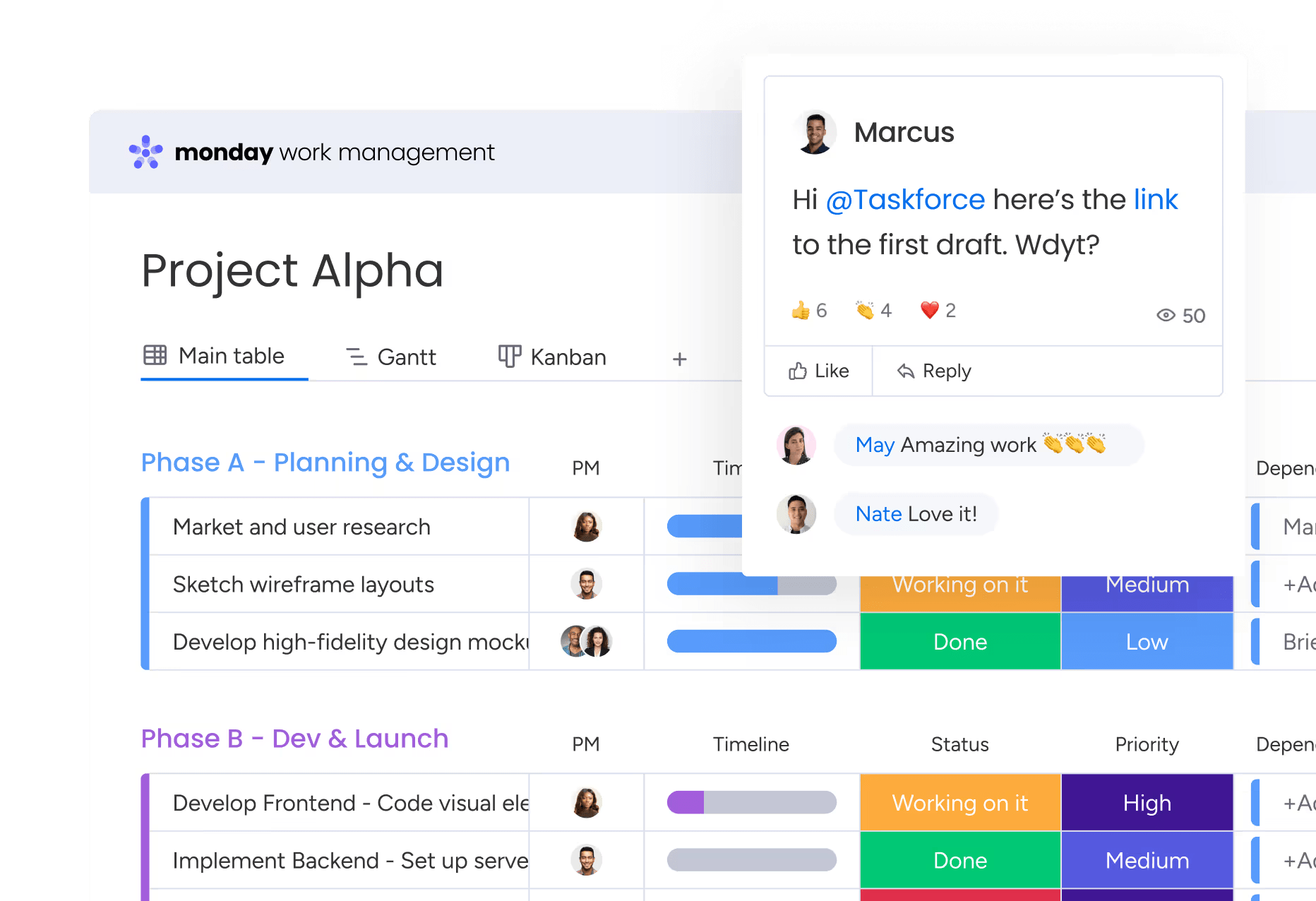
Project management principles create structure. The right software makes that structure scalable. As complexity increases, manual coordination and disconnected tools limit visibility, slow decisions, and introduce risk.
Modern platforms extend the core benefits of project management by automating routine work, connecting systems, and supporting execution from single projects to enterprise portfolios. The sections below outline how:
Automate manual work with AI-powered features
AI has moved from experimental tech to a practical tool that drives efficiency. AI built into project management platforms eliminates repetitive work and reveals insights that would take hours to find manually.
Here’s how AI transforms traditional approaches:
| Manual approach | AI-powered alternative | Business impact |
|---|---|---|
| Manually chasing status updates | AI agents automatically collect and summarize progress | Hours reclaimed for strategic work |
| Sorting and categorizing incoming requests | Intelligent algorithms assign labels and route to correct teams | Faster response times, reduced errors |
| Creating project schedules from scratch | AI suggests realistic timelines based on historical performance | More accurate planning, fewer missed deadlines |
| Reading through lengthy meeting transcripts | AI extracts action items and creates tasks automatically | No detail missed, immediate follow-up |
By leveraging a modern solution like monday.com, you can take advantage of AI Blocks that are embedded directly into workflows. These capabilities let teams categorize data at scale, summarize meeting notes instantly, and extract actionable insights from any document.
Connect all your tools in one platform
Too many tools create data silos and force constant context switching that kills focus. Integrated project management platforms act as your tech stack’s central hub, pulling data from different sources into one view.
Key integrations that unify organizational data include:
- Communication platforms (Slack, Microsoft Teams): Updates flow directly into chat channels, keeping conversation contextual.
- Development tools (Jira, GitHub): Dev progress syncs with business roadmaps for total visibility.
- CRM systems (Salesforce, HubSpot): Sales deals automatically trigger client onboarding projects.
- File storage (Google Drive, Dropbox): Assets attach directly to tasks, eliminating version control issues.
With 200+ integrations, monday.com allows teams to connect all their existing tools and run powerful projects without switching tabs.
Scale from single projects to enterprise portfolios
Solutions that work for small teams fall apart at enterprise scale without the right infrastructure. Scalable project management software handles everything from individual task lists to complex portfolio management.
A great platform allows leadership to standardize processes across departments while giving teams flexibility to customize their specific workflows. This balance keeps execution quality consistent as you grow, with data rolled up to the portfolio level for executives.
monday.com supports over 200 applications across 190 different industries, demonstrating the flexibility required to adapt to virtually any organizational need.
Building a culture of transparency and accountability
Project management transforms organizational culture by fostering an environment where information flows openly, expectations are clear, and teams take ownership of their work. This cultural shift creates competitive advantages that extend beyond individual project outcomes.
Transparency and accountability become embedded in an organization’s DNA when project management is integrated into daily operations. Teams develop trust, leadership gains confidence in execution, and the organization moves faster with greater precision.
Create visibility across every project
Transparency reduces the need for constant status meetings and empowers teams with autonomy. When project progress is visible on shared boards, project management calendars, and dashboards, stakeholders can check initiative status anytime without interrupting work.
This “pull” model of information sharing builds trust between leadership and execution teams. Challenges are surfaced quickly, so help arrives sooner, while wins get celebrated publicly. Different stakeholders see different views of the same data, so everyone gets the context they need without drowning in information.
Executives gain full visibility into the data required for strategic decisions, while teams seamlessly connect every task and process to business objectives.
Define roles and responsibilities
Projects often fail because no one’s clear on who owns what. Project management frameworks require teams to explicitly define who is responsible, accountable, consulted, and informed (RACI) for every deliverable, as detailed in this project management glossary.
This definition prevents the “bystander effect,” where tasks slip through the cracks because everyone assumes someone else is handling them. Platforms reinforce accountability by requiring specific owners for every item, building responsibility right into the workflow.
Multi-level permissions in monday.com control user access to viewing and changing data, including vendors and guests, so the right people have the right access at the right time.
Standardize workflows for consistency
Ad-hoc processes create inconsistent results and make it hard to spot where you can improve. Standardization ensures organizational best practices are applied to every project, reducing setup time and eliminating the risk of missing critical steps while maximizing the benefits of project management.
This consistency improves quality control and speeds up onboarding since the process guides new team members through the work. monday.com offers intuitive forms to collect information needed for efficient project proposals and work requests, easily shareable with external stakeholders or vendors.
Try monday.comControl project budgets and timelines with precision
As organizations scale, margin for error shrinks. In competitive markets, accurate forecasting and disciplined execution are not optional, they are strategic advantages. Project management replaces reactive cost control with structured oversight, giving leaders the visibility needed to protect profitability and credibility.
The capabilities below show how modern project management enables tighter financial and timeline control across initiatives.
Track costs and resources in real time
Traditional financial reporting usually arrives too late to change anything. Real-time project management builds financial tracking into workflows, updating budget burn rates as you log hours and record expenses.
This immediate feedback lets project managers spot trending overages weeks before hitting limits, so they can adjust scope or reallocate resources to protect margins. Time tracking features monitor project duration for future planning while ensuring team time is spent efficiently.
Prevent scope creep with defined boundaries
Scope creep slowly kills project value through small additions that pile up and eventually blow timelines and budgets. Project management sets clear baselines for scope and requires structured approval for changes.
This discipline makes sure every addition gets evaluated for its impact on time and cost, forcing stakeholders to make real trade-offs instead of assuming changes are free.
Use historical data to improve future estimates
Organizations that don’t learn from past projects keep making the same planning mistakes. Project management platforms store institutional knowledge by tracking actual time and cost data from completed projects.
Analyzing past performance helps teams shift from optimistic guessing to data-driven forecasting. If previous marketing campaigns consistently took six weeks instead of the planned four, future plans adjust accordingly, resulting in roadmaps stakeholders can trust.
Turn project data into clear and actionable insights
Spreadsheets don’t fail because they lack information. They fail because they bury it. When project data is scattered across tabs, comments, and reports, leaders spend more time searching for clarity than making decisions.
Visual project management changes that dynamic. By transforming raw data into dashboards, boards, and timelines, it makes work easier to understand at a glance. Patterns stand out. Risks surface earlier. Dependencies become visible. Instead of interpreting columns of text, teams see how everything connects.
Here’s how visual tools convert complexity into clarity and help organizations move faster with confidence.
See everything at a glance with dashboards
Dashboards act as control towers, pulling data from hundreds of projects into high-level metrics. Executives don’t need to read task comments. They need status indicators, budget consumption charts, and progress percentages.
Customizable widgets let different leaders build views for their specific KPIs, keeping critical information front and center. monday.com dashboards can be customized with over ten drag-and-drop widgets, allowing teams to view data exactly how they need it for sharper, faster decisions.
Spot bottlenecks before they cause delays
Workflows often contain invisible choke points where work accumulates and creates delays. Visual tools like Kanban boards and Gantt charts make these bottlenecks immediately apparent.
A column on a Kanban board piled high with cards signals a process failure or resource shortage. By visualizing work flow, teams identify constraints early and redistribute tasks or adjust processes to restore flow before deadlines are threatened.
With 15+ board views available, teams using monday.com can visualize their data and project plans with dynamic features tailored to their needs.
Generate reports that drive action
Reporting should trigger decisions, not just document history. Project management generates dynamic reports highlighting exceptions, risks, and opportunities rather than requiring hours of manual spreadsheet compilation.
Managers generate instant reports on team capacity, overdue tasks, or budget variance with a few clicks. These insights empower leaders to intervene precisely where needed, shifting from passive observation to active management.
AI-powered features can generate daily reports highlighting trends, risks, and project health, keeping leadership informed and making strategic decisions straightforward.
Try monday.com
“monday.com has been a life-changer. It gives us transparency, accountability, and a centralized place to manage projects across the globe".
Kendra Seier | Project Manager
“monday.com is the link that holds our business together — connecting our support office and stores with the visibility to move fast, stay consistent, and understand the impact on revenue.”
Duncan McHugh | Chief Operations OfficerFuture-proof your business with AI-enhanced project management
Artificial intelligence represents the next frontier of project efficiency, shifting the project manager role from administrator to strategist. By integrating AI into work management cores, organizations prepare for a future where speed and adaptability serve as primary differentiators.
AI integration isn’t just about automation, it’s about augmenting human intelligence to make better decisions faster. Organizations that embrace AI-enhanced project management gain competitive advantages that compound over time.
Let AI handle repetitive tasks
Administrative overhead: scheduling, tagging, updating, and reminding consume massive amounts of human capital. AI agents within project management platforms now handle these tasks with greater speed and accuracy than humans.
AI capabilities that remove administrative burden include:
- Data extraction: AI pulls action items directly from meeting transcripts and creates tasks.
- Categorization: Incoming support tickets are automatically tagged by sentiment and urgency.
- Summarization: Lengthy project threads condense into bulleted executive summaries instantly.
- Translation: Marketing materials are localized to any language instantly, breaking barriers for global teams.
Predict project risks with intelligent analytics
Predictive AI analyzes patterns across thousands of data points to foresee complications that human managers might miss. By evaluating factors like recent team velocity changes, task complexity, and historical bottlenecks, the system flags projects statistically likely to miss deadlines.
This early warning system for projects allows leadership to intervene while there’s still time to correct course. Portfolio Risk Insights in monday.com identify risks across hundreds of projects, enabling teams to continuously execute and manage risks at scale with AI-driven analysis.
Optimize resource allocation automatically
Resource allocation involves complex mathematical problems considering skills, availability, and priorities. AI optimization engines solve this instantly, suggesting ideal team configurations for new projects.
These systems balance workloads to ensure no individual is overburdened while maximizing utilization of the entire talent pool. As project timelines shift, AI dynamically suggests reallocations to maintain equilibrium.
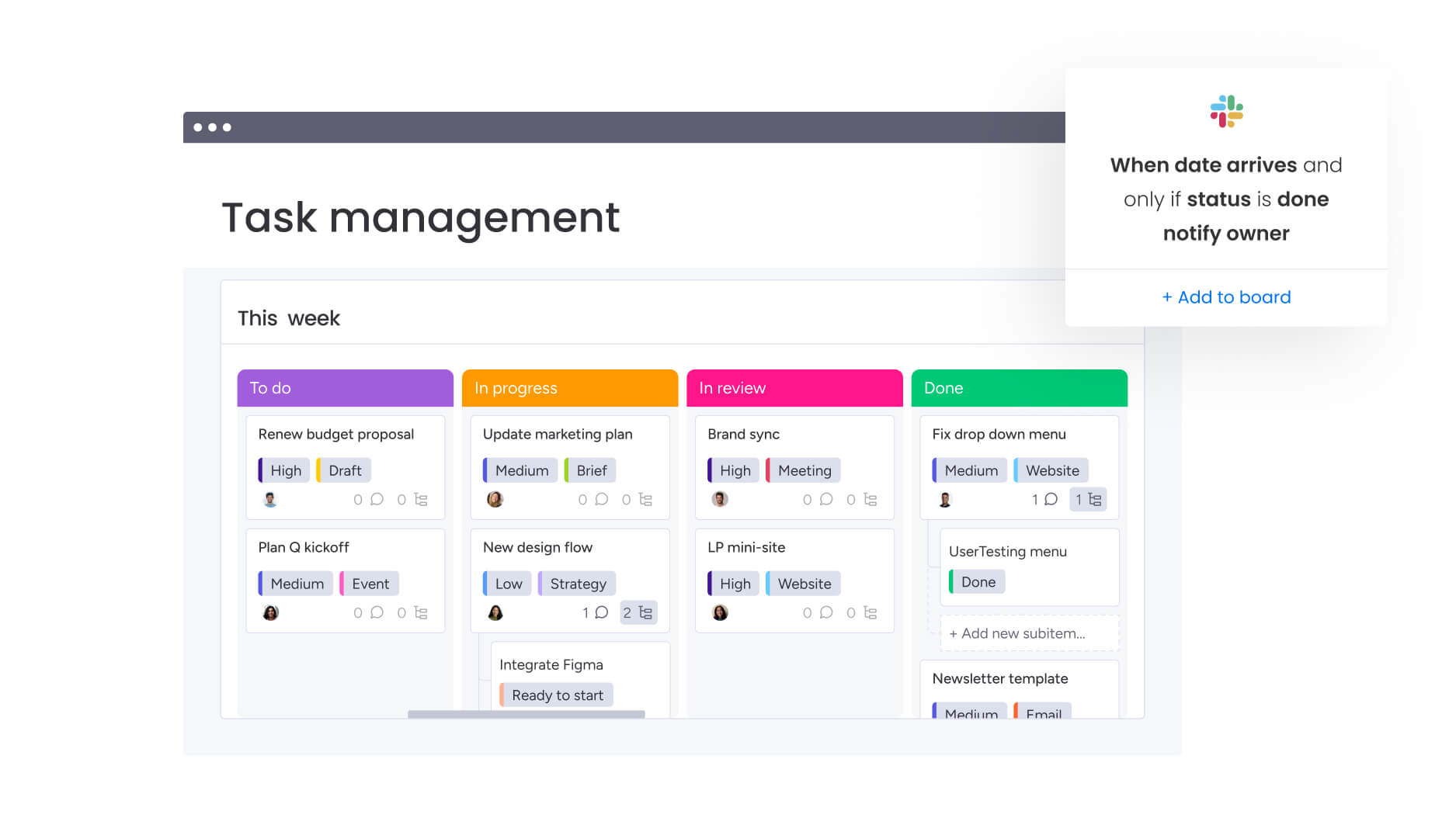
Unlock your organization's potential with structured project management
Scaling teams and operations comes with real challenges: misaligned priorities, missed deadlines, unclear responsibilities, and inefficient resource usage can all slow growth and reduce impact.
monday.com addresses these big issues by connecting daily work to broader business objectives, creating visibility, and enabling structured, scalable execution.
Key benefits include:
- Strategic alignment: Link individual projects and tasks directly to company goals to ensure every effort drives measurable outcomes.
- Timely, on-budget delivery: Visualize timelines, track budgets, and manage milestones to reduce scope creep and protect margins.
- Enhanced collaboration: Unify workflows across teams and departments so dependencies are clear and handoffs are seamless.
- Data-driven decisions: Leverage dashboards and reporting tools to monitor project health, capacity, and performance in real time.
- Efficient resource management: Balance workloads, prevent burnout, and optimize utilization through visibility and AI-driven insights.
By embedding structured project management into daily operations, teams gain clarity, improve execution, and create measurable strategic impact, without adding complexity to workflows.
Frequently asked questions
What are the most important benefits of project management?
The most important benefits of project management include strategic alignment of daily work with company goals, consistent on-time and under-budget delivery, improved cross-functional collaboration, data visibility for smarter decision-making, and optimized resource usage to prevent employee burnout.
How quickly can organizations see ROI from project management?
Organizations typically see measurable ROI within the first few months of implementation. Forrester research indicates that platforms like monday.com can deliver a full return on investment in less than four months through efficiency gains and reduced administrative waste.
Why is project management important for growing businesses?
Project management is important for growing businesses because informal communication and ad-hoc processes break down as organizations scale. Structured project management provides the scalable infrastructure and standardized processes necessary to handle increased complexity without sacrificing speed or quality.
How does project management software improve team collaboration?
Project management software improves team collaboration by centralizing all communication, files, and updates in one shared digital workspace. It creates a single source of truth where dependencies are visible, ensuring cross-functional teams stay aligned and handoffs remain seamless.
What's the difference between project management and work management?
Project management focuses on temporary initiatives with specific start and end dates, while work management is a broader discipline that includes ongoing processes, routine operations, and ad-hoc tasks. Comprehensive platforms like monday.com cover both, managing the entire lifecycle of work across the organization.
Can project management help distributed teams work more effectively?
Project management is essential for distributed teams because it provides a virtual headquarters where work is visible and tracked regardless of location. It replaces physical proximity with digital transparency, ensuring remote members stay connected, accountable, and aligned with central goals.

 Get started