


Team collaboration is more than a workplace buzzword. According to Gallup’s 2026 State of the Global Workplace report, only 20% of employees feel engaged at work, costing the global economy an estimated $10 trillion in lost productivity. Meanwhile, 79% of remote-capable employees now work outside traditional offices at least part of the time.
Effective team collaboration isn’t about scheduling more meetings or adding another communication channel. It’s about creating structured, intentional ways for people to align on goals, share ownership, and move work forward together. This article breaks down what real collaboration looks like, where teams struggle, and 10 strategies you can put into practice today.
Teams that invest in the right collaborative approach see measurable results. Organizations using platforms like monday AI Workspace report cutting meetings by 50% and saving thousands of hours annually. Here’s how to build a team that collaborates with purpose.
Get started with monday.comKey takeaways
- Collaboration is a system, not a habit: effective team collaboration requires shared goals, clear ownership, and structured workflows rather than just more communication
- Engagement and collaboration are connected: with only 20% of employees engaged globally, intentional collaboration strategies directly improve morale and output quality
- AI reduces collaboration drag: AI-powered tools handle status updates, meeting summaries, and routine coordination so teams can focus on meaningful work
- monday AI Workspace centralizes collaboration: from workdocs to automations to 200+ integrations, it replaces scattered tools with one connected workspace
What is team collaboration?
Team collaboration is the process of two or more people working together toward a shared outcome, combining their skills, perspectives, and responsibilities to produce results no individual could achieve alone. It goes beyond simply dividing tasks. True collaboration means actively contributing to each other’s work, making decisions together, and holding shared accountability for what the team delivers.
People often use “collaboration,” “cooperation,” and “coordination” interchangeably, but they describe different levels of working together. Here’s how they compare:
| Aspect | Collaboration | Cooperation | Coordination |
|---|---|---|---|
| Definition | Shared goals, shared ownership, joint decision-making | Shared goals, but individual ownership of separate tasks | Aligned schedules and handoffs, but independent work |
| How teams work | Teams co-create and iterate together | Teams help each other when needed | Teams sequence work to avoid conflicts |
| Example | Cross-functional team designing a product launch | Marketing shares assets with sales on request | Engineering and QA schedule release windows |
What is the difference between collaboration and teamwork?
Teamwork is the broader concept of people working as a group. Collaboration is how they do it. A team can exist without strong collaboration, but the results suffer. When team members actively collaborate, they contribute ideas, challenge assumptions, and build on each other’s work rather than simply completing assigned tasks in parallel.
Common team collaboration challenges
Even teams with the best intentions run into obstacles that slow them down. Understanding these challenges is the first step to solving them.
Communication silos and information gaps
When teams rely on scattered tools and fragmented channels, critical information gets lost between conversations, emails, and shared drives. This problem intensifies for distributed teams. According to Microsoft’s 2025 Work Trend Index, nearly a third of meetings now span multiple time zones, making synchronous communication harder and increasing the risk that decisions happen without full team input. When people don’t have access to the same information at the same time, duplicate work and misaligned priorities follow.
Collaboration overload
More collaboration isn’t always better. Research from the Work Trend Index shows that knowledge workers face up to 275 interruptions per day from meetings, emails, and chat notifications, losing significant hours each week to context switching. The result is high-quantity, low-quality collaboration where people spend more time coordinating than doing meaningful work. Teams need intentional boundaries around when and how they collaborate.
Unclear ownership and accountability
When nobody knows who’s responsible for what, tasks fall through the cracks. Unclear ownership leads to duplicated effort, missed deadlines, and finger-pointing when things go wrong. This challenge grows as teams scale. Without visible task assignments and defined decision-making authority, people either step on each other’s toes or assume someone else is handling it.
Resistance to new tools and processes
Introducing new collaboration tools or workflows often meets resistance, especially when teams are already overwhelmed. Yet the shift is accelerating. The key to overcoming resistance is demonstrating clear value quickly. Teams adopt tools they see as making their work easier rather than adding another layer of complexity. Read more about improving your team communication to reduce these friction points.
Get started with monday.comThe benefits of effective team collaboration
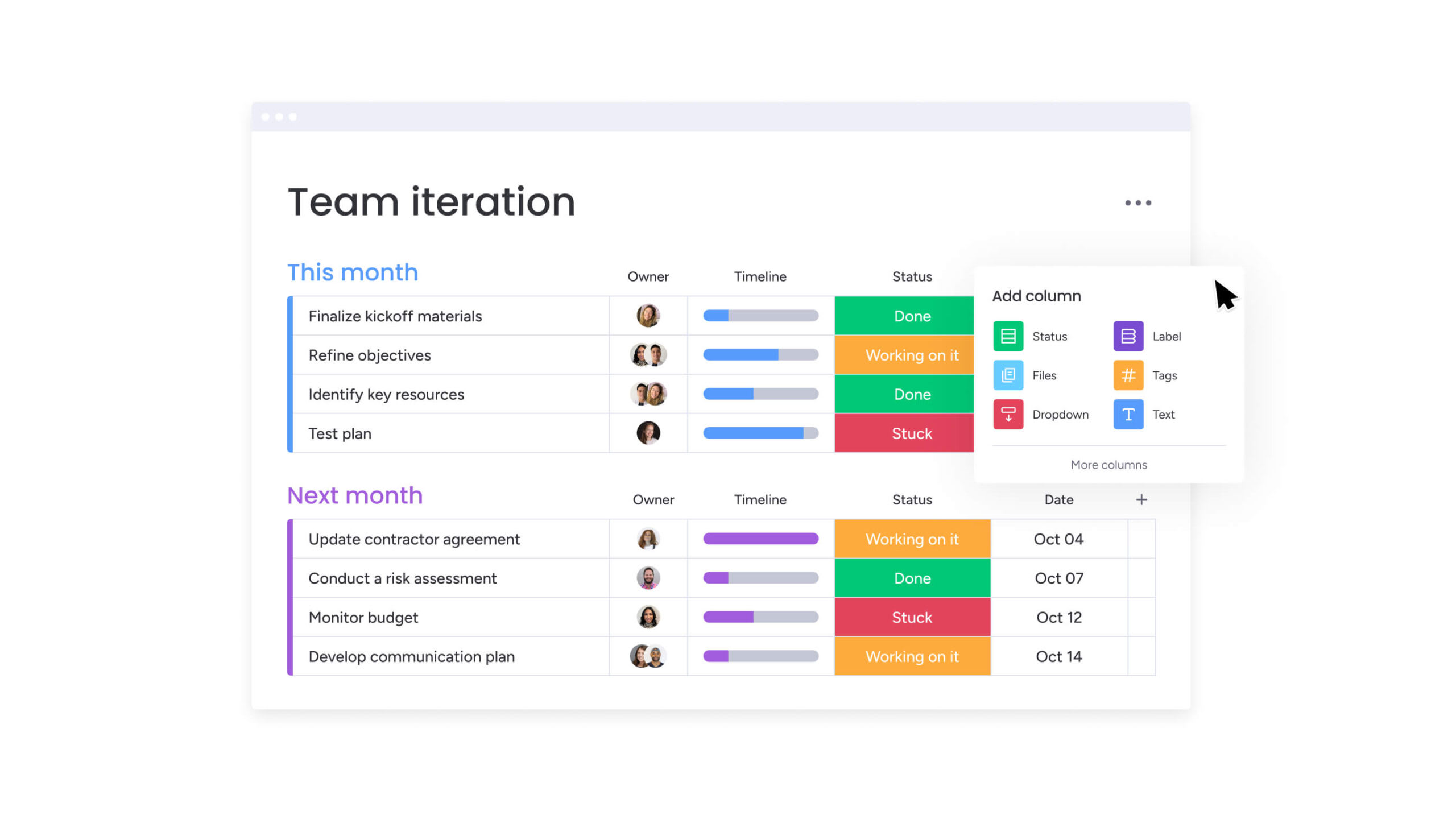
When teams collaborate well, the impact shows up across engagement, creativity, and output quality. Here’s what the research shows.
Encourages diversity and belonging
A collaborative team draws together diverse perspectives, opinions, and ideas. This levels the playing field and gives everyone a space to contribute. Diverse teams perform better, and when everyone feels their input is valuable and respected, it creates a sense of camaraderie and inclusion fundamental to team success. Gallup’s 2026 research confirms that employees who feel connected to their team and organization are significantly more likely to report thriving well-being and higher job satisfaction.
Drives innovation and creativity
This variety of voices can be a powerful stimulus for innovation. When team members brainstorm collectively and bounce ideas off each other, it sparks new ways of thinking and leads to inventive solutions. Colleagues get to exchange knowledge, skills, and experience, leading to new insights. Teams with strong collaborative practices achieve higher productivity when they structure their collaboration around clear objectives rather than open-ended discussions.
Increases engagement and morale
Collaboration is also positive for employee wellbeing. Team collaboration helps people create constructive working relationships, build confidence, and feel included and valued. Being part of a team means you can give and receive guidance and support, which helps team members stay motivated. With only 20% of employees engaged globally according to Gallup’s data, intentional collaboration is one of the most effective levers for improving how people feel about their work.
Improves productivity and output quality
Through collaboration, teams produce higher-quality outputs by combining everyone’s strengths and benefiting from collective input and oversight. Research from i4cp found that organizations with strong team collaboration practices see up to 39% higher productivity. This feeds back into greater motivation and engagement, creating a virtuous cycle where better collaboration drives better results.
Types of team collaboration
Not all collaboration looks the same. Understanding the different types helps you design workflows that match how your team actually works.
- Synchronous collaboration: This happens in real time. Think video calls, live brainstorming sessions, or simultaneous work on a shared document. It’s ideal for decisions that need immediate input, creative ideation, and complex problem-solving. The trade-off is that it requires everyone to be available at the same time
- Asynchronous collaboration: Work that happens on each person’s own schedule. Team members contribute to shared documents, leave comments, record video updates, or update task boards without needing to be online at the same time. Async collaboration is essential for distributed teams spanning multiple time zones
- Cross-functional collaboration: Brings together people from different departments or disciplines to work on a shared initiative. Product launches, marketing campaigns, and process improvements typically require cross-functional collaboration. The challenge is aligning different priorities and communication styles across teams
- Document-based collaboration: this centers on co-creating and refining shared documents, proposals, or plans. Tools like monday Workdocs make it possible for multiple contributors to edit, comment, and track changes in one place. It’s particularly effective for long-form content, strategic plans, and project briefs that evolve over time
Most teams use a combination of these types daily. The key is to match the collaboration type to the task at hand rather than defaulting to a single approach for everything. Learn more about how team building supports each of these collaboration types.
Get started with monday.com10 team collaboration strategies that actually work
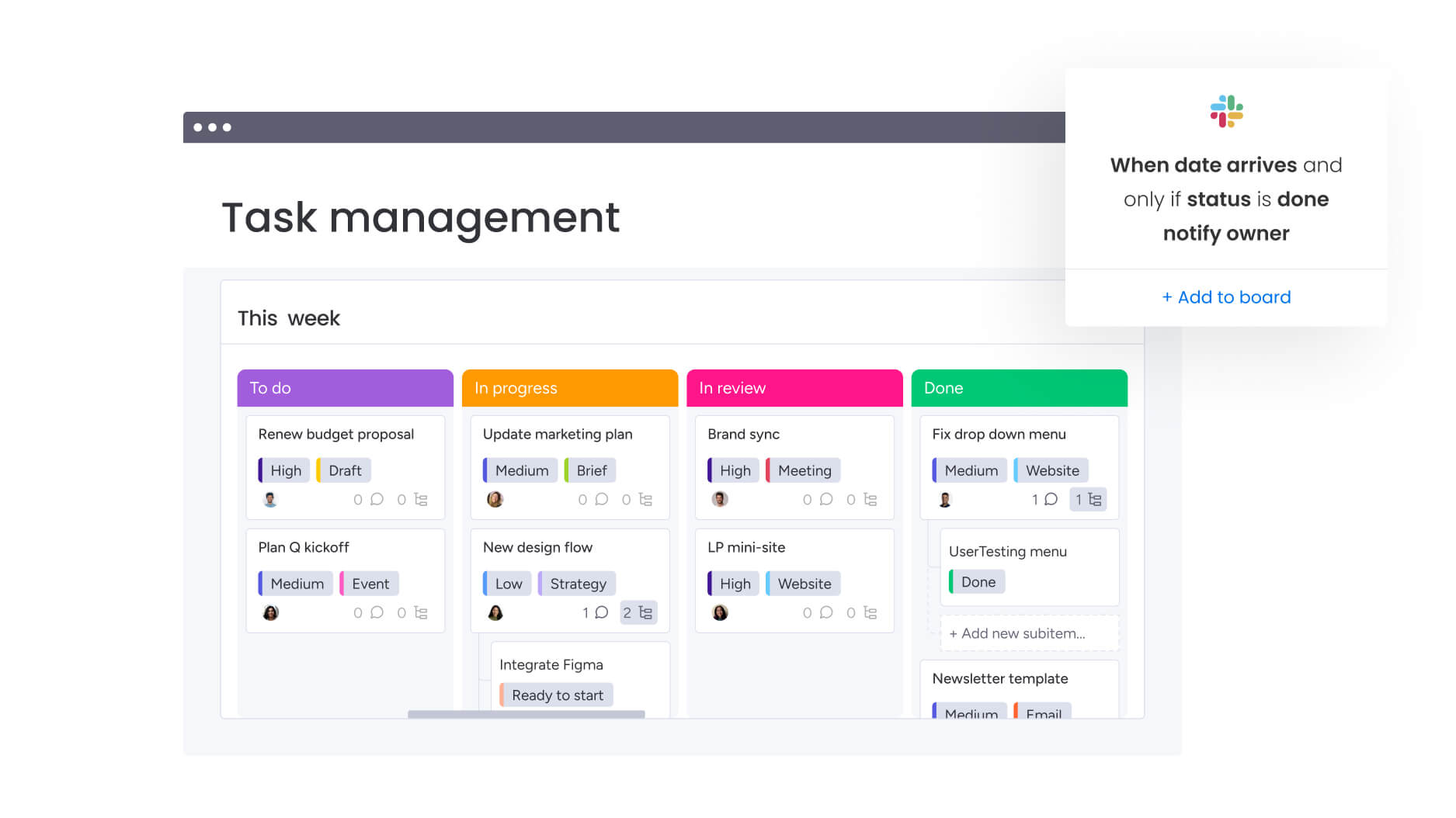
Knowing why collaboration matters is only half the equation. Here are 10 strategies you can put into practice to strengthen how your team works together.
1. Set shared goals before dividing tasks
Before jumping into execution, make sure everyone on the team understands the objective and why it matters. Collaborative goal-setting nurtures a sense of belonging and gives team members a sense of purpose.
Use frameworks like OKRs (objectives and key results) so each person can see how their individual tasks connect to the team’s shared outcome. When goals are visible and agreed upon, teams spend less time second-guessing priorities and more time executing. Involve the team in defining those goals from the start rather than handing them down from leadership.
2. Establish clear roles and ownership
Accountability means every team member owns their piece of the puzzle and is wholly responsible for its success. Define who is responsible for what, who has decision-making authority, and who needs to be consulted versus informed. When ownership is visible to the entire team, duplicated work and missed handoffs drop significantly. This doesn’t mean rigid hierarchies. It means everyone knows what they’re expected to deliver and when.
3. Communicate with intention, not just frequency
If you can’t communicate well, you can’t collaborate well. But more communication isn’t always the answer. Focus on quality over quantity. That means expressing your thoughts clearly, actively listening to understand rather than just respond, and choosing the right channel for the right message. Consider communication training for team members and leaders, and ensure everyone can express themselves openly and with confidence. Have a clear conflict resolution strategy so disagreements don’t derail progress.
4. Design workflows your team can see and follow
When team members can see not only their own processes but also the team’s overall progress, they understand their role in the bigger picture. Develop workflows collaboratively so everyone knows what’s expected and when. Use visual tools like Kanban boards to let your team track real-time progress. Visual workflows give team leaders confidence that everything is on track while giving team members autonomy over their work. Read more about how Kanban project management keeps teams aligned.
5. Prioritize engagement over attendance
Low-quality teamwork, such as overlong or aimless meetings, actively suppresses engagement. Instead of measuring collaboration by hours spent in meetings, focus on whether people are genuinely contributing and connected. Use pulse surveys and encourage conversational feedback to gauge employee sentiment. Make your team-building activities relevant and engaging. A hack day could be better than yet another generic workshop in inspiring colleagues to interact, think, and work differently.
6. Build trust through transparency and accountability
Employees collaborate more willingly when they see their managers and leaders participating themselves. Leading by example establishes trust, a strong teamwork ethic, and a positive work culture. That might mean participating in problem-solving sessions, encouraging team members to share ideas, or delegating responsibility to subject matter experts. Get familiar with situational leadership so you can be flexible and take the right approach in each situation.
7. Create space for cross-functional collaboration
Cross-functional work brings fresh perspectives and prevents silos, but it doesn’t happen by accident. Create intentional opportunities for people from different departments to collaborate on shared initiatives. This might mean forming project-specific teams, running joint planning sessions, or using shared boards where multiple departments can track interconnected work. By building intentional workplace connections, organizations with high levels of collaboration drag are 37% less likely to achieve their revenue goals, according to Gartner research.
8. Use AI to reduce collaboration drag
AI is changing how teams coordinate. Instead of spending hours on status updates, meeting summaries, and routine follow-ups, teams can offload these tasks to AI-powered tools. According to Microsoft’s Work Trend Index, 82% of leaders say AI is a turning point for how their organizations operate.
AI handles the coordination overhead so your team can focus on the creative and strategic work that actually requires collaboration. Features like automated progress tracking, smart notifications, and AI-generated summaries eliminate the manual busywork that drains collaborative energy. The teams that adopt AI for coordination earliest gain a compounding advantage by redirecting the time saved toward higher-impact work.
9. Invest in the right collaboration tools
There’s one last piece to the puzzle: effective team collaboration software. From tag-based group messaging and document sharing to project-planning features like Kanban boards and dynamic reporting, teams can manage their individual and collaborative tasks on a single, accessible platform. Look for tools that integrate with what you already use. The monday.com marketplace offers 200+ integrations, so you don’t need to rip and replace your existing stack.
10. Measure collaboration effectiveness, not just activity
Most teams track activity metrics such as messages sent, meetings held, and tasks completed. But these don’t tell you whether collaboration is actually working. Instead, focus on outcome-based metrics: how quickly does your team make decisions? What’s the cycle time from idea to delivery? Are goals being met on schedule?
Track the quality of outputs, not just the quantity of interactions. Use dashboards to surface patterns and identify where collaborative friction is slowing your team down. Review these metrics regularly with your team so they can see what’s working and where adjustments are needed.
Get started with monday.comHow monday AI Work Platform supports team collaboration
Strong collaboration strategies need the right infrastructure behind them. Without a centralized platform, even the best-intentioned teams end up toggling between disconnected tools, losing context, and spending more time coordinating than doing actual work.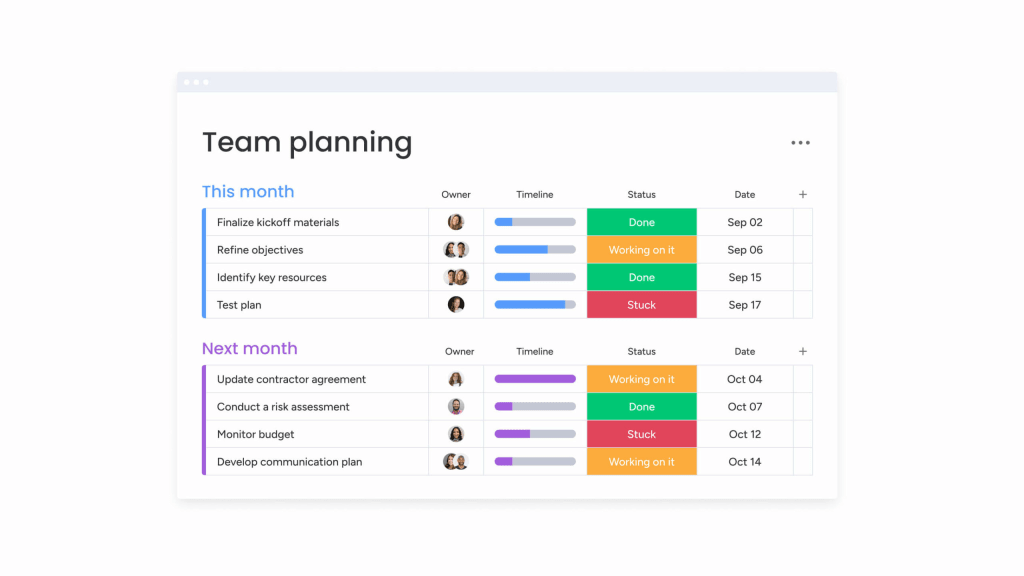 monday AI Workspace solves this by bringing collaboration, workflows, and visibility into one connected workspace. Here’s how it maps to the challenges teams face:
- Scattered communication: monday Workdocs lets your team co-create, comment, and collaborate on documents directly alongside their tasks, so context never gets lost between tools
- Manual status updates: Automations handle routine notifications, status changes, and task assignments automatically, freeing your team to focus on meaningful work.
- No visibility into team progress: Workload view and dashboards give everyone a real-time picture of who’s working on what, where bottlenecks are forming, and whether projects are on track
- Too many disconnected tools: 200+ integrations connect the tools your team already uses, from Slack and Google Workspace to Jira and Salesforce, into one unified workflow
- Repetitive manual tasks: AI Blocks automate data entry, generate summaries, and handle routine decisions, so your team spends less time on busywork
- Need proactive help, not just reactive tools: monday Sidekick is a built-in AI assistant that thinks, recommends, and runs work for you at scale, acting as a context-aware partner across your workflows
- Custom workflow needs: monday Vibe lets you build any business software in minutes, replacing disconnected tools with custom apps tailored to how your team actually works
 Here’s a quick view of how monday AI Workspace addresses each collaboration challenge:
| Challenge | monday AI Work Platform solution |
|---|---|
| Information silos | Centralized Workdocs and shared boards |
| Manual coordination | Automations and AI Blocks |
| Low visibility | Dashboards, Gantt charts, and workload views |
| Tool sprawl | 200+ integrations in one platform |
| Repetitive tasks | AI-powered automation workflows |
| Need proactive support | monday sidekick AI assistant |
The results speak for themselves. Teams using the monday AI Workspace report 50% fewer meetings, a 346% ROI, and 3,564 hours saved per year. Whether you’re building a cross-functional team or improving collaboration within a small group, the platform provides the visibility, automation, and AI capabilities to make every collaboration count. Explore ready-made templates to get started in minutes.
Build a team that collaborates, not just communicates
Team collaboration isn’t something you fix with a single tool or a one-time workshop. It’s the result of shared goals, clear ownership, intentional communication, and a platform that keeps everything connected.
With only 20% of employees engaged globally, the opportunity is significant. Teams that invest in structured collaboration see higher productivity and measurably stronger outcomes. The gap between teams that communicate and teams that truly collaborate comes down to systems and habits that make collaboration the default.
monday AI Workspace gives your team the foundation to collaborate with purpose: centralized workflows, AI-powered automation, and real-time visibility across every project. Start building a team that doesn’t just talk about working together but actually does it.
Get started with monday.comFAQs
What's the difference between collaboration and teamwork?
Teamwork is the broader concept of people working together as a group toward a common objective. Collaboration is how they do it. A team can exist without strong collaboration, but results suffer. Collaboration means actively contributing to each other's work, making decisions together, and sharing accountability for outcomes rather than simply completing individual tasks in parallel.
Why is team collaboration important in a remote workplace?
Remote and hybrid work removes the informal interactions that naturally happen in an office. Without intentional collaboration structures, distributed teams risk communication silos, duplicated effort, and disengagement. Effective team collaboration tools and practices replace missing touchpoints with structured workflows, async updates, and shared visibility, keeping everyone aligned regardless of location.
How do you measure team collaboration?
Focus on outcome-based metrics rather than activity counts. Track decision speed, project cycle time, goal completion rates, and output quality. Pulse surveys can measure how connected and supported team members feel. Dashboards that surface bottlenecks and workflow patterns provide more actionable insight than counting messages sent or meetings held.
What are the best tools for team collaboration?
The best collaboration tools centralize communication, project tracking, and document sharing on a single platform. Look for features like visual workflows, automations, integrations with your existing tools, and real-time dashboards. Read our full guide to the best team collaboration software for a detailed comparison of top platforms and what to look for when choosing one.
How does AI improve team collaboration?
AI reduces the manual overhead that slows collaboration down. It automates status updates, generates meeting summaries, routes tasks based on workload, and surfaces insights from project data. This frees teams to focus on creative problem-solving and strategic decisions. AI assistants like monday Sidekick go further by proactively recommending next steps and running routine workflows so teams can execute faster.

 Get started