

Global employee engagement fell to just 21% in 2025, according to Gallup’s State of the Global Workplace report. One root cause was disconnected teams that struggled to collaborate effectively. When people can’t align on goals, share context, or coordinate across functions, performance suffers across the board.
But what is collaboration, really? It’s more than people sitting in a room together. Today, collaboration involves AI agents, async documents, cross-functional workflows, and distributed teams working across time zones. The way we work together has fundamentally changed, and the definition of collaboration has evolved with it.
This article breaks down the definition of collaboration, its key types, why it drives measurable business outcomes, common challenges teams face, and a research-backed framework for building a collaborative culture. The right platform can bring all of these elements together into one connected workspace.
Get startedKey takeaways
- Collaboration is the act of two or more people working together toward a shared goal, and it takes different forms depending on the team structure and tools involved.
- Effective collaboration drives measurable outcomes with employees commonly reporting improved performance when they collaborate well.
- Common challenges like communication silos, fragmented platforms, and unclear ownership actively undermine collaboration even on high-performing teams.
- Google’s Project Aristotle research identifies 5 dynamics (psychological safety, dependability, structure, meaning, and impact) that distinguish the highest-performing collaborative teams.
- monday.com’s AI Work Platform brings collaboration, AI agents, real-time documents, and workflow automation into one connected workspace.
What is collaboration?
Collaboration in the workpace is the sharing of ideas, skills, and responsibilities with the aim of developing processes, brainstorming solutions, or completing projects. It’s worth distinguishing collaboration from related concepts: cooperation means working alongside others with minimal interdependence, coordination involves organizing separate efforts toward a common timeline, and communication is the exchange of information. Collaboration requires all three, plus a shared commitment to producing something together.
Understanding the different types of collaboration helps teams choose the right approach for each situation. Not every project calls for the same structure, and recognizing what type of collaboration you’re using makes it easier to optimize how your team works together.
Team collaboration
Team collaboration is the oldest and most common form of collaboration. Its signature quality is that everyone is familiar with each other and their work. During team collaboration, each person’s unique skills contribute towards the team’s greater goal.
Example: a group brainstorming session where the entire team gathers together to think of messaging around a new product.
Social collaboration
During social collaboration, teams work across a digital platform and pool their collective expertise rather than relying on their own skills.
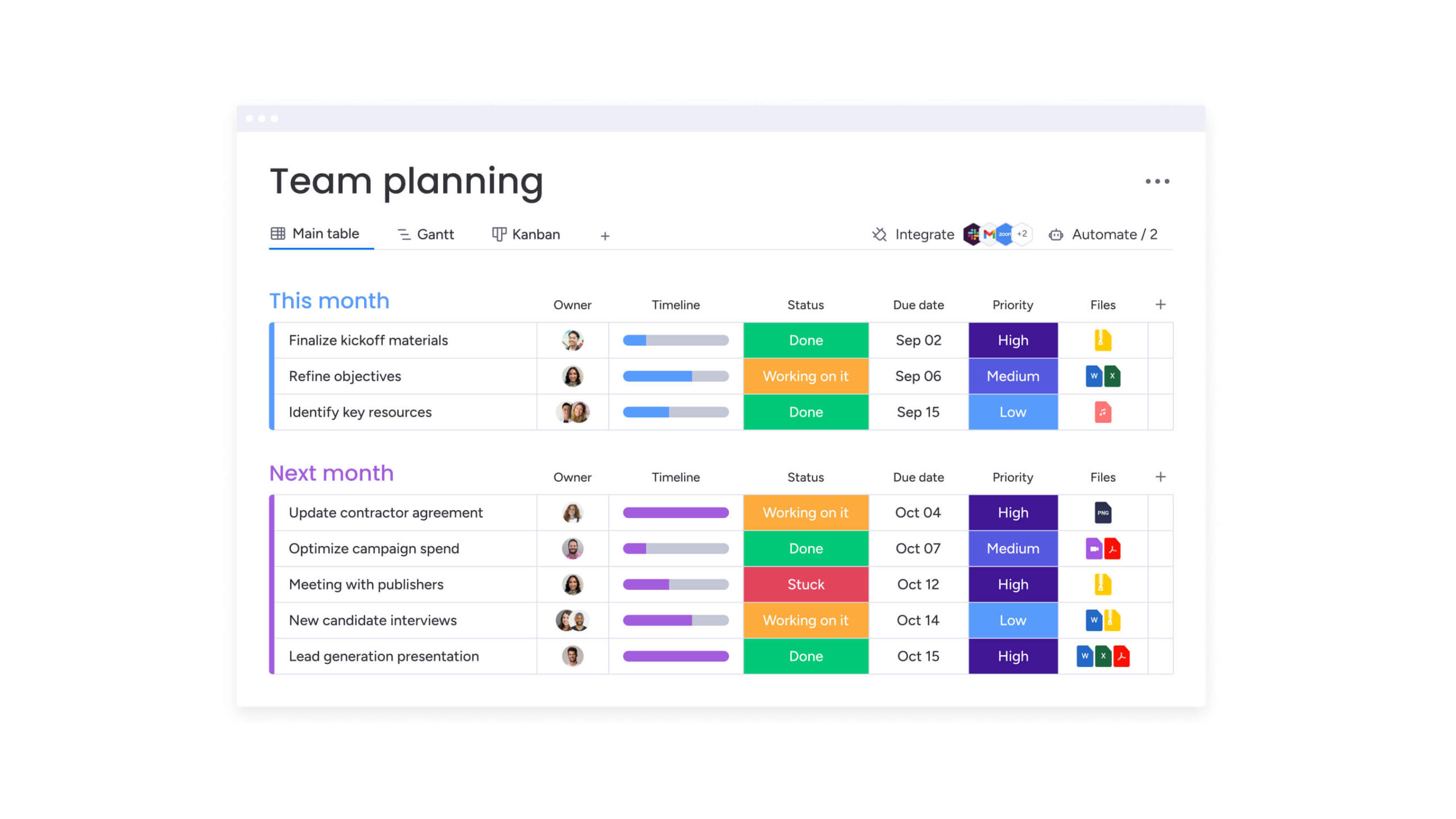
Example: monday’s AI Work Platform lets teams share documents, updates, and reports on one connected workspace. By freely sharing assets on the same platform where teams communicate and collaborate, team members can help each other meet common goals in real time through features like workdocs and real-time board updates.
Cross-functional collaboration
With team collaboration, everyone knows each other. Cross-functional collaboration is the opposite. It’s what happens when various department teams or verticals join forces to achieve a common goal for the greater organization.
Example: HR and marketing teams sit in a room together and come up with new recruitment tactics for open positions.
Virtual collaboration
As distributed work accelerates, so does the capacity for remote collaboration. People no longer just work locally. They collaborate with teammates around the world. Async video updates, shared digital workspaces, AI-powered meeting summaries, and connected documents make it easier than ever to share knowledge and coordinate globally.
Example: A distributed product team uses async video updates and shared workdocs to align on sprint priorities without scheduling a live meeting across three time zones.
Community collaboration
The concept of community collaboration revolves around the idea of sharing. Ideally, teams wouldn’t work in silos hoarding their information and resources. Instead, they’d freely share their knowledge with the entire community, so everyone rises together.
Example: During a company-wide meeting, all department heads share their data about the previous quarter, what they learned, and how their findings will help other teams reach company goals.

What's the difference between communication and collaboration?
Communication and collaboration are not synonymous. They’re complementary, but they have unique definitions and applications in the workplace.
Teams that confuse the two often think they’re collaborating when they’re only communicating. Here’s how they differ:
- Communication is sharing information through a one-way or two-way exchange of knowledge
- Collaboration is applying shared information toward a common outcome, which requires active joint effort and shared ownership of the result
Communication can exist without collaboration, but without communication, collaboration is impossible. For example, sending a project status email is communication. Sitting down with your team to jointly solve a design problem using that status data is collaboration.
A related distinction worth noting: collaboration vs. teamwork. Teamwork implies a defined group with assigned roles working toward one goal. Collaboration is broader and can span teams, departments, or entire organizations. Teamwork is one form of collaboration, but collaboration doesn’t require a formal team structure.
Why is collaboration important?
The benefits of collaboration in the workplace go far beyond “getting along.” Research from Stanford University found that participants primed to think collaboratively persisted 64% longer on challenging tasks. And Gallup’s data consistently shows that teams with high collaboration drive significantly stronger engagement, retention, and performance.
So what makes collaboration so valuable for organizations? Here are 6 measurable benefits.
Strengthens problem-solving skills
When you’re stuck on a problem, your instinct is to get help. But collaboration shouldn’t be the last resort. It’s more effective when it’s baked into how your team works every day. Diverse perspectives find solutions that no single person would reach alone, and the process of working through problems together helps team members identify their own strengths and weaknesses.
Opens new communication lines across teams
Cross-collaboration with people from other departments opens up opportunities that siloed teams would never discover. As bonds strengthen and ideas flow more naturally, teams connect the dots between potential project breakthroughs and new business strategies.
For instance, sales and marketing teams can meet to discuss a product’s selling points and then create assets to strengthen the sales funnel.
Boosts team morale and trust
Organizations that create a collaborative atmosphere naturally build trust among employees. When team members feel psychologically safe enough to share ideas, admit mistakes, and ask for help, morale rises. Everyone wants to feel like they’re part of something larger than themselves, and collaboration creates that connection. One way to strengthen morale is by giving employees a voice, whether through regular feedback surveys, suggestion channels, or open retrospectives, and then making visible decisions based on their input.
Increases operational efficiency
When teams collaborate effectively, they eliminate duplicated effort and speed up decision-making. Instead of multiple people working on the same problem in isolation, collaboration releases shared context so resources go further. The result? Faster execution with fewer bottlenecks. Collaboration also signals to the entire organization that asking for help is a strength, not a weakness, which keeps projects moving instead of stalling when individuals get stuck.
Drives innovation and creative thinking
What happens when people with different expertise, backgrounds, and perspectives work on the same challenge? They produce more creative solutions. Research shows that 60% of workers say collaboration boosts innovation, making it a prerequisite for competitive differentiation rather than a cultural perk.
Improves employee engagement and retention
Teams that collaborate well report higher satisfaction and lower turnover. When people feel connected to their colleagues and see the impact of their joint contributions, they’re more invested in their work. In a landscape where global engagement sits at just 21%, collaboration is one of the strongest antidotes to disengagement.

Common collaboration challenges in the workplace
Even teams that value collaboration face structural barriers that undermine it. How effectively is your organization addressing these obstacles? Understanding them is the first step to building a more connected workplace.
Communication silos between teams
When departments operate on separate platforms or don’t share context, information gets trapped. The result: duplicated work, missed dependencies, and delayed decisions. Silos aren’t always intentional. They often form when teams adopt different workflows without a shared foundation.
Platform fragmentation
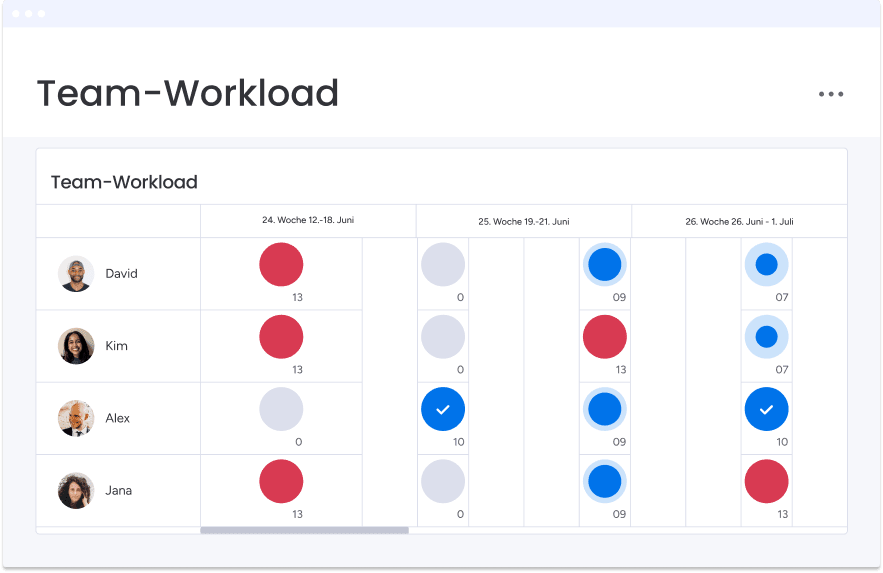
The average knowledge worker switches between 10+ apps daily. When collaboration is spread across email, chat, docs, and project boards that don’t connect, context is lost at every transition. Fragmentation doesn’t just slow teams down. It creates gaps where important information disappears.
Unclear ownership and accountability
When no one owns a decision or deliverable, collaboration stalls. Teams spend more time discussing who should act than actually acting. Without visible assignments and deadlines, even well-intentioned collaboration drifts into confusion.
Remote and hybrid coordination gaps
Time zone differences, async communication lags, and the absence of spontaneous hallway conversations create friction in distributed teams. But this challenge is solvable: 52% of workers report that team connectedness has actually improved in hybrid or remote settings when the right processes and platforms are in place.
Meeting overload
Excessive synchronous meetings crowd out deep work and async collaboration. Teams that rely on live check-ins for every status update lose hours that could go toward meaningful, focused work. Organizations using structured collaboration platforms prove that much of this synchronous overhead is replaceable.
How to foster collaboration: 5 research-backed strategies
Google studied 180+ teams in its landmark Project Aristotle research to discover what makes the highest-performing groups succeed. The answer wasn’t who was on the team. It was how the team worked together. Five dynamics emerged as the foundation for effective collaboration.
Build psychological safety
Team members need to feel safe taking risks, asking questions, and admitting mistakes without fear of judgment. This is the single most important dynamic Google identified. One actionable step: establish a “no blame” norm for retrospectives so teams focus on learning, not finger-pointing. When people feel safe, they contribute more openly and collaboration becomes a reflex rather than an obligation.
Establish dependability
Every team member delivers what they promise, on time. Dependability builds the trust that collaboration requires. One actionable step: use shared project boards with visible deadlines and assigned owners so commitments are transparent to everyone. When your team knows that every commitment will be honored, they collaborate with more confidence.
Create structure and role clarity
Teams collaborate most effectively when everyone understands their role and how their work connects to the larger goal. Ambiguity about responsibilities is one of the fastest ways to stall collaborative momentum. One actionable step: define roles and responsibilities at the start of every project and make them visible to the full team.
Connect work to meaning
People collaborate more effectively when they understand why their work matters. Abstract assignments produce disengaged contributors. One actionable step: tie every project to a larger organizational goal or measurable outcome so team members see the purpose behind the work they’re doing together.
Show impact
Teams need to see the results of their collaboration. Without feedback on outcomes, even strong collaborators lose motivation over time. One actionable step: celebrate wins publicly and share outcome data so the team knows their collaborative effort produced measurable results.

Where collaboration is heading: AI, agents, and connected teams
What does the future of collaboration look like when AI isn’t just a helper but an active participant? 3 trends reshape how teams work together.
AI as a collaborator, not just an assistant. AI agents now attend meetings, summarize discussions, assign follow-ups, and flag risks before people spot them. The shift is from “AI helps you work” to “AI works alongside you,” handling execution while people focus on strategy and creative judgment.
Async-first collaboration. Real-time co-editing, embedded video updates, and connected documents reduce the need for synchronous meetings while preserving alignment. Teams that adopt async-first practices reclaim hours of focused work each week without sacrificing coordination.
Hybrid teams. The future of collaboration isn’t people-only or AI-only. It’s a hybrid workforce where people focus on relationships, strategy, and creative problem-solving while AI handles analysis, coordination, and execution at scale. Platforms that bring these capabilities together are defining what collaboration looks like next.
Get startedHow monday.com's AI Work Platform supports team collaboration
The challenges and strategies above require more than good intentions. They require a connected workspace where people, data, and AI work together. That’s what monday.com’s AI Work Platform is built for.
Here’s how the platform addresses collaboration at every level:
- monday workdocs: Real-time collaborative documents embedded directly in the workspace, so brainstorming, planning, and execution happen in one place instead of scattered across email threads and disconnected files.
- monday agents: AI-powered agents that handle meeting summaries, risk analysis, ticket triage, and lead scoring autonomously, giving your people more time for strategy and creative problem-solving.
- monday sidekick: A context-aware AI assistant that understands organizational data, can generate content, analyze trends, and execute work directly within the platform.
- monday vibe: An AI-powered no-code builder that turns natural language prompts into custom business apps, so any team member can create the collaboration workflows they need without waiting for engineering.
- monday MCP: Open protocol connecting AI assistants (Claude, ChatGPT, Copilot) directly to your monday.com workspace, so AI can read, analyze, and act on your work data securely.
- Automations and integrations: 200+ integrations with existing platforms (Slack, Teams, Gmail, Salesforce) plus no-code automations that eliminate repetitive handoffs and status updates.
How does this translate to solving real collaboration challenges? Here’s how the platform maps directly to the barriers teams face:
| Collaboration challenge | How monday.com’s AI Work Platform solves it |
|---|---|
| Communication silos | Shared workspace with workdocs, dashboards, and real-time updates across teams |
| Platform fragmentation | 200+ integrations and monday MCP connect your existing platforms into one workspace |
| Unclear ownership | Visual boards with assigned owners, deadlines, and automated status notifications |
| Remote/hybrid coordination | Async-first workdocs, AI Notetaker for meetings, and 15+ views (Gantt, Kanban, Timeline) |
| Meeting overload | monday agents summarize meetings and create action items; automations replace status check-ins |
Build a culture of collaboration that scales with your team
Collaboration isn’t a one-time initiative. It’s a measurable driver of team performance, innovation, and engagement. The teams that invest in the right structure, culture, and platform will consistently outperform those that treat collaboration as an afterthought.
The research is straightforward: psychological safety, dependable commitments, role clarity, meaningful work, and visible impact are the dynamics that separate high-performing teams from the rest. And when those dynamics are supported by a connected platform that brings people, AI, and workflows into one workspace, collaboration stops being aspirational and becomes operational.
The AI Work Platform brings collaboration, AI agents, real-time documents, and workflow automation together so your team can focus on what matters most: doing their best work, together.
Get startedFAQs
What is the difference between collaboration and teamwork?
Collaboration and teamwork are related but not identical. Teamwork typically refers to a defined group with assigned roles working toward one specific goal. Collaboration is broader — it can span teams, departments, and entire organizations, and doesn't require a formal team structure. Teamwork is one form of collaboration.
What is the difference between collaboration and communication?
Communication is the exchange of information between people. Collaboration is the act of applying that shared information jointly toward a common outcome. Communication is a prerequisite for collaboration, but sharing knowledge alone doesn't mean you're collaborating — that requires active joint effort and shared ownership of the result.
What are the main challenges of collaboration?
The main challenges of collaboration include communication silos between departments, fragmented platforms that scatter context across too many apps, unclear ownership of decisions and deliverables, coordination difficulties in remote or hybrid settings, and excessive meetings that crowd out focused work. These barriers can be addressed with structured processes and connected platforms.
How can you improve collaboration on a team?
You can improve collaboration by building psychological safety so team members feel comfortable sharing ideas and admitting mistakes. From there, establish visible accountability with shared boards and deadlines, define roles at the start of every project, and reduce unnecessary meetings in favor of async collaboration through connected documents and automated updates.
What makes someone a good collaborator?
A good collaborator listens actively, communicates with transparency, follows through on commitments, and remains open to diverse perspectives. They prioritize the team's shared goal over individual preferences, seek feedback rather than avoiding it, and contribute their unique skills while respecting what others bring to the table.
What are real-world examples of collaboration?
Collaboration happens when a marketing team and sales team jointly develop campaign messaging, when a distributed engineering team co-authors a design document asynchronously, or when cross-functional leaders align quarterly goals in a shared workspace. Any situation where two or more people actively work together toward a shared outcome qualifies as collaboration.
What are the best platforms for team collaboration?
Effective collaboration platforms combine project management, real-time documents, communication, and automation in one workspace. Look for platforms that offer integrations with your existing stack, AI-powered assistants, and visibility across teams. monday.com's AI Work Platform is one example that connects all of these capabilities, with workdocs, AI agents, 200+ integrations, and no-code automations built in.
