


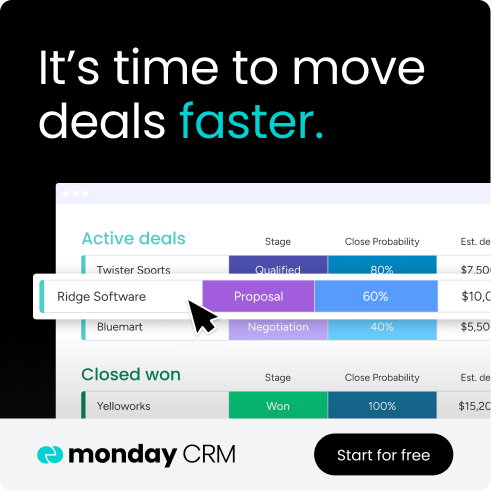
For life insurance agents, closing a policy is just the beginning of a relationship that can span decades. The right CRM transforms that complexity into opportunity — automating renewals, tracking households, and keeping your agency audit-ready without the manual work.
This guide walks you through 12 CRM platforms built for life insurance workflows. You’ll discover purpose-built insurance systems and flexible platforms you can customize, so you can choose the solution that fits how your agency actually works.
What is a CRM for life insurance agents?
A CRM for life insurance agents is a specialized platform that manages the entire policy lifecycle — from initial quote through decades of renewals, beneficiary changes, and policy conversions. Unlike generic sales CRMs that treat the deal as the finish line, a life insurance customer relationship management system handles the long-term responsibility of protecting client relationships and financial security.
Here’s what sets it apart:
- Policy lifecycle tracking: Monitors policies from application through renewal, not just the initial sale
- Household management: Maps entire families — spouses, dependents, beneficiaries — instead of treating each contact as isolated
- Renewal automation: Flags expiration dates and triggers outreach sequences so no policy lapses
- Commission tracking: Reconciles expected payments against actual deposits across multiple carriers
- Audit-ready records: Logs every email, call, and note automatically for compliance verification
- Compliance documentation: Maintains complete interaction histories that regulators can request without warning
Generic sales platforms weren’t built for this. They can’t track renewals, map households, or keep records audit-ready — critical responsibilities that define life insurance work.
Try monday CRM12 best CRM platforms for life insurance agents
Not every solution on this list is the right CRM for insurance agents, and that’s fine. The best platform isn’t about the industry label. It’s about what your agency needs to close more deals. We’ve included rigid, purpose-built systems and flexible platforms that adapt to your workflow. You’ll see your options and pick what works for your team.
Here’s a quick look of the 12 platforms covered in this guide:
| Platform | Use case | Free trial | Notable feature | Starting price* |
|---|---|---|---|---|
| monday CRM | Agents who need flexible, customizable workflows | Yes | AI timeline summaries for instant client context | $12/seat/month |
| AgencyBloc | Independent agents and brokerages needing insurance-specific workflows | Available | Automated commission processing via Commissions+ | Custom quote |
| HubSpot CRM | Agents prioritizing lead nurturing and email automation | Yes | Automated lead nurturing with sequences and scoring | $20/seat/month |
| Decerto Agent Portal | Carriers and MGAs managing agent distribution at scale | Available | 360° client and agent views with portfolio oversight | Custom quote |
| Agent CRM | Independent agents wanting ready-to-run automation | 14 days | Prebuilt Branning Bundles for life insurance workflows | $97/month |
| Applied Epic | Growth-oriented agencies needing unified P&C and benefits management | Available | Applied Epic for Salesforce integration | Custom quote |
| Vertafore AMS360 | Multi-line independent agencies wanting a single system of record | Available | Life quoting via BackNine integration | Custom quote |
| Salesmate | Agents wanting configurable CRM with native communications | 15 days | Built-in calling and SMS without third-party tools | $23/user/month |
| Radius | Independent agents needing insurance-native platform with telephony | Available | Built-in VoIP dialer with call recording | Custom quote |
| Insureio | Life agents and BGAs managing leads through issued policies | 30 days | One-page multi-carrier application across 30+ carriers | $25/month |
| Insightly | Agencies tracking both client relationships and internal workflows | 14 days | Flexible record linking for households and beneficiaries | $29/user/month |
| Oracle | Large carriers needing enterprise-grade policy administration | 30 days (OCI) | Policy administration supporting up to 100M policies | From $150/user/month; insurance products quote-only |
*Prices reflect annual billing where applicable and may vary based on plan, billing cycle, or region.
1. monday CRM
monday CRM gives life insurance agents customizable CRM software without locking them into someone else’s process. Built on the monday.com Work OS, it lets you shape boards, deal stages, and dashboards around how you sell — no code required. You also get AI capabilities on paid plans (when your admin enables them) that cut down the “where’s that info?” scramble. Write emails faster, recap interactions instantly, and clean up data with AI.

Use case: Life insurance agents who need flexible, customizable workflows for renewals, households, and long-term client management
Key features
- Customizable pipelines for every product line: Build separate visual pipelines for term life, whole life, annuities, and final expense — each with stages that match how you actually sell. Drag and drop deal stages when your process changes. Keep workflows consistent across your team without forcing everyone into a one-size-fits-all sales funnel.
- AI timeline summaries for instant client context: Use Timeline summary to generate a short, easy-to-scan recap of every email, call, meeting, and note in Emails & Activities. Walk into renewal calls prepared. Pull compliance documentation in seconds. Review deal history before a household conversation without scrolling through months of records.
- Centralized account and contact management: Store account and contact details in an expanded view. See connected deals, policy history, and related work right there. That’s a big deal when a “simple renewal” turns into a household conversation spanning multiple policies and beneficiaries.
Pricing
- Basic: $12/seat/month (billed annually)
- Standard: $17/seat/month (billed annually)
- Pro: $28/seat/month (billed annually)
- Ultimate (Enterprise): Contact sales for a quote
- Annual billing discount: 18% savings versus monthly billing
- AI features: Available on Standard, Pro, and Ultimate (Enterprise) plans.
- HIPAA support: Available on Ultimate (Enterprise) plans.
Why it stands out
- One record of truth for every relationship: monday CRM ties emails, calls, meetings, and notes to a single Emails & Activities history, so your team can step in without missing context. See who spoke to the client last and what they said.
- Reporting leaders can use (and trust): Dashboards let you track pipeline status and forecasting. Compare forecast to actual results. Walk into leadership meetings with answers, not guesses.
- Built for cross-functional work: When legal, finance, or ops needs to weigh in, connect work to the same account or deal.

“With monday CRM, we’re finally able to adapt the platform to our needs — not the other way around. It gives us the flexibility to work smarter, cut costs, save time, and scale with confidence.”
Samuel Lobao | Contract Administrator & Special Projects, Strategix
“Now we have a lot less data, but it’s quality data. That change allows us to use AI confidently, without second-guessing the outputs.”
Elizabeth Gerbel | CEO
“Without monday CRM, we’d be chasing updates and fixing errors. Now we’re focused on growing the program — not just keeping up with it."
Quentin Williams | Head of Dropship, Freedom Furniture
“There’s probably about a 70% increase in efficiency in regards to the admin tasks that were removed and automated, which is a huge win for us.“
Kyle Dorman | Department Manager - Operations, Ray White
"monday CRM helps us make sure the right people have immediate visibility into the information they need so we're not wasting time."
Luca Pope | Global Client Solutions Manager at Black Mountain
“In a couple of weeks, all of the team members were using monday CRM fully. The automations and the many integrations, make monday CRM the best CRM in the market right now.”
Nuno Godinho | CIO at Velv
“monday.com provides developmental flexibility, operational efficiency, and data transparency — all in one place. We became a company that moved from chasing data to leading with it.”
Hyunghan Lee | Team Lead, Sandbox Network
"monday.com brought every part of our business into one connected space. The harmony between work management and CRM has become our operating system — giving us the clarity and confidence to scale.”
Jennifer Chinburg | Executive Vice President of Corporate Development & Brand, Chinburg Properties
“We just weren’t getting value from our old CRM. With monday.com, it's a thousand times better. Our sales teams are more informed, more consistent, and far more connected."
James Arnold | Chief Operating Officer, Cenversa2. AgencyBloc
AgencyBloc delivers a purpose-built agency management system designed specifically for life and health insurance organizations. The platform serves independent agents, brokerages, and uplines who need insurance-specific workflows — not a generic CRM retrofitted for the industry. It offers automated commission processing through its Commissions+ module, while built-in compliance controls and policy management help agents spend less time configuring and more time selling.

Use case: Independent life and health insurance agencies that need built-in policy tracking, commissions, and compliance workflows without heavy customization
Key features
- Compliance-by-design workflows: Electronic Scope of Appointment, ACA Consent to Contact, and ACA Attestations are built directly into the platform — keeping agencies audit-ready without manual tracking.
- Integrated communications suite: Built-in VoIP with automatic call recording, 1:1 and mass texting, appointment scheduling, and email marketing all attach directly to client records for full communication history.
- Automated commission processing: Commissions+ reconciles and tracks commission data at volume, reducing manual reconciliation time and giving agency leaders accurate revenue visibility.
Pricing
- AMS+ tiers (Grow, Accelerate, Elevate): Custom pricing.
- Commissions+: Volume-based pricing, separate from AMS+ tiers.
- Quote+: Priced per groups quoted; focused on small-group benefits.
- Add-ons such as agency websites and select third-party integrations (e.g., Direct Mail Manager) carry additional costs outside the core AMS+ package.
Considerations
- Pricing is not publicly listed — agencies need to request a custom quote, which makes upfront cost comparisons difficult.
- Life insurance quoting for individual lines relies on third-party integrations (e.g., FEX Quotes for final expense); native quoting is focused on small-group benefits rather than individual life products.
3. HubSpot CRM
HubSpot CRM unifies marketing automation and contact management on a single platform built around a Smart CRM. The platform appeals to teams seeking front-office sales and marketing workflows without juggling multiple systems. Solo agents and growing agencies alike leverage it for lead nurturing, email sequences, and pipeline tracking.

Use case: Life insurance agents who prioritize lead nurturing and email automation over native policy lifecycle management
Key features
- Automated lead nurturing: Sequences and lead scoring move prospects from initial quote request through to policy sale, with triggers based on engagement and pipeline stage.
- DIY renewal workflows: HubSpot doesn’t have a built-in renewal feature for insurance. You can configure your own workflows with custom date properties to send reminders, but expect to do the setup yourself.
- Custom Objects (Enterprise): Agents can model insurance-specific records — policies, carriers, beneficiaries — to reflect how their book of business actually works.
Pricing
- Free: $0/month
- Starter: From $20/seat per month
- Professional: From $1,450/month (6 seats included)
- Enterprise: From $4,700/month (8 seats included)
- Note: Professional and Enterprise tiers require one-time onboarding fees (e.g., Sales Hub Enterprise onboarding starts at $3,500).
- Optional add-ons — calling minutes, e-signatures, additional API limits — carry separate monthly costs.
Considerations
- Custom Objects require Enterprise: Modeling insurance-specific data structures like policies and beneficiaries is locked behind the highest pricing tier, which significantly raises the cost of entry for agents who need that depth.
- Not a policy administration system: HubSpot manages relationships and pipelines; it does not handle billing, claims, or commission accounting natively. Agents typically need a separate agency management system alongside it, adding integration complexity and cost.
4. Decerto Agent Portal
Decerto Agent Portal provides an end-to-end insurance distribution workspace spanning quoting, policy issuance, post-sale servicing, and commission tracking. Designed primarily for carriers and MGAs, the platform excels at distribution management — product configuration, agent onboarding, and underwriting integration — rather than day-to-day client relationship management. Large-scale insurance networks requiring a tightly integrated, carrier-grade system will find it a compelling option.

Use case: Carriers and MGAs that need a centralized workspace to manage agent distribution, policy lifecycles, and commission visibility at scale
Key features
- 360° client and agent views: Consolidates policies, claims, payments, and interactions into a single view, with portfolio-level oversight and renewal alerts for agents managing large books of business.
- Real-time commission tracking: Agents get policy-level commission visibility, self-invoicing capabilities, and a secure, cloud-hosted commission management system — so there’s no chasing down numbers at month-end.
- Modular deployment: Six configurable portal modules (sales, post-sale, claims, dashboards, and more) can be deployed together or separately, giving carriers flexibility to build the setup that fits their distribution model.
Pricing
- Quote-only: Pricing is not published publicly.
- Third-party marketplace data (Clutch) indicates typical project engagements range from $25,000 to $999,000+, reflecting the enterprise scope of most implementations.
- Implementation costs — including configuration, data migration, and training — are typically scoped separately from software licensing.
Considerations
- Independent life insurance agents or small agencies will likely find the platform’s carrier-side orientation misaligned with their day-to-day needs — renewal tracking, compliance documentation, and multi-carrier relationship management aren’t where this platform focuses.
- Enterprise-grade implementation requirements (needs analysis, infrastructure preparation, data migration, and testing) mean this is not a plug-and-play solution; smaller teams should factor in significant time and resource investment before committing.
5. Agent CRM
Agent CRM offers an insurance-specific platform engineered to accelerate life insurance sales with minimal setup and maximum automation. Targeting independent agents, telesales teams, and small agencies, it ships with prebuilt campaign bundles for life insurance, final expense, mortgage protection, and more — eliminating configuration time so agents can focus on closing. The flat-rate pricing model provides cost predictability that solo producers and small agency owners value.

Use case: Independent life insurance agents and small agencies that want a ready-to-run platform with prebuilt follow-up sequences, lead management, and insurance-specific automations
Key features
- Branning Bundles: Prebuilt, “click and play” pipelines and nurture sequences for life insurance, final expense, mortgage protection, IUL, and more — available in English and Spanish, covering everything from new-lead outreach to renewals and cross-sell campaigns.
- Speed-to-lead and power dialer: Hot transfer automations connect agents with new leads in real time, while the 3-line power dialer and Contact Card Rule (a text-first cadence that delivers a vCard before calling) are designed to increase answer rates.
- AgentAI and voice AI: AI-assisted email and SMS follow-up handles ongoing engagement, with an optional voice AI add-on (LOANNE) that places instant outbound calls, manages inbound inquiries, and books appointments after hours.
Pricing
- Starter: $97/month — includes automation engine, calendar, calling and texting (usage fees apply), power dialer, AgentAI, training, and support. 14-day free trial available.
- Marketing+: $297/month — adds unlimited 1-on-1 tech and ad support, ad templates, daily ad reviews, and a simplified ad launcher.
- LOANNE voice AI add-on: $497/month (billed after go-live setup).
- Additional usage fees apply for calls, texts, emails, and AI actions.
Considerations
- Agent CRM focuses on marketing automation and communications; it does not include native commission accounting or multi-carrier quoting, so agencies with complex back-office needs may require additional platforms alongside it.
- The platform’s flat-rate, simplified feature set works well for solo agents, but growing agencies adding multiple producers or more complex workflows may find the customization ceiling limiting over time.
6. Applied Epic
Applied Epic stands as a full-scale agency management system engineered for mid-size to enterprise insurance agencies handling both P&C and benefits lines. Life and benefits producers requiring deep policy administration, commissions tracking, and a synchronized Salesforce CRM layer will find serious infrastructure here.

Use case: Growth-oriented agencies that need a unified system of record across P&C and benefits lines, with optional Salesforce CRM integration for producers
Key features
- Benefits account management: Native benefits screens capture plan details, coverages, eligibility, commission rate tiers, and TPA data — with a consolidated account overview.
- Applied Epic for Salesforce: A purpose-built integration that bi-directionally syncs accounts, contacts, policies, activities, and commission schedules between Salesforce and Epic.
- Applied Marketing Automation: An optional add-on with a P&C and benefits content library that runs email campaigns and writes marketing activity back into Epic automatically.
Pricing
- Quote-only: Applied does not publish list pricing; all plans are scoped and quoted through their sales team.
- Add-ons such as Applied Epic for Salesforce, Applied Marketing Automation, Applied Benefits Designer, and Applied Pay are licensed separately.
- Applied Pay carries transaction fees (3.5% for card payments, $4 per ACH transaction).
Considerations
- Advanced CRM functionality requires a separate Salesforce license and environment — teams without an existing Salesforce setup will face additional cost and configuration before getting value from the CRM layer.
- Implementation is a significant commitment; even with accelerated timelines, onboarding Applied Epic typically spans at least 2 months and requires dedicated IT resources, which makes it a heavy lift for independent life agents or smaller agencies.
7. Vertafore AMS360
Vertafore AMS360 functions as a comprehensive agency management system tailored for independent agencies juggling multiple lines of business — life, P&C, commercial, and beyond. AMS360 combines core policy and client management with AI-assisted workflows. Established agencies needing operational depth across their entire book of business will find it a strong contender.

Use case: Multi-line independent agencies that want a single system of record for policy management, accounting, and client communications
Key features
- Life quoting via BackNine integration: Through an integration with PL Rating and BackNine, agencies can initiate prefilled life applications and complete e-sign and e-submit workflows, keeping AMS360 as the system of record without rekeying data.
- AgencyZoom CRM automation: Prebuilt pipelines and automated email and SMS sequences cover sales, onboarding, renewals, and cross-sell campaigns — accessible on desktop and mobile.
- AI-assisted client communications: Vertafore Client Communications (VCC) connects directly to AMS360 data to run targeted outreach campaigns, retention tracking, and NPS tools across all lines.
Pricing
- AMS360: Quote-only pricing; contact Vertafore for a demo and custom quote based on agency size and modules.
- AgencyZoom: Free trial available; tiered pricing not publicly listed on vertafore.com.
- Add-ons such as AMS360 Connect (Salesforce sync), BackNine, and InsuredMine require separate subscriptions and may affect total cost.
Considerations
- AMS360 is built for multi-line agencies, so life-only or annuity-focused agencies may find the feature set broader than what they actually need — adding complexity without proportional value.
- Life-specific workflows often rely on third-party integrations like BackNine and InsuredMine, which can mean multi-vendor contracting and onboarding rather than a single, unified experience.
8. Salesmate
Salesmate consolidates CRM, built-in calling, SMS, and marketing automation into one platform — eliminating the need for a third-party dialer. This flexible, all-in-one system serves agents, brokers, and RIAs who prefer building their own processes without managing multiple tools. Though it’s a general-purpose CRM, custom fields and automations enable household tracking, basic policy data management, and date-driven renewal reminders. Some initial configuration is necessary for deeper insurance workflows since native commission tracking isn’t included.

Use case: Life insurance agents who want a configurable CRM with native communications and automation, without juggling multiple vendors for calling, email campaigns, and client tracking
Key features
- Flexible contact and data management: Use custom fields and modules to track accounts, households, and basic policy information in one workspace. You can map relationships and see a full communications timeline for every contact.
- Date-driven automations: Trigger renewal reminders, anniversary follow-ups, and RMD notifications automatically via call, text, or email — so no renewal slips through the cracks.
- Built-in calling and SMS: Native power dialer, voicemail drop, and 2-way texting keep all communications logged and audit-ready without a separate telephony platform.
Pricing
- Basic: $23/user/month
- Pro: $39/user/month
- Business: $63/user/month
- Enterprise: Custom pricing
- Annual billing saves up to 20%; a 15-day free trial is available with no credit card required
- Calling and SMS usage billed separately; power dialer and voicemail drop included on Business and above
Considerations
- Salesmate does not publish native integrations with major agency management systems (AMS), so agencies running AMS-centric workflows may need middleware or custom connectors to avoid manual data entry.
- Sequences are capped by plan tier (5 per user on Pro, 10 on Business), and AI agent usage incurs additional credit-based costs that can add up for high-volume teams.
9. Radius
Radius (formerly Radiusbob) operates as an insurance-specific CRM managing the complete life agent workflow — lead capture through commission reconciliation — within a single platform. Founded in 2010 and now part of the AgencyBloc family, it supports agents across life, health, Medicare, and final expense lines. The built-in VoIP dialer, quoting integrations, and automated drip campaigns make it particularly appealing for solo agents and small agencies seeking an insurance-focused solution without cobbling together multiple vendors.

Use case: Independent life insurance agents who need an insurance-native platform with built-in telephony
Key features
- Built-in VoIP dialer: Run call queues, drop voicemails, record calls for compliance, and manage callbacks — all within the same platform used for policy tracking and quoting history.
- Life quoter integrations: Connect directly with Compulife, NinjaQuoter, and IXN to store quote histories inside each client record and keep the quote-to-close process moving.
- Automated lead workflows: Ingest leads from 30+ vendors via API or email, then trigger automatic tagging, drip campaigns, and SMS follow-ups without manual intervention.
Pricing
- Pricing model: Quote-based; specific plan pricing is not publicly listed as of April 2026.
- Pricing and plan selection are now managed through AgencyBloc’s sales flow.
- Inbound phone numbers carry additional monthly fees ($2 per local number; $3 per toll-free number) on VoIP-enabled plans.
- No contracts, signup fees, or cancellation fees; billing is month-to-month.
Considerations
- Full VoIP capabilities — including inbound lines, IVR, and voicemail drop — are only available on higher-tier AMS plans, so agents on basic plans get click-to-call only.
- There is no dedicated native mobile app; access on mobile is browser-based, which may limit usability for agents working primarily in the field.
10. Insureio
Insureio spans the entire life insurance sales cycle — lead capture to issued policy — within a unified platform. Purpose-built for life insurance producers, it merges quoting, application management, and marketing automation, reducing manual hand-offs throughout the process. The exclusive processing partnership with Pinney Insurance handles e-application fulfillment and e-policy delivery directly within the workflow.

Use case: Life insurance agents and BGAs who want to manage leads, run multi-carrier quotes, and process applications without switching between systems
Key features
- One-page multi-carrier application: Submit applications across 30+ carriers covering term, permanent, LTC, DI, and annuities from a single form.
- Status-driven marketing automation: Trigger nurture sequences, drip campaigns, and bulk email outreach automatically based on lead status changes.
- Built-in sales tools: Access embedded life quoters, financial calculators, call scripting, underwriting guides, and XRAE health screening without leaving the platform.
Pricing
- Basic: $25/month
- Marketing: $50/month (adds personalized e-marketing website, pre-built campaigns, and bulk email)
- Agency management: $50/month (adds lead routing, team view, and recruiting features)
- Marketing and agency management: $75/month (bundles both tiers)
- Bulk email add-on: $10 per 10,000 sends
- A 30-day free trial is available across all plans
Considerations
- Insureio’s feature set emphasizes acquisition and application processing, so agents prioritizing post-sale relationship management, renewal tracking, or compliance documentation may find limited depth in those areas.
- The public API is documented as “rather sparse,” which may restrict custom integrations without direct vendor involvement.
11. Insightly
Insightly merges CRM and project management capabilities, providing agencies a unified space for client relationships and internal workflows. Targeting small and mid-market organizations, it offers flexible, customizable pipelines without demanding heavy technical setup. Life insurance agencies managing multi-step processes — beneficiary updates, policy conversions, claims support — will appreciate that combination.

Use case: Life insurance agencies that need to track both client relationships and internal workflows
Key features
- Flexible record linking: Connect households, beneficiaries, and policyholders in a single view, with full interaction histories attached to each record.
- Automated workflows: Set up renewal reminders, claims-related communications, and life-event-driven outreach without manual follow-up.
- AppConnect integrations: Connect Insightly to tools like DocuSign, QuickBooks, and Google Workspace to reduce manual data entry across systems.
Pricing
- Plus: $29/user/month (billed annually)
- Professional: $49/user/month (billed annually)
- Enterprise: $99/user/month (billed annually)
- 14-day free trial available on all CRM plans.
- All-in-One bundle offers up to 30% off when combining CRM, Marketing, and Service products.
- Note: Advanced workflow automation, custom objects, and lead routing are available on higher-tier plans only. Required onboarding and support add-ons carry additional costs.
Considerations
- Insightly is a general-purpose CRM, not a dedicated insurance platform — carrier quoting, underwriting, and policy administration require separate integrations.
- Advanced features like workflow automation and custom objects are locked behind Professional and Enterprise plans, which increases the total cost for agencies that need them from day one.
12. Oracle
Oracle provides enterprise-grade CRM and policy administration for large-scale life and annuity carriers. Architected for organizations operating complex, multi-channel distribution networks, it pairs front-office CX capabilities with a rules-based policy core — positioning it as a viable option for carriers with dedicated IT teams and stringent compliance requirements. Operations running at enterprise scale will find Oracle’s front-to-back architecture covers substantial ground under one vendor.

Use case: Large life and annuity carriers that need to connect producer management, policyholder servicing, and policy lifecycle data across a single, integrated platform
Key features
- Distribution and producer management: Siebel Insurance provides role-specific views and life and annuity workflows, giving carriers visibility into channel performance and producer activity.
- Policy administration integration: Oracle Insurance Policy Administration (OIPA) supports new business underwriting, policy issuance, billing, and claims on a rules-based core that scales to portfolios of up to 100 million policies.
- Embedded AI across CX: Oracle Fusion CX includes AI-assisted guided selling, next-best-action recommendations, and digital self-service portals for both brokers and policyholders.
Pricing
- Oracle Fusion Sales (base): $150 per hosted named user/month
- Oracle Fusion Service (base): Starting at approximately $200 per pooled named user/month (minimums apply)
- OCI Free Tier: Always Free services available, plus a 30-day, $300 trial credit for infrastructure and database services
- OIPA and insurance-specific solutions are quote-only — pricing requires direct engagement with Oracle’s sales team
- Additional costs apply for optional add-ons, including extra test environments, compliance modules, and additional storage
- Annual and multi-year Universal Credit commitments unlock volume discounts.
Considerations
- Life insurance CRM with Oracle typically spans multiple products — Fusion CX, Siebel, OIPA, Documaker, and Oracle Insurance Data Gateway — which requires multi-team coordination, integration planning, and specialized technical resources that most independent agents and small agencies don’t have.
- Several insurance-specific modules are quote-only with no public pricing, and Fusion SaaS plans carry minimum user requirements and standard 3-year terms, making total cost of ownership difficult to assess without direct sales involvement.
Why life insurance agents need a specialized CRM
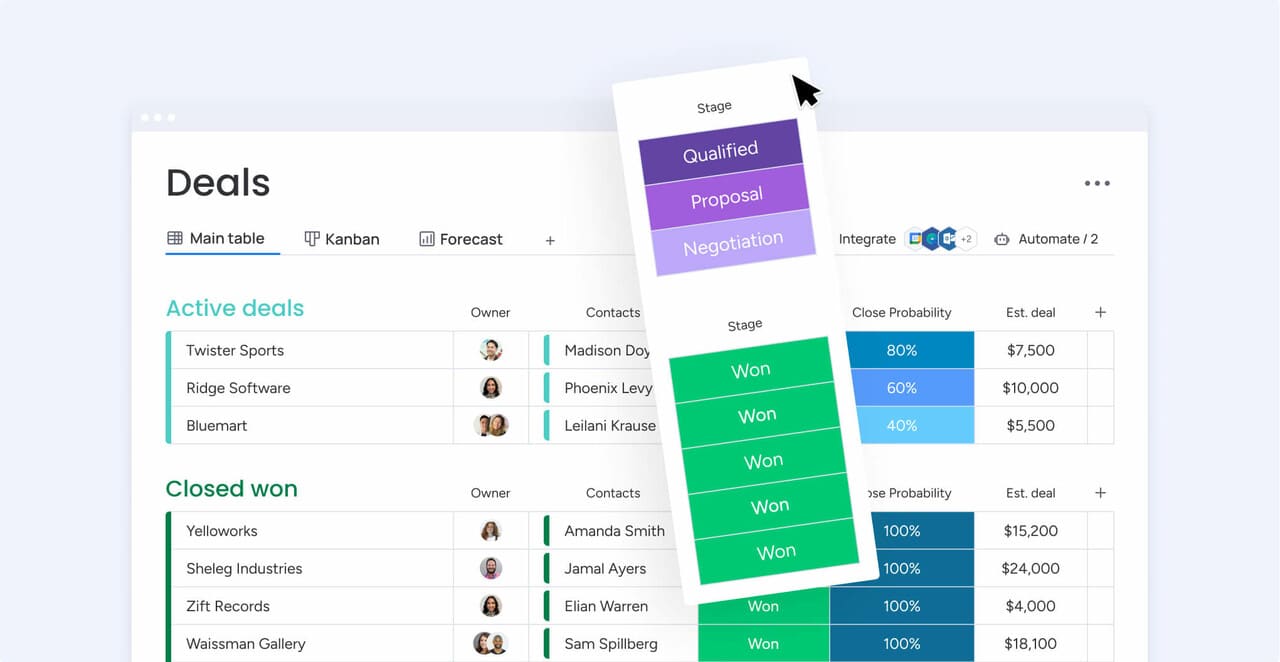
Generic sales CRMs work fine for selling widgets. They fall short when managing decades-long client relationships and complex compliance rules. Life insurance agents don’t just close deals; they manage legacies. Standard CRMs weren’t built for that responsibility.
Here’s where generic platforms create risk for your agency:
- Renewal management: Hundreds of policy renewals create constant exposure. Miss one, and you’re not just losing revenue; you’re facing a potential E&O claim and leaving a client unprotected.
- Household tracking: Your clients are families, not isolated contacts. A CRM that can’t connect a spouse, dependents, and beneficiaries to a primary policy operates blind, causing you to miss critical opportunities.
- Audit-proof records: An audit request shouldn’t trigger a scramble to piece together emails, call logs, and notes. Scattered records turn compliance verification into a messy, manual nightmare.
- Commission reconciliation: Chasing down commission checks from multiple carriers consumes enormous time. Untracked underpayments represent lost money, and a missed payment could signal a lapsed policy.
Revenue teams find success using monday CRM to transform that complexity into confidence. Automate renewal reminders, map entire households, build audit-proof records, and track every commission without manual work. It’s a system built to protect your revenue, your clients, and your reputation.
7 key features to look for in life insurance CRM software
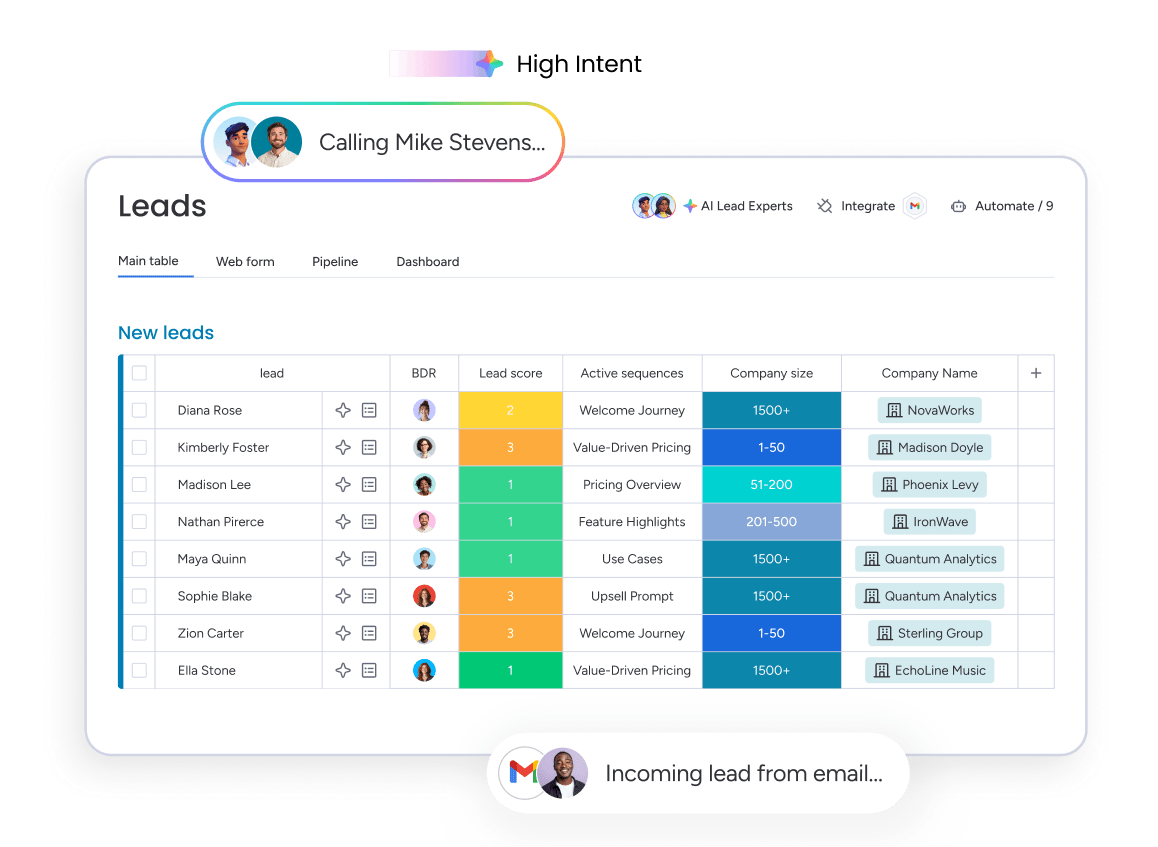
Generic CRMs function as digital Rolodexes. A true life insurance CRM runs your entire book of business. The distinction isn’t about bells and whistles — it’s a specific set of features that either drives revenue or collects digital dust.
Not every platform checks all these boxes out of the box, and that’s acceptable. Understanding your requirements helps you distinguish between a quick setup and a dead end.
- Policy lifecycle and renewal automation: Tracks a policy from application to renewal, automatically flagging expiration dates and initiating outreach. The difference between hours spent checking spreadsheets and hours spent talking to clients.
- Account hierarchy for households: Life insurance centers on families, not individuals. This feature maps the entire household, connecting relationships so you can identify cross-sell opportunities that would otherwise remain hidden.
- AI-powered lead scoring: Who’s ready for a call? Who’s a renewal risk? AI delivers a prioritized to-do list based on client engagement, clarifying who needs attention immediately. Revenue teams find success using monday CRM to automatically tag contacts based on behavior, converting data into clear action plans.
- Compliance documentation and audit trails: Regulators can demand complete interaction histories without warning. Automatic audit trails log every email, call, and note, ensuring constant preparedness.
- Bidirectional AMS integration: Your agency management system and CRM must communicate. Two-way sync means data flows automatically between them, eliminating silos and duplicate work.
- Commission tracking: Tracks expected commissions against actual payments and flags discrepancies. Teams discover that monday CRM enables custom commission trackers built directly on policy boards to identify missing money before it vanishes.
- Mobile access for field agents: Agents work everywhere except their desks. Organizations improve data accuracy by leveraging monday CRM’s dedicated mobile app, enabling agents to update records in the moment rather than at week’s end.
These features aren’t luxuries; they’re the engine of a modern agency. Examine your current setup honestly, and the gaps will reveal exactly where revenue leaks.
Try monday CRMStep-by-step guide to choosing the right life insurance CRM
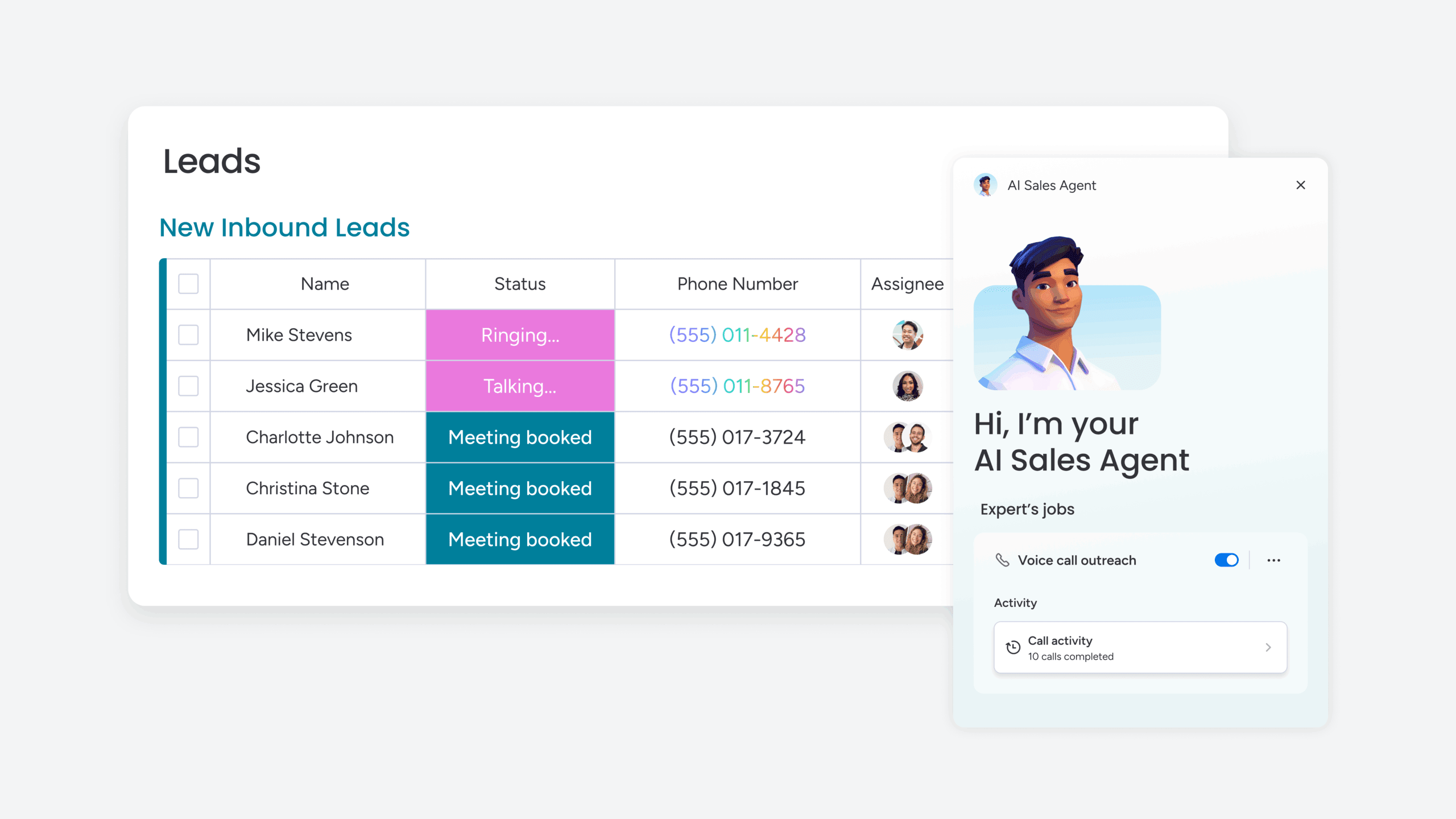
Choosing the right life insurance CRM starts with understanding where your current process breaks down. Some agencies need better renewal reminders. Others need commission visibility, household tracking, compliance documentation, or a cleaner way to manage follow-ups across producers. Use these steps to narrow your options.
- Map your current workflow: Start by listing every stage your team manages, from lead capture and quoting to application status, policy issue, renewal, beneficiary updates, and cross-sell opportunities. Then identify where work gets stuck, duplicated, or lost.
- Decide what must be insurance-specific: Some features need to be built for insurance, like policy tracking, commission reconciliation, carrier integrations, and quoting workflows. Others, like email automation, task management, dashboards, and pipeline tracking, can work well in a flexible CRM.
- Check whether it supports long-term client relationships: Life insurance is relationship-driven. Look for a CRM that can connect spouses, dependents, beneficiaries, policies, notes, emails, and follow-ups in one place, so agents can manage households instead of isolated contacts.
- Evaluate automation and AI features: The right CRM should reduce manual work, not create more of it. Prioritize tools that can automate renewal reminders, assign follow-ups, summarize client history, draft outreach, and flag high-priority opportunities.
- Review integrations with your existing systems: If you already use an AMS, quoting tool, dialer, email platform, or commission system, make sure your CRM can connect to it. Otherwise, agents may end up copying data between platforms, which creates errors and slows down sales.
- Test reporting and visibility: Agency leaders need to see more than open deals. Look for dashboards that show pipeline health, renewal status, producer activity, policy volume, commission trends, and follow-up completion.
- Choose for fit, not just features: A purpose-built insurance CRM may be best if you want industry-specific workflows out of the box. A flexible CRM like monday CRM may be a better fit if your agency wants to customize pipelines, automations, dashboards, and cross-team workflows as it grows.
How AI-powered monday CRM supports life insurance agents
Most insurance CRMs force you into rigid workflows that don’t match how your agency actually operates. monday CRM takes the opposite approach — you configure it to fit your exact processes, products, and team structure without vendor lock-in or support tickets.
Here’s what that flexibility delivers:
- Product-specific pipelines: Build separate visual workflows for term life, whole life, and annuities — each with stages matching how you actually sell. Drag-and-drop simplicity, zero coding required.
- AI that saves hours: Generate renewal emails, summarize client histories instantly, extract data from policy documents, and auto-prioritize follow-ups based on sentiment detection.
- Custom apps without developers: Use WorkCanvas to build commission trackers, renewal dashboards, or any tool your agency needs — described in plain English, built in minutes.
- Cross-department alignment: Connect sales, operations, compliance, and finance on one platform. When a policy is issued, automations trigger onboarding workflows and commission tracking simultaneously.
For agencies built to scale, alignment across sales, ops, and compliance isn’t optional — it’s the foundation. monday CRM gives you that foundation without forcing you to rebuild how you work.
Build a scalable foundation for your insurance agency
Generic CRMs miss the mark for life insurance. You’re juggling renewal dates, compliance documentation, and complex commissions — one missed detail isn’t a simple mistake; it’s a major risk. The right platform handles the entire policy lifecycle so your team stays focused on building relationships, not chasing paperwork.
monday CRM adapts to how you actually sell, giving you complete pipeline visibility as your book of business grows and compliance rules evolve. Map out your ideal workflow, identify the gaps, and build a foundation that scales your agency with confidence.
Try monday CRMFAQs
What is the best CRM for life insurance agents?
The best CRM for life insurance agents is one your team will actually use. Choose an insurance agent CRM for built-in policy features, or an adaptable platform like monday CRM if you need to customize workflows your way.
How much does a life insurance CRM cost?
Life insurance CRM pricing ranges from free plans to custom enterprise quotes. The true cost includes onboarding and integrations, so look beyond the sticker price.
Can a CRM automate policy renewal reminders?
Yes. A CRM automates policy renewal reminders by tracking expiration dates and sending alerts. This prevents policies from lapsing and frees your team from manual follow-ups.
What's the difference between a CRM and an AMS for insurance agents?
A CRM handles client relationships and sales; an agency management system (AMS) manages policies and back-office operations. They serve different but complementary functions.
Do life insurance agents need AI features in their CRM?
AI features help agents save time on manual tasks like writing emails or summarizing documents. This lets your team focus on building client relationships instead of administrative work.
How does monday CRM compare to insurance-specific CRMs?
Insurance-specific CRMs offer rigid, out-of-the-box policy features. monday CRM provides flexibility to build and automate any workflow your team needs, adapting to how you actually sell.
