

A typical CRM is built for speed, aiming to close a deal in a single quarter. But in higher education, the mission is fundamentally different as institutions aren’t closing deals; they’re building relationships that span decades. From the moment a prospective student first inquires about a program to the day they become an engaged alumnus making their fifth annual donation, every interaction matters. Forcing this complex, multi-year student journey into a rigid sales funnel creates friction at every turn and leads to missed opportunities that can impact enrollment, retention, and long-term institutional success.
The right CRM for higher education acts as a central nervous system for the entire student lifecycle, connecting admissions, academic advising, student services, and alumni relations in one unified platform. A flexible solution empowers institutions to build the exact workflows needed to support students at every stage, without the constraints of one-size-fits-all software designed for corporate sales teams.
This comprehensive guide walks through how to choose and implement a CRM that fits the unique needs of higher education institutions.
Key takeaways
- Higher education CRMs require relationship-first thinking: unlike traditional sales CRMs built for quarterly targets, education CRMs manage multi-year student journeys from first inquiry through alumni engagement, requiring platforms that prioritize long-term relationship building over quick conversions.
- Unified data eliminates campus silos: modern solutions like monday CRM provide a single source of truth that connects admissions, student services, and alumni relations in one platform, replacing fragmented systems with real-time visibility across every department.
- Automation frees staff for high-impact work: by automating routine tasks like follow-up emails, document management, and case tracking, education CRMs allow your team to focus on what matters most: building meaningful connections with students rather than chasing paperwork.
- Flexible workflows adapt to institutional needs: platforms like monday CRM empower institutions to build custom workflows without coding, allowing teams to design processes that match their unique operations rather than forcing staff into rigid, one-size-fits-all systems.
- AI-powered insights drive proactive student support: advanced CRMs leverage artificial intelligence to identify at-risk students early, automate personalized outreach at scale, and provide real-time dashboards that help leadership make data-driven decisions about enrollment, retention, and institutional success.
What is CRM in higher education?
A CRM for higher education isn’t about quick wins. It’s a relationship engine built for the long game, managing connections that span from a campus tour to a 20-year alumni donation. Forget quarterly targets; this is about building loyalty that lasts decades.
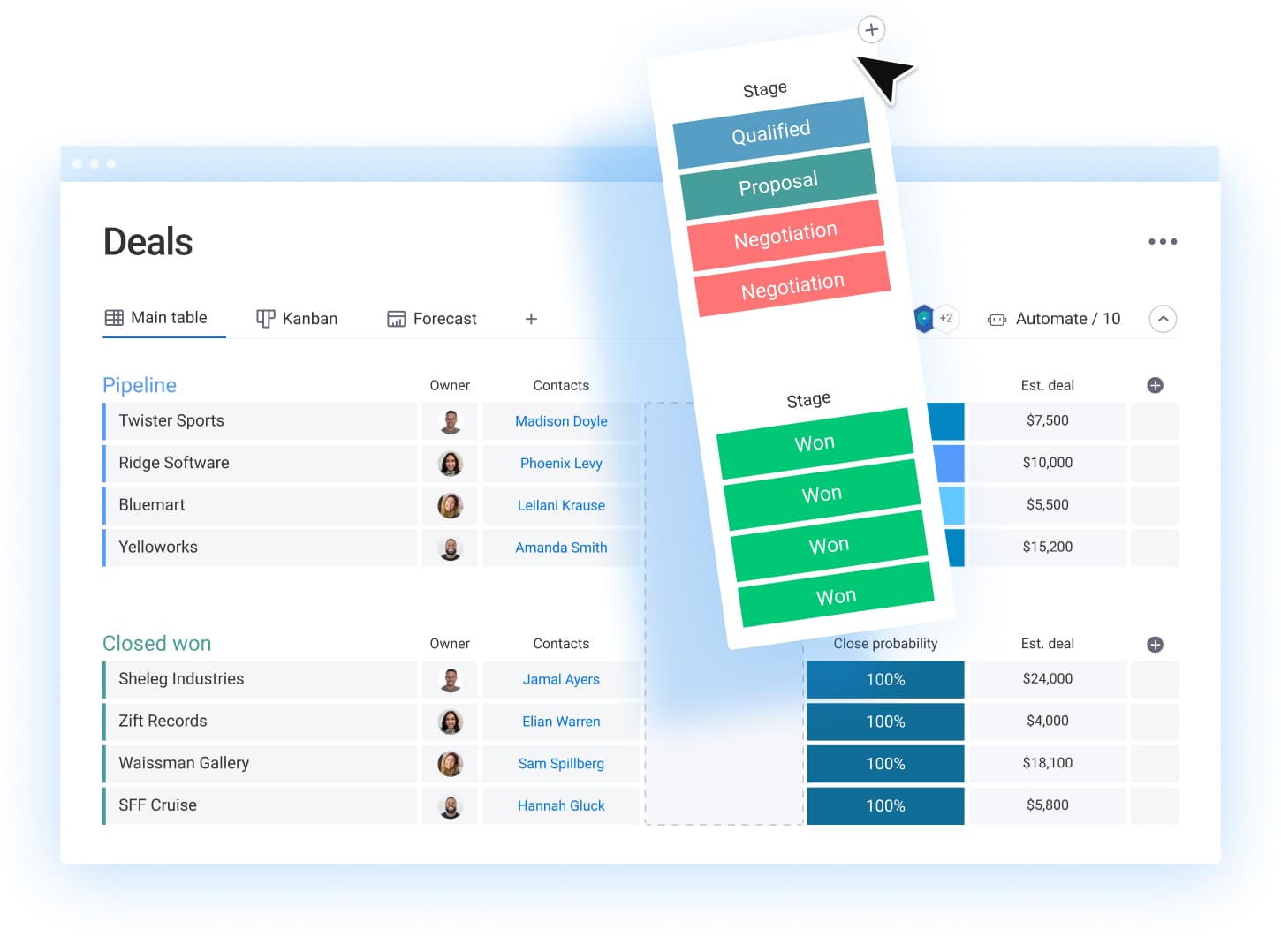
A higher education CRM serves as a unified digital workspace that spans the entire student journey. It connects admissions, student services, and alumni relations, ensuring every interaction remains personal and every student receives effective guidance. The system is designed to support an educational community, not simply process transactions through a sales funnel.
That same relationship-first DNA powers solutions like monday CRM for sales teams. The platform helps teams see the whole customer story, automate the right touchpoints, and turn one-time buyers into lifelong partners. This approach shifts focus from chasing deals to building a business that lasts.
Traditional CRMs focus on sales. Higher education builds futures
The logic of a standard CRM, with its focus on quarterly goals and rapid conversions, simply doesn’t apply to your mission. You aren’t closing a one-time sale; you are cultivating relationships that evolve over decades, from a prospective student’s first inquiry to their future as an engaged alum. Forcing this intricate journey into a rigid sales funnel inevitably leads to missed opportunities and frustrated teams.
Compounding the issue, critical data is often fragmented across the Student Information System, the Learning Management System, and a dozen other disconnected platforms. This fragmentation forces your staff to hunt for information, making a complete view of a student’s journey impossible. You can’t effectively support someone from applicant to alum when their story is scattered in pieces.
Overlaying all of this is the critical mandate of FERPA. While protecting student data is non-negotiable, overly rigid permissions can grind essential collaboration to a halt. The challenge is to create a system that allows for the confident sharing of the right information with the right people, ensuring every department is both compliant and connected.
Close more applications. Graduate more students
Disjointed systems and manual processes create friction, slowing down your teams and preventing them from delivering the coordinated support students expect. Admissions, student services, and alumni relations operate in separate worlds, leading to crossed wires and a disjointed experience.
1. One team, one student record
A single source of truth for every student record eliminates the chaos of scattered data. When every department accesses the same information in real time, from application to graduation, communication becomes direct and consistent. This shift replaces data-entry errors and endless email chains with institutional clarity.
2. Find your best-fit students, faster
Lengthy, manual recruitment cycles create a window for your best applicants to enroll elsewhere. Your team’s hard work gets diluted when too much time is spent on prospects who will never convert. A CRM sharpens your focus, helping you identify high-potential candidates and concentrate energy where it yields the greatest results. By automating follow-ups and guiding applicants through a frictionless process, you can fill your class with the right students in record time.
3. Keep students on the path to graduation
Proactive support begins with early detection. Instead of waiting for at-risk students to ask for help, a point at which it may be too late, a CRM can provide the foresight needed to intervene effectively. The system automatically flags warning signs like missed classes or falling grades, instantly alerting advisors who can step in with support when it can make a genuine difference. This proactive outreach keeps students engaged and on track to succeed.
4. Automate the busywork, focus on students
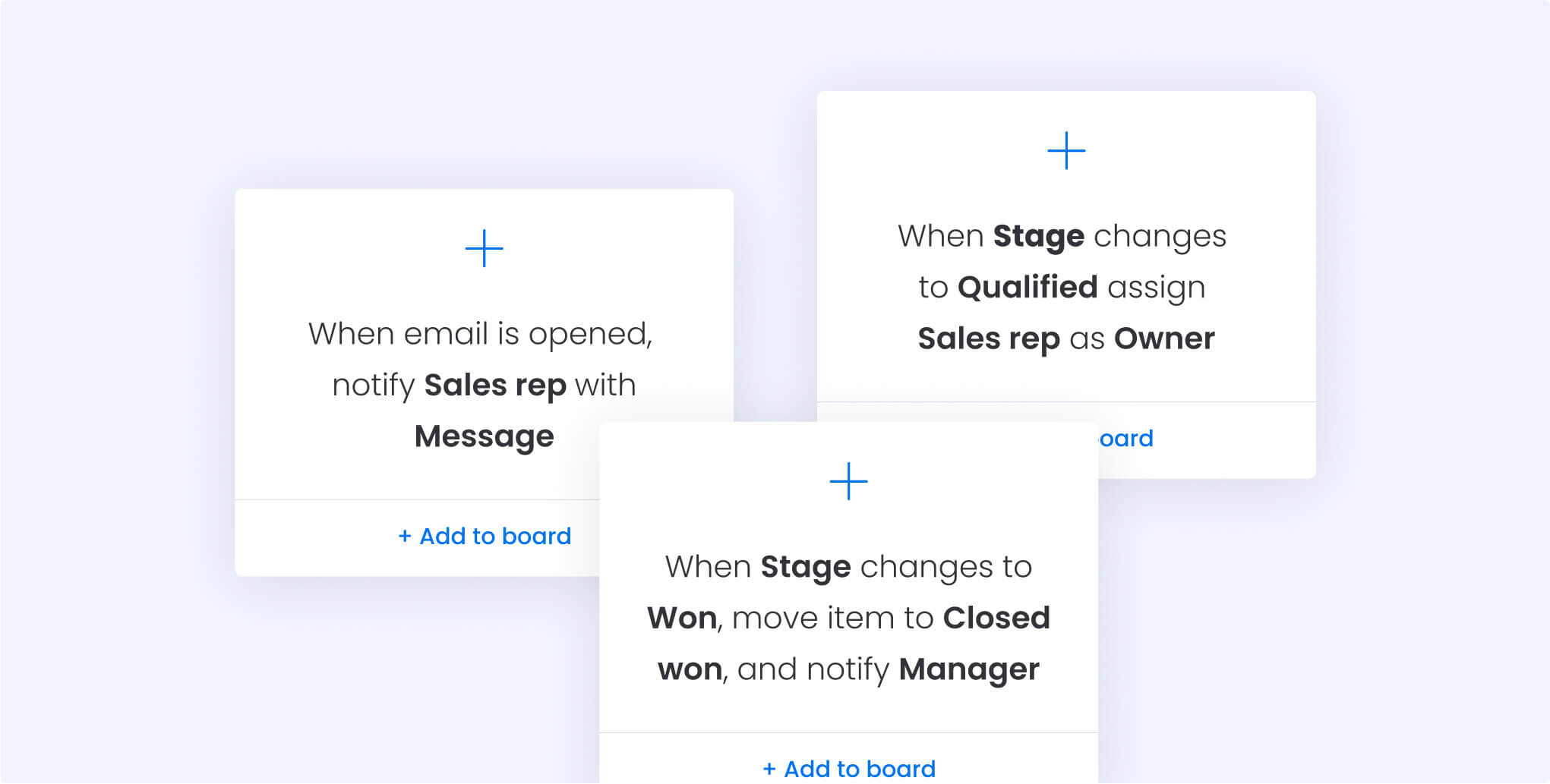
Administrative bottlenecks caused by paperwork and repetitive tasks consume valuable time that your staff could be dedicating to students. By letting automation handle routine work like document management, follow-up emails, and case tracking, a CRM liberates your team to focus on high-impact, people-centric activities. Less paperwork directly translates to more time for students.
5. See what’s working (and what’s not)
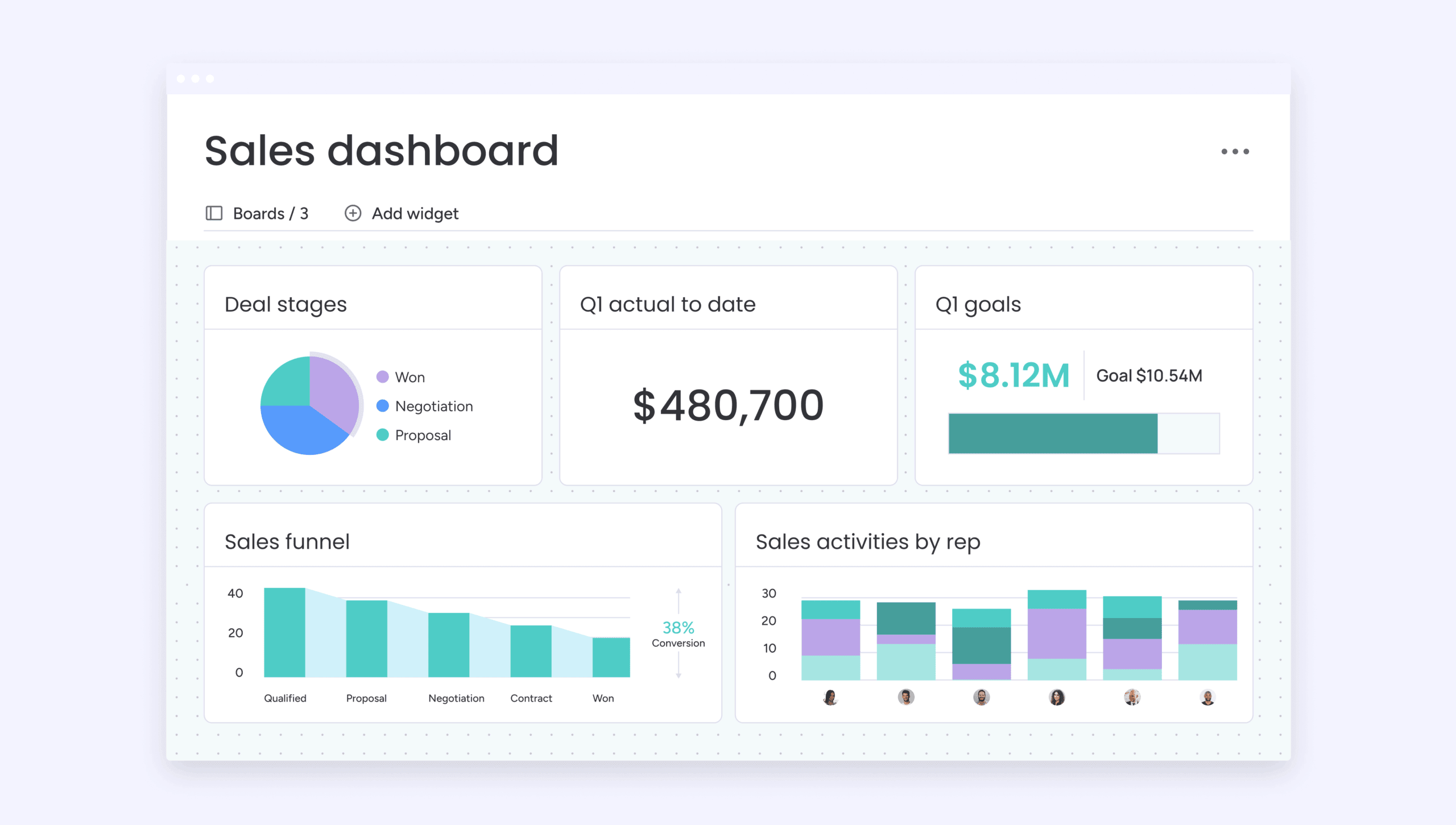
Strategic planning requires more than just guesswork based on outdated spreadsheets. To navigate the future confidently, your leadership team needs a direct, real-time view of institutional performance. A CRM delivers live dashboards on enrollment, retention, and other key metrics, allowing you to spot trends as they emerge and make decisions backed by current data.
6. Talk to every student like an individual
Students expect communication that is relevant to their unique journey, and generic email blasts rarely achieve this. A CRM resolves the logistical nightmare of personalizing messages at scale. It empowers you to send the right message to the right student at the right time, whether it’s orientation information for first-years or career resources for seniors, all automatically. This is communication that builds connection.
7. Turn graduates into lifelong partners
Your alumni represent one of your most powerful assets, but these crucial relationships require consistent effort to thrive. A CRM is essential for building and tracking alumni engagement for the long haul. It provides insights into who is engaged, who is donating, and who is attending events, enabling you to nurture those connections strategically and transform graduates into lifelong partners and advocates.
Essential features for education CRM software
The student journey is not a 30-day sales cycle; it’s a multi-year relationship that generic CRMs are ill-equipped to manage. You need a platform architected for the complexities of education, one that empowers your team rather than adding another layer of administrative burden.
Imagine seeing every touchpoint, from the first inquiry to enrollment day, while automating the communication that keeps prospects engaged. The right system automates messaging, sending the right message at the right time. This strategic automation frees up your staff to focus on what truly matters: building real connections with students.
Get real-time insights on one dashboard, so your whole team knows what’s happening now. Advanced solutions like monday CRM connect with the tools you already use and lets you customize workflows without calling IT. It’s full visibility and total control, finally in one place.
Connect every stage of the student journey
The student lifecycle is a long game, from the first campus visit to a future alumni donation. Disconnected tools create gaps in this journey, causing you to lose momentum and, more importantly, people. We bring every interaction into a single, cohesive platform, enabling your teams to work in concert and ensuring no student ever feels like just a number.
Accelerate the journey from prospect to enrolled student. With automated follow-ups, every inquiry receives a prompt, personal reply, and applications are managed without the administrative chaos. This allows your admissions team to shift their focus from chasing paperwork to building foundational relationships.
The connection doesn’t end at enrollment. Continue to provide the support students need to graduate, link them with valuable career opportunities, and cultivate an alumni network that endures for a lifetime. A complete view of their journey allows you to turn graduates into your most passionate advocates.
“There’s probably about a 70% increase in efficiency in regards to the admin tasks that were removed and automated, which is a huge win for us.“
Kyle Dorman | Department Manager - Operations, Ray White
"monday CRM helps us make sure the right people have immediate visibility into the information they need so we're not wasting time."
Luca Pope | Global Client Solutions Manager at Black Mountain
“In a couple of weeks, all of the team members were using monday CRM fully. The automations and the many integrations, make monday CRM the best CRM in the market right now.”
Nuno Godinho | CIO at Velv7 best CRM systems for higher education
Many CRMs are designed for a world of sales funnels, a model that fails to capture the intricate, long-term nature of the student journey. Applying the wrong tool can lead to lost applicants, frustrated teams, and a misaligned budget. It creates more work, not less.
Your institution needs a platform that adapts to your unique processes, not the other way around. An effective education CRM serves as a central hub, connecting admissions, student services, and advancement so everyone operates from a unified playbook. It’s the key to making campus-wide collaboration feel effortless.
| CRM System | Pricing Model | Education-Specific Features | Integration Capabilities | Ease of Use | AI Features |
|---|---|---|---|---|---|
| monday CRM | Per user/month, scalable | Visual workflows, student journey tracking | Open API, pre-built connectors | Intuitive, no-code | Built-in AI Blocks, automation |
| Salesforce Education Cloud | Custom, enterprise | Admissions, advising, advancement | Extensive app ecosystem | Powerful, steep learning curve | Predictive analytics, Einstein AI |
| Microsoft Dynamics 365 | Per user/month, bundled | Integration with Office 365, academic templates | Microsoft ecosystem | Familiar for MS users | AI-driven insights, Power Automate |
| HubSpot for Education | Free tier + paid | Inbound marketing, lead nurturing | Marketing, email, forms | User-friendly | AI content, workflow automation |
| Ellucian CRM Solutions | Custom, education | SIS integration, retention modules | Deep Ellucian suite integration | Traditional, moderate | Predictive analytics, reporting |
| Anthology Student CRM | Custom, education | Full student lifecycle management | SIS, LMS, financial aid | Comprehensive, moderate | Predictive analytics, automation |
| Slate by Technolutions | Custom, admissions | Application management, event tracking | SIS, limited beyond admissions | Admissions-focused | Workflow automation, reporting |
1. monday CRM
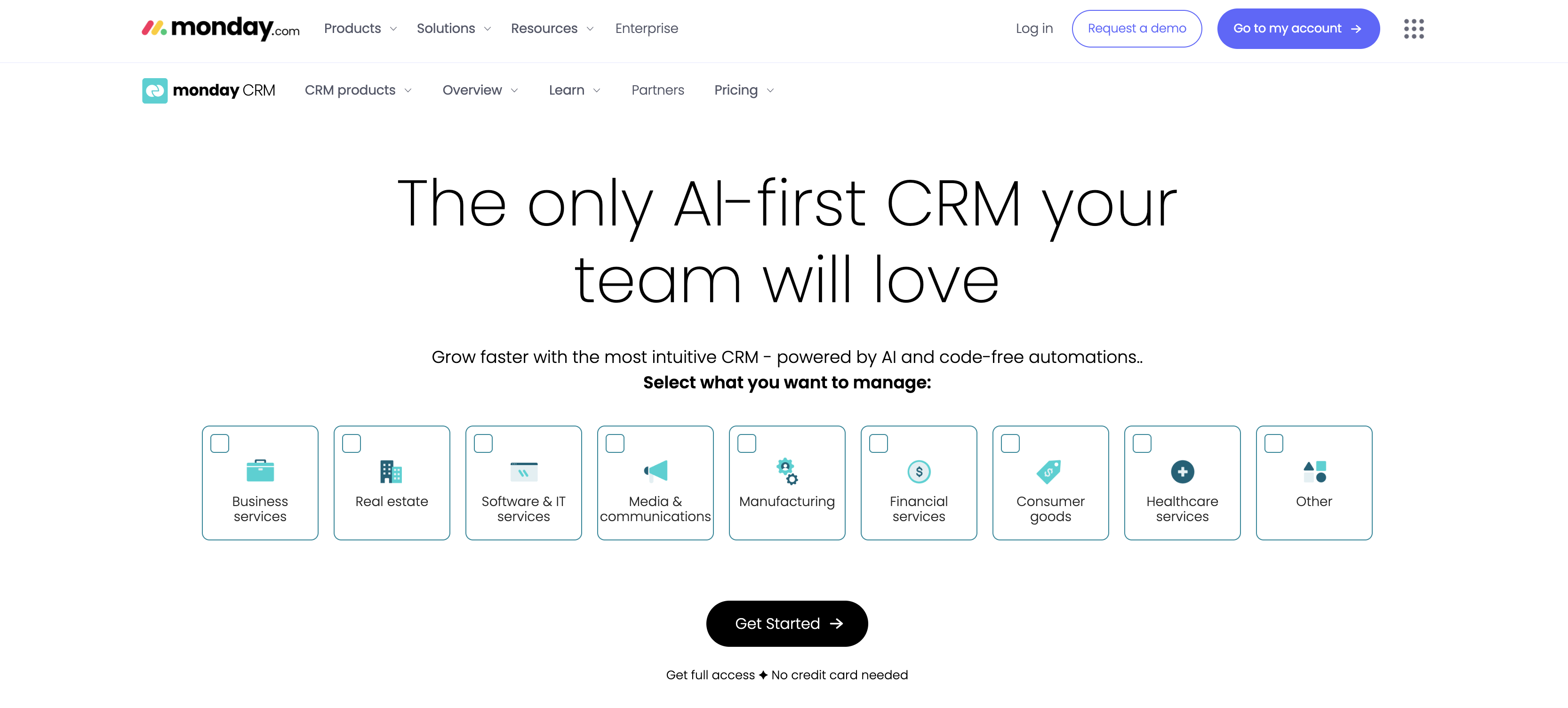
Higher education institutions that need custom workflows without the IT bottleneck get no-code flexibility with monday CRM. The platform empowers admissions, student services, and alumni relations teams to design their own processes for tracking applicants, managing student success initiatives, and coordinating fundraising campaigns, all without writing a single line of code.
Example:
monday CRM serves institutions seeking a flexible, visual platform that adapts to unique workflows across admissions, student services, and advancement without requiring technical expertise or lengthy implementation cycles.
Key features:
- No-code workflow builder: teams create custom processes for student journey tracking, application management, and alumni engagement without IT dependency.
- Built-in automation: handles routine tasks like follow-up emails, document management, and performance reporting to free staff for high-impact student interactions.
- Open API and pre-built integrations: connect seamlessly with existing campus systems including SIS, LMS, and marketing platforms.
Pricing:
- Basic CRM: $15/seat per month (three seats minimum, billed annually).
- Standard CRM: $20/seat per month (three seats minimum, billed annually).
- Pro CRM: $33/seat per month (three seats minimum, billed annually).
- Enterprise: custom pricing with advanced security, governance, and support.
- All plans include: unlimited contacts, visual dashboards, and mobile apps.
Considerations:
- Workflow configuration: teams build their own processes, offering flexibility but requiring initial time investment to configure custom workflows.
- Template library: fewer education-specific pre-built templates compared to purpose-built higher education CRMs, though customization capabilities compensate.
2. Salesforce Education Cloud
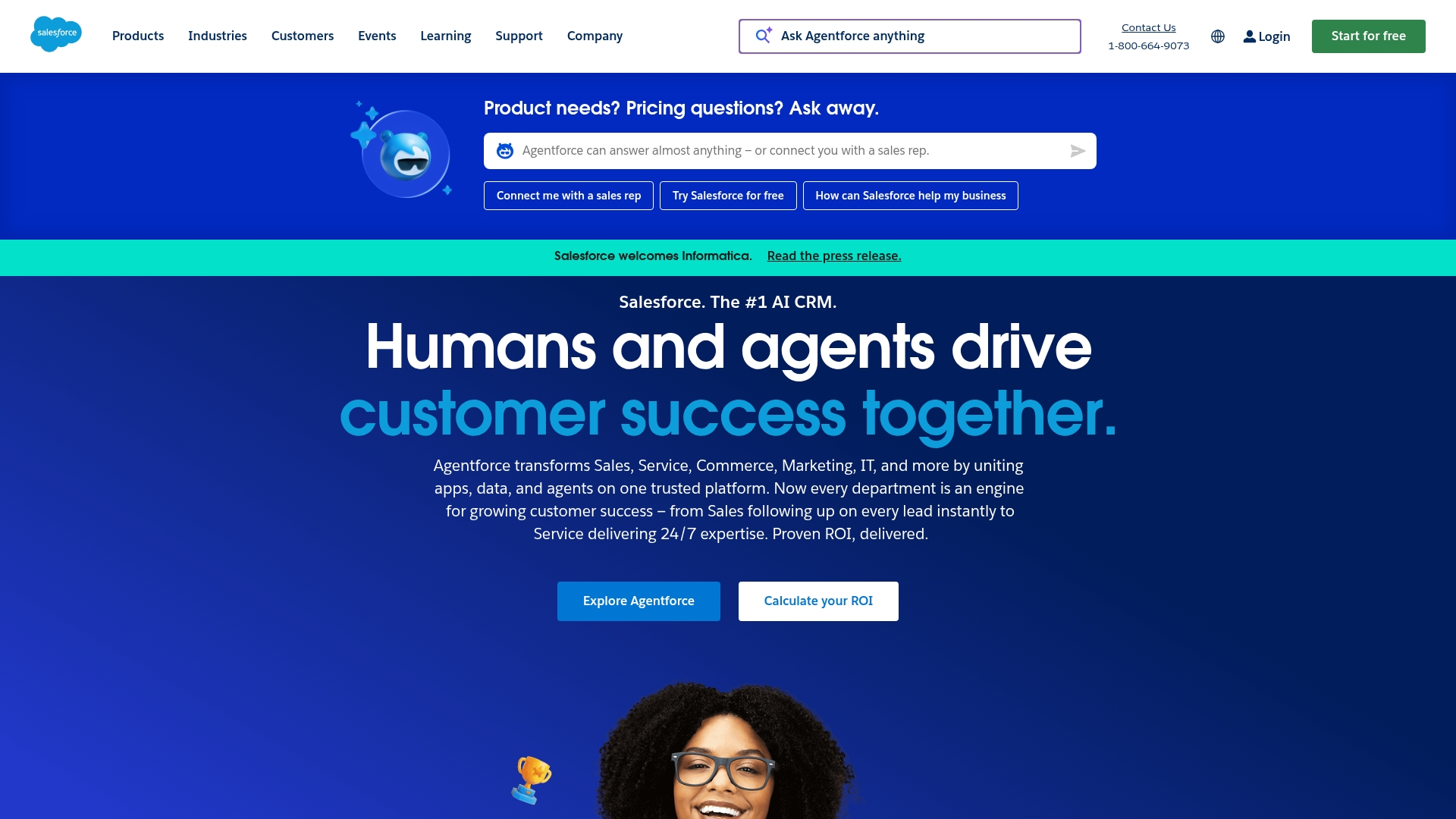
Salesforce Education Cloud brings enterprise-grade CRM power to higher education institutions managing complex student lifecycles. The platform combines admissions, student success, advancement, and alumni relations in one unified system, backed by Einstein AI for predictive insights and automation. Built for institutions that need deep customization and extensive third-party integrations to support their unique academic workflows.
 Example:
Salesforce Education Cloud serves large universities and educational institutions that need a comprehensive platform to manage student relationships from prospective applicant through alumni engagement, with robust data analytics and AI-powered insights.
Key features:
- Student lifecycle management: covers admissions, enrollment, academic advising, and alumni relations in one unified platform.
- Einstein AI: delivers predictive analytics for student success, retention forecasting, and personalized engagement.
- Extensive AppExchange ecosystem: education-specific apps and deep integration capabilities.
Pricing:
- Sales Cloud Starter Suite: $25/user/month (billed annually).
- Sales Cloud Pro Suite: $100/user/month (billed annually).
- Sales Cloud Enterprise: $175/user/month (billed annually).
- Sales Cloud Unlimited: $350/user/month (billed annually).
- Agentforce 1 Sales: $550/user/month (billed annually).
- Industry-specific Education Cloud pricing: available through contact sales.
- Premier Success Plan: adds approximately 30% of net license fees.
- Additional costs: for Data 360 credits, API access, and professional services.
Considerations:
- Technical resources required: significant skilled administrators needed for implementation and ongoing management.
- Higher total cost of ownership: per-user licensing, add-ons, and annual billing requirements increase overall investment.
3. Microsoft Dynamics 365
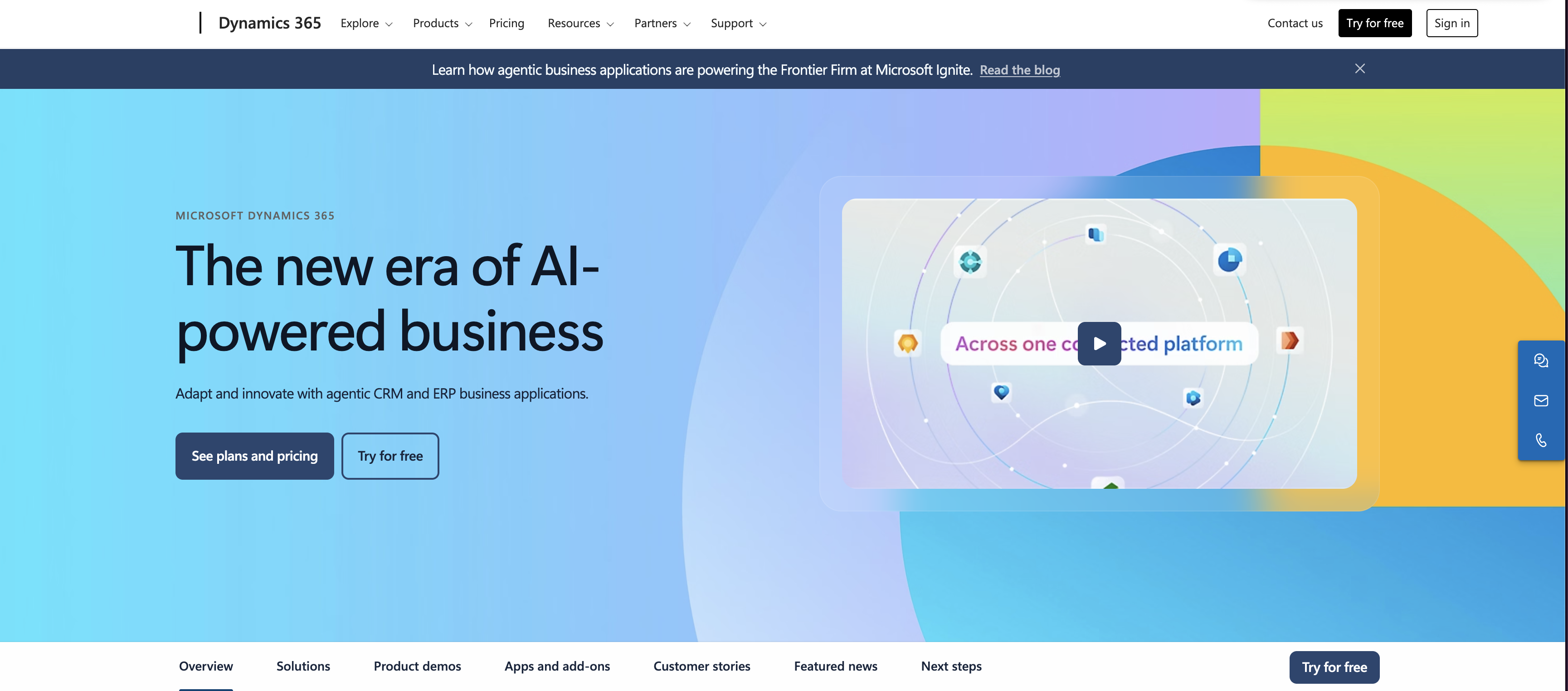
Microsoft brings enterprise-grade CRM power to higher education institutions through Dynamics 365. The platform integrates seamlessly with Microsoft 365 tools that most universities already use, creating familiar workflows for admissions, student services, and alumni relations teams.
Example:
Microsoft Dynamics 365 excels for institutions already invested in the Microsoft ecosystem, offering native integration with Office 365, Teams, and other Microsoft tools to create unified student engagement workflows.
Key features:
- Native Microsoft 365 integration: brings CRM data directly into Outlook, Teams, and other daily-use applications.
- Academic-specific templates: support common education processes like admissions tracking and student lifecycle management.
- AI-powered insights through Copilot: help staff automate routine communications and generate meeting summaries.
Pricing:
- Sales Professional: $65/user/month (annual billing).
- Sales Enterprise: $105/user/month (annual billing).
- Sales Premium: $150/user/month (annual billing).
- Customer Service Professional: $50/user/month (annual billing).
- Customer Service Enterprise: $105/user/month (annual billing).
- Customer Service Premium: $195/user/month (annual billing).
- Copilot for Sales: $50/user/month (includes Microsoft 365 Copilot) or $20/user/month add-on with existing Microsoft 365 Copilot.
- Azure Communication Services: usage for voice features billed separately.
Considerations:
- Complex licensing structure: across base apps, AI add-ons, and usage-based services can make total cost difficult to predict.
- Governance limitations: some governance features don’t apply to all capabilities, and customization for complex institutional needs may require significant IT support.
4. HubSpot
HubSpot delivers an all-in-one customer platform that combines CRM, marketing, sales, and service tools in one unified system. The platform excels at inbound marketing and lead nurturing, making it particularly strong for higher education institutions focused on student recruitment and digital engagement.
 Example:
HubSpot’s Smart CRM serves as a unified data foundation that connects student interactions across marketing, admissions, and student services and is perfect for institutions that want to eliminate data silos and create seamless student experiences.
Key features:
- Smart CRM with AI-powered data enrichment: automated lead scoring identifies high-potential prospective students without manual review.
- Built-in marketing automation: email campaigns, landing pages, and social media tools streamline recruitment outreach.
- Integrated analytics and reporting: dashboards track the complete student journey from first contact through enrollment.
Pricing:
- Free: $0 (unlimited users, up to one million contacts, basic CRM tools).
- Starter: $15/seat per month (promotional pricing, normally $20).
- Professional: $50/seat per month for Smart CRM, $100/seat for Sales Hub.
- Enterprise: $75/seat per month for Smart CRM, $150/seat for Sales Hub.
- Marketing Hub: pricing starts at $890/month for Professional tier.
- Onboarding fees: one-time charges required for Professional and Enterprise tiers.
Considerations:
- Feature limitations: advanced capabilities like custom objects and enterprise governance are locked behind higher-tier plans, increasing costs for larger institutions.
- Contact-based pricing: marketing contact limits can drive up costs significantly as your database grows, with tiered overage pricing that adds to total cost of ownership.
5. Ellucian
Ellucian delivers purpose-built CRM solutions designed exclusively for higher education institutions. The platform covers the complete student lifecycle from recruitment through alumni engagement, with deep integration into existing campus systems. Built on Microsoft Dynamics 365, it brings modern AI capabilities to traditional higher education workflows.
 Example:
Ellucian CRM helps higher education institutions manage student relationships across recruitment, retention, and advancement with specialized modules that integrate seamlessly with existing student information systems.
Key features:
- Complete lifecycle coverage: three specialized CRM modules (Recruit, Advise, Advance) handle everything from prospective student outreach to alumni fundraising campaigns.
- Native campus integration: built-in connections to Ellucian’s SIS/ERP systems and standardized APIs through Ethos reduce integration complexity.
- Higher education workflows: purpose-built features like application tracking, risk alerts for at-risk students, and donor management designed specifically for academic environments.
Pricing:
- Custom enterprise pricing: quote-only pricing with no published rates.
- Professional services: additional costs for implementation, migration, and optimization.
- Success services: tiered support plans (Standard, Premier, Signature) available as add-ons.
Considerations:
- Platform transition required: Ellucian migrates CRM products to Microsoft Dynamics 365, potentially requiring change management and user retraining.
- Quote-only pricing model: lacks transparency, making budget planning difficult without engaging in lengthy sales processes.
6. Anthology Student CRM
Anthology Student CRM delivers end-to-end student lifecycle management built on Microsoft Dynamics 365, covering everything from recruitment to alumni engagement. The platform integrates deeply with Blackboard LMS and Anthology Student SIS, creating unified data flows that eliminate silos between teaching, learning, and student success teams. With AI-powered insights and real-time alerts, it’s designed for higher education institutions that need one system to manage complex student journeys.
 Example:
Anthology Reach provides comprehensive student relationship management across recruitment, enrollment, student success, and advancement with native integrations to LMS and SIS data.
Key features:
- Real-time student alerts: faculty engagement data from Blackboard LMS flows directly into advisor dashboards, triggering automated interventions when students show signs of struggle
- .AI-powered journey orchestration: behavior-triggered outreach campaigns with Microsoft Copilot suggesting next-best actions based on student interactions and academic performance.
- Unified data ecosystem: native integration between Blackboard LMS, Anthology Student SIS, and Reach CRM eliminates data silos and creates a single source of truth for student information.
Pricing:
- Custom pricing: quote-based pricing with no published rates.
- Microsoft licensing: additional costs may apply for Dynamics 365 platform entitlements and Power Platform features.
- Third-party services: potential incremental costs for SMS messaging (TeleSign), live chat support, and document management tools.
Considerations:
- Microsoft dependency: heavy reliance on Dynamics 365 stack may require specific licensing and governance that some institutions don’t have in place.
- Implementation complexity: enterprise-level CRM requires significant change management and training investment, despite available onboarding resources.
7. Slate
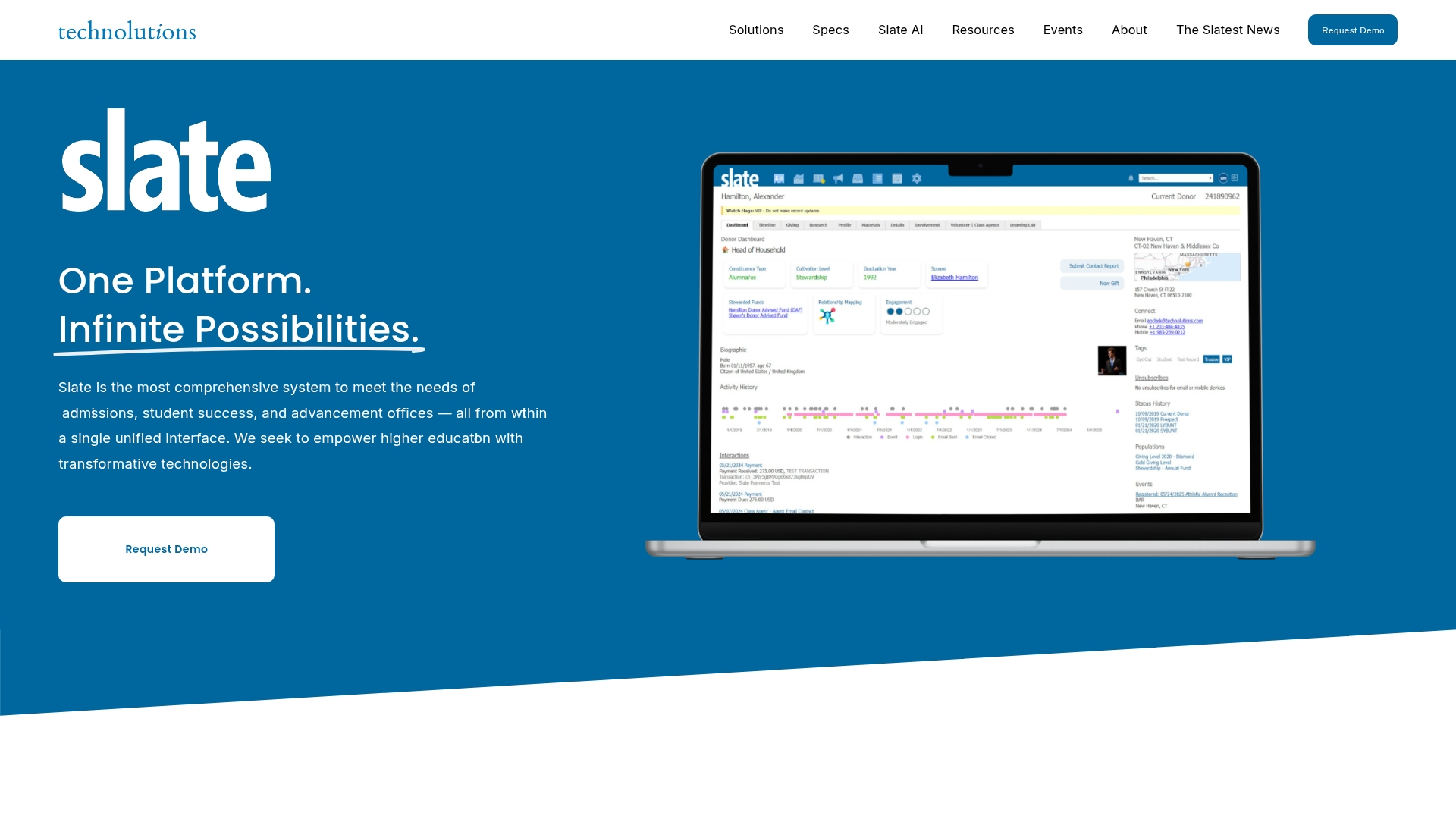
Slate is a higher-ed CRM powerhouse, best known for its deep capabilities in admissions and enrollment. While it offers modules for the entire student lifecycle, from recruitment to advancement, it’s not always a single-database affair. The platform is designed to help colleges and universities ditch vendor sprawl, but institutions often use separate databases for student success and advancement. Think of it as a unified platform, but with a few key moving parts.
 Example:
Bring recruitment, admissions, student success, and advancement operations under one roof. Slate is built to replace a patchwork of point solutions, with its strongest muscle in managing the admissions and enrollment funnel.
Key features:
- Native application portals: hosted application creation with Reader workflows for collaborative file review and decision release.
- Multi-channel communications: email, SMS, and bulk texting with AI First Draft tool to accelerate message creation.
- Data Explorer analytics: customizable dashboards and performance management tools for enrollment insights.
Pricing:
- Admissions & Enrollment (<1,500 applications): $30,000/year.
- Admissions & Enrollment (1,500–7,500 applications): $50,000/year.
- Admissions & Enrollment (7,500–15,000 applications): $75,000/year.
- Admissions & Enrollment (15,000–40,000+ applications): $100,000+/year.
- Student Success: free in existing database; $30,000/year for separate database.
- Advancement (<2,500 FTE enrollment): $50,000/year.
- Advancement (2,500–7,500+ FTE enrollment): $75,000+/year.
- All licenses include: unlimited users, data migrations, integrations, and support with no hidden implementation fees.
- Additional costs: third-party services like SMS or credit card processing billed separately.
Considerations:
- Implementation complexity: platform requires dedicated training and partner assistance for optimal deployment.
- Entry-level investment: $30,000 annual minimum may exceed budget for smaller programs seeking lighter-weight alternatives.
Integrate your campus systems for seamless operations
A CRM that fails to communicate with your other essential tools only creates another information silo, slowing your teams down. The goal is to connect your campus technology stack and put a definitive end to the chase for information.
Solutions like monday CRM integrate with the systems you already rely on, no advanced degree required. Data flows where it needs to go, giving your team back hours in their day. Your staff gets to focus on students, not spreadsheets.
Student information system (SIS)
By connecting your SIS to advanced platform, every student’s academic record is centralized and updated in real time, eliminating the need for advisors to jump between screens. If a student switches majors, their profile reflects that instantly, ensuring every conversation is informed and relevant. Your team gets the full picture, empowering them to have meaningful conversations instead of playing detective with outdated records.
Learning Management System (LMS)
Academic performance is more than just grades. Syncing your LMS provides a richer picture of student engagement, flagging individuals who are falling behind so your team can intervene when it counts. Automated alerts based on activity — or inactivity — ensure no one slips through the cracks. This isn’t about surveillance; it’s about spotting trouble early and offering support before a small problem becomes a major one.
ERP & Financial Systems
Financial hurdles can derail a student’s progress. Integrating your ERP system allows advisors to spot and resolve payment issues before they escalate into a crisis during registration week. This proactive approach gives your team the power to clear financial roadblocks, often before students even know they’re there, ensuring a smoother academic journey.
Email & Marketing Platforms
Synchronizing your marketing tools with your CRM ensures every message a student receives is consistent and timely. This eliminates the confusing, conflicting emails that can arise from different departments using separate systems. With every department speaking with one voice, you build trust and guide students with clarity from their first inquiry to graduation day.
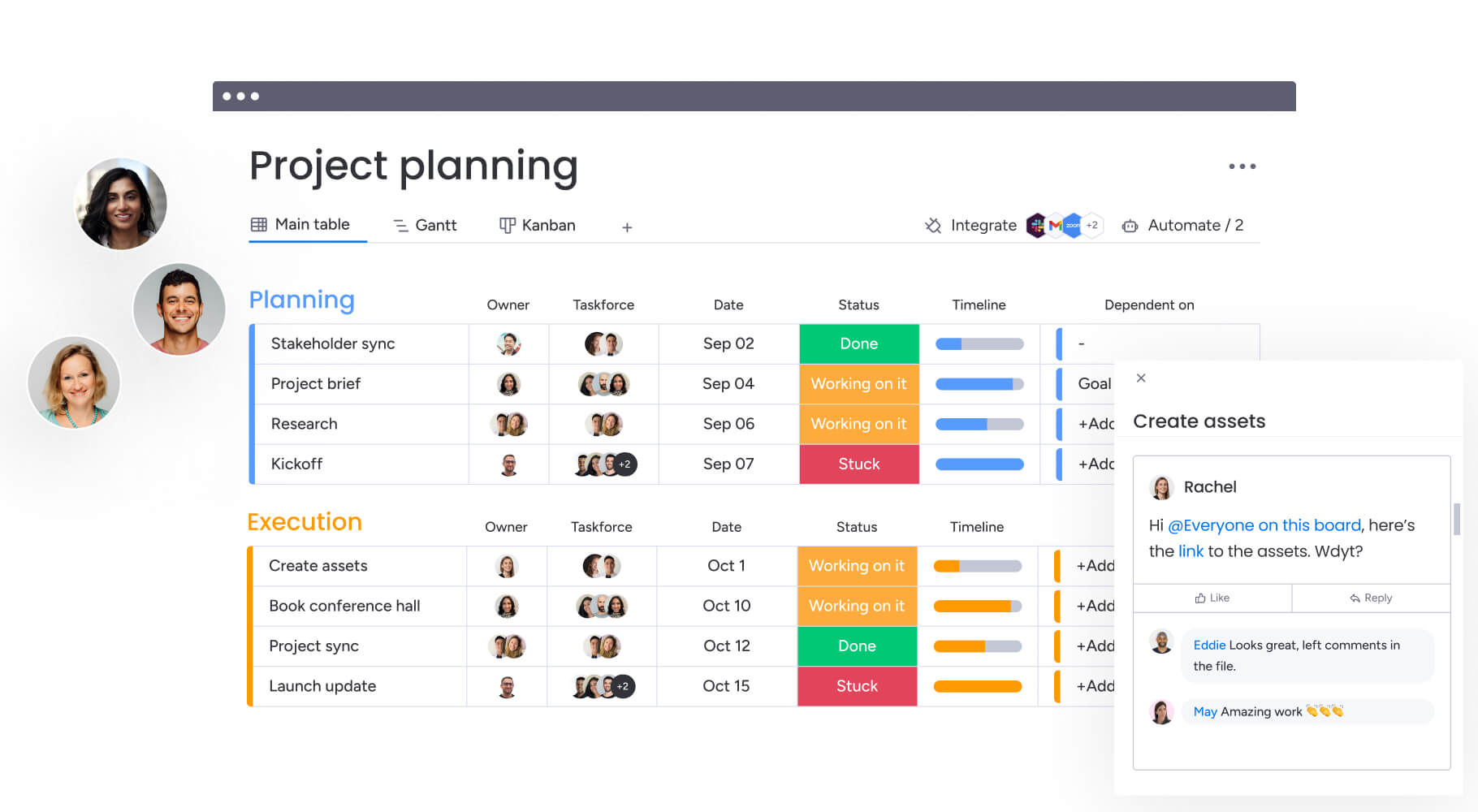
Implementing a CRM in higher education: a practical rollout framework
A successful CRM implementation requires more than just purchasing software and flipping a switch. Higher education institutions need a structured approach that addresses data quality, process design, team adoption, and continuous improvement. The following four-phase framework provides a practical roadmap for rolling out a CRM system that your teams will actually use and that delivers measurable results from day one.
Step 1: audit and clean your data
Most institutional data is messy and that’s okay. This initial phase is a critical opportunity to clean house, define what information truly matters, and establish clear governance rules for maintaining data integrity. Consider it an insurance policy against future headaches and flawed insights.
Step 2: design your ideal process
Don’t force your team into a rigid, out-of-the-box system. Instead, map the processes you actually use and build them directly in platform like monday CRM without writing a single line of code. Your CRM should be molded to your operations, not the other way around.
Step 3: train your team for adoption
A CRM’s value is directly tied to its adoption by the team. Move beyond generic feature tours and demonstrate to each person precisely how the new system simplifies their specific job. Address resistance head-on, celebrate early victories, and prove this is a change for the better.
Step 4: launch, monitor, and improve
Launch day is the starting block, not the finish line. From day one, track adoption rates and data quality, addressing any issues before they escalate. The objective isn’t a one-time setup but the creation of a dynamic system that evolves and improves as your team does.
AI innovation in higher education CRM
Artificial intelligence can transform the administrative burdens that slow your admissions team down, freeing them to focus on what they do best: building genuine relationships with students. Stop losing great applicants in a tangle of messy spreadsheets and endless email chains.
Our AI automates lead qualification and enables personalized outreach at scale. It provides your team with the insights to spot at-risk students or connect with a top prospect at the perfect moment. This is about making smarter, faster moves that enhance the human element of recruitment.
Teams that embrace AI see tangible results in their enrollment numbers and their own morale. The technology adapts to your process, not the other way around, allowing you to scale personalized experiences for every student without burning out your staff.
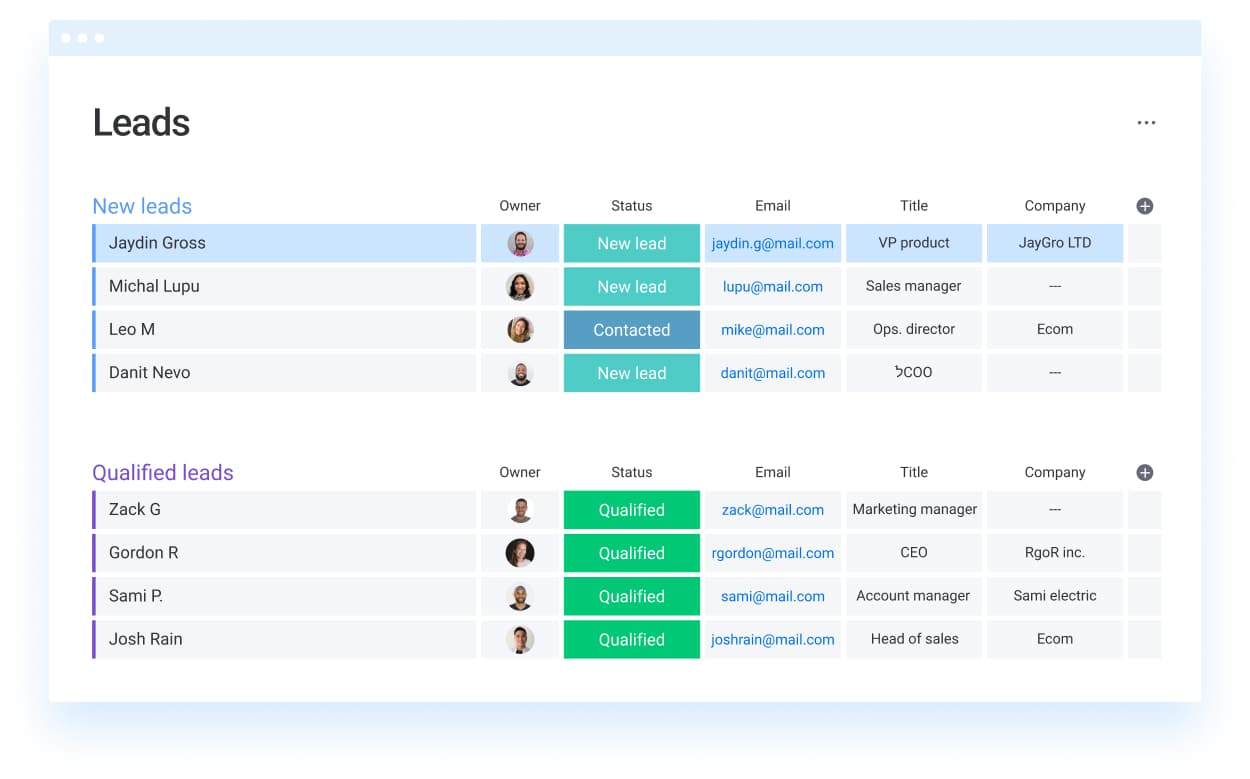
Unify your systems to strengthen student relationships
When admissions, student services, and alumni relations operate from separate systems, institutions face fragmented data, limited visibility, and missed opportunities. An effective CRM solution should consolidate these operations rather than add complexity.
Unified platforms like monday CRM manage student relationships across the entire lifecycle, from initial inquiry through alumni engagement. The system enables institutions to build custom workflows using an intuitive drag-and-drop interface that requires no coding or IT resources. As institutional priorities evolve, the platform adapts accordingly.
Automation handles routine administrative tasks, allowing teams to dedicate more time to meaningful student interactions. Real-time dashboards provide clear visibility into enrollment metrics and fundraising progress, enabling data-driven decision-making and strategic planning.
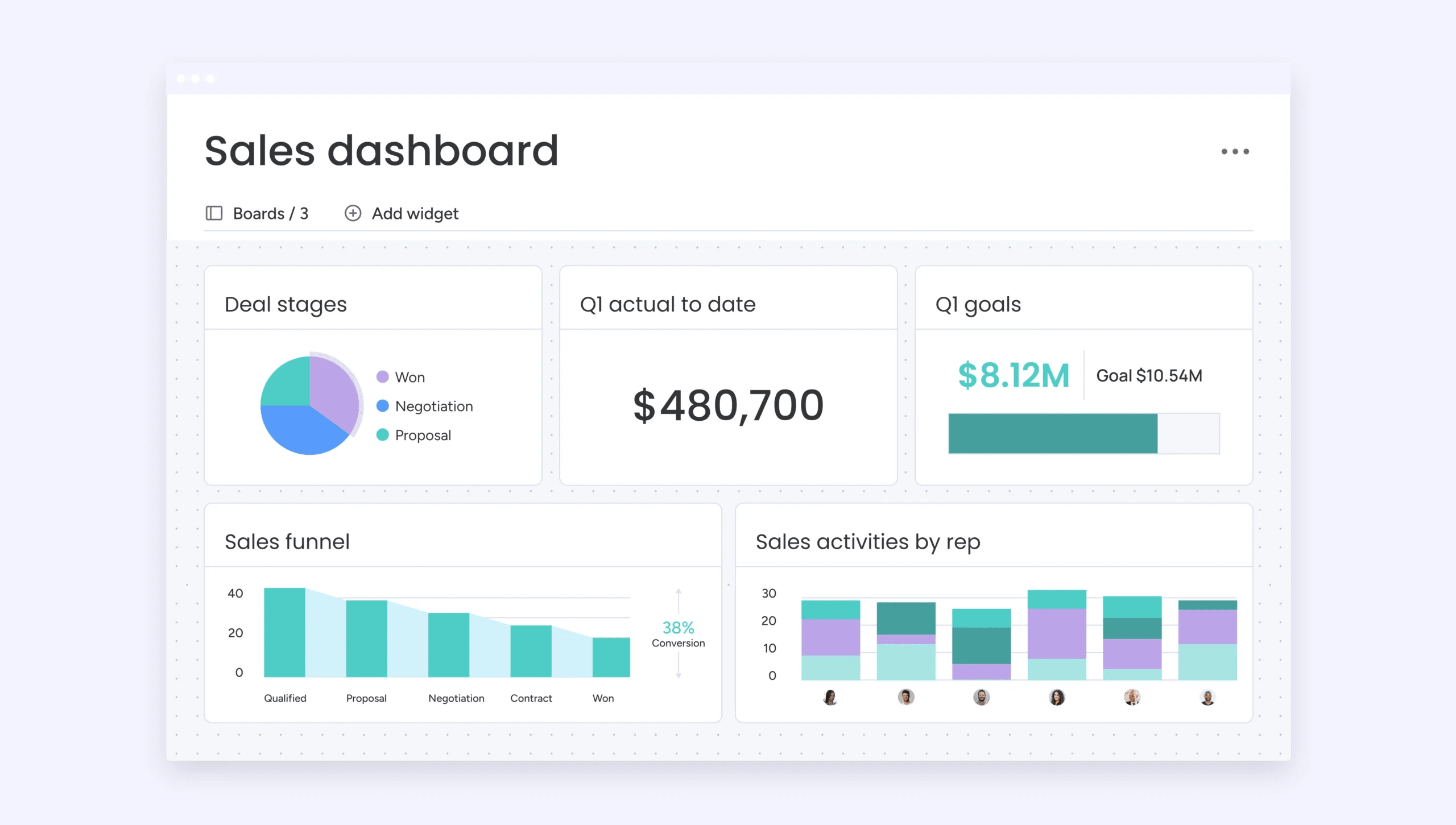
Start your CRM transformation today
Your CRM should be an asset, not an obstacle. Too often, long implementation cycles and manual data entry kill momentum before you even begin. With monday CRM, everything consolidates in one place, allowing you to automate the busywork and focus on achieving your goals.
Forget platforms that take months to set up and require an IT degree to manage. Institutional processes adapt in minutes with monday CRM. Build the exact workflows you need with simple, intuitive drag-and-drop tools.
Ready to see what happens when your team actually likes their CRM? Give your staff the confidence and control to foster student success — try monday CRM today.
The content in this article is provided for informational purposes only and, to the best of monday.com’s knowledge, the information provided in this article is accurate and up-to-date at the time of publication. That said, monday.com encourages readers to verify all information directly.
Frequently asked questions
How much does CRM software cost for universities?
Costs vary based on your team size and the features you need, typically ranging from $30 to $150 per user monthly. With clear, transparent pricing that scales with your institution, monday CRM ensures there are no surprise fees.
How long does CRM implementation take?
Implementation usually takes three to six months, depending on data complexity and customizations. An intuitive platform like monday CRM can significantly speed up this process, getting your team running faster.
Can CRM systems maintain FERPA compliance for student data?
Yes, with the right security controls. Built with enterprise-grade security, access permissions, and audit trails, monday CRM helps you maintain FERPA compliance.
How do AI features improve student recruitment processes?
AI automates lead scoring to focus your team on the most promising applicants and enables personalized communication at scale. This helps you connect with more of the right students, faster.
What training is required for CRM adoption in higher education?
Training depends on the platform, but an intuitive, visual CRM requires far less. Your teams can get started quickly with minimal formal training thanks to monday CRM's user-friendly interface.
Do small colleges benefit from CRM implementation as much as large universities?
Yes, smaller, leaner teams often see the biggest impact from the efficiency gains. A scalable CRM provides the automation and structure needed to compete and grow, regardless of your institution's size.

 Get started