


Most growing businesses run on 2 separate engines: sales chasing revenue in one system, operations managing fulfillment in another. The right choice between ERP and CRM depends on which engine needs power first and how to connect them so your entire business runs on shared data instead of scattered spreadsheets.
This guide breaks down what CRM and ERP actually do, where they overlap, and which system solves your most urgent problem. You’ll get feature comparisons, cost breakdowns, implementation timelines, and a clear framework for choosing the right system — plus how modern platforms connect customer-facing work with operations to create one source of truth.
Key takeaways
- CRM manages customer relationships and sales pipelines while ERP handles back-office operations like finance and inventory, so knowing the difference helps you invest in the right system first.
- If your sales team lacks pipeline visibility, CRM comes first, but if inventory chaos or compliance gaps are breaking operations, prioritize ERP.
- CRM and ERP work best when integrated so data flows automatically between sales and operations instead of living in separate silos.
- Intelligent agents can help automate handoffs, summarize customer activity, surface risks, and keep teams aligned across sales and operations.
- Revenue teams move fast with monday CRM’s no-code automations, AI agents, and 200+ integrations ready from day one for quick and seamless implementation.
What is a CRM?
CRM software centralizes every customer interaction, contact record, and deal in one place so sales, marketing, and service teams stop working from scattered spreadsheets and email threads. The system tracks the entire customer journey, from first website visit to closed deal to account management. Revenue teams get one place to see every relationship.
A CRM, which stands for customer relationship management, gives you visibility and control over everything customer-facing. Sales reps see exactly where each deal stands, managers forecast revenue with confidence, and marketing teams track which campaigns actually generate pipeline. Without a CRM, customer data lives in individual inboxes, handoffs get dropped, and leadership can’t see what’s actually happening.
CRM software automates the repetitive stuff that eats up a rep’s day. Follow-up reminders, email sequences, and task assignments run on autopilot. Reps spend time on conversations that actually close deals.
Key features of CRM software
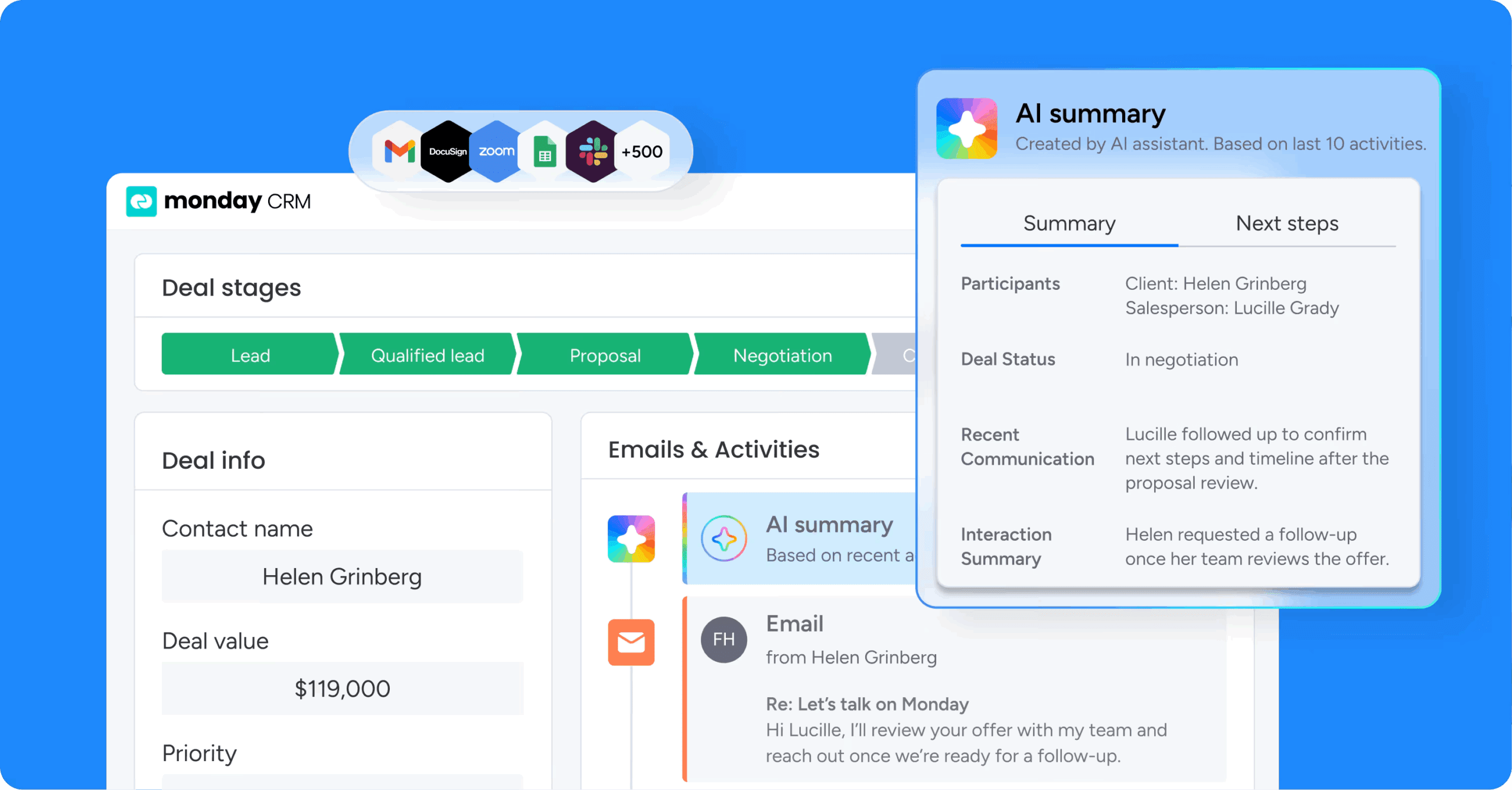
Most CRMs include the same core features that keep revenue teams organized and moving fast. These features cut out manual work and give leaders the data they need to forecast with confidence. Here’s what a solid CRM includes:
- Contact and lead management: A centralized database stores every customer and prospect record, including contact details, company information, interaction history, and custom fields relevant to the business. Everyone sees the same current data.
- Sales pipeline tracking: Visual boards show deals moving from first contact to negotiation to closed-won. Managers spot bottlenecks before they kill deals.
- Email integration and tracking: A CRM syncs with email to log communications, track opens and clicks, and show you who’s engaged. Reps see the moment a prospect opens their proposal.
- Task and activity management: Automated reminders make sure follow-ups don’t slip. The system handles next steps, schedules meetings, and flags accounts that need attention.
- Reporting and analytics: Dashboards show sales performance, conversion rates, pipeline velocity, and how accurate your forecast is. Leaders make calls based on what’s actually happening, not guesswork.
- Marketing automation: Email campaigns, lead scoring, and nurture workflows trigger based on what prospects do. Marketing and sales see the same data and chase the same leads.
- Mobile access: Sales teams work from anywhere: update deals, log calls, pull up customer history.
- AI-powered insights and automation: Modern CRMs can summarize customer interactions, suggest next steps, flag stalled deals, and help reps prioritize the right accounts.
Benefits of CRM
For CROs, VPs of Sales, and RevOps leaders, CRM drives real results: more revenue and improved team performance. This matters most when you’re outgrowing spreadsheets and can’t see what’s coming next.
- Improved sales predictability: You see which deals are moving, which are stuck, and which are at risk. Leaders forecast with confidence because they’re looking at live data, not rep guesses.
- Faster deal cycles: Automated workflows cut out the back-and-forth between sales, marketing, and service. When a lead converts, the right rep gets pinged instantly with everything they need.
- Increased customer retention: Interaction history shows churn signals: engagement drops, support tickets pile up, renewals get missed. Account managers catch at-risk customers before they churn.
- Aligned revenue teams: Sales, marketing, and service see the same customer records. Marketing knows which campaigns close deals. Sales knows what content prospects clicked. Service has the full relationship history.
- Data-driven decision-making: Real-time reports show trends, bottlenecks, and opportunities you’d otherwise miss. Leaders put resources where the data says they’ll work, not where they think they will.
What is an ERP?

An ERP, which stands for enterprise resource planning, runs your back-office operations in one system: finance, accounting, inventory, supply chain, procurement, and HR. Instead of separate systems for each department, ERP gives you one platform where data flows automatically.
ERP software gives you operational control and keeps data consistent. Finance teams close books faster because transactions flow directly from procurement and sales. Inventory managers see real-time stock levels across all locations. Operations leaders track production schedules, resource utilization, and fulfillment status without chasing down spreadsheets from different departments.
An ERP also ensures compliance and audit readiness. Financial transactions create automatic audit trails, regulatory reports generate from live data, and standardized processes reduce the risk of errors that trigger compliance issues.
Key features of ERP software

ERP platforms provide the operational backbone that keeps businesses running efficiently. These features help operations teams maintain control over complex processes, reduce manual errors, and scale without adding headcount. Here’s what a full ERP system typically covers:
- Financial management: General ledger, accounts payable, accounts receivable, budgeting, and financial reporting live in one system. Finance teams close books faster and generate accurate statements without reconciling data from multiple sources.
- Inventory and warehouse management: Real-time tracking of stock levels, locations, and movements across warehouses. The system triggers reorder alerts, tracks lot numbers, and manages multiple storage locations.
- Supply chain management: Procurement workflows, vendor management, purchase orders, and order fulfillment run through automated processes. Operations teams see supplier performance, lead times, and cost trends.
- Manufacturing and production planning: Production schedules, resource allocation, work orders, and quality control integrate with inventory and procurement. Manufacturers optimize capacity and reduce waste.
- Human resources and payroll: Employee records, benefits administration, compensation, and time tracking centralize in one system. HR teams manage the workforce without juggling separate tools.
- Reporting and compliance: Financial statements, audit trails, and regulatory reports generate automatically from live data. The system maintains the documentation needed for audits and compliance requirements.
- Multi-location and multi-currency support: Businesses operating across geographies manage operations, financials, and inventory in multiple currencies and locations from one platform.
Benefits of ERP
For mid-market operations leaders, CFOs, and COOs, ERP delivers the operational visibility and control needed to scale efficiently. These benefits matter most for organizations where manual processes, disconnected systems, and compliance requirements create operational drag.
- Operational visibility: Real-time dashboards show inventory levels, cash flow, resource utilization, and production status across the entire organization. Leaders make decisions based on current data instead of waiting for weekly reports.
- Process standardization: Consistent workflows across departments and locations reduce errors and training time. New employees follow the same processes as experienced staff, and best practices scale across the organization.
- Cost control: Visibility into spending, inventory carrying costs, and supplier pricing enables smarter procurement decisions. The system identifies waste, optimizes stock levels, and surfaces opportunities to reduce costs.
- Regulatory compliance: Automated audit trails, financial controls, and reporting capabilities simplify compliance with accounting standards, tax requirements, and industry regulations.
- Scalability: Standardized processes and automated workflows support growth without proportional increases in headcount. The system handles higher transaction volumes, more locations, and greater complexity without breaking down.
Key features of CRM and ERP at a glance
While both CRM and ERP manage business data and automate workflows, they serve fundamentally different purposes and users. Understanding these distinctions helps decision-makers assess which system addresses their most pressing challenges.
| Feature category | CRM | ERP |
|---|---|---|
| Primary focus | Customer-facing activities, including sales, marketing, and service | Back-office operations, including finance, inventory, and supply chain |
| Core users | Sales reps, account managers, marketing teams, customer service teams | Finance teams, operations managers, warehouse staff, procurement teams |
| Key data managed | Contacts, deals, interactions, customer history, pipeline stages | Inventory levels, financial transactions, purchase orders, production schedules |
| Main workflows | Lead tracking, pipeline management, email campaigns, deal progression | Procurement, accounting, order fulfillment, production planning |
| Reporting focus | Sales performance, win rates, pipeline velocity, customer metrics | Financial statements, inventory turnover, operational KPIs, compliance reports |
| Typical implementation range | 1 to 6 months, focused on sales team adoption | 6 to 18 months, requires cross-departmental coordination |
| Primary business outcome | Revenue growth and customer retention | Operational efficiency and cost control |
This comparison reveals why businesses often need both systems eventually. CRM drives the revenue that ERP helps fulfill and account for. The question isn’t which system is superior, but which problem needs solving first.
Similarities between ERP and CRM systems
Despite serving different purposes, ERP and CRM share foundational goals that explain why they’re often discussed together. Both systems exist to eliminate silos, improve visibility, and enable data-driven decisions — just for different parts of the business. Here’s where they genuinely overlap:
- Centralized data: Both platforms consolidate business data in a single system of record. CRM consolidates customer information that would otherwise scatter across email inboxes, spreadsheets, and individual notes. ERP consolidates operational data that would otherwise live in disconnected departmental tools. In both cases, the goal is one source of truth that everyone trusts.
- Workflow automation: Both systems automate manual workflows and reduce data entry. CRM automates follow-up reminders, email sequences, and lead assignments. ERP automates purchase orders, invoice processing, and inventory updates. Automation reduces errors, saves time, and ensures processes happen consistently.
- Reporting and analytics: Both provide dashboards for decision-making. CRM dashboards show sales performance and pipeline health. ERP dashboards show financial performance and operational metrics. Leaders in both cases make stronger decisions when they see real-time data instead of waiting for manual reports.
- User adoption requirements: Both require change management to deliver value. The value of any CRM or ERP is realized when teams use it consistently. Implementation success depends as much on training, process design, and leadership commitment as on the software itself.
4 key differences between ERP and CRM
While ERP and CRM share some similarities, 4 fundamental differences determine which system a business needs first. These differences aren’t abstract technical distinctions — they’re practical criteria that shape the decision.
1. Front office focus vs. back office focus
CRM focuses on customer-facing activities — everything that happens between the business and its customers. Sales conversations, marketing campaigns, support tickets, and account management all live in CRM. The system helps revenue teams build relationships, track engagement, and move deals forward.
ERP focuses on internal operations — everything that happens behind the scenes to run the business. Financial transactions, inventory movements, production schedules, and procurement workflows all live in ERP. The system helps operations teams maintain control, reduce costs, and ensure compliance.
A concrete example illustrates the difference:
A CRM tracks when a sales rep last contacted a prospect and what they discussed.
An ERP tracks when inventory was last restocked and how much it cost.
Both are important, but they serve different teams solving different problems.
2. Primary users and departments
The teams using each system, and their daily activities within it, are distinct. Here’s how each system maps to its core users:
CRM users:
- Sales reps: Manage pipeline, log activities, and track next steps.
- Account managers: Monitor customer health and identify upsell opportunities.
- Marketing teams: Track campaign performance and lead quality.
- Customer service: See interaction history and resolve issues faster.
ERP users:
- Finance teams: Manage accounts, close books, and generate reports.
- Operations managers: Track inventory, monitor production, and optimize fulfillment.
- Procurement teams: Manage vendors, process purchase orders, and control spending.
The daily tasks differ dramatically. A sales rep’s day in CRM involves updating deal stages, sending follow-up emails, and reviewing pipeline reports. An operations manager’s day in ERP involves checking inventory levels, approving purchase orders, and reviewing production schedules.
3. Core data and workflows
CRM and ERP don’t just serve different teams — they manage entirely different types of data and run different kinds of workflows.
CRM manages data about people and relationships:
- Contact records store names, titles, companies, and communication preferences.
- Deal records track stages, values, probabilities, and close dates.
- Activity records log emails, calls, meetings, and notes.
ERP manages data about transactions and resources:
- Purchase orders track what the business buys, from whom, and at what cost.
- Inventory records track what the business has, where it’s located, and how fast it moves.
- Financial transactions track money flowing in and out.
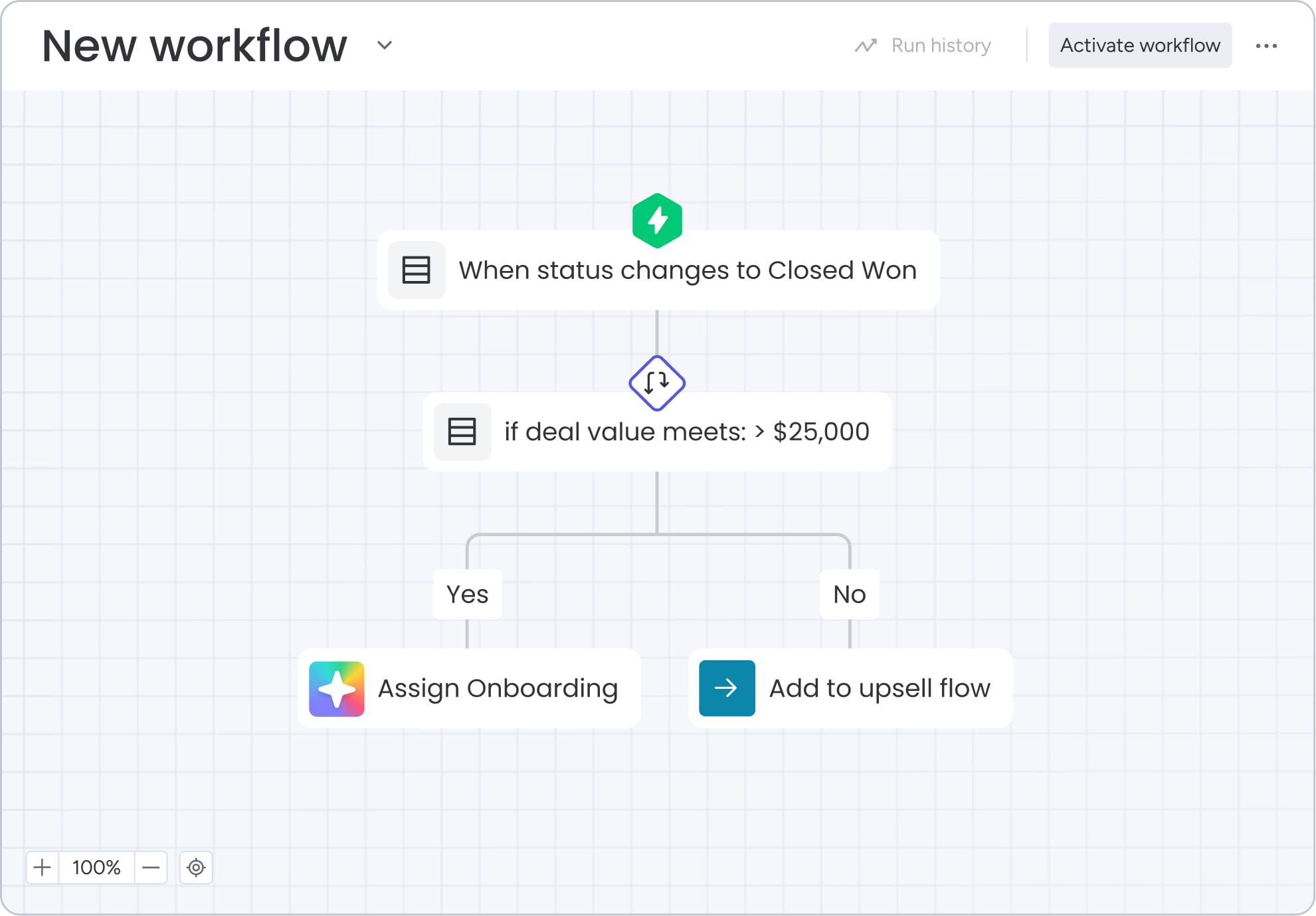
The workflows follow the same logic. CRM workflows revolve around moving deals through a pipeline: a lead enters the system, gets qualified, receives a proposal, negotiates terms, and closes. ERP workflows revolve around fulfilling orders and managing resources: a purchase order gets created, approved, sent to a vendor, received, and paid.
4. Business outcomes and KPIs
CRM and ERP measure success with different metrics because they drive different outcomes. Understanding these differences helps leaders choose the right system for their most urgent challenges.
| KPI category | CRM metrics | ERP metrics |
|---|---|---|
| Revenue | Win rates, average deal size, customer acquisition cost | Cost of goods sold, gross margin |
| Velocity | Pipeline velocity, sales cycle length | Order fulfillment time, inventory turnover |
| Forecasting | Forecast accuracy, pipeline coverage | Cash flow projections, budget variance |
| Efficiency | Rep productivity, activities per deal | Days payable/receivable, resource utilization |
A CRO reviews pipeline reports to forecast next quarter’s revenue. A CFO reviews financial statements to assess profitability and cash position. These different metrics reflect each system’s purpose.
ERP vs. CRM implementation comparison
Cost and implementation complexity are critical factors when choosing between ERP and CRM. Both vary widely based on business size, industry, and customization needs — but the general patterns differ significantly. Here’s what to expect before you commit.
Typical ERP implementation: Timeline and cost
ERP implementations are substantial undertakings that require significant time and financial investment. The exact timeline and budget vary widely depending on business size, industry complexity, customization requirements, and vendor selection. These implementations reflect the complexity of integrating multiple departments, migrating years of financial data, and ensuring regulatory compliance.
ERP implementations take longer because they touch every operational function:
- Finance, operations, procurement, HR, and warehouse teams all need to adopt new processes simultaneously.
- Data migration requires cleaning and validating historical records that affect financial reporting and compliance.
- Testing must verify that transactions flow correctly across all modules before go-live.
Common cost drivers include software licenses, implementation services, data migration, training and change management, and ongoing support. Organizations often underestimate the internal time required, as key employees spend significant hours on requirements gathering, testing, and change management.
Typical CRM implementation: Timeline and cost
CRM implementations generally require less time and investment than ERP systems, though the exact scope varies depending on business needs, customization requirements, and vendor selection. The narrower focus on sales team workflows and simpler data migration requirements typically results in faster deployment.
CRM implementations move faster because they primarily affect one department:
- Sales teams adopt new processes while other departments continue operating normally.
- Data migration involves contact records and deal history rather than complex financial transactions.
- Testing focuses on pipeline workflows and reporting rather than cross-functional integrations.
Revenue teams find real value in monday CRM here: intuitive interfaces and flexible workflows mean teams configure their own pipelines, automations, and reports without waiting for technical resources — reducing both implementation time and cost.
Try monday CRMHidden costs of running separate ERP and CRM systems
Beyond software licenses and implementation services, disconnected ERP and CRM systems can create ongoing operational costs. These costs often show up as duplicate data entry, integration maintenance, reporting delays, and preventable fulfillment errors.
- Manual data entry and reconciliation: Sales teams manually update order details in both systems, doubling data entry work and introducing errors. When a deal closes in CRM, someone must re-enter customer and order information in ERP.
- Integration and middleware expenses: Custom integrations between ERP and CRM require development resources to build and ongoing maintenance to keep working. Third-party middleware tools add subscription costs and create additional points of failure.
- Delayed order fulfillment: Lack of real-time sync between sales and operations causes errors and delays. Sales promises delivery dates without visibility into inventory.
- Reporting complexity: Finance and sales teams work from different data sources, making it difficult to reconcile revenue reports. Leadership spends time investigating discrepancies instead of making decisions.
Once the cost of disconnected systems becomes clear, the next question is how ERP and CRM systems should share data.
How ERP and CRM systems integrate
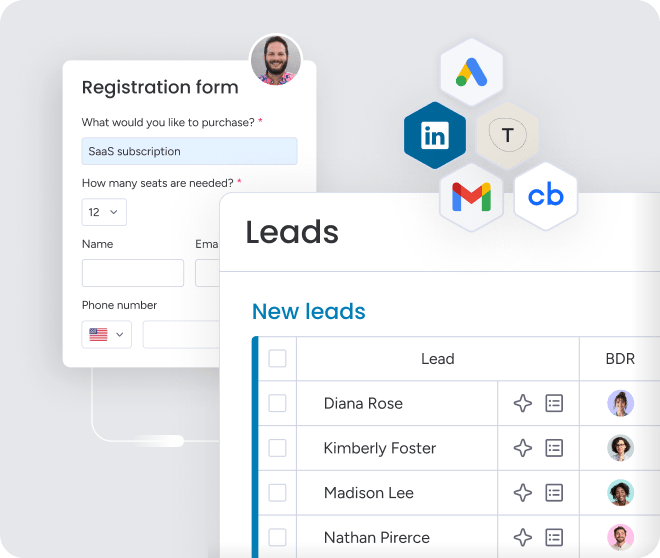
Most businesses eventually need both ERP and CRM, and integration between the 2 systems is critical for seamless operations. Integration bridges customer-facing and back-office processes, eliminating manual handoffs and ensuring both systems reflect accurate, up-to-date information. Here’s how it works in practice.
Common data flows between ERP and CRM
When ERP and CRM systems integrate properly, data flows automatically between them at key points in the customer lifecycle. These are the most common data flows to plan for:
- Customer and account data: CRM pushes new customer records to ERP when deals close, creating the billing and invoicing records needed for fulfillment.
- Order and quote information: CRM sends closed deals to ERP for order fulfillment, including product details, quantities, pricing, and delivery requirements.
- Inventory and pricing data: ERP provides real-time stock levels and pricing to CRM so sales reps know what’s available and at what cost.
- Invoice and payment status: ERP updates CRM with payment history and outstanding balances so sales and service teams see the full financial picture.
- Shipping and delivery updates: ERP sends fulfillment status back to CRM so customer-facing teams can provide accurate delivery information.
Integration approaches and APIs
Several approaches exist for connecting ERP and CRM systems, each with different trade-offs. The right choice depends on your technical resources, budget, and how much customization you need.
- Native integrations: Built by vendors, these offer the easiest setup when available. If the ERP and CRM vendors have a partnership or the same parent company, pre-built connectors handle common data flows.
- Third-party middleware: Platforms like Zapier, Workato, or Celigo provide pre-built connectors for popular systems and visual tools for mapping data flows. Middleware is fast to set up and doesn’t require developer resources, but adds subscription costs.
- Custom API integrations: These offer full control over data flows and business logic. Development teams build exactly what the business needs, handling edge cases and custom requirements.
- Faster order processing: Closed deals automatically trigger fulfillment workflows in ERP. No manual handoff, no re-keying data, no delays.
- Accurate forecasting: Finance teams access real-time sales pipeline data for revenue planning. CFOs see not just closed revenue but committed pipeline.
- Reduced errors: Automated data sync eliminates manual entry mistakes. Customer information, pricing, and order details match across systems.
- Stronger customer experience: Service teams provide accurate delivery and billing information because they see ERP data in CRM.
How to choose between ERP, CRM, or both
The right choice depends on which business problems are most urgent. Rather than a one-size-fits-all recommendation, this decision framework helps mid-market leaders assess their specific situation. Ask yourself: what’s breaking down first — revenue generation or operational execution?
When to prioritize CRM first
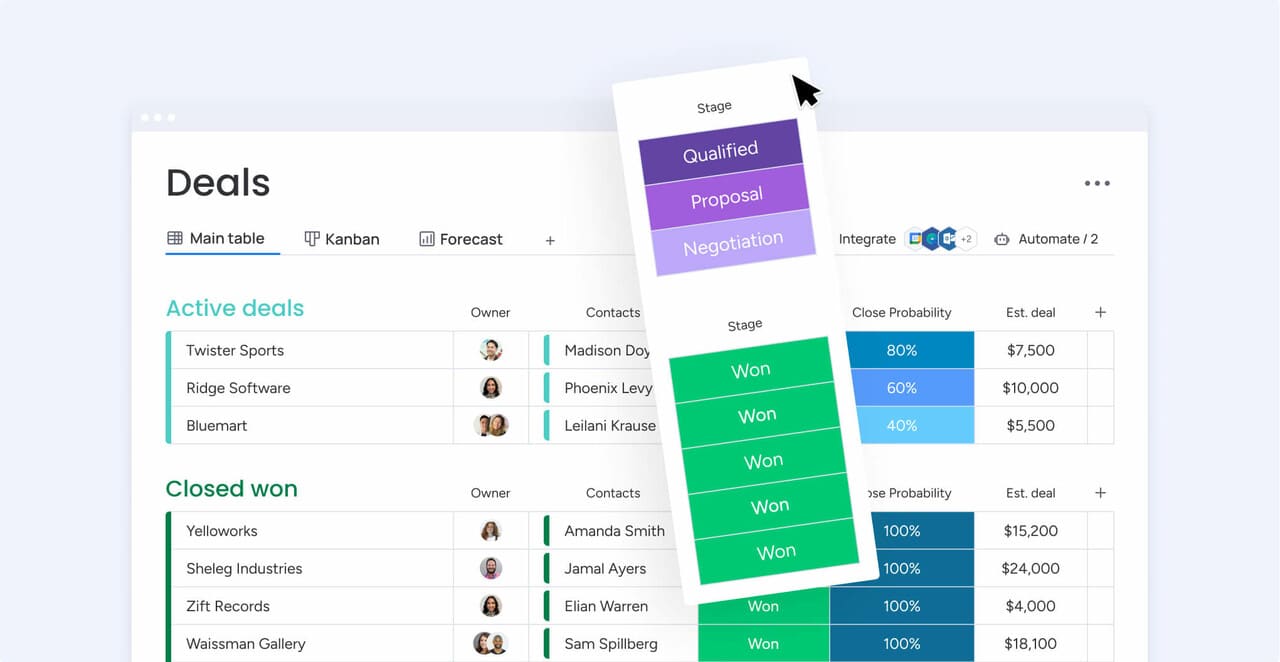
CRM should be the first priority when revenue growth and sales efficiency are the most pressing challenges. These symptoms indicate CRM is the urgent need:
- Sales processes are manual, disorganized, or rely on spreadsheets that different reps maintain differently.
- Revenue teams lack visibility into pipeline health, making forecast accuracy unreliable.
- Customer data is scattered across email inboxes, spreadsheets, and individual notes with no single source of truth.
- Sales and marketing teams struggle to collaborate, with leads falling through cracks during handoffs.
- Leadership can’t answer basic questions about pipeline value, win rates, or sales cycle length.
Businesses facing these challenges should implement CRM first because it directly impacts revenue and requires less complex implementation than ERP. A sales team using spreadsheets can be running on CRM within weeks, immediately gaining visibility and control over customer relationships.
monday CRM offers an intuitive, flexible option for teams that need powerful CRM capabilities without the complexity of legacy systems. Implementation happens in days or weeks rather than months, and teams configure their own workflows without waiting for IT resources.
When to prioritize ERP first
ERP should be the first priority when operational control and efficiency are the most pressing challenges. These symptoms indicate ERP is the urgent need:
- Inventory management is chaotic, leading to stockouts that lose sales or overstock that ties up cash.
- Financial reporting is slow, manual, or error-prone, making it difficult to close books or satisfy auditors.
- Operations teams lack visibility into supply chain and fulfillment processes, causing delays and customer complaints.
- The business is scaling rapidly and outgrowing spreadsheets for tracking inventory, orders, and finances.
- Compliance requirements demand audit trails and controls that manual processes can’t provide.
Businesses facing these challenges should implement ERP first to gain operational control and ensure compliance. This is especially critical for businesses with complex supply chains, manufacturing operations, or multi-location operations.
When you need both ERP and CRM
Some businesses reach a point where both systems are necessary and integration between them becomes critical. These are the signs you’ve hit that stage:
- Sales teams need real-time inventory and pricing data to close deals accurately and avoid overpromising.
- Operations teams need visibility into sales pipeline to plan production and fulfillment capacity.
- Finance teams need accurate revenue forecasts based on sales pipeline data for budgeting and cash flow planning.
- Customer service teams need access to order status, billing, and delivery information to resolve issues quickly.
- Manual handoffs between sales and operations create delays, errors, and customer complaints.
AI doesn’t eliminate the need to choose the right system, but it can make connected systems easier to use. The more your CRM and ERP share data, the more useful AI becomes for forecasting, alerts, summaries, and cross-functional workflows.
Run sales and operations on one flexible platform with monday CRM
monday CRM offers a flexible, integrated platform that bridges the gap between CRM and operational workflows. Unlike rigid legacy systems that require heavy IT involvement and months of implementation, monday CRM adapts to how teams actually work.
A flexible CRM your team will actually use
monday CRM delivers powerful CRM capabilities with an intuitive, customizable interface that teams adopt quickly. Here’s what that means in practice:
- Visual pipeline management: See every deal at a glance, without digging through spreadsheets or chasing updates.
- Customizable workflows: Adapt to existing sales processes rather than forcing teams to change how they work.
- No-code customization: Sales managers configure their own views, automations, and reports without waiting for technical resources.
For mid-market revenue teams struggling with lack of predictability and poor efficiency, monday CRM provides the visibility and control needed to forecast accurately and close deals faster. Leaders see real-time pipeline data, identify bottlenecks, and allocate resources based on what’s actually happening.
AI agents that work across the customer journey
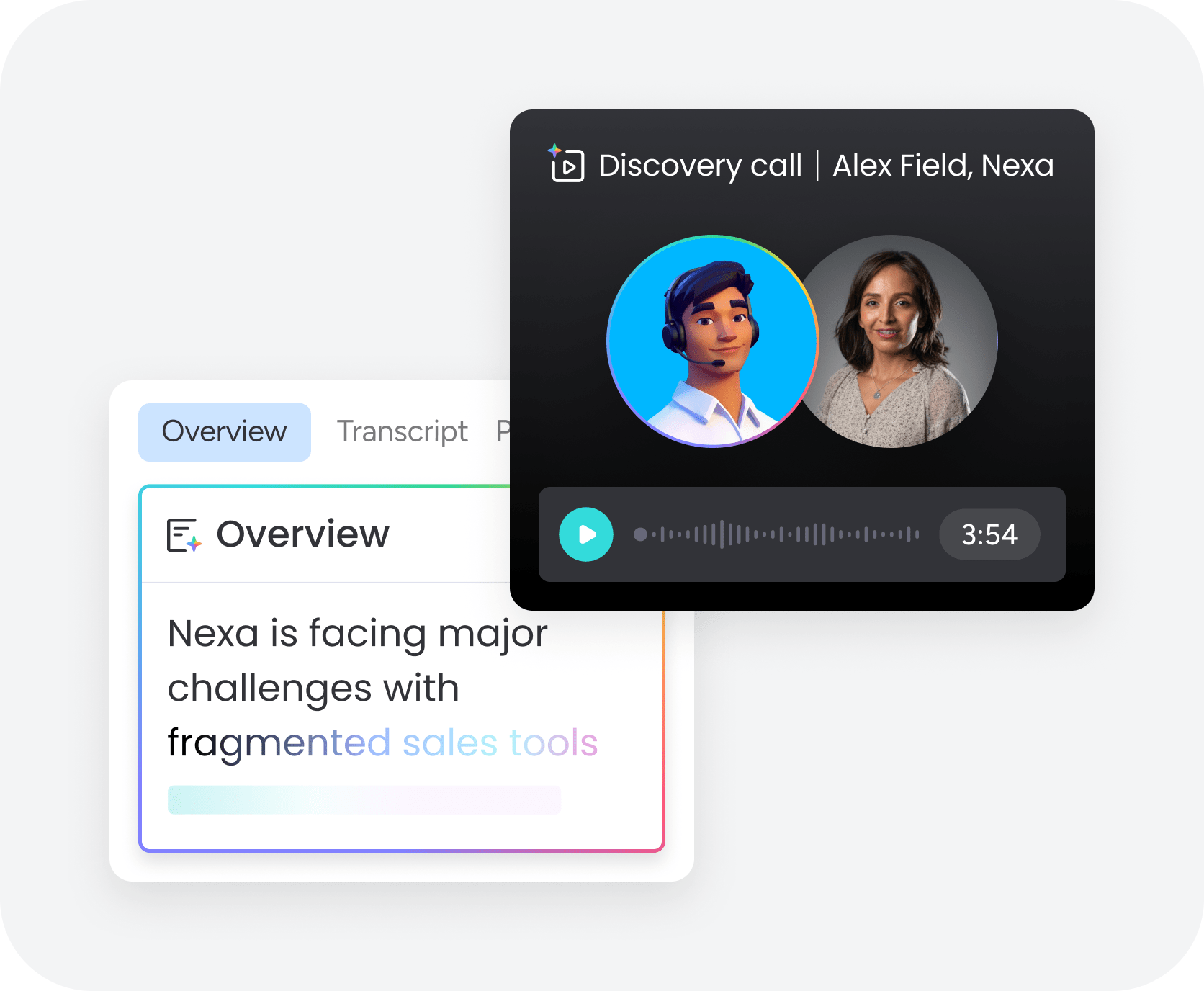
monday CRM’s AI capabilities help teams automate repetitive tasks, surface insights, and take action across the entire customer journey. AI Blocks categorize leads automatically, summarize customer interactions, and extract actionable insights from emails and documents.
AI agents like Sales Advisor and Deal Facilitator go further:
- Sales Advisor: Suggests next steps based on deal stage and customer behavior.
- Deal Facilitator: Automatically schedules follow-ups, sends reminder emails, and flags deals that need attention.
Build the operations apps you need with monday vibe
monday vibe enables teams to build custom apps that extend monday CRM’s capabilities to support operational workflows without writing code. A custom dashboard might show sales pipeline alongside inventory levels, giving leaders unified visibility without logging into multiple systems.
This approach reduces dependence on expensive ERP modules or custom development. Teams build exactly what they need, iterate quickly based on feedback, and adapt as requirements change.
Connect every tool in your stack
monday CRM integrates with 200+ tools and supports open APIs, making it easy to connect CRM data with ERP systems, marketing platforms, and other business tools. monday CRM also supports MCP (Model Context Protocol), enabling AI assistants to access and act on CRM data alongside information from other systems.
“With monday CRM, we’re finally able to adapt the platform to our needs — not the other way around. It gives us the flexibility to work smarter, cut costs, save time, and scale with confidence.”
Samuel Lobao | Contract Administrator & Special Projects, Strategix
“Now we have a lot less data, but it’s quality data. That change allows us to use AI confidently, without second-guessing the outputs.”
Elizabeth Gerbel | CEO
“Without monday CRM, we’d be chasing updates and fixing errors. Now we’re focused on growing the program — not just keeping up with it."
Quentin Williams | Head of Dropship, Freedom Furniture
“There’s probably about a 70% increase in efficiency in regards to the admin tasks that were removed and automated, which is a huge win for us.“
Kyle Dorman | Department Manager - Operations, Ray White
"monday CRM helps us make sure the right people have immediate visibility into the information they need so we're not wasting time."
Luca Pope | Global Client Solutions Manager at Black Mountain
“In a couple of weeks, all of the team members were using monday CRM fully. The automations and the many integrations, make monday CRM the best CRM in the market right now.”
Nuno Godinho | CIO at Velv
“monday.com provides developmental flexibility, operational efficiency, and data transparency — all in one place. We became a company that moved from chasing data to leading with it.”
Hyunghan Lee | Team Lead, Sandbox Network
"monday.com brought every part of our business into one connected space. The harmony between work management and CRM has become our operating system — giving us the clarity and confidence to scale.”
Jennifer Chinburg | Executive Vice President of Corporate Development & Brand, Chinburg Properties
“We just weren’t getting value from our old CRM. With monday.com, it's a thousand times better. Our sales teams are more informed, more consistent, and far more connected."
James Arnold | Chief Operating Officer, CenversaERP vs CRM: Make the right call for your business
Choosing between ERP and CRM doesn’t have to be complicated. Start with the problem that’s costing you the most right now. If your revenue team is flying blind — no pipeline visibility, no forecast accuracy, no shared customer data — CRM is the move. If your operations are breaking under the weight of manual processes, inventory chaos, or compliance gaps, ERP comes first.
Most growing businesses eventually need both. The key is sequencing the investment correctly and ensuring the 2 systems share data rather than creating new silos. Integration isn’t a nice-to-have; it’s what turns 2 separate tools into one connected revenue and operations engine.
For teams that want to move fast without sacrificing flexibility, monday CRM offers a practical starting point. It’s built for revenue teams that need real visibility and control — without the months-long implementation or the IT dependency.
Try monday CRMFAQs
Is Salesforce a CRM or ERP?
Salesforce is primarily a CRM platform designed for managing customer relationships, sales pipelines, and marketing campaigns. While Salesforce offers some operational features through add-ons and acquisitions, it is not a full ERP system and doesn't provide the financial management, inventory control, or manufacturing capabilities that define ERP.
What are the top 3 ERP systems?
The top 3 ERP systems are SAP (enterprise-grade ERP for large organizations with complex global operations), Oracle NetSuite (cloud-native ERP popular with mid-market companies), and Microsoft Dynamics 365 (integrated ERP/CRM suite for organizations in the Microsoft ecosystem). The right choice depends on business size, industry requirements, and existing technology infrastructure.
Can a CRM replace an ERP?
A CRM cannot fully replace an ERP because they serve different purposes. CRM manages customer-facing activities while ERP manages back-office operations like finance, inventory, and supply chain. However, flexible platforms like monday CRM enable teams to extend CRM capabilities into operational workflows through custom apps and integrations, reducing the need for a separate ERP system in some scenarios.
Which should a small business implement first, ERP or CRM?
Small businesses should typically implement CRM first if their priority is driving revenue growth and improving sales efficiency. CRM delivers faster ROI because it directly impacts revenue and requires less complex implementation than ERP. ERP becomes necessary when operational complexity — such as inventory management, multi-location operations, or complex financials — outgrows spreadsheets and manual processes.
What is the difference between ERP, CRM, and SCM?
ERP manages back-office operations including finance, inventory, and HR. CRM manages customer relationships including sales, marketing, and service. SCM (Supply Chain Management) focuses specifically on procurement, logistics, and supplier relationships. SCM is often a module within ERP systems but can also be a standalone tool for businesses with complex supply chain requirements.
How do ERP and CRM differ from a Work OS?
A Work OS (like monday.com) is a flexible platform that enables teams to build custom workflows for any business process, including CRM, project management, and operational tasks. Unlike rigid ERP and CRM systems with pre-built modules, a Work OS adapts to how teams work rather than forcing teams to adapt to the software.
How does monday CRM help teams manage both sales and operations?
monday CRM combines flexible CRM workflows with customizable apps (via monday vibe) and AI-powered automations, enabling teams to manage customer relationships and operational processes in one platform. Teams can build custom dashboards that show sales pipeline alongside operational data, create apps that automate cross-functional workflows, and connect with other business tools through 200+ integrations.
