


A PMO (project management office) transforms how organizations deliver projects by creating a centralized layer that connects strategy to execution. It standardizes processes, aligns initiatives with business goals, and gives leadership real-time visibility into portfolio health, turning project chaos into coordinated progress.
This article breaks down what a PMO is, the different types and roles involved, and how to build one from scratch. You’ll discover practical steps to establish a high-performing PMO, the measurable benefits it delivers, and how modern platforms like monday AI Workspace give PMOs the intelligence and automation they need to operate at scale.
Key takeaways
- PMOs centralize governance and drive accountability: A PMO (project management office) is a centralized function that standardizes project governance, aligns initiatives to strategy, and drives accountability across an organization.
- Different PMO types fit different maturity levels: There are several PMO types (supportive, controlling, directive, and hybrid), each suited to different organizational maturity levels.
- PMOs deliver measurable ROI: PMOs deliver measurable ROI through improved resource allocation, reduced project failure rates, and faster delivery.
- Building a PMO requires 5 key steps: Building a PMO requires assessing organizational needs, defining its mandate, choosing the right technology, assembling the right roles, and measuring success with specific KPIs.
- AI platforms elevate PMO capabilities: AI-powered platforms like monday AI Workspace give PMOs real-time visibility, automated risk detection, and intelligent reporting at scale.
What does PMO mean?
In project management, PMO stands for project management office, which is a team or department that supports project management activities across an organization. It develops standards, processes, and tools to guide how projects are planned, executed, and measured. Acting as a centralized hub, the PMO handles project documentation, performance metrics, and coordination to streamline project operations.
A PMO bridges the gap between strategic plans and project execution. It provides the structure and resources that enable program managers and project teams to manage priorities, track progress, and maintain consistency across efforts.
Key objectives of a PMO include:
- Defining structured processes that support project planning and delivery
- Offering a centralized view of project performance, resource allocation, and risks
- Optimizing resource use across projects to avoid inefficiencies and delays
- Translating organizational priorities into actionable plans that deliver measurable results
In larger organizations, PMOs play a critical role in managing diverse portfolios, supporting complex projects, and aligning efforts across departments to achieve strategic goals.
PMO vs. project manager
A project manager oversees the success of an individual project, while a PMO focuses on broader organizational oversight. Their responsibilities differ in scope and impact.
| Aspect | Project manager | PMO |
|---|---|---|
| Focus | Manages one project's scope, timeline, and budget | Aligns projects with organizational goals and strategic objectives |
| Responsibility | Oversees individual project timelines, budgets, and delivery | Manages multi-project portfolios for strategic alignment |
| Role | Handles day-to-day operations for a specific project | Provides high-level oversight and strategic alignment across projects |
A PMO enhances project success by promoting consistency, offering training, and allocating resources efficiently. These functions improve organizational alignment and the execution of projects.
Typical roles in a project management office (PMO)
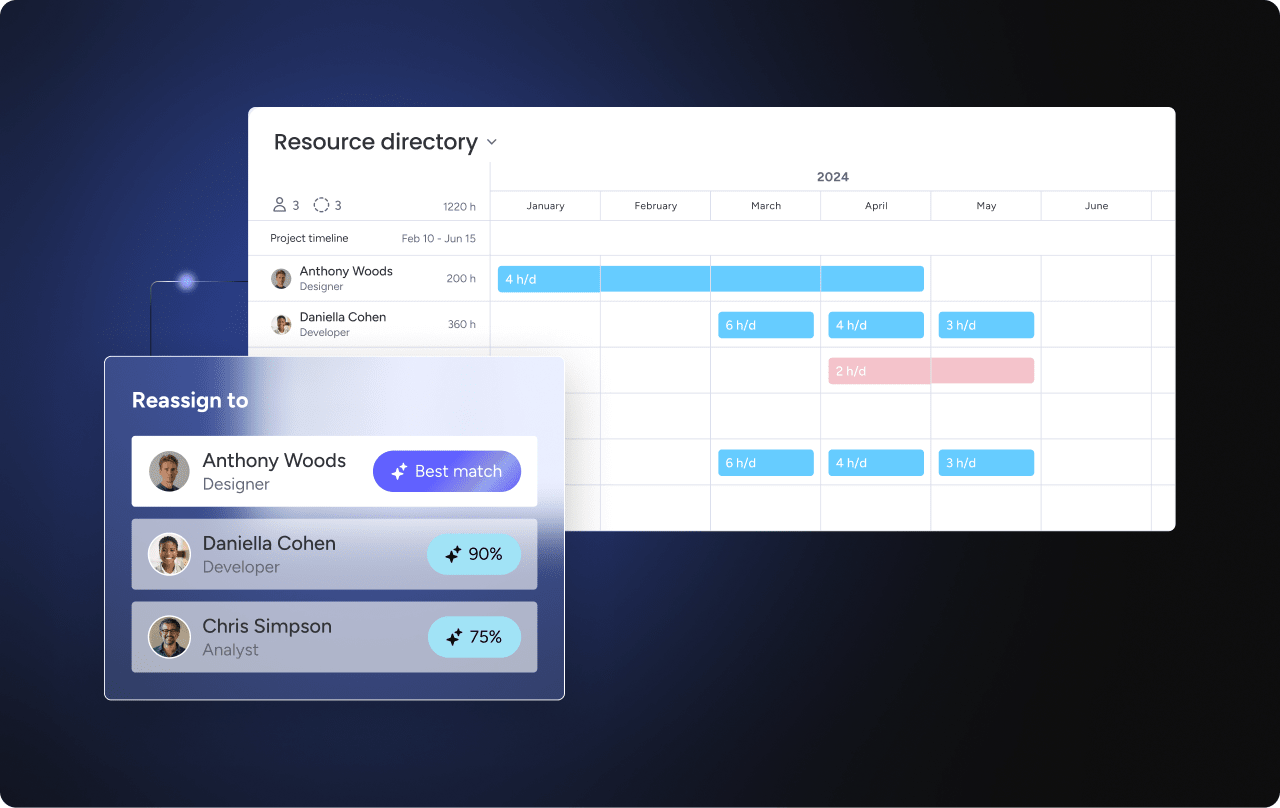
A PMO establishes structure by assigning roles that support project management processes. These roles are central to achieving project goals, driving execution, and managing shared resources.
- Strategic planners: Set priorities and long-term objectives to support senior management in achieving overarching strategies.
- Resource managers: Manage the allocation of personnel, tools, and budgets to reduce inefficiencies and optimize resource use.
- Risk managers: Identify potential risks and implement strategies to mitigate disruptions, keeping project timelines on schedule.
- Portfolio managers: Oversee groups of related projects, providing visibility into progress, resource allocation, and risks to support informed decisions.
- Business analysts: Analyze data and provide recommendations to improve performance and align projects with organizational objectives.
- PMO process specialists: Maintain consistency in project management processes, offering training and support to strengthen adherence to established standards.
- Project portfolio managers (PPM): Review completed projects to identify opportunities for improvement and align future projects with strategic goals.
- Knowledge management staff: Organize and maintain databases of methodologies, project standards, and lessons learned to enhance operational efficiency over time.
- Administrative support staff: Coordinate meetings, generate reports, and manage tools to keep PMO operations running smoothly.
Types of PMOs
PMOs can be structured in different ways to meet the specific needs of various types of organizations. Below are the primary types:
| PMO type | Primary focus | Best suited for | Example |
|---|---|---|---|
| Organizational unit PMO | Supports projects within a specific department or business unit | Organizations that need specialized project support within individual functions | A marketing PMO managing campaigns and initiatives |
| Project-specific PMO | Provides temporary oversight for a major project or program | Large, complex, or high-risk initiatives requiring dedicated governance | A PMO created for a multi-year system implementation |
| Enterprise PMO | Coordinates governance, resources, and portfolios across the organization | Larger organizations managing projects across multiple departments | An enterprise PMO coordinating initiatives across all business units |
| Center of Excellence | Builds project management maturity through standards, training, and best practices | Organizations seeking to strengthen project management capabilities across teams | A center providing workshops, methodologies, and project resources |
| Supportive PMO | Provides templates, resources, and guidance while giving teams flexibility | Experienced teams that need light governance | A PMO providing optional templates and consulting support |
| Controlling PMO | Establishes standards and monitors adherence | Organizations requiring stronger consistency and compliance | A PMO requiring standardized reporting and stage-gate reviews |
| Directive PMO | Directly manages projects and project teams | Organizations requiring centralized project control | A PMO assigning project managers and overseeing delivery |
| Hybrid PMO | Combines different levels of governance based on project needs | Organizations using multiple methodologies or managing projects with different risk levels | A PMO using lightweight governance for agile teams and stricter controls for major capital projects |
It’s worth noting that different frameworks categorize PMOs differently. The Association for Project Management (APM), for instance, uses an embedded, central, and hub-and-spoke taxonomy. The right classification matters less than choosing a structure that matches your organization’s size, culture, and strategic goals.
What does a PMO do?
A PMO contributes to project success by aligning initiatives with business goals and creating consistency in project operations. Research from PMI shows that organizations with mature PMO functions complete 33% more projects on time and 27% more within budget compared to those without one. Its core functions include:
Standardization of project management practices
PMOs define and implement standards for project management to create cohesive workflows across the organization. This goes beyond simple templates. It means establishing governance frameworks that include project charters, stage-gate reviews, status cadences, and escalation paths. Key activities include:
- Documenting project steps, scope, and milestones in a centralized project repository
- Monitoring metrics and progress to keep projects on schedule
- Managing resources, such as personnel, budgets, and tools, to maximize their impact
- Identifying and mitigating project risks early to maintain control over projects
Training and mentoring
PMOs provide structured guidance, tools, and project management methodologies to equip teams with the skills needed for successful delivery and consistent results. This includes onboarding new project managers, running methodology workshops, and maintaining a knowledge base of lessons learned from past projects.
Effective training programs also help organizations build internal project management maturity over time. Rather than relying on external consultants for every new initiative, teams develop the skills and confidence to manage increasingly complex work independently.
Resource allocation
PMOs oversee the sharing of resources across a portfolio of projects, prioritizing based on organizational objectives. This resource management approach reduces waste and enhances financial accountability. Organizations that implement structured resource management through their PMO save an average of 3,564 hours per year by eliminating duplicated effort and optimizing capacity planning.
Risk management

PMOs proactively identify and address project risks across ongoing projects. Effective PMO risk management includes maintaining risk registers, conducting regular portfolio-level risk reviews, and establishing mitigation plans before issues escalate.
Reporting and visibility
How confident is your leadership team in the accuracy of project status reports? PMOs provide a single source of truth through real-time dashboards and executive-level reporting. Instead of relying on manual status updates collected across email threads and spreadsheets, a mature PMO delivers live portfolio insights — including schedule health, budget burn, resource utilization, and risk exposure.
Portfolio management

PMOs prioritize and organize a portfolio of projects in alignment with business goals. The portfolio management role provides leadership with visibility into ongoing projects and informs decisions about resource distribution and organizational strategy. By connecting individual projects to strategic objectives and OKRs, the PMO ensures every initiative contributes to the broader mission.
Benefits of a PMO
What’s the real return on investing in a project management office? The data paints a compelling picture. Organizations with established PMO functions consistently outperform their peers across project delivery, resource efficiency, and strategic outcomes. Here are the most impactful benefits:
- Improved project success rates: According to PMI data, organizations with mature PMOs complete significantly more projects on time and within budget. The difference isn’t marginal; it’s the gap between a portfolio that delivers value and one that burns resources without returns.
- Stronger resource utilization: Effective PMO-driven resource management saves an average of 3,564 hours per year and improves headcount planning accuracy by up to 46%. That translates to fewer bottlenecks, less bench time, and more productive allocation of your most valuable asset: people.
- Strategic alignment: Without a PMO, it’s easy for “pet projects” to consume resources while high-priority initiatives stall. A PMO connects every project to business goals, ensuring leadership invests in the right work at the right time.
- Organizational visibility: Leadership gets a consolidated view of every active initiative (progress, risks, dependencies, and resource health) in one place. No more chasing down status updates from individual project managers.
- Risk reduction: By identifying schedule, dependency, and budget risks at the portfolio level, PMOs catch problems before they become crises. Early detection translates directly into fewer failed projects and fewer costly surprises.
- Measurable cost savings and ROI: According to Forrester’s Total Economic Impact study, organizations using monday AI Workspace for PMO operations realized a 346% ROI with a payback period of less than 4 months. Even beyond platform-specific results, PMOs consistently demonstrate positive ROI by reducing project waste and accelerating delivery.
Beyond these individual benefits, the compounding effect matters. When a PMO improves resource utilization, project success rates go up. When success rates go up, stakeholder confidence grows. When stakeholder confidence grows, the PMO earns more strategic authority, creating a cycle that elevates the entire organization’s project delivery capability.
How to establish a PMO in 5 steps
Creating a PMO requires strategic planning and alignment with organizational objectives. The process doesn’t have to be complex, but it does need to be deliberate. Organizations that invest time in establishing the right foundation see faster adoption, stronger leadership support, and measurable results within the first quarter. Follow these steps:
1. Assess your organization’s needs
Evaluate challenges such as inconsistent project processes, inefficient PMO resource management, and limited visibility into current projects. Use these insights to define the PMO’s purpose and scope.
Start by auditing your current project landscape. How many active projects does your organization run simultaneously? What percentage finish on time and within budget? Where do handoffs break down? This assessment determines whether you need a supportive PMO that provides guidance or a controlling PMO that enforces standards, or a hybrid model that blends both.
2. Define the PMO’s purpose and scope
Clarify the PMO’s objectives and how it will contribute to business goals. Determine if the PMO will focus on standardizing project processes, resource management, or aligning strategies, and decide whether it will serve specific departments or the entire organization.
Document this mandate formally. A PMO charter should specify the function’s authority level, the portfolio it governs, its reporting structure, and the governance artifacts it will produce, such as project charters, stage-gate criteria, and status report templates. Planning for maturity is important here: most successful PMOs start with administrative functions and evolve toward strategic partnership over 12 to 18 months.
3. Select the right tools

Adopt tools that improve collaboration, visibility, and resource management:
- Dashboards for tracking project progress and risks across the entire portfolio
- Automation features to simplify repetitive tasks like status collection and approval routing
- Resource planning tools to allocate and track resources efficiently across competing priorities
When evaluating PMO platforms, look for 5 capabilities: portfolio-level visibility, integrated resource management, real-time reporting, workflow automation, and AI-powered insights. The right platform should also support your governance model with features like managed templates, project intake forms, and approval workflows.
4. Establish roles and responsibilities
Assign specific roles to provide structure and accountability:
- Project coordinators to support operations and daily project management processes
- Strategic planners to align initiatives with business goals
- Risk managers to identify and address project risks effectively
Responsibilities should align team members with the PMO’s processes, improving project outcomes. Staffing depends on your PMO type. A supportive PMO might start with 2 or 3 people, while an enterprise PMO could require a full team spanning governance, analytics, and resource management functions.
5. Measure success with KPIs
Set metrics to evaluate the PMO’s impact. Effective KPIs go beyond basic completion rates. Consider tracking:
- On-time delivery rate: Percentage of projects completed within their original timeline
- Resource utilization: Ratio of billable or productive hours to total available capacity
- Budget adherence: Variance between planned and actual spend across the portfolio
- Portfolio ROI: Financial return generated by completed projects relative to investment
- Stakeholder satisfaction: Scores from regular surveys measuring confidence in PMO value
Regular tracking of your key performance indicators (KPIs) helps refine project management methodologies and maintain alignment with organizational objectives. Review these metrics monthly and adjust your PMO’s approach based on what the data reveals.
6 common challenges facing PMOs
Establishing a PMO can improve organizational efficiency, but it often comes with challenges. Addressing these obstacles early helps create a strong foundation for success.
1. Resistance to change
Employees accustomed to current workflows often hesitate to adopt new processes.
Solution: Secure executive sponsorship first, then deliver quick wins that prove the PMO’s value immediately. Real-time dashboards that surface portfolio health data to leadership demonstrate impact within weeks, making it easier to build momentum for broader adoption.
2. Lack of stakeholder buy-in
A PMO may face difficulties aligning projects with business objectives without leadership backing.
Solution: Real-time dashboards and transparent reporting help demonstrate progress, building trust and securing alignment with organizational goals. When leadership can see project status, resource allocation, and risk data without asking for updates, the PMO becomes indispensable.
3. Inefficient resource utilization
Poorly managed resources lead to delays, missed deadlines, and increased costs.
Solution: Capacity management tools that show availability across projects in real time eliminate the guesswork. Instead of relying on spreadsheets and verbal check-ins, teams can see who’s overloaded and who has bandwidth, and rebalance accordingly.
4. Scope creep
Uncontrolled changes to project requirements disrupt timelines and budgets, undermining project control.
Solution: Standardized change request processes and automated approval workflows prevent scope changes from happening without proper review. A governance framework that requires documented justification for every change protects both timelines and budgets.
5. Inadequate authority
PMOs that lack decision-making power struggle to enforce project standards or allocate resources effectively.
Solution: The PMO charter should define authority levels explicitly. When the PMO has a mandate from executive leadership, with documented escalation paths and decision rights, it can enforce standards without friction.
6. Communication gaps
Inefficient communication between the PMO, project coordinators, and teams can result in misaligned goals and delayed execution.
Solution: Automated status reporting replaces the burden of manual update collection. When project data flows into centralized dashboards automatically, everyone works from the same information, and PMO staff can focus on analysis rather than data gathering.
The future of PMOs: AI, data, and Agile approaches
The role of the PMO is shifting. What was once viewed as an administrative function focused on templates, status reports, and process compliance is evolving into a strategic capability that drives competitive advantage. Here’s where the most significant changes are happening:
AI-powered project management
AI is transforming how PMOs detect and respond to risk, generate reports, and analyze portfolio data. Instead of relying on project managers to manually flag issues in weekly status meetings, AI operations agents and project management agents can continuously monitor schedule health, workload distribution, and dependency chains, surfacing risks before they impact delivery. Automated status reporting eliminates hours of manual data collection, generating executive-ready updates from live project data.
What does this mean for PMO teams? It means less time spent on administrative overhead and more time spent on strategic decision-making. AI doesn’t replace the PMO. It amplifies its impact.
Data-driven decision making
The shift from gut-feel prioritization to real-time analytics is accelerating. Modern PMOs use predictive insights to forecast resource needs, identify at-risk projects before they derail, and optimize portfolio allocation based on actual performance data rather than assumptions.
This data-driven approach helps PMOs answer the questions leadership cares about most: Are we investing in the right projects? Will we deliver on time? Where should we redirect resources? When portfolio decisions are grounded in real performance data — rather than last month’s spreadsheet, organizations make faster, more confident calls about where to invest and where to cut.
Hybrid and Agile PMOs
The debate between waterfall and Agile isn’t either/or anymore. Most organizations run a mix of both: large capital projects that require structured phases alongside fast-moving initiatives that need iterative flexibility. Hybrid PMOs provide governance frameworks that accommodate both methodologies under one umbrella, with standardized reporting and risk management that works regardless of delivery approach.
The key challenge for hybrid PMOs is maintaining consistent visibility across different methodologies. A sprint-based team measures progress differently than a team running a phased implementation. The most effective hybrid PMOs solve this by standardizing outcomes and milestones at the portfolio level while allowing teams flexibility in how they deliver.
The strategic PMO
Perhaps the most important trend is the PMO’s evolution from administrative overhead to strategic business partner. High-performing PMOs don’t just track projects; they inform strategy. By connecting portfolio performance data to business objectives, mature PMOs help leadership decide which initiatives to fund, which to pause, and where the organization’s biggest opportunities lie.
This evolution follows a maturity model that most PMOs progress through over 12 to 24 months.
- Level 1: The PMO standardizes processes and reporting.
- Level 2: The PMO optimizes resource allocation and begins influencing project prioritization.
- Level 3: The PMO operates as a strategic advisory function, participating in business planning, forecasting portfolio outcomes, and recommending investments based on data.
How monday AI Workspace supports your PMO
AI automation, data-driven decisions, and hybrid governance aren’t theoretical. They’re capabilities that monday AI Workspace delivers today, giving PMOs the structure, visibility, and intelligence they need to operate as a true strategic function.
Portfolio management and visibility
Manage your entire project portfolio from a single, centralized view. Portfolio management features include Gantt charts with dependencies, milestones, critical path analysis, and baseline tracking, so you can see exactly where every initiative stands relative to plan. Aligning strategic initiatives with portfolio outcomes ensures leadership always knows which projects are on track and which need attention.
Resource management
The Resource Directory, Resource Planner, and Capacity Manager work together to give PMOs full control over people and capacity. Assign the right people based on skill and availability, track time against projects, and spot over- or under-utilized resources at a glance. Resource management software like this replaces the spreadsheet-based guesswork that slows most PMOs down.
Governance and standardization
Managed Templates let PMOs enforce consistent project structures across the organization, without locking teams into rigid processes. Combined with automated demand intake (project request forms that route to the right approvers), PMOs can standardize how work enters the portfolio while giving teams flexibility in execution.
Dashboards and reporting
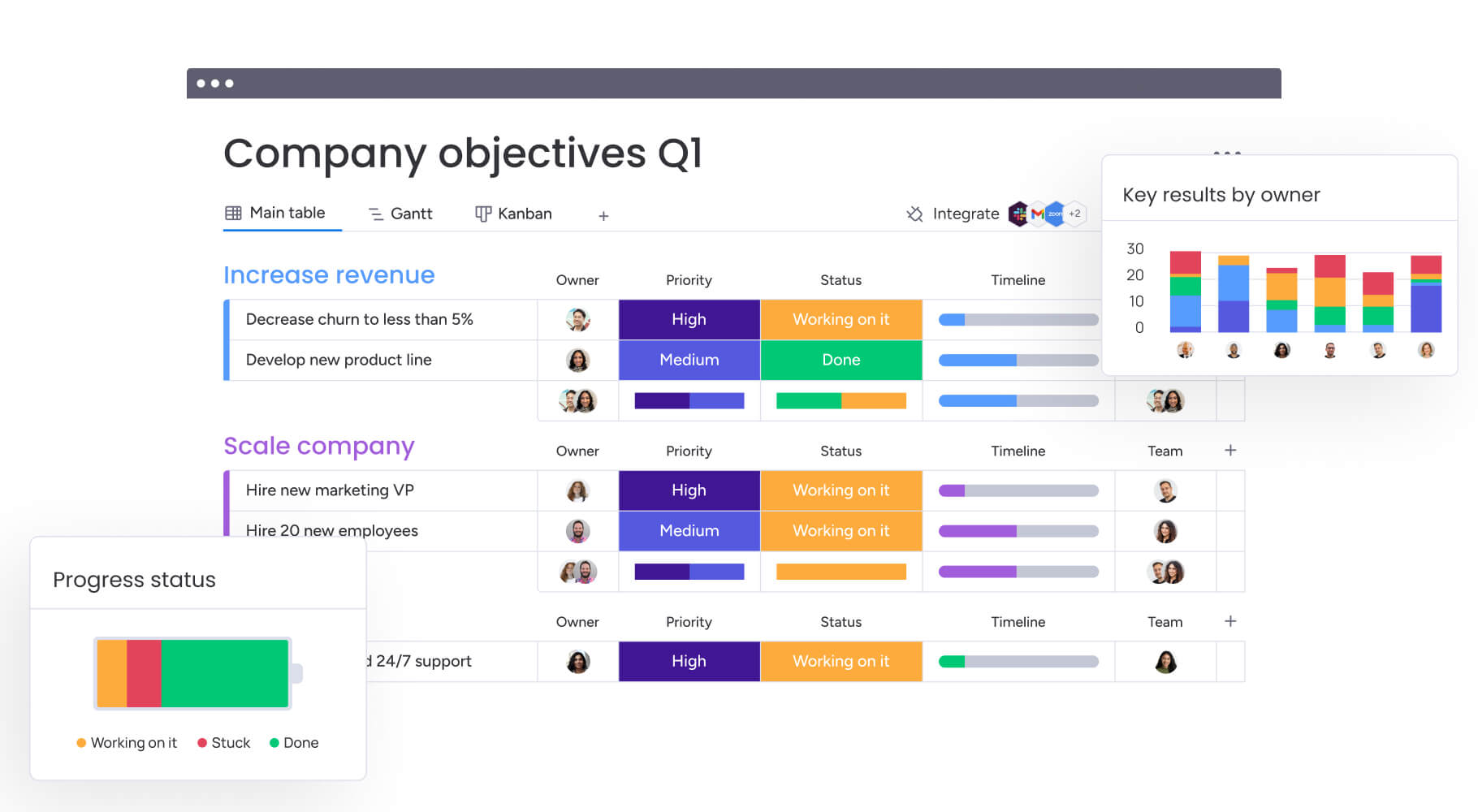 Get customizable dashboards with 10+ drag-and-drop widgets surface the exact data leadership needs, including budget health, schedule status, resource utilization, and risk exposure, updated in real time.
AI agents for PMO
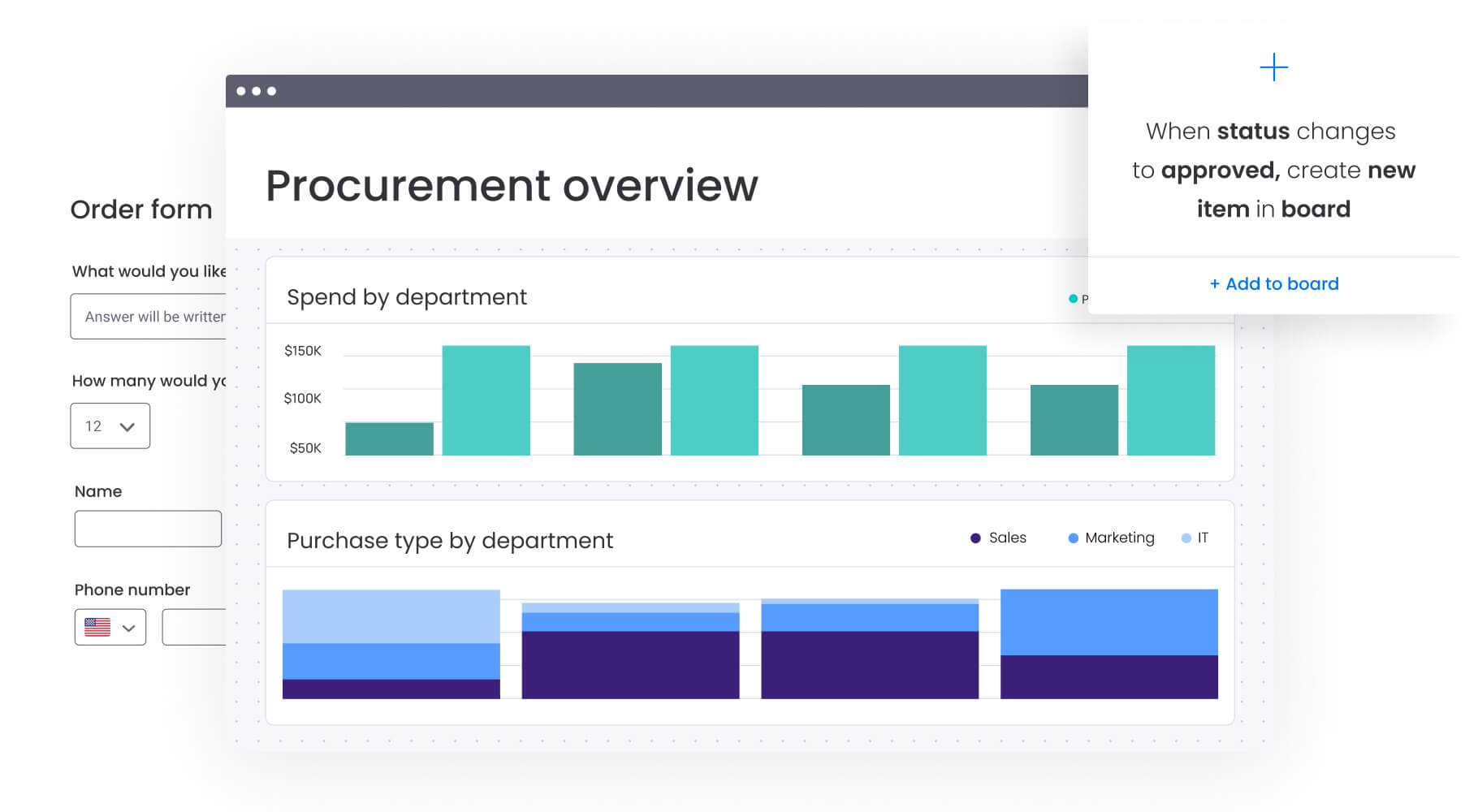 monday AI Workspace includes purpose-built AI agents that handle the work PMOs traditionally spend hours on manually:
- Risk Analyzer: Continuously monitors projects for schedule, dependency, and workload risks, flagging issues before they escalate.
- Status Reporter: Auto-generates project status updates from live data, saving PMO staff from chasing down individual project managers for updates.
These agents run in the background, giving PMOs the kind of proactive oversight that would require a much larger team to achieve manually.
monday sidekick
monday sidekick is a context-aware AI assistant that lives inside your workspace. Ask it to generate a project plan from a brief, analyze portfolio data, summarize risks across active projects, or draft a stakeholder update. It understands your workspace context (boards, timelines, and assignments), so its responses are grounded in your actual data, not generic templates.
For PMO leads, this means instant answers to questions like “Which projects are at risk of missing their Q3 deadline?” or “How is our resource capacity looking for next month?”, without manually pulling data from multiple dashboards.
monday vibe and monday MCP

Need a custom PMO app? monday vibe lets you build it without writing code, from intake dashboards to governance trackers to portfolio review interfaces. And with monday MCP (Model Context Protocol), you can connect external AI tools like Claude and Cursor directly to your workspace, extending what’s possible without waiting for custom development.
Goals and OKRs
Tie every project in your portfolio to measurable strategic objectives. Goals and OKRs on monday AI Workspace connect individual tasks to team-level goals and company-level outcomes, so leadership can see exactly how project execution contributes to business strategy.
Build your PMO on a platform designed for it
A PMO is more than a governance layer. It’s the connective tissue between strategy and execution. Whether you’re establishing a new project management office or evolving an existing one, the right foundation determines how much value your PMO delivers. The organizations that treat their PMO as a strategic function, rather than administrative overhead, consistently outperform their peers in project delivery, resource efficiency, and strategic outcomes.
Getting the most from a PMO also requires a platform that can grow with it, from basic project tracking to AI-powered portfolio intelligence. monday AI Workspace gives PMOs the structure, visibility, and automation to operate at scale, without sacrificing the flexibility teams need to do their best work.
FAQs
What makes a good PMO?
A good PMO establishes consistent project management standards, aligns active projects with organizational goals, and delivers measurable outcomes. It provides governance, resource oversight, and risk management without micromanaging individual teams.
What are the top 3 functions of a PMO?
The three primary PMO functions are aligning projects with strategic objectives, establishing standardized processes to maintain consistency, and managing resources and risks to support on-time, on-budget delivery.
What should a PMO not do?
A PMO should avoid micromanaging active projects or taking over the daily responsibilities of project managers. Its role is to establish frameworks, provide guidance, and equip teams with the processes and tools they need to deliver.
What is the career progression in a PMO role?
PMO careers typically progress from project coordinator to portfolio manager or PMO director. Advancement depends on expertise in managing complex portfolios, implementing governance standards, and contributing to strategic decision-making.
How can AI improve PMO performance?
AI improves PMO performance by automating risk detection, generating status reports from live project data, and delivering predictive portfolio insights. AI agents can monitor schedule health and workload distribution continuously, catching issues that manual reviews would miss. This frees PMO staff to focus on strategic analysis and stakeholder communication instead of data collection.

 Get started