


Collaboration feels like one of those words we all understand. We know what it means and have no problem using it in a sentence. When people say it, there’s no hesitation. We get it. But the way we collaborate now is different than what it was 10 years ago. Technology has changed the way we work together.
The answer may surprise you. Collaboration is the act of working together, but as society evolves, so does the way we collaborate.
In this article, we’ll provide a comprehensive definition, as well as address some common questions and misconceptions about the collaborative process.
What is collaboration?
Collaboration is the act of two or more people working together to achieve a shared goal.
In the workplace, it’s the sharing of ideas, tasks, or skills with the aim of developing processes, brainstorming ideas, or completing projects.
It may surprise you to learn that there are many types of collaboration. From team to community collaboration, we’ll walk you through some types below:
1. Team collaboration
Team collaboration is the oldest and most common form of collaboration. Its signature quality is that everyone is familiar with each other and their work. During team collaboration, each person’s unique skills contribute towards the team’s greater goal.
What this could look like: a group brainstorming session where the entire team gathers together to think of messaging around a new product.
2. Social collaboration
During social collaboration, teams work across a digital platform and pool their collective expertise rather than relying on their own skills.
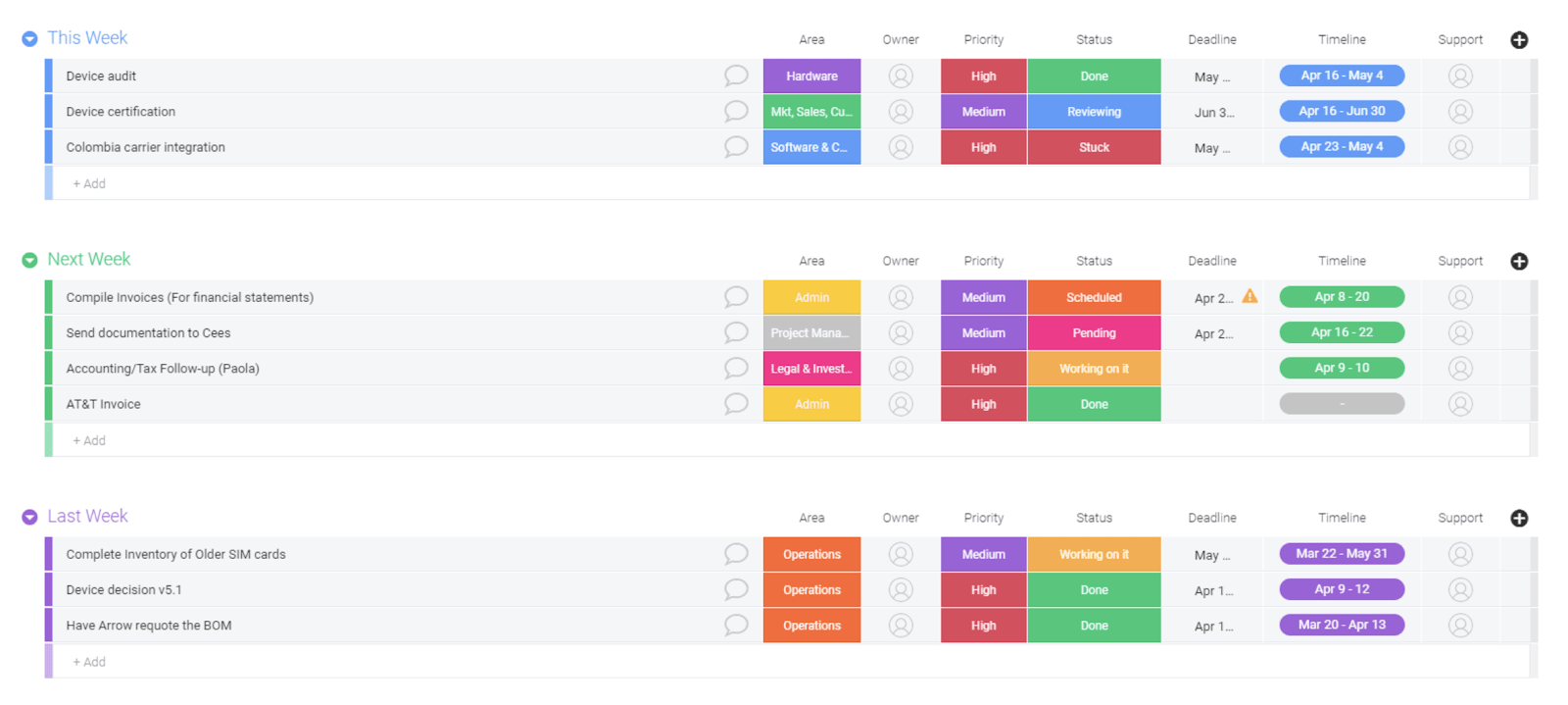
What this could look like: monday.com is a Work Operating System (Work OS) that allow teams to share documents, tasks, and reports.
By freely sharing assets on the same platform where teams communicate and collaborate, monday.com users can help each other meet common goals in real-time.
Try out our team task tracker template to see social collaboration in action:
3. Cross-functional collaboration
With team collaboration, everyone knows each other. Cross-functional is the opposite. It’s what happens when various department teams or verticals join forces to achieve a common goal for the greater organization.
What this could look like: HR and marketing teams sit in a room together and come up with new recruitment tactics for open positions.
4. Virtual collaboration
As globalization accelerates, so does the capacity for remote collaboration. People no longer just work locally, they collaborate with people around the world. Video conferencing, cloud-based software, and channel-based messaging platforms make it easier than ever to share knowledge and human resources globally.
What this could look like: A sales team meets over Zoom and discusses how to best explain a new feature to prospects.
5. Community collaboration
The concept of community collaboration revolves around the idea of sharing. Ideally, teams wouldn’t work in silos hoarding their information and resources. Instead, they’d freely share their knowledge with the entire community, so everyone rises together.
What this could look like: During a company-wide meeting, all department heads share their data about the previous quarter, what they learned, and how their findings will help other teams reach company goals.
What’s the difference between communication and collaboration? Putting knowledge to good use.
Communication and collaboration are not synonymous. They’re complimentary, but they have unique definitions and uses in the workplace.
The bottom line is: communication is all about sharing knowledge, while collaboration is putting that information to good use.
Communication can exist without collaboration, but without communication, collaboration is impossible. An example of communication is calling an organization to inquire about possible job opportunities. If after you get the job, you join your new team in a brain-storming session to generate ideas for your first project, then you’re collaborating.
Pro tip: collaborating with a team is much easier when you have one software for sharing and creating documents, tasks, and projects.
When everyone can work from the same platform and track progress–no matter where they’re located—you’ll be able to move from communicating about a project to truly collaborating on delivering the final result.
Why is collaboration so important?
The benefits of collaboration to an organization are immense. Ultimately, collaboration is a skill that helps teams work together, come up with new ideas, listen, and learn from each other. All of this helps teams efficiently reach company goals.
Let’s break down a few more reasons collaboration is so important:
It strengthens problem-solving skills
Let’s say you’re working on a project, and you get stuck. You’ve tried everything you can think of, and you’re all out of ideas. What’s your next move? It’s unlikely that you give up entirely. You go get help. You ask someone to come brainstorm potential solutions.
You work together until you solve the problem. Collaboration shouldn’t be the last resort. It’s better off baked into the way your team works day-to-day.
A lesser-known benefit of collaboration is that it helps you identify your own strengths and weaknesses. As you collaborate, you inherently seek out people with complementary skills that counterbalance your weaknesses.You and your team can strengthen your problem-solving skills by having everyone come up with alternative solutions to a problem or roadblock, implementing transparent communication, and remaining open to all ideas and opinions. Then, once everyone shares their perspective, you can examine as a team the best way to approach the task.
New communication lines break through barriers
Cross-collaboration with people from other departments or verticals opens up opportunities like never before. As bonds strengthen and ideas flow more naturally, your teams will connect the dots between potential project breakthroughs and revolutionary business ideas.
An easy way to create new communication lines is by having your team share their work with other departments. Hold monthly or bi-weekly meetings and get everyone together to see what others are working on and whether you can pull your resources together to achieve common goals.
For instance, sales and marketing teams can meet to discuss a products’s selling points and then create assets to strengthen the sales funnel.
It helps boost team morale
An organization that creates a collaborative atmosphere will naturally cause employees to trust and like each other more. Mostly because connections matter to people. Everyone wants to feel like they’re a part of something bigger than themselves.
We want to work with people we trust and feel trusted at the same time. Bonus points if people respect our point of view and show empathy throughout the collaborative process. When you can boost team morale through collaboration, you’ll make greater strides towards improving your bottom line.
One way to boost team morale is by putting employees front and center. Give them a way to voice their opinions whether through a survey or a suggestion box and make then make decisions based on their feedback.
Operational efficiency increases
Effective collaboration is far more than just a tool for boosting efficiency. It’s a signpost that says, “It’s okay to ask for help.”
For example, monday.com’s collaboration software (through our project tracker) makes it easier than ever to ask for help by marking a status as “stuck:”
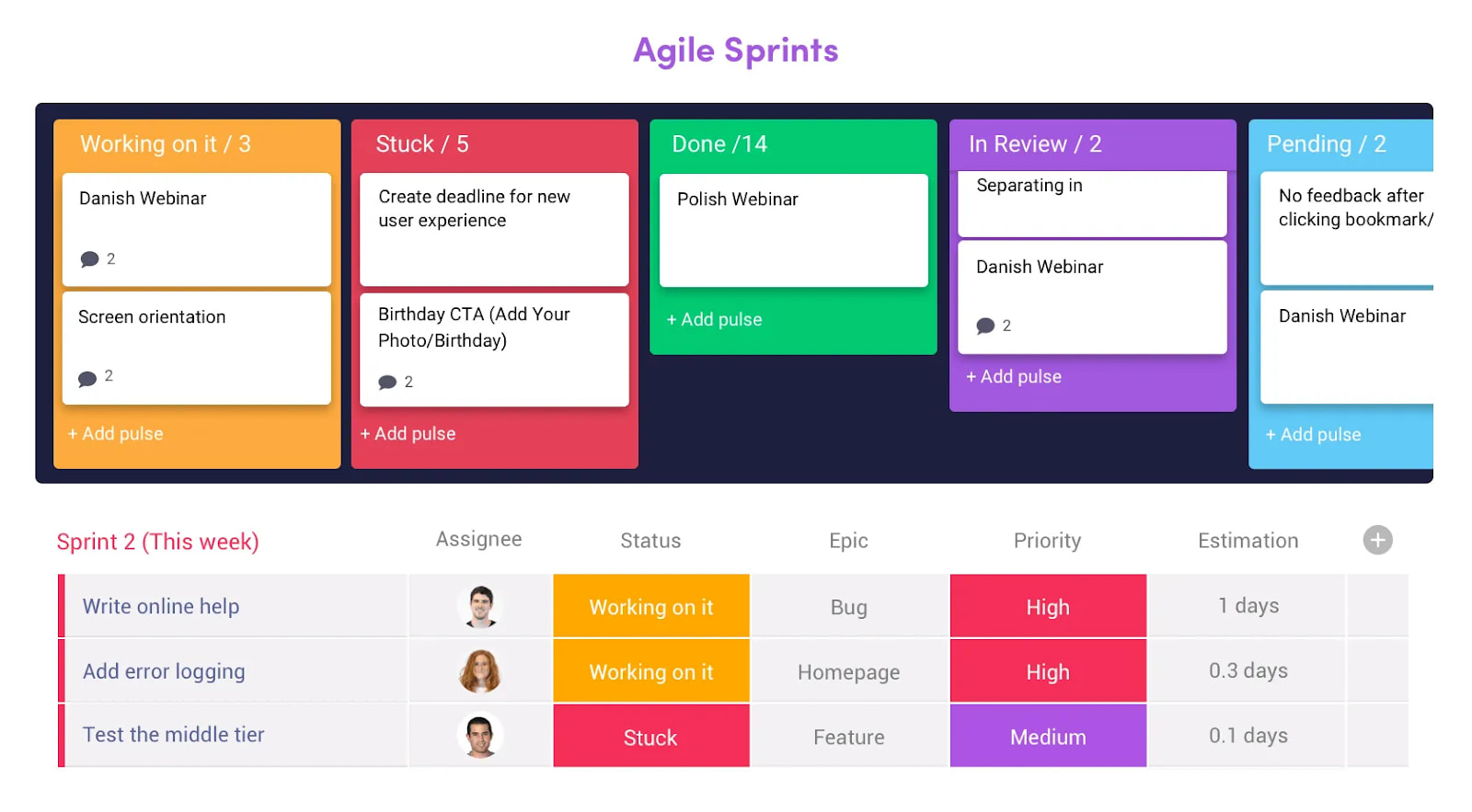
That signals to your teammates that you could use an extra set of eyes or perhaps a whiteboard session to break through to the other side.
And you can create an automation which automatically sends a notification to a project lead whenever anybody’s status changes to “stuck,” so they know to follow up.
Collaboration guides your team to greatness by promoting the sharing of ideas. It makes workloads easier to bear, cuts through the noise to find creative solutions, and keeps us on our toes when it matters most. In short, collaboration makes work feel easier, which helps us get more done in less time.
The FAQs of collaboration
Now that we’ve gone though what collaboration is, why it’s important, and a few types of collaboration, let’s take a look at some of the internet’s frequently asked questions:
How do you create collaboration in the workplace?
A truly collaborative organization wraps the framework of collaboration into everything they do. They discourage working in silos and focus on facilitating an atmosphere that’s solution-oriented and free-thinking.
Not sure where to start? We came up with a few suggestions:
- Invest in technology that allows teams to easily share projects, ideas, and initiatives organization-wide
- Have managers and executives lead by example and prioritize collaboration
- Encourage employees to work together and form meaningful relationships
- Give good feedback early and often to help employees stay motivated
How can people collaborate while working from home?
Teams can collaborate from home with the right technology stack. According to the The State of Project Management 2020 Report, 25% of people surveyed report not having the right technology to enable team collaboration on informal projects, even through this makes up 20% of work time.
They need communication tools so they can stay on the same page. They’ll also need a way to store files and share them in real-time. Most importantly, they need a workspace where they can share ideas, status updates, and deliverables and get help or feedback.
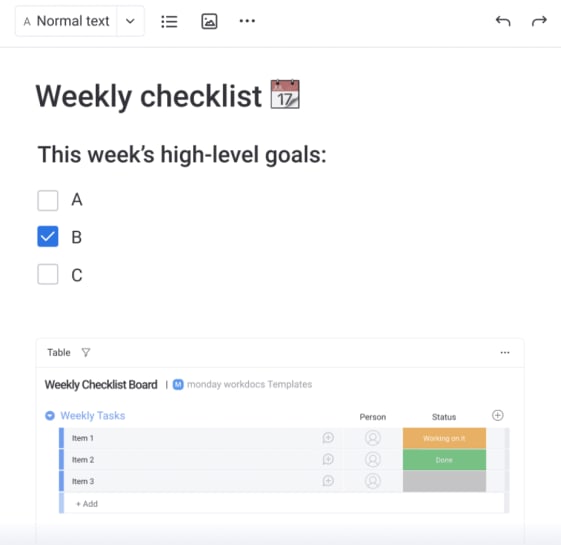
For example, monday.com has monday workdocs, a way for your team to easily collaborate — in real-time — and conduct training, research, ideation, and more.
What’s the best virtual collaboration tool?
Markets & Markets believes the online collaboration market will hit nearly $60 billion so naturally there’s quite a bit of competition out there.
So, who do we believe is the best?
It’s no surprise that we believe monday.com is the best virtual collaboration tool.
Here’s what we think you’ll love about us:
- Our whiteboards make you feel like you’re side-by-side with your team.
- Our newest feature, monday workdocs, makes it easy for team members to simultaneously edit content without disrupting others.
- File storage makes sure everyone has access to the latest version at the right time, improving the workflow.
- Task-based communication gets you the help you need precisely where you need it.
- Chat and video conferencing integrations give you that over-the-shoulder guidance.
- Status updates make it feel comfortable to raise your hand when you’re stuck.
The collaboration tools are immense, and so are all the other features that set your project up for success.
Bring out the best in your team with monday.com. It could be that crucial first step to creating an atmosphere of collaboration.