


Whether you’re planning a weekend city break, a family holiday, a road trip, or a longer international journey, travel planning can involve a lot of moving parts. Flights, hotels, transportation, activities, budgets, travel documents, and packing lists all need to stay organized.
A vacation itinerary template gives you one place to manage the schedule, budget, logistics, and important details for your trip. In this article, we’ll explain what a vacation itinerary template is, why it’s useful, and which itinerary formats can help you plan with less stress. We’ll also show how monday.com’s AI Work Platform can help travelers and teams organize trip details, maps, budgets, documents, and tasks in one connected workspace.
Key takeaways
- A vacation itinerary template helps you organize trip dates, flights, accommodation, transportation, activities, budgets, documents, and packing details in one place
- Different itinerary templates can support different travel needs, including flight itineraries, daily travel schedules, family holidays, and road trips
- A strong itinerary gives travelers a shared source of information, which is especially useful for group trips or multi-destination travel
- The best vacation itineraries balance structure with flexibility, leaving room for rest, changes, and unexpected opportunities
- monday.com’s AI Work Platform helps teams and travelers organize trip plans, maps, budgets, tasks, documents, and updates in one connected workspace
What is a vacation itinerary template?
A vacation itinerary template is a document, spreadsheet, or workspace you can use to create a travel plan and centralize your trip details. It usually includes your schedule plus other useful travel information, such as:
- Flight departure and arrival times
- Accommodation names, addresses, and check-in details
- Important contact details
- Excursions, reservations, tours, or events
- Trip essentials, such as sunscreen, medication, or weather-appropriate clothing
- Destination notes, including local customs and cultural considerations
- Useful phrases in the local language
- Budget details, booking references, and travel documents
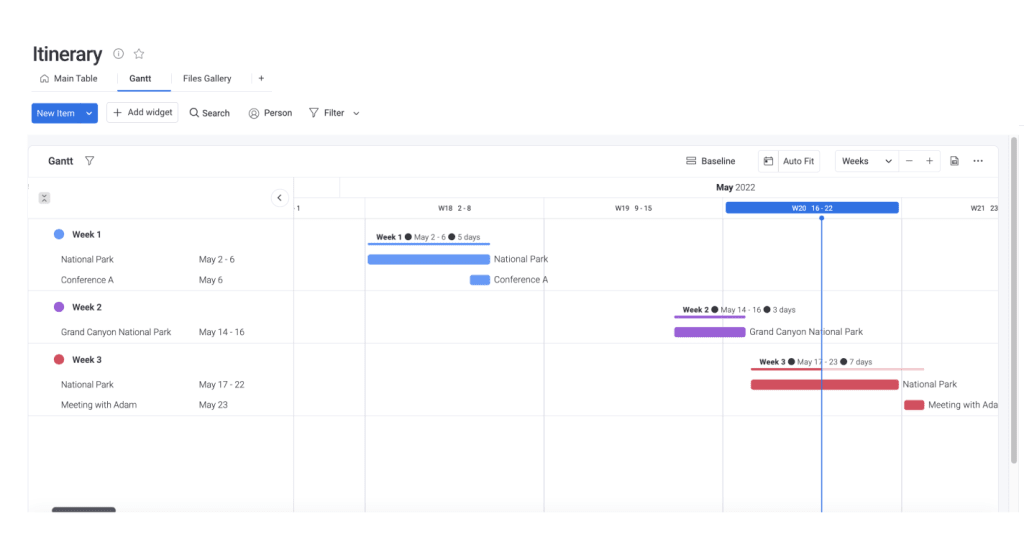
The itinerary format depends on your needs. You might create a travel spreadsheet template in Excel if you’re focused on costs or try a Google Docs itinerary template for more general planning. If you want a simpler visual of your schedule, a Gantt chart view might be a good choice, as you can see in the example below. For more flexible planning, monday.com’s AI Work Platform can help you manage itinerary details, tasks, files, budgets, maps, and updates in one place.
Why use a vacation itinerary template?
Whether you’re a solo traveler or planning a group trip, a vacation itinerary template helps reduce the chance of missing important details. It’s especially useful for group travel because everyone can refer to the same schedule, booking details, and destination information.
1. Centralize your travel information in one place
Travel often involves multiple forms of transportation, booking references, addresses, check-in times, and confirmation details. A travel itinerary keeps that information in one place, making it easier to reach each destination on time and avoid searching through emails or apps while you’re on the go.
2. Make the most of your time
When travel time is limited, a vacation itinerary helps you plan which sites, restaurants, events, and activities matter most. You can organize the trip by day or even by hour, depending on how structured you want the schedule to be.
A good itinerary also helps you avoid overbooking yourself. Instead of trying to squeeze in every possible activity, you can prioritize what matters and leave room for rest or last-minute changes.3. Manage your budget
Even when you’re traveling for leisure, it’s always a good idea to have a cost management system in place. When you’re dealing with foreign currency, expenditures can quickly get out of hand. Some robust itinerary templates include space to estimate costs and track expenses for your trip.
4. Pack everything you need
Once you’ve planned where you’re jetting off to, you need to know exactly what you’ll need when you get there. A vacation itinerary template is the perfect place to list your travel essentials, especially if your trip involves multiple destinations or a variety of activities. You can also make a note of any medicines you’ll need, as well as local emergency numbers.
What are some examples of a vacation itinerary template?
Ready to start bringing your trip ideas to life with a travel schedule template? Take a look at these four examples of vacation itinerary templates to get your inspiration flowing.
Flight itinerary template example
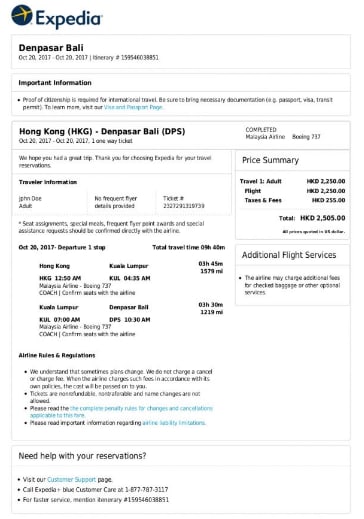
This classic example of a flight itinerary contains all the details a traveler needs for a smooth and carefree flight, including:
- Information about passports and visas
- Departure airport
- Travel destination
- Date
- Departure time
- Flight number
- Connecting flight and layover details
- Booking reference
- Airline rules and regulations
Juggling all of that information without an organizational system could quickly become overwhelming. A flight itinerary template ensures that all your important flight information is in one place and clear and easy to understand.
Daily itinerary template example
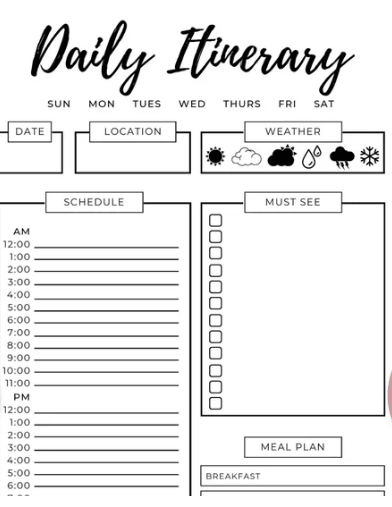
There are almost unlimited ways to create a daily itinerary. Which is best for you will depend on the type of activities you plan. One way to do it is to lay it out like the example below. It has a schedule column on the left and a checklist of must-see sights on the right.
This enables you to plan your route in the most sensible way and ensure you don’t miss anything important. It also has space for meal planning, so no one gets hangry, and the weather forecast, so everyone dresses appropriately.
Family holiday itinerary template example
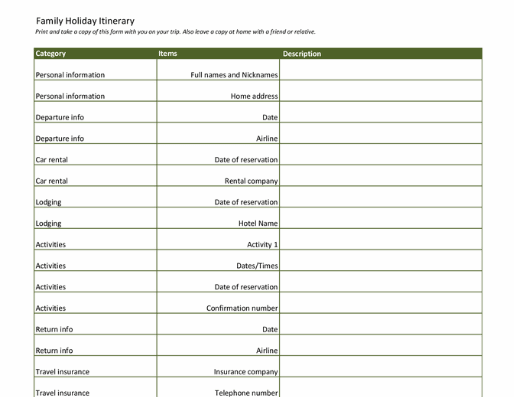
Traveling with kids can be chaotic, but a family holiday itinerary template like the one below can take the stress out of it. It has space for:
- Personal information
- Flights and car rental details
- Accommodation
- Activities
- Travel insurance
It can help ensure everyone gets to the right place at the right time and has all the information they need if they get separated from the group.
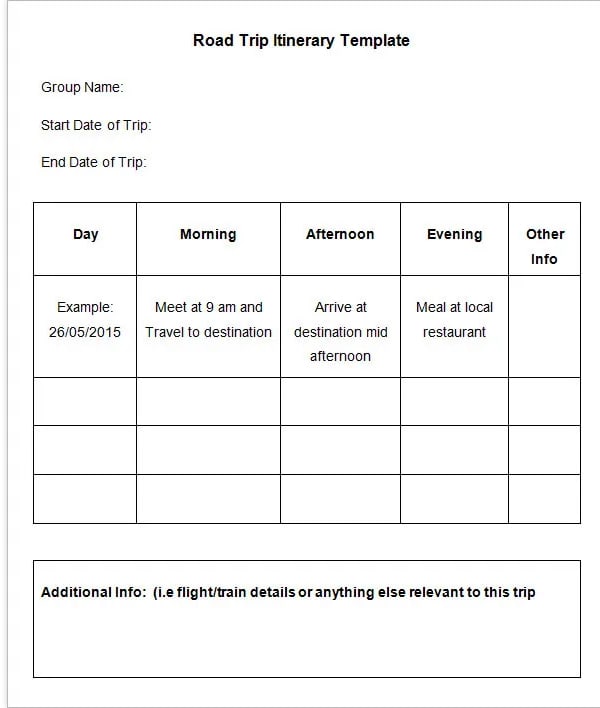
Road trip itinerary template example
If you’re planning a road trip and want a quick way to jot down basic details, the trip itinerary example below may help ensure everyone has the information they need. This includes:
- Name of the group
- Daily schedule
- Contact information
- Other information, such as restaurants, accommodation, and meeting points
This ensures that everyone has the same information and minimizes the risk of the group getting separated.
If you plan frequent, detailed, or group trips, you may want a more connected way to manage itinerary templates, documents, budgets, maps, and updates.
monday.com’s vacation itinerary template
The team at monday.com has created a trip itinerary template you can download and start using right away as an itinerary planner.
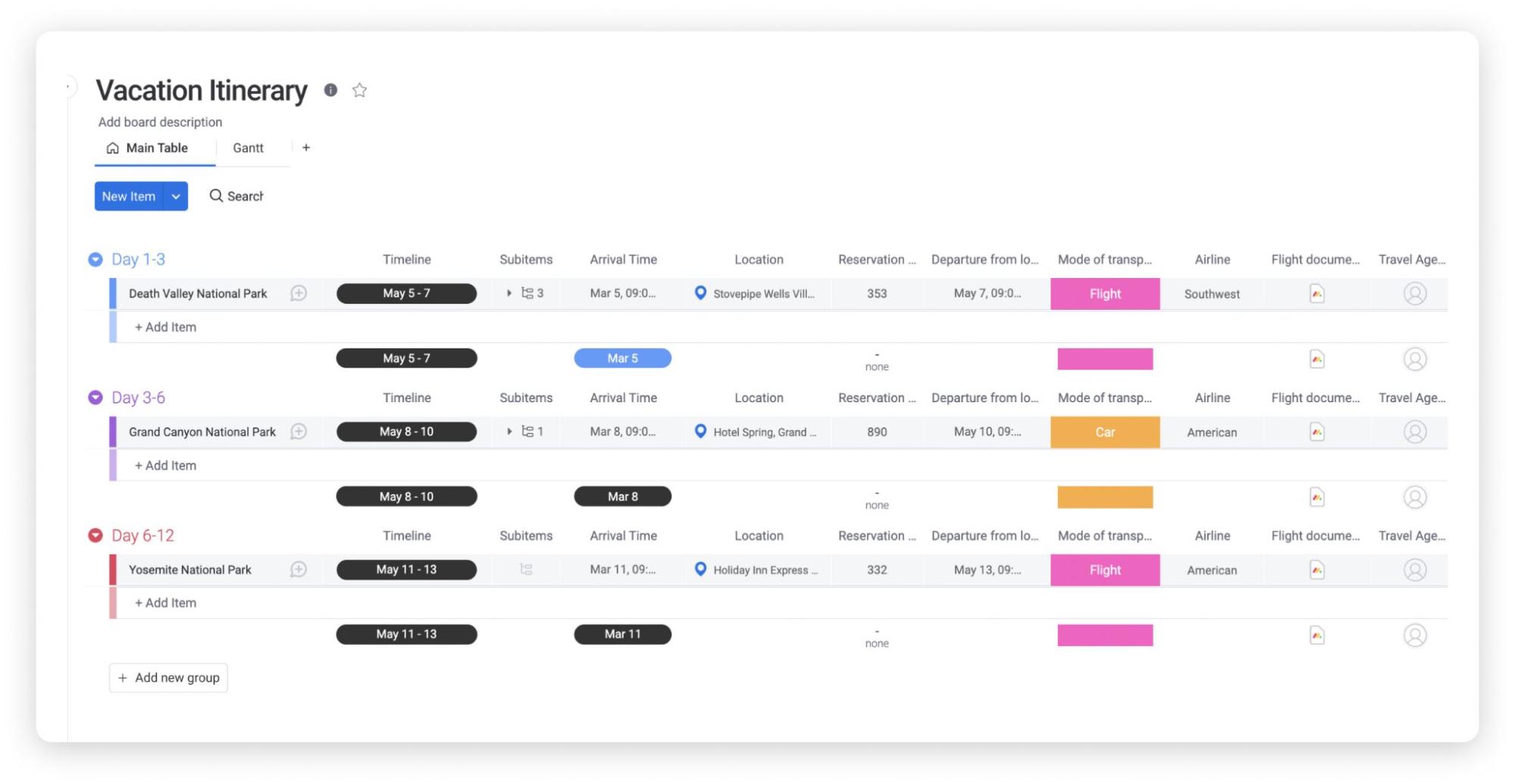
monday.com’s AI Work Platform lets you organize plans using customizable columns, statuses, automations, files, and views. Since each trip is different, you can adapt the itinerary template to the details that matter most.
For example, you can use monday.com’s project management features to manage each vacation, creating a workflow of tasks that span from the pre-departure preparations, such as visas or vaccinations, to the post-trip vacation feedback form.
Suppose you’re planning several trips at once. In that case, you can use the Board and Dashboard views to visualize data for one or all of your trips simultaneously, allowing you to track expenses against the budget and reallocate resources where necessary.
Another way to visualize your trip would be to use the Location Column to plot your itinerary:
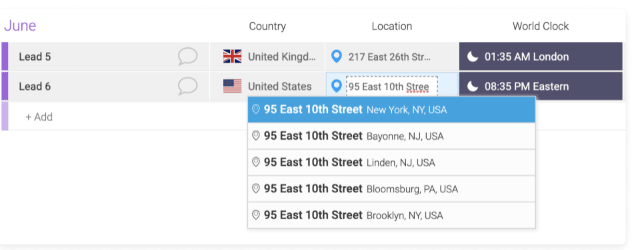
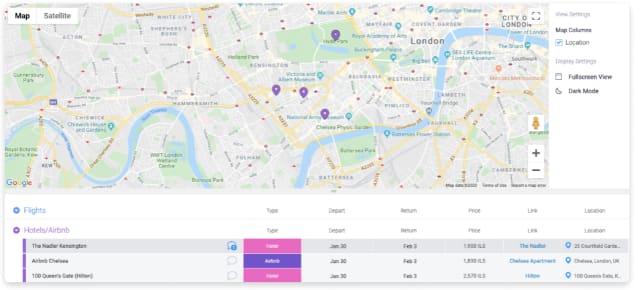
Once plotted, you can then view it on the Map view, so it’s easy to reach all your destinations on time:
Now that you’re familiar with the monday.com vacation itinerary template, let’s look at how you can maximize its abilities.
Three tips for making the most out of your vacation itinerary template
Use these three tips to make your vacation itinerary more useful, realistic, and easy to follow.
1. Don’t try to cram too much in
It can be tempting to try to see as many sights, or even countries, in as little time as possible. But sometimes, it can be more rewarding to take it slow and savor your time in each destination. The same goes for activities. If you try to do too many, you might end up burning out. Build in time to rest, travel between locations, and adjust plans when needed.
2. Take advantage of your layover
If you have a long airport layover, you may be able to explore nearby sights or restaurants for a few hours. Use your itinerary to note transport options, travel time back to the airport, security requirements, and your next flight’s departure time.
3. Be flexible
Preparation is helpful, but travel rarely goes exactly as planned. Leave room for weather changes, delays, new recommendations, or unexpected opportunities, so your itinerary supports the trip instead of controlling it.
FAQs about vacation itinerary templates
What is a vacation itinerary template?
A vacation itinerary template is a reusable travel planning document or workspace that helps you organize trip dates, transportation, accommodation, activities, reservations, budgets, documents, and packing details in one place.
How do I make a vacation itinerary?
To make a vacation itinerary, start by choosing your destination and travel dates. Then add transportation details, accommodation, activities, reservations, important documents, budget notes, emergency contacts, and a packing list. Organize the information by day, location, or category so it’s easy to follow during the trip.
What should a vacation itinerary include?
A vacation itinerary should include travel dates, flight or transportation details, accommodation information, booking references, activity plans, restaurant reservations, local transportation, emergency contacts, budget details, travel documents, and packing essentials.
Can I create a vacation itinerary in Excel?
Yes, you can create a vacation itinerary in Excel by setting up tabs or columns for flights, accommodation, daily plans, budgets, packing lists, and important notes. Excel works well for simple travel planning, but a connected platform can be more useful for group trips, shared updates, maps, and task tracking.
What is the difference between a travel itinerary and a vacation planner?
A travel itinerary usually focuses on the schedule and logistics of a trip, such as flights, accommodation, activities, and transportation. A vacation planner can be broader, including budgets, packing lists, destination research, travel documents, and tasks to complete before departure.
How does monday.com help with vacation itinerary planning?
monday.com’s AI Work Platform helps travelers and teams manage vacation itineraries with customizable templates, boards, dashboards, automations, files, map views, location columns, and AI-powered support. It can keep trip details, budgets, documents, tasks, and updates organized in one shared workspace.
 Get started