


What if the gap between your strategic goals and actual execution isn’t about working harder but rather about managing time smarter? When organizations master time management at scale, they transform scattered effort into focused results that drive measurable business outcomes.
This guide shows you how to build sustainable time management practices across individuals, teams, and entire organizations. You’ll discover core principles that actually work in complex environments, proven strategies for coordinating work effectively, and how a flexible Work OS helps teams move from busy to productive.
Try monday work managementKey takeaways
- Shift your focus from hours worked to results delivered by measuring outcomes and business impact rather than time spent at your desk.
- Create visual workflows using boards, timelines, and dashboards so everyone sees how their daily work items align with bigger objectives.
- Protect deep work time with meeting-free zones and time blocking to prevent constant interruptions from derailing important projects.
- Monitor project delivery speed, resource utilization, and team satisfaction rather than vanity metrics to identify bottlenecks before they become crises.
- Set up automated workflows in monday work management to handle status updates, work assignments, and notifications automatically, freeing your team for strategic work.
What is time management?
Time management is how you organize work activities, manage competing priorities, and align daily execution with broader business objectives. It goes beyond personal calendars and individual checklists to include strategic resource allocation and cross-functional coordination.
Effective time management works on 3 levels that shape how organizations deliver results:
- Individual focus: Managing personal attention and energy throughout the day
- Team coordination: Synchronizing workflows to prevent bottlenecks and missed handoffs
- Organizational alignment: Allocating resources that connect daily activities to high-level business goals
Each level depends on the others, and weakness at any point creates friction across the entire system. When teams can see how their work connects to broader objectives, they make smarter decisions about where to invest their time.
The enterprise time management framework
Sustainable time management doesn’t happen at one level. It requires alignment across individuals, teams, and the organization as a whole. This framework shows how these layers interact to drive measurable results.
| Layer | Focus | Core Question | Supporting Tools |
|---|---|---|---|
| Individual | Focus & energy | Am I working on the highest-value task right now? | Time blocking, priority matrices |
| Team | Coordination & flow | Are handoffs and dependencies aligned? | Shared boards, dashboards |
| Organization | Strategy & capacity | Are resources allocated toward strategic outcomes? | Workload views, portfolio dashboards |
Defining time management for modern organizations
Enterprise time management requires several capabilities that work together to drive results. Organizations need total visibility across teams to identify dependencies before they become blockers. They also need accountability structures with defined ownership for every deliverable and the agility to pivot quickly when priorities shift without breaking the workflow.
These capabilities manifest differently across industries:
- IT: Time management ensures infrastructure can scale with user growth and meet their service level agreements.
- Project management: It supports work assignments that match skills and timelines.
- Manufacturing: It aligns production schedules with demand to maximize throughput.
The evolution from hours to outcomes
Traditional time management focused on inputs: hours worked, time at the desk, and rigid schedules. Outcome-based management focuses entirely on results. This shift requires a fundamental change in both mindset and the systems organizations use to track work.
- The traditional approach focuses on hours worked, measures time at desk, and drives decisions based on volume of activity.
- The outcome-based approach focuses on results delivered, measures goal achievement, and drives decisions based on business impact.
In an outcome-based model, you measure productivity by goal achievement and business impact. A project completed in 4 hours that drives significant revenue is more valuable than a low-impact activity that takes forty hours. This approach empowers teams to make decisions based on value rather than volume.
Individual vs. team time management
Personal time management skills like time blocking and deep work are essential, but they’re not enough on their own. Individual techniques must integrate with team workflows to prevent silos. A highly productive individual can accidentally create bottlenecks if their output doesn’t align with the team’s schedule.
Team time management addresses the complexity of coordinating multiple schedules, managing dependencies, and maintaining alignment across time zones. It requires shared systems where individual contributions feed directly into collective progress. Visual boards and shared dashboards enable this connection by linking personal work items to team projects and organizational goals.
Why time management matters for success
Effective time management drives concrete business outcomes well beyond individual productivity. Success shows up in 3 critical areas: personal performance gains, organizational efficiency, and preventing costly errors. Understanding these impacts helps organizations prioritize time management as a strategic capability rather than just a personal skill.
Personal benefits that drive performance
For professionals, mastering time management means faster decision-making and less stress from competing priorities. It creates mental space for high-value activities like strategic planning, relationship building, and skill development.
The personal benefits build on each other and create lasting impact:
- Career advancement: Consistently meeting deadlines builds a reputation for reliability
- Strategic capacity: Freed time allows for proactive rather than reactive work
- Professional confidence: Control over one’s schedule eliminates the anxiety of constant urgency
Organizational impact on bottom line
Individual time management skills add up to organizational capabilities. When teams manage time effectively, projects deliver faster, resources are used more efficiently, and cross-departmental coordination becomes seamless.
This operational efficiency directly impacts the bottom line:
- Faster time-to-market: Products and initiatives launch faster
- Improved client trust: Reliable delivery builds customer satisfaction
- Competitive advantage: Agile organizations outmaneuver slower competitors
The real cost of poor time management
Ineffective time management creates a hidden cost in every business activity. The measurable costs: Missed deadlines, wasted resources, and opportunity costs from delayed initiatives.
The hidden costs often prove more damaging:
- Context switching: Team members constantly shifting between unrelated activities reduces cognitive capacity significantly
- Rushed planning: Leads to errors that require time-consuming corrections
- Cascading delays: A slip in one department derails interconnected projects across the organization
5 signs you need improved time management
These signs show that current workflows are unsustainable and need immediate attention. Recognizing these signs is your first step to reclaiming control over organizational time and building sustainable work practices.
- Constant fire-fighting mode: The team is stuck in reactive mode where urgent activities constantly override important strategic initiatives. This points to poor planning and unclear priorities, which leads to burnout and missed long-term goals.
- Meeting overload syndrome: Calendars are packed back-to-back with no time left for execution. This usually means poor communication systems and no asynchronous collaboration, forcing teams to meet just to share status updates.
- Unclear priorities and competing deadlines: Team members struggle to decide what to work on first because everything is labeled urgent. This friction causes decision paralysis and resource conflicts, leading to worse outcomes for all projects.
- Platform sprawl and context switching: Information is scattered across email, chat, spreadsheets, and legacy systems. The cognitive load of switching between these disconnected platforms drains energy and wastes hours every week hunting for information.
- Reclaiming work-life balance: Work consistently bleeds into personal time, not due to passion, but due to inefficiency. This unsustainable pattern shows the work system is broken, leading to high turnover and lower long-term productivity.
5 core time management principles
These foundational concepts support all effective time management approaches, no matter your industry or role. They provide the framework for building sustainable practices at every level and form the foundation for any successful time management transformation.
1. Visibility creates accountability
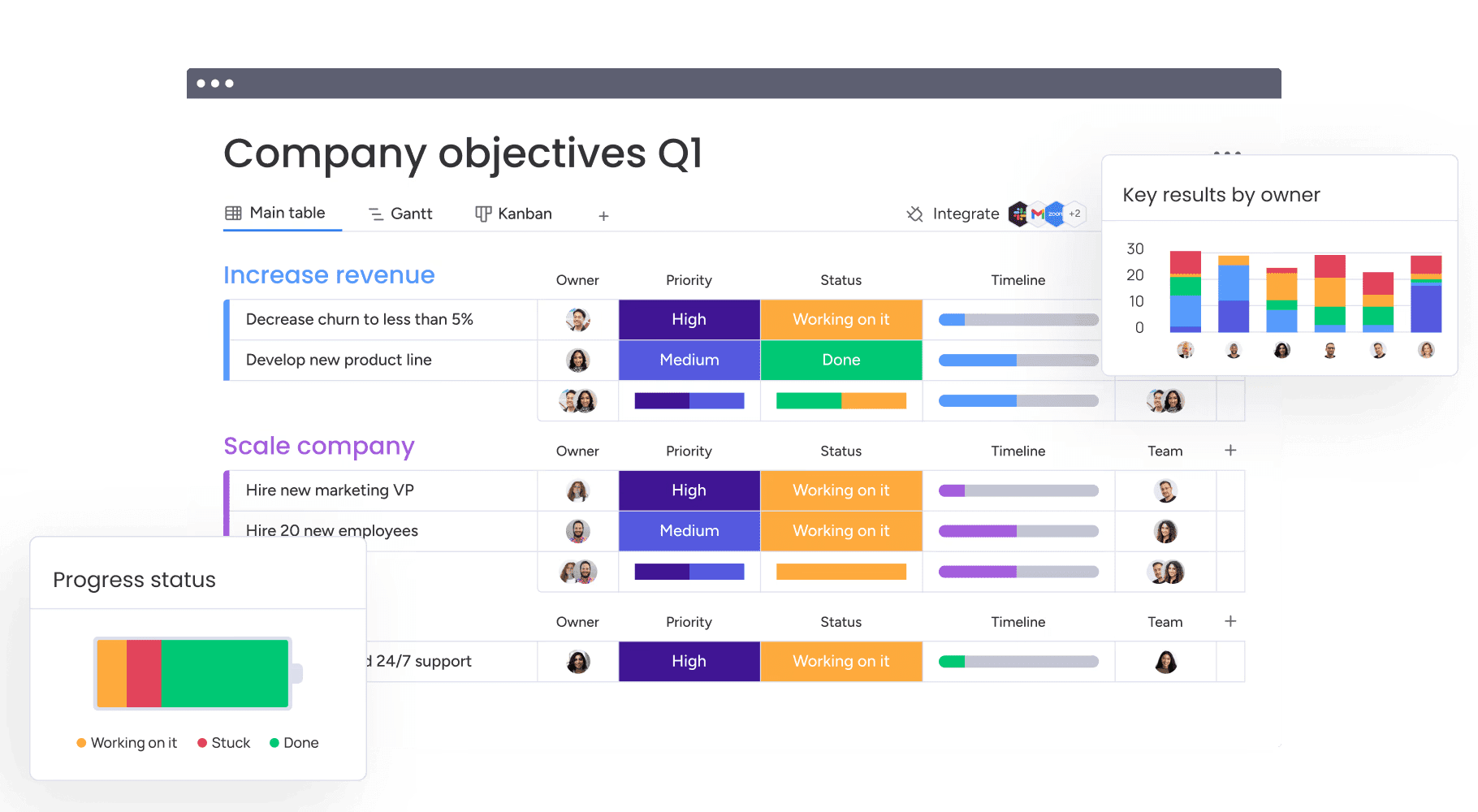
Transparent work tracking is the foundation of coordination. When all stakeholders can see project status, resource allocation, and progress, accountability becomes natural. Visual project management platforms eliminate the need for constant status checks by providing a single source of truth.
Teams using monday work management gain this visibility through dashboards that automatically display live high-level project data for insights on budget, goals, schedules, and resources. This visibility helps teams make sharper, faster decisions without waiting for status meetings.
2. Prioritization beats multitasking
Multitasking is really just rapid task-switching, and it degrades quality. Focused, prioritized work yields superior results. Effective teams use decision-making frameworks to rank activities and allocate resources to the highest-value work first.
3. Automation eliminates time waste
Routine, repetitive activities shouldn’t consume human creativity. Automating workflows such as status updates, assignments, and recurring reminders frees up significant time for high-value work.
4. Boundaries protect deep work
High-concentration activities need protection from the noise of daily operations. Establishing boundaries such as meeting-free Wednesdays or designated focus hours allows teams to engage in deep work. Leadership must respect these agreements for them to work.
5. Measurement drives improvement
You can’t improve what you don’t measure. Tracking time usage and outcomes provides the data needed to optimize workflows. Key metrics reveal where time is leaking and where processes are stuck, enabling continuous, data-driven improvement.
9 time management strategies that actually work
These proven strategies move beyond theory into implementation, offering actionable ways to reclaim time management strategies for both individuals and teams. Each strategy addresses specific pain points while building a comprehensive time management system that scales across the organization.
1. Build visual time management systems
Visual project boards and timeline views create instant shared understanding. Instead of burying dates in spreadsheets, visual workflows let teams see deadlines, dependencies, and progress at a glance.
Teams leverage multiple visualization approaches:
- Gantt charts: Map out timelines and dependencies
- Kanban boards: Visualize workflow stages
- Dashboards: Aggregate real-time status updates
2. Master priority matrices for decision making
The Eisenhower Matrix and similar frameworks categorize activities by urgency and importance, removing the guesswork from daily planning. This simple structure helps teams focus on what matters most:
- Do first: Urgent and important
- Schedule: Important but not urgent
- Delegate: Urgent but not important
- Delete: Neither urgent nor important
3. Implement time blocking for focus
Time blocking involves scheduling specific chunks of time for distinct types of work. This method keeps your day from turning into a reactive series of emails. Matching these blocks to energy levels, like doing creative work in the morning, produces higher-quality outcomes.
4. Design meeting-free work zones
Teams coordinate designated times with no internal meetings allowed. This synchronization gives everyone uninterrupted blocks for execution and reduces workday fragmentation.
5. Batch process similar activities
Grouping similar activities cuts down on the cognitive load of context switching. Communication batching means answering emails and messages during 3 specific windows per day. Admin batching means handling approvals and reports in one sitting.
6. Delegate based on real capacity
Delegation fails when the person you’re delegating to is already overloaded. Effective delegation needs visibility into current team capacity. The Workload View in monday work management visualizes team capacity, so managers can assign work based on actual availability and skill sets.
7. Automate repetitive workflows
Workflow automation handles the robotic parts of project management:
- Auto-assign: Routes activities based on status changes
- Smart notifications: Alert stakeholders only when specific criteria are met
- Recurring items: Generated automatically for monthly reports or weekly checks
8. Create sustainable work rhythms
Consistency creates efficiency. Establishing sustainable rhythms such as regular sprint cycles or quarterly planning weeks helps teams predict workload and manage energy. This prevents the boom-and-bust burnout cycle.

9. Track time to find hidden waste
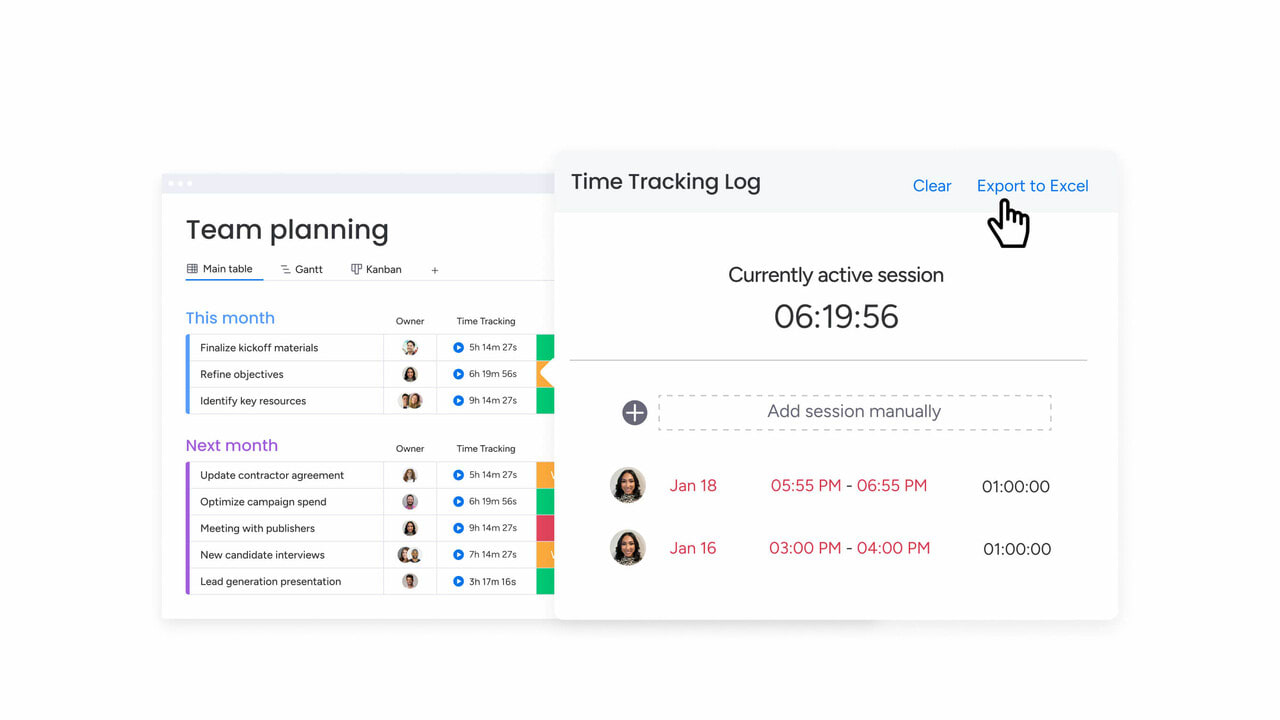
Periodic time audits reveal where hours actually go versus where we think they go. Time tracking features integrated directly into workflows monitor how long projects take, helping teams plan for the future and ensure time is spent efficiently.
82% of employees now use work or project management software to track tasks and collaborate (The world of work report from monday.com)
Essential time management skills for professionals
Professionals need to develop specific capabilities to navigate complex work environments effectively. These skills are learnable and directly contribute to career advancement, helping people thrive in demanding work environments while maintaining sustainable practices.
Strategic planning and goal alignment
This skill means connecting daily activities to broader objectives. It means breaking down large, annual goals into quarterly milestones and weekly deliverables. Regular review cycles keep daily work aligned with the strategic vision and prevent drift.
Digital organization and system design
A disorganized digital workspace wastes massive amounts of time. Proficiency in information architecture, including naming conventions, file structures, and workflow design, means you can retrieve information in seconds. Good digital hygiene reduces friction and improves collaboration.
Delegation and resource optimization
Delegation multiplies capacity. It means assessing requirements, evaluating team skills, and communicating expectations. Effective delegators empower their teams while freeing themselves for higher-level strategy.
Focus management in distraction-heavy environments
Maintaining concentration in open offices or remote settings gives you a competitive advantage. This skill means managing digital notifications, creating physical boundaries, and training your brain to re-engage quickly after interruptions.
Adaptive scheduling for changing priorities
Rigid schedules break under pressure. Adaptive schedules bend. This skill means building buffer time into plans and having a protocol for handling urgent requests. It lets professionals absorb the unexpected without derailing their entire week.
Try monday work management
Coordinating time across multiple departments needs systems that enable collaboration without sacrificing individual productivity. The challenge is making sure one team’s efficiency doesn’t create bottlenecks for another, while maintaining visibility and alignment across diverse working styles and priorities.
Creating transparency across departments
Silos destroy timelines. Shared frameworks and visibility let different departments see how their work impacts others. When marketing sees product’s timeline, and sales sees marketing’s launch date, coordination improves. Cross-departmental visibility connects projects from across the organization into one high-level view.
Balancing workloads at scale
Managing capacity across multiple teams means identifying bottlenecks before they occur. Resource management capabilities provide a heat map of organizational workload, so leaders can redistribute work from overloaded teams to those with capacity.
Coordinating cross-functional timelines
Aligning timelines across departments with different working styles needs dependency management. Identifying the critical path (the sequence of activities that determines project duration) means a delay in one area triggers immediate adjustments across the board.
Real-time capacity planning systems
Static spreadsheets cannot handle dynamic workloads. Real-time capacity planning uses live data to assess team availability. This ongoing assessment lets organizations commit to new projects with confidence, knowing exactly what resources are available.
AI is shifting time management from reactive tracking to proactive optimization. Organizations utilizing AI capabilities handle the logistics of work automatically, allowing humans to focus on strategy and high-value decision-making rather than administrative coordination.
- AI-powered priority recommendations: AI analyzes workload patterns, approaching deadlines, and historical data to suggest optimal sequencing. This reduces decision fatigue by presenting a data-backed list of what requires immediate attention.
- Automated task distribution: Intelligent automation assigns work based on team capacity, specific skill sets, and current availability. This ensures that work is routed to the right person for the job instantly, balancing workloads without manual intervention.
- Smart calendar optimization: AI algorithms optimize schedules by finding the right times for meetings across different time zones while protecting focus blocks. This reduces the administrative overhead of scheduling and ensures that deep work time is preserved.
- Predictive workload balancing: Predictive models forecast future capacity needs based on project pipelines. By identifying potential bottlenecks weeks in advance, AI enables leaders to make proactive hiring or resourcing decisions, preventing future crunches.
To demonstrate business value, time management efforts must be tracked using concrete metrics rather than vanity statistics. Effective measurement systems provide actionable insights that drive continuous improvement and justify investment in time management capabilities.
The following metrics provide meaningful insight into time management effectiveness:
- Project delivery time: The speed from initiation to completion
- Resource utilization rate: The percentage of available time spent on strategic work
- Goal achievement rate: The ratio of planned goals to achieved goals
- Team satisfaction score: A measure of burnout and engagement levels
Building real-time dashboards
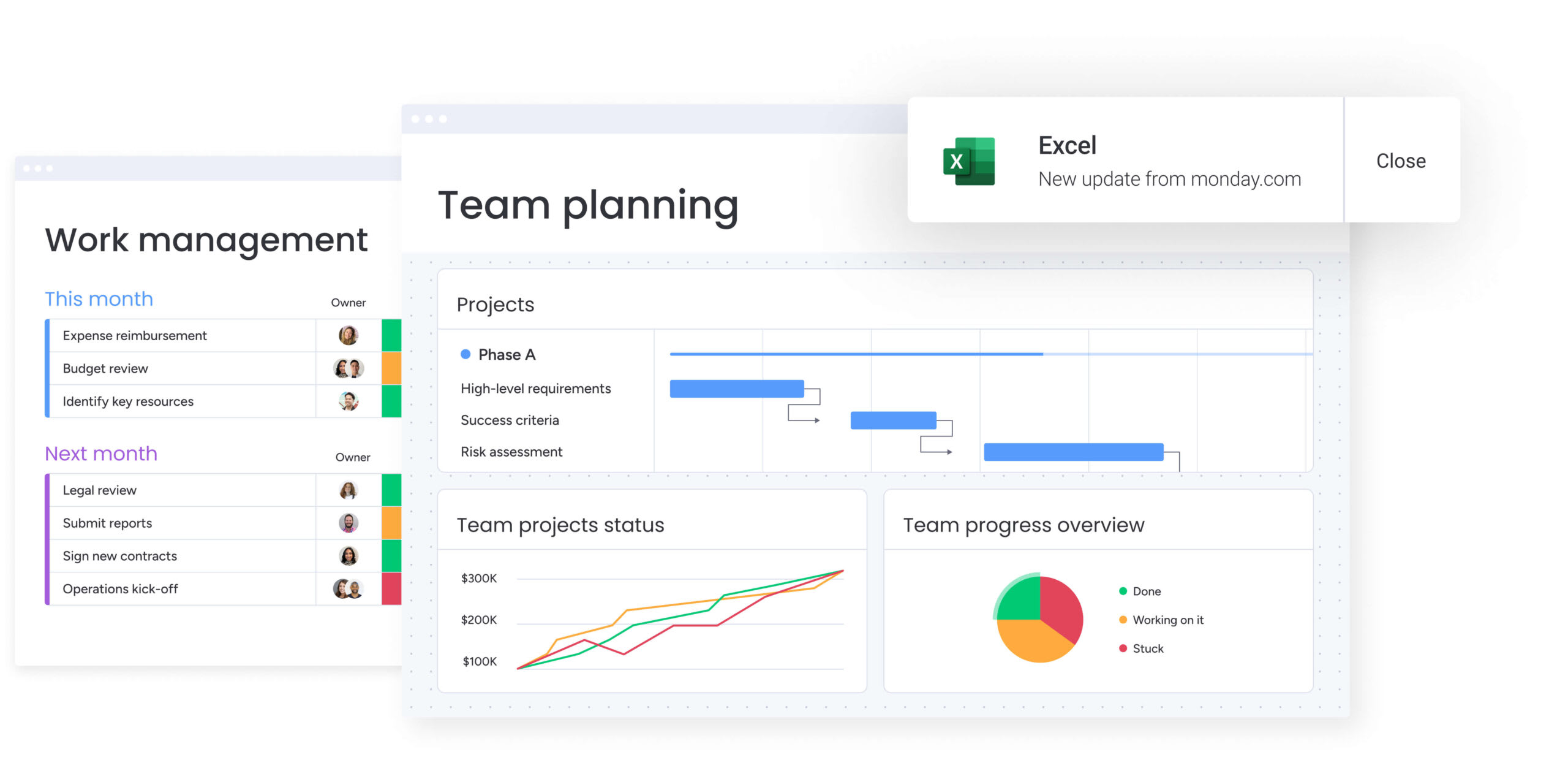
Real-time dashboards aggregate data from daily work to provide an instant health check of the organization. Instead of waiting for end-of-month reports, leaders can see project health, budget burn, and resource allocation live, enabling immediate course correction.
Creating continuous improvement loops
Data is useless without action. Measurement systems must feed into regular review cycles where teams analyze the data to identify process improvements. This loop ensures that time management practices evolve alongside the business.
Transform time management with monday work management
With monday work management, you can centralize time management, resource planning, and project execution into a single Work OS. It replaces fragmented systems with a unified platform that scales from individual tracking to enterprise-grade portfolio management.

The platform provides comprehensive time management capabilities through several key features that work together to create a seamless workflow:
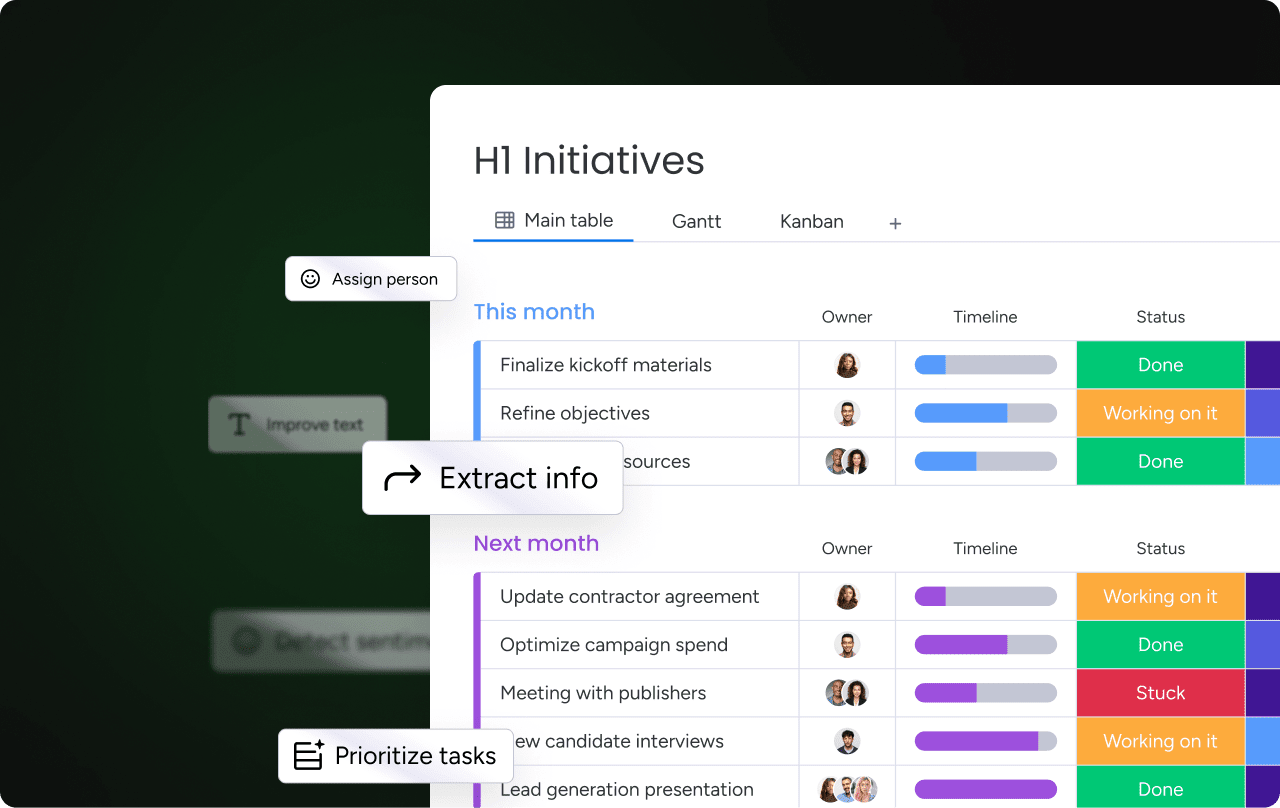
- Visual project management: Gantt charts, Kanban boards, and Calendar views allow teams to visualize timelines and dependencies instantly. Switch between views based on what you need to see — use Gantt for complex project timelines, Kanban for workflow stages, or Calendar for deadline-focused planning.
- Workload View: Provides real-time visualization of team capacity across all projects, enabling managers to identify overallocation before it leads to burnout. See exactly who has bandwidth and who’s at risk of being overwhelmed, then redistribute work with drag-and-drop simplicity.
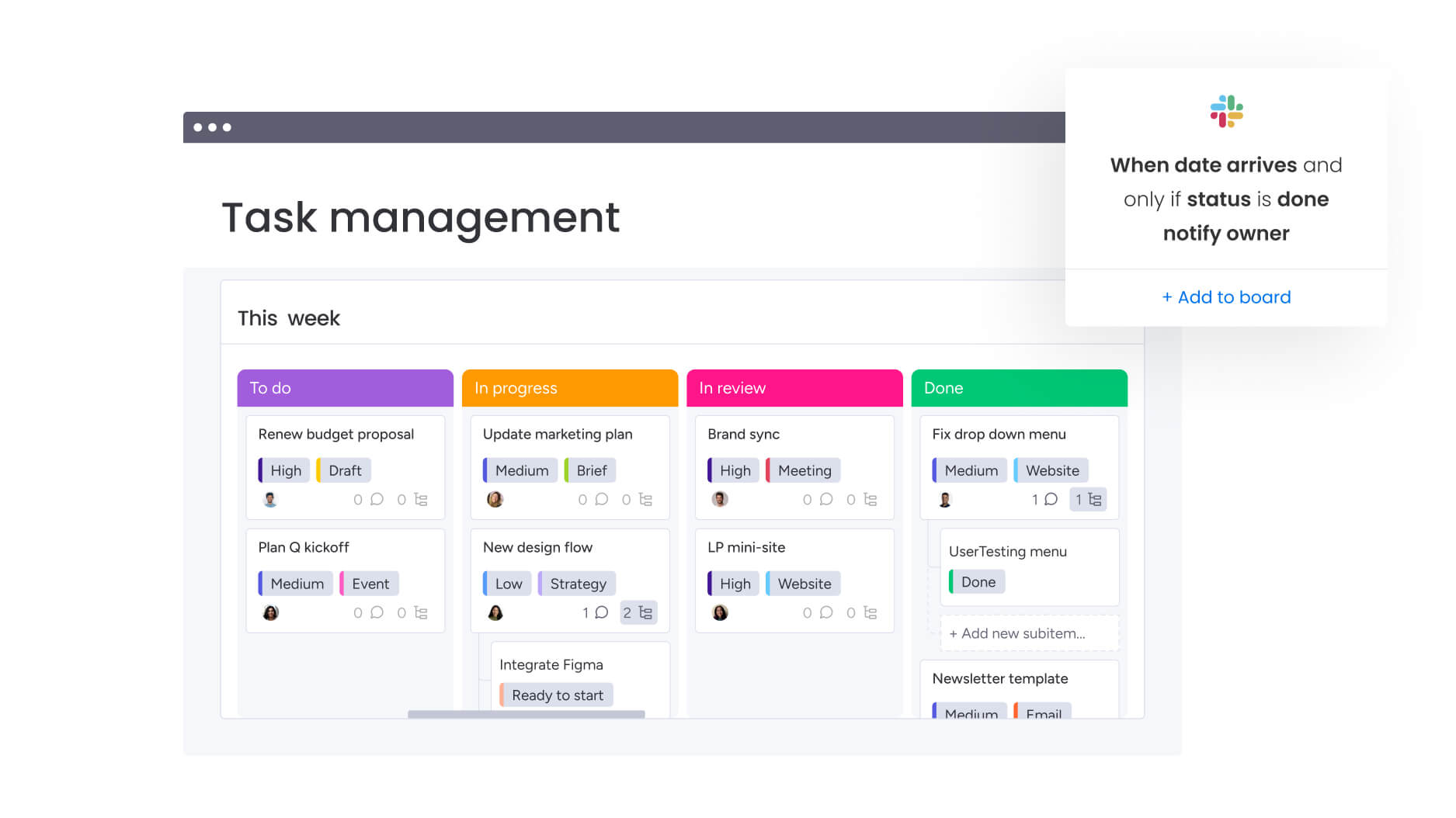
- Automations: Handle repetitive processes such as moving items to Done when all subtasks are complete, notifying managers of overdue items, or automatically assigning work based on status changes.
- Shared boards and dashboards: Break down silos by creating a single source of truth that every department can access. Dashboards aggregate data from multiple boards to provide executive-level visibility, while individual boards keep teams focused on their specific deliverables.
- Time tracking integration: Built-in time tracking capabilities let teams log hours directly within work items, providing accurate data on how long tasks actually take versus estimates. This historical data improves future planning accuracy and helps identify processes that need optimization.
- Mobile accessibility: Access your entire workspace from anywhere with native mobile apps that provide full functionality on the go. Update statuses, respond to notifications, and check project health from your phone, ensuring work doesn’t stop when you’re away from your desk.
These capabilities combine to create a time management ecosystem that adapts to your organization’s needs rather than forcing you to adapt to rigid software constraints. Whether you’re managing a small team or coordinating work across an entire enterprise, monday work management scales with you, providing the structure you need without the complexity that slows teams down.
Build your time management advantage
Effective time management means creating visibility across teams, automating routine work, and aligning daily activities with strategic goals. The principles and strategies in this guide help you shift from reactive firefighting to proactive execution, building sustainable practices that scale from individual contributors to enterprise-wide coordination.
With monday work management, you gain the visual workflows, automation capabilities, and real-time dashboards you need to move from busy to productive — all in one centralized Work OS.
Try monday work managementFAQs
What are the 5 keys to time management?
The 5 keys to time management are visibility into all work, ruthless prioritization of activities, automation of routine processes, strict boundaries for focus time, and consistent measurement of outcomes.
How can I improve my time management skills quickly?
To improve time management skills quickly, start by conducting a time audit to identify waste, then implement a prioritization framework like the Eisenhower Matrix and use time blocking to protect your most productive hours.
What's the most effective time management technique for teams?
The most effective time management technique for teams is visual project management combined with automated workflows, as it creates shared accountability and reduces the manual effort of coordination.
How do you manage time with multiple projects?
Managing time with multiple projects requires a portfolio-level view to manage competing resources, prioritization frameworks to resolve conflicts, and a centralized platform to track progress across all initiatives.
Can AI really help with time management?
Yes, AI significantly improves time management by automating prioritization, optimizing calendar schedules, and predicting resource bottlenecks before they occur.
What's the difference between time management and productivity?
Time management is the process of organizing and planning how to divide your time between specific activities, while productivity is the measure of the efficiency and quality of the outcomes produced during that time.

 Get started