


You’ve heard the title thrown around in meetings, seen it on LinkedIn profiles, and maybe even wondered if you should become one, but what does a project manager actually do? They don’t write code, design products, or close sales, yet entire initiatives succeed or fail based on their work.
This article breaks down exactly what project managers do, the essential skills that make them effective, and how the role is evolving in 2026. You’ll discover their core responsibilities, different specializations across industries, career paths, and salary expectations, plus why this role has become indispensable for turning vision into execution.
Try monday.comKey takeaways
- Project managers coordinate people, resources, and timelines to transform strategic vision into completed projects while balancing time, budget, and scope constraints.
- Modern project managers use data-driven insights and digital platforms to make strategic decisions that directly impact organizational success, going far beyond traditional status reporting.
- The role requires 7 essential skills including project management software proficiency, data analysis, leadership without authority, strategic communication, problem-solving, adaptability, and financial management.
- Project manager salaries vary significantly by experience level, industry, location, and specialization.
- AI-powered intelligence, workflow automation, and real-time portfolio visibility are reshaping project management by reducing administrative burden and enabling more strategic focus.
What is a project manager?
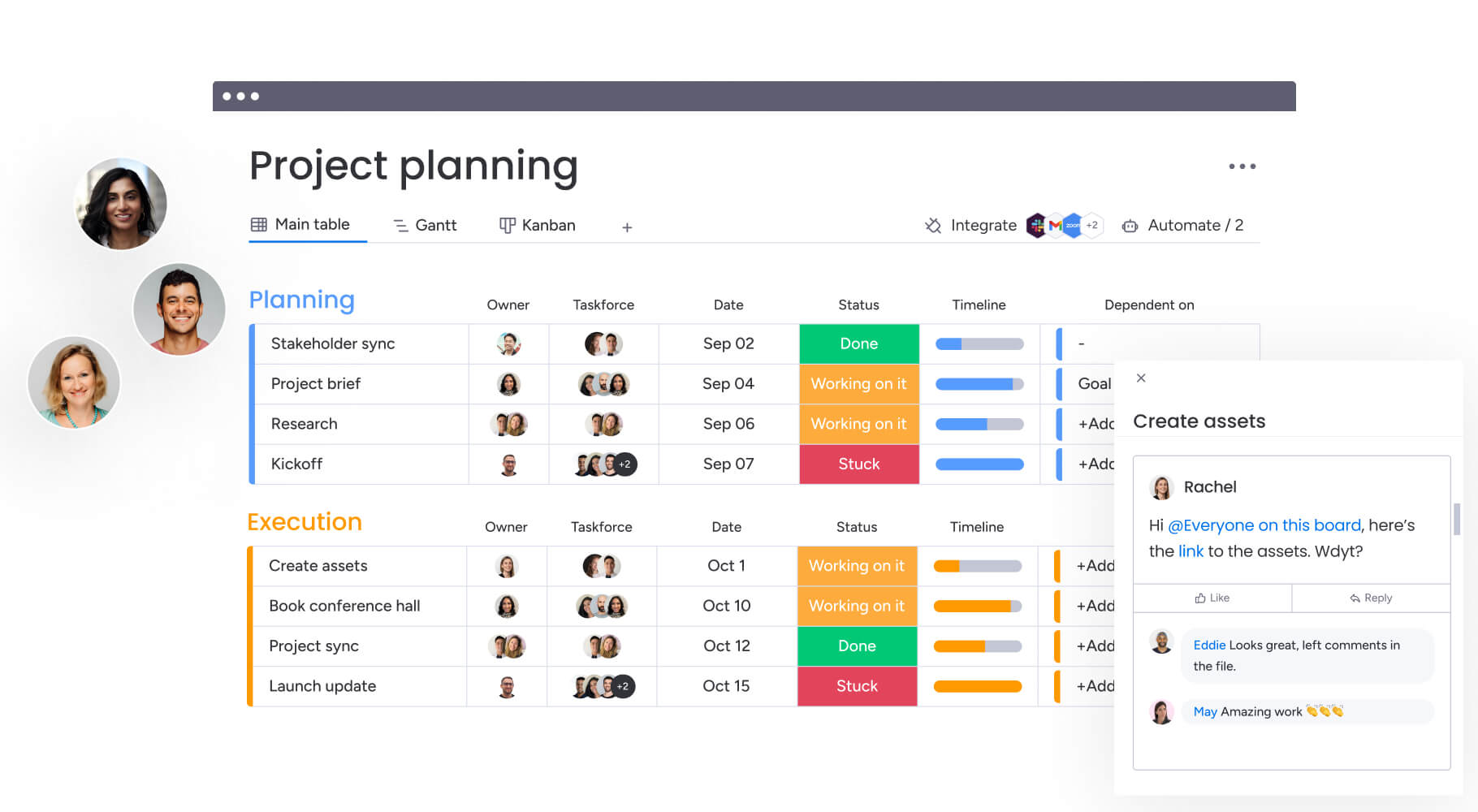
A project manager takes big ideas and turns them into reality by coordinating the people, resources, and timelines needed to hit specific goals — all while juggling the classic constraints of time, budget, and scope.
Unlike operational managers who oversee ongoing business functions, project managers focus on temporary endeavors with defined start and end points. They serve as the central coordination point between departments, transforming strategic vision into tactical execution and bridging the gap between what leadership wants to accomplish and how teams actually get work done.
The project manager role has evolved far beyond traditional coordination and status reporting. They operate across every industry and project type, from coordinating product launches to managing software implementations and corporate events, always balancing the competing demands of scope, schedule, and budget.
How project managers drive business value
Great project managers directly impact the bottom line. They cut costs, head off risks before they become crises, and get products to market faster than competitors. When you have a skilled project manager coordinating your initiatives, you’re not just buying better organization; you’re investing in measurable business outcomes that show up in your quarterly results.
- Preventing scope creep: Disciplined change management keeps projects from ballooning beyond their original budget, saving organizations from costly overruns that eat into profitability
- Accelerating time-to-market: Streamlined workflows and optimized processes reduce project delivery time significantly, helping you capture market opportunities before the window closes
- Maximizing resource efficiency: Smart allocation ensures the right people work on the right assignments at the right time, eliminating wasted capacity and preventing burnout
- Mitigating risks proactively: Early identification of potential problems — from overallocated team members to emerging bottlenecks — allows teams to course-correct before issues derail timelines or budgets
- Improving decision-making: Real-time visibility into project health gives leadership the data they need to make strategic calls about resource allocation, priorities, and investments
Organizations that invest in strong project management capabilities see the returns quickly. Companies with mature project management offices (PMOs) are twice as likely to complete projects successfully, translating these optimization efforts into measurable cost savings, faster delivery cycles, and competitive advantages that compound over time.
How project managers work across the project lifecycle
Project managers wear a lot of hats, but their work typically falls into 2 buckets: guiding the project through its lifecycle (from initiation to close) and owning the core responsibilities that keep execution on track (planning, communication, risk, and resources). Here’s how that breaks down.
- Initiation: Define scope and objectives by working with stakeholders to determine success criteria and project boundaries. Develop business cases and secure executive sponsorship.
- Planning: Create detailed schedules, resource plans, budget forecasts, and risk management strategies. Break down work into manageable components and sequence activities for optimal efficiency.
- Execution: Coordinate work across teams, manage scope changes, and maintain momentum despite obstacles. Facilitate collaboration between team members with competing priorities.
- Monitoring: Track progress against plans, measure performance through key metrics, and identify variances requiring attention. This phase runs parallel to execution.
- Closure: Deliver final results, conduct post-mortems to analyze outcomes, archive documentation, and celebrate team accomplishments.
Did you know? The demand for project managers is growing faster than demand for workers in many other professions. According to a PMI-commissioned talent gap analysis by Anderson Economic Group, the global economy will need nearly 88 million project management-oriented professionals by 2027.
Key project manager responsibilities
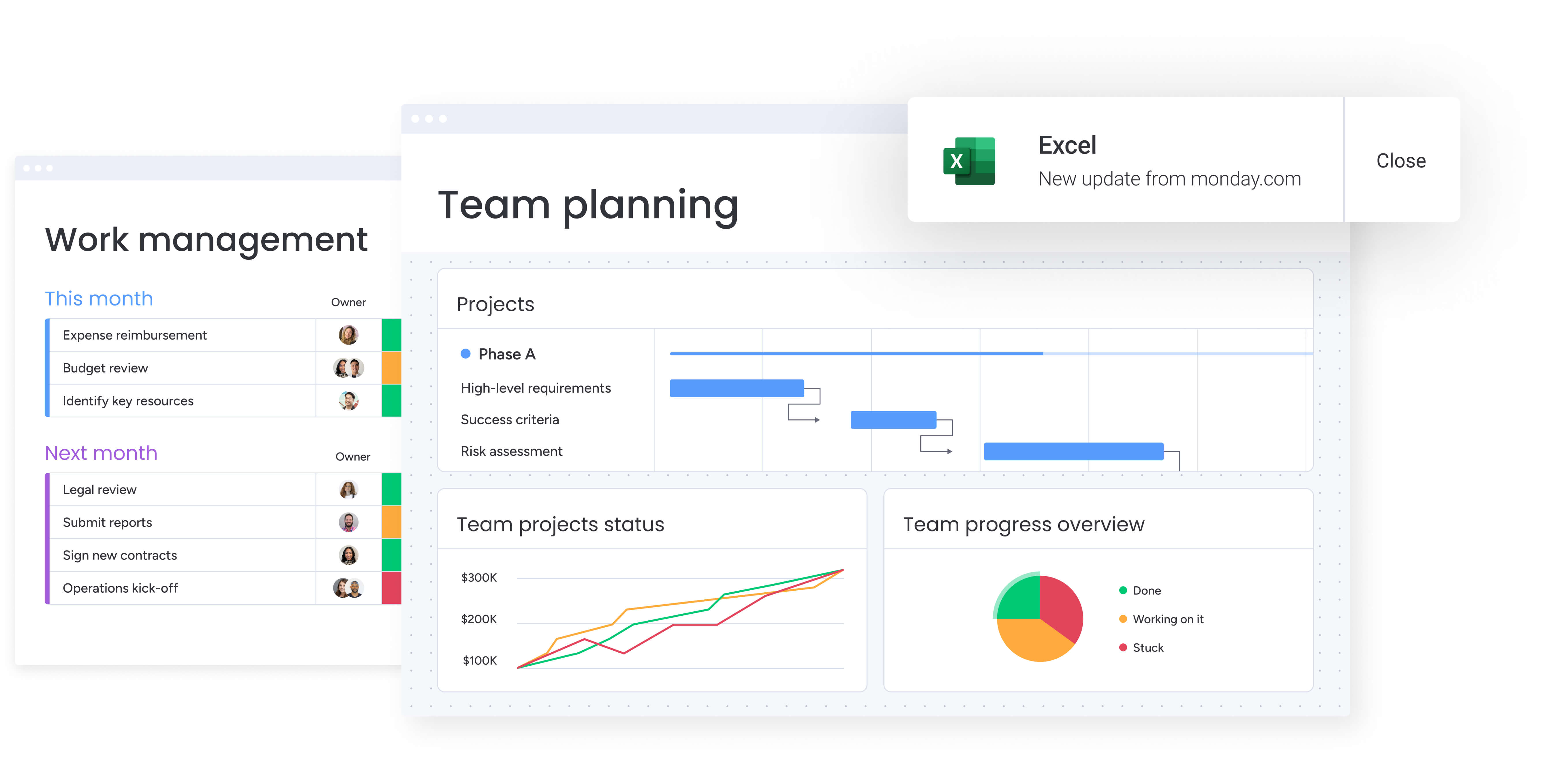
Project managers carry responsibilities that span strategic planning, team leadership, risk management, stakeholder communication, and financial oversight. These responsibilities define the role’s scope and impact on organizational success, requiring a diverse skill set and strategic mindset.
Strategic planning and goal alignment
Project managers translate business objectives into actionable project plans that specify deliverables, timelines, and resource requirements. This translation process ensures projects contribute meaningfully to organizational strategy while maintaining realistic expectations.
Core planning activities:
- Setting realistic timelines: Breaking work into components, estimating effort, and sequencing activities
- Establishing success criteria: Defining measurable targets that remove ambiguity about achievement
- Conducting stakeholder analysis: Identifying affected parties and developing management strategies
- Defining project scope: Clarifying what’s included and excluded from project boundaries
Project managers ensure alignment by understanding how each initiative contributes to broader business goals. They assess stakeholder influence and interest levels, developing tailored strategies to manage different relationships effectively.
Team leadership and performance management
Project managers lead without formal authority, using influence and collaboration rather than command-and-control approaches. This leadership style requires emotional intelligence, communication skills, and the ability to motivate diverse team members toward common goals.
Leadership responsibilities:
- Facilitating communication: Ensuring information flows freely between team members
- Removing obstacles: Eliminating barriers that slow progress or prevent collaboration
- Managing conflicts: Addressing issues directly before tensions escalate
- Providing feedback: Helping team members improve performance and develop professionally
Project managers adapt their leadership style to different team members, recognizing that some need detailed direction while others thrive with autonomy. They create conditions for high performance by providing necessary resources and support.
Risk identification and mitigation
Project managers take a proactive approach to identifying potential problems before they occur. This forward-thinking mindset helps teams prepare for challenges rather than scrambling when crises hit, maintaining project momentum through uncertainty.
Risk management components:
- Developing contingency plans: Outlining specific actions to take if risks materialize
- Setting trigger points: Defining signals for when to activate contingency responses
- Allocating resources: Ensuring necessary resources are available for risk response
- Establishing decision authority: Clarifying who can approve contingency plan activation
Risk assessments occur at project start and throughout execution, with project managers continuously asking what could go wrong and how the team would respond.
Stakeholder communication and reporting
Project managers tailor messages for different audiences based on their information needs and decision-making authority. Effective communication ensures stakeholders remain informed, engaged, and supportive throughout the project lifecycle.
Audience-specific communication:
- Executives: High-level status updates highlighting project health and strategic implications
- Team members: Detailed information, priorities, and context about work integration
- External stakeholders: Progress updates and decision points requiring their input
Communication methods:
- Status reports: Regular written updates for scheduled review
- Dashboard presentations: Visual project data for quick comprehension
- Stakeholder meetings: Interactive discussions for collaboration and decision-making
Budget control and resource optimization
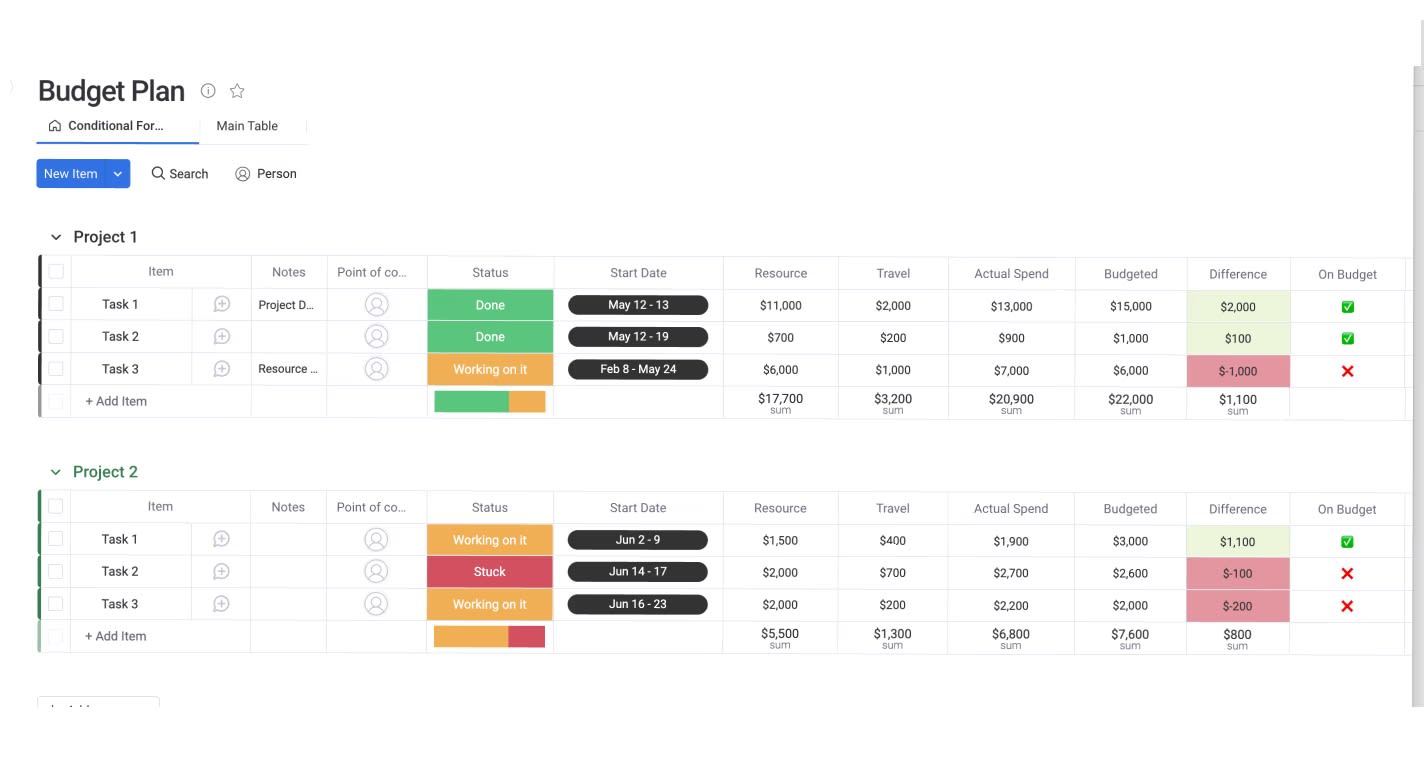
Project managers monitor and control project finances even when they don’t directly control budgets. This financial stewardship ensures projects deliver value while staying within approved spending limits.
Financial management activities:
- Tracking actual spending: Comparing expenditures against planned budgets throughout execution
- Investigating variances: Analyzing discrepancies that exceed acceptable thresholds
- Optimizing allocation: Identifying opportunities to reduce costs without compromising quality
- Justifying investments: Recognizing when additional spending would improve outcomes
Project managers balance the classic project management triangle: scope, time, and cost. These 3 constraints are interdependent, requiring trade-off decisions when changes occur.
Learn more: How to be a good project manager
7 essential skills every project manager needs
Project managers require a blend of technical competencies, interpersonal abilities, and strategic thinking capabilities. These 7 skills represent the core competencies that separate effective project managers from those who struggle to deliver results consistently.
Here’s a quick look at these key skills, with a more in-depth explanation after the table:
| Skill | Primary focus | Business impact |
|---|---|---|
| Project management software proficiency | Digital workflows, automation, data visualization | Faster coordination, reduced manual work |
| Data analysis and visualization | Metrics interpretation, trend identification | Informed decisions, proactive management |
| Leadership and team motivation | Influence, emotional intelligence, conflict resolution | Higher team performance, reduced turnover |
| Strategic communication | Audience-tailored messaging, active listening | Stakeholder alignment, faster approvals |
| Problem-solving and critical thinking | Root cause analysis, systems thinking | Fewer recurring issues, creative solutions |
| Adaptability and change management | Flexibility, transition support | Smoother pivots, maintained momentum |
| Financial management and budgeting | Cost tracking, ROI analysis | Budget adherence, investment justification |
1. Project management software proficiency
In practice, this skill shows up in how effectively a project manager creates visibility across timelines, dependencies, and ownership. Strong software proficiency allows PMs to spot risks early, adjust plans quickly, and keep stakeholders aligned without relying on manual follow-ups.
Without it, teams fall back on spreadsheets, disconnected tools, and status meetings that consume time without improving outcomes. Modern project managers increasingly rely on platforms and AI-powered insights to automate tracking and surface what actually needs attention, freeing them to focus on decisions rather than administration.
2. Data analysis and visualization
Today’s project managers are expected to interpret signals, not just report status. This skill matters most when projects start to drift — deadlines slip, resources stretch thin, or priorities shift — and someone needs to understand why.
Without data fluency, PMs react too late or rely on intuition alone. With clear dashboards, trend analysis, and predictive insights, project managers can identify patterns early and guide teams toward corrective action before issues escalate.
3. Leadership and team motivation
Project managers often lead teams they don’t manage directly, across functions with competing priorities. This skill shows up in how well a PM builds trust, maintains momentum, and keeps teams engaged through uncertainty.
When leadership is weak, projects stall despite solid plans. Effective PMs use emotional intelligence and influence — not authority — to remove blockers, resolve tension, and create conditions where teams can perform at their best.
4. Strategic communication
Strategic communication is less about sharing updates and more about shaping understanding. Project managers use it to align stakeholders, surface risks early, and support timely decision-making.
Without strong communication, teams drown in detail while executives lack clarity. Skilled PMs tailor messages to their audience, focus on implications rather than activity, and ensure everyone understands not just what’s happening, but why it matters.
5. Problem-solving and critical thinking
Projects rarely fail because of a single issue; they fail because symptoms are addressed instead of root causes. This skill matters when PMs must decide which problems to solve, which trade-offs to make, and which risks to accept.
Without critical thinking, teams fix surface issues while deeper constraints persist. Strong project managers apply systems thinking to understand downstream impacts and make decisions that stabilize projects long-term, not just in the moment.
6. Adaptability and change management
Change is constant in project work, whether it comes from shifting priorities, new requirements, or external pressures. Adaptability shows up in how well a PM can replan without losing trust or momentum.
When change is handled poorly, teams resist updates and confidence erodes. Effective project managers build flexibility into plans, communicate changes clearly, and help stakeholders understand the rationale behind pivots so execution can continue smoothly.
7. Financial management and budgeting
Project managers don’t need to be accountants, but they do need financial judgment. This skill matters when decisions affect cost, scope, and speed, especially when trade-offs are unavoidable.
Without financial awareness, projects drift over budget or underdeliver value. Strong PMs understand ROI, track variances, and communicate financial implications clearly, enabling smarter decisions that balance delivery with business impact.
Types of project managers by industry
While the core principles of project management work everywhere, what it actually takes to succeed looks wildly different depending on whether you’re launching software or building a hospital. Understanding these differences helps aspiring project managers choose career paths aligned with their interests and strengths while recognizing the unique value each specialization brings.
Technology and software project managers
Technology project managers work on software development, system implementations, and digital transformation initiatives. They coordinate developers, designers, QA engineers, and product managers to deliver software products and features within fast-paced, iterative environments.
Key characteristics:
- Agile methodology expertise: Using Scrum and Kanban for iterative development
- Technical literacy: Understanding development processes and constraints
- Rapid iteration cycles: Managing evolving requirements based on user feedback
Technology project managers handle technical debt considerations and coordinate product launches that require synchronization across development, marketing, sales, and customer support teams.
Construction and engineering project managers
Construction project managers coordinate physical building projects with long timelines, regulatory requirements, and safety considerations. They manage multiple contractors and subcontractors who must work in carefully sequenced order to avoid delays and cost overruns.
Unique aspects:
- Regulatory knowledge: Managing permit approvals from multiple agencies
- Safety management: Preventing accidents that could injure workers or delay projects
- Physical logistics: Coordinating material deliveries and equipment scheduling
Construction project managers prioritize safety to prevent accidents that could injure workers, delay projects, and expose organizations to liability while managing complex supply chains and weather dependencies.
Healthcare and pharmaceutical project managers
Healthcare project managers work in highly regulated environments with strict compliance requirements. They manage clinical trials that must follow FDA protocols for patient safety and data integrity, where mistakes can have life-threatening consequences.
Critical requirements:
- Regulatory expertise: Ensuring documentation meets stringent requirements
- Clinical knowledge: Understanding medical processes and terminology
- Patient safety focus: Prioritizing safety over schedule or budget concerns
Healthcare project managers navigate regulatory approvals from agencies like FDA, ensuring all documentation meets requirements while coordinating system implementations in hospitals where downtime could impact patient care.
Marketing and creative project managers
Marketing project managers coordinate campaigns, content creation, and brand initiatives. They work with creative teams who have different working styles and timelines than traditional project teams, balancing artistic vision with business objectives.
Key responsibilities:
- Creative collaboration: Managing artistic processes and subjective feedback
- Multi-channel coordination: Aligning efforts across various marketing channels
- Campaign timing: Synchronizing launches with product releases and seasonal trends
Marketing project managers manage relationships with external agencies and coordinate multiple deliverables that must be ready simultaneously for campaign launch, often working with tight deadlines and changing creative requirements.
Project manager salary expectations
What you’ll earn as a project manager depends on your experience, industry, where you live, and what specialized skills you bring to the table. Knowing these ranges helps you set realistic expectations and focus your skill-building on areas that actually pay off.
Note: The ranges below reflect typical U.S.-based roles and should be viewed as directional benchmarks.
Project manager compensation by experience level
Project manager salaries increase substantially with experience, reflecting the growing complexity of projects and increased business impact that senior professionals deliver.
- Entry-level project managers typically earn $60,000–$80,000 annually, focusing on smaller projects with limited complexity and budget responsibility. They work under the guidance of senior project managers, learning methodologies and building foundational skills through hands-on experience.
- Mid-level project managers with 3–7 years of experience earn $80,000–$120,000 annually. They manage moderately complex projects independently, coordinate cross-functional teams, and take on increasing budget responsibility while developing specialized industry knowledge.
- Senior project managers with 7+ years of experience earn $120,000–$160,000+ annually. They manage large, complex projects with significant business impact, coordinate multiple project teams, and provide strategic input on portfolio priorities.
Project manager geographic and industry salary variations
Location significantly impacts project manager salaries, with major metropolitan areas and technology hubs offering higher compensation to attract talent in competitive markets.
| Industry | Average salary range (mid-level) | Key factors driving compensation |
|---|---|---|
| Technology/software | $100,000–$140,000 | High project complexity, competitive talent market |
| Financial services | $95,000–$130,000 | Regulatory requirements, large budgets |
| Healthcare/pharma | $90,000–$125,000 | Compliance demands, specialized knowledge |
| Construction/engineering | $80,000–$110,000 | Physical project complexity, safety responsibility |
| Marketing/creative | $75,000–$105,000 | Agency vs. in-house variation, campaign complexity |
Project managers in San Francisco, New York, Seattle, and Boston typically earn more than those in smaller cities, though cost of living differences offset some of this premium.
How to evaluate benefits beyond base salary
Total compensation for project managers extends beyond base salary, with additional elements that can significantly impact overall value and job satisfaction.
- Performance bonuses: Typically 5–20% of base salary tied to project delivery success
- Stock options: Common in technology companies, potentially increasing total compensation substantially
- Professional development: Training, certifications, and conference attendance funding
- Flexible work arrangements: Remote options and schedule flexibility valued by many professionals
Organizations that invest in certification training, conference attendance, and continuing education help project managers build skills that increase long-term earning potential while providing immediate value through improved project outcomes.
The future of project management: From coordination to ownership
The project managers who succeed in the coming years won’t be the best schedulers. They’ll be the ones who can interpret signals early, guide teams through change, and help leaders make smarter decisions under uncertainty.
Project managers as decision facilitators — not status reporters
In the past, a large portion of a project manager’s time went into collecting updates, preparing reports, and relaying information between teams. Today, that work is increasingly automated. The real value now lies in making sense of what the data is telling you — and acting on it.
Modern project managers are expected to:
- Spot risks before they show up as missed deadlines
- Understand trade-offs between scope, speed, and cost
- Surface insights leaders can use to prioritize work across projects
Instead of answering “What’s the status?”, PMs are being asked “What should we do next and why?”
AI changes how projects are managed — not who manages them
AI is reshaping project management by handling the mechanical parts of the job: tracking progress, flagging risks, forecasting delays, and consolidating data across projects. This doesn’t replace project managers — it raises the bar for their judgment.
As AI takes over administrative coordination, project managers spend more time on:
- Stakeholder alignment and expectation management
- Navigating ambiguity when priorities shift
- Coaching teams through blockers and change
The human side of project management — trust, influence, and decision-making — becomes more important, not less.
Portfolio visibility becomes table stakes
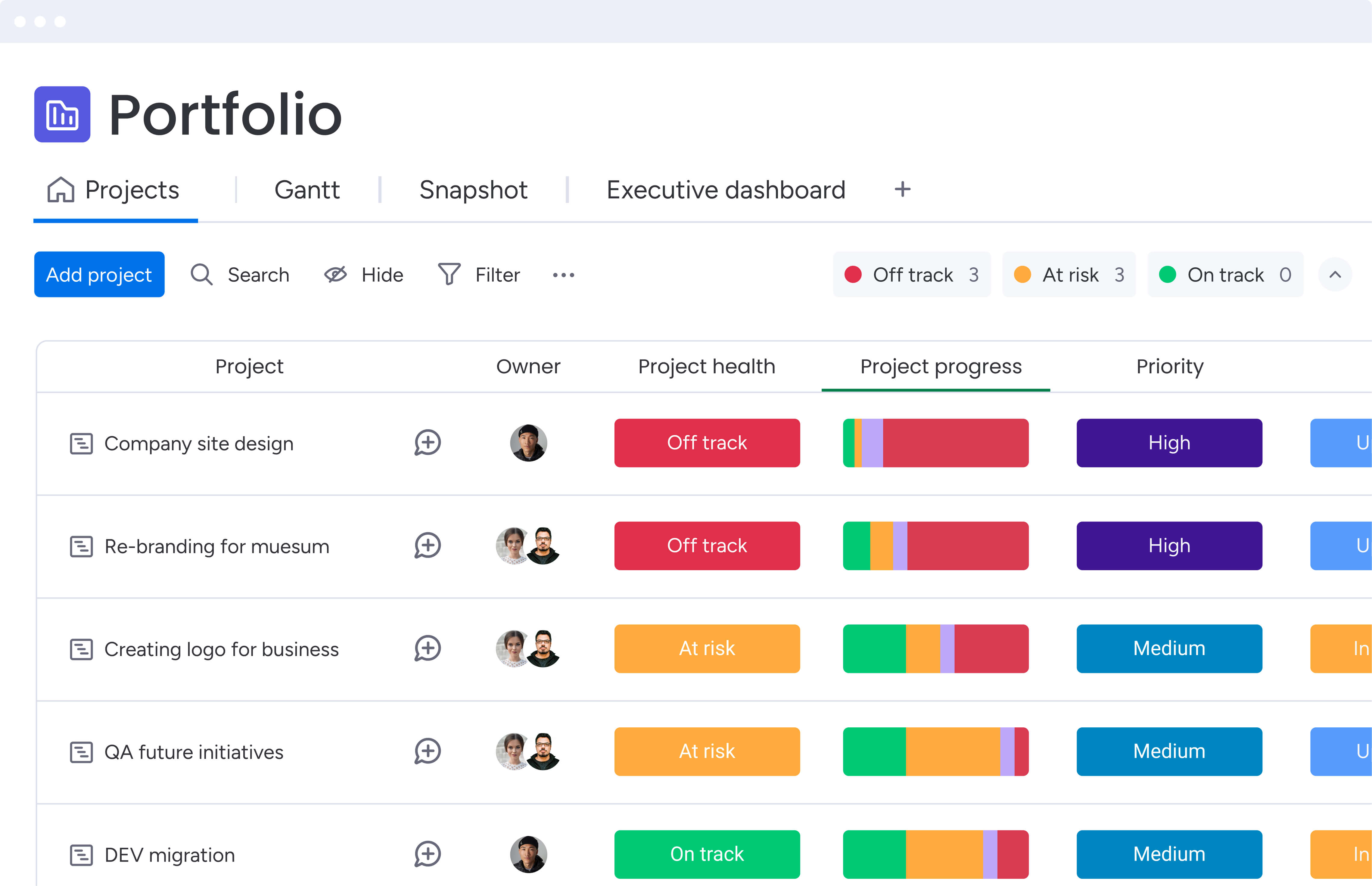
Project managers are no longer evaluated only on individual project delivery. Leaders increasingly expect visibility across entire portfolios, including how resources are shared, where bottlenecks form, and which initiatives create the most impact.
This means PMs need to think beyond single timelines and ask:
- How does this project compete for resources with others?
- Where are teams overextended across initiatives?
- Which projects deserve attention — and which should be paused?
Project managers who can connect project-level execution to organizational priorities position themselves as strategic partners, not just delivery leads.
What this means for your career as a project manager
The future favors project managers who combine strong fundamentals with systems thinking. Certifications and methodologies still matter — but they’re no longer enough on their own.
To stay relevant, project managers need to:
- Build comfort with data and AI-driven insights
- Strengthen communication and influence across functions
- Focus on outcomes, not just deliverables
Project management is evolving into a role where you’re trusted to guide decisions, manage complexity, and help organizations adapt. PMs who embrace that shift will find more influence, more responsibility, and greater career growth — even as the tools continue to change.
Elevate your project management capabilities
Project management is transforming from a role focused on schedules and status updates to a strategic position where you’re directly responsible for delivering real business results. Success requires mastering both traditional project management fundamentals and emerging digital capabilities that enhance coordination, visibility, and decision-making.
Project managers who embrace AI-powered insights, automated workflows, and real-time collaboration will find themselves better positioned to deliver strategic value. The future belongs to project managers who combine human leadership skills with digital platform capabilities to drive results that matter to their organizations.
Try monday.comFAQs
What is the difference between a project manager and a program manager?
The difference between a project manager and a program manager is that a project manager focuses on individual projects with specific deliverables and timelines, while a program manager oversees multiple related projects that work together to achieve broader business objectives. Program managers coordinate dependencies between projects and ensure the collection of projects delivers strategic value beyond what individual projects could achieve alone.
Which industries have the highest demand for project managers?
Technology, healthcare, construction, and financial services consistently show the highest demand for project managers due to their complex, project-driven nature. Technology companies need project managers for software development and system implementations, healthcare organizations need them for clinical trials and process improvements, and financial services need them for regulatory compliance and system upgrades.
Can you become a project manager without prior experience?
Many project managers start by leveraging transferable skills from other roles like business analysis, team leadership, or subject matter expertise, then gain experience through internal projects, volunteer work, or entry-level positions that provide project coordination experience. Formal project management education and entry-level certifications like CAPM help demonstrate commitment and foundational knowledge even without extensive PM experience.
How long does it take to become a certified project manager?
Most certifications require 3–5 years of project management experience plus 35 hours of project management education, though timeline varies based on the specific certification and individual background. The PMP certification requires either 3 years of experience with a bachelor's degree or 5 years without a degree, plus passing a rigorous exam that tests knowledge across the project management body of knowledge.
What is the difference between Agile and traditional project management?
Traditional project management follows sequential phases with detailed upfront planning, where requirements are defined completely before execution begins, while Agile uses iterative cycles with frequent adjustments based on feedback and changing requirements. Traditional approaches work well for projects with stable requirements and predictable execution, while Agile excels in environments where requirements evolve and rapid adaptation provides competitive advantage.
Will project managers be replaced by AI?
AI will augment project managers by automating routine work and providing stronger insights, but human skills like leadership, communication, and strategic thinking remain essential for project success. Project managers who embrace AI capabilities to handle administrative work and data analysis will become more effective, focusing their time on relationship management, strategic decision-making, and complex problem-solving that requires human judgment and emotional intelligence.

 Get started