


Every project reaches a point where the question isn’t “how’s it going?” but “should we keep going?” That’s where gate reviews come in. A gate review is the structured moment when stakeholders review the evidence, like progress, risks, budget, and strategic fit, and decide whether a project moves forward, changes direction, or stops entirely.
Without gate reviews, organizations end up funding projects on momentum instead of merit. Budgets quietly drift, scope creeps, and teams keep building things that nobody re-evaluates after the original business case is approved. Gate reviews exist to prevent exactly that: they force a deliberate, criteria-based decision at the moments where it matters most.
In this guide, you’ll learn what a gate review is, when to hold one, who should be involved, and how to run an effective gate review process from start to finish. We’ll also cover how teams use the monday AI Workspace to centralize gate decisions, automate governance workflows, and give stakeholders real-time visibility across projects and portfolios.
Get started with monday.comKey takeaways
- A gate review in project management is a formal go/no-go decision point between phases, where stakeholders decide whether a project should continue, change, or stop
- The main purpose of gate reviews is to protect strategy, budgets, and resources by checking progress, risks, and the business case against predefined criteria
- Gate reviews usually happen at major milestones, such as after the business case, after design, at key phase transitions, and before launch, when the project’s risk profile changes
- Each gate review ends with one of five outcomes: Go, Kill, Hold, Recycle, or Conditional go, so there’s never ambiguity about what happens next
- Using monday AI Workspace, teams can standardize gate reviews, centralize criteria and documentation, and give stakeholders real-time visibility into project status and gate decisions
Key takeaways
- A gate review in project management is a formal go/no‑go decision point between phases, where stakeholders decide whether a project should continue, change, or stop.
- The main purpose of gate reviews is to protect strategy, budgets, and resources by checking progress, risks, and the business case against predefined criteria.
- Gate reviews usually happen at major milestones — such as after the business case, after design, at key phase transitions, and before launch — when the project’s risk profile changes.
- Each gate review ends with one of five outcomes — Go, Kill, Hold, Recycle, or Conditional go — so there’s never ambiguity about what happens next.
- Using monday.com, teams can standardize gate reviews, centralize criteria and documentation, and give stakeholders real‑time visibility into project status and gate decisions.
What is a gate review in project management?
A gate review, also called a stage gate or phase gate review, is a formal go/no-go decision point between project phases. Independent stakeholders assess progress, risks, and the business case against predefined criteria to decide whether the project should continue, change direction, or stop, strengthening governance and preventing sunk-cost projects.
A gate review has five possible outcomes:
- Go: The project may proceed
- Kill: It’s no longer feasible to pursue the project
- Hold: For a defined reason, the project is on hold for now, but may continue in the future
- Recycle: After a few adjustments, the project can go ahead
- Conditional go: Upon meeting certain conditions, the project may move forward
In a literal sense, it’s a gate between phases or stages of a project, where the gatekeeper decides whether the project should proceed to the next stage. You can’t complete a phase or stage and cross to the next one until you pass through the gate.
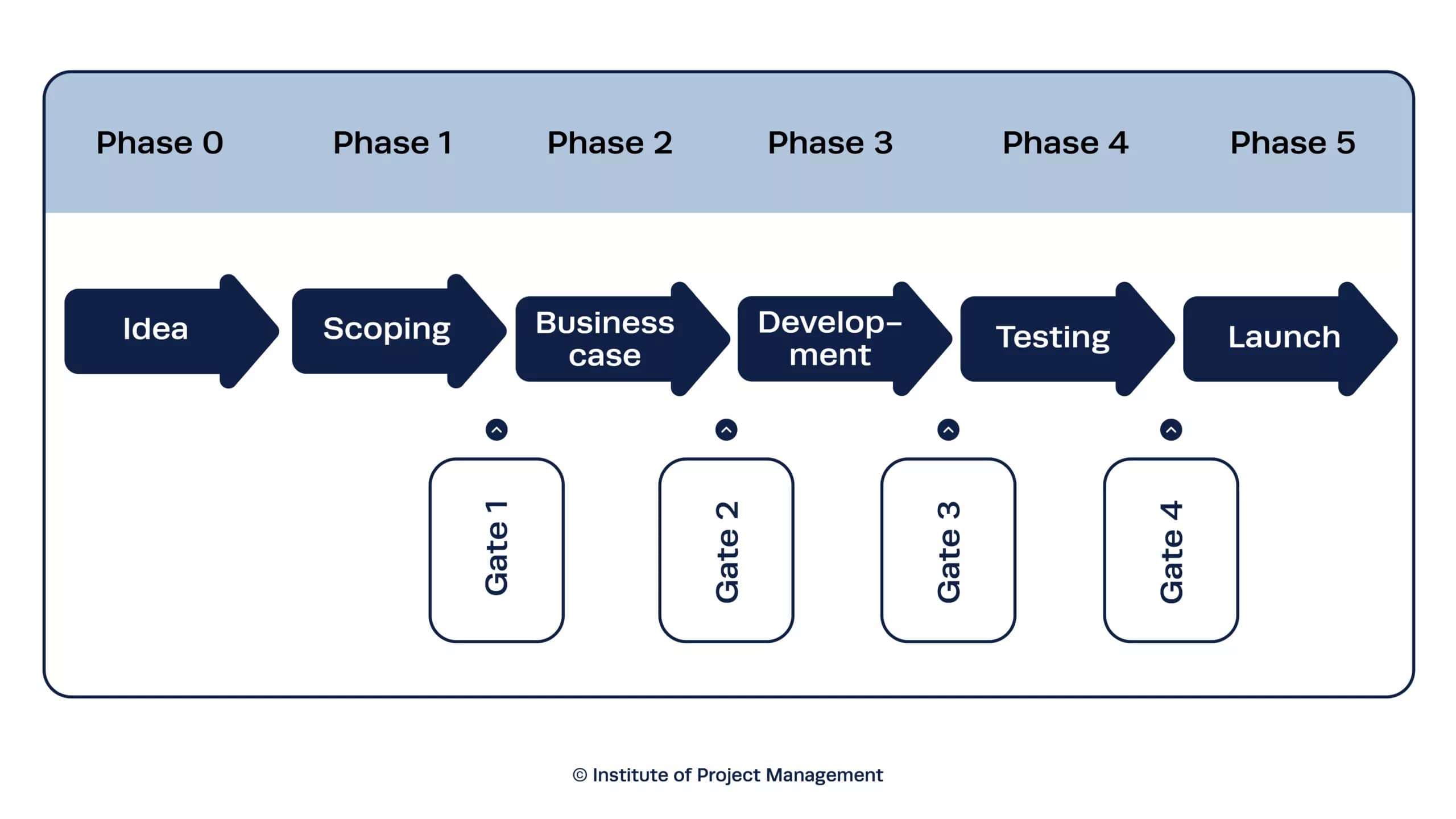
By enforcing these decisions at clear checkpoints, gate reviews keep governance robust and prevent projects from consuming budget without delivering value.
Stage gates, phase gates, and other related terms
In many organizations, stage gates and phase gates are used interchangeably, but they describe slightly different perspectives on the same idea.
- Phase gates sit at the end of each project phase, such as moving from design to construction or from development to testing. They confirm that the work for that phase is complete and meets the agreed quality standards before the team moves on
- Stage gates are often linked to a formal Stage-Gate-style investment model, where each gate decides whether to release additional budget for the next stage. For example, an organization might fund a beta release only after an alpha prototype meets defined performance or retention metrics
Both types of gates serve as structured go/no-go checkpoints that protect your budget and help you avoid moving projects forward solely on time and money spent.
Other common terms for gate reviews include:
- Stage gates
- Phase gates
- Decision gates
- Toll gates
- Boundary gates
- Gateway
- Go/no-go decision points
Gate reviews vs. regular project reviews
While both meetings involve project data, their fundamental purpose and authority levels differ significantly. Regular reviews focus on how the work is progressing, while gate reviews question whether the work should continue.
Gate reviews in Agile, hybrid, and portfolio management
Gate reviews aren’t limited to traditional waterfall projects. The core idea, i.e., pausing at defined points to make evidence-based go/no-go decisions, applies just as well in Agile, hybrid, and portfolio-driven environments.
Gate reviews in Agile teams
In Agile environments, gate reviews are usually aligned with major release boundaries, program increments, or large feature milestones rather than fixed project phases. Instead of approving a full phase upfront, stakeholders review evidence such as customer feedback, delivery velocity, quality metrics, and business impact before approving continued investment.
The goal isn’t to block iteration, but to ensure that ongoing work still delivers value and aligns with strategic priorities.
Gate reviews in hybrid delivery models
Many organizations operate in hybrid mode, combining Agile delivery with traditional governance requirements. In these cases, teams may work iteratively day-to-day, while formal gate reviews occur at key funding, regulatory, or cross-departmental checkpoints. This allows teams to move quickly while leadership retains decision-making authority over risk, budget, and scope.
Portfolio-level gate reviews
At the portfolio level, gate reviews shift focus from individual project execution to investment prioritization. Leaders compare initiatives across the portfolio to assess which projects should receive additional funding, be paused, be re-scoped, or stopped entirely based on strategic value, risk exposure, and capacity constraints.
Used consistently, portfolio gate reviews help organizations dynamically rebalance work rather than lock in outdated priorities for the entire year.
Why gate reviews are important
So why should your organization invest time in formal gate reviews when project teams are already stretched thin?
Gate reviews help teams make deliberate, data-driven decisions about whether projects should continue, change direction, or stop. They protect budgets, focus, and trust by structuring how major commitments are made.
Here are some of the benefits of gate reviews:
- Keeping projects aligned with business goals by checking that each phase still supports the original strategy and business case
- Confirming the expected benefits, scope, and timelines remain realistic before approving additional work
- Protecting budgets by preventing quiet cost drift and forcing a justification for additional investment
- Preventing “zombie projects” that keep running just because time and money have already been spent
- Reducing scope creep by requiring formal approval for significant changes in scope or direction
- Improving resource utilization by freeing people and budget from low-value projects and redirecting them to higher-priority work
- Strengthening portfolio management and focus by making it easier to compare projects and prioritize the highest-impact ones
- Building stakeholder and executive confidence through transparent, evidence-based decisions at each gate
In 2026, AI-augmented governance is making gate reviews even more valuable, teams can surface risks earlier and reduce reliance on manual status reporting, so the committee spends its time on decisions rather than data gathering.
When to hold a gate review
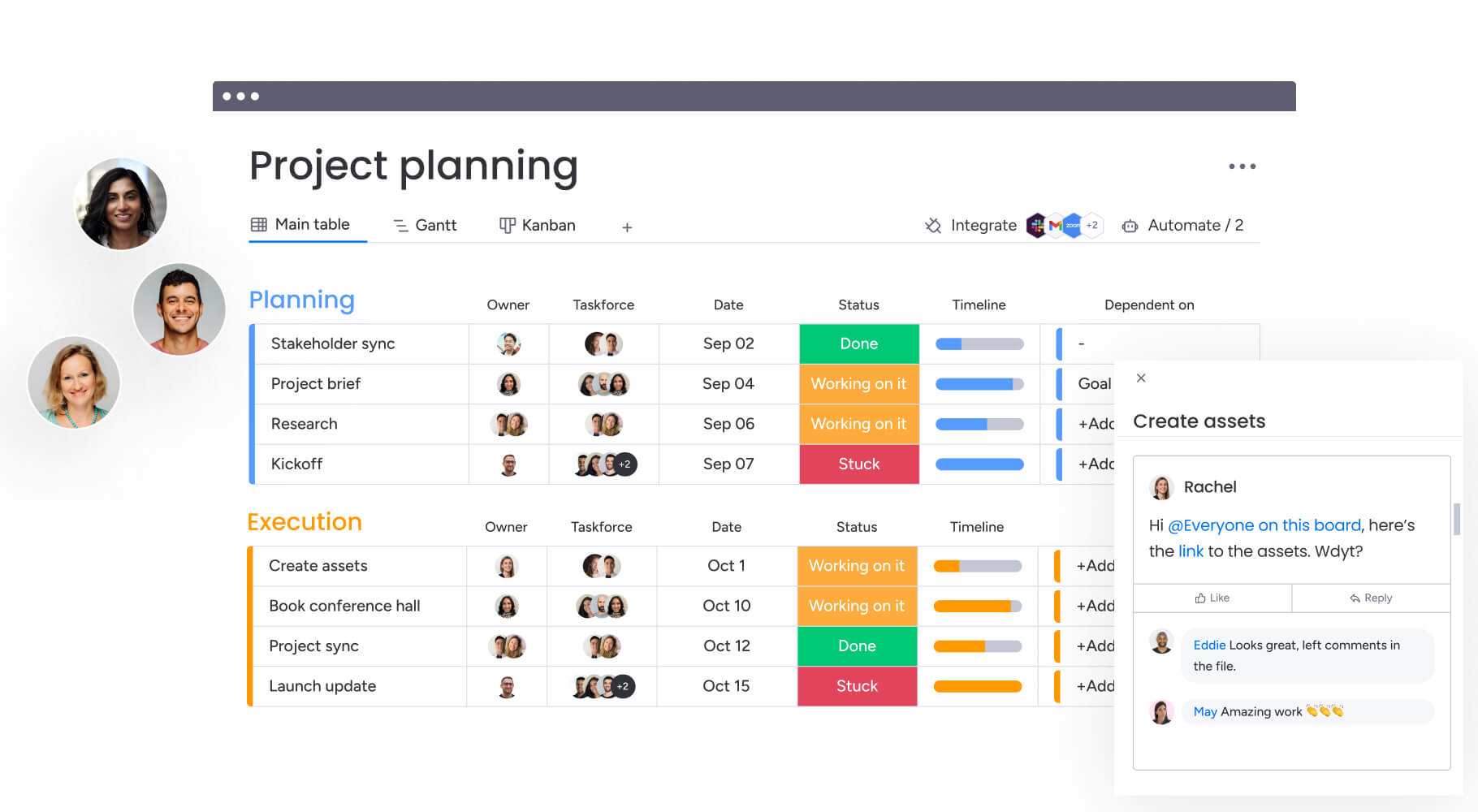
Gate reviews are most effective when they’re tied to moments where the project’s risk profile, investment level, or strategic commitment changes. In practice, this usually means holding a gate review at the end of each major project phase, before approving additional time, budget, or resources.
As part of project planning, teams should define both the phases of the work and the decision points between them, so gate reviews are expected, not reactive, throughout the project lifecycle.
Typically, projects move through 5 high-level phases, each with a natural gate review moment:
Phase 1: project initiation
A gate at the end of the project initiation confirms that the problem is worth solving, the business case is sound, and the project is aligned with the current strategy before meaningful investment begins.
Phase 2: project planning
A gate at the project planning phase validates that scope, timelines, costs, and risks are clearly understood and realistic, and that the team is ready to commit to execution.
Phase 3: project execution
Mid-execution gate reviews assess whether delivery is on track, risks are under control, and assumptions made earlier still hold true before continuing at full speed.
Phase 4: project monitoring and control
Gate reviews at the project monitoring and control phase focus on whether corrective action is needed, such as re-scoping, pausing, or reallocating resources, based on performance, risk, or external changes.
Phase 5: project closure
A final gate at the project closeout confirms that objectives were met, deliverables are accepted, and lessons learned are captured before formally closing the project and releasing resources.
Note: Not every project needs a gate at every phase, but any point where failure, delay, or misalignment would materially impact the business is a strong candidate for a gate review.
Get it now: Project closure template
The steering committee: Who to involve in a gate review
A gate review needs to be independent of the project’s day-to-day operations, so the project manager shouldn’t conduct it. Ideally, you want a steering committee of independent reviewers with a stake in the business, because they’ll conduct a more rigorous review.
A steering committee typically includes C-level executives and departmental managers involved in the project. The gatekeeper, typically the most senior decision-maker on the committee, has final authority on the go/no-go decision at each gate. But the committee can also include:
- Executive sponsors and decision makers: Senior leaders with the authority to approve or stop projects, release budget, and resolve conflicts between this project and other organizational priorities
- Technical experts/SMEs: Experienced specialists (for example, lead engineers, architects, compliance or security experts) who can validate feasibility, quality, and technical risks
- Business stakeholders: Representatives from product, sales, customer success, finance, or operations who ensure the project still meets customer needs, is commercially viable, and is operationally supportable
- Independent challenge/”red team” (for high-risk work): A small group with no direct stake in the project’s success, brought in on critical initiatives to challenge assumptions, ask difficult questions, and surface blind spots
The main criteria are that they have sufficient seniority, experience, and time to conduct an effective review.
Portfolio-level gate reviews
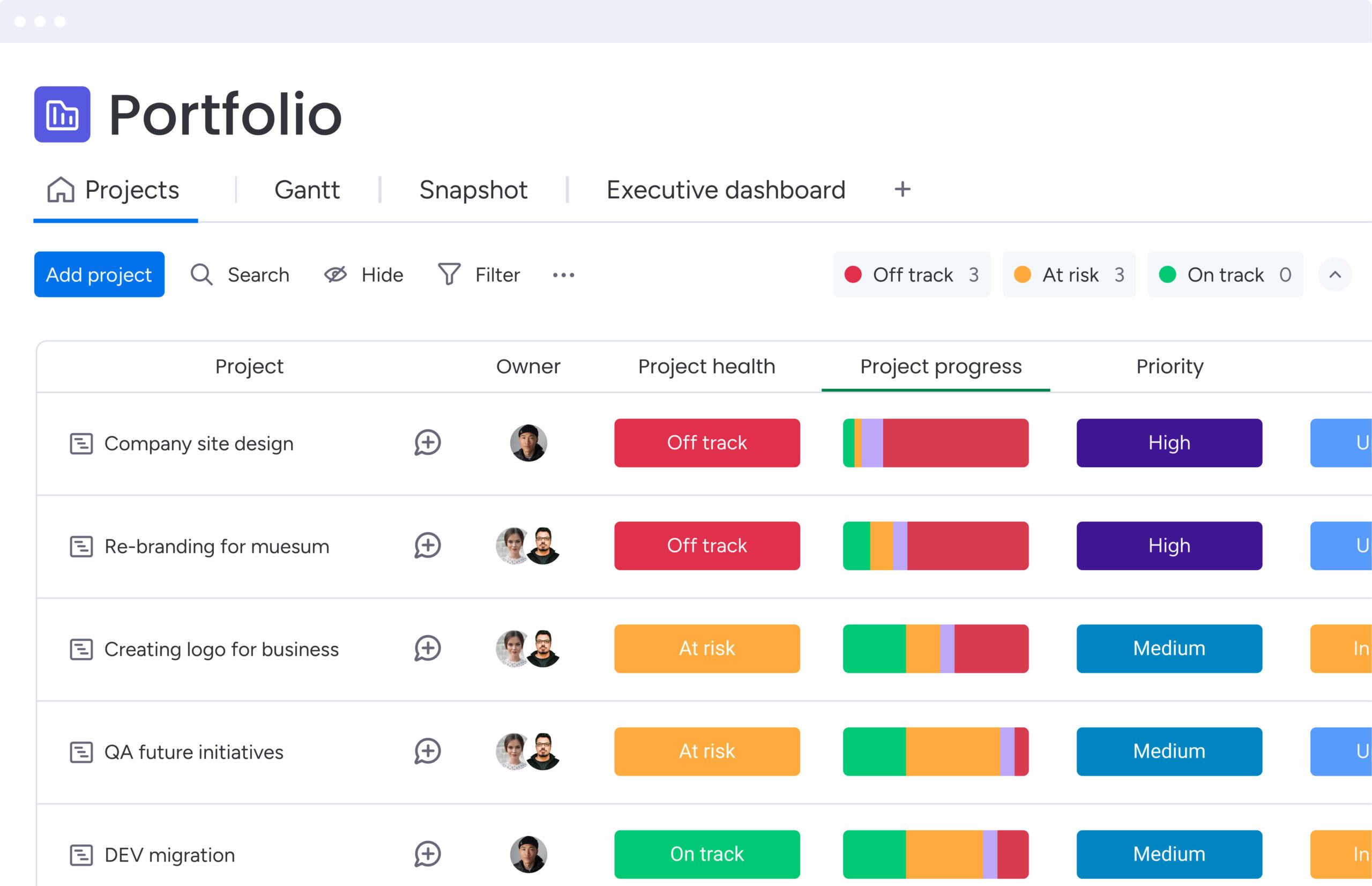
While individual gate reviews focus on whether a single project should move forward, portfolio-level gate reviews look across multiple initiatives to determine where the organization should invest next.
At this level, decision makers assess projects collectively, comparing expected value, risk, strategic alignment, and resource demands, rather than evaluating each initiative in isolation. A project that passes its individual gate may still be paused or deprioritized if higher-impact work requires the same people or budget.
Portfolio-level gate reviews help organizations:
- Reallocate funding toward the highest-value initiatives
- Balance short-term delivery with long-term strategy
- Reduce over-commitment and resource overload
- Increase transparency around why some projects advance while others stop
In large or fast-moving organizations, these reviews are essential for maintaining strategic focus as priorities evolve.
Seven steps to run an effective gate review
How do you move from understanding gate reviews to actually running one that drives results?
A gate review should feel like a structured, criteria-based decision workshop, not a routine status meeting. The goal is to decide whether the project should move forward, change direction, or stop, using evidence and predefined standards rather than gut feel.
Every organization will develop its own gate review process. However, a typical stage gate process includes the following steps:
- Establish gate criteria: Agree upfront on what “good enough to pass this gate” looks like, using specific, measurable criteria rather than vague statements
- Gather project documentation and data: Compile the evidence you need to assess those criteria, including updated timelines, budget reports, risk logs, test results, and key dependencies
- Run a pre-gate or “dry run” check: Do an informal internal review to spot gaps, missing data, or unresolved issues so the team walks into the formal gate review well-prepared
- Facilitate the review meeting (decision-focused agenda): Keep the agenda tight: brief project summary, review of critical risks and criteria, then a focused discussion leading to a recommendation
- Evaluate project health against criteria: Compare the evidence to the agreed criteria, combining hard metrics with informed judgment about feasibility, risk, and stakeholder alignment. AI-powered project management platforms can flag budget anomalies, timeline slippage, and resource conflicts before the review meeting, giving the committee data to act on rather than scrambling for status updates
- Decide: The steering committee confirms one of the outcomes: Go, Conditional go, Recycle, Hold, Kill, and documents any conditions, rework requirements, or reasons for stopping the project
- Create and assign action plans: Turn the decision into concrete next steps with owners and deadlines, whether that means unlocking the next phase, fixing gaps, or closing the project
Gate review criteria checklist
Use these buckets to shape your criteria for each gate:
| Criteria category | Key questions to assess | Example indicators |
|---|---|---|
| Business value | Does this project still support current strategic priorities? Is the expected ROI still realistic? | Updated business case, market demand signals, customer impact |
| Scope and deliverables | Are the agreed deliverables complete for this phase? Has scope changed materially since the last gate? | Phase deliverables, change requests, scope variance |
| Timeline and progress | Is the project on track against approved milestones? Are delays manageable and justified? | Schedule variance, milestone completion, dependency status |
| Budget and cost control | Is spending within approved tolerance? Are future cost estimates still credible? | Budget variance, forecast to complete, burn rate |
| Risk profile | Have new risks emerged? Are existing risks actively mitigated? | Risk register, mitigation plans, regulatory or vendor risks |
| Technical feasibility | Does the solution meet quality and performance expectations for this stage? | Test results, prototype outcomes, architecture reviews |
| Resource capacity | Are the right skills and capacity available for the next phase? | Team availability, skill gaps, competing priorities |
| Stakeholder alignment | Is there continued executive and business support to proceed? | Sponsor sign-off, steering committee feedback |
Common gate review mistakes (and how to avoid them)
What separates a gate review that protects your portfolio from one that becomes a rubber-stamp exercise?
Even well-intentioned gate reviews can lose their effectiveness if they’re treated as formalities rather than real decision points. These are some of the most common pitfalls teams encounter:
- Treating gate reviews as status updates: Gate reviews should not be extended project status meetings. Their purpose is decision-making, not reporting. If no decision is expected at the end of the meeting, it’s not a gate review
- Allowing sunk-cost bias to override criteria: A frequent failure mode is approving continuation simply because “we’ve already invested so much.” Gate reviews exist precisely to counter this bias by comparing future value against future cost, not past spend
- Using vague or shifting criteria: If criteria aren’t defined upfront, decisions become subjective and inconsistent. Changing criteria during the review undermines trust and makes outcomes harder to justify
- Lack of independent challenge: When only the project team is involved, risks and assumptions often go unchallenged. Effective gate reviews include independent perspectives that can ask difficult questions without ownership bias
- Failing to document decisions and follow-up actions: A gate decision without a documented rationale, conditions, owners, and deadlines quickly loses value. Without visibility, teams may continue work that was supposed to stop or change direction
Gate review template and example
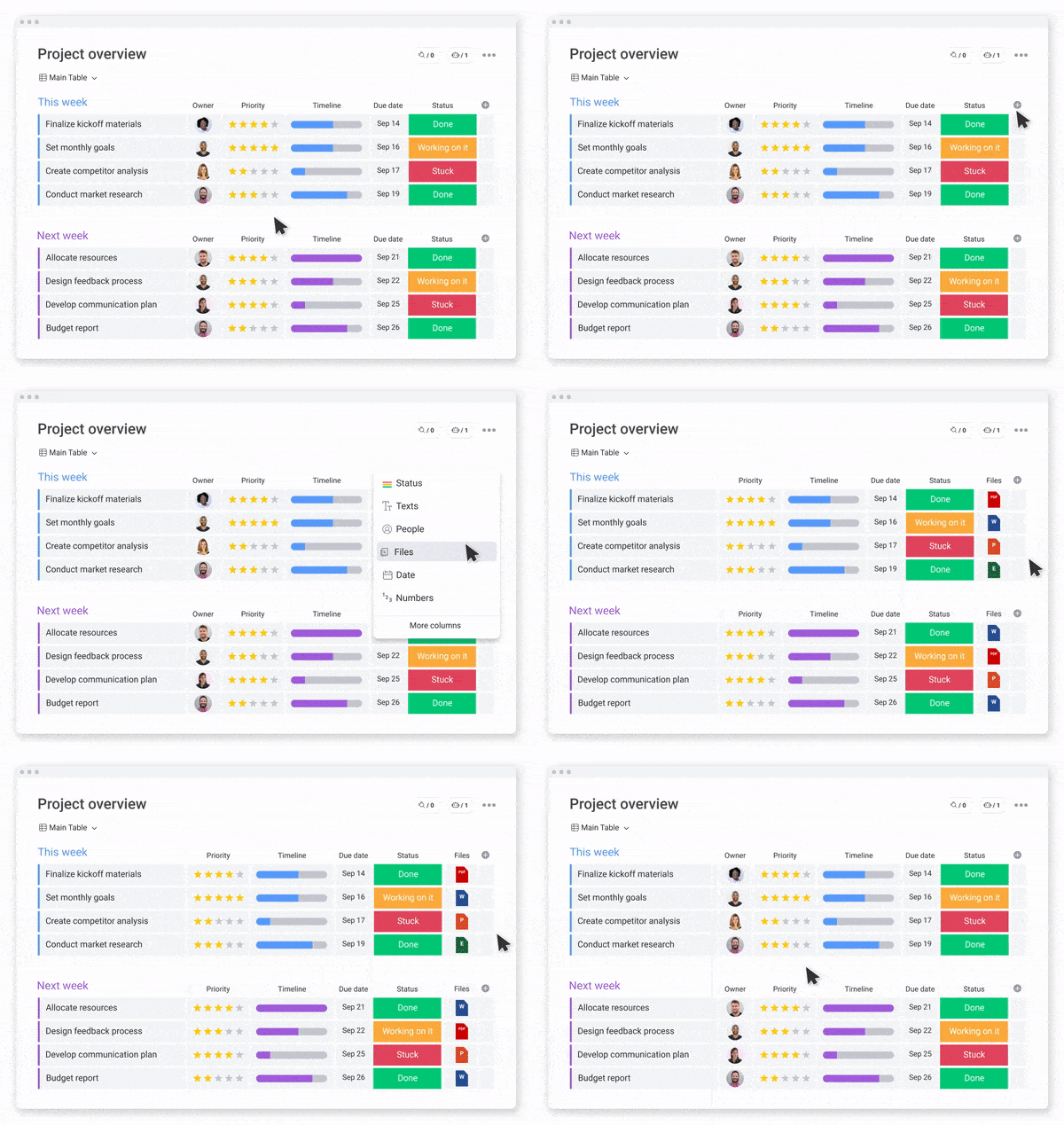
A simple gate review template helps you standardize decision-making across every project. At a minimum, each gate should capture the same core information so stakeholders can quickly see what has been reviewed, what was decided, and why.
Here’s what to include in your gate review template:
- Agenda: Purpose of the gate, time-boxed sections (project summary, key risks and issues, criteria review, decision, and next steps)
- Required artifacts: Approved business case or charter, updated plan, budget report, timeline, key deliverables, test results, dependency list
- Criteria list: The specific business, technical, risk, and resource criteria that must be met to pass this gate
- Risk log: Top risks with owners, current status, and mitigation plans, plus any new risks identified during the review
- Decision log: Outcome (Go, Conditional go, Recycle, Kill, or Hold), voting record if relevant, and a short rationale for the decision
- Next steps: Actions, owners, and deadlines (for example, remedial work for a Conditional go or closure activities for a killed project).
A practical way to manage this is to mirror the template on a board, with one item per gate review, and columns for status, decision, criteria score, key risks, and owners. A dedicated monday AI Workspace board or template can centralize these artifacts, link to project boards, and keep every decision in one place.
Example: construction project gate review
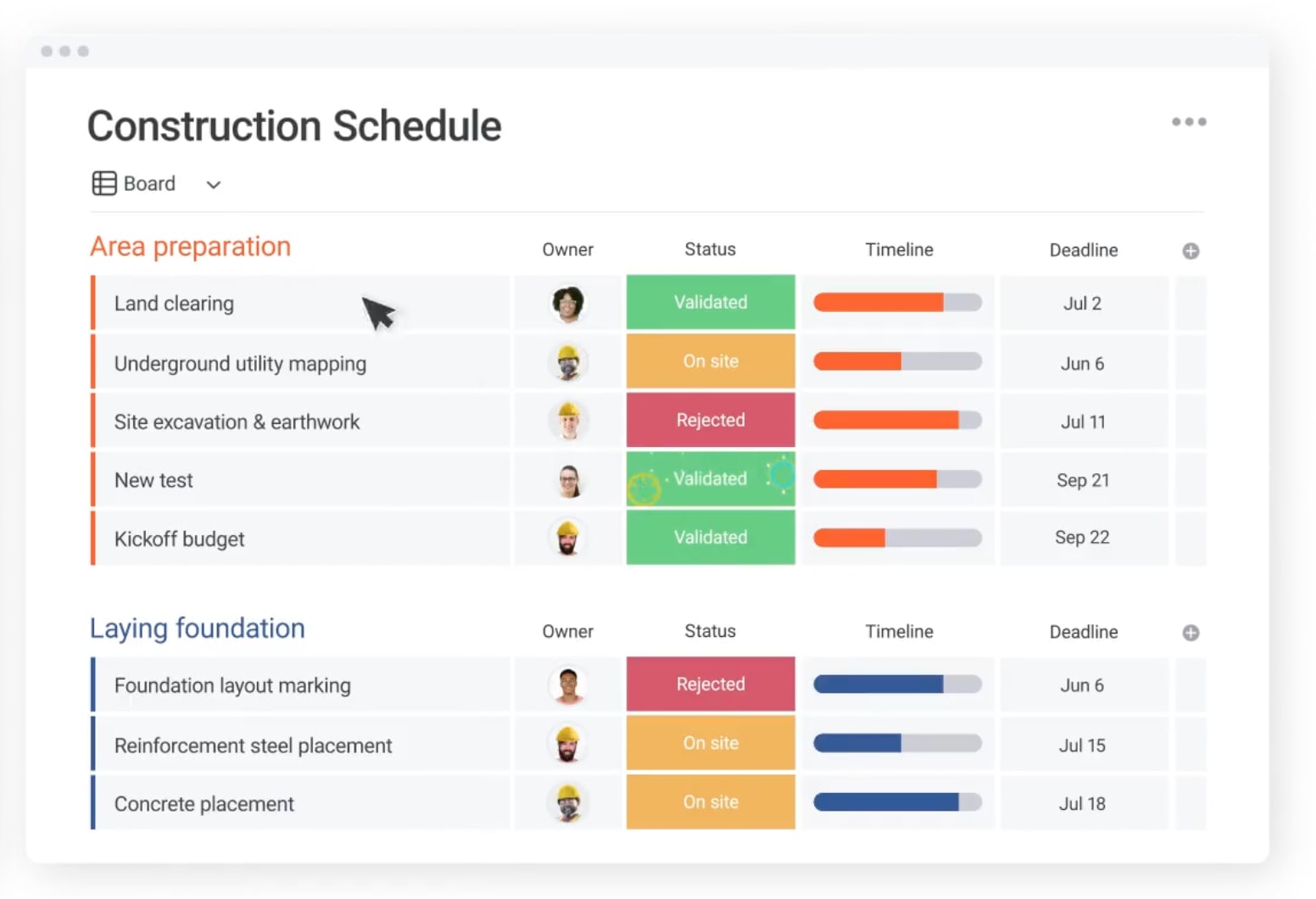
Imagine a construction company preparing to move from design to foundation work on a new office building. At the end of the design phase, the team holds a gate review with approved drawings, updated cost estimates, permit status, and key readiness criteria.
During the review, stakeholders confirm that designs are complete and costs remain within tolerance. However, one critical permit is still pending, and the soil report reveals a higher-than-expected risk of subsidence.
Because the gate criteria require all essential permits and geotechnical risks to be addressed before construction begins, the committee issues a Conditional go. Excavation can only start once the permit is granted and the foundation design is updated to reflect the soil findings.
Those conditions, owners, and deadlines are documented and tracked on monday AI Workspace, giving everyone visibility into what must happen before on-site work proceeds.
Run smarter gate reviews with monday AI Workspace
For gate reviews to work at scale, teams need a single source of truth for project data, decisions, and risks. Built on monday.com, monday AI Work Platform offers a centralized platform that reduces admin, standardizes how gates run, and makes every outcome visible to stakeholders in real time.
So what does that look like in practice? Here’s how the platform supports each stage of the gate review process.
Portfolio management
Aggregate all projects into a single portfolio view so steering committees can see every initiative’s health before the gate. Drill into risks, automate project intake, and categorize work via managed templates, giving decision-makers the full picture without chasing updates across spreadsheets and email threads.
AI-powered risk insights
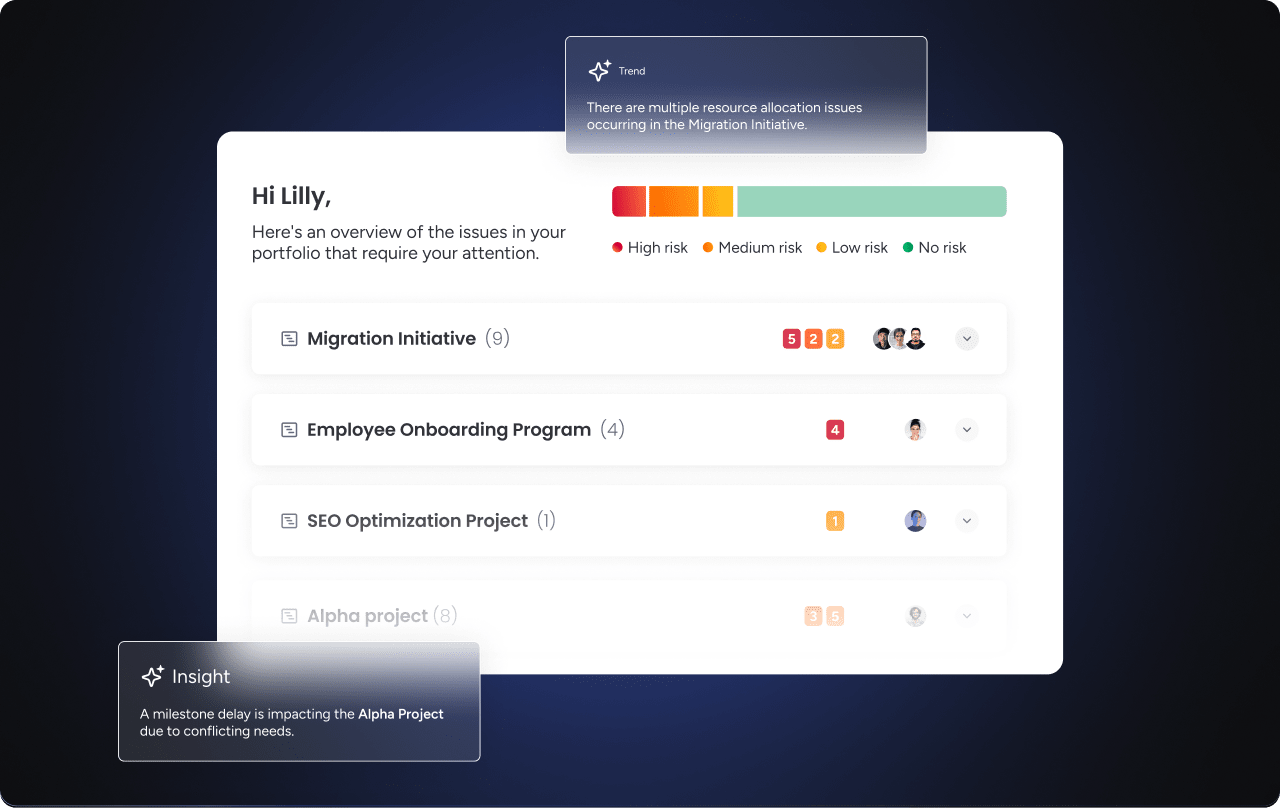
monday agents, including the Project Analyzer, monitor projects in real time, flagging bottlenecks, budget anomalies, and potential threats with urgency insights. Risk data is pre-surfaced before the gate review meeting, so the committee can focus on decisions rather than data collection.
Dashboards
Pre-built or custom dashboards connect data from multiple projects into a single view. Filter by status, risk level, or timeline to get real-time insights, so gate review committees see live KPIs instead of stale slide decks.
Automations
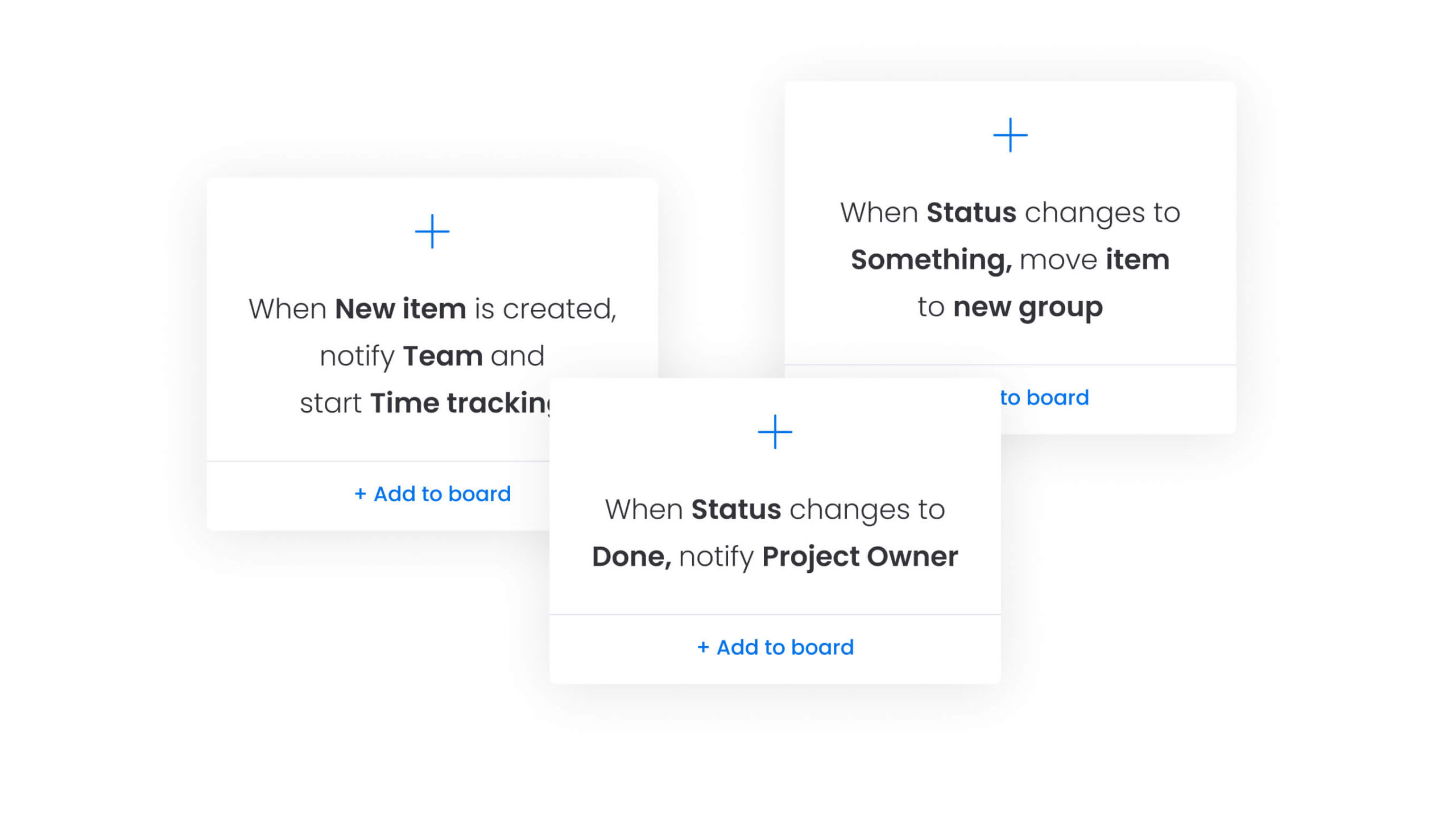
No-code automations handle approval notifications, reminders, and templated project boards without manual effort. When a gate outcome is recorded: Go, Kill, Hold, automations can trigger next-phase setup, notify stakeholders, or archive the project, keeping governance consistent across every initiative.
Resource management
The Resource Directory, Planner, and Capacity manager give committees real-time visibility into team availability and workload. Resource data feeds directly into go/no-go decisions; if the people and budget aren’t there for the next phase, the gate review surfaces that before commitments are made.
Ready-made project and gate review templates
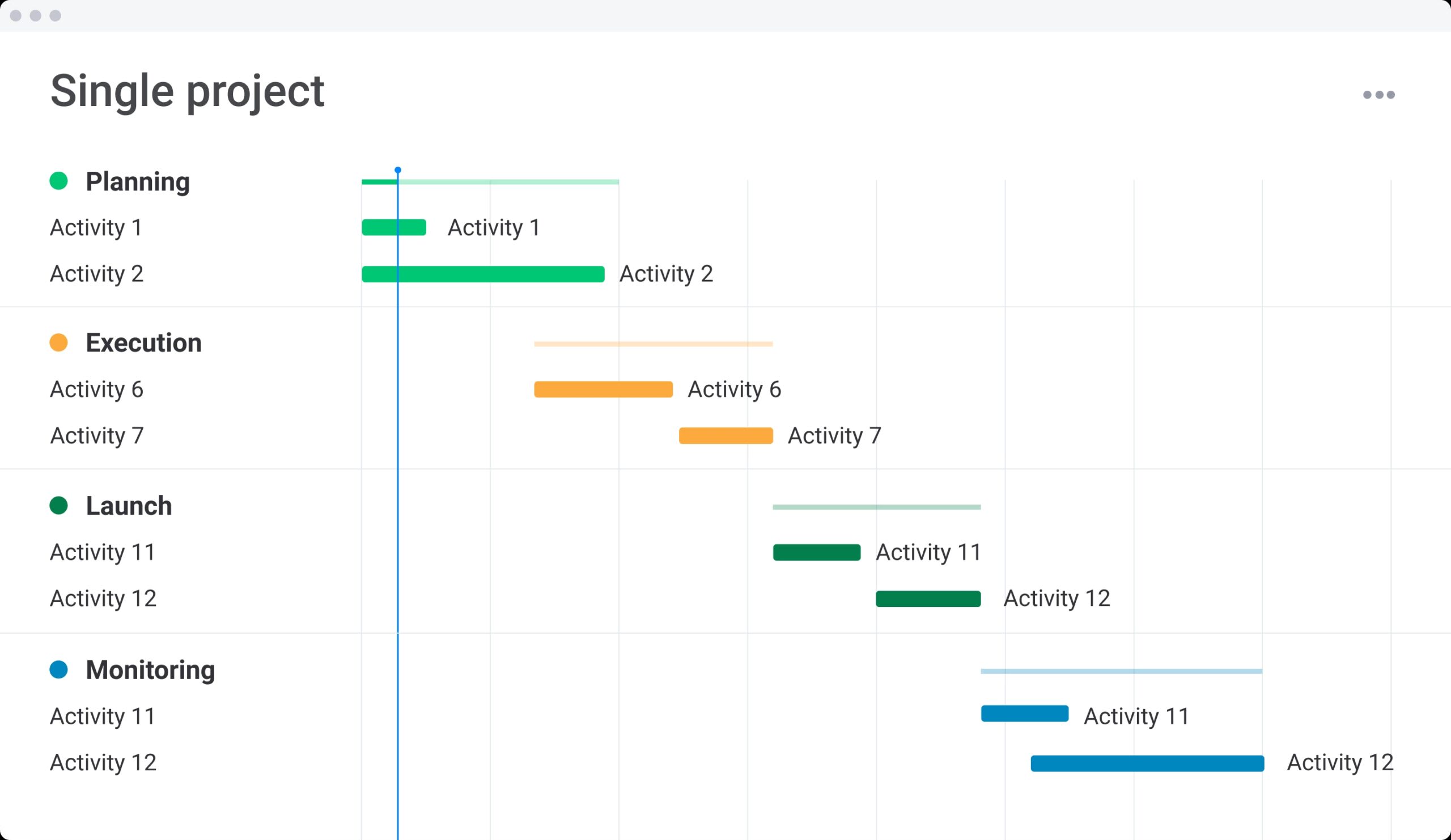
Use dedicated boards to track both individual projects and portfolio-level gate reviews, so each gate has a consistent structure for criteria, artifacts, decisions, and next steps. A repeatable template, like the Single Project Template, ensures every team follows the same playbook rather than reinventing the process for each project.
Visual views for gate criteria
Visual views such as Gantt, Kanban, timeline, and calendar help you see which projects are approaching gates and whether they’re on track against schedule and scope. Portfolio-level dashboards can surface gate outcomes, approval rates, and risk indicators in one place, so leaders can quickly spot where attention is needed.
monday vibe
The AI-powered no-code builder lets teams create custom gate-review tracking apps tailored to their governance processes, without engineering support. Build bespoke workflows for criteria scoring, approval routing, and decision logging that match exactly how your organization runs gates.
monday agents
AI agents like the Project Analyzer don’t just help during the gate; they monitor projects continuously between milestones. That means issues are flagged proactively as they emerge, rather than discovered for the first time at the gate review meeting, when it’s already too late to course-correct easily.
monday MCP
Connect AI assistants like Claude, Cursor, or ChatGPT directly to your monday.com workspace for project reporting and cross-team visibility. Prepare gate review briefs by querying project data in natural language, pulling timelines, risks, and status updates into a structured summary without manual data wrangling.
monday sidekick
The built-in AI assistant provides context-aware recommendations based on your project data. During gate prep, get instant answers about project status, risks, dependencies, and next steps, so the committee walks in informed and the review stays focused on decisions.
Turn gate reviews into a strategic advantage
When done well, gate reviews are more than checkpoints; they’re structured go/no-go decision points that keep projects aligned with strategy, protect budgets, and prevent “zombie” work from dragging teams off course. With AI-augmented governance, those decisions are faster, sharper, and grounded in real-time data rather than stale status reports. Consistent criteria at each gate make those decisions fairer and easier to explain across the organization.
Use monday AI Work Platform to standardize gate reviews, centralize criteria and documentation, and give stakeholders real-time visibility into every stage of your projects.
Get started with monday.comFAQs
What are gates in project management?
Gates are predefined checkpoints between project phases where stakeholders decide whether the project should move forward, change direction, pause, or stop. They’re used to review progress, risks, and the business case against clear criteria before committing more time and budget.
What is a stage gate?
A stage gate is a go/no‑go decision point in a structured Stage‑Gate®‑style process, often used in product development. At each gate, decision makers review results from the current stage and decide whether to release funding and resources for the next stage.
What is a phase gate?
A phase gate sits at the end of a project phase — such as initiation, design, or planning — and confirms that the work for that phase is complete and meets agreed standards. Only once the phase gate is passed does the project move into the next phase.
What are the basic steps of a gate review?
Gate reviews typically involve three high-level phases — preparation, evaluation, and decision-making — which are carried out through a structured, multi-step process. In practice, this includes defining criteria, reviewing evidence, assessing risks, and documenting a clear go/no-go decision with next steps.
How many gate reviews should a project have?
Most projects benefit from 3–5 gate reviews aligned with major milestones, such as post‑charter, end of design, mid‑execution, pre‑launch, and post‑implementation. More complex or higher‑risk initiatives may add extra gates at critical technical or regulatory points.
What happens if a project fails a gate review?
If a project fails a gate review, it might be stopped entirely (Kill), sent back for rework in the current phase (Recycle), or put on hold until specific issues are resolved (Hold). In some cases, it receives a ‘Conditional go’ with clear remedial actions and deadlines before it can fully proceed.
Can gate reviews work with Agile methodologies?
Yes. In Agile environments, you can align gate reviews with major release boundaries, program increments, or key feature deliveries rather than traditional waterfall phases. The mindset is the same — use evidence and criteria at key points to make informed go/no‑go decisions without unnecessarily blocking iterative delivery.
How can AI improve gate reviews?
AI improves gate reviews by automating risk detection, surfacing budget anomalies and timeline slippage before the review meeting, and reducing the manual effort of compiling status reports. AI agents can monitor projects continuously between gates, flagging issues as they emerge rather than waiting for the next scheduled checkpoint. On monday AI Workspace, features like monday agents, monday sidekick, and AI-powered dashboards give committees real-time, data-driven insights so they can make faster, more informed go/no-go decisions.

 Get started