


Delivering projects on time and on budget is the baseline for success. But when work is siloed, priorities are undefined, and processes are inconsistent, teams spend more time managing chaos than driving results. This gap between planning and execution is where value gets lost.
The right project management techniques bridge that gap by providing structured, repeatable methods that help teams work in sync and stay on track.
This guide breaks down 15 of the most effective project management techniques, from Agile to Waterfall. We will explore how to choose the right approach for your team and show how a flexible platform like monday AI Workspace can help you implement any methodology successfully.
Get StartedKey takeaways
- Project management techniques serve as your operational playbook, providing the structured frameworks teams need to navigate complex work from kickoff to completion.
- Effective techniques convert disorganized workflows into streamlined systems where teams collaborate seamlessly, potential roadblocks are identified early, resources are allocated strategically, and deadlines are consistently met.
- No single approach works universally — highly regulated projects may thrive with sequential Waterfall methods, while innovative initiatives often benefit from Agile’s adaptability and frequent feedback loops.
- monday AI Workspace enhances your chosen technique with intuitive visualization capabilities, real-time resource allocation features, and AI-powered workflows that flex to match your team’s specific methodology.
- Finding your ideal approach means assessing your project’s unique characteristics, including scope complexity, team composition, deadline flexibility, and strategic priorities, to create a tailored methodology that balances structure with adaptability.

What are project management techniques?
Project management techniques are systematic methods for planning, executing, and delivering projects. They provide structured approaches that help teams organize work, allocate resources, and achieve specific goals within defined timelines and budgets.
Think of techniques as recipes for project success. Just like a recipe guides you through cooking steps, project management techniques guide teams through work processes. They differ from project management platforms, as techniques are the methodologies (like Agile or Waterfall), while platforms are the software that support these methods.
Every effective technique shares core characteristics that drive results:
- Structured frameworks: Step-by-step processes that guide teams from project start to finish
- Resource optimization: Methods for allocating people, time, and budget where they matter most
- Risk identification: Proactive methods to identify and mitigate threats, keeping your timeline on track
- Goal alignment: Systems that connect daily work to strategic objectives
Why project management techniques drive optimal results
The right techniques transform chaotic workflows into predictable processes, helping teams collaborate effectively and deliver repeatable results.
Boost team collaboration and visibility
When everyone understands their role and can track progress in real time, collaboration happens naturally. Strong techniques create transparent processes where information flows freely across departments.
With monday AI Workspace, teams can amplify this transparency by centralizing all project information in one platform. Team members see exactly what needs to be done, who’s responsible, and when work is due — freeing up valuable time for high-impact work.
Eliminate project bottlenecks
Bottlenecks happen when work gets stuck. Maybe approvals take too long. Perhaps one team member is overloaded while others wait. Or dependencies aren’t clear, causing delays.
Proven techniques identify these friction points early. Methods like critical path analysis show you exactly which activities could delay your entire project, letting you address issues before they cascade.
Maximize resource efficiency
Your resources — people, time, and budget — are finite. Effective techniques help you use them wisely through systematic planning and allocation.
Resource optimization techniques prevent common problems like:
- Team burnout: When workloads are unbalanced
- Budget overruns: When spending isn’t tracked properly
- Skill mismatches: When tasks don’t align with team capabilities
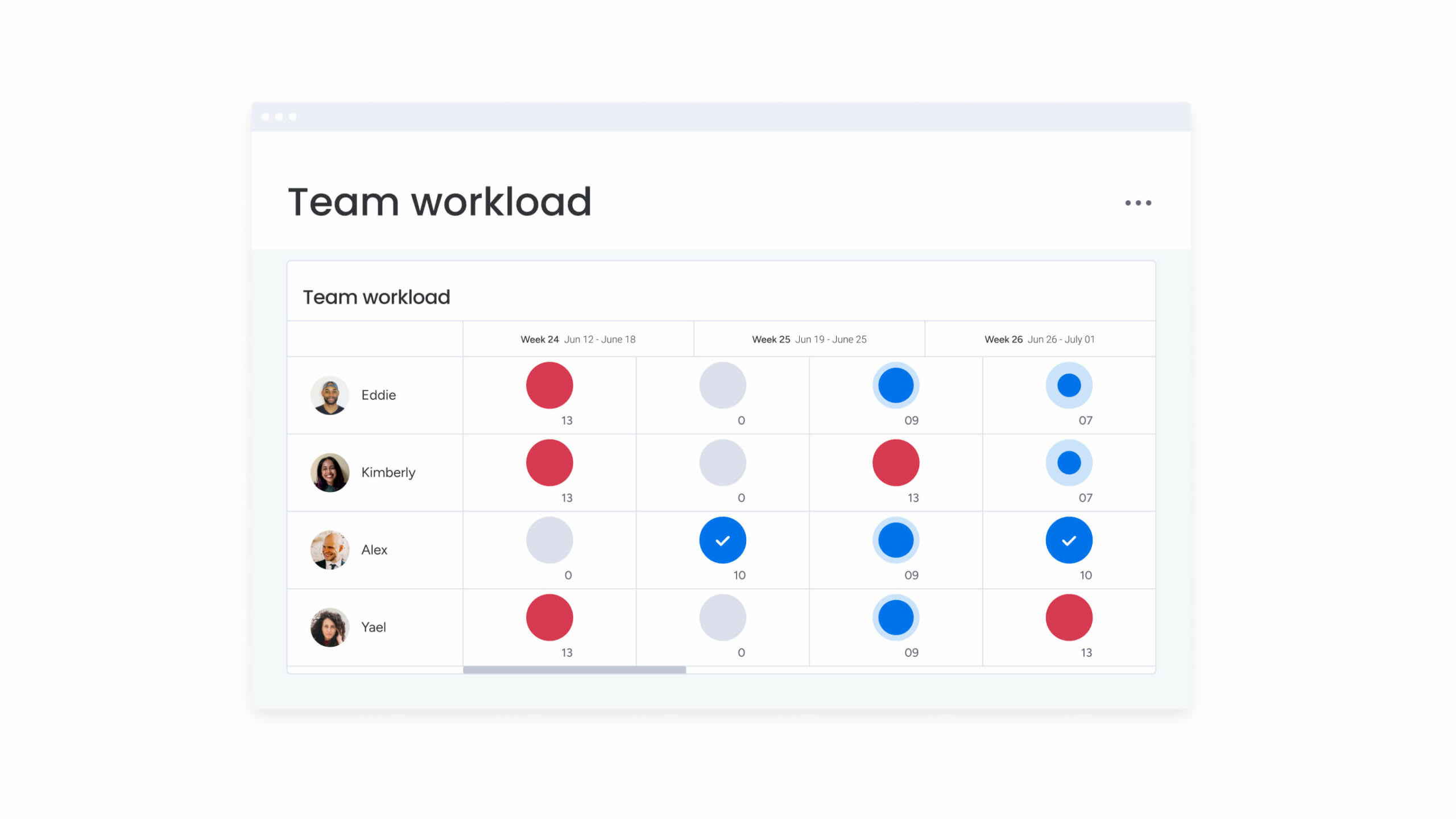
monday AI Workspace’s Workload Views make resource efficiency visible, showing exactly who’s at capacity and where you have room to take on more work.
Deliver projects on time and on budget
Structured techniques create reliable delivery through systematic planning and monitoring. When you follow proven methods for scope management and change control, you avoid the surprises that derail timelines and budgets.
Project planning techniques vs project management platforms
Understanding the distinction between project planning techniques and project management platforms helps you choose the right combination for success.
Project planning techniques are the methodologies that define your work processes, such as Agile, Waterfall, or Kanban. They focus on approach and strategy, providing frameworks for decision-making that guide your team through project phases. These techniques shape how you think about and organize your work.
In contrast, project management platforms are the software solutions that support these processes, like monday AI Workspace or traditional spreadsheets. They focus on execution and tracking, providing the practical tools for implementation. These platforms help you visualize, monitor, and report on the work defined by your chosen technique.
While techniques provide the strategic blueprint, platforms deliver the tactical infrastructure. One defines your approach; the other enables its execution. The key is finding the right balance between a methodology that fits your team’s needs and a platform flexible enough to support it.
Predictive vs agile vs hybrid approaches
Before you pick a specific technique, it helps to know which family it belongs to. Most project management methodologies fall into one of three approach types, and matching the type to your project sets you up to choose the right technique next. Here’s how to tell them apart.
Predictive (traditional): You plan the full scope, schedule, and budget upfront, then execute in sequence. This works best for linear projects with fixed, well-understood requirements, such as construction, manufacturing, or compliance work. Waterfall and critical path method live here.
Agile: You work in short iterations, delivering value in increments and adjusting as requirements evolve. This fits projects where the end state isn’t fully defined at the start, such as software development or product design. Scrum and Kanban are agile mainstays.
Hybrid: You blend predictive and agile, using structured planning for fixed elements and iterative cycles for the parts that change. This suits complex, cross-functional work where some requirements are locked and others keep evolving.
The table below maps each approach to the projects and techniques it fits best.
| Approach type | Best-fit project | Example technique |
|---|---|---|
| Predictive | Fixed scope, clear requirements, regulated delivery | Waterfall, critical path method |
| Agile | Evolving requirements, frequent feedback, fast iteration | Scrum, Kanban |
| Hybrid | Complex, cross-functional work with mixed requirements | Waterfall planning with Agile execution |
15 powerful project management techniques for success
Different projects demand different approaches. Your choice depends on factors like team size, project complexity, timeline constraints, and organizational culture. Here are the most effective techniques for various scenarios.
1. Work breakdown structure
Work breakdown structure (WBS) divides large projects into smaller, manageable pieces. You start with the final deliverable and break it down into progressively smaller components until you reach individual work items.
This hierarchical decomposition helps teams understand project scope and assign clear ownership. Use WBS when facing complex projects with multiple deliverables or when you need to define scope clearly upfront.
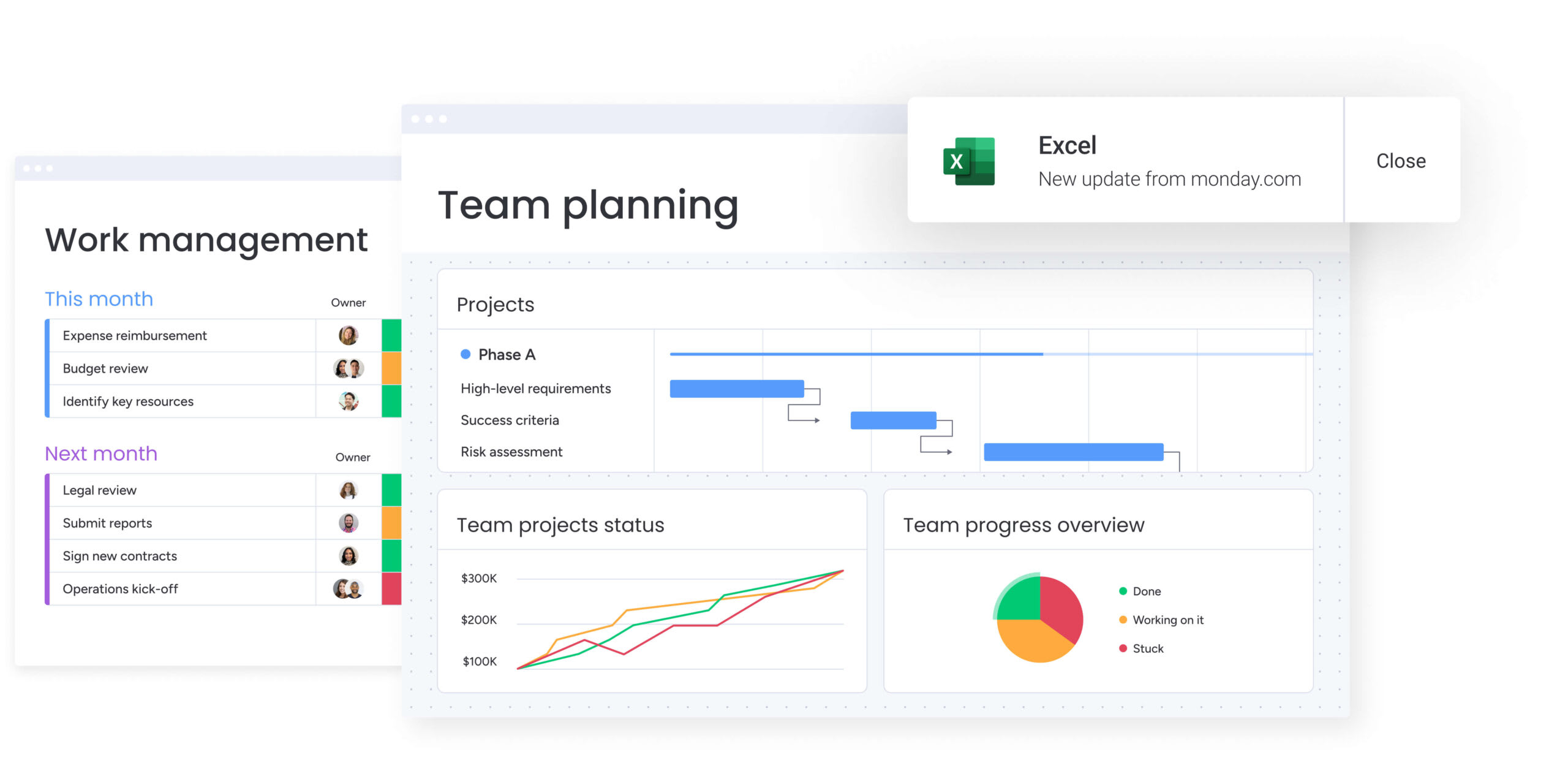
monday AI Workspace supports WBS through visual boards and sub-items that mirror your project hierarchy, making complex initiatives feel manageable.
2. Gantt chart planning
Gantt charts display project schedules as horizontal bars across a timeline. Each bar represents a task, showing when it starts, how long it takes, and how it relates to other activities.
These visual timelines excel at showing dependencies and tracking progress. Use Gantt charts for projects with strict deadlines, complex project management task relationships, or when stakeholders need visual updates on project status.
3. Critical path method
Critical path method (CPM) identifies the longest sequence of dependent tasks in your project. This sequence determines your minimum project duration — delay any task on the critical path, and your entire project runs late.
CPM helps you focus resources where they matter most. Apply this technique to projects with complex dependencies where meeting deadlines is crucial for success.
4. Kanban visual management
Kanban uses boards with columns to visualize workflow stages. Work items move from left to right as they progress, with limits on how many items can be in each stage.
This technique emphasizes continuous Kanban flow and prevents overload. Kanban works perfectly for ongoing operations, support teams, or any work that needs flexibility to adapt to changing priorities.
monday AI Workspace’s Kanban views let teams customize columns to match their exact workflow, providing real-time visibility into work status.
5. Agile sprint methodology
Agile breaks work into short iterations called sprints, typically lasting 1-4 weeks. Each sprint delivers a working piece of the project, allowing for regular feedback and course correction.
This iterative approach thrives in environments where requirements evolve or innovation is key. Teams deliver value quickly while maintaining flexibility to adapt based on what they learn.
6. Scrum framework implementation
Scrum provides a specific structure for Agile work. It defines clear roles (Product Owner, Scrum Master, Development Team), regular ceremonies (Sprint Planning, Daily Standups), and specific artifacts (Product Backlog, Sprint Backlog).
This framework creates disciplined yet flexible execution. Scrum works especially well for software development and cross-functional teams that need structured collaboration.
7. Waterfall sequential method
Waterfall follows a linear path where each phase completes before the next begins. Requirements lead to design, design to development, development to testing, and testing to deployment.
This sequential approach suits projects with fixed requirements and clear specifications. Construction, manufacturing, and compliance-heavy projects often benefit from Waterfall’s structured progression.
8. PERT network analysis
Program Evaluation and Review Technique (PERT) handles uncertainty by using three time estimates for each task: optimistic, pessimistic, and most likely. This creates more realistic project schedules.
PERT excels when dealing with new initiatives or projects without historical data. The technique helps manage risk by accounting for variability in task duration.
9. Resource optimization and leveling
Resource leveling adjusts project schedules to balance workload across your team. Instead of having peaks and valleys in resource demand, you smooth out the allocation for sustainable execution.
This technique prevents burnout while maintaining productivity. Use resource leveling when team capacity is limited or when multiple projects compete for the same resources.
monday AI Workspace’s workload features visualize team capacity in real time, making it simple to spot and resolve resource conflicts before they impact delivery.
10. Risk matrix management
Risk matrices evaluate potential project threats based on probability and impact. You identify risks, assess their likelihood and severity, then develop mitigation strategies for the highest priorities.
This visual approach to risk management keeps teams proactive rather than reactive. For example, one pharmaceutical company used advanced analytics for risk-based audits, a move that helped in freeing 30 percent of its quality resources. High-stakes projects and initiatives in regulated industries particularly benefit from this kind of systematic risk assessment.
11. Stakeholder mapping strategy
Stakeholder mapping pinpoints everyone who influences or is affected by your project. It involves assessing their power, interest, and impact so you can create tailored engagement strategies.
Effective stakeholder management helps prevent surprises and build support. According to monday.com’s world of work report, there’s a clear perception gap around change — 45% of senior leaders say it’s managed “very well,” compared to just 23% of individual contributors. This technique is especially valuable for projects that need broad buy-in or involve complex approval processes.
12. Time boxing technique
Time boxing sets fixed time limits for activities. When time expires, you move on regardless of completion status. This creates urgency and prevents perfectionism from delaying progress.
Creative projects and activities prone to scope creep benefit from time boxing. The technique maintains momentum by forcing decisions within predetermined windows.
13. MoSCoW priority framework
MoSCoW (Must have, Should have, Could have, Won’t have) categorizes requirements into four buckets:
- Must have: Critical for project success
- Should have: Important but not vital
- Could have: Nice to have if time allows
- Won’t have: Explicitly excluded from scope
This framework creates transparent prioritization when resources are limited or stakeholder expectations need alignment.
14. Earned value analysis
Earned Value Management (EVM) compares planned work, actual work completed, and costs incurred. This provides objective measurements of project performance and helps predict future outcomes.
Large projects with significant budgets use EVM to maintain financial control. The technique provides early warning of cost overruns or schedule slippage.
15. Hybrid adaptive approach
Hybrid approaches blend multiple techniques to fit unique project needs. You might use Waterfall for planning phases while applying Agile for execution, or combine Kanban for ongoing work with Scrum for development sprints.
Organizations transitioning between methodologies or managing complex initiatives often find hybrid approaches provide the right balance of structure and flexibility. According to recent PMI research, there is a 57% increase in hybrid approaches as teams seek to combine the best of different frameworks.
The customizable monday AI Workspace platform supports any hybrid combination, letting teams build workflows that match their exact needs.

How to select the right project manager techniques
Choosing techniques isn’t about finding the “best” one — it’s about matching methods to your specific situation. Consider these factors when making your selection.
Evaluate project complexity and scope
Simple projects with clear requirements might thrive with straightforward techniques like Waterfall. Complex, innovative initiatives often need adaptive approaches like Agile.
Ask yourself: How well-defined are the requirements? How much uncertainty exists? How many dependencies must you manage?
Analyze team structure and capabilities
Your team’s experience, size, and distribution influence technique selection. Small, experienced teams might excel with lightweight Kanban. Large, distributed teams often need more structure, like Scrum provides.
Consider your team’s familiarity with different approaches. Introducing complex techniques to teams new to project management can create more confusion than value.
Consider timeline and budget parameters
Fixed deadlines might require techniques emphasizing critical path management. Tight budgets benefit from methods with strong scope control. Flexible timelines allow for more iterative approaches.
Match your constraints to technique strengths. Ensure you align your chosen technique with your project’s constraints, matching Agile iterations with flexible-scope contracts and structured Waterfall with innovative product development.
Align techniques with business goals
Your chosen techniques should reinforce organizational priorities, especially since monday.com’s world of work report shows that employees who understand how success is measured are 2x more likely to feel motivated. Innovation-focused companies might emphasize Agile methods. Risk-averse industries might prefer predictable Waterfall approaches.
With monday AI Workspace, project work is connected to strategic objectives through customizable dashboards, ensuring your techniques support broader business goals.
Get started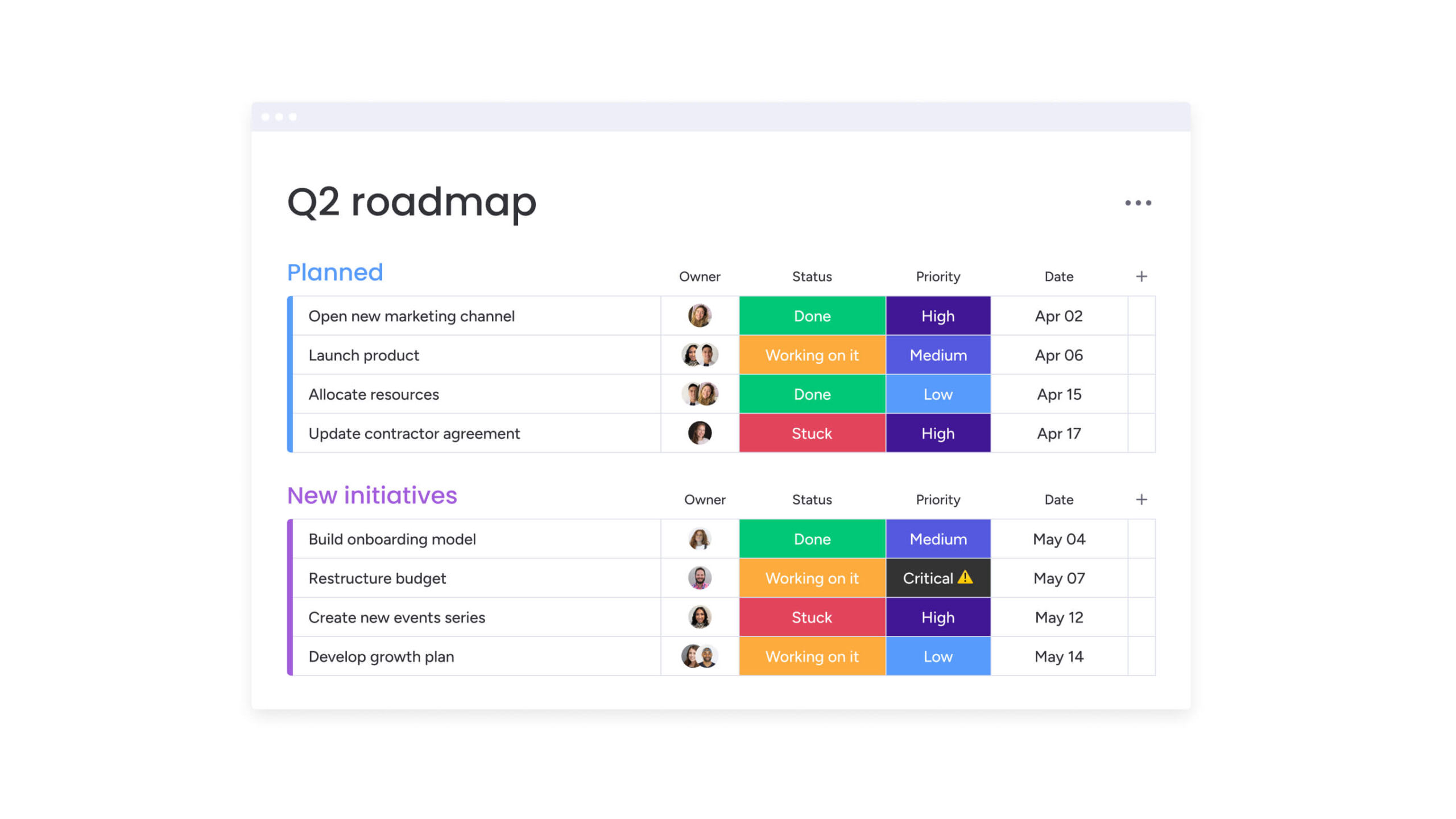
Master project development techniques with monday AI Workspace
Knowing the techniques is one thing. Running them consistently across teams, without drowning in manual updates, is where most projects stall. That’s the problem monday AI Workspace is built to solve: it adapts to whatever methodology you choose while keeping the work visible and coordinated in one place.
Whatever approach you run, you need a way to see the work, balance the load, and keep everyone aligned. Here’s how the platform supports each of those needs.
- Run any methodology with flexible views: Gantt, Kanban, Workload, Timeline, and Calendar views let the same project data flex to your technique, so a Waterfall plan and an Agile sprint board draw from one source of truth.
- Cut manual coordination with no-code automations: Ready-made and custom automation recipes handle notifications, date reminders, task assignments, and stage handoffs, replacing thousands of repetitive manual actions so people focus on higher-value work.
- See the whole portfolio with dashboards: No-code dashboards turn work data into real-time views of progress, resource utilization, and timelines, giving leaders a single source of truth for spotting risk early instead of reporting on it after the fact.
An AI layer sits on top of these capabilities and turns visibility into action:
- AI Blocks: Add ready-made AI actions to any workflow to categorize risks, summarize updates, and extract insights from documents without leaving your board.
- Digital Workers and Project Analyzer: Autonomous helpers monitor project health, flag bottlenecks, and surface delays before they spread, so risk management shifts from reactive to proactive.
- monday agents: A workforce of ready-made and custom AI agents that act where you already work, handling specialized tasks like risk analysis, meeting summaries, and status reporting around the clock within guardrails you control.
- monday Vibe: Describe the tracker, dashboard, or app you need in plain language, and Vibe builds a working custom tool on the platform, so teams get purpose-built support for their methodology without waiting on developers.
- monday MCP: Connect AI assistants like Claude or ChatGPT to your workspace so they can securely read and act on your project data, always inside your existing permission model.
The table below shows how the platform changes the day-to-day work behind common techniques.
| Technique need | Manual or spreadsheet approach | monday AI Workspace approach |
|---|---|---|
| Visualizing timelines | Rebuild static charts by hand every time a date shifts | Gantt and Timeline views update automatically as work changes |
| Balancing resources | Track capacity across scattered sheets and guesswork | Workload views show who's at capacity in real time |
| Managing risk | Review risks only in periodic status meetings | AI Blocks and Digital Workers flag risks and bottlenecks as they emerge |
| Reporting | Copy data into slides for each stakeholder update | Live dashboards give leaders portfolio visibility on demand |
| Automating handoffs | Chase updates over email and chat | No-code automations move work between stages and owners |
These AI capabilities enhance rather than replace your chosen techniques. They provide the insights and automation that help teams execute more effectively, regardless of methodology.

Turning techniques into consistent execution
Project management techniques give your team a shared language for planning, prioritizing, and delivering work. The goal isn’t to master every method, but to match the right technique to each project and apply it consistently.
As AI takes on more of the routine coordination, the value shifts from knowing the frameworks to executing them well. Teams that pair proven project management techniques with a flexible platform spend less time managing the process and more time delivering the results that move the business forward.
Get startedFAQs
What is a technique in project management?
A technique in project management is a specific method or systematic approach used to plan, execute, monitor, and control project activities to achieve defined objectives within constraints like time, budget, and scope.
What are the 5 basics of project management?
The 5 basics of project management are initiation (defining the project), planning (creating the roadmap), execution (doing the work), monitoring and controlling (tracking progress), and closure (wrapping up and documenting lessons learned).
What are the 7 strategies of project management?
The 7 strategies of project management encompass stakeholder management, risk management, communication planning, resource optimization, quality control, scope management, and timeline management — each addressing a critical aspect of project success.
What are the 5 C's of project management?
The 5 C's of project management are Complexity, Criticality, Compliance, Culture, and Compassion — factors that help determine how much structure, oversight, and flexibility your project management approach requires.
Which project management technique works best for distributed teams?
Distributed teams succeed with techniques emphasizing digital collaboration like Agile/Scrum with video standups, Kanban boards for visual workflow management, and hybrid approaches combining structure with flexibility for remote coordination.
How do you combine multiple project management techniques effectively?
Combine project management techniques effectively by selecting complementary methods, establishing clear boundaries between approaches, ensuring team understanding of when each applies, and using a flexible platform like monday.com to support seamless transitions.

 Get started