

Most outbound emails get ignored, and reps feel it every morning when the reply count sits near zero. Cold outbound typically averages a 2% to 3% reply rate, so volume alone won’t move your pipeline. What separates the sequences that book meetings is a well-built email sales cadence: your repeatable plan for how many touches you send, when each one lands, and what each message says. Get that rhythm right and you turn cold contacts into booked conversations.
These 15 tips walk through building a cadence that earns replies, from structuring touches and timing sends to acting on buying signals and measuring results. Day-by-day examples show how the touches fit together in practice. When your cadence data sits alongside your CRM on monday, marketing and sales can run one coordinated sequence from first touch to closed-won.
Key takeaways
- An email sales cadence is a structured sequence of value-led outbound touches designed to move a prospect from cold to booked meeting.
- Relevance and timing beat volume, since cold outbound averages only a 2% to 3% reply rate.
- A typical B2B sales cadence runs 5 to 8 emails over 2 to 4 weeks, spaced 3 to 5 days apart.
- Buying signals like funding, hiring, and product-page visits give each touch a credible reason to reach out now.
- Reply rate and meetings booked matter more than opens, and monday campaigns connects that cadence data directly to your CRM.
What is an email sales cadence?
An email sales cadence is a structured sequence of outbound emails, often mixed with calls and LinkedIn touches, that moves a prospect from cold to a booked meeting. Each message carries a specific job: earn attention, build relevance, and make the next step easy. Unlike a single cold email, a cadence gives you multiple, planned chances to land a reply.
People often ask how a sales cadence differs from a drip campaign. A drip campaign sends automated, list-wide emails on a fixed schedule to nurture broad audiences. A sales cadence is a rep-driven prospecting sequence aimed at named accounts and quick replies. One nurtures at scale, the other prospects with intent.
A well-structured cadence also lifts your email conversion rate by matching each message to where the prospect sits in the buying journey. It replaces guesswork with a repeatable rhythm that drives real customer engagement. When you fire off a one-time mass email to everyone at once, you’re hoping for luck. When you run a cadence, you’re making informed decisions based on prospect behavior.
Here’s the payoff of keeping cadence data in one place: when it lives in your CRM, marketing and sales see the same prospect journey.
With monday campaigns, that shared view means both teams work from the same touches, signals, and outcomes, rather than piecing the story together after the fact.
15 tips for making an email sales cadence
Each tip below tackles a specific challenge in structure, timing, copy, or signals, with steps you can apply right away. Whether you’re building your first sequence or fixing one that stalls, these tactics help you send fewer, sharper emails that prospects actually reply to. So how do you build a cadence prospects want to answer?
1. Segment prospects by persona, account stage, and buying signals
Not every prospect deserves the same sequence, so segment email lists by persona, account stage, and buying signals. A VP who just raised funding needs a different angle than a manager who downloaded a guide. Each segment gets its own messaging and pacing.
For example, high-intent accounts might get a tight 5-touch sequence over 2 weeks, while early-stage prospects get a slower, value-led sequence.
2. Balance consistency with prospect fatigue
A steady rhythm keeps you top of mind, but crowding an inbox burns the relationship fast. Space touches 3 to 5 days apart and stop the moment a prospect asks for room. Test spacing across segments to find where replies stay strongest.
3. Align cadence with the buyer’s journey
Your cadence should shift as a prospect moves from awareness to consideration to decision. Match the message and pacing to their stage so every touch feels timely rather than pushy. The table below maps a simple starting point.
| Stage | Email focus | Recommended pacing |
|---|---|---|
| Awareness | Frame the problem and share a relevant insight | Every 3 days (short opening series) |
| Consideration | Prove value with a case study or peer example | Every 4 to 5 days |
| Decision | Make a direct ask and remove friction to reply | Weekly, then a breakup touch |
4. Build prospect profiles progressively
You don’t need a full profile before you reach out. Start with a name, role, and one relevant signal, then enrich the record as the prospect engages. Each reply, click, or call teaches you something to sharpen the next touch. This approach lowers research time per prospect while your account picture grows with every interaction.
5. Create re-engagement and breakup sequences
Cold prospects who went quiet aren’t dead ends; they just need a different angle. Send 2 to 3 touches over 2 weeks: a fresh insight, a short peer proof point, then a friendly breakup email. Breakup emails often earn replies precisely because they signal you’re moving on. Some prospects re-engage, others opt out, and both outcomes keep your active list focused.
6. Use AI to sharpen timing and relevance
AI can learn when each prospect tends to open and engage, then adjust send times to match. That moves you past generic averages toward true email personalization at the individual level. Relevance, not word-swapped templates, is what earns the reply.
Point AI at the moments that matter: a role change, a site visit, or a content download, and let it prioritize who to reach first.
7. Give prospects an easy way to opt down
An obvious opt-out protects deliverability and respects the prospect’s inbox. Offer a low-friction way to pause or decline so unresponsive contacts don’t turn into spam complaints. Options might include a “not now, reach out next quarter” reply path.
- Pause option: Let prospects push the next touch to a later date
- Topic switch: Offer a different angle if the first didn’t land
- Clean exit: Make declining simple to keep your list healthy
8. Monitor engagement signals in real time
Live signals tell you which touches are working while the cadence still runs. Watch replies, opens, clicks, and meeting bookings, and set alerts for sudden drops. Quick reactions save sequences before good accounts go cold.
You might pause a flat sequence, swap a subject line, or route a hot reply straight to the right rep.
9. Adjust frequency for unresponsive prospects
Prospects who never engage need a lighter touch, not more of the same. Step down frequency in tiers based on how long they’ve stayed silent, so you preserve the relationship for a future window. The table below shows a simple framework.
| Silence period | Recommended action | Example |
|---|---|---|
| 2 to 4 weeks | Slow the pace | Move from every 3 days to weekly |
| 1 to 2 months | Switch to signal-only outreach | Reach out when a buying signal fires |
| 3+ months | Move back to marketing nurture | Hand off for long-term re-engagement |
10. Align sales and marketing around shared CRM data
When sales and marketing work from the same CRM record, prospects get one coherent experience instead of competing messages. Shared visibility into every touch prevents duplicate outreach and dropped handoffs. On monday, email activity and pipeline data sit together, so both teams see each interaction in one place.
That shared view also lets sales feedback shape the next round of messaging while marketing keeps the top of funnel warm.
11. Coordinate touches across channels
Email rarely closes a deal on its own. Stagger it with calls, LinkedIn touches, and relevant ads so each channel reinforces the same message without crowding the prospect. Map the full sequence on one calendar to spot conflicts early.
12. Personalize each touch with relevant context
Generic merge fields don’t fool anyone. Tie each message to something real: a recent announcement, a shared connection, or a page the prospect viewed. Relevance signals you did the homework and earns a second read.
Even one specific, well-placed detail per email lifts replies more than a fully “personalized” template that says nothing.
13. Design segment-specific sequences
Different buyers respond to different proof. Enterprise prospects want security, ROI, and peer case studies, while smaller teams want speed and quick wins. Build separate sequences so each segment hears what matters to them. Enterprise accounts might get a longer sequence with detailed proof, while smaller teams get a shorter, outcome-focused run.
14. Automate on buying-signal triggers, not just the calendar
Fixed schedules ignore what a prospect just did. Trigger touches on buying signals, such as a funding round, a leadership change, hiring activity, or a pricing-page visit, so your outreach lands with a credible reason. Signal-timed first touches consistently outperform calendar blasts.
Set triggers for the events that predict intent, then let each one launch the sequence built for that moment.
15. Test and refine continuously
A cadence is never finished. Test one variable at a time, such as subject lines, send timing, sequence length, or the ask, and run each test through a full cycle before you judge it. Document what wins and roll it into the next sequence.
What earns replies this quarter can fade the next, so make testing a standing habit rather than a one-off project.
How many emails should a sales cadence have
A typical B2B sales cadence runs 5 to 8 emails over 2 to 4 weeks, with touches spaced 3 to 5 days apart. That range gives you enough chances to land a reply without tipping into fatigue. Fewer than 5 touches often quits too early, and more than 8 usually adds noise rather than replies.
Your ideal length depends on how warm the prospect is and how they respond. Use these starting points to calibrate:
- Warm inbound leads: 4 to 5 touches, since interest already exists
- Cold high-fit accounts: 6 to 8 touches, mixing email with calls and LinkedIn
- Re-engagement: 2 to 3 touches, then hand back to marketing nurture
Set defined exit criteria so the cadence knows when to stop: a reply, a booked meeting, or no engagement after the final touch. That way reps spend time on live conversations, not on chasing contacts who’ve already tuned out.
Best time to send sales cadence emails
As a baseline, Tuesday through Thursday between 9 and 11 a.m. in the prospect’s local time tends to earn the strongest response. That window catches people while they’re triaging their inbox but before the day fills up. Still, a fixed calendar is only a starting point.
Trigger-timed sends outperform any standing schedule. So what makes a prospect open on a Tuesday and ignore you on a Thursday? Usually it’s relevance, a first touch that lands hours after they visited your pricing page beats one that arrives on a “best practice” slot with no context.
Two habits sharpen your timing:
- Send in local time: Schedule per contact’s time zone, not your own
- Lead with signals: Fire the first touch when intent data spikes
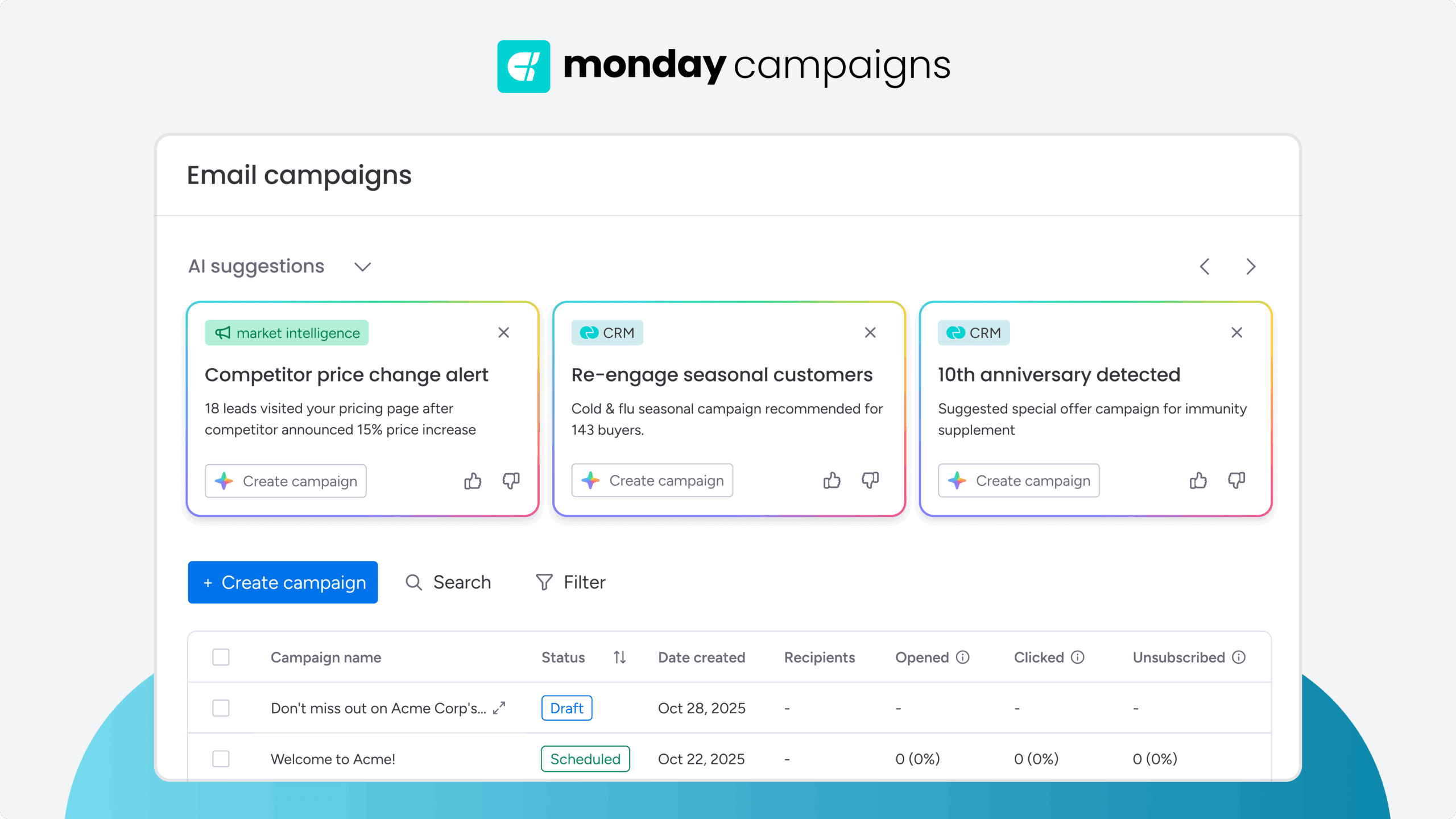
This is where AI earns its keep. monday campaigns offers AI-driven optimal send times that learn each contact’s engagement pattern and adjust delivery per person, so timing improves without manual guesswork.
How to use buying signals and triggers in your cadence
Buying signals turn cold outreach into a timely, relevant conversation. A funding round, a leadership change, a hiring spree, a product-page visit, or a content download all give you a credible “why now” that a batch-and-blast email never can. Reaching out on a signal shows the prospect you noticed something real.
Signal-based outreach beats fixed calendars because it matches the prospect’s moment of interest. Instead of sending touch three because it’s Tuesday, you send it because they just returned to your pricing page. Which trigger tells you a prospect is ready to hear from you?
Common signals worth building triggers around include:
- Company events: Funding, leadership hires, expansion, or new office openings
- Behavioral signals: Pricing-page visits, demo requests, or repeated content downloads
- Engagement signals: Email replies, link clicks, or event sign-ups
Behavioral triggers from CRM updates and prospect actions can auto-enroll a contact into the right sequence the moment a signal fires. On monday, AI agents make this practical: the Lead Scorer scores and routes prospects while the Sentiment Detector reads reply tone, so reps prioritize the follow-ups most likely to convert. That’s signal detection working inside the cadence, not a spreadsheet you check once a week.
High-converting email sales cadence examples
Real sequences show how the touches fit together. Use these frameworks as starting points and adapt the copy to your accounts and market. Each one balances value, proof, and a single, direct ask.
A day-by-day outbound sales cadence
This 5-touch sequence runs over 2 weeks and works well for cold, high-fit prospects: Day 1 opens with a personalized intro tied to a relevant signal, Day 3 shares a peer case study with measurable outcomes, Day 7 offers a value resource like a guide or benchmark, Day 10 makes a direct ask for 15 minutes with two time options, and Day 14 sends a polite breakup that invites a reply if timing improves.
B2B prospecting sequences
Effective B2B email sequences span 2 to 4 weeks with touches every 3 to 4 days to build credibility and earn a first meeting. Open by framing the prospect’s problem, prove value with a relevant result, then make a low-friction ask, keeping each email short enough to read on a phone.
SaaS trial-to-demo sequences
When a prospect starts a trial or requests information, a tight sequence helps them reach value fast: Day 1 welcomes them with one setup step that delivers a quick win, Day 3 shares a short demo video tied to their likely use case, and Day 7 offers a peer success story with an invite to talk.
Long-term nurture for “not now” prospects
Not every prospect is ready today, and that’s fine. Drip campaigns keep you visible with steady, value-led touches rather than hard sells, sending a useful resource every week or two so you’re the first name they recall when the need returns. Want a head start on the copy? Browse these free email templates for adaptable openers and follow-ups.
How to measure and optimize your sales cadence
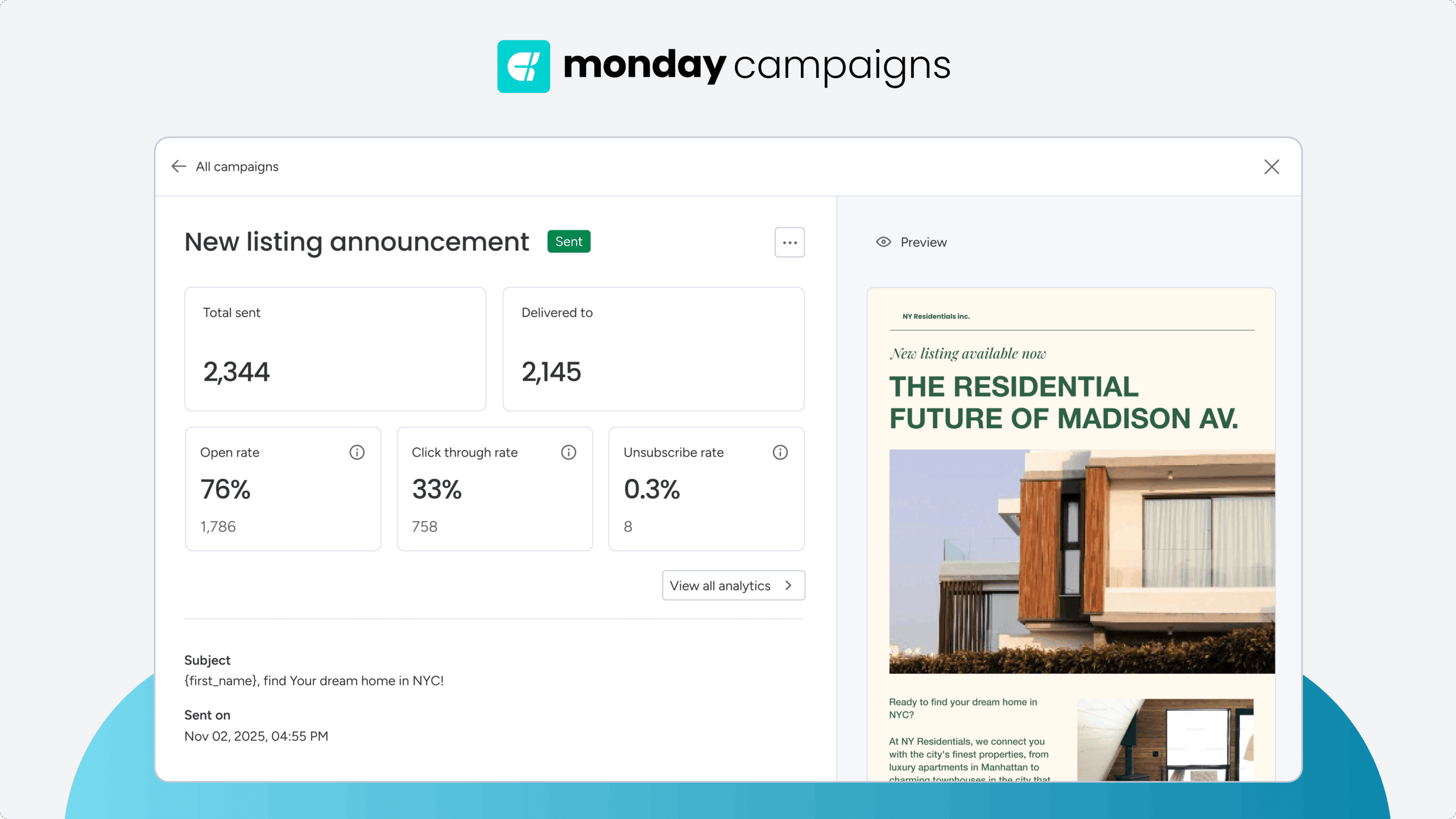 What metrics should you track? For a sales cadence, reply rate is the primary measure, followed by meetings booked and pipeline created. Opens and clicks are useful signals, but they don’t prove the cadence is working on their own. The table below shows what to watch and why.
| Metric | What it measures | Why it matters |
|---|---|---|
| Reply rate | How many prospects respond | Primary sign the cadence earns conversations |
| Meetings booked | Replies that convert to calls | Ties the cadence directly to pipeline |
| Conversion rate | Meetings that advance to opportunities | Connects outreach to revenue |
| Open rate | Subject line and timing appeal | Early signal only, not a success metric |
| Unsubscribe and spam rate | Prospect fatigue and deliverability health | Keep unsubscribes below 0.5% and spam complaints below 0.10% to protect your sender reputation |
Test one element at a time so you know what caused the change. Run each test through a full cadence cycle, not a single send, and keep test groups large enough to trust the result. Document every test and apply what wins across your sequences.
Watch the patterns your email marketing analytics surface: which touch earns the most replies, where prospects drop off, and which signals precede a booked meeting. Those trends tell you what to double down on and what to cut.
How monday campaigns supports a connected sales cadence
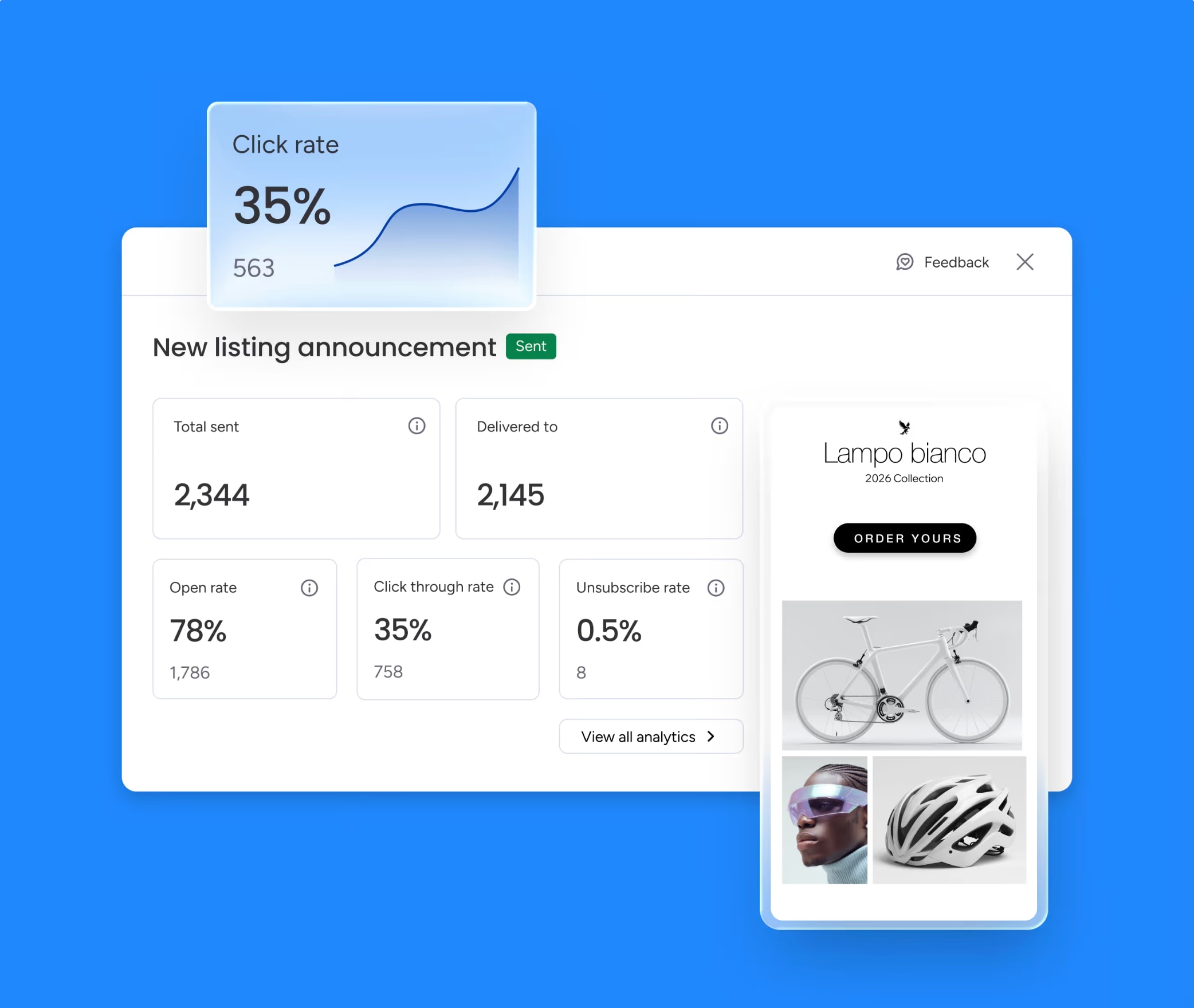
monday campaigns is an AI-powered product in the monday CRM suite that helps teams create, launch, and optimize outbound cadences in minutes. Because it connects natively to monday CRM and monday Work Management, marketing and sales run one coordinated sequence instead of stitching data across systems.
The result is a full view of the prospect journey, from first touch to closed-won. When the cadence, the signals, and the pipeline all live in one place, marketing and sales finally close the loop on what actually drives revenue.
AI-powered cadence creation and optimization
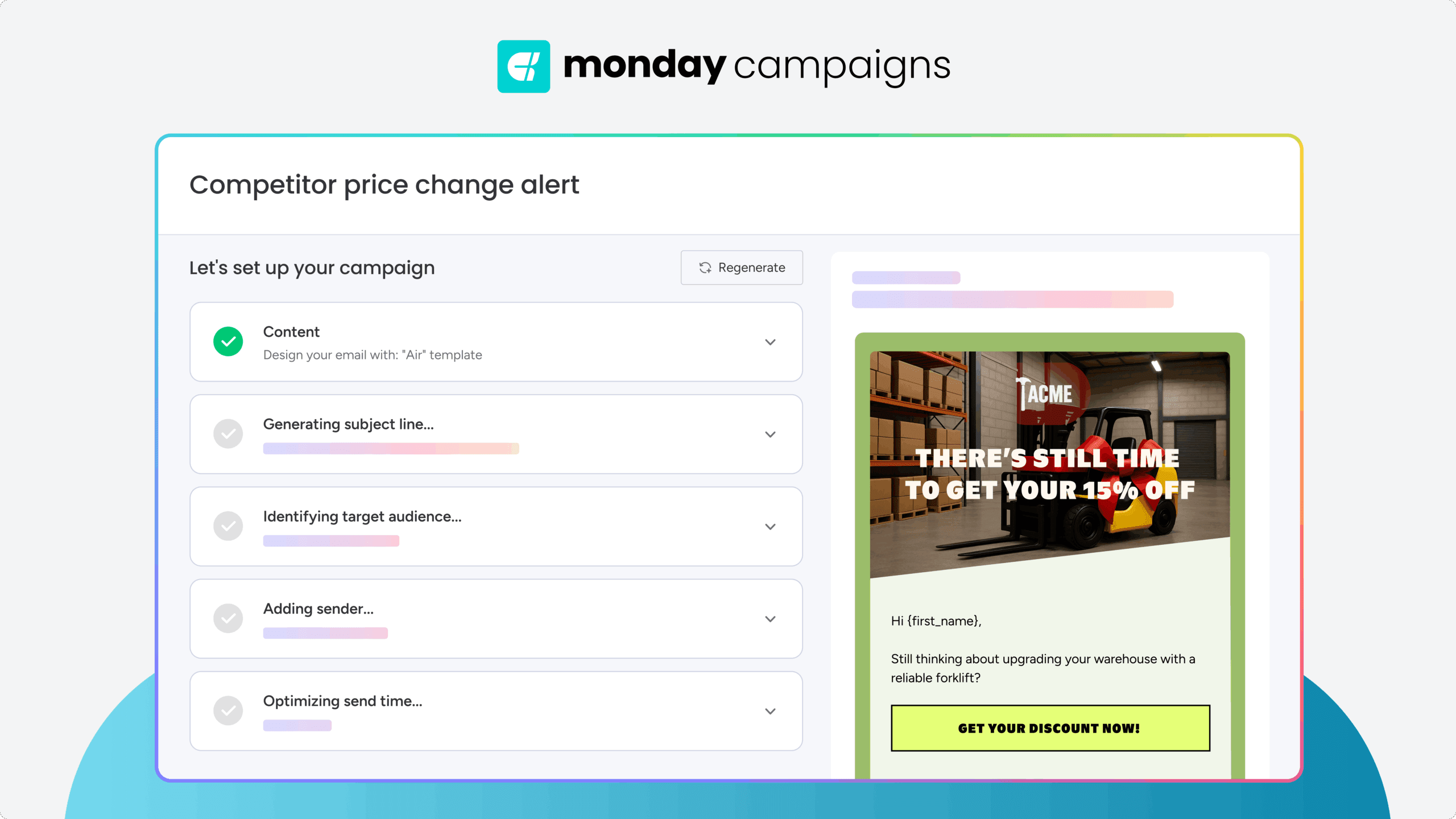
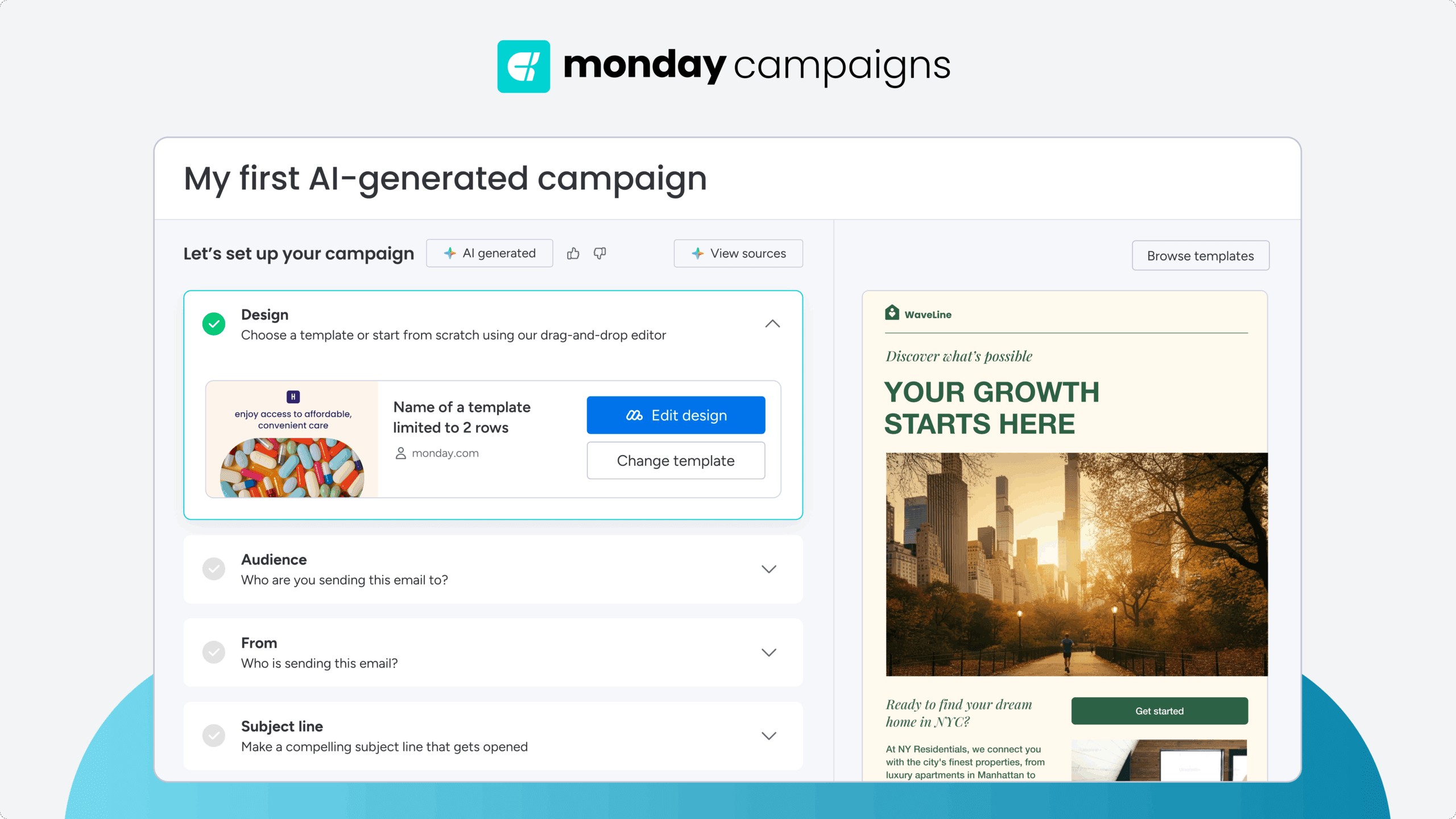
AI generates copy, suggests segments, and verifies brand consistency so you can launch cadences faster. The drag-and-drop builder lets you design on-brand emails without waiting on design or ops. AI send-time recommendations deliver each touch when a contact is most likely to engage, learning individual patterns rather than relying on generic averages.
Intelligent automation triggered by buying signals
Launch cadences that run themselves from CRM updates and prospect behavior, not just fixed schedules. Native triggers fire when a prospect visits your pricing page, downloads content, or hits another buying signal. Dynamic CRM segmentation refreshes audiences automatically as contact records change, so your sequences stay relevant without manual list updates.
AI agents that prioritize and execute follow-ups

The Lead Agent sources and enriches prospects, the Sales Agent qualifies contacts and books meetings, and the Lead Scorer scores prospects, routes them, schedules follow-ups, and alerts reps. The Sentiment Detector reads reply tone, so your team knows which conversations to prioritize. These agents execute and prioritize cadence follow-ups at scale, freeing reps to focus on live conversations.
Closed-loop visibility for marketing and sales
Performance tracking monitors open, click, and unsubscribe rates in one place, with closed-loop reporting that ties every touch to pipeline and revenue. Because monday campaigns sits inside the same suite as your CRM, both teams see the same prospect journey without switching tools. One customer reported 26x ROI and 25,000 hours saved annually running campaigns on monday.
Turn your sales cadence into a repeatable revenue engine
The teams that win outbound don’t send the most emails, they send the most relevant ones at the right moment. Relevance, timing, buying signals, and honest measurement beat volume every time. Start with the fundamentals: segment your prospects, structure each touch around a single job, and let signals decide when to reach out. Then layer in automation and AI to scale what already works.
Your prospects are already signaling what they care about through their actions. monday campaigns turns those signals into timely conversations by connecting your cadence automation, AI send-time recommendations, and dynamic segmentation directly to your CRM. When marketing and sales share the same view, scattered outreach becomes a predictable path to booked meetings and real revenue.
FAQs
How many emails should be in a B2B sales cadence?
A B2B sales cadence should have 5 to 8 emails spread over 2 to 4 weeks, spaced 3 to 5 days apart. Warm leads need fewer touches, while cold high-fit accounts can support the full range.
What is the best day and time to send sales cadence emails?
The best day and time to send sales cadence emails is generally Tuesday through Thursday between 9 and 11 a.m. in the prospect's local time. Trigger-timed sends tied to buying signals outperform any fixed schedule.
What is the difference between a sales cadence and a drip campaign?
A sales cadence and a drip campaign differ in intent and audience. The cadence is rep-driven prospecting aimed at named accounts, while the drip nurtures broad audiences with automated, list-wide sends.
How do you personalize a sales cadence at scale?
You personalize a sales cadence at scale by using buying signals and CRM data to tailor each touch to the prospect's context rather than editing every email by hand. Signal-driven relevance, like referencing a recent funding round, lifts replies more than surface-level merge fields.
What metrics show a sales cadence is working?
The metrics that show a sales cadence is working are reply rate, meetings booked, and conversion to pipeline, with unsubscribes kept below 0.5% and spam complaints below 0.10%. Opens and clicks are helpful signals but don't prove the cadence earns conversations on their own.
How does monday campaigns help run an email sales cadence?
monday campaigns helps run an email sales cadence by connecting cadence automation, AI send-time recommendations, and dynamic segmentation to your CRM in one suite. Its AI agents, including the Lead Scorer and Sentiment Detector, score prospects and prioritize the follow-ups most likely to convert.

 Get started