


A strong sales management process turns revenue targets into predictable outcomes. It gives you the visibility to spot what’s working, the structure to scale what succeeds, and the confidence to lead your team through every quarter with clarity.
This guide shows you how to build a sales management process that drives consistent performance: from mapping your pipeline and structuring your team to tracking the right metrics and leveraging AI to work smarter. You’ll get a practical framework that connects strategy, people, and performance in one flexible workspace.
Key takeaways
- Without consistent pipeline stages and qualification criteria, forecasting becomes guesswork and hitting targets turns into a matter of luck.
- A gap in any of the 4 pillars — people, strategy, process, or performance — weakens the entire system, so audit all 4 before assuming the problem is just your reps.
- Routine work like follow-ups, data entry, and lead routing should run on autopilot, freeing reps to focus on deals that actually move.
- Activity and outcome metrics let you give reps specific, targeted feedback instead of generic advice that doesn’t stick.
- Revenue teams get a flexible, centralized workspace with monday CRM to track every deal, automate workflows, and gain real-time pipeline visibility without the setup headaches of legacy systems.
What is a sales management process?
A sales management process is the systematic approach revenue leaders use to plan, execute, and optimize sales activities across their team. It’s the framework that turns individual sales efforts into predictable, scalable revenue.
Without a defined process, revenue leaders face uncertainty every day. Forecasting turns into guesswork, and resource allocation becomes reactive. Scaling? Nearly impossible. A structured sales management process creates consistency across reps, visibility for leadership, and a foundation for growth that lasts.
Here’s what creates that foundation:
- Strategy: Revenue targets, market positioning, and go-to-market approach define where you’re headed
- People: Hiring, onboarding, and team structure determine execution quality
- Process: Pipeline stages, qualification criteria, and workflows create consistency
- Performance: Metrics tracking, coaching, and optimization drive continuous improvement
Sales management vs. the sales process
Knowing the difference between these terms helps revenue leaders build systems that actually work. They’re related, but they operate at different levels of your sales organization. Here’s how:
| Aspect | Sales process | Sales management process |
|---|---|---|
| Focus | Rep-level activities | Manager-level oversight |
| Scope | Prospect-to-customer journey | Strategy through optimization |
| Approach | Tactical and linear | Strategic and cyclical |
| Example | Qualifying a lead | Coaching reps on qualification |
| Objective | Individual deal progression | Team and organizational performance |
The sales process is the step-by-step journey prospects take from first contact to closed deal. It’s tactical and rep-facing: prospecting, qualification, demos, proposals, and closing.
The sales management process is the broader system that runs your sales organization. It includes strategy, team structure, coaching, forecasting, and performance management. That’s the oversight layer that makes sure your sales process gets followed, improved, and scaled.
Why an effective sales management process matters
Revenue leaders lose sleep over 3 things: unpredictable revenue, poor efficiency, and reporting up without confidence. A structured sales management process fixes these. Here’s how it works:
Predictable revenue through accurate forecasting
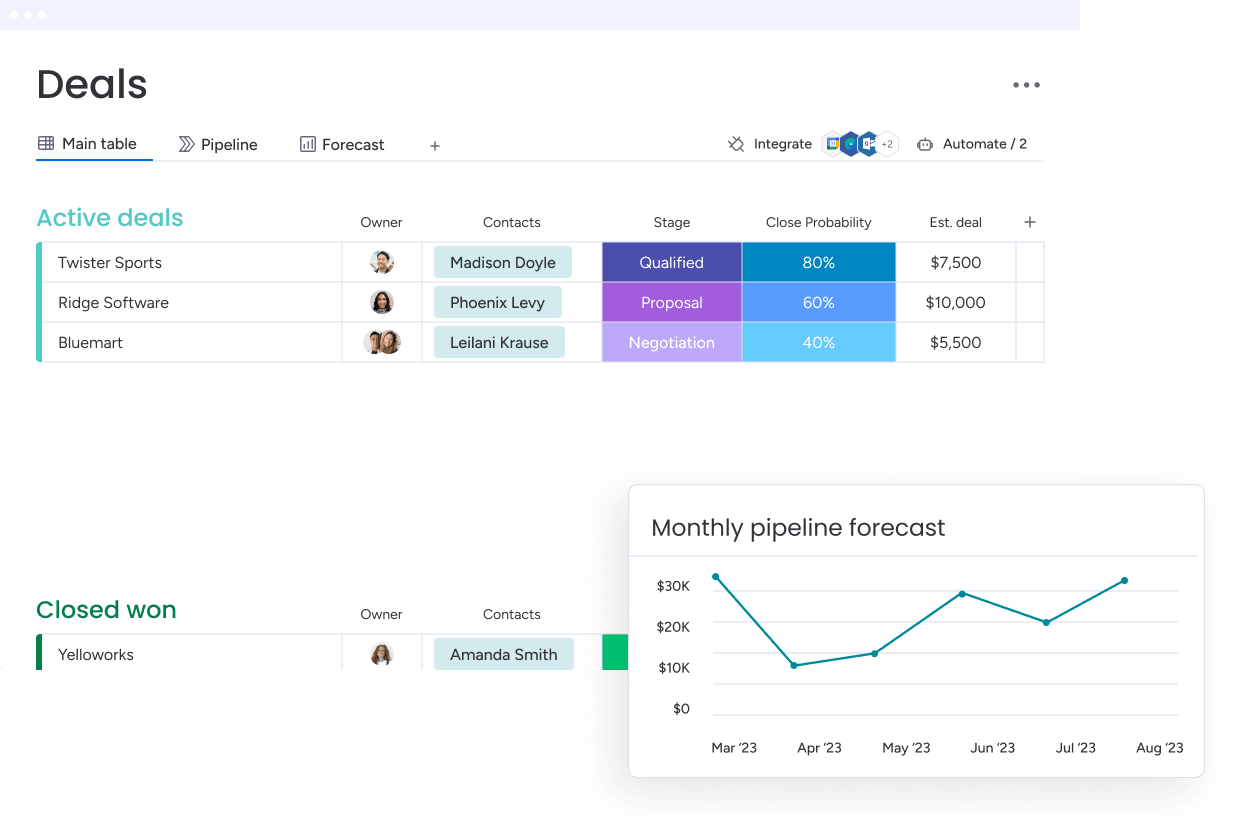
When pipeline visibility is poor and forecasting relies on gut feel, you can’t predict whether teams will hit targets. A structured process creates consistent pipeline stages, defined qualification criteria, and regular forecast reviews.
Every deal follows the same progression, making it possible to:
- Calculate conversion rates at each stage.
- Identify patterns across deals and reps.
- Project outcomes with confidence before the quarter ends.
Leaders gain confidence in their numbers, can report up accurately, and make more strategic decisions about hiring, territory planning, and resource allocation.
Learn more: Sales pipeline report examples
Higher productivity across your sales team
Without defined processes, reps spend hours searching for information, updating records, and figuring out next steps. That’s time that should go toward selling.
Defined workflows, automated routine activities, and prioritized activities free reps to focus on what moves deals forward. When the process is straightforward, reps work faster and make fewer mistakes. Teams close more deals in less time. Managers spend less time firefighting and more time coaching.
Stronger alignment across departments
Siloed teams create handoff failures, misaligned expectations, and lost revenue. Marketing generates leads that sales doesn’t follow up on. Sales closes deals that customer success can’t retain. Finance builds forecasts on incomplete data.
A unified process makes sure:
- Marketing delivers qualified leads based on agreed criteria.
- Finance receives accurate revenue data for planning.
- Customer success gets complete handoff information to drive retention.
Teams work better together, reducing friction and speeding up the customer journey from first touch through long-term retention.
Faster, data-driven decisions at every level
Without real-time data, sales leaders make decisions based on old reports or gut feel. Problems show up after they’ve already hurt the quarter.
Structured processes generate consistent, real-time data on pipeline health, rep performance, and how fast deals move. Leaders spot bottlenecks as they happen, adjust strategies mid-quarter, and fix small issues before they become big problems.
4 core components of sales management
Every effective sales management process rests on 4 foundational pillars. Weakness in any one area weakens the others. Knowing what each pillar covers helps you diagnose gaps and build a stronger sales organization.
1. People
Your sales team’s skills, structure, and development determine how well they execute. This component covers 3 critical areas:
- Hiring: Recruiting reps with the right skills, experience, and cultural fit means your team can deliver on the strategy.
- Onboarding: Ramping new hires quickly reduces time-to-productivity and protects revenue.
- Structure: Organizing teams by territory, product, or account size aligns capacity with opportunity.
2. Strategy
Strategy defines where you’re going and how you’ll get there. Here are the key strategic elements:
- Revenue targets: Setting realistic, data-driven goals based on historical performance and market opportunity.
- Market segmentation: Identifying ideal customer profiles and target accounts to focus effort.
- Go-to-market approach: Choosing between inbound, outbound, or hybrid motions to engage prospects.
3. Process
Process is the repeatable workflow that takes prospects from first contact to closed deal. Here are the essential process components:
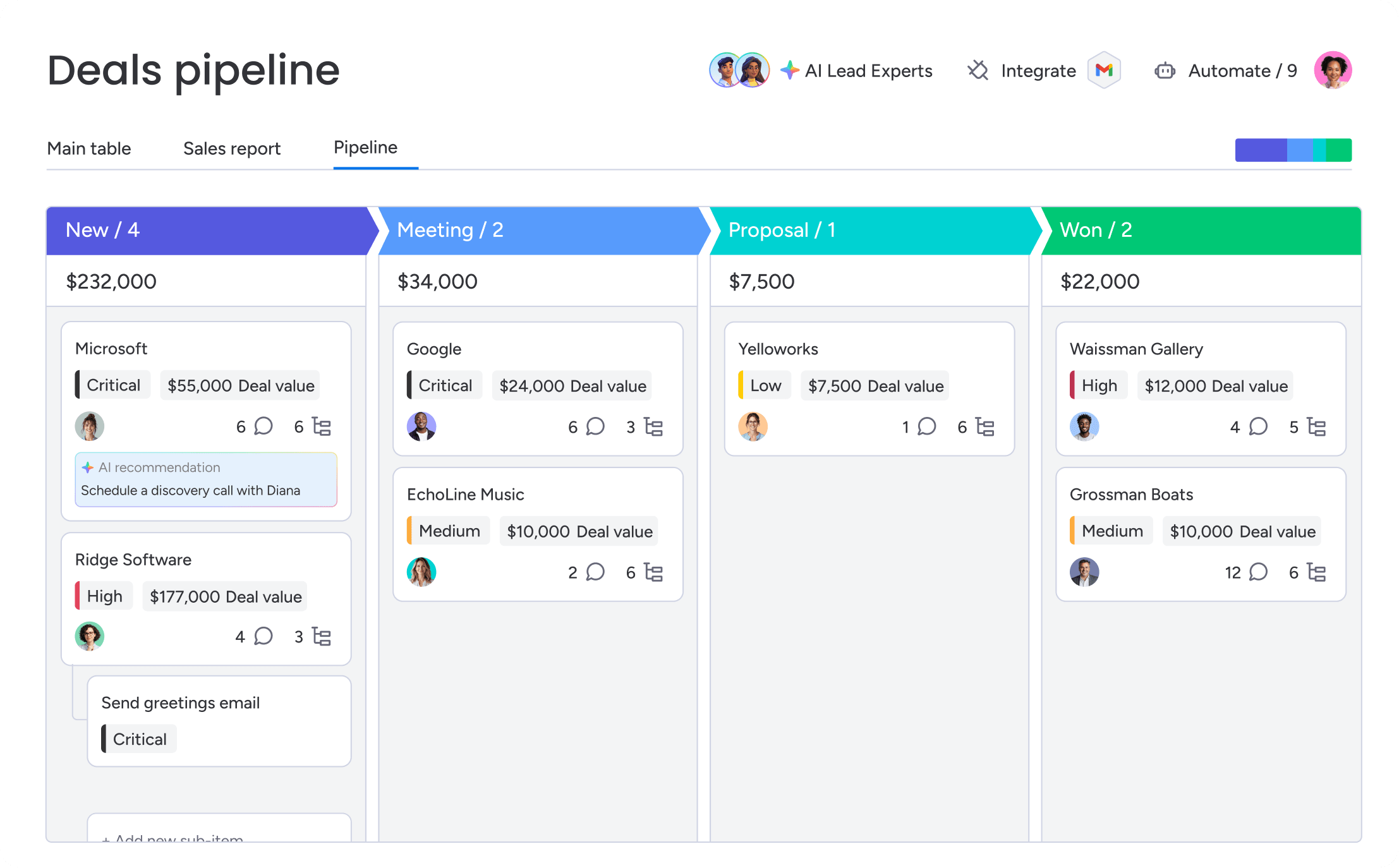
- Pipeline stages: Defining clear stages creates consistency across reps.
- Qualification criteria: Establishing what makes a lead sales-ready ensures focus on real opportunities.
- Sales methodology: Choosing frameworks like MEDDIC or BANT provides common language for progression.
4. Performance
Performance, or sales performance management, encompasses how you measure success, identify gaps, and drive improvement:
- Metrics tracking: Monitoring win rates, pipeline velocity, and quota attainment reveals what’s working.
- Coaching: Providing targeted feedback based on activity and outcomes accelerates development.
- Optimization: Refining processes based on results ensures continuous improvement.
6 steps to build your sales management process
Building or improving a sales management process follows a clear sequence. Follow these steps in order, then refine them as your organization learns and grows.
Step 1: Define your sales strategy and revenue targets
Start by setting revenue goals and defining your sales strategy. That means identifying your ideal customer profile, target market segments, and how you’ll reach them.
Here’s how to get this right:
- Set revenue targets based on historical data, market opportunity, and growth objectives.
- Define your ICP by identifying characteristics of best-fit customers, including industry, company size, pain points, and buying behavior.
- Choose your sales motion based on market dynamics and available resources.
- Align marketing and sales on target accounts, messaging, and lead qualification criteria.
Step 2: Hire, onboard, and structure your sales team
Build a team with the right skills, structure it for success, and ramp it up quickly with solid onboarding. The goal is to get reps productive faster and set them up to perform from day one.
Here’s what to do:
- Recruit for fit: Look for reps with relevant experience, coachability, and cultural alignment.
- Organize for scale: Structure by territory, product line, or account size based on your strategy.
- Build a ramp plan: Create structured milestones, training modules, and shadowing opportunities.
- Set expectations early: Ensure everyone knows their responsibilities, success metrics, and how they fit into the broader team.
Step 3: Map your pipeline stages and sales process
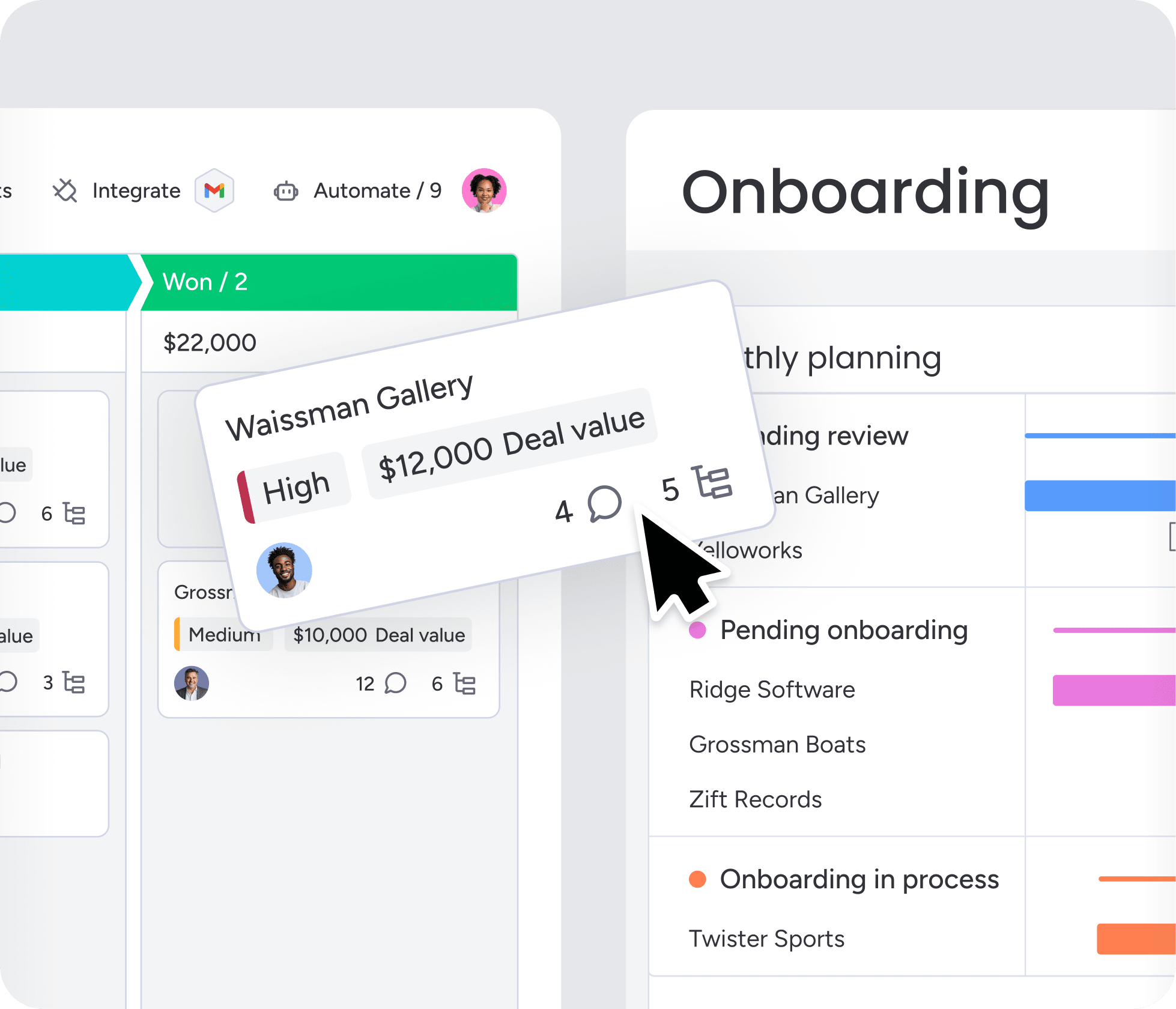
Define the stages prospects move through from first contact to closed deal with a sales process flowchart, establishing criteria for advancing between stages. Without this, reps interpret the pipeline differently, and your forecast becomes unreliable.
| Pipeline stage | Entry criteria | Exit criteria |
|---|---|---|
| Prospecting | Lead identified | Initial contact made |
| Qualification | Initial contact made | BANT criteria confirmed |
| Demo | BANT confirmed | Demo completed, interest validated |
| Proposal | Demo completed | Proposal delivered, pricing discussed |
| Negotiation | Proposal delivered | Terms agreed, contract in review |
| Contracting/Close | Terms agreed | Contract signed, deal won |
Customizable pipeline stages and deal tracking within monday CRM ensure visibility at every step, helping teams maintain consistency while adapting to their specific sales cycle.
Step 4: Execute with the right tools and automations
Equip your team with the right sales enablement tech stack to execute efficiently, automating repetitive tasks to free up selling time. The right setup means reps spend less time on admin and more time in front of buyers.
Build your execution layer around these 4 priorities:
- Centralize data: Implement a CRM to consolidate customer data, pipeline tracking, and activity logging in one system.
- Automate workflows: Use automations to handle follow-ups, task assignments, and data entry.
- Connect your stack: Integrate your CRM with email, calendar, and communication tools for seamless workflows.
- Enable real-time visibility: Give reps and managers instant access to performance data without waiting for weekly reports.
Step 5: Monitor pipeline health and team performance
Track key sales metrics to understand pipeline health, rep performance, and where deals get stuck. Consistent monitoring turns your pipeline from a snapshot into a decision-making engine.
| Metric | What it measures | Target range |
|---|---|---|
| Pipeline coverage | Total pipeline divided by quota | 3–5x |
| Stage conversion | Percentage of deals advancing | Varies by stage |
| Average deal velocity | Days from creation to close | Industry-dependent |
| Activity volume | Calls, emails, meetings per rep | Role-dependent |
Real-time dashboards provide instant visibility into pipeline health and rep activity without manual report generation, helping managers spot issues before they impact results.
Step 6: Coach, refine, and scale what works
Use data to coach reps, refine processes, and support ongoing sales optimization. Sales management is a continuous cycle, not a one-time setup.
- Coach to data: Use activity and outcome metrics to provide targeted, specific feedback.
- Refine the process: Adjust pipeline stages, qualification criteria, or workflows based on what’s working.
- Replicate top performance: Identify behaviors from your best reps and build them into team-wide practices.
- Keep iterating: Treat every quarter as an opportunity to improve, not just execute.
Best practices for effective sales management
These proven practices separate high-performing sales organizations from the rest. Applying them consistently is what turns a good process into a repeatable, scalable system.
Centralize customer data in a single source of truth
Scattered data creates blind spots, slows handoffs, and makes reporting impossible. A single source of truth ensures everyone works from the same information, reduces duplicate work, and improves collaboration across sales, marketing, and customer success.
Teams using monday CRM benefit from centralized customer data that integrates with existing tools, eliminating silos and creating a complete view of every customer relationship.
Automate routine work to free up selling time
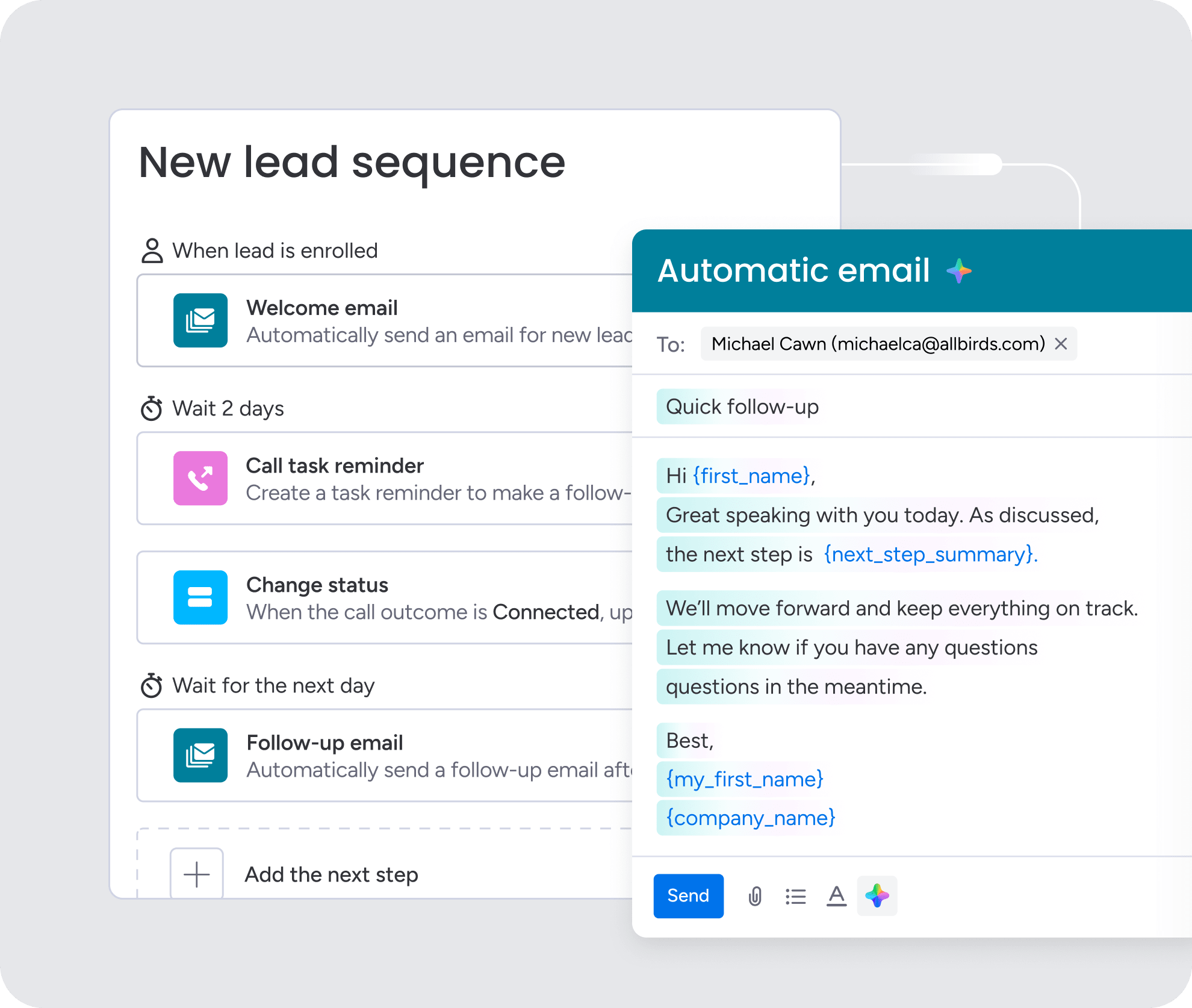
Reps spend too much time on administrative work instead of selling. Automation reduces manual effort, ensures consistency, and keeps deals moving without constant manual intervention.
Key automation opportunities include:
- Lead routing: Automatically assign leads based on territory or expertise.
- Follow-up reminders: Trigger notifications when deals need attention.
- Data entry: Auto-populate fields from emails and calendar events.
- Status updates: Move deals through stages based on activity completion.
Build a coaching cadence tied to real activity
Targeted, data-driven coaching is what moves the needle. Data-driven coaching targets specific gaps, reinforces best practices, and accelerates rep development. A regular cadence ensures coaching happens consistently, not just when problems arise.
Performance dashboards make it easy to identify coaching opportunities and track improvement over time, helping managers focus their efforts where they’ll have the most impact.
Connect sales to marketing, finance, and customer success
Disconnected teams create handoff failures, misaligned expectations, and lost revenue. Shared data and processes ensure marketing delivers qualified leads, finance has accurate forecasts, and customer success receives complete handoff information.
Cross-team visibility and shared workflows eliminate silos and improve collaboration across the entire revenue organization, creating a seamless experience from prospect to customer.
Treat buyer enablement as a first-class motion
Equip buyers with the information, tools, and resources they need to make confident decisions. Buyer enablement accelerates deals by making it easier for champions to sell internally.
Effective buyer enablement includes:
- Mutual action plans: Shared documents outlining steps to purchase
- ROI calculators: Tools helping buyers build their business case
- Stakeholder-specific content: Materials tailored to different decision makers
- Implementation guides: Clear expectations for post-purchase success
Key metrics to measure sales management success
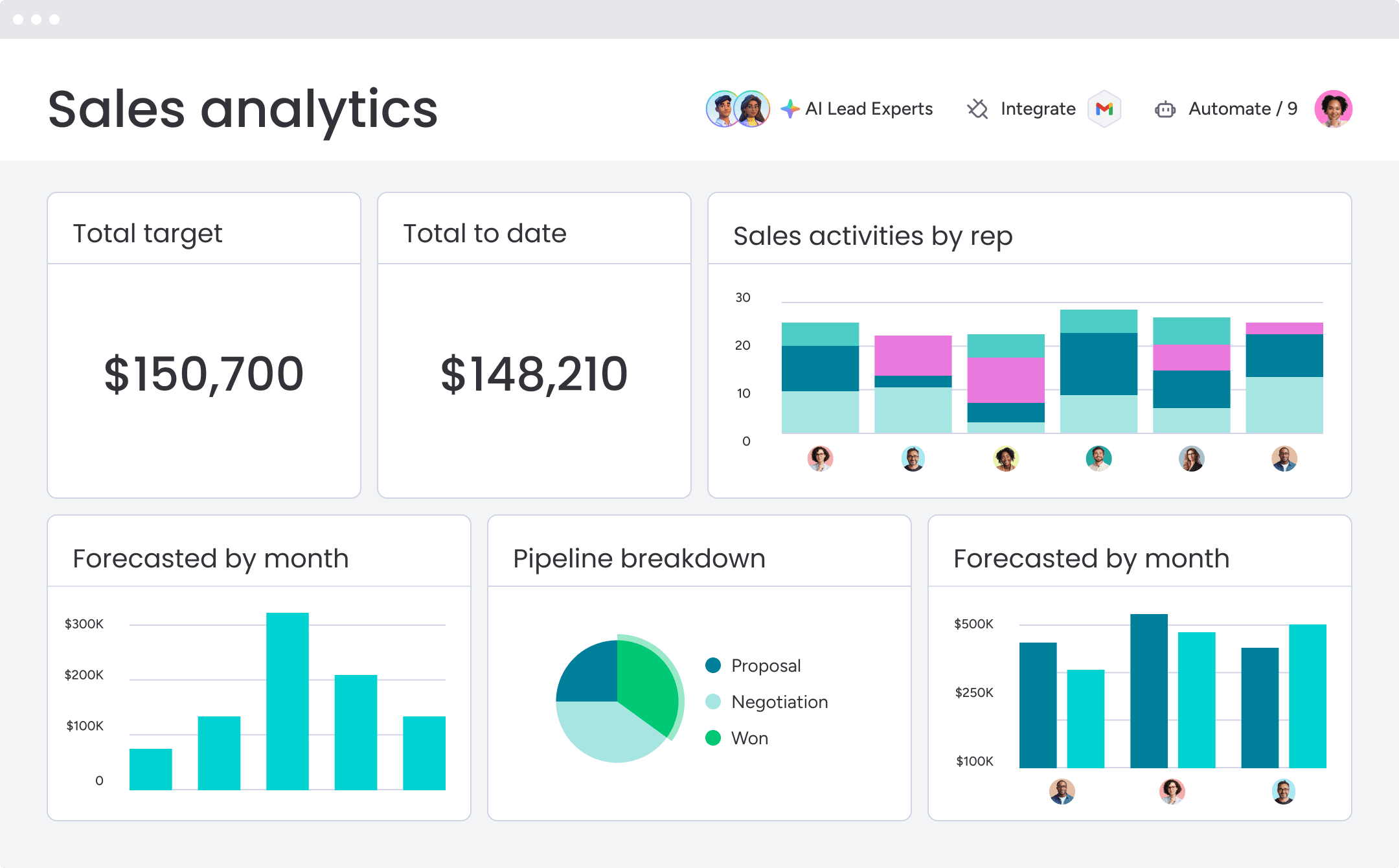
Metrics provide the feedback loop that tells you whether your sales management process is working. Tracking the right ones gives leaders a real-time view of performance, not just a post-quarter recap.
Pipeline coverage and sales velocity
Pipeline coverage is the ratio of total pipeline value to quota. Sales velocity measures how quickly deals move through your pipeline, calculated as:
(Number of Opportunities × Average Deal Value × Win Rate) ÷ Sales Cycle Length
These metrics reveal whether you have enough opportunities to hit targets and how efficiently you’re moving them to close.
Quota attainment and forecast accuracy
Quota attainment is the percentage of reps hitting their targets. Forecast accuracy measures how closely actual results match forecasted revenue. These metrics indicate whether your process drives consistent performance and whether your visibility into the pipeline is accurate.
Activity-to-outcome ratios
Activity-to-outcome ratios measure the relationship between sales activities and results:
- High activity, low outcomes: Signals a quality problem — reps are busy but not effective
- Low activity, high outcomes: Suggests reps are prioritizing well and focusing on the right deals
Understanding these ratios helps you optimize where reps spend their time and where coaching should focus.
How AI is reshaping the sales management process

AI transforms sales management from reactive to proactive. It doesn’t just automate tasks — it surfaces insights, predicts outcomes, and enables smarter decision-making at scale. Here’s where AI is having the most impact right now.
AI-powered lead scoring and prioritization
AI analyzes historical data to score leads based on fit, intent, and likelihood to convert, then prioritizes them for reps automatically. This ensures teams focus on opportunities most likely to close, improving both efficiency and win rates.
Automated account planning and email outreach
AI generates account plans, suggests outreach strategies, and drafts personalized emails based on customer data and past interactions. This reduces manual work while improving personalization at scale.
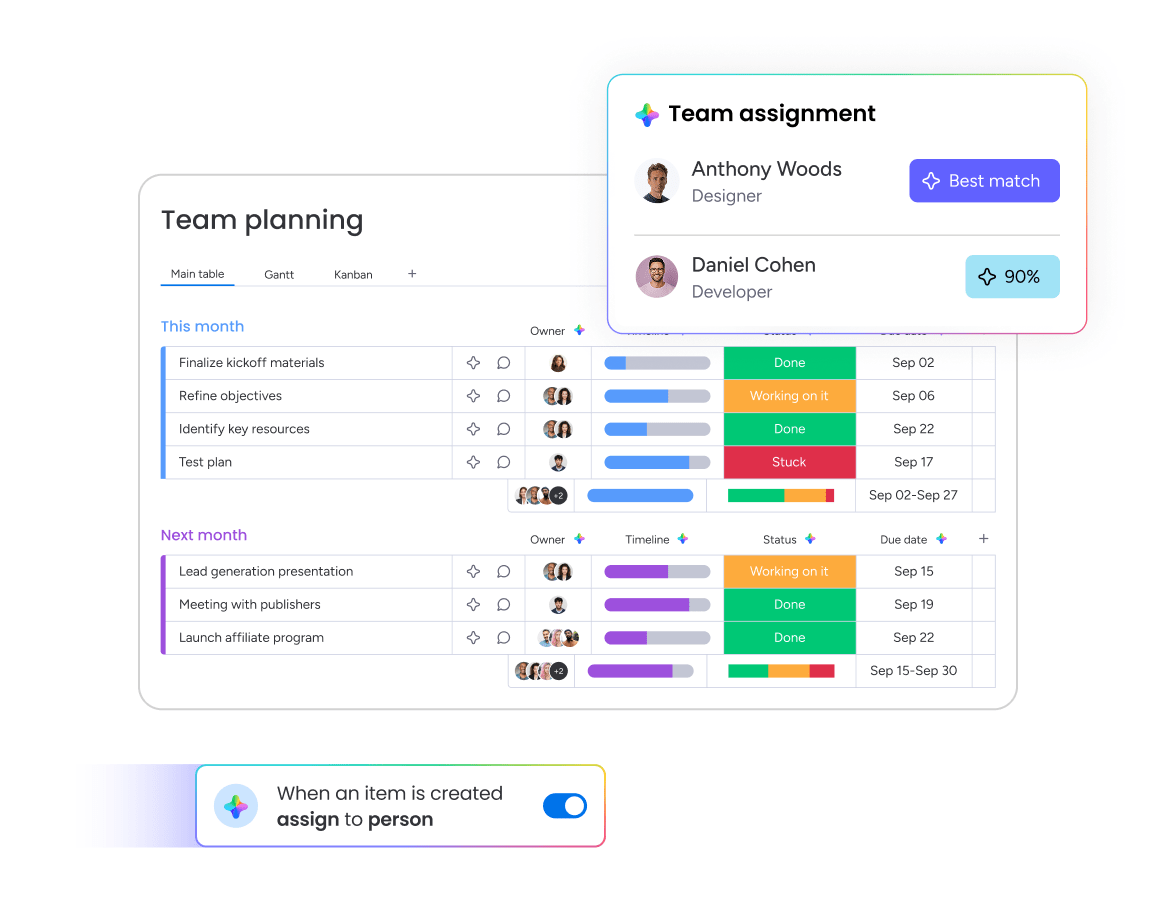
Teams leveraging AI capabilities within monday CRM can automate email composition, extract information from documents, and use AI to assign the right person to each opportunity based on skills and availability.
Real-time coaching and conversation insights
AI analyzes sales calls and emails to surface coaching opportunities, highlight best practices, and identify areas for improvement. Managers receive actionable insights without spending hours on manual call reviews.
AI agents working alongside your sales team
AI agents handle routine activities like data entry, follow-up scheduling, and pipeline updates, freeing reps to focus on selling. These digital workers operate continuously, ensuring nothing falls through the cracks while your team focuses on high-value activities.
Learn more: Best practices for AI sales report automation

How monday CRM helps refine the sales management process
Revenue leaders need more than a place to store customer data. They need a flexible system that helps teams manage the full sales management process, from pipeline visibility and workflow automation to coaching, forecasting, and cross-team collaboration.
monday CRM gives sales teams a centralized workspace to track deals, manage customer relationships, automate routine work, and monitor performance in real time. Instead of forcing teams into rigid workflows, monday CRM lets managers customize pipelines, dashboards, automations, and reporting around the way their team actually sells.
With monday CRM, sales teams can:
- Customize pipeline stages: Build sales workflows that match your team’s process, qualification criteria, and deal stages.
- Automate repetitive work: Trigger follow-ups, assign tasks, update deal statuses, and reduce manual admin.
- Centralize customer data: Keep account details, activity history, communications, and next steps in one shared workspace.
- Track performance in real time: Use dashboards to monitor pipeline health, rep activity, sales velocity, and forecast accuracy.
- Improve coaching and visibility: Give managers the data they need to identify bottlenecks, coach reps, and scale what works.
- Use AI to work smarter: Leverage AI capabilities to support email creation, document extraction, task assignment, and faster sales execution.
For teams building or refining a sales management process, monday CRM brings the strategy, people, process, and performance layers together in one place, so leaders can manage the team with more clarity and reps can focus on moving deals forward.

“With monday CRM, we’re finally able to adapt the platform to our needs — not the other way around. It gives us the flexibility to work smarter, cut costs, save time, and scale with confidence.”
Samuel Lobao | Contract Administrator & Special Projects, Strategix
“Now we have a lot less data, but it’s quality data. That change allows us to use AI confidently, without second-guessing the outputs.”
Elizabeth Gerbel | CEO
“Without monday CRM, we’d be chasing updates and fixing errors. Now we’re focused on growing the program — not just keeping up with it."
Quentin Williams | Head of Dropship, Freedom Furniture
“There’s probably about a 70% increase in efficiency in regards to the admin tasks that were removed and automated, which is a huge win for us.“
Kyle Dorman | Department Manager - Operations, Ray White
"monday CRM helps us make sure the right people have immediate visibility into the information they need so we're not wasting time."
Luca Pope | Global Client Solutions Manager at Black Mountain
“In a couple of weeks, all of the team members were using monday CRM fully. The automations and the many integrations, make monday CRM the best CRM in the market right now.”
Nuno Godinho | CIO at Velv
“monday.com provides developmental flexibility, operational efficiency, and data transparency — all in one place. We became a company that moved from chasing data to leading with it.”
Hyunghan Lee | Team Lead, Sandbox Network
"monday.com brought every part of our business into one connected space. The harmony between work management and CRM has become our operating system — giving us the clarity and confidence to scale.”
Jennifer Chinburg | Executive Vice President of Corporate Development & Brand, Chinburg Properties
“We just weren’t getting value from our old CRM. With monday.com, it's a thousand times better. Our sales teams are more informed, more consistent, and far more connected."
James Arnold | Chief Operating Officer, CenversaGet started with a scalable sales management process
A well-built sales management process gives you the visibility, consistency, and control to hit targets with confidence. From pipeline mapping to AI-powered coaching, every element works together to reduce guesswork and put your revenue on a predictable path.
With monday CRM, revenue teams get the flexibility to run their process their way, with the visibility and automation to back it up. Try monday CRM and see how your team performs when everything is in one place.
Try monday CRM sales managementFAQs
What is the difference between sales management and sales operations?
The difference between sales management and sales operations is their focus: sales management is about leading the sales team, setting strategy, and driving performance, while sales operations focuses on the systems, processes, and tools that help the team execute.
How do you measure the success of a sales management process?
You measure the success of a sales management process through a combination of leading and lagging indicators. Lagging indicators include quota attainment, revenue growth, and win rates. Leading indicators include pipeline coverage, activity levels, and stage conversion rates. Together, these metrics show both current performance and future trajectory.
How often should sales managers review pipeline with their teams?
Weekly pipeline reviews are standard practice. These reviews should cover pipeline health, deal progression, and forecast accuracy. Individual deal reviews happen more frequently for active opportunities, while monthly reviews focus on trends and strategic adjustments.
What role does CRM play in sales management?
CRM is the operational backbone of sales management. It centralizes customer data, tracks pipeline progression, logs activities, and generates the reports that inform coaching and strategy. Without a CRM, sales management becomes manual, inconsistent, and impossible to scale.
How can small sales teams implement a sales management process?
Small teams should start simple and add complexity as they grow. Begin with clear pipeline stages and qualification criteria. Implement a CRM early to establish good data habits. Focus on a few key metrics like pipeline coverage, win rate, and activity levels. As the team grows, add more sophisticated processes and tools.
