


Your sales team closed 15 deals last quarter, but it took 90 days on average when similar companies are closing in 60. Three promising opportunities stalled in discovery, and your best rep spends half their day updating spreadsheets instead of talking to prospects. This happens when your sales process has no plan or intention. Most revenue teams have some version of a process, but few have optimized that process to eliminate friction and accelerate results.
In this article, we’ll cover 7 steps to optimize your sales process and close deals faster. You’ll learn how to map your current workflow, identify revenue bottlenecks through data analysis, implement AI-powered lead scoring, build digital sales rooms, and track performance. Each step builds on the last, creating a system that turns reactive scrambling into predictable revenue. With the right framework and a flexible platform like monday CRM, you can go from just having a process to owning one that delivers.
Key takeaways
• Start with data, not guesswork: Analyze conversion rates between each sales stage to find your biggest bottlenecks — the stage with the lowest conversion rate is where you’ll get the highest impact from optimization efforts.
• Focus on qualification early to save time later: Define your ideal customer profile and implement lead scoring to ensure reps spend time on deals that can actually close, not prospects who’ll never buy.
• Build digital sales rooms for complex deals: Create centralized workspaces where all 6-10 buying committee members can access materials, track progress, and collaborate — this cuts approval cycles and keeps deals moving.
• Automate routine work so reps can sell: Set up workflows for lead routing, follow-up sequences, and data entry so your team spends more time with prospects and less time on administrative work.
• Gain real-time visibility into performance: Use visual pipeline management and built-in analytics to track performance automatically, plus leverage AI-powered lead scoring and no-code automation.
Try monday CRMWhat is sales process optimization?

Sales process optimization means finding what slows your deals down, measuring it, and fixing it so that you close faster and win more. This means analyzing each stage of how deals move from first contact to closed-won, finding what’s working, what’s broken, and what’s missing entirely.
Having a sales process and actually optimizing it are two different things. Most teams have some version of a process: stages in their CRM, a sequence of activities, or a playbook gathering dust. Optimization means you measure what’s happening at each stage, spot where deals stall, and fix it while continuously tracking results.
Here’s how the pieces fit together:
- Map current workflows to understand what actually happens (not what’s supposed to happen)
- Identify bottlenecks through conversion rate and timing data
- Implement specific improvements to address those bottlenecks
- Measure results to confirm changes are working
Why optimize your sales process in 2026?
The sales environment has changed fast, and if you don’t act, these challenges pile up. Buyers have more information, more options, and less patience. Internal expectations for forecast accuracy and rep productivity have intensified.
Sales process optimization builds a revenue engine that adjusts when things change but still delivers consistent results.
Every quarter, optimized teams pull further ahead. The longer you wait, the more it costs you.
To succeed, it’s important to understand these key shifts in B2B sales:
- Buying committees have expanded: Purchases now involve 6-10 stakeholders on average. A process built for one decision-maker breaks down when you need to coordinate across procurement, IT, finance, and end users.
- Sales cycles lengthen without intervention: Buyers research more before they talk to you. Without optimization, your 30-day deals turn into 60.
- Manual processes create revenue leaks: Sales reps spend significant portions of their day on administrative work instead of selling.
- Data-driven decisions separate winners from losers: Teams using real-time analytics to spot bottlenecks beat teams relying on gut feel.
- AI and automation have become table stakes: Competitors using AI for lead scoring and automation are closing more deals with the same team size.
Learn more: Top AI platforms for sales productivity
7 steps to optimize your sales process
These seven steps build on each other. Each step gives you something specific to use in the next one. Follow these steps to turn your sales process from reactive to predictable.
Step 1: Map and audit your current sales process
Before you change anything, you need to understand how deals actually move through your sales pipeline right now. Most sales teams have informal processes that live only in reps’ heads rather than not documented anywhere.
Start by documenting every stage from initial contact to closed-won, including stages that happen informally. Here’s what to document:
- Key activities and requirements at each stage
- Typical timeline and duration for each phase
- Handoff points between team members or departments
- Required approvals or stakeholder involvement
The audit shows you the gap between what should happen and what actually happens. Talk to reps at different experience levels and review 20-30 recent deals. Look for patterns and where things went off track. The table below includes some examples to look out for.
| Red flag | What it indicates | Impact on revenue |
|---|---|---|
| Inconsistent qualification criteria | Poor-fit leads advance too far | Wasted rep time, inflated pipeline |
| Stages with extended deal duration | Unclear next actions or missing information | Longer sales cycles, deal stagnation |
| Manual data entry and admin work | Process inefficiency | Reduced selling time |
| Lack of visibility into deal status | Poor CRM adoption | Forecast inaccuracy, missed follow-ups |
| Disconnected systems | Technology fragmentation | Context loss, duplicated effort |
Visual workflow mapping platforms help you document your sales process and spot where reality doesn’t match the plan.
Deliverable: A documented, visual map of your current sales process with identified inefficiencies and bottlenecks marked.
Step 2: Analyze sales data to find revenue bottlenecks
Data shows you exactly where things break down. Base your optimization decisions on real data about where deals stall and where you have the biggest opportunities.
Calculate conversion rates between each stage. If 100 leads enter your pipeline and only 15 reach the discovery call stage, that 15% conversion rate represents a critical friction point. Average time in each stage shows where deals stall. If one stage takes way longer than others, it usually means unclear next steps, missing info, or buyers going quiet.
Track these metrics:
- Stage-to-stage conversion rates: Percentage of deals advancing at each transition
- Average time in each stage: Days spent before advancing or exiting
- Overall sales cycle length: Total days from first contact to closed-won
- Win rate by segment: Conversion rates by lead source, industry, or deal size
- Activities completed per stage: Calls, emails, and meetings logged
- Pipeline velocity: How quickly deals move through the funnel
CRM platforms with real-time dashboards show you these insights automatically. With monday CRM, you can see conversion rates, cycle times, and rep performance on customizable AI-powered dashboards so that you can view reliable real-time data.
Deliverable: A prioritized list of bottlenecks ranked by revenue impact, with specific data supporting each identified issue.
Step 3: Define ICPs and accelerate lead qualification
Poor-fit leads waste rep time before they eventually disqualify. Tighten your qualification criteria early so reps focus on opportunities that can actually close.
An Ideal Customer Profile (ICP) describes who’s most likely to buy, succeed with your product. Base your ICP on real customers, not who you wish you were selling to.
| ICP category | Criteria to document | Example |
|---|---|---|
| Company characteristics | Industry, size, geography, growth stage | B2B SaaS, 50-500 employees, $10M-$100M revenue |
| Buying signals | Pain points, budget, trigger events | Recently hired VP of Sales, using spreadsheets |
| Decision-maker profile | Job titles, department, responsibilities | cro, vp of sales, director of revenue operations |
| Fit indicators | Technical requirements, deal size | Needs CRM integration, $15K-$75K ACV |
Qualification frameworks like BANT or MEDDIC establish criteria for advancing leads through effective sales opportunity management. Qualify early and keep qualifying as deals progress.
Deliverable: Documented ICP criteria and qualification framework that all reps use consistently.
Learn more: ACV in sales
Step 4: Implement AI-powered lead scoring
AI-powered lead scoring prioritizes leads based on conversion likelihood, so reps focus on the best opportunities. Lead scoring assigns scores based on who they are (company size, industry, role) and what they do (email opens, site visits, downloads). AI-enhanced scoring looks at won and lost deals to figure out which combinations predict conversion best.
AI-powered lead scoring gives you major advantages over manual approaches:
- Learns from your results: AI analyzes won and lost deals to identify what predicts conversion, then keeps learning as new deals close.
- Updates in real-time: Scores adjust immediately when prospects engage, so reps can follow up while interest is hot.
- Spots hidden patterns: AI identifies non-obvious signal combinations that predict success.
- Adapts automatically: As your ICP evolves or buying behaviors shift, scoring adjusts without manual reconfiguration.
- Eliminates bias: Every lead gets scored using the same data-driven criteria.
Revenue teams use monday CRM’s AI to categorize and score leads automatically based on their specific criteria. The Autofill with AI feature assigns labels and routes leads based on your rules.
Deliverable: An active lead scoring model that prioritizes your pipeline and routes high-value opportunities appropriately.
Step 5: Build digital sales rooms for buying groups
Managing 6-10 stakeholders in a complex sale? You need one place where everyone collaborates. Email threads and scattered docs? Total confusion. Digital sales rooms fix this by giving buyers and sellers one workspace for the entire sales process.
A digital sales room puts all your content in one place, tracks who’s engaging, and shows both sides where the deal stands. It speeds up deals by centralizing information so all stakeholders access the same up-to-date materials while giving you engagement visibility into who’s involved and what they’re reviewing. Digital sales rooms enable asynchronous collaboration that works on the buyer’s timeline and create shorter approval cycles by keeping everything in one place instead of scattered across email chains.
Every digital sales room needs:
| Component | Purpose | Example content |
|---|---|---|
| Mutual action plan | Align on milestones and responsibilities | Timeline with key dates, owner assignments |
| Case studies | Build credibility and relevance | Customer stories from their industry |
| Product materials | Enable evaluation | Demos, documentation, feature comparisons |
| Commercial documents | Facilitate decision | Pricing, proposals, ROI calculators |
| Technical/security docs | Address IT concerns | Security certifications, integration guides |
| Contract materials | Accelerate legal review | Standard terms, signature workflow |
Deliverable: A digital sales room template and process for creating personalized rooms for each opportunity.
Step 6: Automate workflows and scale personalization
Buyers want personalized, timely interactions, but reps managing 50 deals can’t customize every touchpoint manually. Automation handles the repetitive stuff so reps can focus on the moments that need a human touch.
Automate these high-impact areas first:
- Lead routing and assignment: New leads automatically route based on territory, industry expertise, or workload
- Follow-up sequences: Personalized email sequences trigger based on prospect actions or stage transitions
- Task creation and reminders: Next-step activities generate automatically when deals move between stages
- Data enrichment: Contact and company information populates from external sources
- Meeting scheduling: Calendar links send automatically after triggers
- Approval workflows: Contracts and custom terms route through approval chains
Organizations achieve more predictable results when they leverage monday CRM’s automation builder to create custom workflows combining triggers, conditions, and actions as part of comprehensive sales growth strategies. The AI Timeline Summary feature creates short summaries of communication events so reps can prep for calls fast.
Deliverable: A library of automated workflows that handle routine activities while maintaining personalized buyer experiences.
Learn more: How to calculate sales growth
Step 7: Track performance with real-time metrics
Optimization isn’t one-and-done. You need ongoing measurement. Today’s bottlenecks won’t be tomorrow’s. Your market, team, and product keep changing. Real-time tracking helps you spot new bottlenecks fast and fix them before they pile up.
Build dashboards that give each role what they need to see. Individual reps need visibility into their personal pipeline and activity, tracking metrics like pipeline value by stage, activities vs. targets, and conversion rates. Sales managers focus on team performance and coaching, monitoring pipeline coverage, rep performance variance, and bottleneck stages. Revenue leaders require strategic visibility and forecasting capabilities, examining forecast accuracy, win rates by segment, and cycle length trends.
Set up regular reviews to keep optimization on track:
- Daily reviews: Focus on individual rep pipeline
- Weekly reviews: Examine team performance
- Monthly reviews: Analyze trends and optimization opportunities
- Quarterly reviews: Assess ICP, qualification criteria, and major process changes
With monday CRM’s dashboards, you can see performance across your entire revenue engine — no waiting for reports. Sales widgets like the leaderboard and funnel show you pipeline strengths and weaknesses instantly.
Deliverable: A multi-level dashboard system and review cadence that keeps optimization efforts on track.
Try monday CRMEssential metrics for sales process optimization

Four metrics give you the clearest view of sales process health and where to optimize. Track these consistently to spot trends and measure improvement across your sales process.
Conversion rates by stage measure the percentage of opportunities successfully advancing from one stage to the next. Calculate by dividing opportunities that advanced by total opportunities in the current stage, then multiply by 100. This shows where prospects drop out and which stages need work.
Average sales cycle length measures time from first contact to closed-won deal. It directly affects revenue predictability and how productive your reps are. Track cycle length over time and break it down by deal size, industry, or lead source to spot patterns.
Pipeline velocity measures the speed at which opportunities move through your pipeline and convert to revenue. Calculate by multiplying number of opportunities by average deal value by win rate, then dividing by sales cycle length. This gives you a fuller picture than any single metric.
Revenue per rep measures average revenue generated by each sales rep over a specific period. It shows sales team productivity and whether you need more reps or better performance from your current team.
Common sales process optimization challenges
You’ll hit predictable obstacles during optimization. Spot these challenges early so you can fix them before they derail your optimization work.
Inconsistent data quality
Optimization depends on accurate information, but inconsistent data quality undermines your analysis. When reps don’t update deal stages, log activities, or enter complete info, you can’t trust the data for analysis. Fix it by:
- Simplifying data entry processes
- Automating data capture where possible
- Establishing standards for information capture at each stage
Poor CRM adoption
Optimization efforts fail when reps don’t consistently use the system. When info lives in spreadsheets, email, or people’s heads, you lose visibility and automation breaks. Here’s how to fix it:
- Choose intuitive platforms that match how reps naturally work
- Demonstrate value to reps through improved efficiency
- Start simple before adding complexity
Siloed teams and tools
Information gaps, duplicated effort, and poor handoffs slow deals when teams and tools operate in silos. Sales doesn’t work in a vacuum, but most companies have disconnected teams using different systems. Solutions:
- Using unified platforms that all revenue teams access
- Establishing shared metrics spanning teams
- Documenting handoff processes with required information
Resistance to change
Process changes fail when reps ignore them, derailing optimization if not addressed thoughtfully. Get buy-in by:
- Communicating reasons for changes clearly
- Involving reps early in designing improvements
- Starting with quick wins to build momentum
- Providing adequate training before expecting full adoption
Go from reactive to predictable with an optimized process
This optimization framework needs a platform that supports each step without adding more work. Legacy CRMs often get in the way instead of helping — they need constant configuration and maintenance that slows you down.
With monday CRM, revenue teams get the unified visibility they need to implement effective sales growth strategies without the complexity of traditional systems. The platform combines visual pipeline management, built-in analytics, AI-powered automation, and cross-functional collaboration in one intuitive workspace.
AI-powered lead scoring and intelligent automation
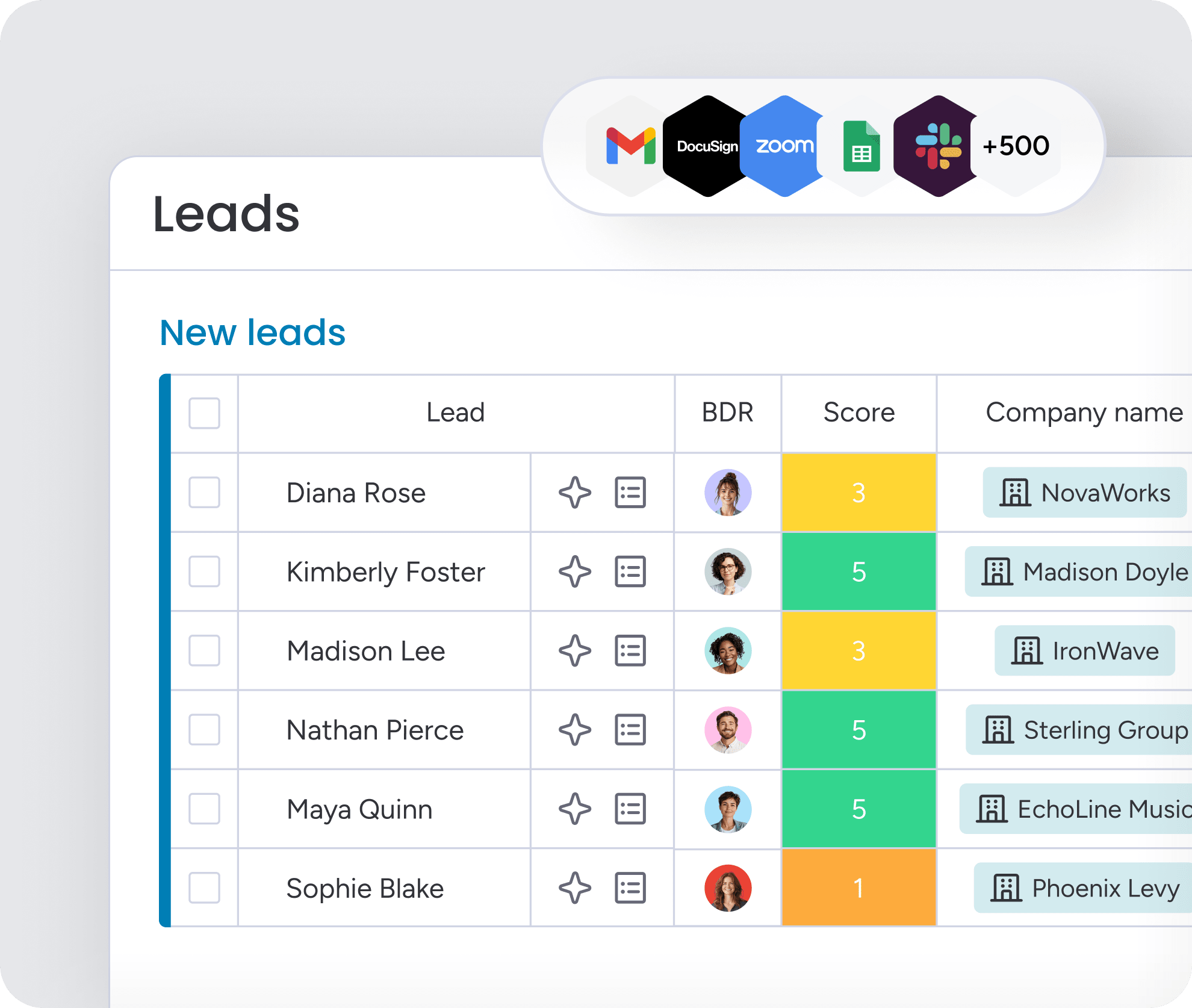
Let AI handle lead scoring, data categorization, and smart automation without needing a data science degree. The Autofill with AI feature pulls information from invoices, contracts, and resumes to populate board columns automatically, while the AI Timeline Summary creates quick briefings so reps can prep for calls in seconds. Revenue teams use these AI capabilities to prioritize high-value opportunities, eliminate manual data entry, and focus selling time where it matters most.
Real-time analytics and visual pipeline management
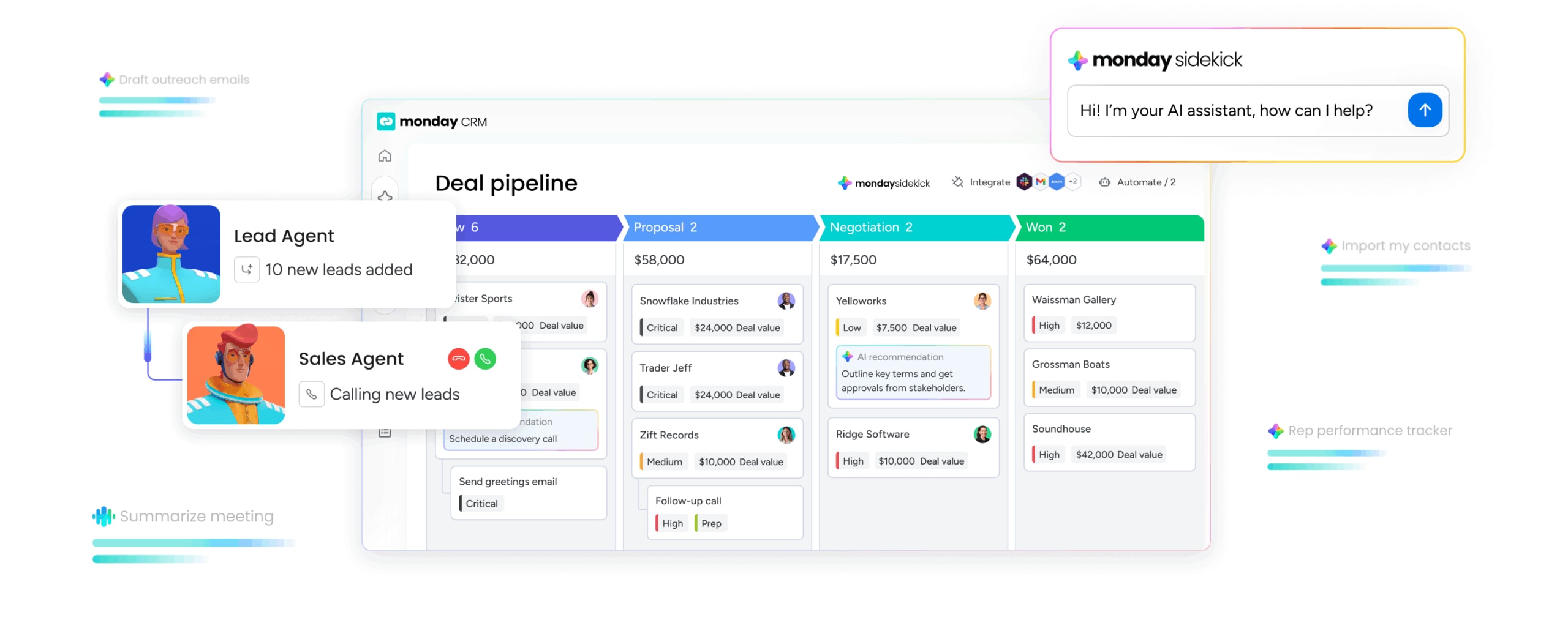
Track conversion rates, cycle times, and rep performance automatically as deals move through your pipeline. The metrics you need update in real-time and display in role-specific dashboards. AI agents monitor your pipeline continuously, flagging at-risk deals and surfacing opportunities that need immediate attention. See your entire sales process in one view, with deals moving through customizable stages that match your actual workflow, while color-coded labels show priority and health at a glance.
No-code workflow automation that scales

Build complex workflows with triggers, conditions, and actions using the visual automation builder — no coding required. Automate lead routing, follow-up sequences, task creation, and approval workflows so reps spend time selling instead of on administrative work. The platform scales with your optimization efforts, letting you start with basic pipeline management and layer in automation, AI features, and advanced analytics as your process matures.
Cross-functional collaboration and digital sales rooms
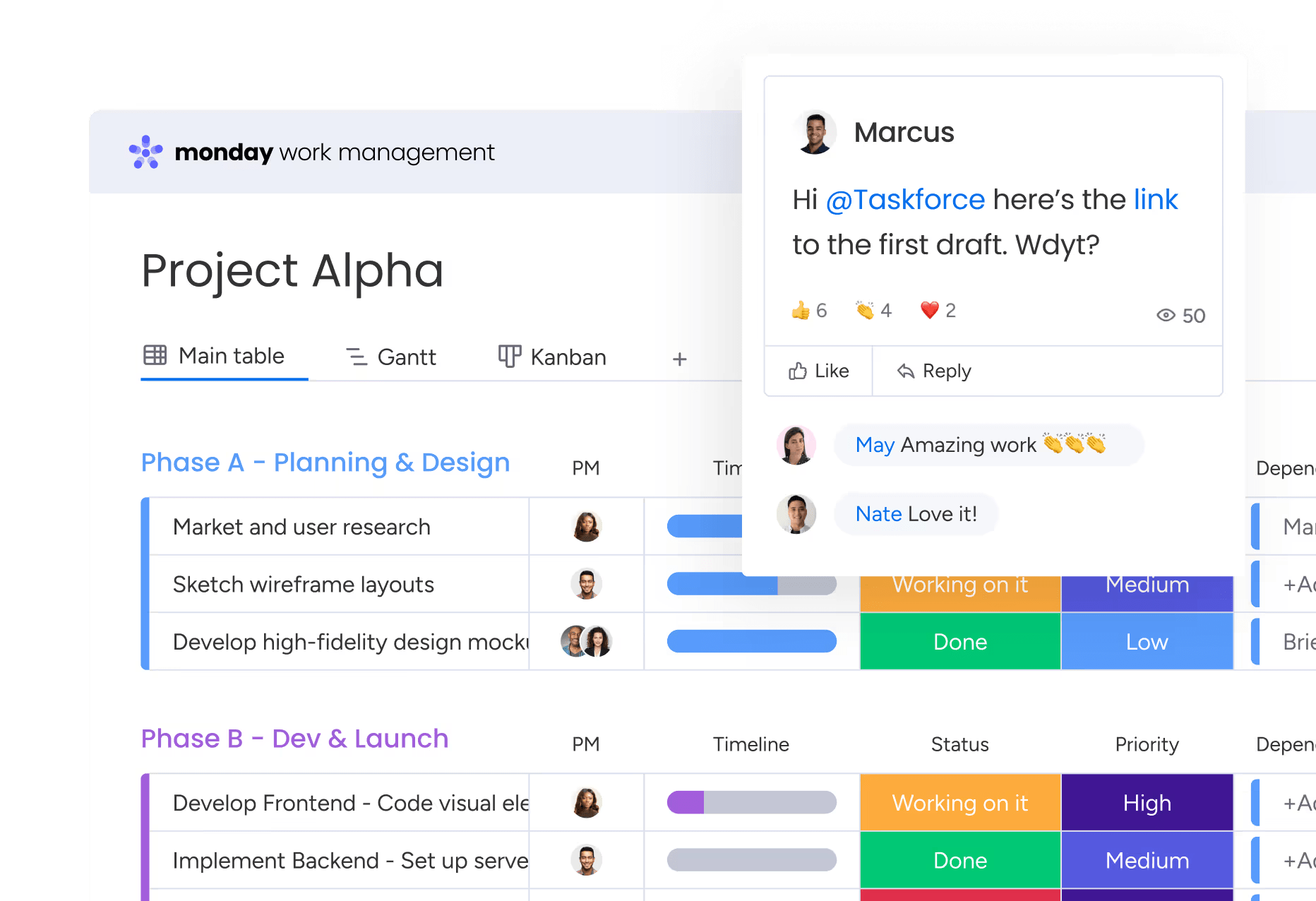
Create centralized workspaces where buying committees access materials, track progress, and collaborate throughout the sales cycle. Sales, marketing, and customer success work in the same platform with full visibility into the customer journey, so handoffs happen smoothly, and everyone sees the same information in real-time. Everything lives in one place instead of scattered across email threads and shared drives, accelerating deal cycles and keeping complex buying groups aligned.
Try monday CRMTurn your sales process into a revenue engine
Sales process optimization isn’t a one-time project; it’s an ongoing discipline that separates high-performing revenue teams from those stuck in reactive mode. The seven steps we’ve covered give you a clear framework: map your current workflow, analyze data to find bottlenecks, tighten qualification with ICPs, implement AI-powered lead scoring, build digital sales rooms for complex deals, automate repetitive work, and track performance with real-time metrics.
The teams that win in 2026 won’t be the ones with the most reps or the biggest budgets. They’ll be the ones that eliminate friction, focus on high-value opportunities, and continuously optimize based on data. With the right approach and a flexible platform like monday CRM, you can transform your sales process from a bottleneck into your biggest competitive advantage.
Try monday CRMFAQs
What is sales process optimization and why does it matter?
Sales process optimization is the systematic analysis and refinement of each stage in your sales cycle to eliminate inefficiencies and accelerate revenue generation. It matters because teams that optimize their processes close deals faster, improve win rates, and generate more revenue per rep than those relying on informal approaches.
How long does it take to see results from sales process optimization?
Initial results from sales process optimization typically appear within 30-60 days of implementing changes, though timeline depends on your sales cycle length and specific bottlenecks addressed. Quick wins like improved lead routing show impact almost immediately, while larger changes take longer to measure.
What's the difference between sales process optimization and sales enablement?
Sales process optimization focuses on improving the workflow and stages that deals move through, while sales enablement focuses on equipping reps with content, training, and tools they need to execute effectively within that process. The two disciplines complement each other.
How do I know which stage of my sales process needs optimization first?
To know which stage of your sales process needs optimization first, start by analyzing conversion rates between stages. The stage with the lowest conversion rate represents your biggest bottleneck and highest-impact optimization opportunity. Also examine time spent in each stage, since unusually long durations indicate friction.
Can small sales teams benefit from sales process optimization?
Small sales teams often benefit more from optimization than large teams because they have less margin for inefficiency. When you have 3-5 reps, every hour spent on administrative activities has proportionally larger impact.
What role does AI play in sales process optimization?
AI enhances sales process optimization through lead scoring that prioritizes opportunities, automated data enrichment that eliminates manual research, intelligent routing that matches leads with the right reps, and predictive analytics that identify deals at risk. The most effective approach combines AI automation for routine activities with human judgment for complex decisions.
