


The reality for most revenue teams: marketing brings in leads, sales close deals, but when communication is siloed, opportunities slip through the cracks and money gets left on the table. This disconnect frustrates prospects, slows down deals, and ultimately costs organizations revenue they should be capturing.
When sales and marketing truly align, everything changes. Teams share responsibility for hitting revenue targets, work from the same customer data, and coordinate their efforts at every stage of the buying process. Organizations that operate from a unified playbook with real-time access to prospect interactions and deal progress create seamless experiences that accelerate conversions and drive predictable growth.
This guide provides a comprehensive framework for building lasting alignment between revenue teams. By establishing shared goals and implementing integrated technology, you can maintain synchronization automatically. Ultimately, you will learn how to transform two separate departments into a single, high-velocity revenue engine.
Key takeaways
- Create shared revenue goals that both teams own: stop letting marketing chase lead volume while sales focuses on quality; align on common targets like pipeline generated and revenue closed.
- Map your customer journey together: document every touchpoint from awareness to close, defining clear handoffs and information requirements so prospects never fall through the cracks.
- Centralize all customer data: give both teams real-time visibility into prospect interactions, engagement history, and deal progress using solutions like monday CRM that provide a unified platform for collaboration.
- Track metrics that matter for alignment: monitor lead conversion rates, sales cycle length, and pipeline velocity — not just individual team performance — to measure collaborative success.
- Start with quick wins before expanding: begin with one area like improving lead handoffs, then build momentum for broader alignment initiatives across your entire revenue process.
What is sales and marketing alignment?
Sales and marketing alignment is when your sales and marketing teams work together toward shared revenue goals instead of operating in separate silos. This means both teams share accountability for pipeline targets, use the same customer data, and coordinate their activities throughout the buyer journey.
Consider this dynamic: marketing generates leads and sales closes deals, but without alignment, marketing may generate leads that sales doesn’t pursue, while sales invests time on prospects who aren’t ready to buy. When teams align, they create a unified revenue engine where every activity, from first touchpoint to closed deal, works together seamlessly.
The foundation of alignment rests on three core elements:
- Shared accountability: both teams own revenue outcomes, not just their departmental metrics.
- Unified visibility: everyone works from the same customer data and can see all interactions.
- Coordinated execution: clear handoffs, consistent messaging, and automated workflows keep teams in sync.
Modern definition for revenue teams
Today’s alignment looks nothing like the traditional model where marketing simply “hands off” leads to sales. Modern revenue teams use real-time data sharing, predictive analytics, and CRM marketing automation that respond instantly to customer behavior. For example, a 2023 McKinsey report highlights that leading organizations are establishing cross-functional foresight teams and using advanced analytics to monitor changes in real time.
Modern buyer behavior has fundamentally changed the traditional sales funnel. Prospects now engage with content during active sales conversations, conduct independent research outside business hours, and expect seamless interactions regardless of which team member they contact. This reality requires both teams to remain actively engaged throughout the entire customer journey, delivering consistent value at every touchpoint.
Platforms like monday CRM enable this modern approach by providing unified visibility and automated processes. Teams stay synchronized without constant manual coordination, and everyone has access to the same real-time information about prospect engagement and deal progress.
Key components of successful alignment
Successful alignment requires several interconnected components working together. Understanding these components helps you build a framework for sustainable collaboration between teams.
- Shared goals and metrics: ensure both teams work toward common revenue targets. Instead of marketing chasing lead volume while sales focuses on deal quality, both teams measure success by collaborative outcomes like pipeline generated and revenue closed.
- Unified customer data: eliminates the conflicting perspectives that arise when information lives in separate systems. A single source of truth means both teams understand prospect needs, behaviors, and history the same way, which is where a CRM for marketing becomes invaluable.
- Integrated technology systems: enable seamless data flow and real-time visibility. Connected platforms remove manual work and delays that create gaps in the customer experience. When your CRM automatically updates based on marketing interactions and sales activities, nothing falls through the cracks.
- Collaborative processes: provide clear expectations for how teams work together. Standardized procedures for lead qualification, handoffs, and feedback ensure consistency regardless of who’s involved.
- Consistent messaging: builds trust throughout the customer journey. When prospects receive coherent communications that reinforce the same value proposition, they move forward with confidence.
Why does sales and marketing alignment drive revenue growth?
When sales and marketing alignment is executed effectively, the results are measurable across key performance indicators: deals close faster, lead conversion rates increase, and customer retention improves. These outcomes translate directly to bottom-line revenue growth.
Organizations that achieve strong alignment see these gains because their teams operate with fundamentally different dynamics: customers receive consistent experiences, marketing investments focus on proven channels, and deals progress through the pipeline more efficiently.
Higher win rates and faster sales cycles
When marketing nurtures leads before sales jumps in, your reps can invest their time in high-value conversations. They can dive straight into the good stuff, addressing specific needs and talking solutions, because prospects already get what you do.
Sales teams with immediate access to marketing intelligence know exactly which content prospects consumed, which emails they engaged with, and which pain points they researched. This insight allows for personalized conversations that address specific concerns rather than generic pitches.
Meanwhile, marketing uses sales feedback about lead quality and common objections to optimize campaigns. The result? Shorter sales cycles and higher conversion rates at every funnel stage. Modern platforms like monday CRM facilitates this exchange by centralizing all prospect interactions where both teams can access them instantly.
Improved customer experience
Alignment creates seamless handoffs and consistent messaging that builds trust. Prospects don’t have to repeat information they already shared with marketing when they talk to sales. Sales conversations naturally build on the foundation marketing established.
This continuity extends through post-sale support, creating a cohesive experience that reinforces your value proposition. Customers experience your organization as competent and coordinated, making them more likely to move forward confidently.
Maximized return on investment
Shared data helps both teams understand which marketing channels generate high-value opportunities and which sales activities drive conversions. This visibility enables strategic budget allocation focused on proven approaches rather than guesswork.
Unified reporting spans from initial marketing investment to closed deals and customer lifetime value. This allows you to accurately calculate true ROI across the entire revenue funnel. With complete data, you can enable more precise forecasting and strategic resource planning.
5 signs your teams need sales and marketing alignment
Misalignment creates recognizable patterns that signal the need for systematic coordination. These symptoms appear across operations, culture, and customer experience, creating drag on revenue growth. Recognizing these signs early helps you address issues before they become deeply entrenched.
1. Misaligned goals and metrics
Marketing focuses on lead volume while sales prioritize lead quality. As a result, marketing celebrates hitting their MQL targets while sales complain the leads aren’t qualified. Neither team feels accountable for the other’s success.
This creates internal competition where teams optimize for their own metrics even when those optimizations hurt overall business outcomes. Both teams end up frustrated, pointing fingers instead of working together.
2. Poor lead quality and handoffs
Furthermore, sales consistently complain that marketing leads aren’t ready for conversations. These leads lack budget authority or don’t match your ideal customer profile. Marketing feels frustrated when sales doesn’t follow up quickly on the leads they worked hard to generate.
Prospects fall through cracks during transitions because ownership is undefined. Without systematic processes for determining when leads should move from marketing to sales, opportunities get lost and resources get wasted.
3. Inconsistent messaging
In addition, marketing may promote value propositions that don’t match what sales communicates in the field. Sales spends time correcting misconceptions created by marketing materials. Prospects receive different information depending on which team they interact with.
This inconsistency creates doubt about your organization’s reliability. When prospects can’t get straight answers, they lose confidence in your ability to deliver.
4. Disconnected data and systems
Moreover, teams often use separate systems requiring duplicate data entry and creating incomplete customer views. Marketing can’t see what happens after handoff. Sales lacks visibility into prospect engagement with marketing content.
A unified system makes it possible to track full customer journeys and understand which marketing activities contribute to closed deals. This is exactly what solutions like monday CRM address by centralizing all customer data where both teams have real-time visibility into every interaction.
5. Finger-pointing between teams
Finally, when targets are missed, teams often resort to blaming each other. Sales claims marketing doesn’t generate quality leads. Marketing argues sales doesn’t follow up effectively. This blame culture creates territorial behavior where teams protect their turf rather than collaborating.
The toxicity affects morale and prevents the honest communication needed to identify and solve real problems.

“With monday CRM, we’re finally able to adapt the platform to our needs — not the other way around. It gives us the flexibility to work smarter, cut costs, save time, and scale with confidence.”
Samuel Lobao | Contract Administrator & Special Projects, Strategix
“Now we have a lot less data, but it’s quality data. That change allows us to use AI confidently, without second-guessing the outputs.”
Elizabeth Gerbel | CEO
“Without monday CRM, we’d be chasing updates and fixing errors. Now we’re focused on growing the program — not just keeping up with it."
Quentin Williams | Head of Dropship, Freedom Furniture
“There’s probably about a 70% increase in efficiency in regards to the admin tasks that were removed and automated, which is a huge win for us.“
Kyle Dorman | Department Manager - Operations, Ray White
"monday CRM helps us make sure the right people have immediate visibility into the information they need so we're not wasting time."
Luca Pope | Global Client Solutions Manager at Black Mountain
“In a couple of weeks, all of the team members were using monday CRM fully. The automations and the many integrations, make monday CRM the best CRM in the market right now.”
Nuno Godinho | CIO at VelvBuilding alignment that delivers lasting results: 4 key areas
To build alignment that actually sticks, you need to focus on four key areas. This isn’t just about changing your org chart, but about reshaping how your teams operate day-to-day and shifting the culture so alignment becomes second nature.
1. Unified revenue strategy
Aligned teams develop shared definitions of ideal customers and revenue targets together. This means:
- Collaborative planning: both teams participate in defining target accounts, buyer personas, and go-to-market strategies, bringing their unique perspectives to create more accurate definitions.
- Joint goal-setting: revenue targets become team-neutral, with both marketing and sales accountable for hitting the same numbers.
- Shared accountability: this changes how teams prioritize activities and make trade-offs, ensuring both commit to common objectives rather than optimizing for departmental metrics.
2. Integrated technology foundation
Unified platforms enable real-time data sharing and automated workflows. This technological backbone is provided by solutions like monday CRM, which centralize customer data in a single system accessible to both teams.
The platform’s flexible architecture adapts to any sales process without complex customization. Teams implement alignment workflows quickly and adjust them as needs evolve. Built-in automation handles routine tasks, ensuring consistent execution without relying on manual steps.
3. Streamlined processes
Standardized procedures define exactly when and how leads transition between teams. Clear expectations about information requirements and follow-up timelines eliminate ambiguity and reduce friction.
Service level agreements formalize commitments:
- Marketing commits to: specific lead volume and quality standards.
- Sales commits to: follow-up timeframes and feedback on lead quality.
- Both teams commit to: regular communication and shared accountability.
4. Collaborative team culture
Regular communication through joint meetings and shared channels keeps teams connected. Cross-functional training helps marketing understand sales challenges while sales gains appreciation for marketing’s strategic role.
Shared celebrations reinforce collaborative behavior. When both teams celebrate closed deals together and share credit for success, it builds the cultural foundation for sustained alignment. Joint problem-solving sessions create shared ownership of outcomes and prevent blame dynamics.
7 steps to achieve sales and marketing alignment
Building sustainable alignment requires a structured approach. The following seven steps provide a practical framework for establishing and maintaining coordination between your sales and marketing teams. Successful alignment is an ongoing process that demands continuous attention and refinement rather than a single implementation effort.
Step 1: set shared revenue goals
To start, you must establish revenue targets that both teams are accountable for achieving. Include metrics like total revenue, customer acquisition cost, and customer lifetime value that reflect overall business performance.
Create accountability structures that reward collaborative success. When both teams benefit from hitting common goals, they naturally prioritize activities that drive collective results. Regular progress reviews keep both teams focused on shared success.
Step 2: define your ideal customer together
Creating accurate buyer personas requires input from both teams. Marketing brings insights about content engagement and campaign performance. Sales contributes knowledge about decision-making processes and common objections.
Once defined, you should document these profiles in shared systems where everyone works from the same understanding. This ensures both teams use specific details about pain points and buying triggers to personalize their approaches.
Step 3: map the customer journey
Create a comprehensive view of the customer experience from awareness to advocacy. Identify all touchpoints, handoff points, and opportunities for collaboration. Note which team is primarily responsible at each stage and how teams should coordinate.
Define critical handoff moments where prospects transition from marketing to sales. Document the information that must be passed, timing requirements, and expected follow-up. Understanding the complete journey reveals gaps and friction points that need addressing.
Step 4: create unified reporting
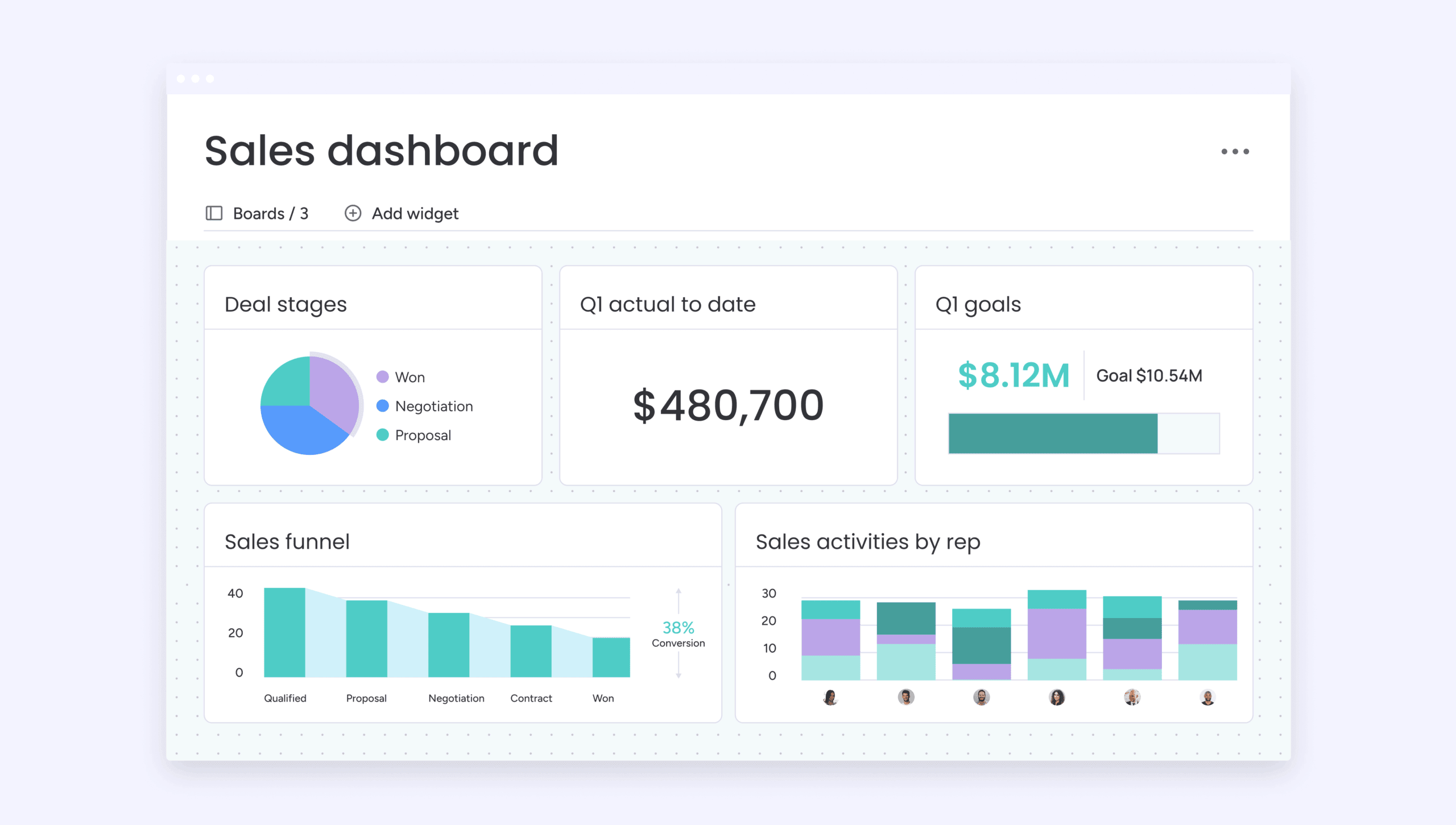
Then, establish shared dashboards that provide visibility into the entire revenue funnel. With customizable dashboards provided by platforms like monday CRM, teams can create views showing both individual performance and collaborative outcomes.
Track metrics that reflect alignment effectiveness:
- Lead conversion rates: at each stage of the funnel.
- Sales cycle length: from first touch to close.
- Pipeline velocity: speed of opportunity progression.
- Revenue attribution: across all marketing and sales activities.
Step 5: schedule regular sync meetings
Weekly or bi-weekly alignment meetings should cover pipeline reviews, campaign performance, lead quality feedback, and upcoming initiatives. These meetings need clear agendas and defined outcomes to ensure discussions translate into improvements.
Monthly strategic sessions allow teams to align on bigger priorities and market changes. Quarterly reviews bring leadership together to assess alignment effectiveness and identify areas needing attention.
Step 6: connect your tech stack
Integrate CRM and marketing automation systems to ensure seamless data flow. Native integration capabilities in solutions like monday CRM support connections with marketing platforms, email systems, and other tools both teams use.
The platform’s no-code approach means teams can set up integrations without IT support. Built-in automation handles data synchronization and triggers appropriate actions based on customer behavior.
Step 7: continuously optimize
Finally, gather regular feedback from both teams about what’s working and where friction exists. Use performance data to identify patterns and adjust strategies accordingly.
Market conditions and customer needs change over time, requiring corresponding evolution in team coordination. Organizations that treat alignment as a continuous improvement process maintain stronger coordination and achieve superior results.
Essential metrics for sales and marketing alignment
The right metrics provide visibility into coordination health and business outcomes. These measurements help teams understand where alignment is working and where adjustments are needed.
Revenue performance indicators
These metrics measure the bottom-line impact of alignment on your business. They show whether coordinated efforts between sales and marketing are translating into tangible financial results.
- Revenue growth rate: reflects the ultimate outcome of alignment efforts. Strong alignment typically drives higher growth compared to misaligned organizations.
- Customer acquisition cost (CAC): shows efficiency improvements from alignment. Coordinated teams see lower CAC through targeted efforts and higher conversion rates.
- Customer lifetime value (CLV): demonstrates the quality of customers acquired. Alignment often increases CLV through accurate targeting and improved customer experience.
- Revenue attribution: reveals which activities contribute to closed deals. Accurate attribution requires unified data tracking the complete customer journey.
Pipeline health metrics
Pipeline metrics reveal how smoothly prospects move through your revenue funnel. These indicators help you identify bottlenecks and understand where alignment creates the most impact on deal progression.
- Lead conversion rates: at each stage reveal where alignment is effective and where friction exists. Track conversions from MQL to SQL, SQL to opportunity, and opportunity to closed deal.
- Sales cycle length: indicates the efficiency of your combined process. Aligned teams typically reduce cycles through higher lead quality and coordinated engagement.
- Pipeline velocity: shows how effectively teams advance deals. Calculate by multiplying opportunities by average deal size by win rate, then dividing by cycle length.
- Win rates: reflect lead quality and how well marketing prepares prospects for sales conversations.
Team efficiency measures
Operational metrics track how well your teams execute coordinated processes. These measurements highlight whether your alignment framework is working in practice, not just in theory.
- Lead response times: affect conversion rates and customer experience. Alignment helps ensure consistent, rapid follow-up on marketing-generated leads.
- Handoff completion rates: show process effectiveness. Automated handoffs through platforms like monday CRM achieve higher completion rates than manual processes.
- MQL to SQL conversion ratio: reveals lead quality and alignment on qualification criteria. Target ratios vary by industry and sales cycle.
How does AI accelerate sales and marketing alignment?
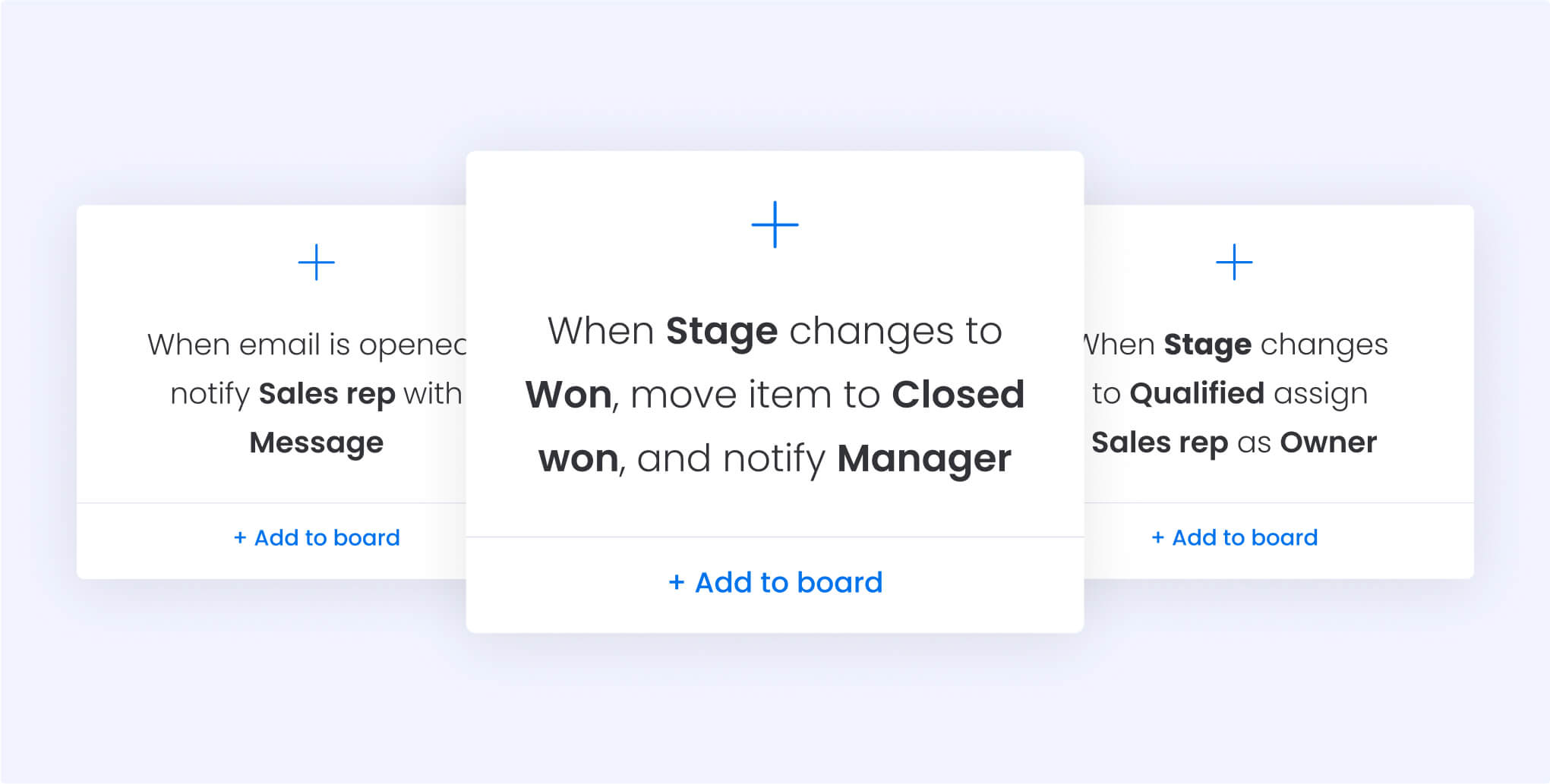
AI capabilities remove friction and manual work that often prevents effective coordination. Modern platforms integrate AI directly into workflows, making these capabilities accessible without technical expertise.
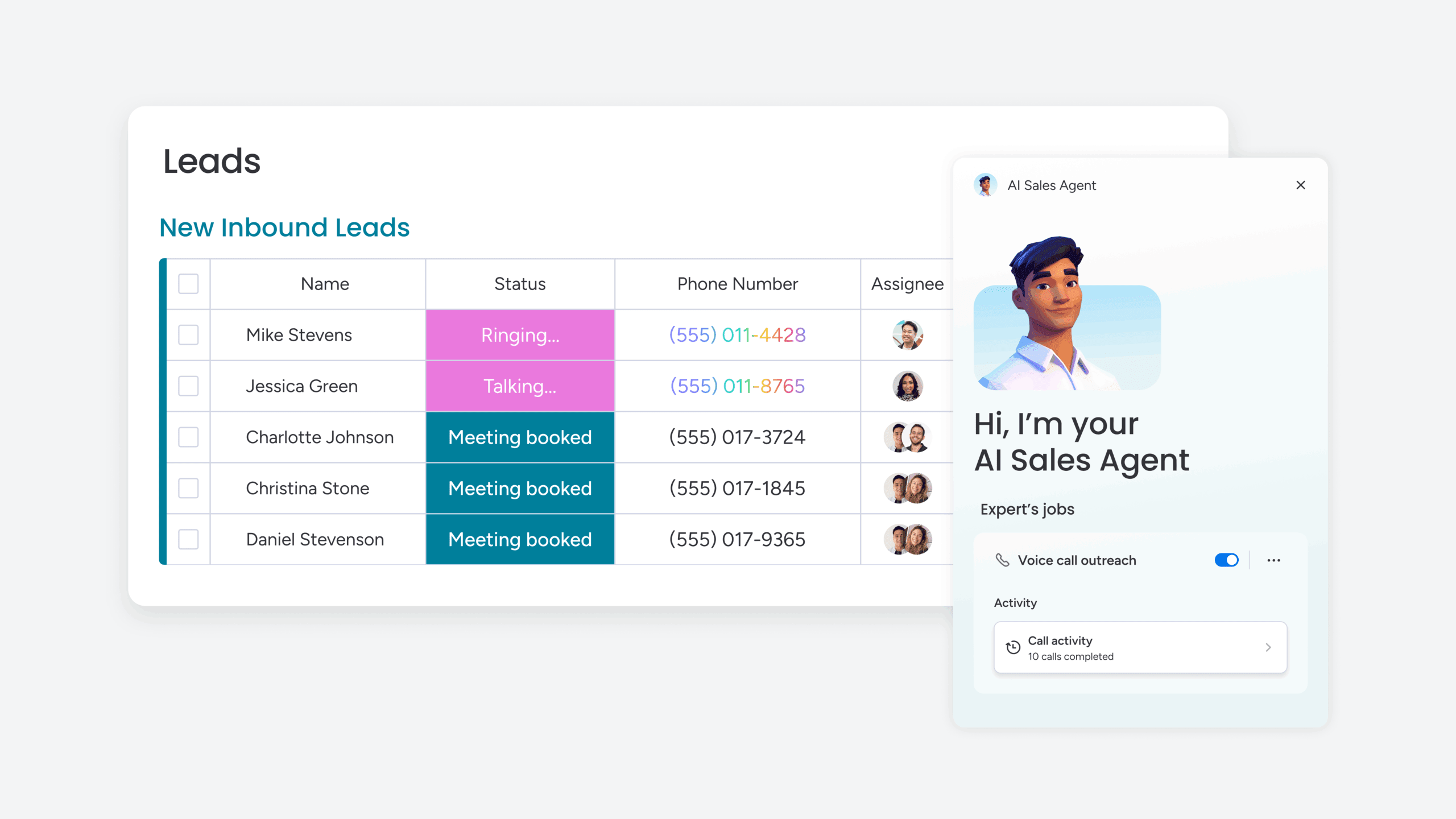
- Intelligent lead routing: AI automatically assigns leads based on territory, expertise, and workload within monday CRM. This eliminates handoff errors and ensures prospects are matched with the representative most likely to close the deal.
- Predictive pipeline analytics: AI integrates with sales analytics software to analyze historical data and identify at-risk opportunities. These models allow teams to prioritize leads based on conversion probability rather than intuition.
- Automated workflow management: AI triggers instant follow-ups and record updates based on prospect behavior. Conditional logic ensures no lead slips through the cracks while keeping all stakeholders informed of status changes.
- Smart content personalization: this personalization strategy uses AI to match relevant materials to a prospect’s specific profile and buying stage. It increases engagement relevance while reducing the time reps spend on content selection.
10 sales and marketing alignment best practices
Successful organizations use proven strategies to build and maintain strong coordination. These practices create sustainable frameworks for collaboration that evolve with changing business needs.
1. Start small with quick wins
Begin with pilot programs that demonstrate value quickly. Focus on one aspect like improving lead handoffs before expanding to other areas. Early successes build momentum and buy-in for broader initiatives.
2. Put customers first
All alignment decisions should prioritize customer experience over internal convenience. When teams focus on creating the best prospect experience, they naturally move toward collaboration.
3. Document everything
Create written processes and standards that outlive personnel changes. Documentation ensures consistency and makes it easier to onboard new team members. Written standards provide objective criteria for evaluating performance.
4. Celebrate shared success
Recognize collaborative achievements rather than just individual performance. Public recognition of cross-functional collaboration signals organizational values and encourages teamwork.
5. Use data to drive decisions
Make alignment decisions based on performance data rather than assumptions. Data-driven approaches reduce conflicts by providing objective evidence. Regular metric reviews keep discussions focused on results.
6. Break down physical barriers
Physical proximity or virtual collaboration tools enable regular interaction. When teams sit together or have dedicated collaboration spaces, informal communication increases understanding.
7. Align compensation models
Structure incentives that reward collaborative behavior and shared outcomes. When compensation depends on collective success, team members naturally prioritize overall results.
8. Invest in joint training
Cross-functional education improves collaboration quality. Team members who understand each other’s challenges communicate more effectively and make informed coordination decisions.
9. Create feedback loops
Establish regular mechanisms for teams to share insights and suggestions. Continuous feedback drives improvement by surfacing issues early and enabling quick adjustments.
10. Embrace technology
Adopt platforms that support alignment objectives through seamless data sharing and automated workflows. Advanced solutions like monday CRM provide the technological foundation through its unified platform approach and built-in automation capabilities.
Streamline sales and marketing alignment with monday CRM
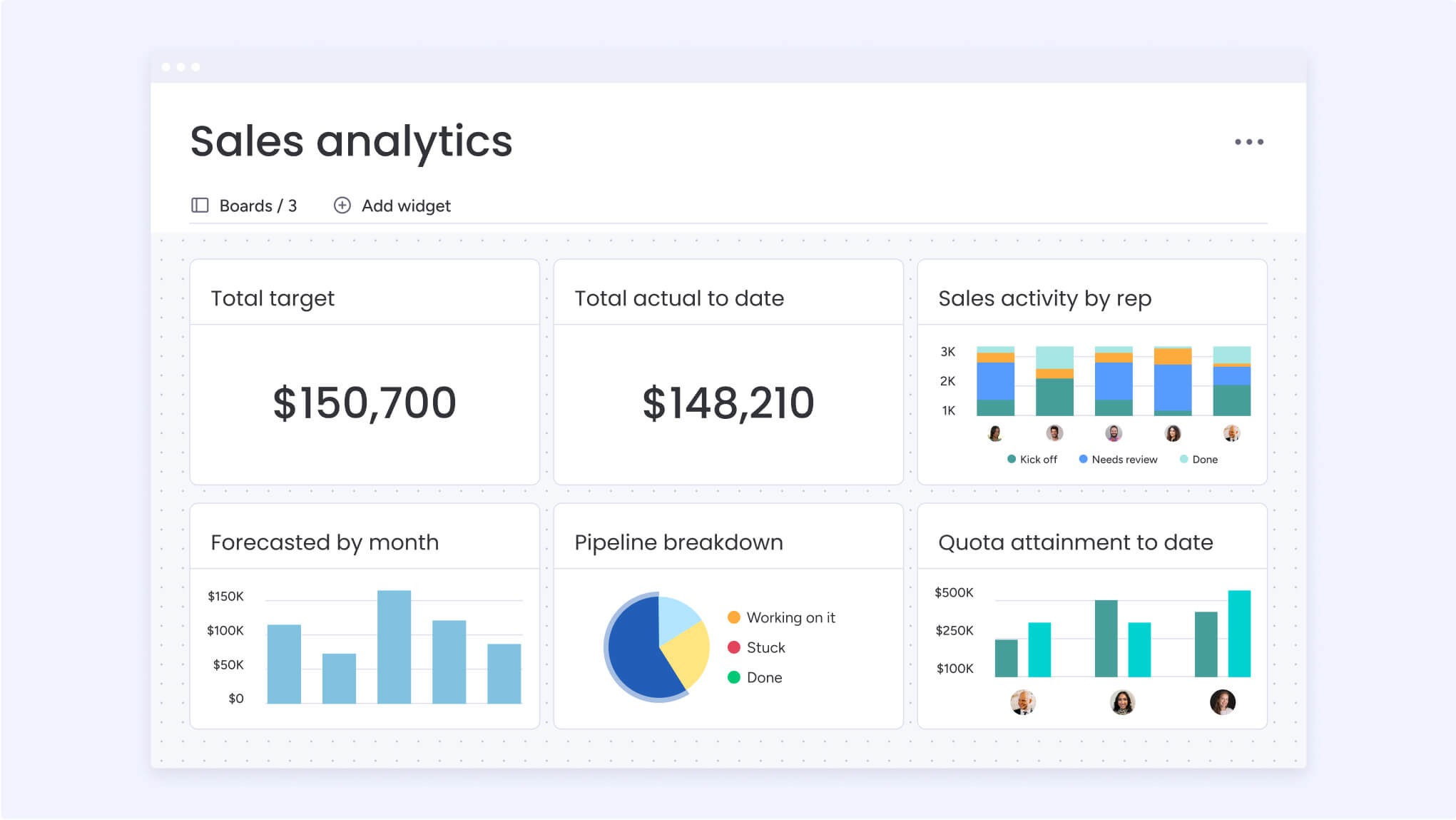
With monday CRM, you get a unified platform that makes alignment practical and sustainable. The platform combines flexibility, ease of use, and powerful capabilities in a single system both teams can adopt quickly.
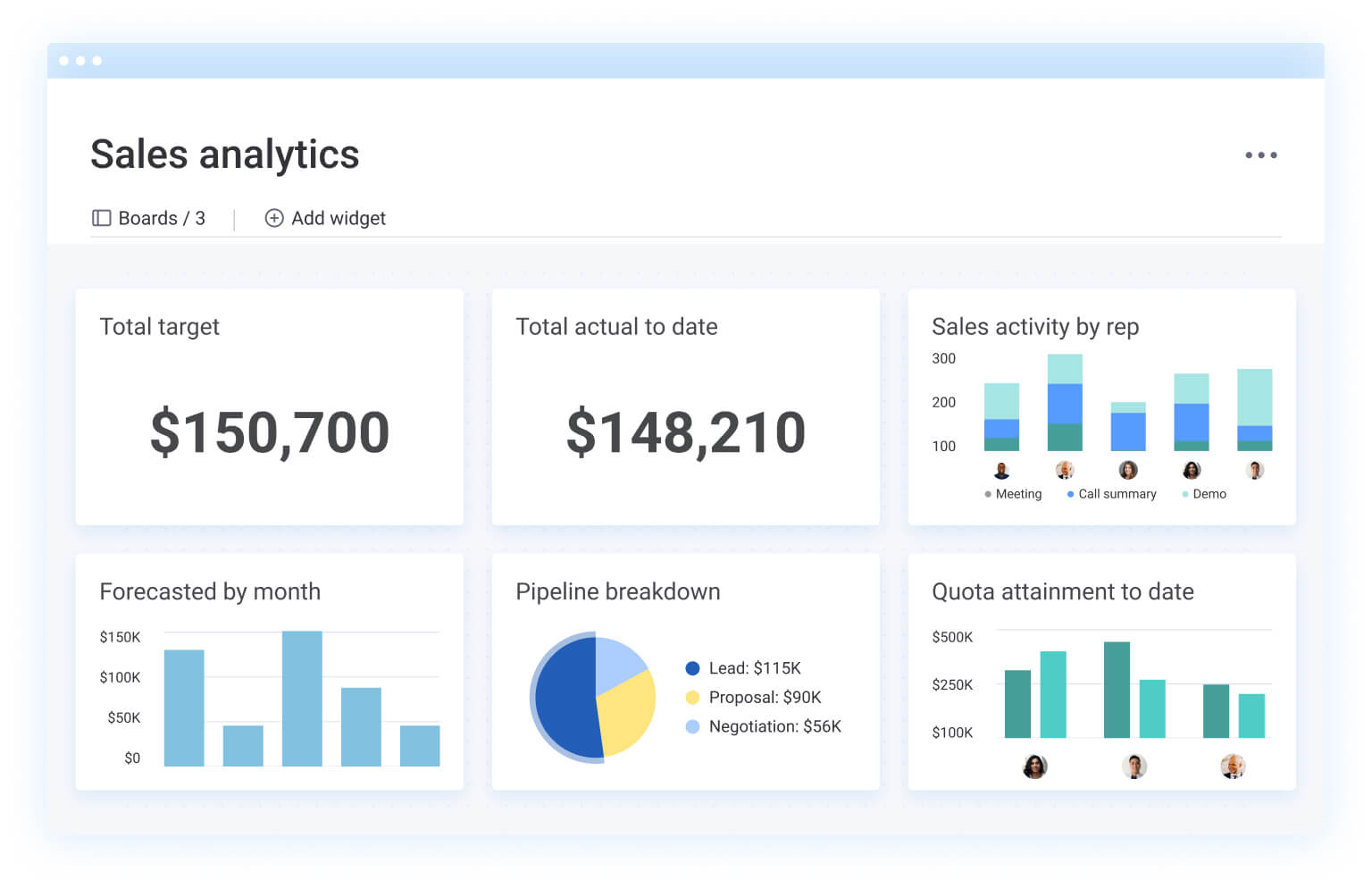
- See your entire revenue engine: customizable dashboards show real-time data from both marketing and sales activities. Both teams access the same information about prospect interactions, engagement history, and deal status. The platform’s flexible dashboard builder allows teams to create tailored views; executives see high-level metrics while individual contributors access detailed activity data.
- Automate team handoffs: conditional logic triggers appropriate actions based on lead behavior and qualification criteria. When leads meet defined criteria, automated workflows instantly notify sales representatives, update statuses, and trigger email sequences. The no-code automation builder allows teams to create sophisticated workflows without technical expertise through simple drag-and-drop interfaces.
- Track performance together: reporting capabilities enable both teams to measure shared success through customizable widgets. Create dashboards combining marketing metrics like lead generation with sales metrics like conversion rates for complete visibility. Sales forecasting tools help both teams understand pipeline health and predict future performance, which is critical for effective pipeline management.
- Grow smarter with AI: AI-powered timeline summaries automatically generate concise overviews of customer interaction history, helping both marketing and sales quickly understand prospect context without reading extensive activity logs. Email composition assistance ensures consistent messaging by suggesting relevant content based on prospect context, helping both teams maintain brand voice while personalizing communications.
Frequently asked questions
How long does it take to align sales and marketing teams?
Initial alignment efforts typically show measurable results within three to six months, with improvements in lead quality and team collaboration becoming evident relatively quickly. Full cultural and process alignment usually takes 12 to 18 months of consistent effort as teams build trust and develop new working habits.
Who should own the sales and marketing alignment process?
While executive sponsorship from the CEO or CRO is essential for providing resources and resolving conflicts, alignment works best when both sales and marketing leaders share ownership and accountability. Joint ownership ensures both teams remain committed to making alignment work.
What's the cost of sales and marketing misalignment?
Misaligned teams typically see lower revenue growth, higher customer acquisition costs, longer sales cycles, and reduced customer satisfaction. Hidden costs include wasted marketing spend on campaigns that don't generate quality leads and sales time spent on unqualified prospects.
How is sales and marketing alignment different from sales enablement?
Sales enablement focuses specifically on providing sales teams with tools, content, and training they need to sell effectively, often leveraging sales enablement software to streamline access to resources. Alignment creates shared processes and mutual accountability between both teams for revenue outcomes, involving bidirectional collaboration and shared ownership of results.
How do you maintain alignment in growing organizations?
Scaling alignment requires documented processes that can be taught to new hires, regular training programs that reinforce alignment principles, and technology platforms that adapt to changing team structures. Formal structures like service level agreements become increasingly important as organizations grow.
How does monday CRM support sales and marketing alignment?
It provides a unified platform where both teams collaborate on shared data, automate handoff processes, and track performance together. The platform's flexible customization allows teams to implement workflows matching their specific needs while built-in automation ensures consistent execution.

 Get started