


You open your inbox on a Monday morning and delete six emails before finishing your coffee. None of them speak to what you actually care about right now. That reflex is exactly why an email marketing personalization strategy has become essential rather than optional. Personalization at this depth is easiest to sustain from a single platform to manage marketing campaigns end to end, so segmentation and send logic stay in sync. When every message feels generic, people tune out and your budget follows them out the door. Personalized email does the opposite. It reaches the right person with a relevant message at the moment they’re ready to act, which turns a marketing cost into a revenue driver.
The encouraging part is that you don’t need a huge team or a stack of disconnected point tools to get there. With a sound approach and a connected platform like monday campaigns, you can build tailored campaigns that tie straight to revenue. Let’s start with what an email marketing personalization strategy really involves.
Key takeaways
- Personalization drives conversions, loyalty, and competitive advantage through tailored experiences.
- Audit your data quality before implementing tactics, since poor data undermines personalization.
- Use dynamic segmentation that updates automatically based on customer behavior.
- Measure success through conversion rate and customer lifetime value, not vanity metrics.
- AI-powered platforms like monday campaigns let you build personalized campaigns in minutes while tracking real revenue impact.
What is an email marketing personalization strategy?
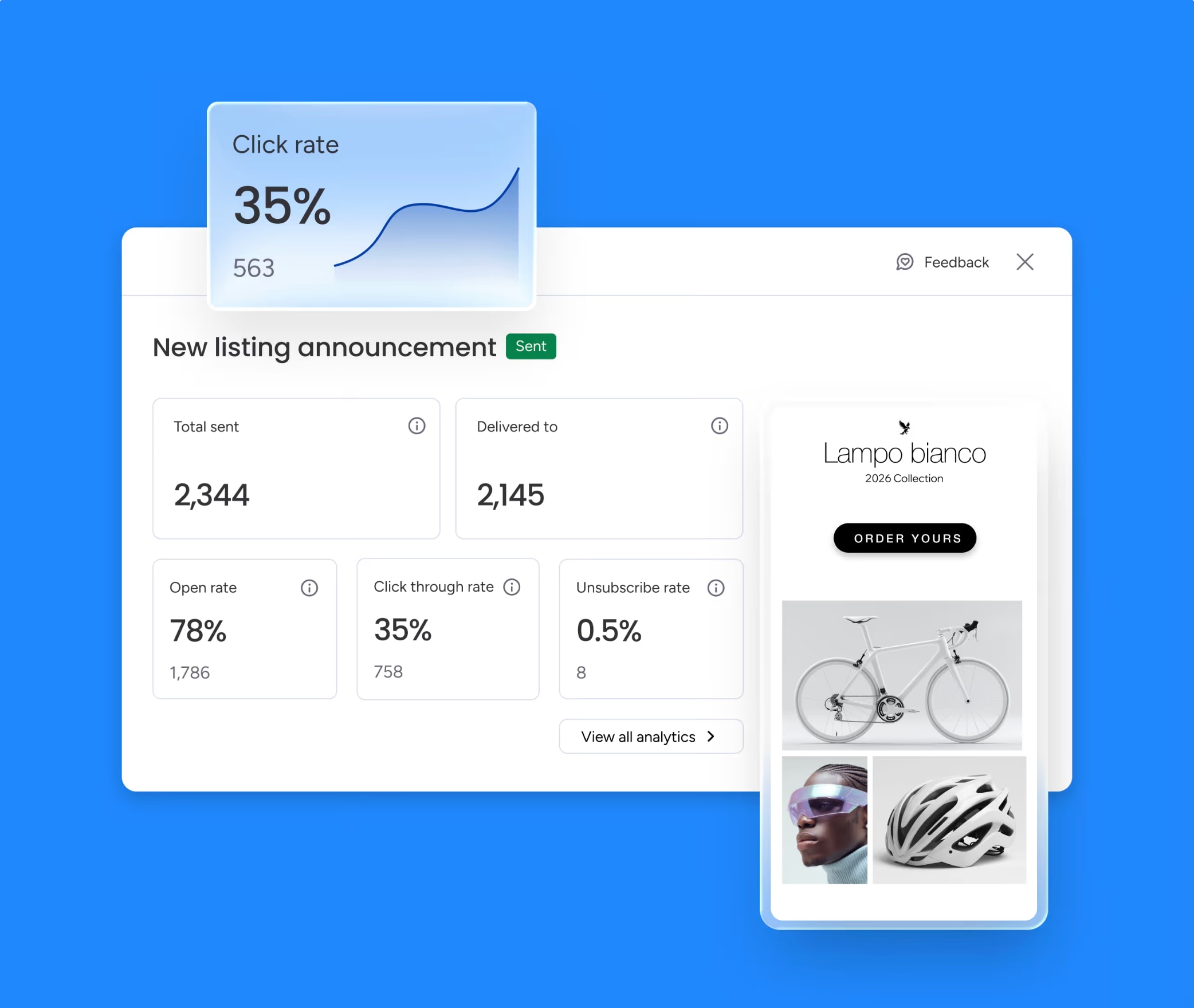
An email marketing personalization strategy is a data-driven plan for tailoring every email to the individual who receives it. Personalization in email marketing means using customer data to shape subject lines, content, offers, and send timing around real preferences and behavior.
Think of it as the difference between shouting into a crowd and having a one-on-one conversation.
Generic email treats everyone the same. A personalization strategy recognizes that each subscriber has unique needs and responds to them directly.
Personalization vs. segmentation vs. customization
Personalization, segmentation, and customization often get used interchangeably, yet they describe different things. Understanding the distinction helps you choose the right technique for each campaign goal. The table below breaks down what each term means with a quick example.
| Concept | What it means | Example |
|---|---|---|
| Segmentation | Grouping customers based on shared attributes | First-time buyers vs. loyal customers |
| Personalization | Tailoring experiences to individual behaviors | Recommending content based on past actions |
| Customization | User-controlled preferences | Subscribers selecting which emails they want |
Understanding strategic personalization
Strategic personalization goes beyond basic tactics like adding someone’s name to a subject line. It’s about building a system that adapts to each customer across their whole journey with your brand. Three components work together to make that happen.
- Dynamic segmentation: Customer groups that automatically update based on real-time behavior
- Behavioral triggers: Specific actions that prompt personalized responses
- Cross-channel marketing consistency: Unified messaging across email, web, and social platforms
Why email personalization matters now
Shopper expectations have moved faster than most email programs. The data shows a widening gap between what people want and what they receive. That gap is where a strong personalization strategy earns its return.
According to The Consumer Trends Report: The State of Personalized Marketing in 2025, 90% of shoppers want more personalized communications than they already get, and 96% say they’re more likely to purchase after receiving at least 1 type of personalized message. The same report found 77% of respondents value AI-powered brand experiences, rising to 88% among Gen Z and Millennials.
The 4 pillars of an email personalization strategy
Effective email personalization rests on a foundation of connected data, meaningful customer segmentation, adaptable content, and technology that ties everything together. Get these four pillars right and every campaign becomes easier to build and measure. Here’s what each one covers.
1. Customer data
Personalization is only as good as the data behind it. You’ll draw on three data types, each with a different source and level of trust. Knowing which is which helps you stay both relevant and compliant.
- First-party data: Collected directly from customer interactions
- Second-party data: Shared insights from trusted partners
- Third-party data: Purchased or externally sourced contextual information
2. Dynamic segmentation
Static lists fall out of date quickly and drag your relevance down with them. Dynamic segmentation uses real-time behavioral, demographic, and lifecycle data to keep every group current. That means a subscriber moves between segments automatically as their behavior changes.
3. Personalized content
Content is where personalization becomes visible to the reader. Modular email content lets you assemble tailored messages without rebuilding each one from scratch. The formats below give you flexible building blocks.
- Product recommendations
- Lifecycle messaging
- Dynamic email blocks
- Personalized landing pages
- Tailored onboarding flows
4. Connected technology
Personalization breaks down when your systems can’t talk to each other. Connected technology keeps data flowing so every email reflects the latest customer signal. These capabilities hold the pillar together.
- Real-time behavioral triggers
- Unified customer profiles across channels
- Automated lifecycle workflows
- Cross-channel orchestration
- Performance analytics that tie personalization to revenue
6 key benefits of email personalization
Why invest the effort in personalizing email at all? The payoff shows up across revenue, retention, and team alignment. These six benefits explain what a strong strategy returns to the business.
1. Drive higher revenue and conversions
Personalized email increases purchase likelihood by presenting the right offer at the right moment. The strategic case is well documented. McKinsey reports that brands getting personalization right create significant value by using AI to scale relevant, resonant messaging to the right audiences.
2. Create standout customer experiences
Customers feel valued when brands remember their preferences, a core principle of relationship marketing. That feeling turns one-time buyers into repeat ones.
3. Align marketing and sales teams
With monday campaigns, sales teams see which campaigns influenced each lead, while marketers learn which messages drive quality opportunities. That shared view strengthens their sales strategy and keeps both teams working from the same data.
4. Improve campaign ROI
Even with mass email outreach, personalization makes sure your marketing dollars reach the people most likely to respond. You spend less to earn each conversion.
5. Build customer loyalty and retention
Personalized communication maintains relationships over time, raising lifetime value and reducing churn, which improves customer retention. Loyal customers also become brand advocates, reinforcing customer loyalty.
6. Gain competitive advantage
In crowded inboxes, relevance becomes your differentiator. When rivals still batch and blast, a personalized message stands out and wins the click.
7 steps for building your email personalization strategy
Ready to put the pillars into practice? A repeatable framework keeps you from starting too broadly and losing momentum. Follow these 7 steps to move from goals to optimized campaigns.
Step 1: Set specific, measurable personalization goals
Focus on measurable targets like increasing email revenue by 25% through behavioral segmentation or reducing churn by 10% with lifecycle campaigns. Concrete goals guide every later decision.
Step 2: Audit your data and tech stack
So what data do you actually need for email personalization? Start with first-party signals you already own: purchase history, email engagement, website behavior, and profile details subscribers give you willingly. Then evaluate whether your current systems can act on that data before you add new tactics.
Step 3: Map customer journeys
Document every touchpoint where a personalized email can create impact. This shows you where to trigger messages and which moments matter most.
Step 4: Create dynamic segments
Build customer groups that update automatically based on real-time behavioral and lifecycle data. Subscribers should move between segments without manual list work.
Step 5: Build personalized content
Develop modular content systems that make efficient customization possible. Reusable blocks let you tailor emails at scale without rewriting each one.
Step 6: Choose the right technology
Software like monday campaigns offers native integration that keeps data flowing between marketing and sales teams. That connection removes the manual exports that slow most programs down.
Step 7: Test and optimize performance
Run A/B testing to compare personalization approaches and keep what works. Optimization is ongoing, not a one-time setup.
Personalization tactics that drive results
Strategy sets the direction, but tactics deliver the numbers. The most effective programs combine a few proven techniques rather than chasing every trend. These four tactics consistently move engagement and revenue.
Email marketing personalization
Email personalization extends well beyond name insertion. Behavioral triggers automatically send relevant messages based on specific customer actions. For example, a DTC apparel brand might use browsing history and past purchases to send targeted lookbooks and restock alerts, giving repeat buyers a timely reason to return.
Real-time behavioral targeting
Website behavior can trigger personalized responses across channels within minutes. For example, a SaaS company starts a personalized onboarding sequence the moment a user completes their first workflow. Timing like this keeps the message relevant while intent is high.
AI-powered content creation
AI Blocks in monday campaigns analyze CRM data to suggest the highest-impact target audience segments and generate on-brand messaging tailored to each group. That shrinks content production from weeks to minutes while keeping your voice consistent.
Omnichannel personalization
Personalization gets stronger when channels reinforce each other. For example, when a customer clicks an email promo, monday campaigns updates their CRM record and aligns follow-up messaging across the journey. The result is one coherent experience instead of disconnected touches.
How AI is changing email personalization
How does AI improve personalization effectiveness? It removes the manual work that used to cap how far personalization could scale. AI generates subject-line and copy variants, predicts the best send time per recipient, updates dynamic segments as behavior shifts, and reads sentiment to adjust messaging in real time.
AI now sits at the center of the field’s direction. Gartner names generative AI a defining marketing trend heading into 2026, and McKinsey describes generative AI as the mechanism finally letting brands scale personalization to every customer. The practical shift is from marketers writing each variation to AI producing and testing them for you.
Inside monday campaigns, this plays out through AI Blocks and monday agents that execute real work rather than just suggest it. Two agents matter most for email personalization:
- Campaign Manager agent: Analyzes campaign metrics and returns data-driven recommendations on what to change next.
- Sentiment Detector agent: Flags sentiment shifts across emails and customer feedback in real time, so you can adjust tone before a segment disengages.
Consider what this changes in day-to-day work. Instead of writing five subject-line variants by hand, you ask AI to draft and test them against your segments. Instead of guessing when to send, the system predicts the optimal moment for each recipient based on past engagement. Instead of reviewing dashboards for hours, an agent surfaces the one change most likely to lift results.
Used together, these capabilities let a small team run the kind of responsive, always-on personalization that once required a dedicated operations group. The marketer sets the goals and the guardrails, and AI handles the repetitive execution underneath. What could your team focus on if the manual work ran itself?
Overcoming email personalization challenges
Personalization pays off, but the path has real obstacles. Naming them up front helps you plan around them. The table below maps common challenges to practical solutions you can act on today.
| Challenge | Why it matters | Solution |
|---|---|---|
| Breaking down data silos | Fragmented data prevents unified customer views | Integrate data sources into one connected system |
| Scaling content creation | Manual writing can't keep pace with personalization needs | Use AI-assisted creation to generate on-brand messaging at volume |
| Growing privacy expectations | Regulations and customer trust demand transparency | Limit personalization to consent-based, first-party data |
| Proving ROI | Executives need clear business impact, not vanity metrics | Build reporting that ties campaigns to revenue and retention |
| Avoiding intrusive messaging | Over-personalization feels creepy and drives disengagement | Send fewer, more relevant messages based on explicit preferences |
| Maintaining data quality | Outdated or inaccurate data undermines personalization | Audit and clean your data regularly, automate updates where possible |
There’s a subtler risk worth naming: personalization done poorly can backfire. When personalization leans on assumptions or data customers didn’t knowingly share, it feels intrusive rather than helpful, and that pushes people to disengage. The fix is relevance over volume. Personalize from consent-based, first-party data, and send fewer messages that genuinely fit the moment.
Privacy shifts make that discipline non-negotiable. With third-party cookies fading, prioritize zero- and first-party data that customers share directly with you, such as preferences, purchase history, and stated interests. Unifying that data in a CRM keeps your personalization both accurate and compliant with regulations like GDPR and CCPA. Ask yourself a simple test before each send: would this message feel helpful or intrusive to the person receiving it?
How to measure email personalization success
You can’t improve what you don’t measure, and personalization is no exception. The right metrics tie your effort to business outcomes rather than surface activity. Track the following alongside attribution and disciplined testing.
Essential personalization metrics
Strong programs watch a mix of engagement, conversion, and retention signals. Each metric answers a different question about how your emails perform. The table below maps what to track and why it matters.
| Metric | What it measures | Why it matters |
|---|---|---|
| Open rate | Share of recipients who open the email | Signals subject-line and send-time relevance |
| Click-through rate | Share of readers who click a link | Shows whether the content resonates |
| Conversion rate | Share who complete the desired action | Connects the email to real outcomes |
| Revenue per email | Revenue generated per message sent | Quantifies direct financial impact |
| Customer lifetime value | Total value of a customer over time | Reflects long-term relationship health |
| Churn rate | Share of customers who disengage or leave | Flags where personalization is falling short |
Compare your numbers against current benchmarks so you know whether a result is strong or soft. HubSpot publishes recent email engagement benchmarks that give you a realistic baseline for open, click, and conversion rates.
Revenue attribution methods
Multi-touch attribution recognizes the cumulative impact of personalized touchpoints across the journey. It credits the full path a customer takes rather than only the last click. When your email data lives in the same system as your CRM, you can trace a personalized message all the way to closed revenue, which makes the business case far easier to defend.
Testing frameworks
A/B testing compares different approaches to identify the tactics that actually work. Run one variable at a time, whether that’s a subject line, a send time, or a content block, so you can trust what the results tell you. Feed each learning back into your segments and content, and treat every send as another data point that sharpens the next one.
How monday campaigns powers your email personalization strategy
Most personalization programs stall for the same reason: the data, the content, and the results live in separate systems. monday campaigns closes that gap by building email personalization on top of native CRM data inside the monday CRM suite. Marketing and sales work from one source of truth, from first touch to closed revenue.
The platform turns personalization from a manual project into an automated system. Instead of juggling disconnected tools or wondering which touchpoints actually drove revenue, you get a connected workspace where every campaign ties directly to customer behavior and business outcomes.
Native CRM integration for real-time personalization
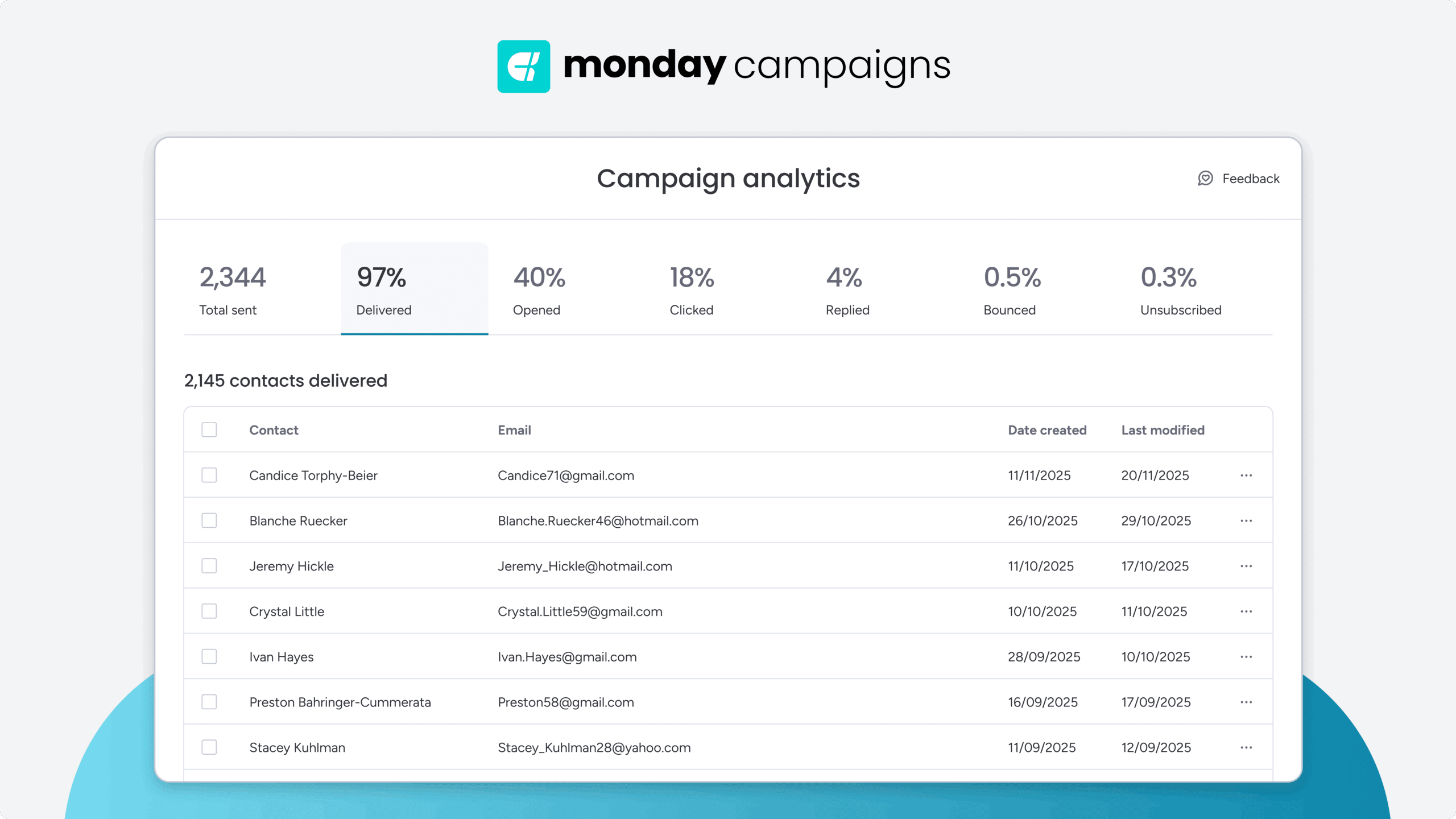
monday campaigns pulls directly from your CRM data without exports or syncs, so every segment reflects the latest customer actions. When a lead downloads a resource or a customer makes a purchase, that signal updates their profile instantly and triggers the right follow-up. Your personalization stays current because the data never goes stale.
AI Blocks for on-brand content at scale
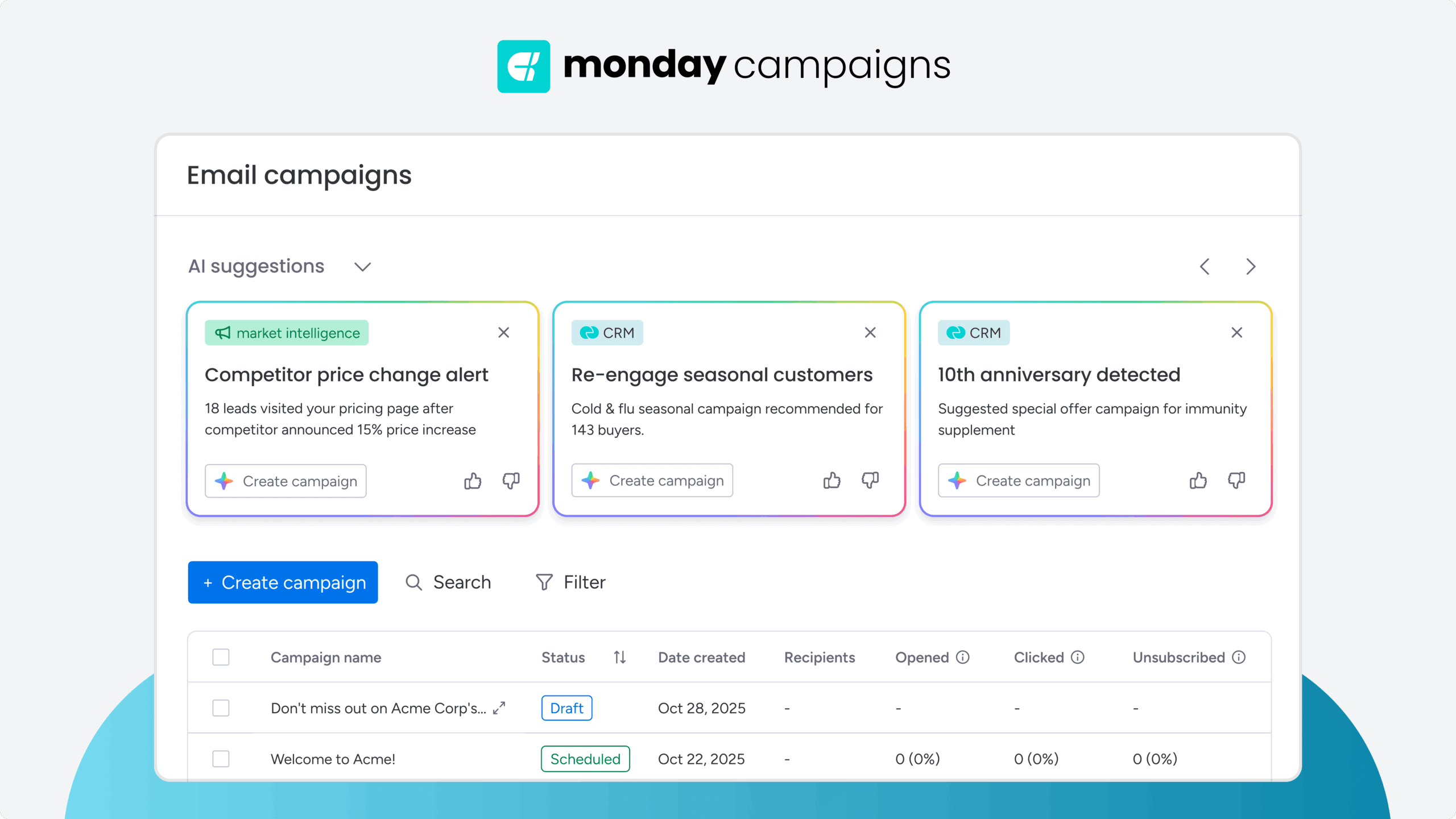
AI Blocks analyze your CRM data to suggest high-impact audience segments and generate tailored messaging that matches your brand voice. Instead of writing each variant by hand, you describe what you need and the AI drafts subject lines, body copy, and calls to action in seconds. That shrinks content production from hours to minutes while keeping every message consistent.
Campaign Manager agent for data-driven optimization

The Campaign Manager agent reviews your campaign metrics and surfaces the changes most likely to lift results. It identifies which segments are engaging, which messages are converting, and where to adjust next. You get actionable recommendations without spending hours in dashboards, so you can focus on strategy while the agent handles analysis.
Sentiment Detector agent for proactive engagement

The Sentiment Detector agent monitors tone shifts across emails and customer feedback in real time, flagging when a segment starts to disengage. That early warning lets you adjust messaging before sentiment drops further. Both agents run on the same CRM data that powers your segments, so their recommendations reflect the full customer picture and help you respond faster than manual review ever could.
Build a smarter email personalization strategy
Your customers already expect personalization, and the gap between their expectations and generic email keeps widening. An email marketing personalization strategy closes that gap when you pair a strong data foundation with dynamic segmentation, relevant content, and honest measurement.
The teams that win treat personalization as an ongoing practice rather than a one-time project. They lean on AI to handle repetitive execution, protect trust with consent-based data, and keep every campaign tied to revenue. With monday campaigns connecting marketing and sales on one platform, you can turn that strategy into tailored campaigns that follow each customer from lead to loyal buyer.
FAQs
How long does it take to see results from an email personalization strategy?
Results from an email personalization strategy usually appear within 2 to3 months of implementation, once your data and segments are in place. Early wins like improved open rates often show up sooner, while revenue impact builds over time as your segments refine and your content library grows.
What's the minimum budget needed for email personalization?
The minimum budget for email personalization depends on your current technology stack and team size. Many programs start with the CRM and email data you already own, so your initial investment focuses on platform costs and time rather than new data sources. You can scale spending as results prove out.
How do I measure the success of my email personalization efforts?
Measure the success of your email personalization efforts through conversion rate improvements, increased customer lifetime value, and higher email engagement rates like opens and clicks. Track revenue per email and multi-touch attribution to connect personalized campaigns directly to closed deals. Avoid vanity metrics that don't tie to business outcomes.
Can B2B companies benefit from email personalization?
B2B companies can benefit significantly from email personalization, especially when they apply AI in B2B marketing to tailor messaging across long buying cycles. Personalized nurture sequences keep prospects engaged through multiple decision-makers and extended timelines, which shortens sales cycles and improves win rates.
What's the biggest mistake companies make with personalization?
The biggest mistake companies make with personalization is starting too broadly without a proper data foundation, which leads to irrelevant messages that feel generic despite the effort. Poor data quality undermines every tactic you layer on top. Audit your data first, then build personalization on signals you can trust.
How does monday campaigns handle email personalization at scale?
monday campaigns handles email personalization at scale by combining native CRM data, dynamic segmentation, and AI Blocks that generate on-brand content, so tailored campaigns update automatically as customer behavior changes. The platform keeps marketing and sales aligned on one source of truth, which removes manual exports and keeps every message current.

 Get started