


Sales reps spend a great deal of their week on research, data entry, and chasing down marketing assets. Marketing tools for sales reps solve this by putting lead generation, email automation, and engagement tracking directly inside a rep’s daily workflow, so they spend more time on conversations that close deals.
You’ll find 8 categories of marketing tools for sales reps, 4 practical sales toolkits, and a practical framework for building a connected tech stack that supports your full sales cycle. Whether you’re evaluating your first CRM or filling gaps in your current stack, you’ll learn which platforms to prioritize and how to get sales and marketing working from the same data.
Key takeaways
- Build your sales tech stack around your CRM first — every other platform should feed data into it, not away from it.
- Reps who follow up within the first hour convert far more leads, and automated routing plus pre-built templates make that response time achievable every time.
- Sales reps who use lead scoring, email sequences, and engagement tracking close more deals without waiting on marketing team support.
- Teams that act on buyer signals faster and personalize outreach at scale consistently outperform teams with more tools but less alignment.
- Unified platforms like monday CRM bring pipeline management, email sequences, campaign data, and AI-powered automation together so reps spend less time switching platforms and more time selling.
What are marketing tools for sales reps?
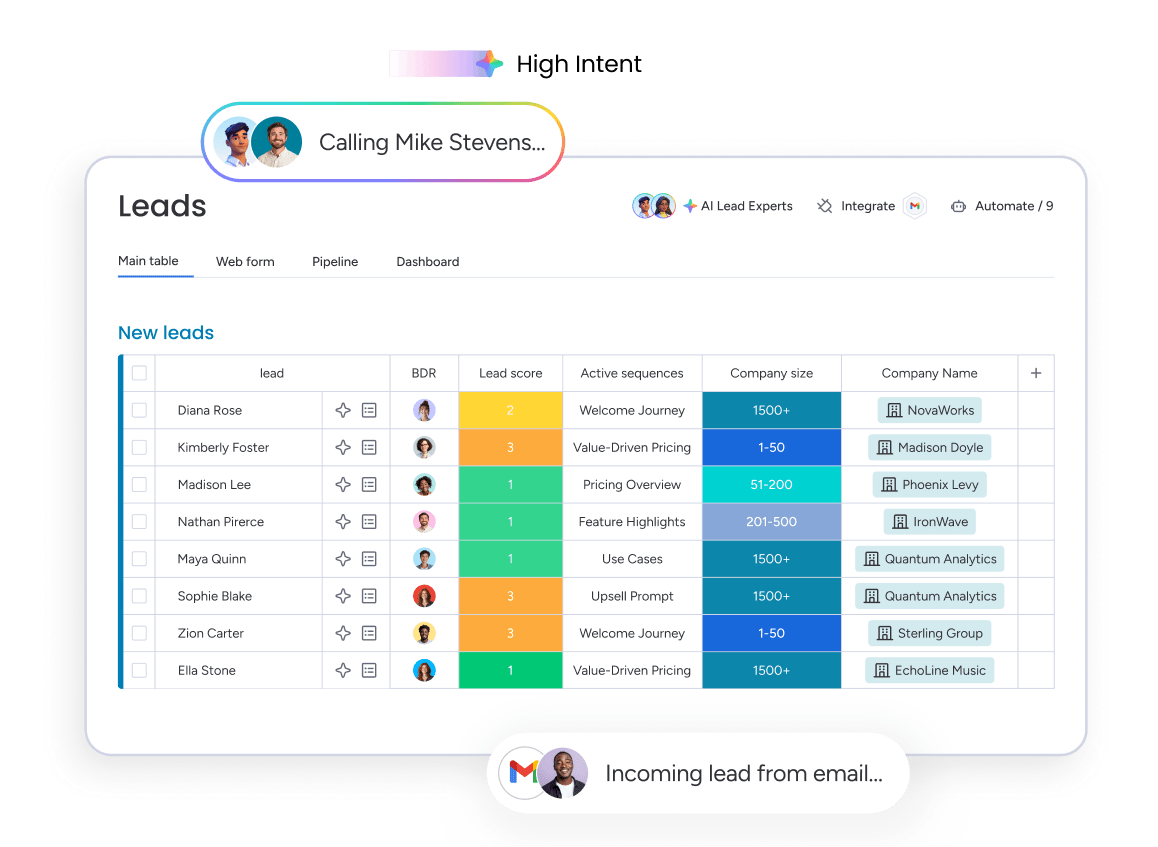
Marketing tools for sales reps help individual sellers generate leads, personalize outreach, track engagement, and automate follow-ups without waiting on marketing team support. These platforms put capabilities like email sequences, lead scoring, and campaign tracking directly into a rep’s daily workspace.
The best tools increasingly combine sales and marketing functions with AI-powered automation, giving reps the context they need to act on buyer signals immediately. Instead of switching between disconnected tools or asking marketing for campaign data, reps can see which content a prospect engaged with, which webinar they attended, and what triggered their interest — all from inside their CRM.
The result: Reps spend more time selling and less time on manual tasks like data entry, research, and chasing down assets. When marketing capabilities integrate directly into a rep’s workflow, they respond faster, deliver more relevant outreach, and close deals without handoff delays.
8 marketing tools every sales rep should know
The right marketing tools help sales reps generate leads, personalize outreach, track engagement, and automate follow-ups. Each category below is organized by the problem it solves and the outcomes it enables, so you can identify exactly where your team has gaps and which platforms to prioritize.
| Tool type | What it does | Why it matters |
|---|---|---|
| CRM software | Manage contacts, deals, and customer relationships in one central workspace | Foundation of your sales tech stack where all customer data and deal activity lives |
| AI-powered sales tools | Automate repetitive work and surface what matters next | Frees up time for high-value conversations by handling email drafts, lead scoring, and next-step recommendations |
| Sales engagement tools | Send personalized email sequences and outreach at scale | Makes every email feel one-to-one without manual effort, improving response rates |
| Lead generation and enrichment tools | Find and qualify the right prospects | Gives reps the context they need to personalize outreach and prioritize high-value accounts |
| Marketing automation tools | Nurture leads with behavior-based campaigns | Keeps reps relevant without staying glued to their inbox by triggering follow-ups based on buyer behavior |
| Sales enablement tools | Organize content, training, and messaging for consistent execution | Surfaces the right marketing assets at the right moment in the sales cycle |
| Collaboration tools | Coordinate sales and marketing teams around shared goals | Eliminates handoff friction and ensures both teams work from the same information |
| Sales analytics tools | Report on pipeline health, rep performance, and revenue forecasts | Turns raw CRM data into insights leaders need to coach reps and hit revenue targets |
1. CRM software: Manage contacts, deals, and customer relationships in one place
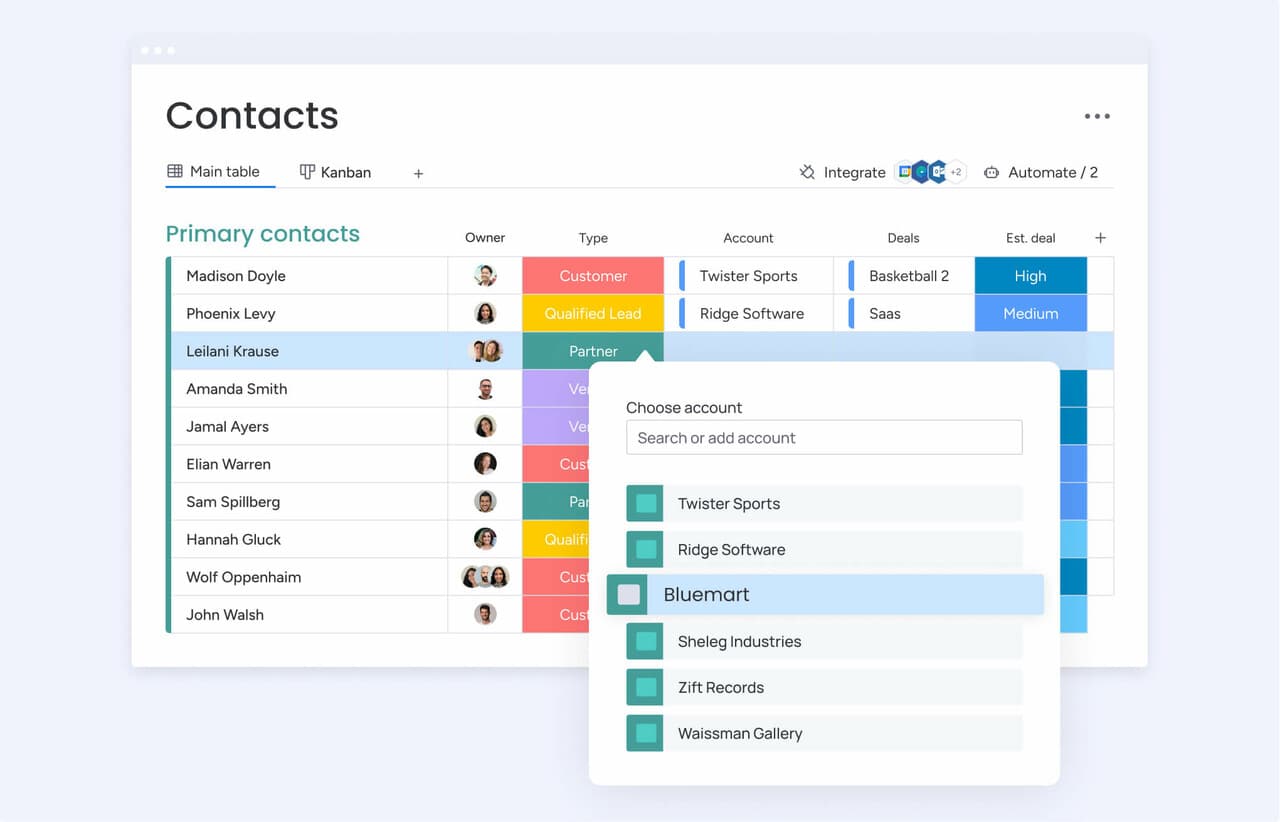
CRM software is the central workspace where sales reps manage contacts, track deals, log activities, and access customer data. CRMs that integrate marketing tools let reps execute marketing-like activities without switching platforms.
CRM software enables:
- Contact and account management: Store communication history, notes, meeting summaries, and relationship context in one searchable location.
- Pipeline tracking: Visualize deals by stage, owner, close date, and value with customizable views and filters.
- Activity logging: Automatically capture emails, calls, meetings, and tasks without manual data entry.
- Marketing campaign visibility: See which campaigns influenced each lead, which content they engaged with, and what triggered their interest.
- Email sequences and automation: Send personalized follow-ups, nurture campaigns, and check-ins without manual effort.
Common CRM platforms include HubSpot, Salesforce, Pipedrive, and monday CRM.
Where monday CRM fits: Unify contact management, pipeline tracking, email sequences, and marketing campaign data in one platform. Reps can see which marketing touchpoints influenced each lead, automate follow-up sequences, and track engagement without switching between disconnected tools. Everything from lead capture to close happens in one workspace, so reps spend less time on admin and more time selling.
2. AI-powered sales tools: Automate repetitive work and surface what matters next
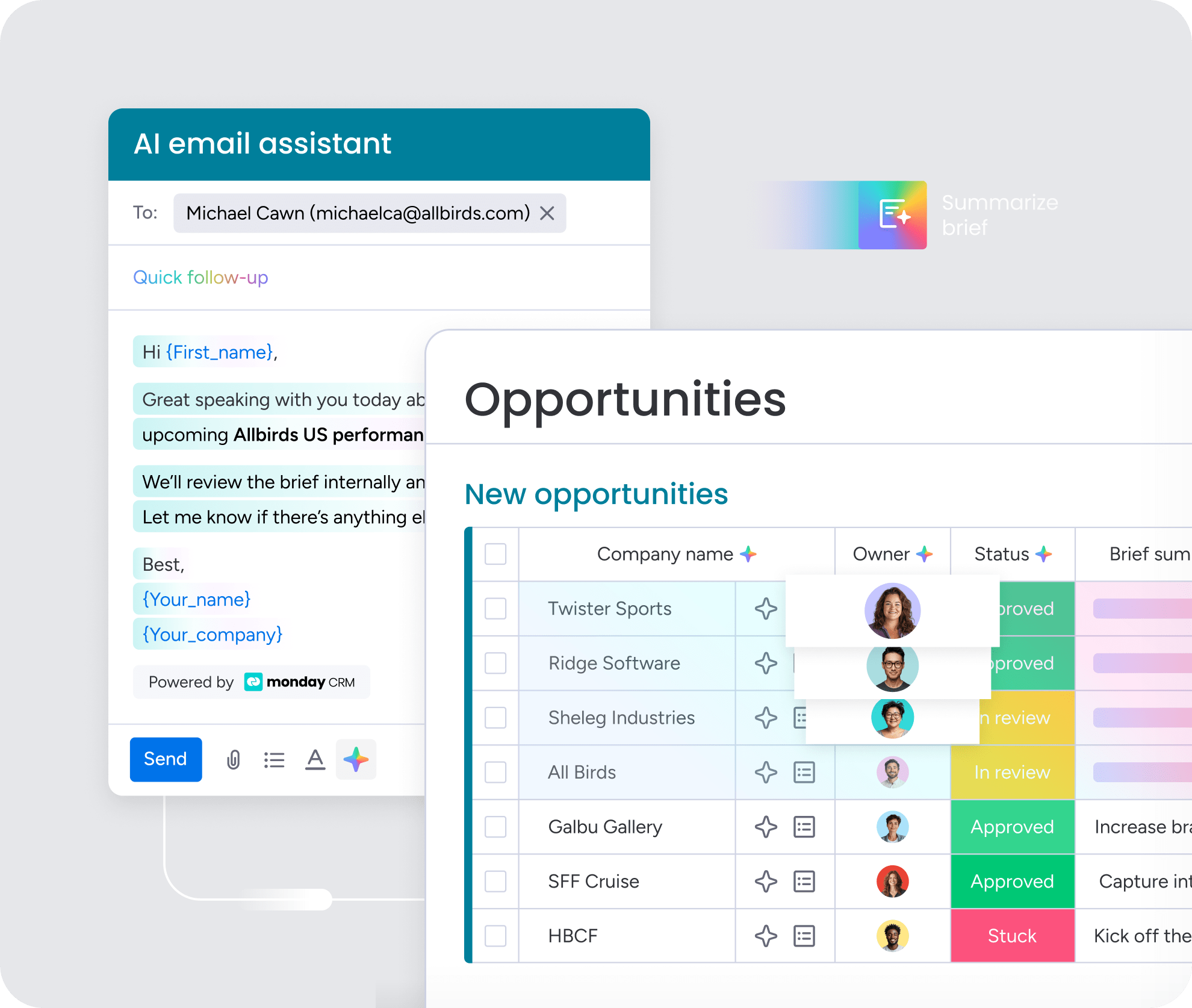
AI-powered sales tools use machine learning and automation to speed up repetitive tasks, surface insights, and recommend next steps. They give reps more time for the conversations that actually move deals forward.
AI-powered sales tools enable:
- AI email writing: Generate personalized email drafts in seconds based on prospect context, previous conversations, and best-performing templates.
- Lead scoring and prioritization: Use predictive models to rank prospects by conversion likelihood based on engagement patterns and firmographic fit.
- Meeting summaries: Automatically capture key takeaways, action items, and next steps from calls without manual note-taking.
- Sentiment analysis: Detect buyer interest, objections, concerns, or enthusiasm from email and call transcripts.
- Next-step recommendations: Suggest the best action to move each deal forward based on deal stage, engagement history, and similar won deals.
Where monday CRM fits: Get AI-powered email generation, automated lead scoring, and intelligent next-step recommendations built directly into the platform. Reps can draft personalized emails in seconds, prioritize leads based on conversion likelihood, and get AI-driven suggestions for moving deals forward — all without leaving their CRM workspace.
3. Sales engagement tools: Send personalized email sequences and outreach at scale
Sales engagement tools help reps send personalized, multi-touch email campaigns at scale. These platforms use templates, dynamic fields, and automation to make every email feel one-to-one without the manual effort.
Sales engagement tools enable:
- Email templates and sequences: Pre-built campaigns with multiple touchpoints that run automatically based on timing rules.
- Dynamic personalization: Insert prospect name, company, industry, job title, and recent engagement into every message.
- A/B testing: Test subject lines, messaging, send times, and call-to-action language to improve response rates.
- Engagement tracking: See who opened your email, clicked your link, replied, or forwarded to a colleague.
- Multi-channel outreach: Combine email, phone, LinkedIn, and social touchpoints in one coordinated sequence.
Common sales engagement platforms include Outreach, Salesloft, Apollo, and CRM platforms with built-in sequencing capabilities.
Where monday CRM fits: With built-in email sequences, personalization fields, and engagement tracking, monday CRM empowers reps to run multi-touch campaigns without a separate sales engagement platform. Reps can create automated follow-up sequences, track opens and clicks, and see full engagement history alongside deal data — all in one system.
4. Lead generation and enrichment tools: Find and qualify the right prospects
Lead generation and enrichment tools help sales reps find prospects who match their ideal customer profile and automatically fill in missing contact details, company data, and firmographic information. These platforms give reps the context they need to personalize outreach and prioritize high-value accounts.
Lead generation and enrichment tools enable:
- Prospect search and filtering: Find contacts by industry, role, company size, location, technology stack, and funding stage.
- Automatic data appending: Fill in missing email addresses, phone numbers, job titles, and direct dials.
- Company intelligence: Surface revenue, employee count, technology stack, recent funding, and company news.
- Intent data: Identify prospects who are actively researching solutions like yours based on content consumption and search behavior.
- List building: Export qualified leads directly into your CRM with complete contact and company data.
Popular lead generation and enrichment tools include ZoomInfo, Apollo, Cognism, and Clearbit.
Where monday CRM fits: Easily integrate with lead generation and enrichment platforms to automatically capture new leads, append missing contact data, and route prospects to the right rep. When a new lead enters the system, monday CRM can trigger enrichment workflows, assign ownership, and kick off automated outreach sequences — all without manual intervention.
Learn more: Zoominfo alternatives
5. Marketing automation tools: Nurture leads with behavior-based campaigns

Marketing automation tools help sales reps nurture leads over time with personalized, multi-channel campaigns. These platforms trigger emails, tasks, and notifications based on buyer behavior, so reps stay relevant without staying glued to their inbox.
Marketing automation tools enable:
- Behavioral triggers: Send follow-up emails when a prospect opens a message, clicks a link, visits your pricing page, or downloads content.
- Multi-channel campaigns: Combine email, SMS, LinkedIn, and social outreach in one coordinated sequence.
- Lead scoring: Prioritize prospects based on engagement frequency, content consumption, and fit criteria.
- Drip campaigns: Nurture leads over weeks or months with automated touchpoints that educate and build trust.
- Task automation: Create reminders, next steps, and internal notifications based on prospect activity.
Common marketing automation platforms include Mailchimp, ActiveCampaign, Marketo, and CRM systems with built-in automation features.
Where monday CRM fits: monday CRM helps sales and marketing teams work from the same customer data, making it easier to automate outreach, segment audiences, track engagement, and see how campaigns influence pipeline. With built-in campaign management, AI-powered content generation, and CRM-driven audience targeting, teams can coordinate marketing and sales activity without relying on disconnected tools.
6. Sales enablement tools: Organize content, training, and messaging for consistent execution
Sales enablement tools provide reps with training, playbooks, scripts, and messaging frameworks to ensure consistent, effective communication. They organize and surface the right marketing assets at the right moment in the sales cycle, making it easy for reps to find, share, and track content engagement.
Sales enablement tools enable:
- Centralized content library: Store all sales and marketing assets in one searchable location with tags, categories, and filters.
- Playbooks and scripts: Pre-built messaging for discovery calls, demos, objection handling, and competitive positioning.
- Training and onboarding: Video courses, quizzes, certifications, and role-play exercises to ramp new reps faster.
- Content recommendations: Suggest the right asset based on buyer stage, industry vertical, role, or expressed pain points.
- Engagement tracking: See which prospects viewed your content, how long they spent on each page, and which sections they revisited.
Popular sales enablement platforms include Highspot, Seismic, Showpad, and Guru.
Where monday CRM fits: Integrate with sales enablement platforms and get built-in content management capabilities. Reps can attach relevant assets to deals, track which content prospects engage with, and access playbooks and templates directly from their CRM workspace — eliminating the need to dig through shared drives or switch between platforms.
7. Collaboration tools: Coordinate sales and marketing teams around shared goals
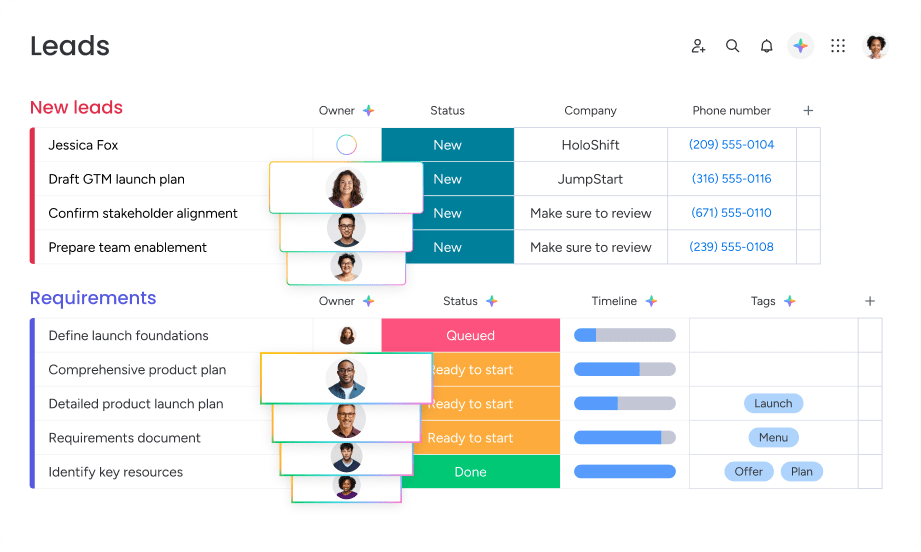
Collaboration tools help sales and marketing teams coordinate around shared goals, campaigns, and customer data. These platforms eliminate handoff friction, ensure both teams work from the same information, and give everyone visibility into what’s driving pipeline and revenue.
Collaboration tools enable:
- Shared workspaces: Centralize campaign planning, lead handoffs, and deal collaboration in one location accessible to both teams.
- Real-time communication: Discuss leads, share feedback, and coordinate outreach without email chains or status meetings.
- Campaign visibility: Give sales reps access to marketing campaign data, content performance, and lead source attribution.
- Lead routing and assignment: Automatically route marketing-qualified leads to the right rep based on territory, industry, or deal size.
- Feedback loops: Capture sales feedback on lead quality, messaging effectiveness, and content performance to improve future campaigns.
Where monday CRM fits: As a shared workspace, monday CRM is where sales and marketing teams collaborate on campaigns, track lead handoffs, and align around pipeline goals. Marketing can create and manage campaigns using CRM audience data, while sales teams can see campaign engagement alongside deal activity. Shared visibility helps both teams understand which campaigns influence pipeline and revenue.
8. Sales analytics tools: Report on pipeline health, rep performance, and revenue forecasts
Sales analytics tools provide visibility into pipeline health, rep performance, and revenue trends. They turn raw CRM data into the insights sales leaders need to allocate resources, coach reps, and report upward with confidence.
Sales analytics tools enable:
- Pipeline dashboards: Visualize deals by stage, owner, close date, value, and probability with customizable views and filters.
- Rep performance tracking: See activity levels, conversion rates, quota attainment, and time-in-stage metrics for each rep.
- Campaign attribution: Track which marketing campaigns influence pipeline and revenue, with multi-touch attribution models.
- Forecasting: Predict revenue based on historical trends, current pipeline, deal stage, and rep performance.
- Deal health indicators: Identify stalled deals based on lack of activity, missing next steps, or extended time in stage.
Where monday CRM fits: Get built-in dashboards, reporting, and forecasting capabilities so sales leaders can track pipeline health, monitor rep performance, and predict revenue without exporting data to a separate analytics platform. Customizable views, real-time reporting, and visual dashboards give leaders the insights they need to coach reps and hit revenue targets consistently.
4 sales toolkits every rep should have
Sales reps need more than individual tools. They need integrated toolkits that support specific workflows. A toolkit is a collection of platforms, templates, and processes that work together to accomplish a specific sales activity.
When reps have pre-built toolkits for common workflows, they can execute faster, maintain consistency, and avoid reinventing the wheel for every deal. Here are the 4 toolkits that make the biggest difference.
1. Prospecting toolkit: Build pipeline from scratch with the right leads
A prospecting toolkit combines lead generation, enrichment, and outreach tools to help reps build pipeline from scratch. It gives reps a repeatable system for finding, qualifying, and reaching out to high-fit prospects.
A complete prospecting toolkit includes:
- Lead generation platform: Find prospects who match your ideal customer profile using filters like industry, company size, job title, and technology stack
- Contact enrichment: Fill in missing email addresses, phone numbers, and company data automatically
- Email sequence templates: Pre-built outreach campaigns for cold prospects with multiple touchpoints and follow-up cadences
- LinkedIn outreach process: Connection request templates, messaging sequences, and engagement tracking for social selling
- Prospecting scorecard: Criteria for qualifying prospects before investing time in outreach
2. Email outreach toolkit: Send personalized, high-converting emails at scale
An email outreach toolkit combines templates, sequences, and tracking tools to help reps send personalized, high-converting emails at scale. It removes the guesswork from outreach and gives reps a repeatable system for driving responses.
A complete email outreach toolkit includes:
- Email templates by stage: Pre-built messages for initial outreach, follow-up, re-engagement, and meeting confirmation
- Dynamic personalization fields: Merge tags for prospect name, company, industry, recent engagement, and custom attributes
- Sequence automation: Multi-touch campaigns that run automatically based on timing rules and behavioral triggers
- A/B testing framework: Process for testing subject lines, messaging, and send times to improve response rates
- Engagement tracking dashboard: Real-time visibility into opens, clicks, replies, and bounces
3. Pipeline management toolkit: Keep deals moving and forecasts accurate
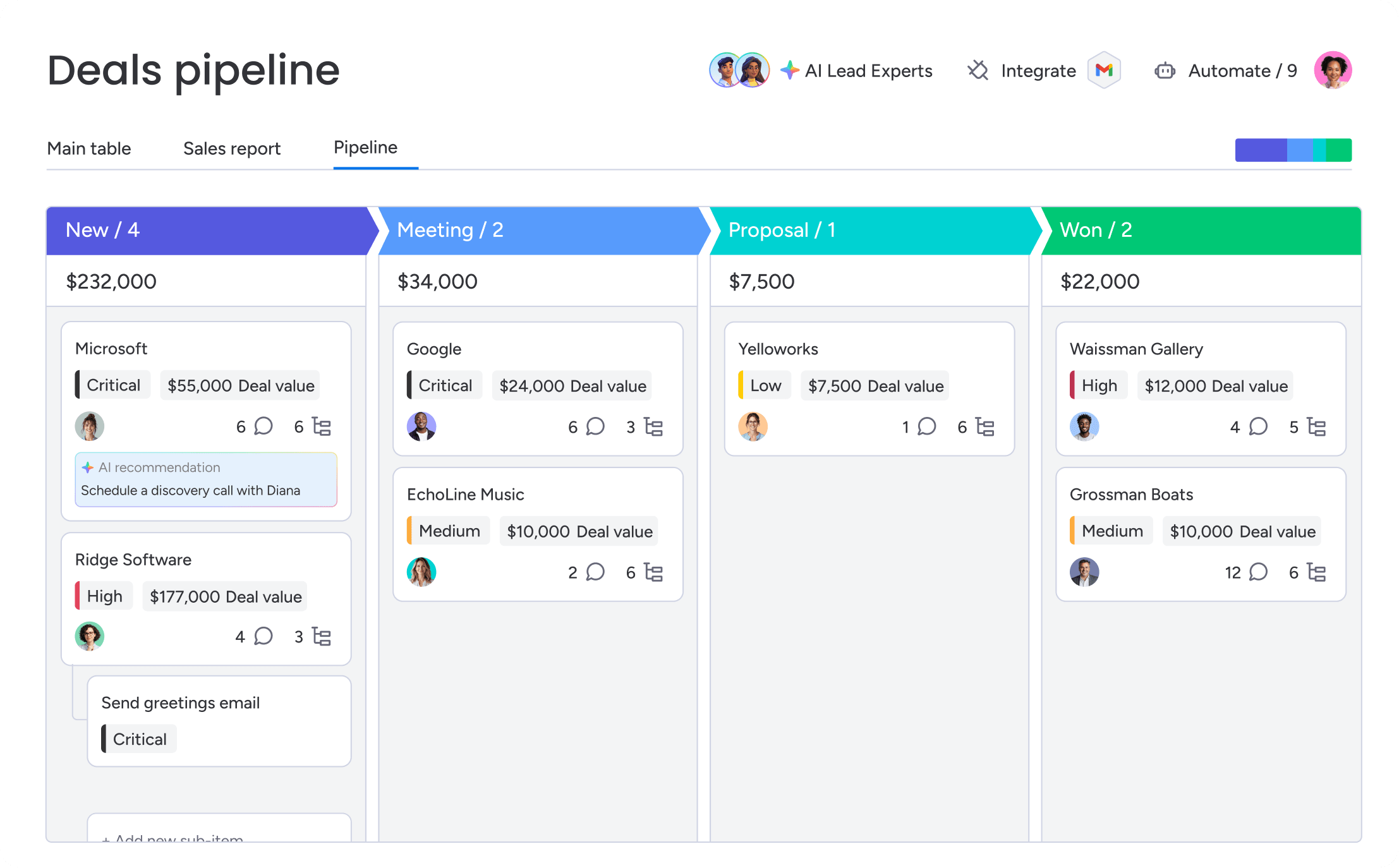
A pipeline management toolkit combines CRM views, sales dashboards, and deal review processes to help reps and managers maintain healthy pipeline. It gives leaders the visibility they need to forecast accurately and identify risk before it becomes a missed quarter.
A complete pipeline management toolkit includes:
- Pipeline views by stage: Customizable CRM views that show deals by stage, owner, close date, and value
- Deal health indicators: Criteria for identifying stalled deals, at-risk opportunities, and high-priority accounts
- Weekly pipeline review process: Structured meeting agenda for reviewing deals, updating forecasts, and identifying blockers
- Forecasting methodology: Consistent approach to predicting revenue based on stage, probability, and rep confidence
- Win/loss analysis template: Framework for reviewing closed deals to identify patterns and improve future performance
4. Deal closing toolkit: Move from verbal agreement to signed contract without delays
A deal closing toolkit combines proposal tools, contract templates, and negotiation frameworks to help reps close deals faster. It removes the friction that stalls deals at the finish line and gives reps a repeatable process for getting to signature.
A complete deal closing toolkit includes:
- Proposal templates: Pre-built proposal formats that can be customized for each deal with pricing, scope, and timeline
- Contract templates: Standard agreements with pre-approved terms that can be sent for signature quickly
- Negotiation playbook: Framework for handling pricing objections, discount requests, and competitive pressure
- Approval workflow: Process for getting internal approvals on non-standard terms or pricing
- Closing checklist: Step-by-step process for moving from verbal agreement to signed contract
How to choose marketing tools for your sales team
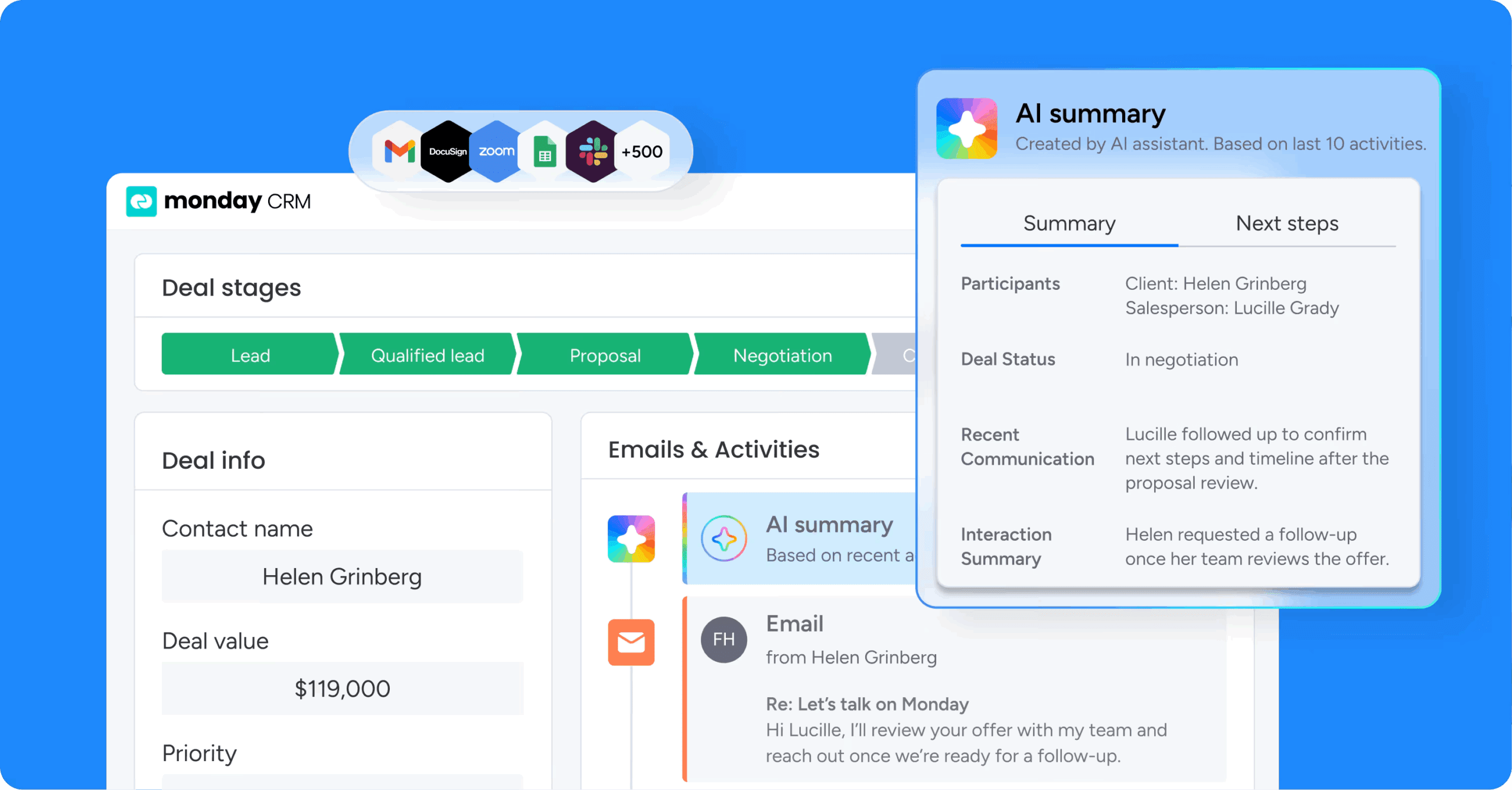
Choosing the right marketing tools for your sales team means evaluating your current workflows, identifying gaps, and prioritizing platforms that integrate with your existing tech stack. The goal is to build a connected system that supports the full sales cycle without creating data silos or adding complexity.
Assess your current sales workflow before evaluating any platform
Start by mapping your current sales process from lead generation through close. Identify where reps spend the most time on manual tasks, where data gaps exist, and where handoffs between marketing and sales create friction.
Key questions to answer:
| Question | What it answers | Why it matters |
|---|---|---|
| Where do leads come from? | Inbound marketing, outbound prospecting, referrals, or a combination | Determines which lead generation and routing tools you need |
| How are leads routed to reps? | Manually, automatically, or through a hybrid process | Identifies opportunities to automate assignment and reduce response time |
| What platforms do reps use daily? | CRM, email, calendar, phone, and any specialized platforms | Shows which integrations are essential for adoption and workflow continuity |
| Where do reps waste time? | Data entry, research, content hunting, or manual follow-ups | Reveals which automation and AI capabilities will deliver the biggest time savings |
| What data is missing? | Lead context, engagement history, campaign attribution, or contact details | Highlights gaps in enrichment, tracking, and integration that limit personalization |
Prioritize integration over features when comparing platforms
The most powerful marketing platforms deliver value only when they connect to your CRM and existing tech stack. Prioritize platforms that integrate natively with your CRM, share data automatically, and eliminate the need for manual syncing.
Here are the integrations that matter most and what to look for in each:
| Integration type | Why it matters | What to look for |
|---|---|---|
| CRM integration | Ensures all lead and deal data lives in one place | Native integration, bi-directional sync, real-time updates |
| Email integration | Captures communication history automatically | Gmail/Outlook sync, activity logging, template support |
| Calendar integration | Logs meetings and enables scheduling | Two-way sync, meeting links, availability sharing |
| Marketing platform integration | Provides campaign context and lead scoring | Lead source tracking, engagement data, attribution |
| Communication tools | Centralizes customer interactions | Slack, Teams, phone system integration |
Evaluate platforms based on whether reps will actually use them
The marketing platforms that drive results are the ones your reps actually use. Prioritize platforms with intuitive interfaces, minimal training requirements, and value for daily workflows. Involve reps in the evaluation process and pilot platforms with a small group before rolling out to the full team.
Adoption factors to consider:
- Ease of use: Can reps start using the platform with minimal training?
- Mobile access: Can reps access the platform from their phones when traveling or between meetings?
- Workflow fit: Does the platform integrate into existing workflows or require reps to change how they work?
- Time savings: Does the platform save time compared to current processes?
- Rep feedback: What do reps who piloted the platform say about their experience?
Start with your CRM as the foundation of your sales tech stack
Your CRM should be the foundation of your sales tech stack. Choose a CRM that includes marketing capabilities like email sequences, lead scoring, and campaign tracking, so reps can execute marketing-like activities without switching platforms.
monday CRM unifies marketing and sales workflows in one system, giving reps access to campaign data, lead engagement history, and automation capabilities alongside their pipeline. This eliminates the need for multiple disconnected platforms and ensures every rep has the context they need to close deals.
Build your sales tech stack with intention — and start closing more deals
Choosing the right marketing platforms is about building a connected system where every platform reinforces the next — from the first lead to the final signature. The teams that close more deals are the ones who act on buyer signals faster, personalize outreach at scale, and keep sales and marketing aligned around shared data — regardless of budget size.
The right tools make all of that possible without adding complexity or requiring heavy IT involvement. Start by identifying where your current workflow breaks down — whether that’s slow lead follow-up, disconnected data, or reps spending too much time on manual work. Then build your stack around those gaps, with your CRM as the foundation.
Revenue teams find success using monday CRM to bring marketing and sales execution into one place, so every rep has the context, automation, and visibility they need to hit quota consistently.
Try monday CRMFAQs
What is the difference between sales tools and marketing tools?
Sales tools help reps manage active deals, track pipeline, and close revenue. Marketing tools help generate leads, nurture prospects, and execute campaigns. Marketing tools for sales reps give individual sellers access to marketing capabilities like email sequences and lead enrichment without waiting for marketing team support.
What tools do sales reps use most?
Sales reps use CRM software as their primary workspace for managing contacts, tracking deals, and logging activities. Beyond CRM, the most commonly used platforms include email, calendar, phone systems, and content libraries. Increasingly, reps also use marketing automation, lead enrichment, and AI-powered platforms for email writing and meeting summaries.
How do marketing tools help sales reps close more deals?
Marketing tools help sales reps close more deals by automating repetitive tasks, personalizing outreach at scale, and surfacing buyer signals that indicate purchase intent. These platforms enable faster lead follow-up, more relevant outreach, and tighter alignment between sales and marketing.
What is the most important marketing tool for a sales rep?
The most important marketing tool for a sales rep is a CRM that includes built-in marketing capabilities. When contact management, pipeline tracking, email sequences, and campaign data all live in one place, reps can act on buyer signals without switching platforms or waiting for marketing to provide context.
How do sales and marketing tools work together?
Sales and marketing tools work together by sharing data across the full buyer journey. When connected, marketing-qualified leads flow to the right rep with full engagement history and campaign data already attached. Shared data eliminates handoff friction and gives both teams visibility into what's working.
What should I look for when choosing marketing tools for my sales team?
When choosing marketing tools for your sales team, prioritize native integration with your CRM, ease of adoption for reps, and platforms that address your most time-consuming manual workflows. Start by mapping where your current process breaks down and select platforms that solve those specific gaps.
