


B2B buyers have changed how they buy, with Gartner reporting that 75% of B2B buyers prefer a rep-free buying experience. This is why the best sellers are meeting buyers where they already are — on social media — and building trust through valuable insights instead of cold pitches.
This guide shows you how to build a social selling strategy that drives real pipeline. You’ll learn the 4 pillars that make social selling work, which platforms and techniques generate the best results, how to measure ROI, and how to connect every social interaction to your CRM for full visibility into what’s driving revenue.
Key takeaways
- Social selling works by showing up where buyers research, sharing genuine insights, and earning trust before any sales conversation starts.
- Build a credible profile, target the right accounts, engage with real value, and nurture relationships over time to drive consistent pipeline.
- Job changes, company announcements, and repeated content engagement signal when prospects are ready for outreach.
- Log every LinkedIn message, comment, and interaction on the contact record so social activity connects directly to pipeline and closed revenue.
- Use AI to summarize prospect activity and draft personalized outreach while adding your own voice, and track it all in monday CRM to measure what’s actually driving deals.
What is social selling?
Social selling means using social media to find prospects, connect with them, and build real relationships. You engage prospects through valuable content and real conversations on platforms like LinkedIn, not cold calls or mass emails.
Instead of interrupting someone’s day with an unsolicited pitch, you’re showing up where buyers already spend time researching solutions. You share insights, answer questions, and establish credibility before any sales conversation begins.
What social selling is not: Social selling is not posting promotional content, sending mass LinkedIn messages, or running social media ads. These tactics do something else entirely. Social selling is about individual sellers building one-to-one relationships that position them as trusted advisors during the buyer’s research phase.
Social selling vs. traditional selling vs. social media marketing
Understanding how social selling differs from other approaches helps revenue teams implement it effectively alongside an existing sales strategy. Each method needs different skills, metrics, and expectations. Here’s the breakdown:
| Aspect | Traditional selling | Social selling | Social media marketing |
|---|---|---|---|
| Primary goal | Start direct sales conversations and move prospects toward conversion | Build trust and relationships with specific prospects over time | Build brand awareness and generate demand at scale |
| Approach | Outbound outreach through calls, emails, and direct pitches | Helpful content, thoughtful engagement, and personalized interactions | Campaigns, thought leadership, promotional content, and audience engagement |
| Timing | Seller-driven, often based on sales targets or outreach sequences | Buyer-aware, often happening while prospects are researching or engaging online | Campaign-driven, based on marketing calendars and audience strategy |
| Audience | Prospects or leads in a sales pipeline | Specific decision-makers, influencers, or target accounts | Broader audience segments based on demographics, interests, or ICP |
| Relationship style | More transactional and conversion-focused | Consultative and trust-based | One-to-many brand relationship |
| Primary channels | Phone, email, in-person meetings, demos | LinkedIn, X, online communities, direct messages, comment threads | Social platforms, paid campaigns, organic posts, newsletters, brand channels |
| Ownership | Sales team | Individual sellers or revenue teams | Marketing team |
| Key metrics | Call volume, email opens, meetings booked, close rate | Conversations started, engagement quality, meetings booked, pipeline influence | Reach, impressions, engagement, MQLs, campaign performance |
Social selling doesn’t replace traditional selling or social media marketing. It sits between them. Marketing creates brand awareness and air cover, traditional selling drives direct outreach and conversion, and social selling helps sellers build familiarity and trust before a formal sales conversation begins. When prospects already recognize your company or your seller’s point of view from social channels, outreach feels less cold and more relevant.
Why social selling matters for B2B sales
Traditional outreach is getting less effective, and buyers have gotten good at ignoring interruption-based tactics. Gartner research found that 73% of B2B buyers actively avoid sellers who send irrelevant outreach, preferring to do their own research before even engaging with sellers.
Instead, buyers are busy reading reviews, consuming content, and asking peers for recommendations before responding to any outreach. Social selling allows sellers to be present during this self-serve research phase. Buyers want to work with sellers they already know or who come recommended. When prospects see sellers sharing helpful insights and engaging in real conversations, those sellers earn credibility before the first call.
7 benefits of social selling for revenue teams
Social selling drives real results across the entire sales cycle. These benefits explain why teams that do social selling right see consistent pipeline and revenue growth.
1. Warmer leads and shorter sales cycles
Prospects you engage on social already know you when the first conversation happens. That familiarity cuts out the trust-building phase that usually drags out early sales cycles. Teams using monday CRM can track these warmer interactions through the Emails & Activities timeline, seeing exactly how social touches influence deal velocity.
2. Stronger seller credibility
When prospects research you before a meeting, a strong social presence shows expertise. A solid LinkedIn profile with relevant content builds confidence before you even talk.
3. Direct access to buyers researching online
Social selling lets you meet buyers where they already spend time. A thoughtful comment on a prospect’s LinkedIn post can start a conversation that leads straight to a discovery call.
4. Multi-threaded relationships across buying groups
Purchase decisions involve 5–11 stakeholders across departments, according to the Gartner B2B Buying Report, and evaluation can take anywhere from 3 to 18 months, depending on deal size. Social selling lets you build relationships with multiple buying committee members at once, so deals don’t stall when a single champion leaves.
5. Higher seller productivity with AI assistance
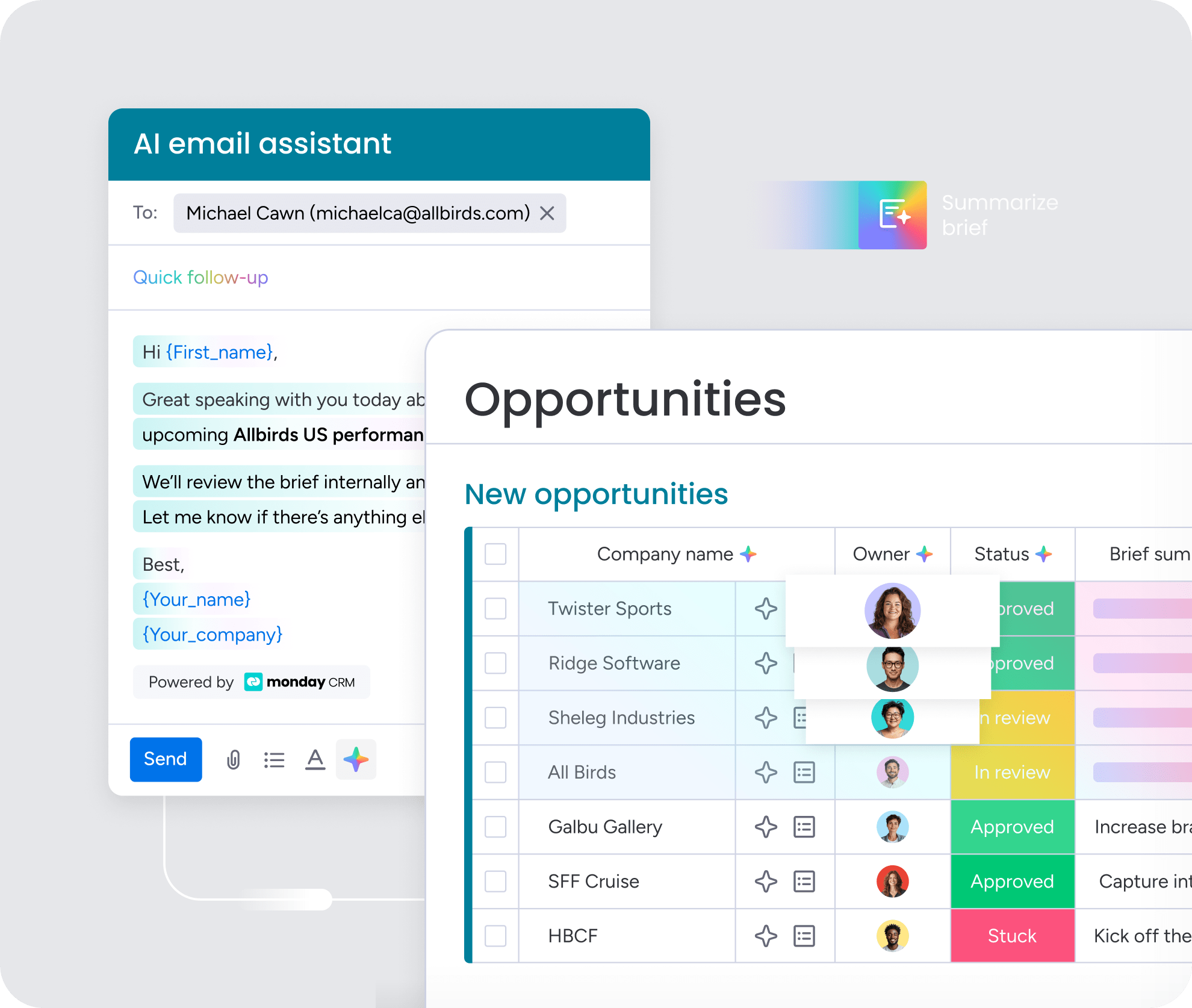
AI SDR tools help sellers scale social selling without sacrificing personalization. AI surfaces relevant prospects, suggests personalized messages, and spots buying signals. Revenue teams using monday CRM get AI features that summarize communication history and detect sentiment across interactions.
Try monday CRM6. Pipeline insights from real-time buyer signals
Social platforms give you real-time signals about buyer intent.
- Job changes: New decision-makers often reassess vendors
- Company announcements: Growth or restructuring creates opportunities
- Content engagement: Repeated interactions indicate interest
7. Predictable, repeatable revenue motion
When social selling integrates into a structured sales methodology with CRM tracking, it becomes a predictable engine. Teams that treat social selling like a real discipline see consistent pipeline.
The 4 pillars of social selling
Successful social selling comes down to 4 pillars. Together, they give you a framework for building and executing a strategy that generates pipeline consistently, not just occasionally.
1. Build a credible professional brand

Your online presence needs to show expertise and value to target buyers. Every element counts when you’re building credibility.
Profile optimization means focusing on:
- Headline: Communicate value, not just title (“Helping revenue teams close deals faster” instead of “Sales Representative”)
- Professional photo: High-quality, approachable headshot
- Summary: Address buyer pain points directly and include clear next steps
- Recommendations: Request them from customers and colleagues who can speak to your expertise
2. Find the right buyers
Social selling works best when paired with focused sales prospecting around the right accounts and decision-makers. Broad outreach wastes time and weakens your impact.
To find the right buyers, you need to:
- Use platform search capabilities to identify prospects
- Monitor intent signals like job changes and company announcements
- Leverage warm connections through mutual contacts and shared groups
Quality beats quantity every time. Focusing on 50-100 high-fit accounts beats broad outreach to thousands.
3. Engage with relevant insights
Engagement is what social selling is all about. Share valuable insights consistently, comment thoughtfully on prospect posts, and jump into relevant conversations.
Make every engagement count.
- Share industry trends, how-to guides, and case studies that address buyer challenges
- When commenting, add perspective rather than generic responses
- The goal is being seen as a valuable resource, not a vendor
4. Build trusted long-term relationships
Social selling isn’t built for quick wins. The best outcomes come from relationships you build over months or years.
To build relationships that last, you need to:
- Stay engaged with prospects’ content regularly
- Share relevant resources and congratulate them on milestones, even without immediate deal opportunities
- Offer insights, introductions, or resources before asking for anything in return
Prospects who aren’t ready today might become champions or customers down the road.
Social selling message templates and examples
The right message at the right time makes all the difference. These templates show how to turn social signals into real conversations that move deals forward.
Connection request examples
1. Shared content engagement
Hi [Name],
I’ve been following your posts on [topic] and your recent piece on [specific insight] really resonated. I work with [type of companies] facing similar challenges around [pain point].
Would value connecting to exchange ideas.
2. Mutual connection
Hi [Name],
[Mutual connection] suggested we connect. I saw your recent post about [specific challenge] and have worked with several [role/industry] leaders navigating similar issues.
Happy to share what’s worked for them if helpful.
3. Relevant insight
Hi [Name],
I noticed you’re leading [initiative] at [Company]. I recently published research on [related topic] that might be relevant to your work. Would be great to connect and hear your perspective.
Comment examples that add value
1. Adding perspective with data
This aligns with what we’re seeing across [industry]. In recent conversations with [role], [specific challenge] keeps coming up as a top priority. The approach you outlined around [specific point] is exactly what’s working for teams getting ahead of this.
2. Sharing relevant experience
We saw this exact scenario play out with a customer last quarter. What made the difference was [specific insight]. Happy to share more details if it would be helpful for your situation.
3. Asking a thoughtful question
Great point about [specific insight]. How are you thinking about [related challenge]? We’re seeing teams take two different approaches and curious which direction makes more sense for [their situation].
Buying signal outreach examples
1. Job change trigger
Congrats on the new role at [Company], [Name]. I know the first 90 days in a [role] position often involve reassessing [relevant area]. I work with [similar companies] navigating [specific challenge] and have some benchmarks that might be useful as you’re getting oriented. Worth a quick conversation?
2. Company announcement trigger
Saw the announcement about [Company]’s [expansion/funding/initiative]. Based on conversations with other [industry] companies at similar stages, [specific challenge] usually becomes a priority around this time. We’ve helped several teams get ahead of this — happy to share what’s worked if it would be valuable.
3. Content engagement trigger
Hi [Name],
I noticed you’ve engaged with several posts about [topic] recently. We just published a guide on [related solution] based on what’s working for [similar companies]. Thought it might be relevant given your focus on [their initiative].
Want me to send it over?
Best platforms for B2B social selling
Each platform plays a different role in your social selling strategy. B2B sellers should focus where their buyers are most active, and each platform below plays a different role.
LinkedIn: The primary platform for B2B social selling
LinkedIn is built for professional networking and where most B2B buyers research vendors. That makes it the go-to platform for social selling.
Focus on these LinkedIn activities:
- Profile optimization: Complete every section with buyer-focused messaging.
- Content sharing: Post 2-3 times weekly with valuable insights.
- Personalized connections: Reference shared interests in requests.
- Thoughtful commenting: Add perspective to prospect posts.
LinkedIn’s Social Selling Index can also give sellers a directional benchmark for profile strength, engagement, and relationship-building activity, though revenue teams should still prioritize pipeline and revenue metrics over platform scores.
Reddit and niche communities: Unfiltered buyer insights
Reddit and niche online communities are where buyers often have unfiltered conversations about their priorities, frustrations, and decision-making criteria. These spaces can be valuable because buyers may discuss challenges more candidly than they would in branded channels.
To build credibility here, you need to listen to pain points first before contributing, answer questions helpfully without pitching, and share relevant resources that genuinely help. Build credibility in these spaces and you’ll get inbound inquiries over time.
YouTube: Video content for thought leadership
YouTube gives B2B sellers a platform to demonstrate expertise through long-form video content. Video can be especially useful for explaining complex solutions and showing expertise in a more accessible format.
To use YouTube effectively for social selling:
- Educational content: Create how-to videos and tutorials that address buyer challenges.
- Thought leadership: Share insights on industry trends and best practices.
- Customer stories: Showcase real results through video testimonials.
- Consistent engagement: Respond to comments and questions to build relationships.
Video content positions you as an expert and creates touchpoints that complement your LinkedIn presence.
6 steps to start social selling
Social selling needs structure to work. These 6 steps give you a roadmap for launching and scaling your efforts, from setting up your profile to logging every interaction in your CRM.
Step 1: Optimize your professional profile
Your profile is where social selling starts. Buyers research sellers before engaging, so your profile needs to show credibility and value.
- Update your headline to communicate value, not just your job title.
- Add a professional, approachable photo.
- Write a summary that addresses buyer pain points directly.
This foundation makes everything else work.
Step 2: Define your ideal customer and target accounts
Social selling works best when you focus on the right accounts. To build a high-quality target list, you need to:
- Define your ideal customer profile.
- Identify key decision-makers within those accounts.
- Build a prioritized list using LinkedIn Sales Navigator and intent data.

(Source)
Step 3: Build a daily listening and engagement routine
Daily consistency is everything. Spend 15-30 minutes daily on monitoring target accounts for new activity, engaging with prospect posts, and sharing helpful content. Consistency beats volume every time. Daily engagement builds stronger relationships than random bursts of activity.
Step 4: Share insights that solve buyer problems
Focus your content on solving buyer problems, not promoting products. To make your content land, you should:
- Use multiple formats (text posts, short videos, carousels).
- Share your genuine perspective and experience.
- Address the specific challenges your buyers face.
Step 5: Move conversations from social to pipeline
Social selling supports sales lead generation when done right. Look for buying signals in engagement patterns, then:
- Personalize outreach by referencing specific social interactions.
- Offer value first before requesting a meeting.
- Keep the conversation focused on their challenges, not your product.
AI tools can detect buying signals across conversations and alert sellers in real time. When prospects engage with multiple posts about specific pain points, AI can detect patterns and recommend outreach before the window closes.
Step 6: Log every social touch in your CRM
You need to track social selling activities to measure impact. Log every social touch, tag social-sourced leads, and build dashboards that measure activity and pipeline impact. Teams using monday CRM can log these interactions through the Emails & Activities timeline, maintaining full visibility into buyer engagement.
5 social selling techniques that drive pipeline
Knowing the steps is one thing. Executing the right tactics is another. These 5 proven techniques consistently generate pipeline when you use them with intention and consistency.
1. Personalized connection outreach
Strong connection requests prove you’ve done your homework. To make yours stand out, you should:
- Reference mutual connections or shared groups
- Mention a specific post or piece of content they shared
- Explain the specific reason you’re connecting
This approach shows genuine interest and can lead to higher acceptance rates than generic requests.
2. Insight-led commenting
When you comment on posts, make it count. Add perspective by sharing relevant experience or data. Ask thoughtful questions to deepen the conversation, and avoid generic responses like “great post,” which add no value.
3. Triggered outreach based on buyer signals
Watch for key signals and reach out when the timing’s right.
- Job changes: New roles mean new priorities and vendor reassessments.
- Company announcements: Growth or restructuring creates fresh opportunities.
- Content engagement: Multiple interactions from the same prospect indicate real interest.
4. Employee advocacy and team amplification
Coordinate team efforts for bigger impact. Encourage team members to share each other’s content and coordinate messaging around key themes and campaigns. Amplify each other’s posts to extend reach and signal team credibility.
5. Multi-threading across buying groups
Map the buying committee first, then engage each stakeholder with content tailored to them. Build multiple advocates in the same account to speed up deals and avoid losing momentum when a single champion leaves.
4 types of social selling tools for B2B sales
The right technology makes social selling easier to scale. These 4 categories help sellers track buyer signals, find the right contacts, create content, and measure impact in one connected workflow:
| Category | Purpose | Examples |
|---|---|---|
| Social listening and signal tracking | Monitor accounts for buying signals, mentions, and relevant activity | LinkedIn Sales Navigator, Google Alerts |
| Prospecting and contact enrichment | Find decision-makers and enrich account or contact data | ZoomInfo, Apollo, Clearbit |
| Content creation and engagement | Create, schedule, and share social content | Canva, Loom, Buffer |
| CRM platforms for activity tracking | Track social touches, follow-ups, pipeline impact, and revenue attribution | monday CRM |
A social CRM is essential for tracking social selling activities. monday CRM provides built-in activity logging through the Emails & Activities timeline, allowing sellers to track LinkedIn messages, comments, and content shares alongside other buyer interactions.
Try monday CRMHow to measure social selling success
Social selling must be measured to prove ROI and refine tactics. Metrics should span activity, engagement, and pipeline impact — here’s how to think about each layer.
Activity metrics measure effort and consistency:
- Connection requests sent: Volume of outreach
- Posts published: Content consistency
- Comments per day: Engagement frequency
- Profile views: Visibility indicator
Engagement metrics measure prospect response:
- Connection acceptance rate: Message relevance
- Content engagement: Post effectiveness
- Direct messages received: Inbound interest
- Target account engagement: Focus accuracy
Pipeline and revenue metrics measure business impact:
- Social-sourced leads: Direct attribution
- Social-influenced opportunities: Touch influence
- Pipeline created: Dollar value generated
- Win rate: Quality of social-sourced deals
- Deal velocity: Speed to close
CRM tracking is essential for connecting these metrics to revenue. Revenue teams using monday CRM can build customizable dashboards with sales funnel widgets and lead source tagging to connect social activity directly to closed deals.
How to connect social selling to your CRM
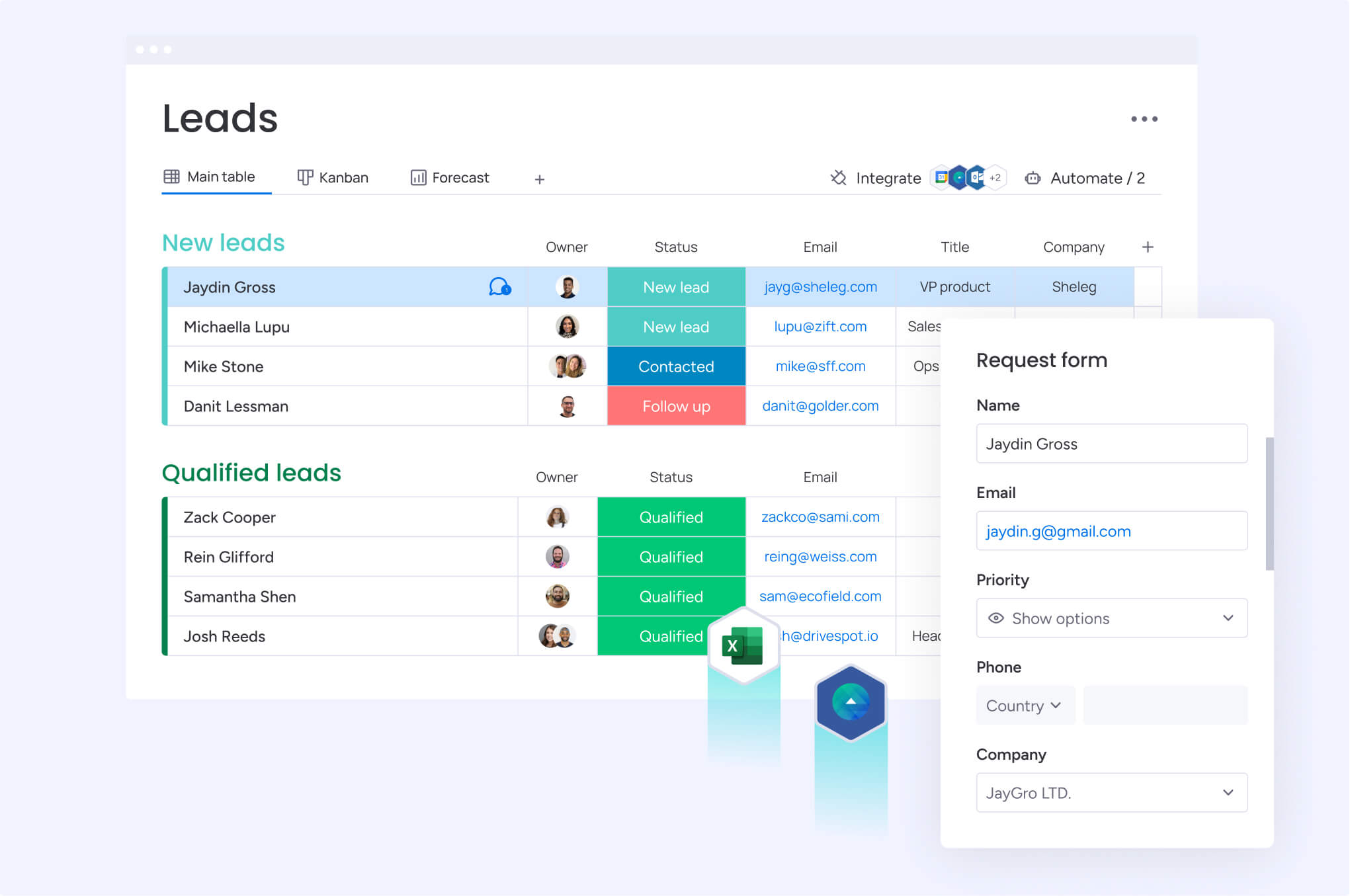
Social selling activities must integrate into the CRM to measure impact and maintain context. Without CRM integration, social selling remains invisible to sales leadership — and invisible activity doesn’t get resourced or scaled.
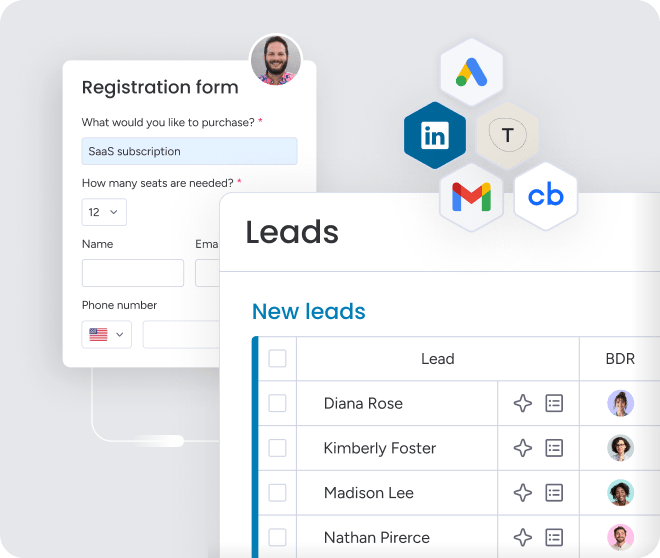
Step 1: Capture social leads in one place
All social-sourced leads should be logged alongside leads from other channels. To do this well:
- Tag leads by source so you can measure channel performance
- Capture interaction context at the point of entry
- Assign ownership immediately so no lead goes cold
Teams using monday CRM can centralize and qualify leads in one place, with lead source fields and activity tracking that help connect social engagement to pipeline.
Step 2: Track every social touchpoint on the contact record
Every social interaction should be logged on the contact record:
- LinkedIn messages: Full conversation history
- Comments: Engagement on posts
- Profile views: Interest signals
- Content shares: Value delivered
Add notes capturing key details from social conversations. monday CRM’s Emails & Activities timeline logs every interaction in one chronological view.
Step 3: Build dashboards for social selling performance
CRM dashboards should track social selling activity, engagement, and pipeline impact. Revenue teams need visibility into which activities drive results. monday CRM enables teams to build code-free, customizable dashboards that provide immediate insights into pipeline status and team performance.
Run social selling end to end with monday CRM
Social selling is most effective when integrated into a unified CRM platform that tracks all buyer interactions. monday CRM provides the infrastructure to run social selling from prospecting to closed revenue.
Centralize social conversations alongside email and calls
monday CRM logs all social touches on the same contact record as email and call activity. The Emails & Activities timeline provides a chronological view of all interactions, showing the full journey from first social touch to closed deal. This complete context improves personalization and helps sellers build stronger relationships.
Automate follow-ups when prospects engage
Automation ensures social engagement translates into pipeline action. Create automations that assign tasks, send notifications, or trigger email sequences based on social engagement. This ensures no opportunity is missed when prospects show interest.
monday AI drafts personalized messages based on prospect activity. Sellers review and edit AI-generated messages, saving time while maintaining authenticity. The AI email assistant, a feature of monday CRM, helps compose emails directly on the platform.
Use AI to surface insights and suggest next steps
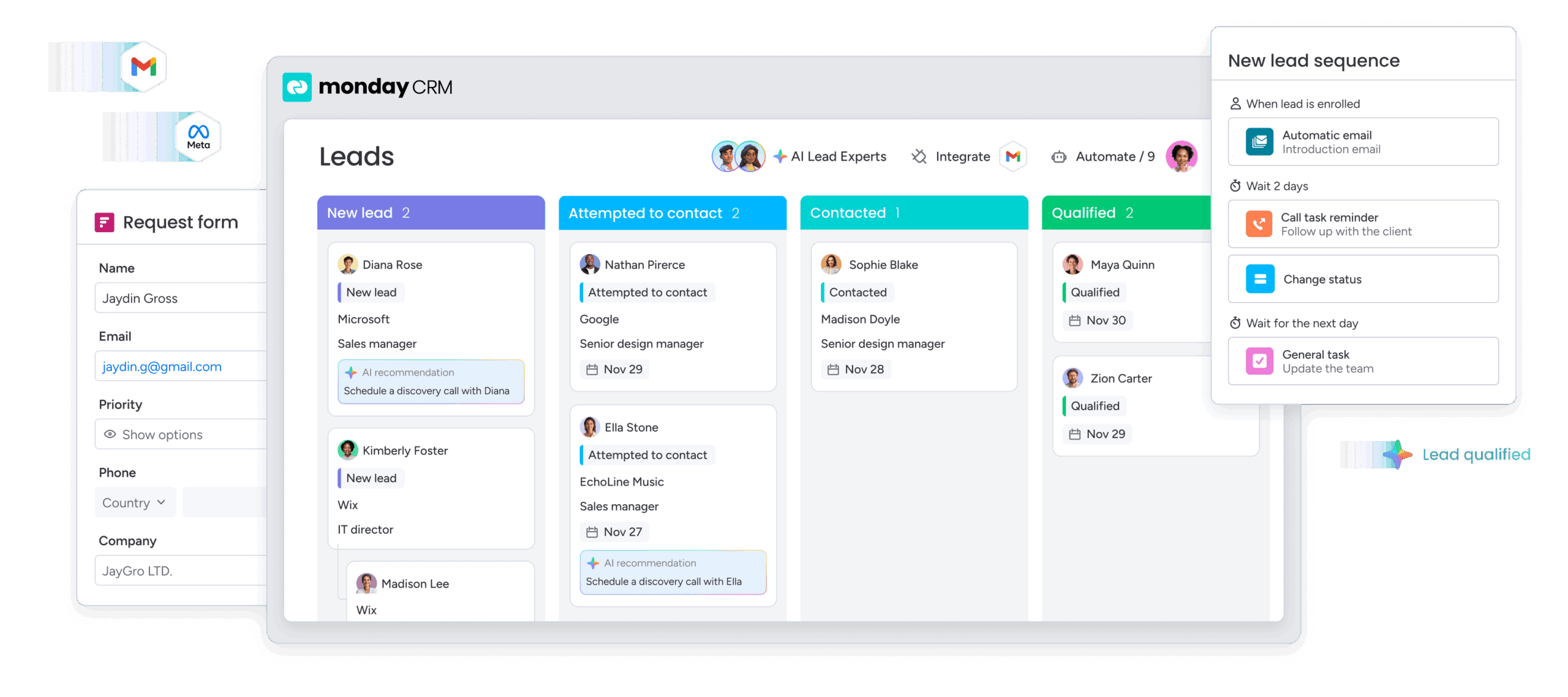
AI capabilities help sellers act on social signals faster. AI summarizes prospect activity, suggests personalized messaging through the email assistant, and detects sentiment across communications. These capabilities handle time-consuming research so sellers focus on conversations that close deals.
monday CRM’s AI Timeline Summary creates short summaries of all communication events, so sellers walk into every conversation prepared.
Build dashboards connecting social activity to revenue
Dashboards allow teams to track social selling impact in one view by tracking activity by seller and time period, measuring pipeline attributed to social selling, identifying engagement trends across target accounts, and connecting closed revenue to social-sourced opportunities. monday CRM’s dashboard capabilities enable this visibility without complex setup.
Get started with smarter social selling
Social selling isn’t a trend. It’s a response to how B2B buyers actually make decisions today — through research, peer recommendations, and trusted relationships built long before a sales conversation begins. Teams that show up consistently, share genuine insights, and engage with intention will always have an edge over those relying on cold outreach alone.
The difference between social selling that generates pipeline and social selling that goes nowhere comes down to structure. Tracking every interaction, measuring what drives results, and connecting social activity to revenue requires a CRM that keeps up with how modern sales teams work.
Try monday CRMFAQs
What is social selling and how does it differ from traditional sales?
Social selling is using social media platforms to find, connect with, and nurture sales prospects through relationship-building rather than cold outreach. Unlike traditional selling that relies on interruption tactics, social selling engages buyers during their research phase through valuable content and authentic conversations.
Which social media platforms work best for B2B social selling?
LinkedIn is the primary platform for B2B social selling since it's built for professional networking and where most B2B buyers research vendors. YouTube provides value for demonstrating expertise through video content, while Reddit and niche communities offer insights into unfiltered buyer pain points.
How much time should sellers spend on social selling daily?
Sellers should dedicate 15-30 minutes daily to social selling activities including monitoring target accounts, engaging with prospect posts, and sharing content. Consistency matters more than volume — daily engagement builds stronger relationships than sporadic bursts of activity.
How do you measure social selling ROI?
Social selling ROI is measured through activity metrics (connection requests, posts, comments), engagement metrics (acceptance rates, content engagement, inbound messages), and pipeline metrics (social-sourced leads, pipeline created, win rates, deal velocity). CRM tracking connects these activities to revenue impact.
What is the LinkedIn Social Selling Index?
The LinkedIn Social Selling Index scores users from 0-100 on how effectively they use LinkedIn for social selling across 4 pillars: professional brand, finding the right people, engaging with insights, and building relationships. While SSI provides a benchmark, pipeline created and revenue influenced are more meaningful business metrics.
How can AI help with social selling?
AI helps sellers scale social selling by surfacing relevant prospects, summarizing prospect activity, suggesting personalized messaging, and detecting buying signals. AI handles research and administrative tasks, allowing sellers to focus on building relationships and closing deals while maintaining the human touch essential to social selling success.
