


Imagine closing a $200K deal in half the time it typically takes to close $50K — for a company with a similar profile. The difference? A strategic approach that targets high-value opportunities, aligns stakeholders faster, and positions your solution as the clear choice from day one.
This guide breaks down 9 proven B2B sales strategies that directly increase deal sizes and close rates. You’ll learn how to use AI for prospect targeting, align entire buying teams, build digital experiences that accelerate decisions, and negotiate without discounting, so you can close bigger deals faster while building relationships that last.
Try monday CRMKey takeaways
- Focus on high-value prospects using AI-powered intelligence by using predictive lead scoring to identify which prospects match your best customers and show genuine buying signals.
- Build relationships with stakeholders across departments rather than relying on one person, because if your only advocate leaves, your deal dies.
- Lead with ROI calculations and productivity gains specific to each stakeholder, then trade any concessions for commitments like longer contracts or case study participation.
- Let buyers research, demo, and evaluate solutions on their own timeline while providing human expertise for strategic guidance and stakeholder alignment.
- Use monday CRM’s AI capabilities to personalize outreach at scale, including automated lead scoring, sentiment detection, and timeline summarization.
What makes B2B sales different in 2026
The enterprise buying journey looks nothing like it did a few years ago. Today, 61% of B2B buyers prefer a rep-free buying experience, according to Gartner, choosing to research solutions, compare vendors, and form opinions through digital channels before a rep even enters the picture.
This self-serve behavior doesn’t eliminate the sales role; it changes when and how sellers add value. Sales teams now earn attention by sharing expertise buyers can’t find anywhere else.
The Gartner B2B Buying Report found that purchase decisions involve 5-11 stakeholders across departments. Finance, IT, operations, end-users, legal, and executive leadership all evaluate solutions through different lenses. The CFO scrutinizes ROI projections. IT assesses integration complexity. End-users prioritize daily usability.
B2B sales means getting all these groups aligned — not just convincing one decision-maker. Buyers also expect B2B tools to work as smoothly as the apps they use at home. Instant responses, personalized recommendations, and frictionless processes have become baseline expectations. Fast, personalized responses win deals. Slow, generic ones lose them.
The strategies in this article tackle these shifts head-on. Here are 9 practical B2B sales tips that show you how to find the right prospects, align entire buying teams, and build buying experiences modern buyers actually want.
Tip 1: Target high-value prospects with AI-powered intelligence
Not all prospects are worth the same effort. AI-powered targeting helps sales teams identify which opportunities will actually close big by analyzing patterns across hundreds of data points — firmographics, behavior, historical trends, and buying signals — that no human could track manually.
This approach increases deal sizes by directing your team’s time toward prospects who match your best customers and show genuine readiness to buy.
| Signal type | Examples | What it indicates |
|---|---|---|
| Firmographic signals | Company size, industry, growth rate, funding status | Fit with your ideal customer profile |
| Behavioral indicators | Website engagement, content downloads, email interactions | Active interest and evaluation stage |
| Historical patterns | Characteristics of past high-value customers | Likelihood of becoming a large account |
| Technographic data | Current tools, recent technology purchases | Integration requirements and budget availability |
| Engagement velocity | Speed through evaluation stages | Urgency and buying timeline |
Here’s how to use AI to target high-value prospects:
- Predictive scoring: Use AI-driven lead scoring to prioritize opportunities based on real buying signals rather than static point systems.
- Best-fit prioritization: Focus first on prospects that match your highest-value customer profiles and move quickly through evaluation stages.
- Expansion signals: Watch for usage growth, hiring activity, or funding events that indicate readiness for larger deals.
- Budget readiness: Prioritize accounts with confirmed budget authority instead of chasing large companies with vague interest.
- Automated focus: Let AI continuously flag deals worth immediate attention so reps spend time where revenue impact is highest.
What this looks like in practice: A SaaS company using predictive lead scoring might discover that prospects in the 100-500 employee range who download 3 or more resources within 2 weeks and match the technology stack of existing customers close at 3x the average deal size. The AI automatically flags these prospects the moment they hit those criteria, allowing reps to reach out when buyers actually need help rather than manufacturing urgency.

Tip 2: Master value-based selling for larger commitments
Value-based selling shifts the conversation from features and pricing to outcomes and ROI. This approach justifies bigger investments because buyers see actual returns — not just another software tool. The key? Show specific, measurable impact that matters to each stakeholder.
Each stakeholder in a B2B purchase evaluates value differently. A single value proposition doesn’t resonate across the buying group. Stakeholder-specific quantification builds consensus because each decision-maker sees personal and departmental value.
| Stakeholder | Primary metrics | Value focus |
|---|---|---|
| CFO | Cost savings, revenue impact, payback period | Financial returns and risk mitigation |
| Operations leader | Efficiency gains, error reduction, process speed | Productivity and quality improvements |
| End users | Time savings, ease of use, daily workflow impact | Personal productivity and job satisfaction |
| IT | Integration effort, security, maintenance burden | Technical feasibility and long-term stability |
| Executive sponsor | Strategic alignment, competitive advantage | Business transformation and market position |
Building ROI models transforms vague value propositions into concrete financial justifications that make larger investments defensible to CFOs and executive buyers. When you quantify specific business impact with conservative assumptions, you shift the conversation from “Can we afford this?” to “Can we afford not to do this?”
- Identify stakeholder metrics: Pinpoint what each stakeholder actually cares about and translate impact into financial terms.
- Build credible ROI models: Include quantified benefits, implementation costs, time to value, and payback period, using conservative assumptions you can exceed. Learn more about calculating ROI for business investments.
- Replace vague claims with specifics: Anchor conversations in concrete outcomes like time saved, revenue unlocked, or errors reduced.
- Position value strategically: Tie ROI to publicly stated company goals such as growth targets, expansion plans, or digital transformation initiatives.
What this looks like in practice: For a sales operations team, automation might reduce manual data entry from 10 hours per week to 1 across a 20-person team. At a $50/hour loaded cost, that’s over $23,000 per year in recovered productivity — a concrete number executives can justify and defend.
Tip 3: Navigate complex buying groups through multi-threading
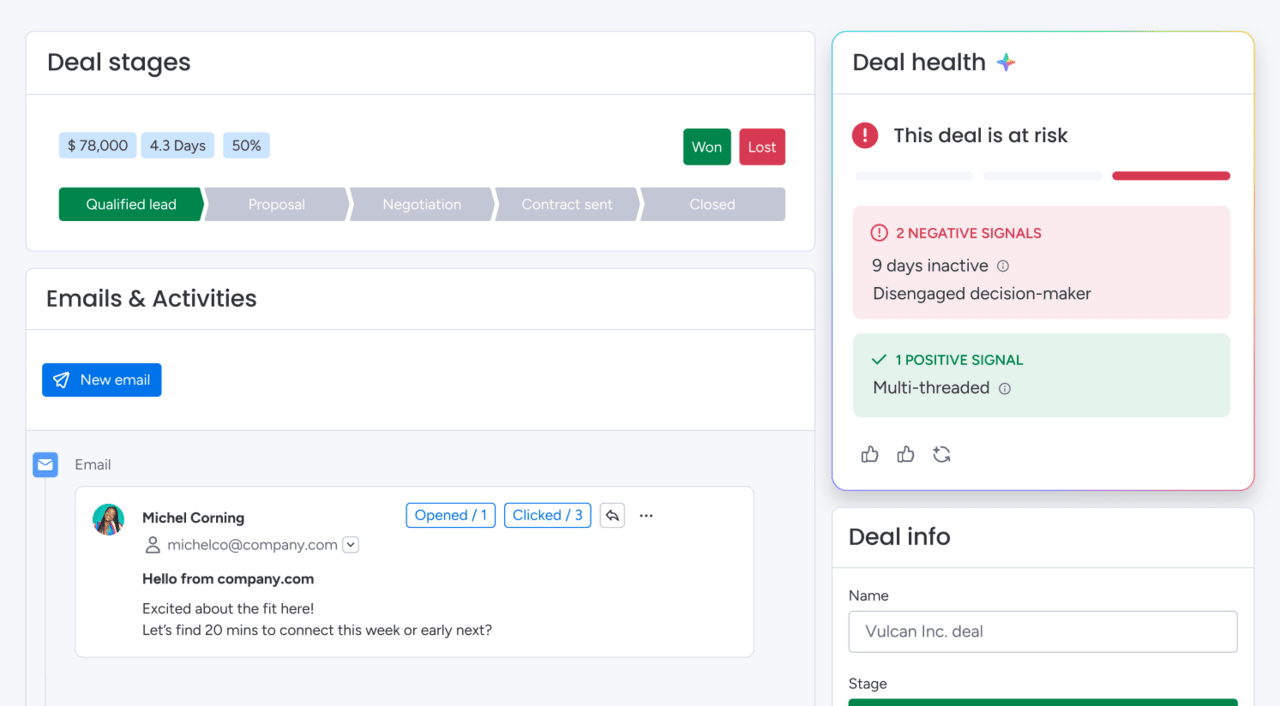
Multi-threading means building relationships with multiple stakeholders simultaneously rather than relying on a single champion. This approach reduces risk by creating redundancy if your main contact leaves, and it accelerates consensus by having advocates push the decision forward from different angles within the organization.
- Map all decision influencers: Identify economic buyers, technical evaluators, end users, legal, procurement, and executive sponsors by asking directly, researching org structures, and tracking who appears in meetings and email threads.
- Build multiple champions: Develop advocates across departments by tailoring value to each team’s priorities and equipping them with materials they can use internally when you’re not in the room.
- Align competing priorities: Document each stakeholder’s top priorities and show where interests overlap, using both/and framing to resolve conflicts instead of forcing trade-offs.
What this looks like in practice: Instead of framing IT’s need for security controls against Sales’ desire for mobile access as competing priorities, show how modern authentication methods deliver enterprise-grade security and mobile flexibility simultaneously, giving both stakeholders exactly what they need without compromise.
Tip 4: Access executive buyers through strategic social selling
Executive buyers control larger budgets but are harder to reach through traditional outreach. Social selling builds credibility and access before formal sales conversations begin, positioning you as a trusted resource rather than another vendor when they’re ready to buy.
- Share original insights: Post trend analysis, regulatory perspectives, and data-driven observations that demonstrate deep industry knowledge rather than curating generic content.
- Engage early: Comment thoughtfully on executives’ LinkedIn posts, share relevant articles with personalized context, and congratulate them on milestones before they’re actively evaluating solutions.
- Provide value first: Build relationships through helpful introductions, event invitations, and industry insights without pitching your solution.
- Transition strategically: Move from social engagement to sales conversations by sharing relevant case studies, offering specific resources, and using permission-based language that asks rather than assumes.
- Watch for triggers: Reach out when executives post about relevant challenges, announce strategic initiatives, change roles, or face industry changes that create natural conversation opportunities.
What this looks like in practice: Instead of cold emailing a CFO about your financial planning software, spend 3 months commenting on their LinkedIn posts about budget forecasting challenges and sharing relevant industry research. When they post about preparing for next year’s planning cycle, you’re already a trusted voice they recognize, making your outreach about a relevant case study feel like helpful timing rather than random prospecting.
Tip 5: Scale personalized outreach using smart automation
Smart automation lets you deliver personalized messages to hundreds of prospects without sacrificing relevance or authenticity. This approach increases deal sizes by ensuring every touchpoint feels custom-built for the recipient, which dramatically improves response rates and moves more conversations toward high-value opportunities.
- Segment strategically: Divide your prospect database by industry, role, company size, and specific challenges so you can tailor messaging that speaks directly to a CFO’s forecast accuracy concerns or a sales VP’s rep productivity goals rather than sending generic outreach that resonates with no one.
- Deploy AI messaging: Use AI to generate personalized content that pulls in recent company news, references sector-specific pain points, includes relevant case studies, and adjusts tone based on role level, making every message feel genuinely relevant without manual research and writing.
- Test systematically: Experiment with subject lines, message length, value framing, calls-to-action, timing, and channel mix to discover what generates responses, then optimize based on data rather than assumptions.
- Automate intelligently: Let technology handle repetitive personalization tasks like inserting company details and selecting relevant proof points while you focus on strategic relationship-building and high-value conversations.
- Measure impact: Track response rates, conversion rates, and deal sizes across different segments and approaches to identify what’s working and compound small improvements into significant revenue gains.
What this looks like in practice: Instead of one “sales leader” segment, create separate segments for enterprise CROs managing 100+ rep teams focused on predictable revenue, mid-market VPs of sales managing 10-30 reps balancing growth and efficiency, and small business sales managers managing 3-8 reps wearing multiple hats.
Tip 6: Build a sales tech stack that accelerates deal execution

An efficient sales tech stack eliminates manual work and amplifies selling time rather than creating administrative overhead. The right tools increase deal sizes by freeing reps to focus on high-value activities like relationship building and strategic conversations, while poor tool choices bog teams down in data entry and platform management that steal hours from actual selling.
- Prioritize adoption: Choose platforms with intuitive interfaces, mobile access, and fast performance that reps actually want to use rather than sophisticated tools that sit unused.
- Connect revenue intelligence: Integrate AI-powered analysis of sales activities and conversations to surface insights about deal health, pipeline forecasting, and what’s actually driving wins.
- Automate insight capture: Connect email, calendar, marketing, and customer data so activity is logged automatically and CRM analytics surface patterns like which behaviors correlate with larger, faster-closing deals.
- Measure real cost: Evaluate tools based on active adoption, not seat count; high-cost platforms with low usage quietly destroy ROI.
With an intuitive interface and native integrations, monday CRM helps teams start selling immediately rather than spending weeks in training. Emails, meetings, and interactions are logged automatically, while AI-powered sentiment detection and summaries give managers instant visibility into deal health.

Tip 7: Enable digital buying experiences for modern B2B buyers
Digital buying experiences let prospects research, evaluate, and move toward purchase decisions on their own timeline without mandatory sales meetings. This approach accelerates deals by meeting buyers where they are while improving satisfaction by respecting their autonomy and reducing friction throughout the evaluation process.
- Offer self-serve resources: Provide interactive demos, free trials, comprehensive documentation, ROI calculators, case studies, and comparison guides so prospects can explore your solution thoroughly before engaging sales.
- Reserve sales for expertise: Let reps focus on high-value activities like custom demonstrations, strategic implementation guidance, stakeholder alignment, ROI modeling with prospect-specific data, and contract negotiation rather than delivering basic information.
- Show transparent pricing: Display pricing frameworks and ranges publicly so prospects self-qualify based on budget fit, which shortens sales cycles by eliminating back-and-forth on basic cost questions and builds trust by signaling confidence in your value.
- Enable asynchronous decisions: Support buying groups across departments and time zones with recorded demos, supporting documentation, shared workspaces for questions and discussion, and 24-hour response times so evaluations progress continuously without waiting for the next available meeting slot.
Example: Instead of requiring 12 stakeholders to attend a 90-minute live demo, provide a recorded walkthrough with clearly marked sections for each department’s concerns, create a shared workspace where IT can ask security questions while Finance reviews ROI calculations, and respond to all questions within 24 hours. The evaluation moves forward daily rather than stalling for 3 weeks while you coordinate everyone’s calendars.
Tip 8: Expand existing accounts with predictive analytics
Existing customers represent your highest-value growth opportunity because they already trust you, understand your solution, and have budget allocated.
Predictive analytics identifies which accounts are ready for expansion by analyzing usage patterns, engagement signals, and behavioral data that reveal the perfect moment to approach with upsell, cross-sell, or renewal conversations that feel helpful rather than pushy.
- Monitor usage signals: Track when customers approach plan limits, rapidly adopt advanced features, add users consistently, build complex workflows, or connect additional integrations — all indicators they’re outgrowing their current tier and ready for expansion.
- Identify churn risk: Watch for declining usage, increasing support tickets, champion departures, engagement drops, or competitive research activity that signals at-risk accounts needing proactive intervention before they leave.
- Spot cross-sell opportunities: Analyze how customers use current features, monitor business changes like growth or new departments, track feature requests, and observe industry adoption patterns to identify complementary solutions they actually need.
- Time outreach strategically: Reach out when customers show genuine expansion signals rather than arbitrary quota deadlines, which increases success rates by positioning your offer as problem-solving instead of sales pressure.
- Intervene early: Address warning signs before accounts churn by offering training for declining usage, resolving support issues proactively, and building relationships with new stakeholders when champions change roles.
- Lead with value: Frame expansion conversations around outcomes customers want to achieve rather than products you want to sell, ensuring every upsell and cross-sell solves real problems instead of just increasing your revenue.
What this looks like in practice: A customer using 85% of their storage capacity while adding 3-5 new users monthly and building increasingly complex automation workflows shows clear expansion readiness. The right sales software can automatically alert the account manager when these signals align, enabling outreach that says “I noticed your team’s growing fast — let’s make sure you have the capacity you need” rather than “Want to upgrade your plan?”
9. Negotiate strategically to protect deal value

Strategic negotiation protects deal value by anchoring conversations on business outcomes rather than price, trading concessions for meaningful commitments, and creating legitimate urgency based on buyer timelines.
| If they ask for ... | You ask for ... |
|---|---|
| Price discount | Longer contract term, upfront payment, case study participation |
| Additional features | Expanded user count, multi-year commitment, reference calls |
| Extended trial | Defined evaluation criteria, executive sponsor meeting, timeline commitment |
| Faster implementation | Dedicated internal resources, decision timeline, stakeholder access |
This approach increases deal sizes by preventing unnecessary discounting while building relationships that support long-term customer success and mutual value creation.
- Lead with ROI: Start every pricing conversation with quantified financial returns and business impact rather than defending your price in isolation, which shifts the discussion from “Can we afford this?” to “Can we afford not to do this?”
- Trade strategically: Exchange every concession — whether it’s a discount, additional features, or extended terms — for corresponding commitments like longer contract periods, upfront payment, case study participation, or expanded user counts.
- Quantify inaction: Show buyers exactly what happens if they don’t solve the problem now, including lost productivity, missed revenue opportunities, and competitive disadvantages that make your solution’s cost look small by comparison.
- Create legitimate urgency: Accelerate decisions by referencing the buyer’s own stated deadlines, project timelines, and business goals rather than artificial pressure tactics that erode trust and damage relationships.
- Frame mutual value: Position concessions as collaborative problem-solving by asking “If we can do X, would you be able to commit to Y?” which transforms negotiation from adversarial to partnership-oriented.
- Reference peer outcomes: Share specific results similar companies have achieved to validate your pricing and demonstrate that the investment delivers measurable returns across comparable organizations.
What this looks like in practice: When a buyer requests a 20% discount, respond by anchoring on value: “I understand price is a concern. Let’s review the $2.3M in productivity gains we calculated for your team.” Then trade strategically: “If we can adjust pricing, would you be able to commit to a 3-year term and participate in a case study?” This protects deal value while creating a win-win outcome that justifies the investment and strengthens the partnership.
Use monday CRM to execute top B2B sales strategies in 2026
The strategies in this guide are proven ways to increase deal size and close rates, but executing them consistently across a growing sales organization is where most teams struggle. Larger deals involve more stakeholders, longer timelines, more data, and higher risk. Without the right system in place, even strong sales strategies break down under operational complexity.

This is where monday CRM acts as the execution layer that turns these strategies into repeatable, scalable sales motions. By combining deal visibility, AI-driven insights, and flexible workflows in one platform, revenue teams can focus on high-impact opportunities without adding friction or administrative overhead.
Here’s how monday CRM supports the full B2B sales lifecycle outlined in this article:
- Focus on high-value opportunities: AI-powered lead scoring and deal prioritization help reps identify prospects and accounts most likely to close larger deals, based on real engagement patterns, firmographics, and historical performance — not generic benchmarks.
- Manage complex buying groups: Track every stakeholder, champion, and decision-maker across accounts in one centralized view. See engagement history, sentiment, and deal context instantly, so multi-threaded relationships don’t fall through the cracks as deals expand.
- Support value-based selling: Centralized deal data, timelines, and activity summaries give reps the context they need to build credible ROI conversations and tailor value messaging to each stakeholder — without digging through emails or spreadsheets.
- Scale personalization without losing relevance: AI-assisted communication tools help reps personalize outreach based on deal stage, account activity, and past interactions, making it possible to stay relevant across large pipelines without sacrificing quality.
- Increase pipeline visibility and predict risk: Real-time deal health signals, sentiment detection, and activity tracking surface stalled or at-risk opportunities early, giving managers time to intervene before revenue is lost.
- Expand accounts at the right moment: Usage patterns, engagement signals, and account activity make it easier to spot upsell and cross-sell opportunities when customers are actually ready, turning expansion conversations into helpful problem-solving instead of quota-driven outreach.
Because monday CRM is highly customizable, teams can adapt workflows to match how they sell — not the other way around. Sales, marketing, and customer success teams all work from the same source of truth, ensuring handoffs are smooth, context is preserved, and deals continue moving forward as they grow in size and complexity.

The result is a sales system that supports bigger deals, shorter cycles, and stronger customer relationships — without adding unnecessary friction to your team’s day-to-day work.
Turn B2B sales strategies into revenue growth
Increasing B2B deal sizes in 2026 requires a strategic combination of AI-powered targeting, value-based selling, and multi-stakeholder engagement. By implementing these 9 proven strategies systematically — from predictive lead scoring to strategic negotiation — your team can close larger deals faster while building relationships that drive long-term revenue growth.
Ready to put these strategies into action? Try monday CRM to leverage AI-driven insights, manage complex buying groups, and execute high-value sales motions that consistently deliver results.
Try monday CRM
“With monday CRM, we’re finally able to adapt the platform to our needs — not the other way around. It gives us the flexibility to work smarter, cut costs, save time, and scale with confidence.”
Samuel Lobao | Contract Administrator & Special Projects, Strategix
“Now we have a lot less data, but it’s quality data. That change allows us to use AI confidently, without second-guessing the outputs.”
Elizabeth Gerbel | CEO
“Without monday CRM, we’d be chasing updates and fixing errors. Now we’re focused on growing the program — not just keeping up with it."
Quentin Williams | Head of Dropship, Freedom Furniture
“There’s probably about a 70% increase in efficiency in regards to the admin tasks that were removed and automated, which is a huge win for us.“
Kyle Dorman | Department Manager - Operations, Ray White
"monday CRM helps us make sure the right people have immediate visibility into the information they need so we're not wasting time."
Luca Pope | Global Client Solutions Manager at Black Mountain
“In a couple of weeks, all of the team members were using monday CRM fully. The automations and the many integrations, make monday CRM the best CRM in the market right now.”
Nuno Godinho | CIO at Velv
“monday.com provides developmental flexibility, operational efficiency, and data transparency — all in one place. We became a company that moved from chasing data to leading with it.”
Hyunghan Lee | Team Lead, Sandbox Network
"monday.com brought every part of our business into one connected space. The harmony between work management and CRM has become our operating system — giving us the clarity and confidence to scale.”
Jennifer Chinburg | Executive Vice President of Corporate Development & Brand, Chinburg Properties
“We just weren’t getting value from our old CRM. With monday.com, it's a thousand times better. Our sales teams are more informed, more consistent, and far more connected."
James Arnold | Chief Operating Officer, CenversaFAQs
What is the most effective way to increase B2B deal sizes?
The most effective way to increase B2B deal sizes is combining value-based selling with multi-stakeholder engagement, which shifts conversations from features to business outcomes while building consensus across the 10+ people typically involved in B2B purchases.
How does AI help sales teams close larger deals?
AI helps sales teams close larger deals by identifying high-value opportunities through predictive lead scoring, personalizing outreach at scale, and providing insights that improve decision-making through sentiment detection and timeline summarization.
What is multi-threading in B2B sales?
Multi-threading in B2B sales means building relationships with multiple stakeholders simultaneously rather than relying on a single champion, which reduces risk if your advocate leaves and accelerates consensus by having multiple advocates pushing the decision forward.
How can sales teams shorten B2B sales cycles?
Sales teams can shorten B2B sales cycles by enabling digital buying experiences, supporting asynchronous decision-making, and focusing on budget-ready accounts that eliminate time spent on prospects who aren't ready to purchase.
What role does social selling play in enterprise sales?
Social selling plays a critical role in enterprise sales by building credibility and access to executive buyers before formal sales conversations begin, making you a known, trusted resource rather than a random cold caller when they eventually need your solution category.
How do you negotiate larger B2B deals without discounting?
Negotiating larger B2B deals without discounting requires anchoring on value rather than price, trading concessions for commitments like longer contract terms or case study participation, and creating legitimate urgency based on business timing rather than artificial pressure tactics.
