


Pipeline visibility separates teams that consistently hit quota from those that scramble at quarter-end. When your pipeline stages are clearly defined with specific exit criteria and time benchmarks, you can predict revenue with confidence, spot at-risk deals early, and coach reps based on real data instead of gut feel.
This guide covers the 7 core B2B pipeline stages, how to customize them for your sales process, and the metrics that actually predict revenue. You’ll also learn how CRM automation, AI-powered summaries, and real-time pipeline visibility help teams manage deals more efficiently from first contact to close.
Key takeaways
- Each pipeline stage needs specific exit criteria so deals move forward on facts, not gut feelings.
- Conversion rates, deal age, and pipeline coverage tell you what’s coming before it arrives.
- B2B deals involve 6-10 people on average, according to Gartner — know who influences, who approves, and who can block a deal.
- Consistent stage definitions and honest deal data are what separate reliable forecasts from wishful thinking.
- monday CRM helps teams customize pipeline stages, automate deal alerts, summarize account activity with AI, and keep revenue teams aligned from first contact to close.
What is a B2B sales pipeline?
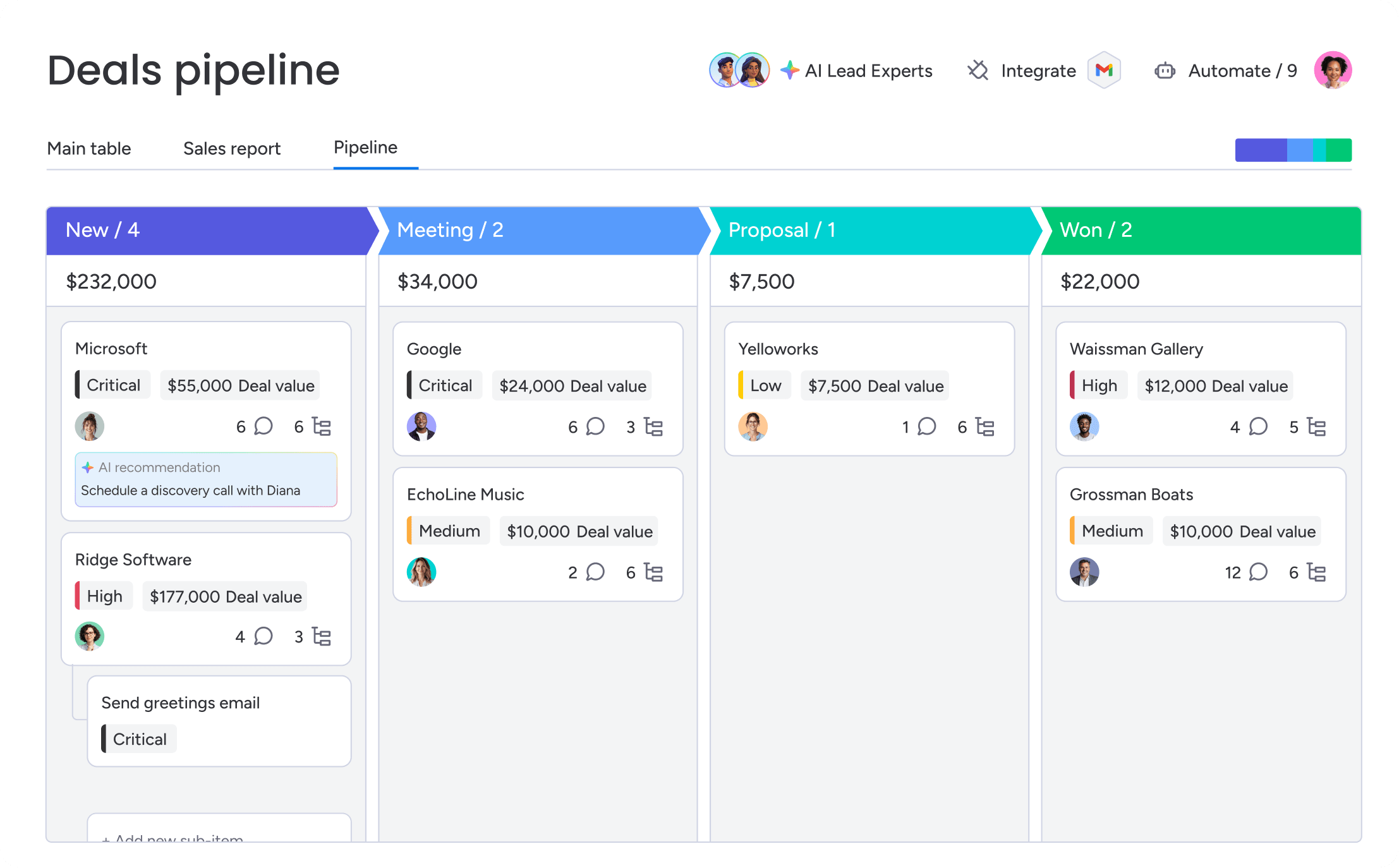
A B2B sales pipeline shows you exactly where every deal stands right now. It tracks each deal from first contact to closed revenue — so you can see momentum building, predict what’s coming, and catch problems before deals die.
Think of your pipeline as mission control for revenue. Each deal has a specific location, an assigned owner, and clear next steps. When prospects advance from “Discovery” to “Proposal,” that movement represents measurable progress toward revenue.
Here’s what a solid pipeline actually does for your team:
- Visibility: Sales leaders see deal status instantly. When negotiations drag for 3 weeks, you know right away — no waiting for reports or status meetings.
- Forecasting: Your forecast comes from real data, not gut feel. With 20 prospects in Discovery and a 40% conversion rate to Proposal, you know what’s coming next month.
- Accountability: Each deal has an owner, every stage has completion criteria, and all reps know their next action. Everyone knows what they own and what happens next.
B2B sales pipeline vs. B2B sales funnel vs. B2B sales cycle
Sales teams mix up pipelines, funnels, and cycles all the time. Here’s what each one actually means. Know the difference, and you’ll stop talking past each other in meetings.
| Concept | What it tracks | Perspective | Primary use |
|---|---|---|---|
| B2B sales pipeline | Individual deals and their progress through stages | Seller's view | Deal management, forecasting, rep performance |
| B2B sales funnel | Volume of prospects at each stage | Aggregate view | Conversion rate optimization, marketing alignment |
| B2B sales cycle | Time from first contact to close | Temporal view | Process efficiency, timeline forecasting |
Let’s dive a little deeper on each:
- B2B sales pipeline: Your operational control panel, the pipeline tracks specific deals, who owns them, and where you need to act. A sales manager viewing the pipeline sees “TechCorp is in Negotiation, owned by Sarah, closing March 15.” Customize your stages to match how you actually sell.
- B2B sales funnel: Your conversion diagnostic, the funnel shows you where prospects drop off. It shows you where prospects bail and where marketing needs to hand off better leads. Funnels display aggregate metrics like “30% of leads become opportunities” rather than individual deal details.
- B2B sales cycle: Your timeline benchmark, the sales cycle measures duration. How many days from first touch to signed contract? It helps you set real timelines, catch delays, and see how you stack up. A 90-day cycle means today’s deals close in 3 months.
Learn more: B2B marketing funnel
Why defined B2B sales pipeline stages accelerate deals
Clear pipeline stages don’t just organize deals — they speed them up. They make deals move faster, forecasts more accurate, and teams more aligned. When every rep understands what “Qualified” means and knows the exact criteria for advancing to “Discovery,” deals move forward consistently instead of stalling in limbo.
Predictable forecasting and revenue visibility
Defined stages turn guesswork into real forecasts. When each stage has clear entry and exit criteria, you can actually predict revenue.
Here’s an example: You’ve got 15 deals in Negotiation worth $500K total. With a 60% historical close rate at this stage, you can forecast $300K in upcoming revenue. That’s a number you can take to the board and actually count on.
This precision fixes the forecasting mess most revenue leaders deal with. Instead of hedging with vague projections, you can state confidently: “Based on pipeline coverage and conversion rates, we’re tracking to 95% of quota.”
Faster sales cycles with fewer stalled deals
Defined stages show you exactly where deals die. When a deal sits in Proposal for 30 days (twice your average), you can step in before it dies.
With this level of visibility, you can identify stalled deals early and take action while there is still time to save them. With defined stages and time benchmarks, they can act early: reassign the deal, bring in an exec, or change the approach.
Teams using monday CRM track deal age and time-in-stage automatically — so you can proactively re-engage at-risk deals and keep momentum high. Less manual work. More time closing.
Try monday CRM B2B sales pipelineStronger alignment across teams
Pipeline stages get everyone speaking the same language. Marketing knows when leads are ready. Sales knows when to loop in customer success. Legal and finance know when they’re up.
When deals hit Negotiation, your pipeline alerts legal and finance automatically. Deals close on time. Here’s what that looks like:
- Marketing-to-sales handoff: Marketing delivers qualified leads that meet specific criteria; sales accepts leads that are genuinely ready.
- Sales-to-customer success transition: Customer success receives complete context about promises made, pain points addressed, and success metrics defined.
- Cross-functional coordination: Legal, finance, and procurement know when they’re needed and what to prepare.
The 7 B2B sales pipeline stages
Most B2B sales processes follow 7 core stages built for complex enterprise deals. They account for long cycles, multiple stakeholders, and decisions that take forever. Adapt them to fit how you actually sell.
Stage 1: Prospecting
Prospecting is the foundational stage where reps identify and engage companies that fit your ideal customer profile (ICP). The goal is to find companies with problems you can solve, generate initial interest, and secure a meeting. AI can support this stage by helping reps prioritize accounts based on fit, engagement signals, or similarities to existing customers, so prospecting starts with the highest-potential opportunities.
- Research target accounts: Identify decision-makers through LinkedIn, company websites, and intent data.
- Execute outbound outreach: Send cold calls, emails, and LinkedIn messages to generate interest.
- Qualify inbound leads: Review marketing-generated leads and website inquiries.
- Schedule discovery calls: Book meetings with interested prospects.
Exit criteria: Prospect agrees to a discovery call or meeting.
Example: A rep identifies 50 manufacturers experiencing supply chain delays. After researching contacts and sending personalized emails about reducing lead times, 5 prospects respond and schedule discovery calls. Those 5 deals advance to the next stage.
Stage 2: Lead qualification
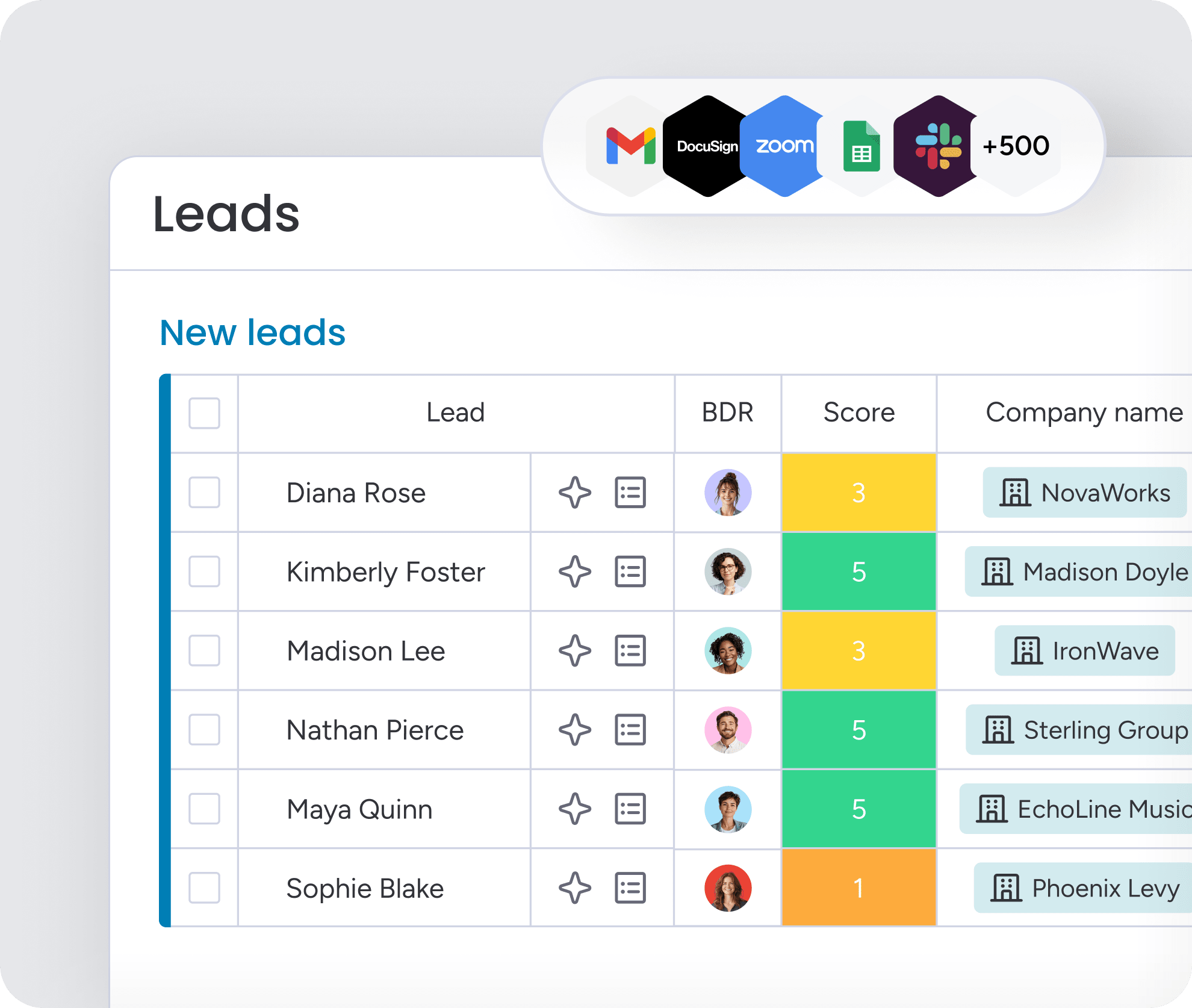
Qualification determines whether prospects have the budget, authority, need, and timeline to buy. This stage keeps you from chasing dead ends.
AI-assisted lead scoring can also help teams rank prospects based on firmographic data, engagement history, and buying signals, giving reps a clearer sense of which leads deserve immediate attention.
What happens during qualification:
- Conduct qualification calls: Use BANT, MEDDIC, or whatever framework fits your process.
- Assess pain point alignment: Confirm the prospect’s challenges match your solution.
- Map key stakeholders: Identify decision-makers and influencers.
- Verify budget and timeline: Confirm purchasing readiness.
Exit criteria: Prospect meets qualification criteria and agrees to deeper discovery.
Example: During qualification, a rep learns the prospect has Q3 budget allocated, the VP of Operations has buying authority, and they’re actively evaluating solutions. The deal advances. Another prospect reveals they’re “just exploring” with no budget until next year. That deal is best suited for a B2B lead nurturing sequence to maintain engagement for future opportunities.
Stage 3: Discovery and demo
Discovery is where you learn what they’re actually trying to fix and how they buy. The demo shows how you solve their specific problem — not a feature tour.
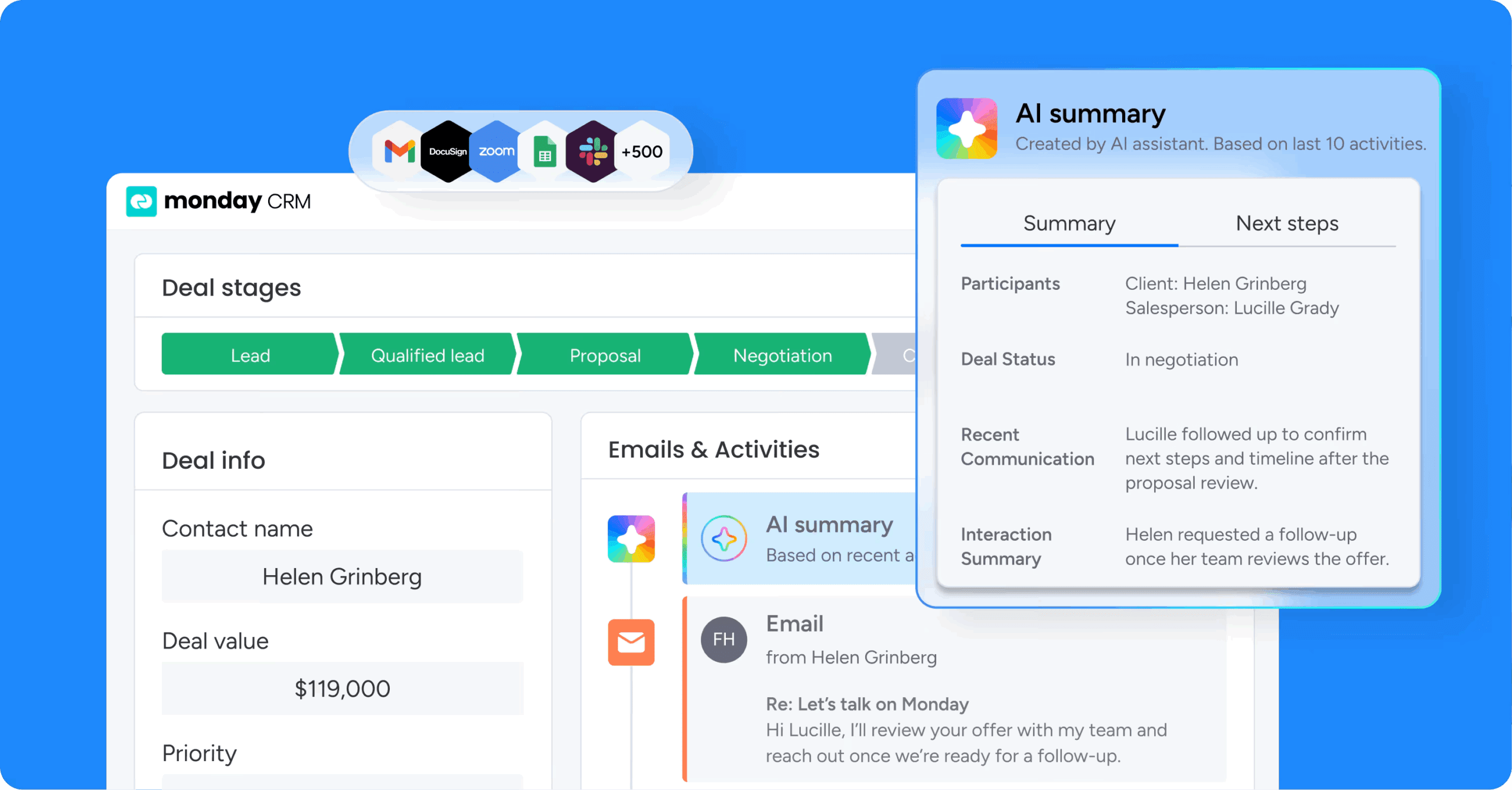
This is also where AI-powered account summaries can help. In monday CRM, teams can use AI to summarize communication history across emails, calls, meetings, and notes, giving reps the context they need before discovery calls.
What happens during discovery:
- Uncover pain points: Understand current processes and success metrics through discovery calls.
- Map the buying committee: Identify champions, influencers, and potential blockers.
- Deliver a tailored demo: Focus on solving their specific challenges.
- Address initial objections: Answer questions and concerns.
Exit criteria: Prospect confirms your solution addresses their needs and requests a proposal.
Example: A rep discovers the prospect’s team wastes 15 hours weekly on manual reporting. The demo shows how automated dashboards eliminate this work. The prospect asks for a formal proposal, advancing the deal.
Stage 4: Proposal
The proposal stage is where you lay out your offer: what you’re delivering, what it costs, and how long it takes. Prospects decide if you’re worth the money.
What happens during proposal:
- Create a customized proposal: Base it on discovery insights.
- Outline pricing and terms: Include contract details and deliverables.
- Present ROI calculations: Show success metrics and expected outcomes.
- Address stakeholder questions: Respond to finance, legal, and operations concerns.
Exit criteria: Prospect accepts the proposal or requests specific term negotiations.
Example: A rep submits a proposal showing 12-month ROI based on time savings and efficiency gains. The CFO reviews pricing, requests volume discounts, and the deal moves to negotiation.
Stage 5: Negotiation
Negotiation is where you hash out pricing, terms, and how the whole thing works. This stage is about finding a deal that works for both sides.
What happens during negotiation:
- Negotiate pricing and payment: Discuss contract length and payment schedules.
- Address legal and procurement concerns: Work with multiple stakeholders.
- Clarify implementation timelines: Set expectations for onboarding and support.
- Finalize terms: Reach agreement that works for both parties.
Exit criteria: Both parties agree on terms and prepare to sign.
Example: A prospect requests a 10% discount and quarterly payment terms instead of annual. After internal approval, the sales rep agrees, and both parties prepare signatures.
Stage 6: Closing the deal
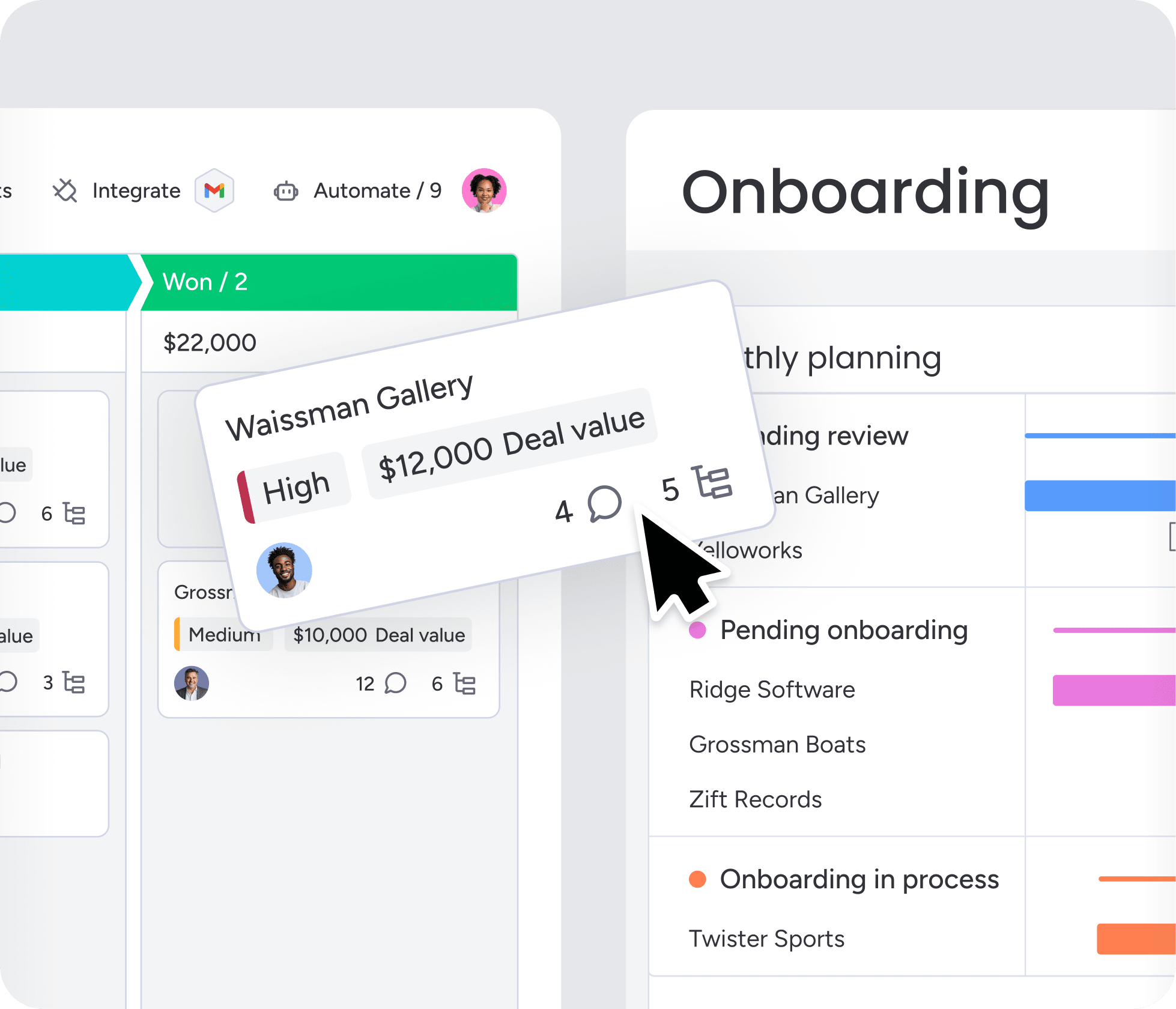
Closing is signatures, payment, and making them an official customer. This stage should be easy if you did the earlier work right.
What happens during closing:
- Send final contracts: Use e-signature tools for faster turnaround.
- Process payment: Set up billing and confirm payment.
- Confirm implementation date: Schedule the kickoff.
- Transfer to customer success: Pass context and expectations.
Exit criteria: Contract signed and payment confirmed.
Example: After final review, the prospect signs via e-signature. The rep logs the closed deal in the CRM, and customer success schedules the kickoff call.
Stage 7: Onboarding and expansion
Onboarding gets new customers up and running. Expansion is where you find opportunities to grow the account.
What happens during onboarding:
- Execute onboarding and training: Help customers achieve early wins.
- Monitor adoption: Track engagement and usage.
- Identify expansion opportunities: Find additional users, features, or use cases.
- Manage renewals: Ensure long-term success.
Exit criteria: Customer actively uses the solution and achieves measurable results.
Example: After onboarding, a customer successfully automates their reporting. Three months later, they expand to additional teams and upgrade their plan.
How to build and customize your B2B sales pipeline
Generic pipelines fail because every business sells differently. Customization makes your pipeline actually work instead of just looking good on paper. Here’s how to build one that works.
Step 1: Define your ideal customer profile and buyer personas
Before you build stages, know who you’re selling to. Your ICP defines target companies. Buyer personas define the people making decisions. Here’s what to do:
- Identify firmographic criteria: Industry, company size, revenue, geography, technology stack.
- Define buyer personas: Roles, responsibilities, pain points, goals, evaluation methods.
- Understand the buying committee: Who influences, approves, and uses your solution.
- Document common objections: What questions each persona raises.
Example: A SaaS company defines their ICP as mid-market manufacturers with 200-500 employees. Buyer personas include the vp of operations (economic buyer), it manager (technical evaluator), and operations director (end user).
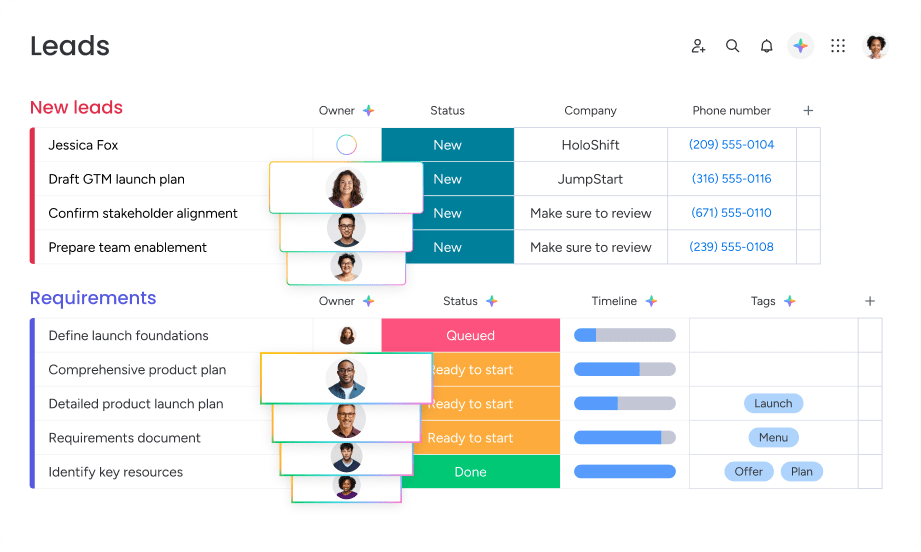
Step 2: Map your sales process to pipeline stages
Your pipeline stages should match how your team actually closes deals. Look at recent wins and losses to see how deals actually move.
Actions to take include:
- Review 10-20 recent deals: Document every step from first contact to close.
- Identify common patterns: Where do deals accelerate, stall, or drop?
- Eliminate unnecessary stages: Remove stages that don’t add value.
- Ensure meaningful progression: Each stage should represent real buyer advancement.
Fewer clear stages beat a bunch of vague ones. Aim for 5-8 stages maximum.
Step 3: Set stage exit criteria and time benchmarks
Every stage needs exit criteria — the specific actions required before a deal moves forward. Without them, deals drift and forecasts fall apart. Start here:
| Stage | Exit criteria | Time benchmark | Red flag threshold |
|---|---|---|---|
| Prospecting | Prospect agrees to discovery call | 7 days | 14 days |
| Qualification | Meets BANT criteria, agrees to deeper conversation | 10 days | 21 days |
| Discovery/Demo | Confirms solution fit, requests proposal | 14 days | 30 days |
| Proposal | Accepts proposal or requests negotiation | 14 days | 28 days |
| Negotiation | Terms agreed, ready to sign | 21 days | 45 days |
| Closing | Contract signed, payment confirmed | 7 days | 14 days |
For example, a sales team sets a 14-day benchmark for the Proposal stage. When deals exceed 21 days, the CRM alerts the sales manager to investigate.
Step 4: Build the pipeline in your CRM
Your B2B CRM brings your pipeline to life. Configure it to match your stages, exit criteria, and time benchmarks — so every rep runs the same process.
Actions to take include:
- Create custom pipeline stages: Match your sales process exactly.
- Set up required fields: Define requirements for each stage.
- Configure automated alerts: Flag deals exceeding time benchmarks.
- Integrate with other tools: Connect email, calendar, and marketing automation.
Revenue teams using monday CRM get drag-and-drop customization, automated alerts for aging deals, AI-powered communication summaries, and seamless integrations that keep pipeline activity connected.
Step 5: Train your team and standardize definitions
The best pipeline is useless if your team doesn’t use it. Reps need to know what each stage means, what actions to take, and how to keep the CRM updated.
Here’s what to do:
- Conduct training sessions: Explain stages, exit criteria, and expected behaviors.
- Create reference guides: Document stage definitions and examples.
- Establish review cadence: Schedule weekly or bi-weekly pipeline reviews.
- Hold reps accountable: Ensure accurate, timely pipeline updates.
B2B sales pipeline metrics that predict revenue
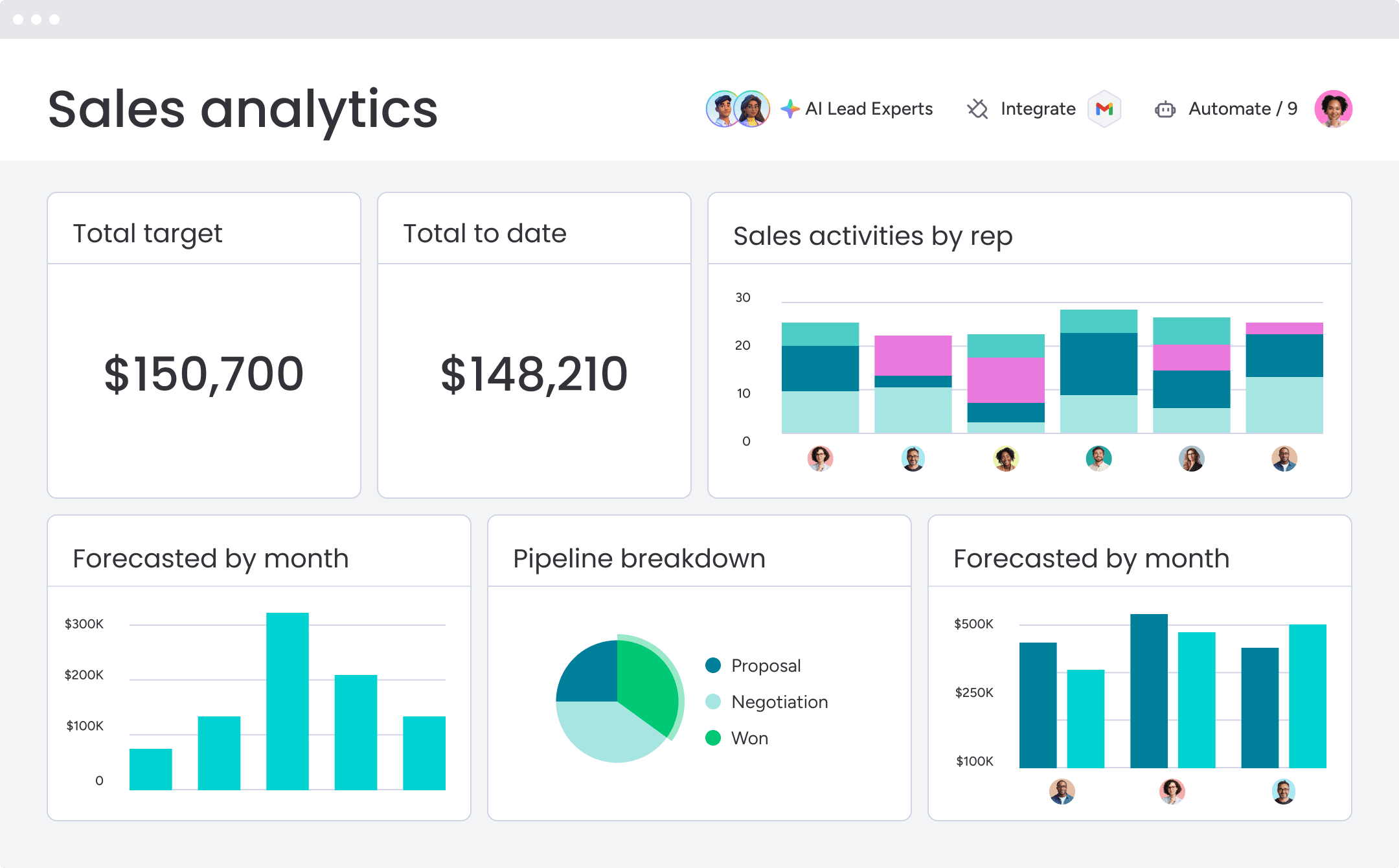
Building a pipeline isn’t enough. Effective pipeline management requires tracking sales metrics that reveal pipeline health, forecast accuracy, and coaching opportunities. These 3 metrics matter most.
Conversion rate between stages
Conversion rate is the percentage of deals that move from one stage to the next. It shows you where prospects bail and where your process breaks.
(Deals moved to next stage ÷ Deals in previous stage) × 100
Example: If 50 deals were in Qualification and 30 moved to Discovery, your conversion rate is 60%. If your benchmark is 70%, investigate why 20 deals stalled.
Sales velocity and deal age
Sales velocity tracks how fast deals move through your pipeline.
(Number of deals × Average deal size × Win rate) ÷ Average sales cycle length
Deal age tracks how long individual deals sit in the pipeline or a specific stage. Together, they show you where momentum builds or dies. AI-powered summaries and automated alerts can make this easier to act on by surfacing recent activity, missing follow-ups, and deals that have been sitting too long without movement.
Example: With $50K average deals, 25% win rate, and 90-day cycles, monthly sales velocity is approximately $139K. Shortening cycles to 75 days increases velocity to $167K (a 20% improvement without closing more deals).
Pipeline coverage and win rate
Pipeline coverage is your total pipeline value compared to your revenue target.
Total pipeline value ÷ Revenue target
Win rate is the percentage of deals you close.
(Closed-won deals ÷ Total opportunities) × 100
Track both to see if your pipeline is actually healthy.
Example: With a $500K quarterly target and $1.2M pipeline, your coverage ratio is 2.4:1 — below the healthy 3:1 benchmark. You need more pipeline or improved win rates to hit target.
How to manage buying groups across pipeline stages
B2B decisions usually involve 6-10 people (sometimes more). Each one cares about different things and has different levels of influence. You need a structured approach to navigate buying groups and move deals forward.
Map every stakeholder in the buying network
Start by mapping everyone involved: decision-makers, influencers, champions, blockers, and end users. Do this early and you’ll avoid surprises later.
- Ask during discovery: “Who else will evaluate this solution?”
- Identify roles: Economic buyer, technical buyer, end users, influencers.
- Document priorities: Each stakeholder’s concerns, success metrics, and influence level.
- Update continuously: New stakeholders often emerge during the sales process.
Teams leveraging monday CRM can track stakeholder engagement through the Emails & Activities timeline, logging every interaction with each contact in one centralized location.
Multi-thread relationships across the organization
Multi-threading is building relationships with multiple stakeholders instead of betting everything on one champion. If your only contact leaves or loses pull, your deal doesn’t die with them.
- Identify a champion: Find someone who advocates internally for your solution.
- Build direct relationships: Connect with economic buyers and technical evaluators.
- Engage influencers: Cultivate relationships with people who sway decisions.
- Leverage your champion: Use them to facilitate introductions to other stakeholders.
Coordinate handoffs between departments

As deals move forward, legal, finance, and procurement all get involved. Smooth handoffs keep deals moving and prevent delays.
- Anticipate involvement: Know when legal and finance need to review.
- Share proactively: Provide documents before they’re requested.
- Set up joint calls: Connect your team with the prospect’s cross-functional stakeholders.
- Track engagement: Use your CRM to monitor stakeholder involvement.
Learn more: B2B sales tips
Why teams choose monday CRM to manage B2B sales pipeline stages
Managing a complex B2B pipeline requires more than spreadsheets and good intentions. You need a system that adapts to how your team actually sells, surfaces the right information at the right time, and keeps everyone aligned without adding busywork. monday CRM gives revenue teams the visibility, automation, and flexibility to manage pipeline stages efficiently from first contact to close.
Here’s what makes monday CRM effective for pipeline management:
- Drag-and-drop pipeline customization: Build stages that match your sales process exactly — no rigid templates or forced workflows.
- Automated deal alerts: Get notified when deals exceed time benchmarks or sit idle too long, so you can intervene before opportunities die.
- AI-powered account summaries: Surface communication history, recent activity, and key context instantly — so reps walk into every call prepared.
- Real-time pipeline visibility: Sales leaders see deal status, stage progression, and team performance in one centralized view.
- Stakeholder tracking: Log every interaction with buying committee members through the Emails & Activities timeline, keeping multi-threaded relationships organized.
- Seamless integrations: Connect email, calendar, marketing automation, and other tools to keep pipeline activity flowing without manual data entry.
Revenue teams using monday CRM spend less time updating systems and more time closing deals. The platform handles the operational overhead — tracking, alerting, summarizing — so reps can focus on relationships and revenue.
Build your pipeline once, win deals consistently
A well-built B2B sales pipeline turns guesswork into predictable revenue. When your stages are defined with clear exit criteria, your team knows exactly what moves deals forward — and you can spot problems before they kill opportunities. The result: faster cycles, accurate forecasts, and consistent quota attainment.
monday CRM gives you the visibility and automation to manage pipeline stages without the busywork. Build custom stages that match how you sell, get alerts when deals stall, and use AI to surface the context your reps need before every call. Try monday CRM and see how the right system makes pipeline management actually work.
Try monday CRM B2B sales pipeline
“With monday CRM, we’re finally able to adapt the platform to our needs — not the other way around. It gives us the flexibility to work smarter, cut costs, save time, and scale with confidence.”
Samuel Lobao | Contract Administrator & Special Projects, Strategix
“Now we have a lot less data, but it’s quality data. That change allows us to use AI confidently, without second-guessing the outputs.”
Elizabeth Gerbel | CEO
“Without monday CRM, we’d be chasing updates and fixing errors. Now we’re focused on growing the program — not just keeping up with it."
Quentin Williams | Head of Dropship, Freedom Furniture
“There’s probably about a 70% increase in efficiency in regards to the admin tasks that were removed and automated, which is a huge win for us.“
Kyle Dorman | Department Manager - Operations, Ray White
"monday CRM helps us make sure the right people have immediate visibility into the information they need so we're not wasting time."
Luca Pope | Global Client Solutions Manager at Black Mountain
“In a couple of weeks, all of the team members were using monday CRM fully. The automations and the many integrations, make monday CRM the best CRM in the market right now.”
Nuno Godinho | CIO at Velv
“monday.com provides developmental flexibility, operational efficiency, and data transparency — all in one place. We became a company that moved from chasing data to leading with it.”
Hyunghan Lee | Team Lead, Sandbox Network
"monday.com brought every part of our business into one connected space. The harmony between work management and CRM has become our operating system — giving us the clarity and confidence to scale.”
Jennifer Chinburg | Executive Vice President of Corporate Development & Brand, Chinburg Properties
“We just weren’t getting value from our old CRM. With monday.com, it's a thousand times better. Our sales teams are more informed, more consistent, and far more connected."
James Arnold | Chief Operating Officer, CenversaFAQs
What are the typical stages of a B2B sales pipeline?
The typical B2B sales pipeline stages are prospecting, lead qualification, discovery and demo, proposal, negotiation, closing the deal, and onboarding/account expansion. Most organizations customize these stages to match their specific sales process and buyer journey.
How is a B2B sales pipeline different from a B2B sales funnel?
A B2B sales pipeline tracks individual deals and their progress through stages from the seller's perspective. A B2B sales funnel tracks the aggregate volume of prospects at each stage for conversion optimization.
How long should a B2B sales cycle take?
B2B sales cycle length varies by deal size, industry, and complexity. SMB deals often close in 30-60 days, mid-market deals typically take 60-120 days, and enterprise deals can take 6-12 months or longer.
What metrics should I track for B2B sales pipeline management?
Track key B2B sales metrics like conversion rate between stages, sales velocity, deal age, pipeline coverage ratio, win rate, and average deal size. These metrics predict future revenue rather than just reporting past performance.
How do I improve conversion rates between pipeline stages?
Identify which stage has the lowest conversion rate, then analyze why deals drop off. Common fixes include refining qualification criteria, improving discovery questions, strengthening proposals with ROI data, and multi-threading stakeholders.
What is multi-threading in B2B sales?
Multi-threading means building relationships with multiple stakeholders in a prospect's organization rather than relying on one champion. This approach reduces risk and ensures deals survive organizational changes.
