


What if you could identify your best prospects in the first conversation and focus your team’s energy on deals that actually close? BANT — Budget, Authority, Need, and Timeline — is a proven qualification framework that helps sales teams prioritize opportunities strategically, turning discovery calls into clear qualification insights that drive revenue.
This guide shows you how to apply each BANT element naturally in sales conversations, with 20 trust-building discovery questions and practical ways to automate qualification in your CRM. You’ll learn how to score opportunities objectively, build BANT into your workflow, and create a consistent qualification process that helps your team close more deals faster.
Key takeaways
- Lead qualification conversations by exploring business problems first — this builds trust and naturally opens doors to budget, authority, and timeline discussions.
- Deals stall when you’re talking to the wrong people, so identify decision-makers, influencers, and champions before investing significant time in the opportunity.
- Qualified prospects have specific business events driving their timeline — contract renewals, compliance deadlines, or growth milestones create real urgency.
- Use AI-powered tools and custom fields to automatically extract qualification signals from calls and emails, turning manual note-taking into structured sales intelligence.
- Rate BANT confidence on a simple scale to make qualification decisions based on evidence, not gut feelings.
What does BANT stand for in sales?
BANT stands for Budget, Authority, Need, and Timeline. It’s a framework that helps revenue teams figure out which prospects deserve their time. Each letter represents a key factor in whether a lead can actually become a paying customer.
Sales teams use BANT to prioritize BANT qualified leads by assessing these 4 elements before investing significant hours in the sales process. IBM developed this framework decades ago, but BANT remains relevant when applied flexibly. The key is treating it like a conversation guide, not a rigid checklist that turns discovery calls into interrogations.
1. Budget
Budget refers to the prospect’s financial capacity and willingness to invest in a solution. This isn’t just about whether the company has money. It’s about whether funds are allocated, accessible, and prioritized for this type of purchase.
Understanding budget means exploring investment ranges, approval processes, and whether funds are set aside or need a business case. A prospect with $50K allocated for sales solutions this quarter represents a very different qualification scenario than one who needs to build a case for next year’s budget cycle.
Budget qualification tells you about timing and urgency, too. When funds are already approved and budgeted, deals move faster. When budget requires executive approval or fiscal year planning, the sales cycle extends accordingly.
2. Authority
Authority means identifying who has decision-making power and influence over the purchase. In B2B sales, there’s usually a buying committee with different roles and priorities. Understanding authority means knowing these key roles:
- Decision-makers: Give final approval
- Influencers: Shape the decision through recommendations or requirements
- Champions: Advocate internally for your solution
Mapping the entire buying committee matters more in target account selling than finding one enthusiastic contact. An SDR might initially connect with a sales manager who loves the product, but the VP of Sales and CFO both need to approve any purchase over $25K. Knowing this early changes your entire sales approach — who you invite to demos, how you frame ROI, everything.
3. Need
Need is the business problem, pain point, or goal pushing the prospect to look for a solution. Qualifying need means understanding the problem and how it stacks up against other priorities competing for time and budget.
Surface-level needs are different from the real business impact. “We need a CRM” tells you almost nothing. “Our sales team misses 30% of follow-ups, costing us deals worth $200K monthly” tells you everything.
Quantifiable needs with measurable consequences mean stronger qualification — they create urgency and make the investment easier to justify. A company experiencing 40% annual growth while struggling to track deals in spreadsheets has a more urgent, qualified need than a company casually exploring CRM options without specific pain points.
4. Timeline
Timeline shows when the prospect plans to decide and implement. This tells you about urgency, priority, and whether the timing works for your sales cycle.
Timeline ties to business triggers — contract renewals, fiscal year planning, new hires, compliance deadlines, growth milestones. These triggers create real deadlines that force decisions. “Just looking” or “no timeline” often signals low qualification because nothing is forcing a decision.
A prospect whose current CRM contract expires in 60 days and who’s frustrated with the platform represents a time-bound opportunity with built-in urgency. Someone exploring options “sometime this year” without specific drivers may never move forward, or may take 18 months to decide.
Why sales teams use the BANT framework
Sales teams face more sales leads than they can realistically pursue with equal attention. BANT provides a systematic way to identify which opportunities deserve immediate focus versus which should be nurtured over time or disqualified entirely. This framework gives you key benefits that change how revenue teams work:
- Resource allocation becomes strategic when BANT guides decisions. Sales leaders can deploy their team’s time intentionally, ensuring senior reps focus on high-value, well-qualified opportunities while less-qualified leads receive appropriate nurturing sequences or SDR attention. This keeps experienced closers from wasting time on unqualified deals.
- Forecast accuracy improves dramatically with consistent BANT qualification. Deals advance based on verified criteria, not gut feelings or wishful thinking. When you know budget exists, decision-makers are engaged, need is quantified, and timeline is defined, forecast confidence increases.
- Sales and marketing alignment strengthens through shared qualification language. BANT creates common criteria for defining “qualified leads,” reducing friction over lead quality and handoff standards. When both teams agree on what ‘qualified’ means — budget confirmed, authority mapped, need validated, timeline within 90 days — handoffs get easier.
6 steps to apply BANT in your sales process
BANT qualification isn’t about interrogating prospects with a checklist. The goal is weaving discovery into sales conversations naturally — building trust while gathering what you need to qualify smart. These 6 steps give you a system that feels consultative, not transactional.
Step 1: Lead with need discovery
Starting with Need instead of following B-A-N-T order makes conversations feel more natural and consultative. Asking about problems and goals feels collaborative, not transactional. You’re showing you want to help them solve a real business problem.
Starting with need discovery builds a foundation of trust and naturally opens doors to the other BANT elements. Understanding the core problem makes it easier to explore how it impacts the business and who is responsible for solving it.
- Discussing impact leads to budget conversations
- Identifying stakeholders reveals authority structures
- Understanding consequences surfaces timeline urgency
Step 2: Map the buying committee
Once you understand the need, figure out who’s involved in the decision. Deals stall when you’re talking to the wrong people or missing stakeholders who show up late with objections.
Mapping the committee means asking your contact specific questions:
- Who else cares about this problem?
- Who needs to approve the purchase?
- Who will use the solution daily?
- Who might resist change?
Understanding each stakeholder’s role, concerns, and influence helps you tailor your pitch and spot blockers early.
Step 3: Uncover budget realities
After you’ve established need and authority, budget conversations feel more natural — you’ve built context and credibility. The prospect knows you’re trying to solve a real problem, not just qualify them for your pipeline.
| Budget discovery approach | What it reveals | Example phrasing |
|---|---|---|
| Investment range framing | Whether your solution fits their expected spend | Companies solving similar challenges typically invest between $30K and $75K annually. Does that align with your planning? |
| Historical funding patterns | How they've handled similar purchases | How have you funded similar initiatives in the past? |
| Approval process mapping | Who controls budget and what's required | Is budget already set aside for this, or would we need to build a business case? |
| ROI expectations | What return they need to justify investment | What kind of return would make this investment worthwhile? |
| Timing of funds | Whether money is available now or later | Is this something you'd fund this quarter, or is it a next fiscal year conversation? |
Step 4: Identify timeline triggers
Timeline qualification is about understanding not just when they want to buy, but why that timing matters. Business triggers are what create real urgency. Vague timelines usually mean low priority or weak commitment.
| Timeline type | Characteristics | Qualification strength |
|---|---|---|
| Event-driven | Tied to contract expiration, compliance deadline, or business milestone | Strong: external pressure creates urgency |
| Calendar-based | We want to decide by Q2" without specific driver | Moderate: intention exists but may slip |
| Budget-driven | We need to use remaining budget before fiscal year ends | Strong: financial pressure creates urgency |
| Growth-driven | We're hiring 20 reps and need systems in place | Strong: business change forces action |
| Exploratory | Just looking" or "sometime this year" | Weak: no forcing function |
Step 5: Score confidence levels
After gathering BANT info, rate your confidence in each element. This makes qualification more objective and shows you where you need more discovery. A simple scoring approach rates each BANT component as high, medium, or low based on what you’ve learned.
Strong evidence looks different for each element:
- Budget: Specific numbers discussed, approval process understood, funds confirmed as allocated
- Authority: Multiple stakeholders identified by name and role, decision process mapped with specific steps
- Need: Business impact quantified with specific metrics, consequences of inaction acknowledged
- Timeline: Specific drivers identified and validated, urgency confirmed through business events
Step 6: Plan next actions based on BANT scores
BANT qualification should tell you exactly what to do next based on what you’ve learned. What you learn from qualification shapes your sales strategy and how you allocate resources.
| BANT score pattern | Recommended action | Resource allocation |
|---|---|---|
| Strong across all 4 elements | Advance aggressively toward close | Senior rep involvement, executive engagement, priority scheduling |
| Strong need/timeline, weak authority | Focus on stakeholder mapping and introductions | Multi-stakeholder demo, champion coaching |
| Strong authority/need, weak budget | Develop ROI business case | Value engineering, customer references |
| Strong budget/authority, weak need | Deeper discovery on problem and impact | Discovery call, pain point validation |
| Weak across multiple elements | Nurture or disqualify | Marketing sequences, periodic check-ins, or respectful exit |
20 BANT discovery questions that build trust
Good BANT qualification comes down to asking thoughtful questions that feel consultative, not like an interrogation. These questions uncover what you need to know while building rapport and showing you get the prospect’s world. Each question helps you gather BANT data without making prospects feel interrogated.
5 budget questions that uncover opportunity
These questions get at budget and approval without being pushy:
- “How have you funded similar initiatives in the past?” This shows whether they have a budget process for this kind of purchase.
- “Companies solving similar challenges typically invest between X and Y. Does that align with your planning?” Giving them a range feels less pushy.
- “Is this something you’d fund from existing budget, or would it require a new line item?” This tells you whether funds are already set aside or need approval.
- “What would need to be true for this investment to get approved?” This shows you the approval process and who’s involved.
- “What ROI would make this investment a win for you?” Understanding their success metrics helps you frame value the right way.
5 authority questions that map decisions
Use these questions to find decision-makers and understand the approval process:
- “Who else would need to be excited about this for it to move forward?” This helps you find both the formal decision-makers and the informal influencers.
- “Walk me through how decisions like this typically get made at your company.” This shows you the process, timeline, and who’s involved.
- “If you decided this was the right solution, what would happen next?” This surfaces the steps between “yes” and signed contract.
- “Who might have concerns about making a change like this?” This helps you spot potential blockers early.
- “Is there anyone else who should be part of our next conversation?” It’s a direct but respectful way to expand your access.
5 need questions that quantify impact
These questions help prospects explain the business value of solving their problem:
- “What’s this problem costing you in terms of lost revenue, wasted time, or missed opportunities?” Quantifying impact helps prospects explain ROI.
- “What happens if this doesn’t get solved in the next 6-12 months?” This shows what happens if they don’t act.
- “What have you tried before to address this, and why didn’t it work?” Understanding what they’ve tried before shows you what they’re really looking for.
- “How does this problem affect your team’s ability to hit their goals?” Connecting the problem to business goals makes the conversation more strategic.
- “If you could wave a magic wand and fix one thing about your current process, what would it be?” This usually gets at the core need.
5 timeline questions that find urgency
These questions show whether timeline is driven by real business events or just casual browsing:
- “What’s driving the timing on this?” A direct question that shows whether their timeline is tied to real business events.
- “What happens if this isn’t in place by the timeframe you mentioned?” This tells you whether their timeline actually matters.
- “Are there any upcoming events or deadlines that make solving this more urgent?” This uncovers triggers you might’ve missed.
- “What could accelerate your timeline, and what might slow it down?” Understanding both sides helps you spot opportunities to move faster.
- “If we could have you up and running in a specific timeframe, would that work for your needs?” This tests whether your implementation timeline works for them.
How to automate BANT with AI and data
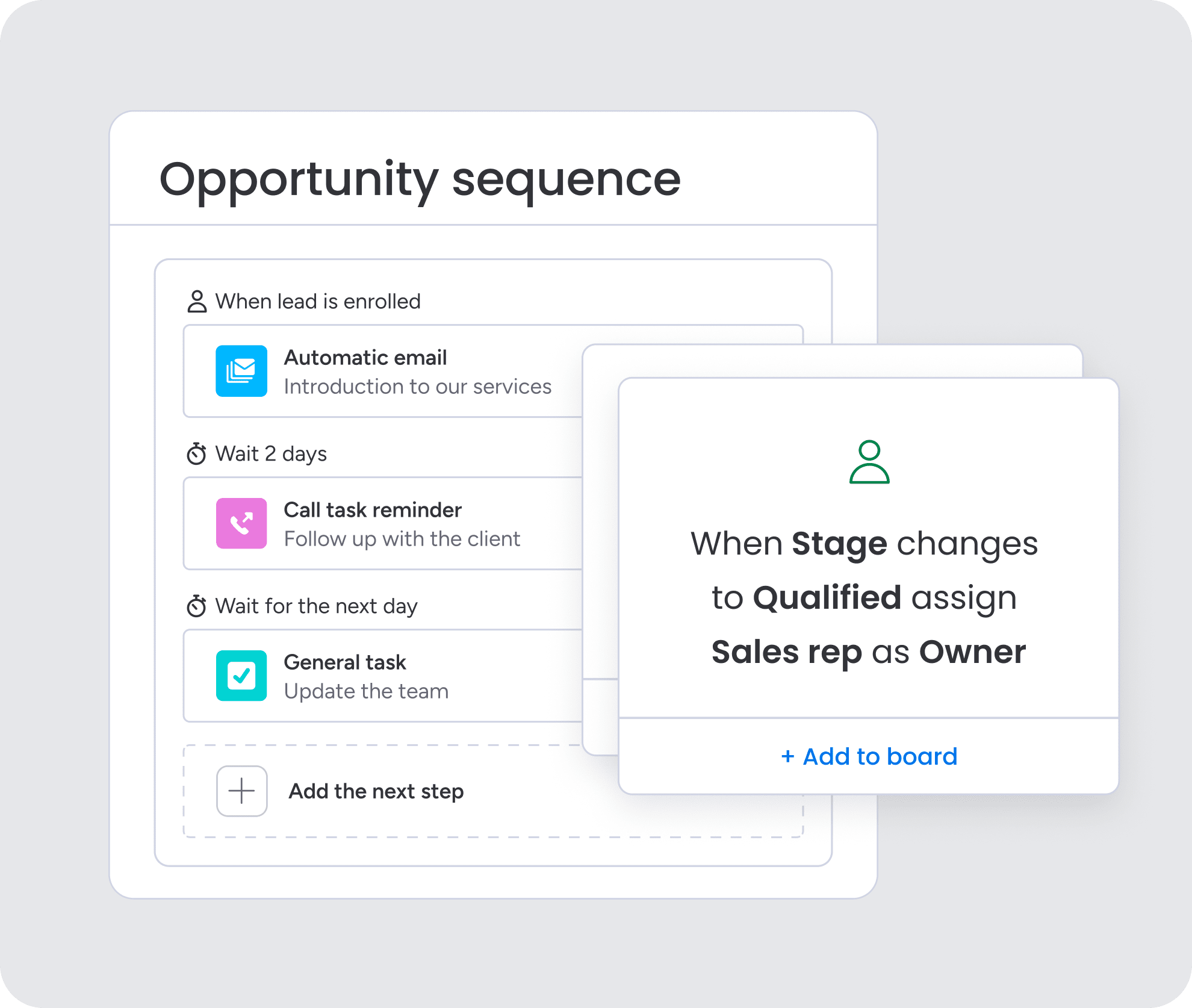
Automating qualification creates a more efficient and consistent process for your sales team. Sales automation can automate data gathering, surface qualification signals, and prompt reps to fill gaps. Sales teams need systems that cut manual work without sacrificing accuracy.
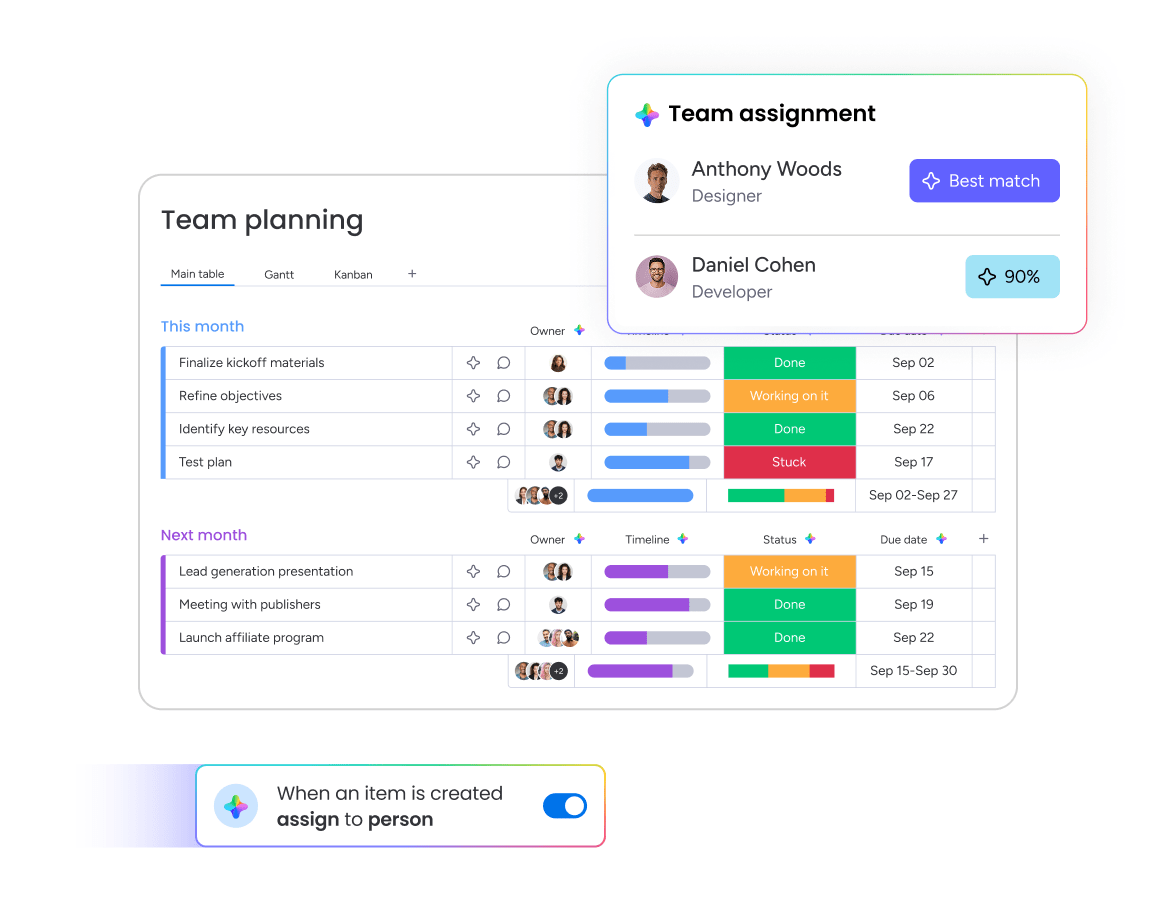
Revenue teams using monday CRM can use AI to cut manual qualification work without losing accuracy. The AI Timeline Summary creates a short summary of all communication events, including emails, calls, meetings, and notes. This saves sales teams time when reviewing account history and spotting BANT signals from past conversations.
AI Autofill capabilities can extract information, summarize notes, detect sentiment, and assign labels based on communication data. This turns qualification from manual note-taking into structured signals teams can act on right away.
| Automation type | What it does | BANT impact |
|---|---|---|
| Data enrichment | Appends firmographic and technographic data | Pre-qualifies budget potential and need signals |
| Conversation intelligence | Transcribes and analyzes sales calls | Captures BANT elements automatically |
| Predictive scoring | Identifies patterns in won/lost deals | Prioritizes opportunities by qualification strength |
| Workflow automation | Triggers actions based on qualification status | Routes leads, prompts discovery, alerts managers |
| AI-assisted research | Surfaces relevant prospect information | Identifies authority structures and business triggers |
How to build BANT into your CRM workflow
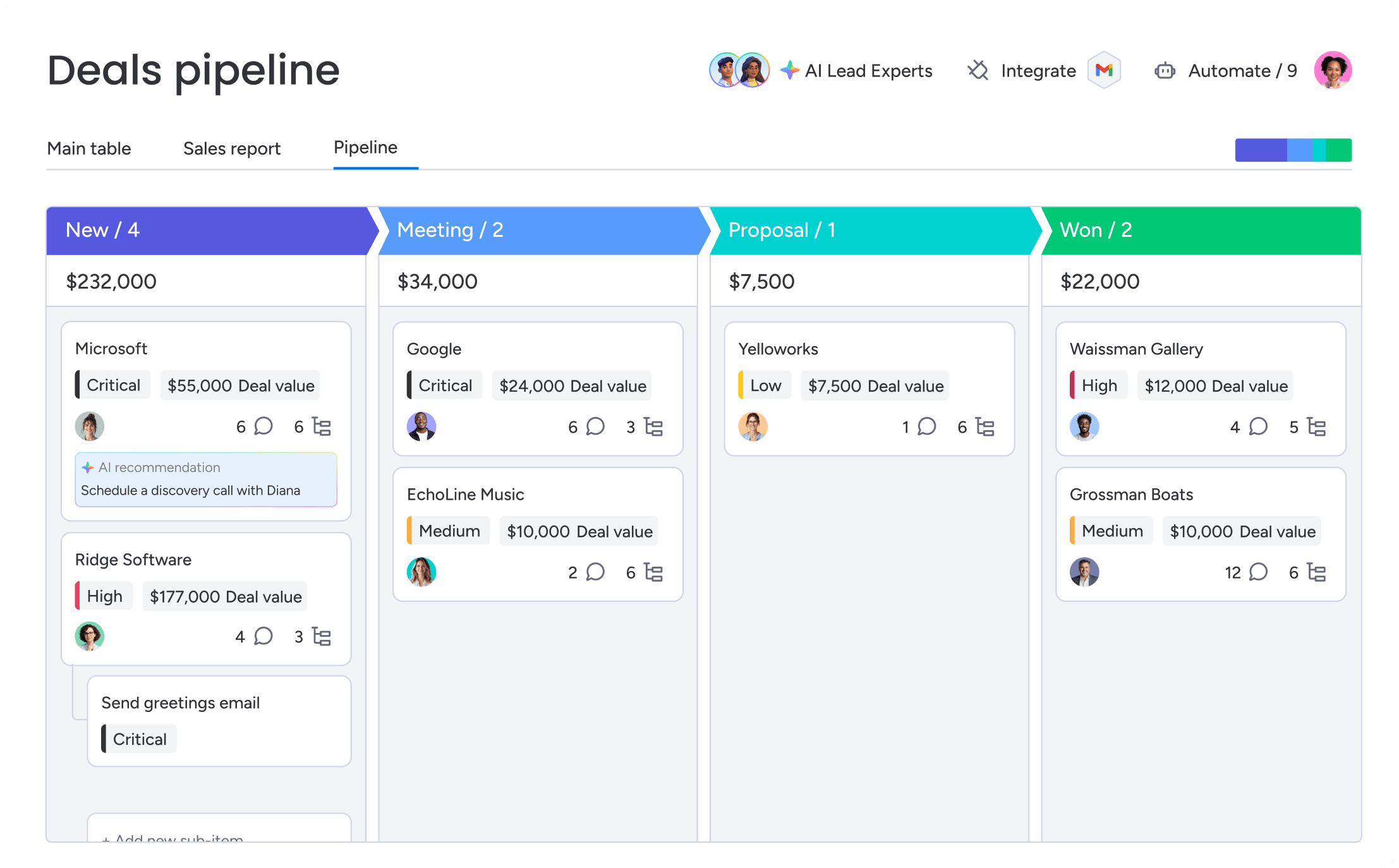
Good BANT qualification needs systematic documentation and visibility. Integrating BANT into CRM workflows keeps things consistent, prevents lost info, and helps you make data-driven qualification calls. The right CRM structure makes BANT work across your entire revenue team.
Create dynamic BANT fields
Structuring BANT in your CRM means creating dedicated fields for each element — fields that capture both qualitative info and quantitative scores. Fields should be easy to update, visible to everyone, and set up for reporting.
| BANT element | Data fields | Purpose |
|---|---|---|
| Budget | Amount range, approval status, decision date, budget process notes | Track financial qualification and approval path |
| Authority | Stakeholder list with roles, decision-maker identification, buying committee map | Document who's involved and how decisions get made |
| Need | Problem description, business impact metrics, priority level, success criteria | Capture the "why" behind the opportunity |
| Timeline | Target decision date, timeline drivers, urgency indicators, next milestone | Track when and why timing matters |
Automate lead scoring
CRM systems can auto-calculate lead scores based on BANT fields, weighting each element by what predicts success in your sales process. Scores trigger automatic prioritization:
- High scores route to senior reps
- Moderate scores trigger gap-filling prompts
- Low scores route to nurture sequences
Design real-time dashboards
Good BANT dashboards show how qualification breaks down across your pipeline. Key components:
- Pipeline health views: Percentage of opportunities with high/medium/low confidence in each BANT element
- Qualification gap analysis: Where reps need more discovery
- Forecast confidence: Grouping deals by BANT strength
Enable team collaboration
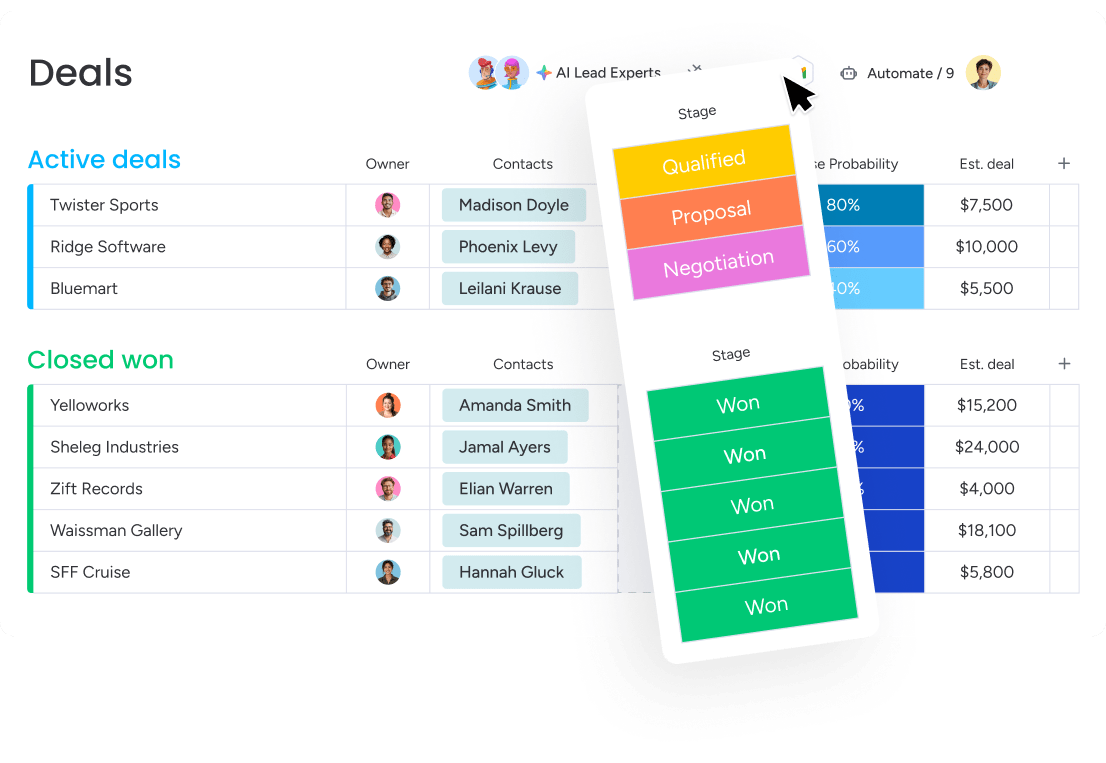
In complex deals, multiple team members often interact with different stakeholders. monday CRM enables teams to log and track every interaction in one timeline. This centralized approach ensures everyone can contribute qualification intelligence and see what others have learned, making BANT a team effort rather than individual rep responsibility.
Transform your qualification process with monday CRM
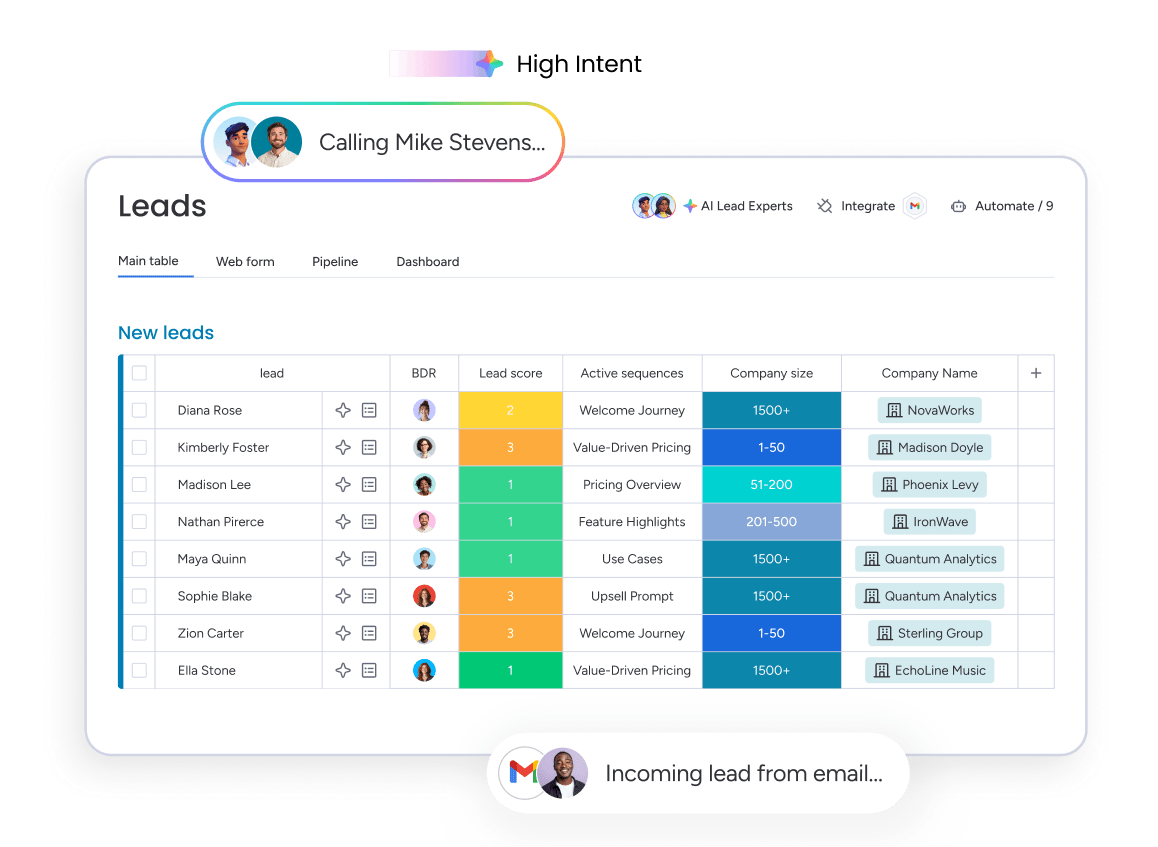
Revenue teams using monday CRM gain a unified platform for applying BANT qualification consistently across every opportunity. The platform centralizes qualification data, automates scoring, and makes BANT intelligence visible to everyone who needs it.
Custom fields capture the specific qualification data that matters for your business. Create dedicated columns for budget ranges, stakeholder maps, need descriptions, and timeline drivers, all visible on deal records and automatically included in pipeline views. This structure keeps all qualification intelligence centralized and accessible throughout the sales cycle.
The Emails & Activities feature logs all communication in one timeline, so BANT context stays attached to the account, contact, or deal. AI capabilities help reps gather and document BANT information more efficiently. The AI Timeline Summary generates concise summaries of communication history, helping reps and managers review qualification context faster.
Real-time dashboards show qualification distribution across your pipeline at a glance. See which deals have strong BANT scores, identify where qualification gaps exist, and spot coaching opportunities before they become forecast misses. Managers get objective data for pipeline reviews rather than relying on rep optimism.

“With monday CRM, we’re finally able to adapt the platform to our needs — not the other way around. It gives us the flexibility to work smarter, cut costs, save time, and scale with confidence.”
Samuel Lobao | Contract Administrator & Special Projects, Strategix
“Now we have a lot less data, but it’s quality data. That change allows us to use AI confidently, without second-guessing the outputs.”
Elizabeth Gerbel | CEO
“Without monday CRM, we’d be chasing updates and fixing errors. Now we’re focused on growing the program — not just keeping up with it."
Quentin Williams | Head of Dropship, Freedom Furniture
“There’s probably about a 70% increase in efficiency in regards to the admin tasks that were removed and automated, which is a huge win for us.“
Kyle Dorman | Department Manager - Operations, Ray White
"monday CRM helps us make sure the right people have immediate visibility into the information they need so we're not wasting time."
Luca Pope | Global Client Solutions Manager at Black Mountain
“In a couple of weeks, all of the team members were using monday CRM fully. The automations and the many integrations, make monday CRM the best CRM in the market right now.”
Nuno Godinho | CIO at Velv
“monday.com provides developmental flexibility, operational efficiency, and data transparency — all in one place. We became a company that moved from chasing data to leading with it.”
Hyunghan Lee | Team Lead, Sandbox Network
"monday.com brought every part of our business into one connected space. The harmony between work management and CRM has become our operating system — giving us the clarity and confidence to scale.”
Jennifer Chinburg | Executive Vice President of Corporate Development & Brand, Chinburg Properties
“We just weren’t getting value from our old CRM. With monday.com, it's a thousand times better. Our sales teams are more informed, more consistent, and far more connected."
James Arnold | Chief Operating Officer, CenversaStart qualifying smarter with BANT
BANT qualification transforms how revenue teams prioritize opportunities by providing a systematic framework for evaluating budget, authority, need, and timeline. When you apply BANT conversationally, automate data capture with AI, and build qualification into your CRM workflow, you create a consistent process that helps your team focus on deals that actually close while nurturing opportunities that need more time.
With monday CRM, you gain the tools to implement BANT qualification at scale — custom fields that capture what matters, AI that extracts signals automatically, and dashboards that show qualification strength across your entire pipeline. Start building a qualification process that drives predictable revenue growth.
Try monday CRMFAQs
Is BANT still relevant for B2B sales?
BANT remains relevant when applied flexibly rather than as a rigid checklist. Teams adapt the framework to fit consultative selling approaches by leading with need discovery, mapping buying committees, and using technology to automate qualification data capture.
What's the difference between BANT and MEDDIC?
BANT provides a simpler 4-element qualification framework suitable for small to mid-market deals with shorter sales cycles. MEDDIC offers more comprehensive qualification for complex enterprise sales with quantified metrics, explicit champion development, and detailed decision process mapping.
How do you ask BANT questions without sounding pushy?
Effective BANT discovery feels consultative by leading with need-focused questions and framing budget questions around investment ranges. Explore authority by asking how decisions typically get made, and uncover timeline by asking what's driving timing rather than pushing for commitment dates.
How do you score BANT qualification objectively?
Create a scoring system that rates each BANT element on a 0-3 scale based on evidence quality. Zero means no information, 1 means weak evidence, 2 means moderate confidence with specific information shared, and 3 means strong verification through multiple sources.
What CRM features help with BANT qualification?
Effective CRM platforms for BANT qualification include custom fields for capturing each element, automated lead scoring based on defined criteria, real-time dashboards showing qualification distribution, and workflow automation that prompts reps to gather missing information.
