


Your marketing team just spent three weeks building a campaign launch plan. Sales created detailed lead scoring criteria. Operations mapped out project workflows, and IT documented their ticket triage process. Each department has their playbook, but when it’s time to execute, everything still requires manual handoffs and constant follow-ups. The work gets done, but teams spend more time coordinating than creating value. This coordination overhead hits every organization scaling beyond startup size. Teams know what needs to happen, but executing consistently across departments while maintaining quality and speed remains a persistent challenge.
We’ll walk through the complete AI adoption journey, from initial awareness to enterprise-wide deployment. You’ll explore the five stages of AI maturity, common roadblocks, and department-specific strategies for scaling AI. You’ll also see how a work management platform with centralized data accelerates adoption, and how monday agents need organizational context to work effectively.
Key takeaways
- Start with high-impact pilots in departments where pain is visible: Focus on IT ticket triage, PMO status reporting, or sales lead scoring where success is measurable and teams are eager for relief.
- Scale AI adoption across departments using a unified platform: Break down data silos so AI agents can see the full picture. Marketing agents need sales data, operations agents need project timelines.
- Build trust through transparency and control: Use audit trails, permission settings, and human approval checkpoints so teams feel confident about what AI agents can and cannot do.
- Move beyond individual AI experiments to operational integration: Graduate successful pilots into standard workflows with clear ownership, documented results, and defined rollout plans.
- Deploy monday AI agents that work alongside your existing workflows: Ready-made agents for research, reporting, and insights integrate directly into your current processes without requiring consultants or coding.
What is AI adoption?
AI adoption means embedding artificial intelligence into workflows, decision-making, and daily operations across teams and departments. It includes strategy, culture change, workforce readiness, and scaling from initial experiments to enterprise-wide deployment.
In practice, AI adoption looks different across organizations. It ranges from individual team members using AI assistants for content generation to entire departments deploying autonomous agents that handle lead scoring, ticket triage, or vendor research without constant oversight.
AI agents are autonomous software programs that perceive their environment, make decisions, and take actions to achieve specific goals within a workflow. They operate within defined permissions and guardrails, acting on behalf of teams while keeping people in control of strategy and judgment calls.
The distinction between “using AI” and truly adopting it matters. Sporadic use by a few individuals in one department is not adoption.
AI adoption means AI is built into how work gets planned, executed, and measured across the organization, not siloed in a single team or treated as an occasional experiment.
Why AI adoption matters for every organization
Organizations can’t afford to treat AI as optional. The pressure to deliver more with existing resources is intensifying, and competitors who embed AI into their operations are pulling ahead. Understanding the specific benefits helps you prioritize your AI adoption strategy and make the case internally.
Productivity gains across teams
AI automates repetitive work like status reporting, data entry, and request routing, freeing up team capacity for high-impact projects. According to Microsoft’s 2025 Work Trend Index, 29% of leaders and 20% of employees say AI saves them at least one hour per day at work. When these workflows shift to AI agents, team members reclaim hours every week to focus on strategic, high-impact work.
These gains multiply across departments. When marketing uses an AI agent to generate daily recaps of meetings and action items, operations uses a status reporting agent to distribute project updates, and IT uses a triage agent to classify and route every incoming ticket in seconds, the organizational impact multiplies far beyond any single team’s improvement.
Here’s the specific work AI handles:
- Status updates: Automatically generating project reports highlighting progress, risks, and blockers
- Risk detection: Flagging at-risk deadlines before they become crises
- Lead management: Scoring and routing incoming leads based on fit and intent signals
- Vendor analysis: Analyzing procurement requirements to prioritize supplier lists
Competitive advantage from early adoption
Organizations that adopt AI earlier build advantages that compound over time. Early adopters develop institutional knowledge about which AI applications deliver the most value. They train their teams to collaborate effectively with AI agents and create proprietary workflows that competitors can’t easily replicate.
The adoption gap between AI’s capabilities and how organizations actually use them remains significant. According to Gartner, just 15% of IT application leaders are considering, piloting, or deploying fully autonomous AI agents. Organizations that move to operational integration and cross-departmental scaling gain outsized advantages as the window for early adoption narrows.
Revenue growth and new business models
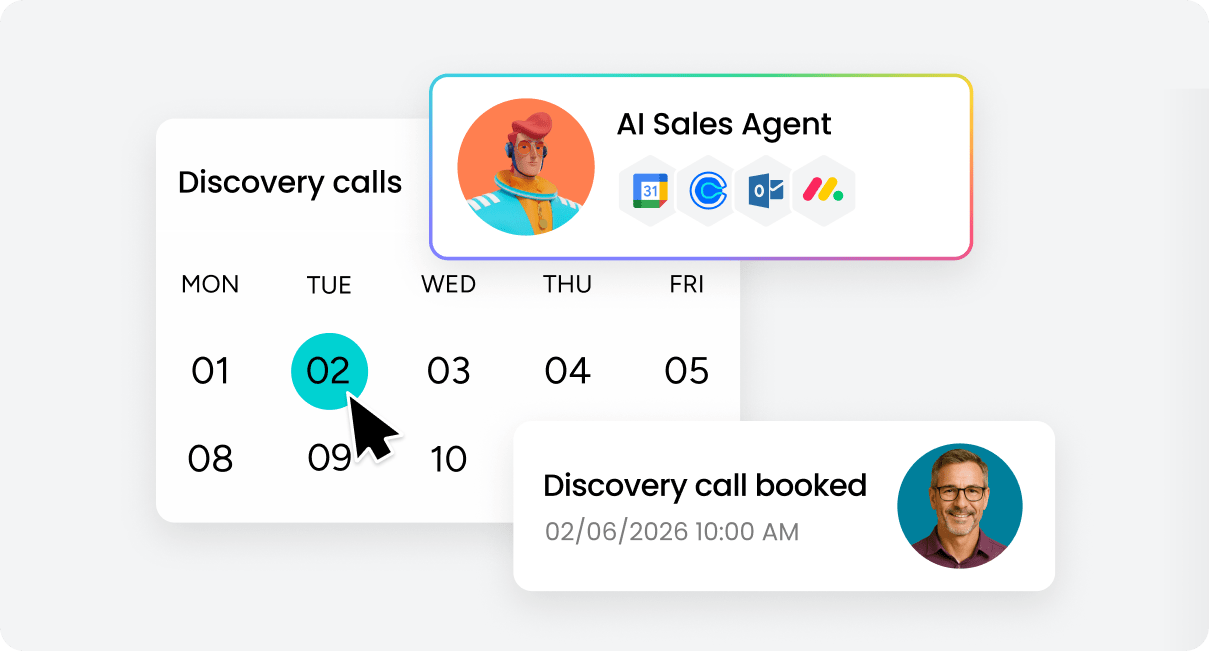
AI-powered insights help you identify market trends faster, respond to customer needs more precisely, and launch campaigns or products with shorter cycle times. AI agents continuously monitor competitive signals, analyze customer sentiment, and surface growth opportunities that would otherwise go unnoticed. They run 24/7 without volume or language constraints.
Organizations using AI agents for market analysis can spot new competitors, emerging technologies, and macro trends as they develop, not months later in quarterly reviews. monday agents continuously track your competitive environment and consolidate signals into structured insights. Goal tracking agents monitor metrics progress against targets and flag underperformance while there is still time to course-correct.
Try monday agentsAI adoption vs digital transformation vs automation
These three terms mean different things. Understanding the distinction helps with planning, budgeting, and setting realistic expectations. Each approach serves different needs and requires different levels of investment and change management.
| Dimension | Digital transformation | Automation | AI adoption |
|---|---|---|---|
| Definition | Broad organizational shift from analog or legacy processes to digital systems | Using technology to execute predefined, rule-based processes without human intervention | Integrating intelligent systems that learn, reason, and make decisions beyond fixed rules |
| Scope | Organization-wide: culture, processes, technology, business models | Specific workflows within existing processes | Workflows, decision-making, and operations across teams and departments |
| Primary goal | Modernize how the organization operates | Reduce manual effort on repetitive, predictable workflows | Amplify what teams can achieve by embedding intelligence into work |
| Role of AI | AI may be one component | AI is not required; rule-based logic drives execution | AI is the core capability; agents perceive, decide, and act |
AI adoption usually builds on existing digital transformation and automation efforts. Organizations that have already digitized workflows and automated routine processes can adopt AI faster. Their data is structured and accessible, giving AI agents the context they need to act effectively.
5 stages of AI adoption
Most organizations move through predictable stages of AI maturity. Understanding where you are helps you plan the next move without skipping critical foundations. Each stage builds on the previous one, creating a foundation for sustainable AI integration.
Stage 1: Awareness and exploration
Leadership and teams first recognize how AI could help their work. Executives read industry reports about agentic AI. Teams experiment with consumer AI assistants for individual productivity, summarizing documents, drafting emails, and brainstorming ideas.
Key activities at this stage include:
- Leadership education: Executives learn what AI can and cannot do, distinguishing hype from practical application
- Application identification: Teams brainstorm where AI could reduce manual effort or accelerate delivery
- High-value starting points: Status reporting, ticket triage, meeting summarization, lead scoring, and competitive research
Stage 2: Pilot and experimentation
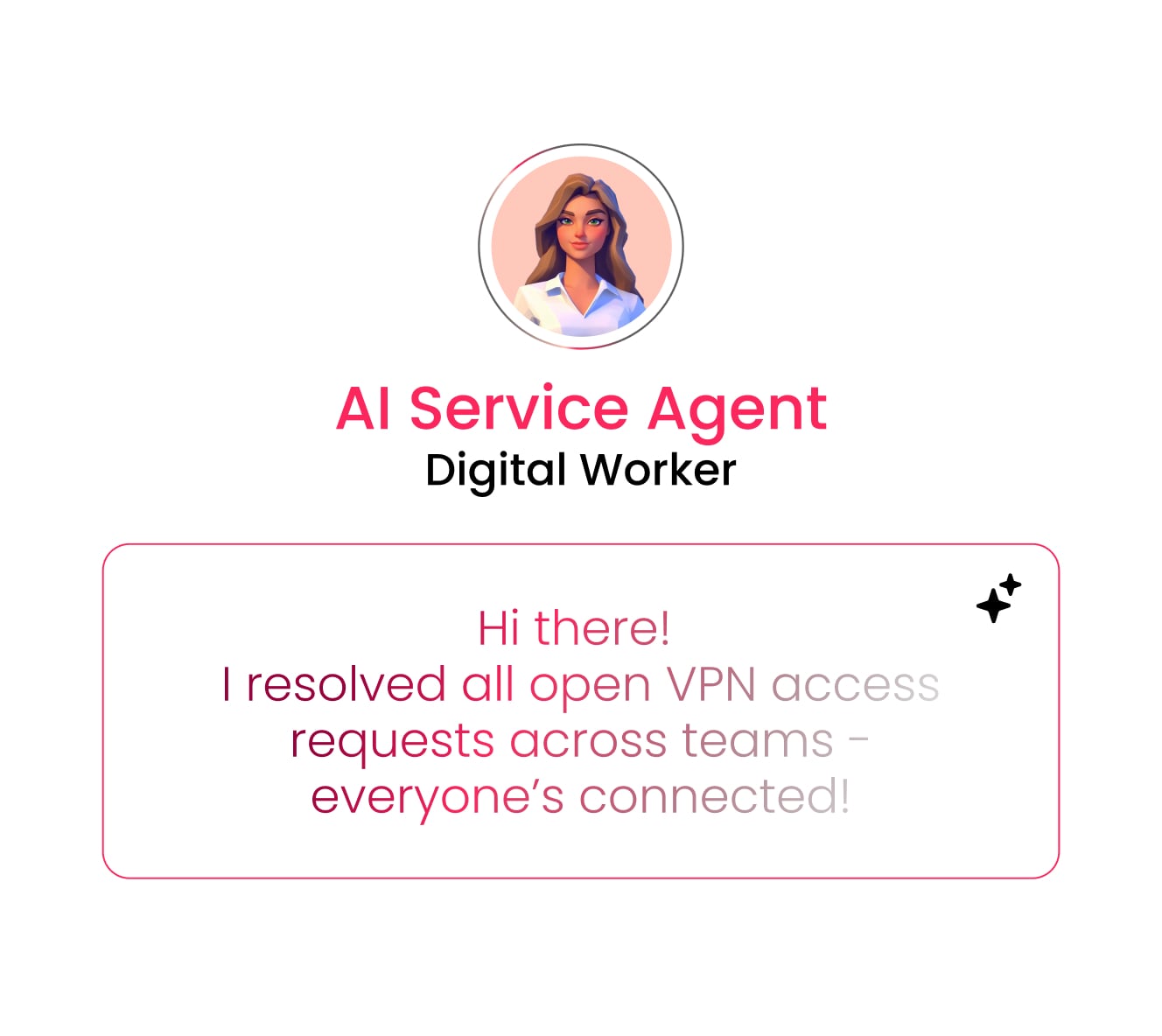
The organization picks one or two specific applications and runs controlled experiments. Successful pilots are narrow in scope but measurable in impact: using an AI agent to automatically triage IT support tickets for one team, deploying a meeting summarizer for the PMO department, or running a risk analyzer that flags items nearing their deadlines.
Strong pilots share common characteristics:
- Defined success criteria: The team agrees upfront on what “working” looks like, whether reduction in manual hours, faster response times, or improved accuracy
- Limited blast radius: Affecting a single team or workflow to minimize risk while generating real data
- Feedback loops: Team members provide regular input on what works, what fails, and what needs adjustment
- Executive sponsorship: A senior leader champions the pilot and ensures it receives adequate resources
Stage 3: Operational integration
Successful pilots become standard operating procedures. AI becomes part of how a team does its daily work. This requires formalizing the AI workflow: defining who owns the AI agent’s output, establishing escalation paths when the AI encounters edge cases, and integrating AI actions into existing project boards and reporting dashboards.
Key shifts at this stage include:
- Process redesign: Workflows are updated to include AI as a participant
- Intake process updates: Client requests now route through an AI agent that validates, categorizes, and assigns before a human reviews
- Governance establishment: Defining permissions, audit trails, and human-in-the-loop checkpoints so AI operates within controlled boundaries
Stage 4: Cross-departmental scaling
This is where AI adoption shifts from a single-team initiative to an organizational capability. Scaling across departments requires a shared data layer: AI agents in marketing need to see sales pipeline data, agents in operations need visibility into project timelines, and agents in HR need to understand headcount plans across business units.
Here’s where most organizations stall. The primary blocker isn’t technology but context fragmentation. When each department uses different systems, AI agents can’t connect the dots across the business. An agent helping marketing cannot anticipate a product delay that will derail a campaign if it cannot see the product development timeline.
Organizations that run their work on a unified platform can scale AI adoption significantly faster. When structured data spans marketing campaigns, sales pipelines, HR onboarding, IT tickets, and operations workflows, agents have the cross-departmental context they need.
Stage 5: Enterprise-wide optimization
This is where AI agents are embedded across every major function and operate as an extension of the workforce. Agentic workflows mean AI agents autonomously execute multi-step processes, from research to reporting to action, with human oversight at key decision points rather than at every step.
At this stage, executives have AI-powered control centers that surface risks, cost leaks, and strategic opportunities across the organization. Marketing teams launch campaigns with AI agents handling performance optimization and competitive monitoring. IT teams resolve tickets with intake and triage agents that classify, prioritize, route, and resolve common requests directly.
How to overcome the biggest AI adoption challenges
AI adoption isn’t a smooth, linear process. Every organization hits friction: trust concerns, data gaps, budget questions. Addressing these challenges proactively prevents stalled initiatives and builds momentum for company-wide adoption.
Build trust and transparency into AI systems
Trust is the single biggest barrier to AI adoption, and it shows up differently across the organization. Team members worry about job displacement. Managers worry about accountability when AI makes mistakes. Executives worry about compliance, data privacy, and reputational risk.
Practical mechanisms that build trust include:
- Audit trails: Every AI action is logged, showing what the agent did, why it did it, and what data it accessed
- Human-in-the-loop checkpoints: Critical decisions require human approval before the AI executes
- Permission controls: Administrators define exactly what each AI agent can access and whether it can read, create, or edit data
- Simulation mode: Teams test an AI agent’s behavior in a sandbox environment before activating it in production workflows
Address data readiness gaps
AI agents work only as well as the data they can access. Many organizations delay AI adoption because they believe they need “perfect data” first. A minimum viable data layer offers a more practical path: the smallest amount of structured, accessible data needed to run a meaningful AI pilot.
A minimum viable data layer includes:
- Structured workflows: Projects, processes, and requests are tracked in a consistent format with status, ownership, deadlines, and priorities
- Connected departments: Teams share data on a common platform so AI agents can see cross-functional context
- Clean naming conventions: Consistent labels for statuses, categories, and project types so AI agents can accurately interpret and act on data
Move from pilot to production
A common challenge is the “pilot trap,” where organizations run successful experiments but fail to scale them into production. McKinsey’s 2025 global AI survey found that nearly two-thirds of organizations have not begun scaling AI enterprise-wide, even as 62% report at least experimenting with AI agents. The gap between pilot and production is usually organizational, not technical: unclear ownership, lack of executive sponsorship, or no defined process for graduating a pilot into a standard workflow.
Steps to bridge this gap:
- Document pilot results with specific metrics: hours saved, error reduction, speed improvement, or revenue impact
- Assign a production owner who is responsible for maintaining, monitoring, and iterating on the AI workflow after the pilot ends
- Define the rollout plan specifying which additional teams or departments will adopt the workflow, in what order, and with what training
How to scale AI adoption across departments
Scaling AI adoption requires a department-by-department approach. Each team has different workflows, pain points, and success metrics. Understanding how AI agents address specific departmental challenges helps you prioritize rollouts and set appropriate success criteria.
Marketing teams
Marketing teams use AI agents to accelerate campaign execution and maintain continuous competitive awareness:
- Competitor research agents: Track key competitors and consolidate signals into structured snapshots
- Goal tracking agents: Monitor metrics progress against targets and flag when campaigns are underperforming
Sales teams
Sales teams use AI agents to improve pipeline quality and eliminate administrative work:
- Lead scoring agents: Evaluate leads using fit, intent, and engagement signals, then route high-priority leads and schedule follow-ups automatically
- Meeting summarizer agents: Analyze sales calls, generate concise summaries, and assign follow-ups
PMO and operations teams
PMO and operations teams use AI agents to maintain project visibility and proactively manage risk:
- Status reporting agents: Automatically generate and distribute project updates highlighting progress, risks, and blockers
- Risk analyzer agents: Proactively flag items nearing deadlines and identify dependency conflicts
IT teams
IT teams use AI agents to accelerate ticket resolution and maintain service quality:
- Intake and triage agents: Classify, prioritize, and route every incoming ticket in seconds, automatically setting SLAs and matching knowledge base articles
- SLA monitoring agents: Track service level agreements across active tickets and flag at-risk cases
HR teams
HR teams use AI agents to accelerate hiring and improve employee engagement:
- Candidate sourcing and ranking agents: Find and rank candidates across multiple sources, learning from recruiter feedback over time
- Scheduling agents: Eliminate back-and-forth by letting candidates self-book against live interviewer availability
How monday.com supports AI adoption across teams
monday.com addresses the specific AI adoption challenges we’ve covered, such as cross-departmental context, trust, and ease of adoption. AI agents integrate directly into existing processes for the 225,000+ organizations already running their work on monday.com, which prevents the need for a separate system.
AI agents that work alongside your team
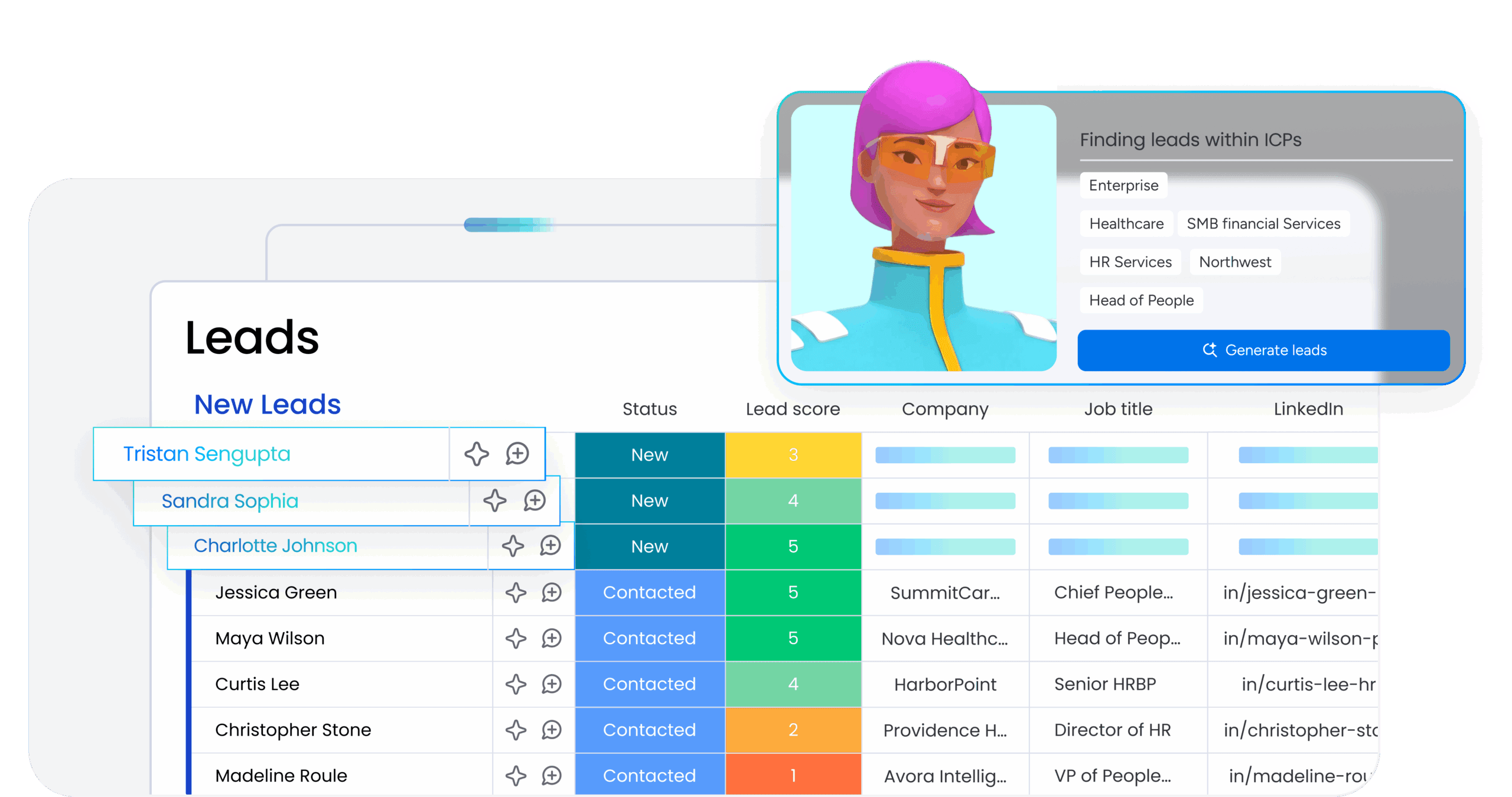
monday AI agents expand what teams can achieve by providing an “unlimited workforce” that operates 24/7 without time, volume, or language constraints. The platform offers both ready-made agents for specialized applications and a custom agent builder. You can create agents tailored to your exact needs in three steps: describe the role and triggers, connect relevant knowledge and integrations, then test and refine.
Ready-made agents by capability:
- Research agents: Competitor Research Agent, Market Landscape Analyzer, Vendor Researcher that continuously gather and structure external intelligence
- Reporting agents: Status Reporter, End of Day Recap that automatically generate reports that previously consumed hours of manual effort
- Insights agents: Risk Analyzer, Goal Tracker that proactively flag risks and track metrics against targets
Core capabilities that power every agent:
- Knowledge grounding: Agents use the docs, PDFs, and boards you define as context
- 24/7 autonomy: Following up, generating content, and taking actions around the clock
- Guardrails: Full transparency into every action with the ability to set permissions and boundaries
Cross-departmental visibility on one platform
What makes the platform unique is its structured work data. An AI agent helping marketing can see sales pipeline data. An agent planning a sprint can see support tickets. An executive dashboard can aggregate insights from every department.
This cross-departmental context makes AI agents more capable than agents operating in single-domain platforms. The platform includes 200+ integrations, including Slack, Microsoft Teams, Gmail, Jira, and Salesforce, plus MCP protocol support that lets external AI assistants securely access and act on monday.com workspace data.
Enterprise-grade trust and governance
Trust and governance are built into the platform’s foundation:
- Control: You explicitly decide what each agent can and cannot do, both inside monday.com and across external integrations
- Permissions: Define exactly which data each agent can access
- Human in the loop: Validate agent actions before activation using simulation mode
- Compliance: HIPAA compliance, ISO/IEC 27001, SOC 2 Type II, and ISO/IEC 27701 certifications
Start building your AI-powered organization today
AI adoption transforms how organizations operate, but success depends on the right foundation. Organizations that start with clear pilots, build trust through transparency, and scale on unified platforms achieve measurable impact faster than those treating AI as an isolated experiment.
monday.com eliminates common AI adoption barriers: fragmented data, complex integrations, and trust concerns. With enterprise-grade governance and cross-departmental visibility built in, teams focus on high-value applications instead of infrastructure challenges. monday agents integrate directly into existing workflows with ready-made solutions for research, reporting, and insights, no consultants or coding required.
Try monday agentsFAQs
What is the difference between AI adoption and AI implementation?
AI implementation refers to the technical process of deploying AI software. AI adoption encompasses the broader organizational journey—strategy, culture change, workforce readiness, and scaling AI from experiments to enterprise-wide deployment across multiple departments.
Which departments should adopt AI first to produce measurable business value?
Start with departments where pain is highest, success is measurable, and you have champions. High-confidence starting points include IT (ticket triage), PMO (status reporting and risk analysis), sales (lead scoring and meeting summaries), and marketing (competitive research and goal tracking).
Why does AI adoption stall after pilot projects succeed?
Pilots stall due to organizational rather than technical barriers—unclear ownership of the AI workflow after the pilot ends, lack of executive sponsorship to push through competing priorities, no defined process for graduating a pilot into standard operating procedures, and insufficient documentation of measurable results.
How can organizations scale AI across departments while maintaining trust and oversight?
Scaling requires a unified platform with cross-departmental context. You need explicit permission controls defining what each agent can access and do, audit trails logging every AI action, human-in-the-loop checkpoints for critical decisions, and simulation mode to test agent behavior before production deployment.
How does monday.com support AI adoption for organizations new to artificial intelligence?
monday.com supports AI adoption through ready-made AI agents that integrate directly into existing workflows without requiring consultants or coding. You get a cross-departmental data layer that gives agents full organizational context, plus enterprise-grade governance with built-in permissions, audit trails, and human-in-the-loop controls.

 Get started