


What if your pipeline review meetings ended with clear, data-backed forecasts instead of guesswork — and your team already knew which opportunities need attention and what actions will move them forward? AI sales pipeline management transforms your pipeline into an intelligent system that actively helps you sell, automatically flagging risks, predicting outcomes, and recommending next steps so your team can focus on closing deals instead of chasing updates.
In this guide, you’ll discover how AI-powered pipelines accelerate qualification, boost forecast accuracy, and return hours of selling time to your reps each week. We’ll walk through the capabilities that deliver the most impact, practical implementation steps that won’t disrupt your team, and how platforms like monday CRM help revenue teams close more high-value deals with less administrative work.
Key takeaways
- AI transforms reactive pipeline management into proactive deal execution by flagging risks early and recommending specific actions to save deals before they stall.
- Automation returns vital hours per week to actual selling by handling data entry, follow-ups, and lead routing so your reps focus on conversations that close deals.
- AI-powered lead scoring and routing automatically classify prospects and match them to the right reps based on expertise and performance, cutting qualification time in half.
- Start with your data foundation by connecting email and calendar systems first, then add AI assistance for high-impact use cases and expand automation based on proven results.
- Choose platforms that embed AI directly into your existing CRM interface where reps already spend their time, like monday CRM, which maintains human control while adding intelligent assistance.
What is an AI sales pipeline?
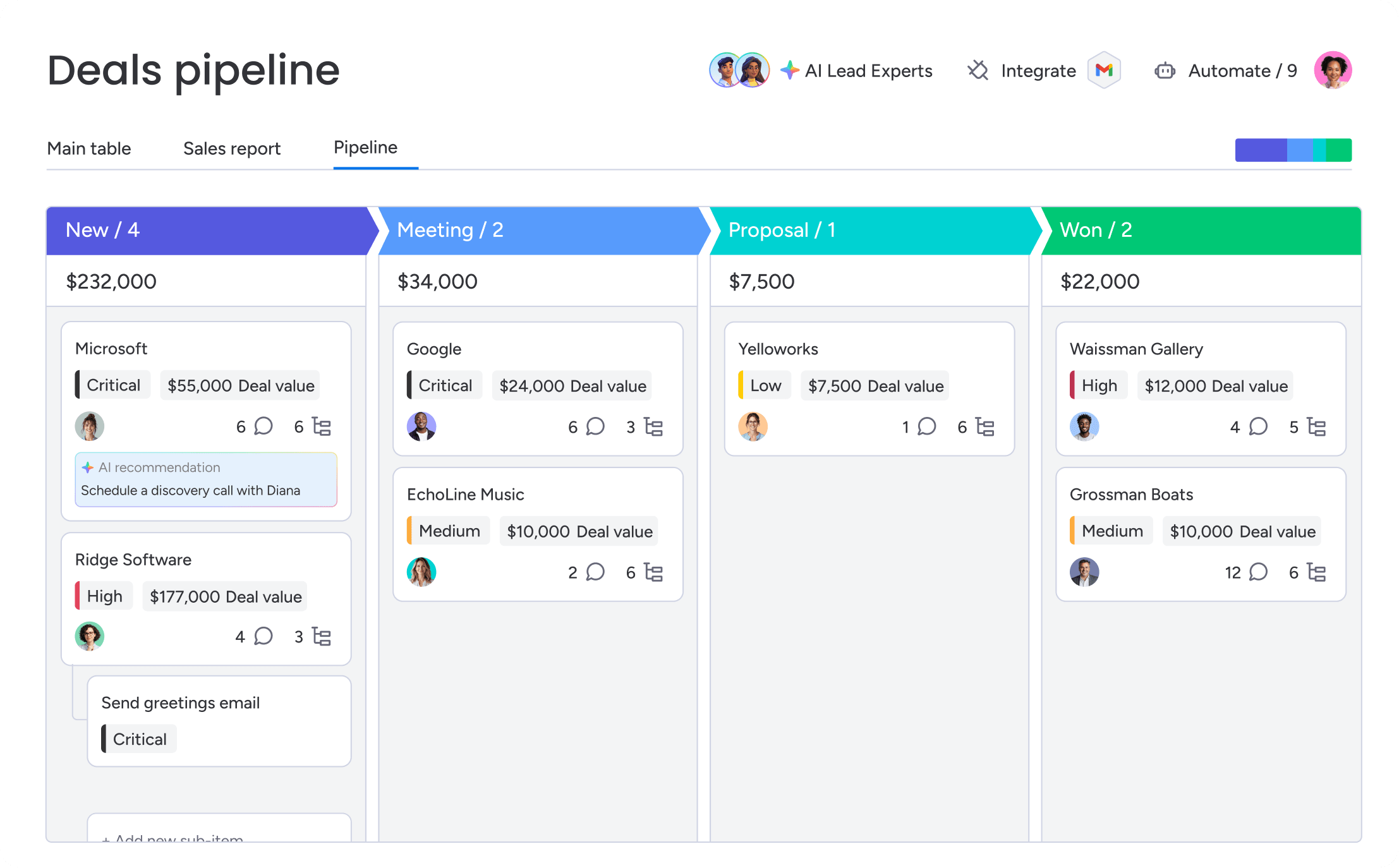
An AI sales pipeline automates the grunt work, analyzes your deals, and tells you what to do next at every stage. Instead of manually tracking deals, updating records, and guessing which opportunities will close, AI deal flow management software handles the heavy lifting while your team focuses on selling.
Think of a traditional sales pipeline as a visual snapshot of where prospects sit in your customer journey. You track leads through stages like qualification, discovery, proposal, and negotiation. When managing 50 deals, you need to know which ones need attention today versus which are ready to sign. AI turns that static view into something that actually works — analyzing patterns, predicting outcomes, and telling you what to do next.
Here’s what changes when you move from traditional to AI-powered pipeline management:
- Machine learning: Analyzes your historical deal data to spot patterns that predict success. The system learns which behaviors and characteristics separate won deals from lost opportunities, then applies these insights to your current pipeline.
- Natural language processing: Reads through sales conversations, emails, and call transcripts to extract insights. NLP identifies objections, competitive mentions, and buying signals that would otherwise stay buried in individual conversations.
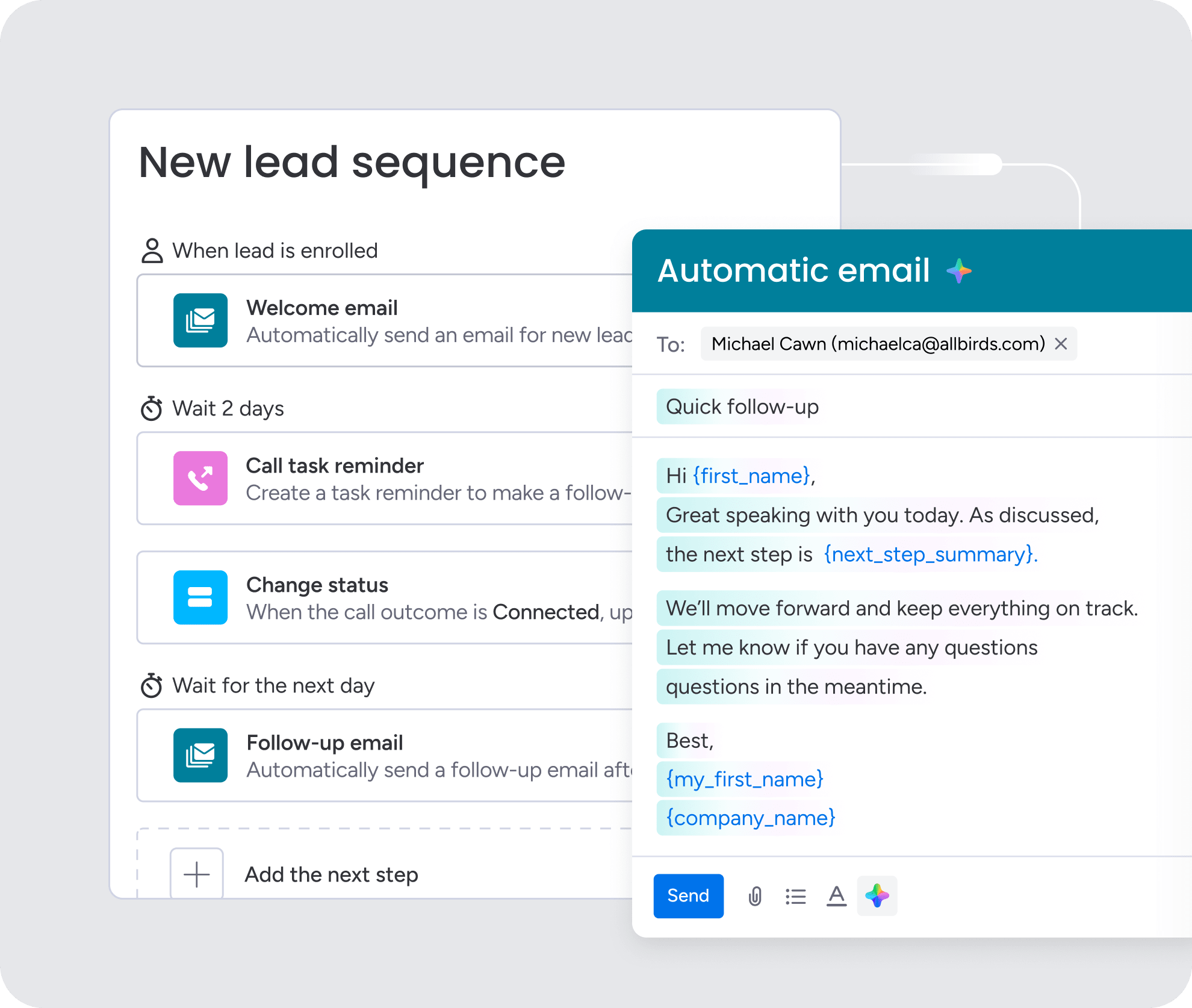
- Automation engines: Execute repetitive tasks based on triggers you set. When a prospect goes quiet for 3 days, automation sends a follow-up. When deals reach certain stages, the system creates activities and notifies stakeholders.
Learn more: Sales pipeline report examples
How AI transforms traditional pipeline management
Traditional pipeline management forces you to react after problems happen. Sales managers review pipelines weekly, ask reps for updates, and manually identify at-risk deals based on age or stage. By the time you spot issues, intervention options are limited.
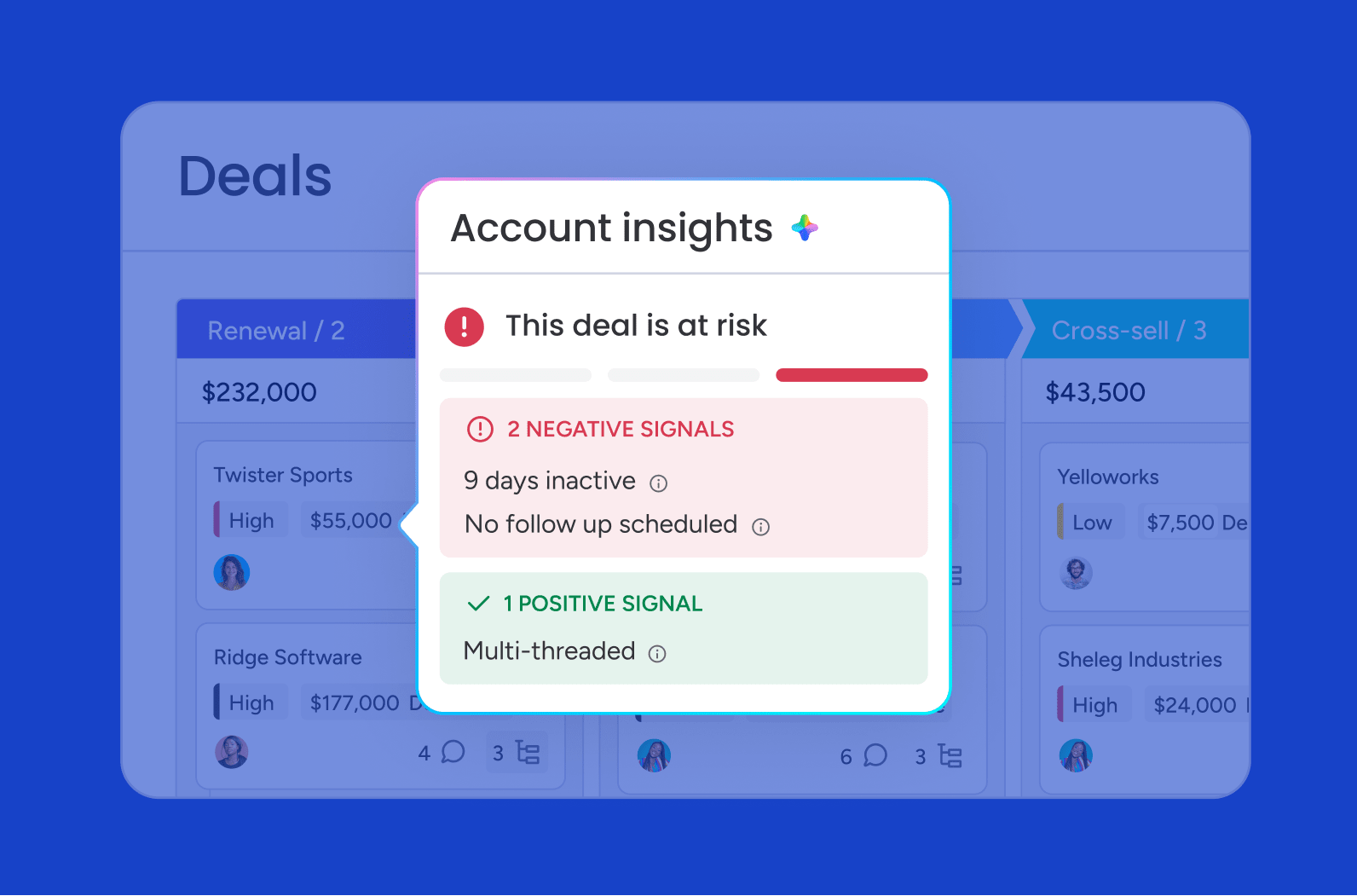
AI-powered pipelines work differently — they watch all your deals, flag risks based on engagement patterns, and tell you how to save deals before they die.
- Traditional approach: Weekly manager reviews, manual rep updates, and subjective deal assessments lead to problems discovered late with limited intervention time.
- AI-powered approach: Continuous monitoring, automatic risk detection, and specific action recommendations deliver early warnings that enable proactive saves.
Traditional pipelines require reps to log every call, email, and meeting manually. AI captures this information automatically from your email, calendar, and call recordings. When reps send emails or finish calls, the system logs everything and updates deal records.
Forecasting shifts from gut feeling to data-driven predictions. Instead of reps estimating deal probability based on conversation tone, sales forecasting software analyzes historical patterns, deal velocity, engagement signals, and external factors to generate reliable forecasts that leadership can trust for planning.
Core components of AI-powered pipelines
AI sales pipelines run on 5 core components that work together. Understanding these components helps you pick the right capabilities for your team.
- Data foundation: Clean, structured data from multiple sources including CRM records, email systems, calendar data, conversation transcripts, and marketing platforms. Data quality directly determines AI accuracy.
- Predictive models: Machine learning algorithms that analyze historical patterns to forecast outcomes and identify which behaviors correlate with success.
- Automation workflows: AI that takes action, not just provides insights. Workflows trigger follow-ups, create activities, and route leads based on specific conditions.
- Intelligence layer: Where AI surfaces insights through dashboards, alerts, and recommendations, translating complex analysis into actionable guidance.
- Integration architecture: Connections to your existing tech stack including email platforms, calendar systems, and communication platforms.
Why revenue teams need AI pipeline platforms now
The following forces make AI pipeline tools essential for revenue teams right now:
- Customer expectations have changed completely. B2B buyers expect the same personalized, responsive experience they get as consumers. They research on their own, reach out across multiple channels, and expect fast, relevant responses. Sales teams without AI can’t personalize at scale — and they lose deals to competitors who respond faster with better messaging.
- Pipelines have gotten way more complex. Sales cycles now involve more stakeholders, longer evaluations, and touchpoints across email, phone, video, social, and in-person meetings. Traditional pipeline management can’t process this volume of information effectively.
- Competitive pressure keeps ramping up. Teams using AI pipeline platforms win more deals, qualify faster, and forecast more accurately. Teams without AI fall behind — not because they lack talent, but because they’re working with less effective systems.
5 game-changing benefits of AI pipeline management
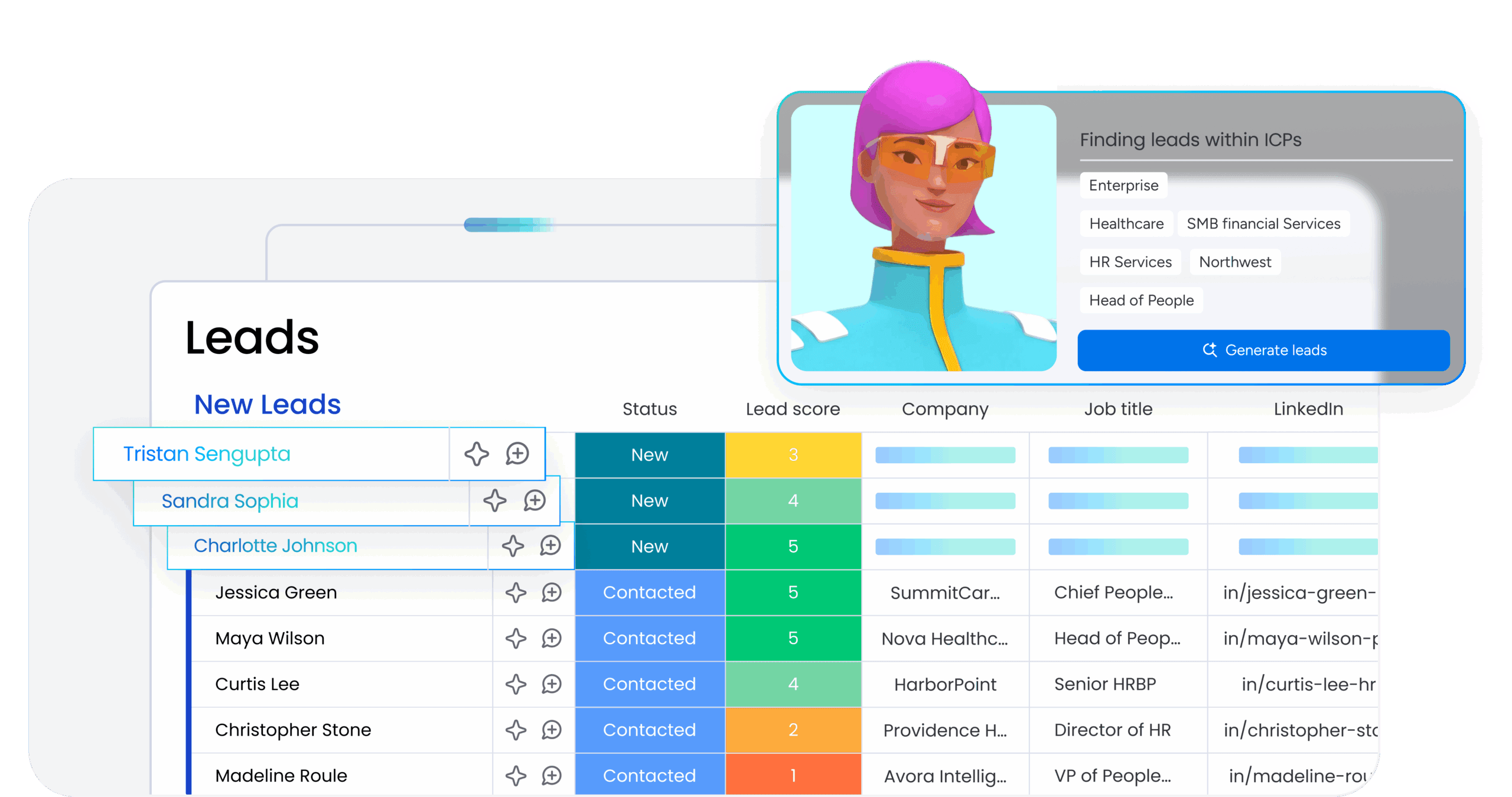
AI pipeline management delivers measurable improvements across your entire sales operation. The following 5 benefits represent the highest-impact outcomes that revenue teams experience when implementing intelligent pipeline systems.
Each benefit connects directly to metrics that matter: faster deal velocity, higher win rates, and more efficient resource allocation.
1. Accelerated lead qualification
Traditional lead qualification creates bottlenecks that delay response times and let hot prospects go cold. AI accelerates qualification in these ways:
- Instant data enrichment: Automatically appends firmographic data and behavioral signals to every lead record
- Automated scoring: Machine learning analyzes dozens of attributes simultaneously and assigns priority scores in real-time
- Intelligent routing: Matches qualified leads to the most appropriate sales rep based on territory, expertise, and performance history
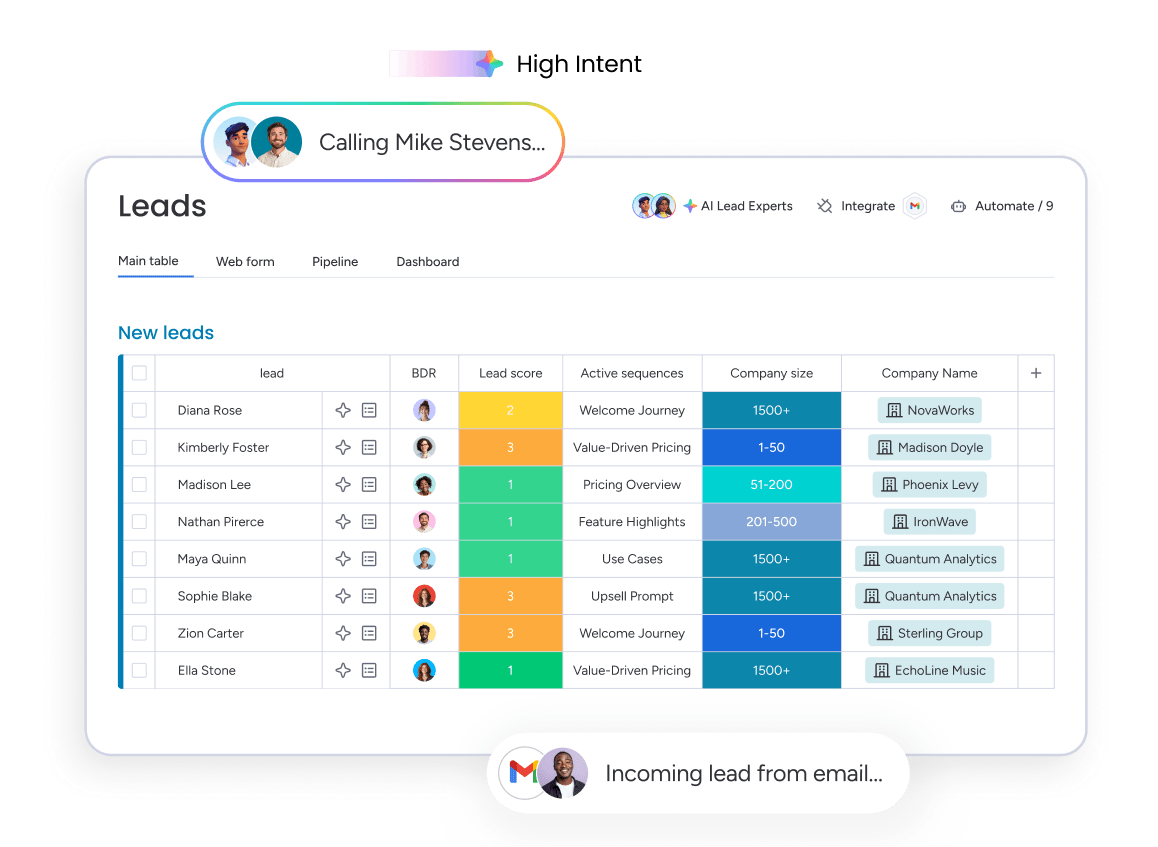
Teams using monday CRM leverage the Assign label and Assign person AI actions to automatically classify and route leads based on text, Emails & Activities data, and teammate role definitions. This cuts out manual sorting and gets high-value leads to reps immediately.
2. Greater forecast accuracy
Traditional forecasting produces inconsistent results because it relies on subjective judgment. AI analyzes thousands of past deals to find what actually leads to wins. Instead of weekly pipeline reviews, AI watches engagement signals and adjusts forecasts based on what buyers actually do. The system compares rep predictions to actual outcomes, then adjusts future forecasts based on what it learns.
3. Automate the majority of non-selling activities
Sales reps don’t spend the majority of their time actually selling because they’re too busy with data entry, scheduling, follow-ups, and research. AI automates these tasks and gives reps hours back every week:
- Activity logging: Automatically captures emails, calls, and meetings without manual CRM updates
- Follow-up management: Sends personalized follow-ups based on triggers without rep intervention
- Data enrichment: Updates contact information, appends company data, and identifies stakeholders automatically
The AI Timeline Summary feature on monday CRM creates readable summaries of all communication events. Sales reps and managers gain complete context on any account without reading through every message.
Learn more: Data enrichment software
4. Higher win rates
Win rates improve when reps focus on the best opportunities and take the right actions at the right time. AI increases win rates in 3 ways:
- Opportunity prioritization: AI identifies which deals have the highest probability of closing and the highest potential value. Reps focus their energy on deals that actually matter.
- Action recommendations: The system analyzes successful deal patterns and recommends specific actions that correlate with higher close rates.
- Early warning detection: AI identifies early warning signals that predict deal loss and prompts corrective action before deals stall.
5. Scale pipeline coverage without adding headcount
Traditional sales models require linear scaling. To double pipeline coverage, you double headcount. AI breaks that model by making each rep way more productive.
By automating admin work and smart prioritization, AI lets each rep handle exponentially more opportunities. Real-time coaching cuts new rep ramp time from most of a year to a few months. AI ensures every lead receives timely follow-up, creating complete coverage across your pipeline.
7 AI capabilities every sales pipeline needs
Not all AI capabilities deliver equal value. Some features sound impressive but add minimal impact to your actual sales results. The 7 capabilities below represent the highest-ROI functions that transform pipeline management from reactive tracking to proactive deal execution.
1. Predictive lead scoring and prioritization
Predictive lead scoring uses machine learning to rank leads based on how likely they are to convert and how much they’re worth. Unlike simple rule-based scoring, predictive models analyze hundreds of signals at once and learn which combinations actually predict conversions.
What makes predictive scoring work:
- Transparent methodology: The system explains why leads receive specific scores.
- Customizable models: Ability to adjust scoring for your business model.
- Continuous learning: Models that improve as they process more data.
2. Real-time conversation intelligence
Conversation intelligence analyzes sales calls, meetings, and emails to pull out what matters and spot patterns. The most valuable pipeline information exists in conversations, but without AI, this stays trapped in individual rep knowledge.
Teams using monday CRM benefit from the Emails & Activities feature that logs every interaction in one timeline. The AI Timeline Summary creates readable summaries of communication history — saving sales and support teams hours every week.
3. AI email generation and personalization
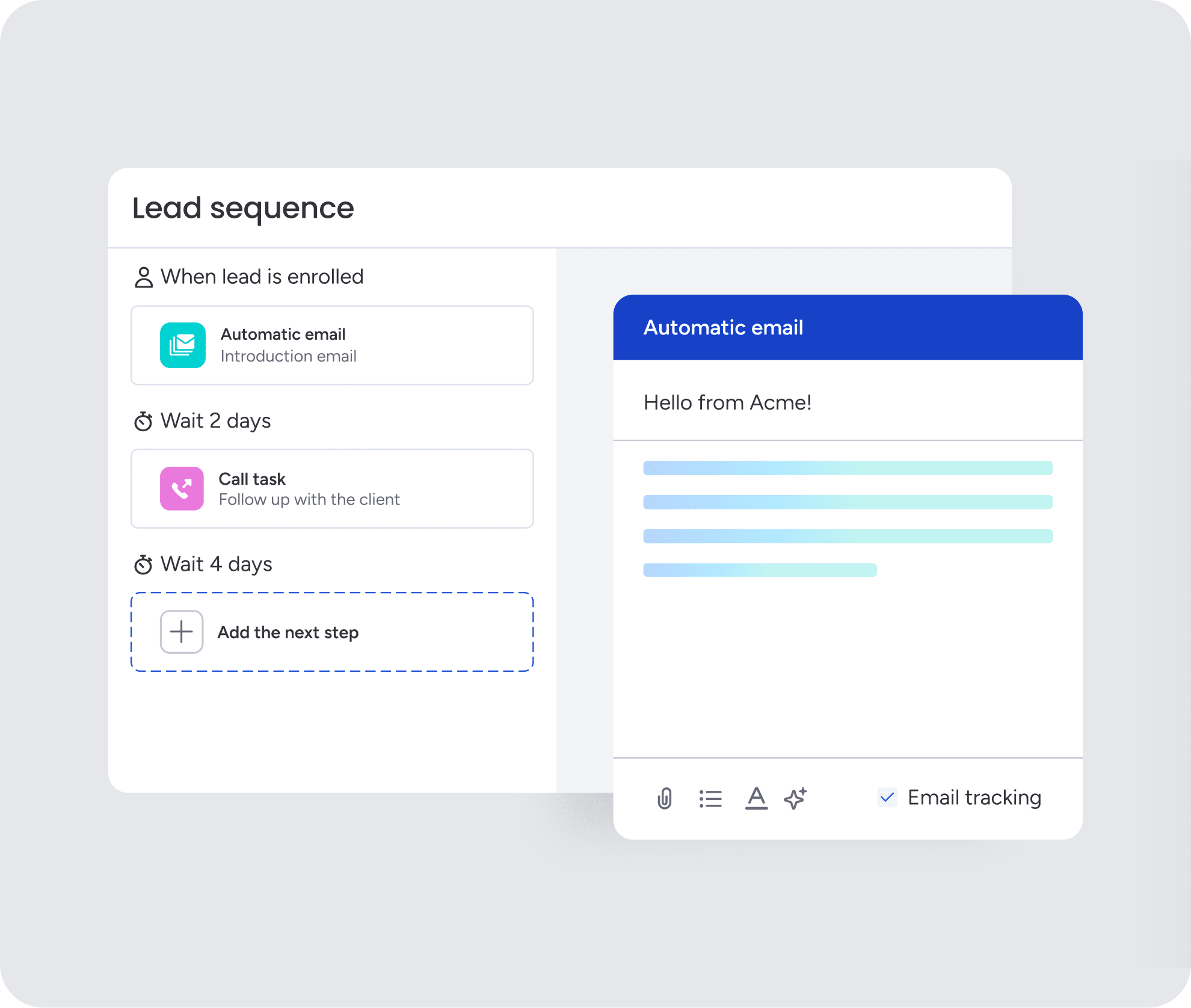
AI account outreach agents create personalized sales emails based on prospect data, conversation history, and proven messaging patterns. Email is still the main B2B channel, but personalizing at scale manually? Nearly impossible.
The AI email assistant on monday CRM helps reps compose emails directly within Emails & Activities. Reps adjust tone, length, and content while AI handles the initial draft, reducing composition time.
4. Next-best-action recommendations
Next-best-action recommendations tell you exactly what to do with each opportunity. Traditional pipeline management leaves reps to figure out priorities on their own — leading to inconsistent execution.
Deal scenario AI recommendation Rationale
Deal A ($450K) Schedule executive meeting Deals without C-level engagement at this stage close at only 12%
Deal B ($280K) Send competitive differentiation Prospect mentioned competitor in Friday's call
Deal C ($175K) Request technical validation This step typically happens 14 days before close
5. Automated deal risk detection
Automated risk detection watches for signals that deals might stall or die. AI watches for engagement drops, missing stakeholders, slow velocity, competitive threats, and budget timeline shifts.
Good risk detection looks at multiple signals — not just one factor. The system scores risk levels to help you prioritize and alerts reps immediately when deals cross risk thresholds.
6. Pipeline health monitoring and alerts
Pipeline health monitoring provides continuous analysis of overall pipeline metrics with automated alerts when performance deviates from targets. Revenue leaders need real-time visibility to make informed decisions about resource allocation and forecast adjustments.
AI monitors coverage ratios, stage distribution, velocity trends, conversion rate changes, and activity levels. Customizable dashboards and sales widgets surface strong and weak points in your pipeline without manual report building.
7. AI-powered sales coaching
AI coaching analyzes rep performance and provides personalized improvement recommendations based on comparison to top performers. Traditional coaching reaches only a small percentage of sales interactions.
Performance dimension Average rep Top performer AI coaching focus
Discovery questions per call 4 12 Expand discovery framework
Talk-to-listen ratio 65:35 40:60 Increase active listening
ROI discussion in demos 30% 85% Lead with business value
How to implement AI pipeline management: A 4-step approach
Starting with AI pipeline management doesn’t require a complete overhaul of your sales process. The most successful implementations follow a phased approach that builds momentum through quick wins while minimizing disruption to your team.
Step 1: Build your data foundation
Before AI can provide insights, you need communication and activity data flowing into your CRM. Connect your email systems, calendar platforms, and communication tools to create a single source of truth. This foundation alone improves visibility even before adding AI capabilities.
Step 2: Introduce AI assistance for high-impact use cases
Phase 2 introduces AI assistance for high-impact, low-friction use cases. Start with AI summaries that help reps quickly understand account context. Add email drafting assistance to speed up follow-ups. Implement autofill capabilities to eliminate manual data entry. These features deliver immediate time savings without changing core workflows.
Step 3: Expand automation based on proven results
Once teams see value from AI assistance, add intelligent routing for leads, automated follow-up sequences, and risk detection alerts. Test these automations on small groups before rolling out team-wide. This approach ensures adoption while minimizing disruption to existing processes.
Step 4: Leverage AI insights for strategic decisions
With clean data and proven automations in place, use dashboards and predictive analytics to guide coaching, resource allocation, and territory planning. This final phase transforms AI from a tactical tool into a strategic advantage for revenue leadership.
What makes AI pipeline management successful
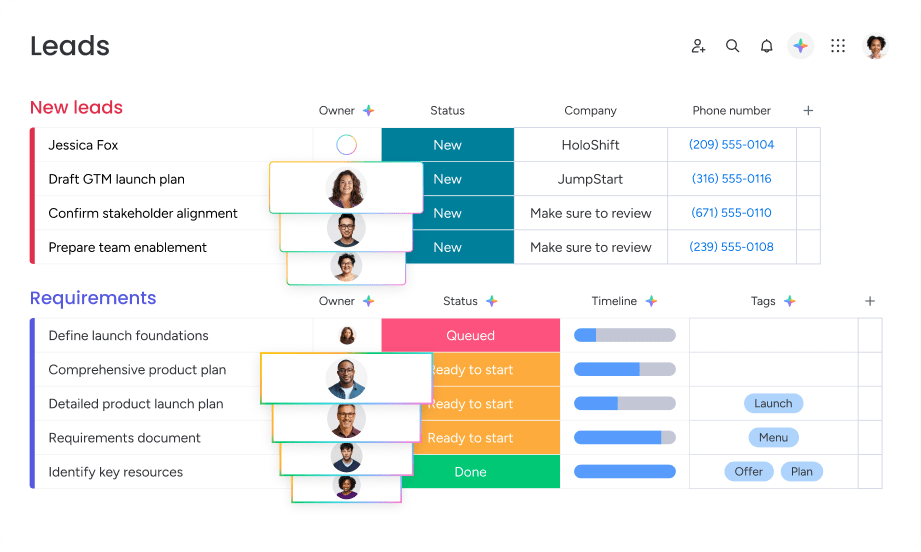
Success with AI pipeline management depends on 3 critical factors that determine whether teams achieve promised benefits or struggle with adoption. Understanding these factors helps you avoid common pitfalls and maximize your investment:
- Data quality matters more than data quantity. AI needs accurate, consistent information about deals, activities, and outcomes. Perfect data isn’t required, but you need enough quality data for AI to identify meaningful patterns. Focus on capturing core information consistently rather than tracking every possible data point.
- Integration depth determines value delivery. AI that lives outside your daily workflow won’t get used. The most successful implementations embed AI directly into existing CRM interfaces where reps already work. When AI summaries appear in deal records and email assistance is available where reps compose messages, adoption happens naturally.
- Trust and control drive adoption. Sales teams need to balance human-AI collaboration in sales by understanding how AI makes recommendations and maintaining the ability to override suggestions. Systems that show their reasoning and allow human judgment build confidence. Black box AI that forces automation without explanation faces resistance.
Measuring ROI from AI pipeline management
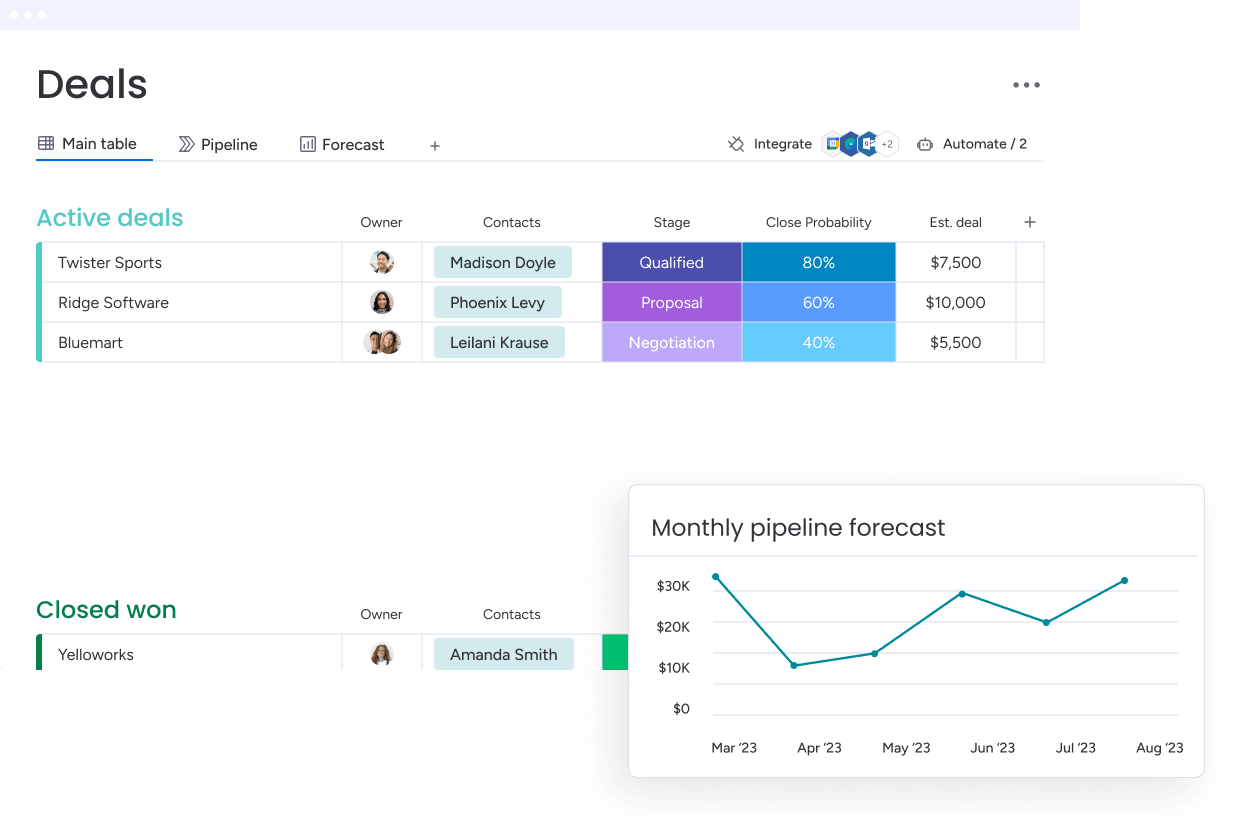
Tracking return on investment from AI pipeline management requires monitoring both efficiency gains and revenue impact. The most meaningful metrics connect directly to business outcomes rather than feature usage.
Efficiency metrics show immediate impact:
- Time saved per rep: Track reduction in administrative tasks and CRM updates.
- Response time to leads: Measure improvement in speed to first contact.
- Data quality scores: Monitor completeness and accuracy of pipeline data.
- Forecast variance: Compare predicted versus actual results over time.
Revenue metrics demonstrate long-term value:
- Win rate improvement: Track conversion rates before and after AI implementation.
- Deal velocity: Measure reduction in average sales cycle length.
- Pipeline coverage ratio: Monitor ability to maintain coverage without linear headcount growth.
- Average deal size: Identify whether AI helps reps pursue higher-value opportunities.
Transform your pipeline with monday CRM's intelligent automation
AI pipeline management represents a fundamental shift from reactive to proactive sales execution. Teams that embrace this technology gain measurable advantages in qualification speed, forecast accuracy, and win rates while reducing the administrative burden that keeps reps from selling.
monday CRM delivers this transformation through an intelligent work platform built specifically for modern revenue teams. Unlike standalone AI tools that require constant context-switching, monday CRM embeds intelligence directly into your daily workflow — making AI assistance feel natural rather than disruptive.
- Native AI features that work out of the box: AI Timeline Summaries, email composition assistance, and intelligent automations require zero configuration — they start delivering value immediately after connecting your email and calendar.
- Customizable automation without coding: Build sophisticated workflows using visual automation builders that let you define triggers, conditions, and actions in plain language — no technical expertise required.
- Unified communication timeline: The Emails & Activities feature consolidates every interaction into one chronological view, giving reps complete context without jumping between systems or searching through email threads.
- Intelligent lead routing and classification: AI-powered Assign label and Assign person actions automatically categorize leads and match them to the right reps based on expertise, territory, and performance history.
- Flexible data structure: Unlike rigid CRM systems, monday CRM adapts to your sales process rather than forcing you to adapt to predetermined fields and stages.
The key to success lies in taking a phased approach that builds on data quality, embeds AI into existing workflows, and maintains human control over final decisions. monday CRM makes this progression natural through its intuitive interface and progressive feature adoption.

“With monday CRM, we’re finally able to adapt the platform to our needs — not the other way around. It gives us the flexibility to work smarter, cut costs, save time, and scale with confidence.”
Samuel Lobao | Contract Administrator & Special Projects, Strategix
“Now we have a lot less data, but it’s quality data. That change allows us to use AI confidently, without second-guessing the outputs.”
Elizabeth Gerbel | CEO
“Without monday CRM, we’d be chasing updates and fixing errors. Now we’re focused on growing the program — not just keeping up with it."
Quentin Williams | Head of Dropship, Freedom Furniture
“There’s probably about a 70% increase in efficiency in regards to the admin tasks that were removed and automated, which is a huge win for us.“
Kyle Dorman | Department Manager - Operations, Ray White
"monday CRM helps us make sure the right people have immediate visibility into the information they need so we're not wasting time."
Luca Pope | Global Client Solutions Manager at Black Mountain
“In a couple of weeks, all of the team members were using monday CRM fully. The automations and the many integrations, make monday CRM the best CRM in the market right now.”
Nuno Godinho | CIO at Velv
“monday.com provides developmental flexibility, operational efficiency, and data transparency — all in one place. We became a company that moved from chasing data to leading with it.”
Hyunghan Lee | Team Lead, Sandbox Network
"monday.com brought every part of our business into one connected space. The harmony between work management and CRM has become our operating system — giving us the clarity and confidence to scale.”
Jennifer Chinburg | Executive Vice President of Corporate Development & Brand, Chinburg Properties
“We just weren’t getting value from our old CRM. With monday.com, it's a thousand times better. Our sales teams are more informed, more consistent, and far more connected."
James Arnold | Chief Operating Officer, CenversaStart building your intelligent pipeline today
AI pipeline management transforms how revenue teams work — accelerating qualification, improving forecast accuracy and returning crucial hours of selling time to your reps each week. By implementing the right AI capabilities in a phased approach, you’ll move from reactive pipeline tracking to proactive deal execution that identifies risks early, recommends specific actions, and helps your team close more high-value deals with less administrative work.
monday CRM makes this transformation simple with native AI features that work immediately, intelligent automations that require no coding, and a unified communication timeline that gives your team complete context on every deal. Start your free trial today and see how AI-powered pipeline management can accelerate your revenue growth.
FAQs
What's the difference between traditional CRM and AI pipeline management?
Traditional CRM systems store customer information and require manual data entry, while AI pipeline management actively analyzes data, predicts outcomes, automates activities, and provides recommendations without manual input, transforming your CRM from a database into an intelligent system that guides sales execution.
Can small sales teams benefit from AI pipeline management?
Small sales teams often see the highest relative impact from AI pipeline management. With fewer reps, every hour of selling time matters more, and automation that returns valuable hours per week per rep has a significant impact on overall productivity and pipeline coverage.
What data quality level does AI need to work effectively?
AI pipeline management requires consistent capture of core data including communication history, activity records, deal information, and historical outcomes. Perfect data isn't necessary; AI works with "good enough" quality as long as key fields are populated consistently and integration with email and calendar systems provides activity context.
How do you get sales reps to actually use AI features?
Successful AI adoption happens when features reduce friction rather than add complexity. Embed AI directly in existing workflows, start with high-value use cases that save time immediately, show reps how AI helps them hit quota faster, and maintain human control over final decisions while using AI for assistance.
What's the biggest mistake companies make with AI pipeline tools?
The biggest mistake is treating AI as a magic solution without addressing underlying process and data issues. AI amplifies what you already have; if your sales process is undefined or your data is completely unreliable, AI won't fix these fundamental problems. Start by establishing basic pipeline hygiene before adding AI capabilities.
